Watch brandsWatch wikiWatch videosVariousWatch calendarSaved articles
WristBuzz Various Compare Rolex GMT-Master II vs Tudor Black Bay GMT
⚖ Head-to-head comparison

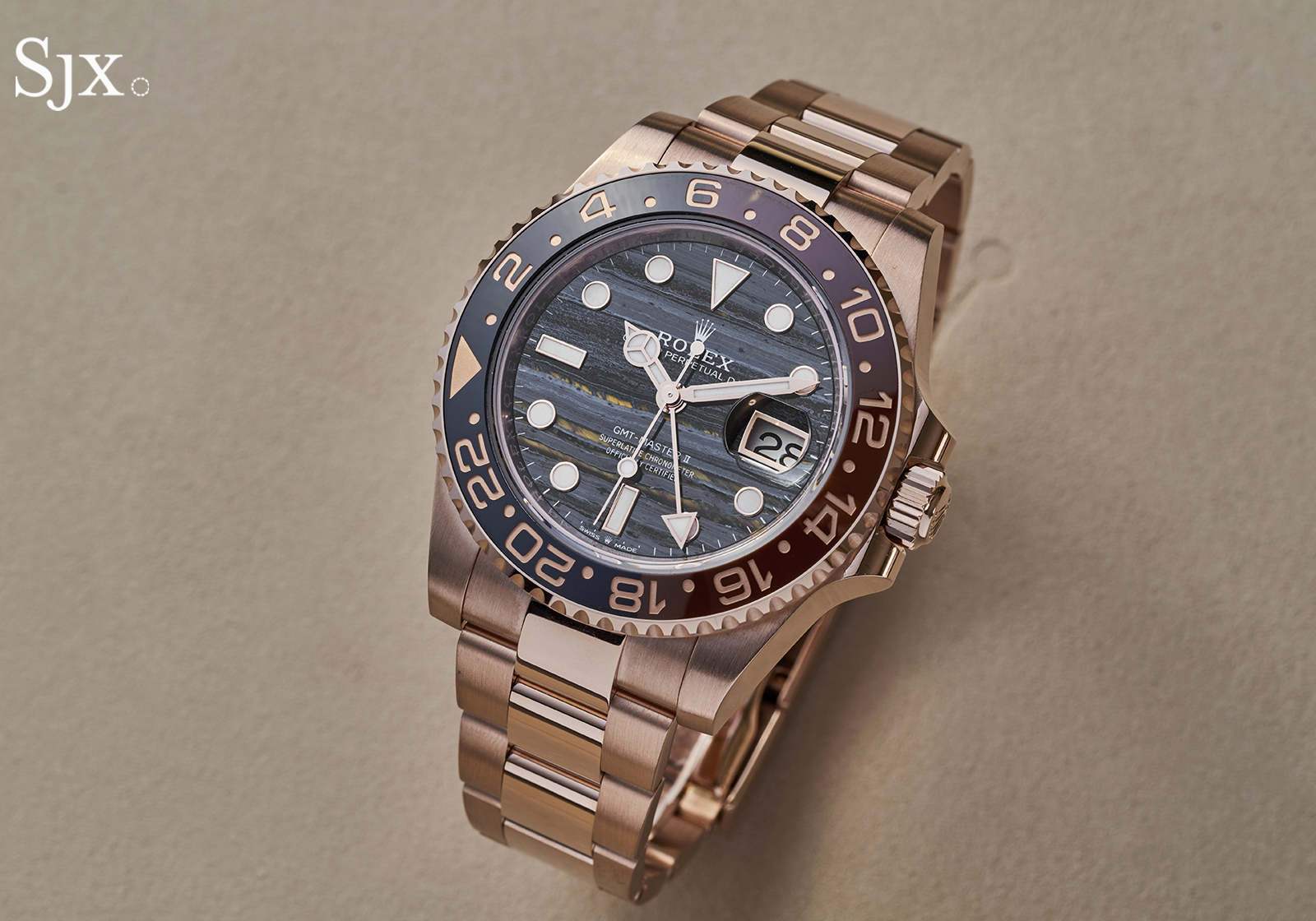
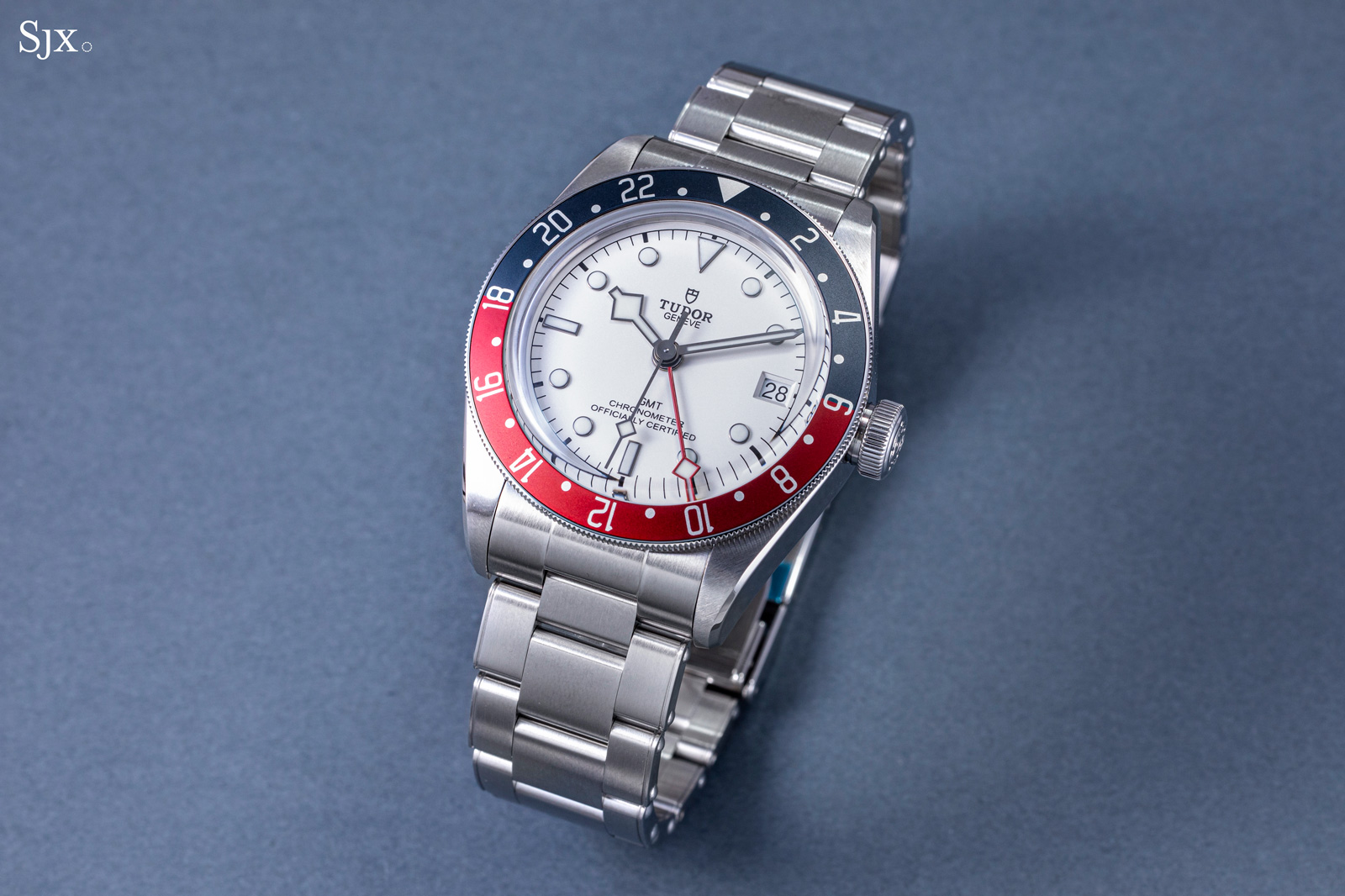
Rolex GMT-Master II Pepsi vs Tudor Black Bay GMT

Pepsi vs Pepsi. Rolex GMT-Master II 126710BLRO at €11,200 retail (allocation-only) vs Tudor BB GMT 79833MN at €4,690, in-stock. Same colour scheme, very different waitlist.
Updated 2026-08-21 By Ronald Calls, WristBuzz Editor
Rolex GMT-Master II Pepsi
Rolex

GMT-Master II Pepsi

126710BLRO · 40mm · 100m
Introduced 1955 (model), 2018 (current ref.) ~€11,200 retail (allocation-only)
Cerachrom Pepsi bezel, in-house Cal. 3285, allocation-only.
Tudor Black Bay GMT
Tudor

Black Bay GMT

79833MN · 41mm · 200m
Introduced 2018 ~€4,690 retail
Aluminium Pepsi bezel, in-house Cal. MT5652, available now.

Same colour scheme, opposite availability

The original 1955 ref. 6542 GMT-Master launched with a red-and-blue ("Pepsi") bakelite bezel for Pan Am pilots flying long-haul. The current Cerachrom Pepsi 126710BLRO continues the lineage, with in-house Cal. 3285 and a 70-hour reserve. Allocation-only at AD.

Tudor introduced the Black Bay GMT in 2018 (ref. 79833MN) at retail €4,690 with a Pepsi aluminium bezel and in-house Cal. MT5652. Same flyer-GMT architecture as the Rolex (true-flyer: hour hand jumps independently). Identical pricing at retail, available without waitlist.

Spec sheet

Attribute Rolex GMT-Master II Pepsi Tudor Black Bay GMT
Reference 126710BLRO 79833MN
Case diameter 40mm × 11.9mm 41mm × 14.6mm
Case material 904L Oystersteel Stainless steel
Bezel insert Cerachrom (ceramic) Anodised aluminium
Bezel colours Red + blue (Pepsi) Burgundy + blue (Pepsi)
GMT architecture Flyer (independent hour hand) Flyer (independent hour hand)
Movement Cal. 3285 (in-house) Cal. MT5652 (in-house)
Reserve 70 hours 70 hours
Water resistance 100m 200m
Bracelet Jubilee 904L Oystersteel Riveted-look steel
Retail price ~€11,200 (allocation-only) ~€4,690

Cerachrom vs aluminium

The Rolex Cerachrom bezel is genuinely scratch-proof ceramic and the platinum-plated graduations don't fade. The Tudor aluminium insert is the more vulnerable surface and develops patina (or faded edges) over years. For collectors who like the BB GMT's vintage feel, the aluminium bezel is a feature, not a bug. For daily-wear durability, Cerachrom wins.

Both flyer GMTs (rare in 2018)

When the BB GMT launched in 2018, it was rare for a sub-€5K watch to ship a true-flyer GMT (where the hour hand jumps independently). The Rolex GMT-Master II has had this since the 1983 ref. 16760. The Tudor MT5652 is the cheapest in-house flyer GMT in the market. Practical: travelers can change time-zones quickly without resetting the watch.

Allocation vs retail

The Rolex Pepsi 126710BLRO has been on multi-year waitlists since 2018. ADs won't quote a delivery date. Secondary market sits 1.6-2x retail. The Tudor BB GMT is at MSRP at any AD with weekly stock turnover. The €6,500 retail-price gap widens to €15,000+ on secondary.

Pros and cons

GMT-Master II Pepsi · Pros
  • Cerachrom (scratch-proof ceramic) bezel
  • 904L Oystersteel construction
  • Cultural status as the original Pepsi GMT
  • Holds 1.5x+ retail in secondary
GMT-Master II Pepsi · Cons
  • Multi-year waitlist at AD
  • 1.6-2x retail on secondary market
  • Only 100m water resistance (vs Tudor 200m)
Black Bay GMT · Pros
  • Available at retail; no waitlist
  • 200m water resistance
  • €6,500 cheaper at retail than the Rolex
  • In-house Cal. MT5652 with 70h reserve
  • Snowflake hands distinct from the Sub-style
Black Bay GMT · Cons
  • Aluminium bezel (less scratch-proof)
  • 41mm × 14.6mm thicker than the Rolex
  • Less prestige signal

Verdict: which one?

If you have AD allocation history and want the cultural reference Pepsi: GMT-Master II 126710BLRO. Cerachrom + 904L + the brand. Worth waiting for if you can.

If you actually want a Pepsi GMT now: BB GMT 79833MN. Same flyer architecture, in-house movement, available, €4,690.

For most buyers without a Rolex AD, the BB GMT is the answer. The Rolex Pepsi is the aspirational acquisition years later.

Common questions

Do the Rolex GMT-Master II and the Tudor Black Bay GMT both have a true "flyer" GMT?
Yes - both have a flyer (traveller) GMT where the local hour hand jumps independently in one-hour steps while the 24-hour hand keeps home time. Rolex has done this since 1983; the Tudor MT5652 (introduced 2018) made it the cheapest in-house flyer GMT on the market. Both have 70-hour reserves.
Cerachrom or aluminium: does the bezel material matter?
The Rolex Cerachrom Pepsi bezel is genuinely scratch-proof ceramic with platinum-plated graduations that do not fade. The Tudor anodised aluminium insert is softer and develops patina or faded edges over the years - a feature if you like the vintage look, a downside for daily-wear durability.
How much do the GMT-Master II Pepsi and the Black Bay GMT cost?
The Rolex GMT-Master II Pepsi 126710BLRO is around €11,200 at retail but allocation-only, so it trades at roughly 1.6 to 2 times that on the secondary market. The Tudor Black Bay GMT 79833MN is around €4,690 and in stock at most authorised dealers, so you can buy one the same week.
Which is better for travel and water resistance?
Both change time zones the same easy way. The Tudor adds 200m water resistance against the Rolex 100m, but it is also thicker (41mm x 14.6mm versus 40mm x 11.9mm), so the Rolex wears slimmer and dressier while the Tudor wears more like a tool watch.

Comments 31

  1. Patrick D.
    Allocation-only at £9,200 is rather the racket, isn't it. Tudor at £3,850 does the same job without the waiting list theatre and the post-Brexit import markup. The Cerachrom is lovely, but I'm not convinced it justifies the premium when the aluminium bezel on the Black Bay GMT will look nearly identical after five years anyway.
  2. TT
    Two pepsis walk into a watch blog. Only one goes home.
  3. Chronograf
    This is the El Primero argument all over again, isn't it. Pay double for the name and the waiting list, or get 80% of the watch for half the money. Tudor's using aluminium on the 79833MN, which means it'll scratch, sure, but that's kind of the point. Cerachrom is clever, but at these prices you're paying for allocation theatre.
  4. DJ
    Black Bay GMT in stock now. Rolex allocation-only. That's the real comparison.
  5. Ravi
    The allocation-only pricing on the 126710BLRO is the real story here. At 11,200 euros, you're looking at roughly 280 euros/year depreciation if it holds value over 40 years, but that's optimistic given market saturation. The BB GMT at 4,690 has a much tighter margin for loss. For pure financial efficiency, Tudor wins decisively unless you're betting on Rolex steel appreciation.
  6. Stef
    been shooting the BB GMT on leather lately and the dial reads so much cleaner on camera than I expected. the aluminum bezel actually photographs better than I thought it would.
  7. Nik V.
    eleven grand for a watch you can't even buy without waiting on a list. meanwhile the Tudor sits on the shelf for under five. I'll take the Tissot and a nice holiday.
  8. Anonymous
    The allocation-only pricing on the Rolex is wild. Tudor's in-stock option starts to look pretty reasonable when you factor in actually being able to buy it.
  9. L. Pereira
    interesting comparison. in brazil the grey-market rolex 126710BLRO arrives around R$45k after customs, still nearly 2.5x the tudor price here. aluminium bb gmt holds value better locally too, less temptation to flip. cerachrom is nice but the duty penalty makes it hard to justify.
  10. Rik
    The dial hierarchy is what separates these two. Rolex's Cerachrom bezel forces the GMT hand into a narrower visual lane; the Tudor actually gives the hand more breathing room with that aluminium ring. Font weights on the hour markers feel more considered on the BB GMT too, less crowded. At 11k vs 4.6k though, you're paying for finishing, not layout.
  11. GrailHunterX
    The allocation-only situation on the 126710BLRO really highlights why I'm eyeing the BB GMT as a stepping stone. Cerachrom is genuinely superior to aluminium, but if I can't actually acquire the Rolex without connections, what's the point. The Tudor at 4,690 with immediate availability feels like the grail path right now. Hit that, prove my commitment to the hobby, then maybe in 2-3 years the allocation gods smile.
  12. Anonymous
    The allocation-only bit is really the crux here. Tudor's in-stock advantage at 4,690 euros is hard to ignore when the Rolex demands patience and probably a relationship with an AD. Both solid watches though.
  13. Anonymous
    Four grand difference is huge, but you're really paying for the Cerachrom bezel and the Rolex name at allocation prices. Tudor's aluminium holds up fine and it's in stock right now.
  14. Frank
    In my view, the real story here is the allocation versus availability trade-off, which the lede captures well. The Cerachrom bezel on the 126710BLRO is undoubtedly superior in scratch resistance and colour stability compared to the aluminium on the Black Bay GMT, but you're paying €6,500 more for that privilege and you may never get one at retail. The Tudor, conversely, sits in stock at a sensible price point. For most wearers, in my experience, the aluminium will age gracefully and the €4,690 leaves room for a second watch entirely. Both are solid 24-hour movements.
    1. Aaron replying to Frank
      sell the flippers' allocated Rolex, buy the Tudor in stock, pocket the difference, and actually wear something.
  15. Anonymous
    The allocation-only Rolex pricing is getting absurd. Tudor's in-stock option at 4,690 euros is looking smarter every month.
  16. Anonymous
    The allocation game for the Rolex really does kill it for casual buyers. Tudor's in-stock advantage at under five grand is genuinely hard to ignore, even if the Cerachrom ceramic feels more premium.
  17. Reece
    So is the 11k Rolex actually worth double the Tudor if you can even get one? Or should I just grab the Black Bay GMT now and not worry about waiting lists. Any thoughts from people who own either.
  18. Anonymous
    allocation only at 11k is wild when the tudor is sitting on shelves for half the price. cerachrom flex i guess.
  19. Anonymous
    honest question: how much does that cerachrom bezel really justify the 6.5k premium over aluminium. both tell time fine.
  20. Anonymous
    The aluminium bezel on the Black Bay GMT will show wear, but honestly that's part of the charm. Hard to justify the Rolex premium here unless you're chasing the prestige.
  21. Mike
    Tudor makes sense here. Half the price, in stock, and the aluminium bezel ages better anyway.
  22. Margaret R.
    My late husband collected watches, though nothing quite so grand as these. I've been reading about the Black Bay line since he passed, and I must say the Tudor sounds like the more sensible choice for someone like me. The price difference is rather striking, and knowing something is actually available to purchase, rather than on some waiting list, appeals to me greatly. Both sound beautifully made.
  23. Anonymous
    The allocation-only thing with the Rolex really does sour the deal. Four grand difference is meaningful, and the Tudor is in stock right now. Cerachrom bezel is nice but not if you're on a waiting list.
  24. Anonymous
    allocation only for the rolex is the real story here. tudor in stock at half the price feels like the obvious move.
  25. Theo
    The Tudor makes sense if you're actually wearing it on the Riviera; the Rolex sits in a drawer waiting for allocation approval. At this price gap, I'd take the aluminium BB GMT and spend the difference on a good Panerai for dress occasions.
  26. Kevin O.
    I understand the appeal of the Cerachrom and in-house movement, but calling the 126710BLRO allocation-only while the Tudor sits on shelves is doing half the work for you. I owned a BB GMT for three years; the aluminium ages beautifully and the movement keeps better time than my previous Rolex. The value proposition isn't even close at 4,690 euros.
  27. Anonymous
    allocation-only at that price is wild. tudor in stock and half the cost makes this easy.
  28. Nadim A.
    The framing here as 'Pepsi vs Pepsi' misses the point a bit. I bought a Submariner in 2014 and I still wear it weekly. One good watch, worn and serviced properly, beats ten mediocre ones. The Tudor at 4,690 is excellent value, but the real question isn't whether to buy both; it's whether you actually need either right now.
  29. Jenkins
    allocation-only pepsi costs more than my car, so tudor it is.
  30. Anonymous
    allocation only at that price is wild. Tudor makes more sense if you can actually buy it.

Leave a comment

All comments are reviewed before they go live. Email is for our records only - it's never published.