What it replaces
The Caliber 3186 (later 3187) powered the GMT-Master II reference 116710 from 2007 onwards. The 3186 was a 3135 with a GMT module bolted on top: 28,800 vph, 48-hour reserve, blue Parachrom hairspring, and a true-GMT independent local-hour hand. It was a fine movement; what it lacked was the 70-hour reserve that all the modern Rolex calibres now offer. The 3285 launched in 2018 alongside the redesigned Pepsi GMT-Master II 126710BLRO on the new Jubilee bracelet, replacing the 3186 across the GMT line within two years.
"True GMT" vs "Caller GMT"
A "true GMT" is one where pulling the crown to the second click adjusts the local hour hand independently in 1-hour jumps, while the 24-hour hand and minute hand keep running as the home reference. Push the crown back, set the date if needed, and you have read your home time off the 24-hour scale and your travel time off the regular dial. This is the configuration travellers actually use. A "caller GMT" (Tudor Black Bay GMT, Longines Spirit Zulu Time, almost all microbrand GMTs) does the opposite: pulling the crown adjusts the 24-hour hand independently, which is fine for tracking a remote office colleague but worse if you are the one moving. The 3285 is the gold standard for true-GMT execution; setting it is fast, the crown action is positive, and the date pivots correctly when the local hour crosses midnight.
What is shared with the 3235
The 3285 is the 3235 architecture with the additional GMT module. Chronergy escapement (nickel-phosphorus, skeletonised), Parachrom Bleu niobium-zirconium hairspring, Paraflex shock absorbers, the same free-sprung Microstella balance, the same 70-hour mainspring barrel architecture. Service procedures are mostly shared; the GMT-specific parts (additional 24-hour wheel, jumping-hour mechanism, indirect-drive train for the local hour) are 3285-only. A modern Rolex watchmaker who can service a 3235 can service a 3285 with one extra training module.
Watches it powers
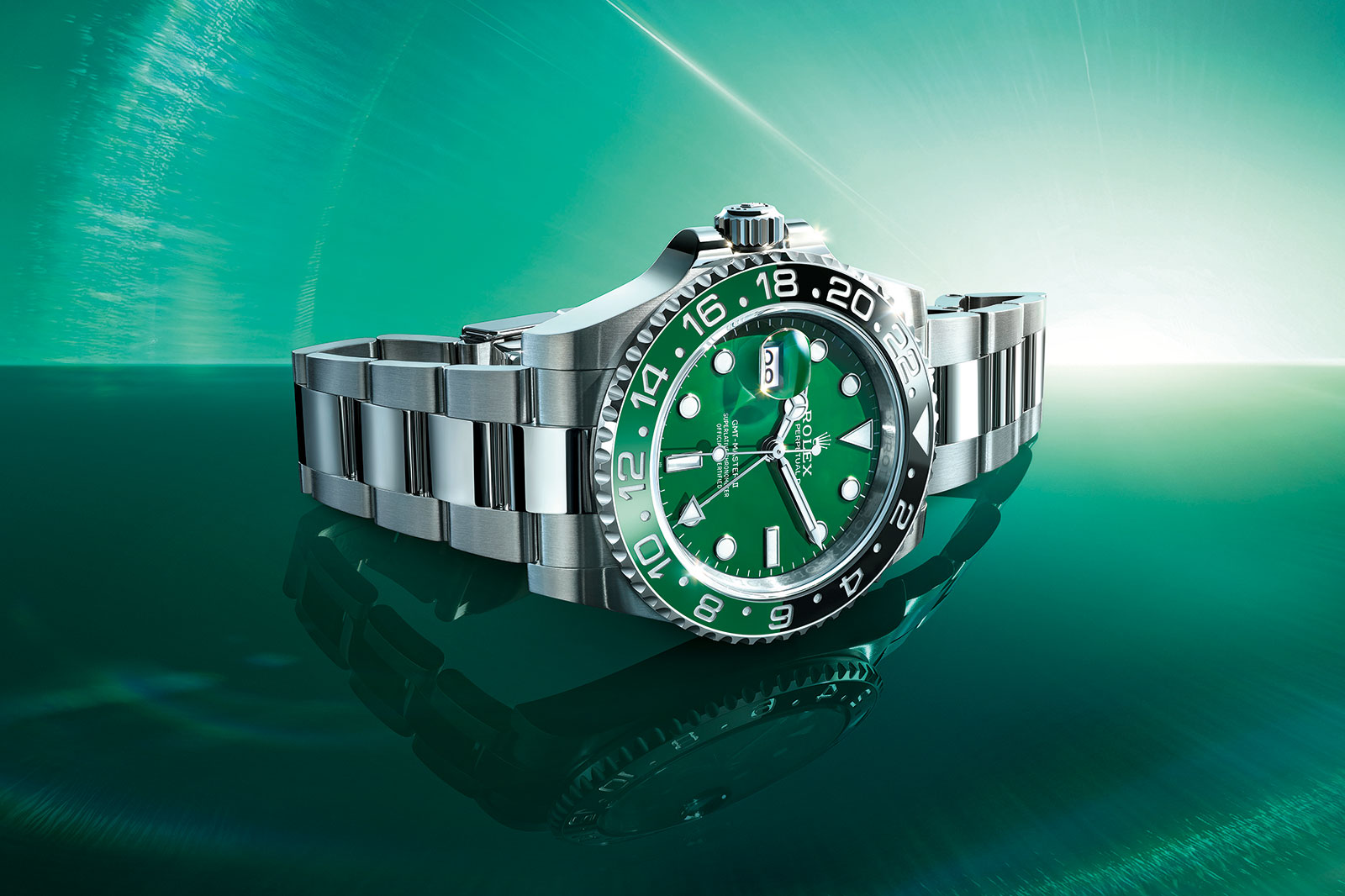
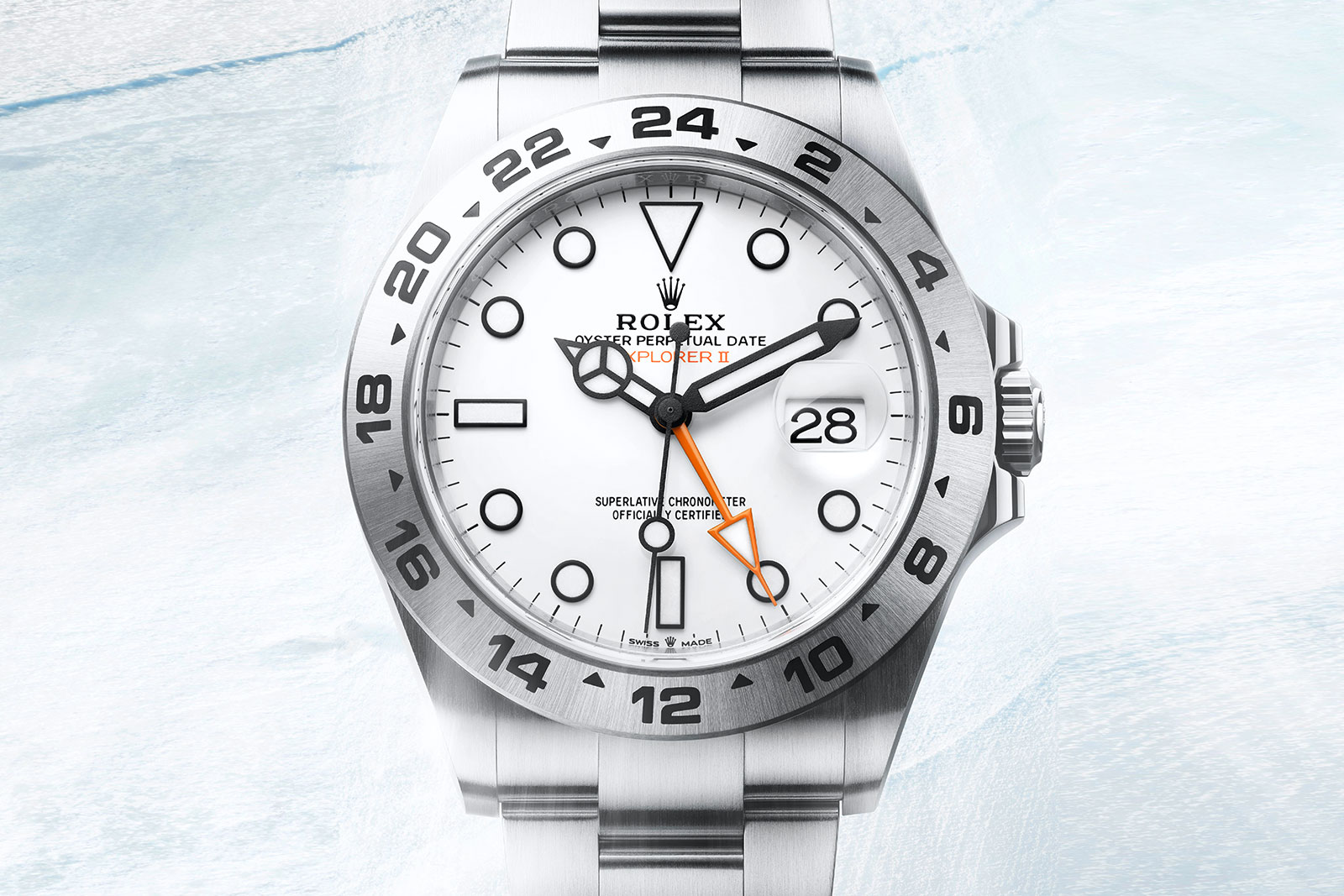
GMT-Master II 126710 BLNR (Batman/Batgirl), 126710 BLRO (Pepsi), 126710 GRNR (Sprite, left-handed in 126720), 126713 GRNR (steel/yellow gold "Root Beer"), 126715 CHNR (full Everose Root Beer), and the platinum 126769 TBR. The Sky-Dweller uses the more complex Calibre 9001/9002, which is mechanically distinct (annual calendar). The Explorer II 226570 also uses a 3285 derivative with the orange or black 24-hour hand.
Buying, allocation, and grey-market
The 3285 is the engine inside several of the hardest-to-buy Rolex references. The Pepsi 126710BLRO and the green-bezel "Sprite" 126720VTNR are functionally impossible to buy at retail without prior AD relationship; grey-market premiums in 2026 are still 15-30% over MSRP, down from the 50-100% peak of 2021. The Batman 126710BLNR is more available but still 6-18 months on a cold AD list. See how long does it take to receive a Rolex for the full allocation picture, and GMT vs world time for the complication landscape.
Service interval and cost
Same target as the 3235: 10 years recommended service interval, with most owners finding the watch keeps spec for 7-12 years before noticeable amplitude loss. Rolex service for a GMT-Master II currently runs CHF 800-1,000 at the brand, similar to the Submariner Date but with the additional GMT-module check adding a small premium. The watch comes back with a 2-year service warranty and (if requested) a fresh polish. Independent service is possible; expect 30-50% lower price but parts access for the GMT-specific components is restricted to authorised channels.
Comments
No comments yet, be the first to weigh in.