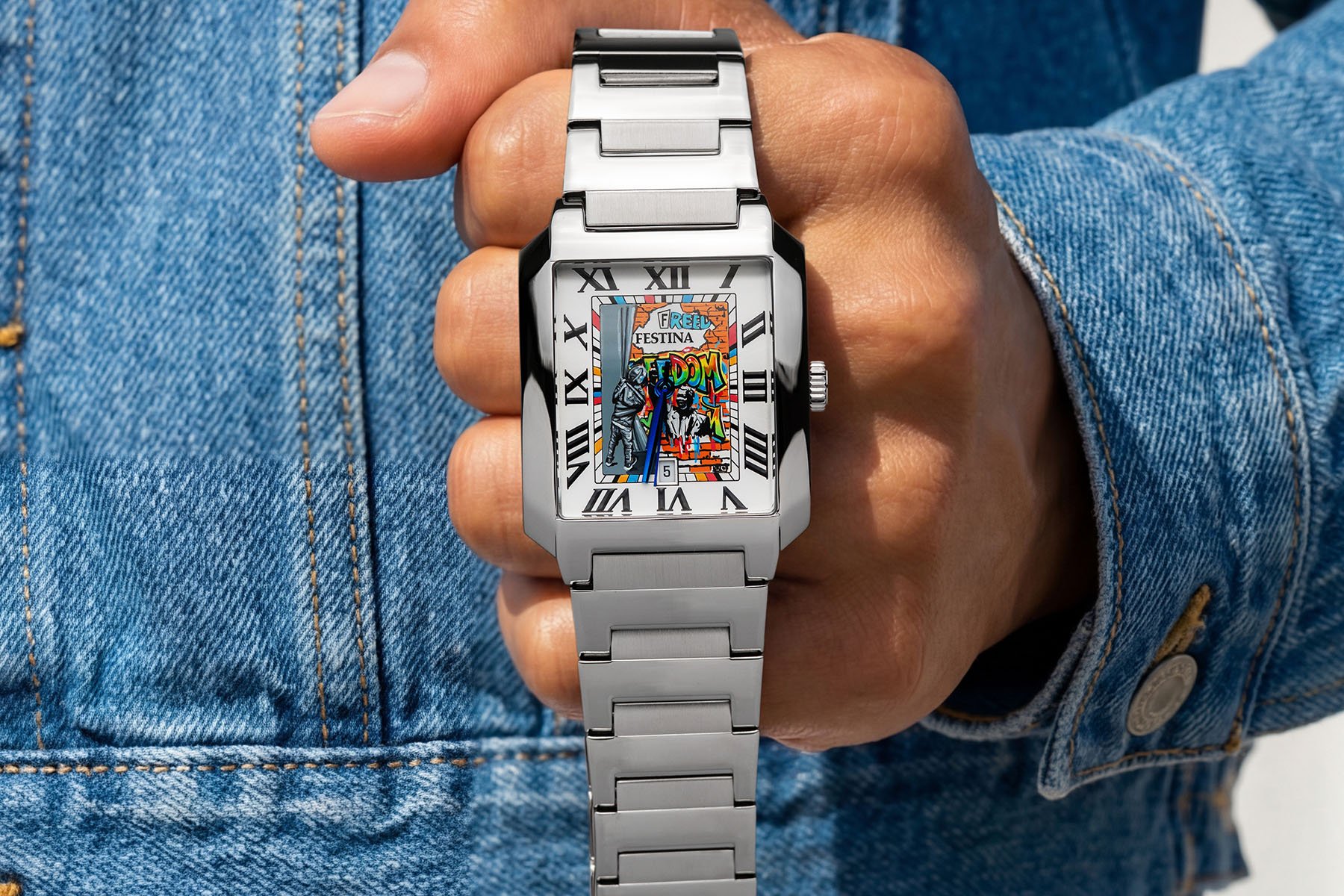
Festina was founded in 1902 in La Chaux-de-Fonds, the heartland of Swiss watchmaking in the Jura mountains. Through the early and mid-20th century the brand operated as one of dozens of mid-tier Swiss producers, building competently-finished mechanical watches without distinct brand identity beyond the regional Swiss-made signal. The brand's modern identity began in 1984 when the Spanish entrepreneur Miguel Rodriguez acquired Festina from the receivers and re-established production with a focus on accessible Swiss-made watches for the mainstream European market.
Rodriguez's defining strategic move was the Tour de France sponsorship: in 1992 Festina became the official timekeeper of the world's largest cycling race, a partnership that has continued without interruption for more than three decades. The annual Chrono Bike collection (launched in the late 1990s and still produced today) marries chronograph layouts with cycling-themed dial graphics; the Tour de France visibility made Festina the most-recognised Swiss-made watch brand in the European cycling and broader sports-enthusiast segment.
The modern Festina Group headquartered in Barcelona, Spain has expanded around the Festina core to include Lotus (Spanish mainstream), Candino (Swiss accessible), Calypso (sport / casual), and Jaguar Watches (Swiss sport, licensed from the British carmaker). Group revenue is reported in the EUR 200-300 million range; Festina-branded watches remain Swiss-made with assembly in Toledo (Spain) for selected lower-tier references. The mainstream Festina catalogue covers EUR 70-450 typical retail: solar / quartz three-handers, chronograph references, the Chrono Bike Tour de France series, and the F-20 / F-16 men's and women's collections.
Comments
No comments yet, be the first to weigh in.