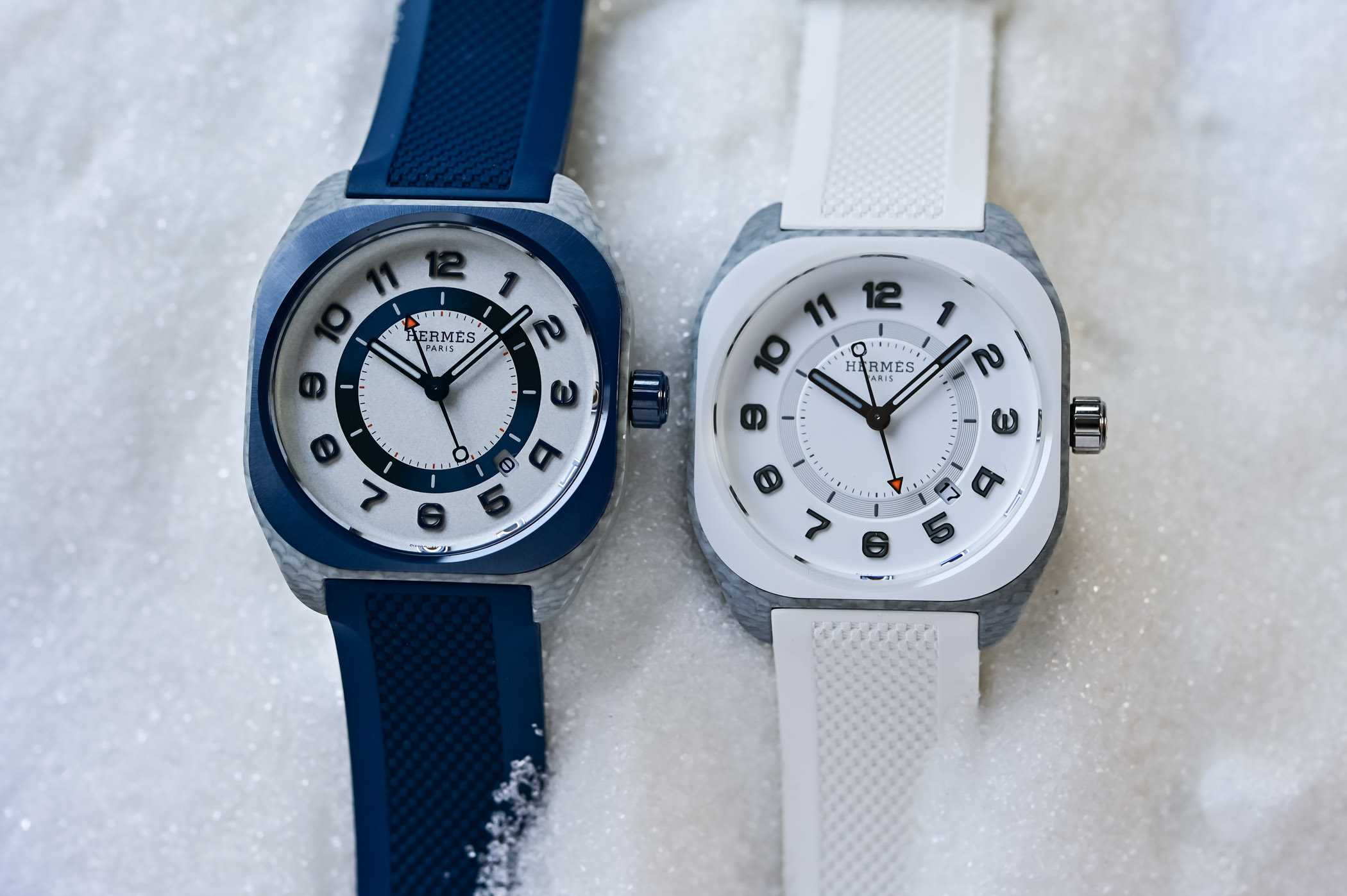
Hermès was founded in Paris in 1837 by Thierry Hermès as a saddlery and harness-maker serving European nobility. Watchmaking entered the picture only in 1912, when Émile Hermès - the founder's grandson - had a saddle-maker in Paris create a wristband that would hold an actual pocket watch on a rider's wrist. By 1928 Hermès was selling watches made by external Swiss suppliers with Hermès-signed dials, and in 1978 the house established La Montre Hermès as a dedicated Swiss watch subsidiary in Bienne and commissioned its in-house design department under Henri d'Origny to create the first watch Hermès could call its own: the Arceau, an asymmetric round-cased watch with angled stirrup-style lugs evoking the house's equestrian heritage.
The modern watchmaking identity crystallised in 2006 when Hermès acquired a 25% stake in Vaucher Manufacture Fleurier, giving La Montre Hermès direct access to one of the most respected independent movement-makers in Switzerland (Vaucher also supplies Parmigiani, Richard Mille, and others). Vaucher-built calibres, finished and signed to Hermès specifications, have powered the house's upper-end references since - including the in-house H1837 automatic and the higher-end H1837/2 and H1912 calibres. The Slim d'Hermès collection (2015) with its custom Philippe Apeloig typography has become the flagship of this era.
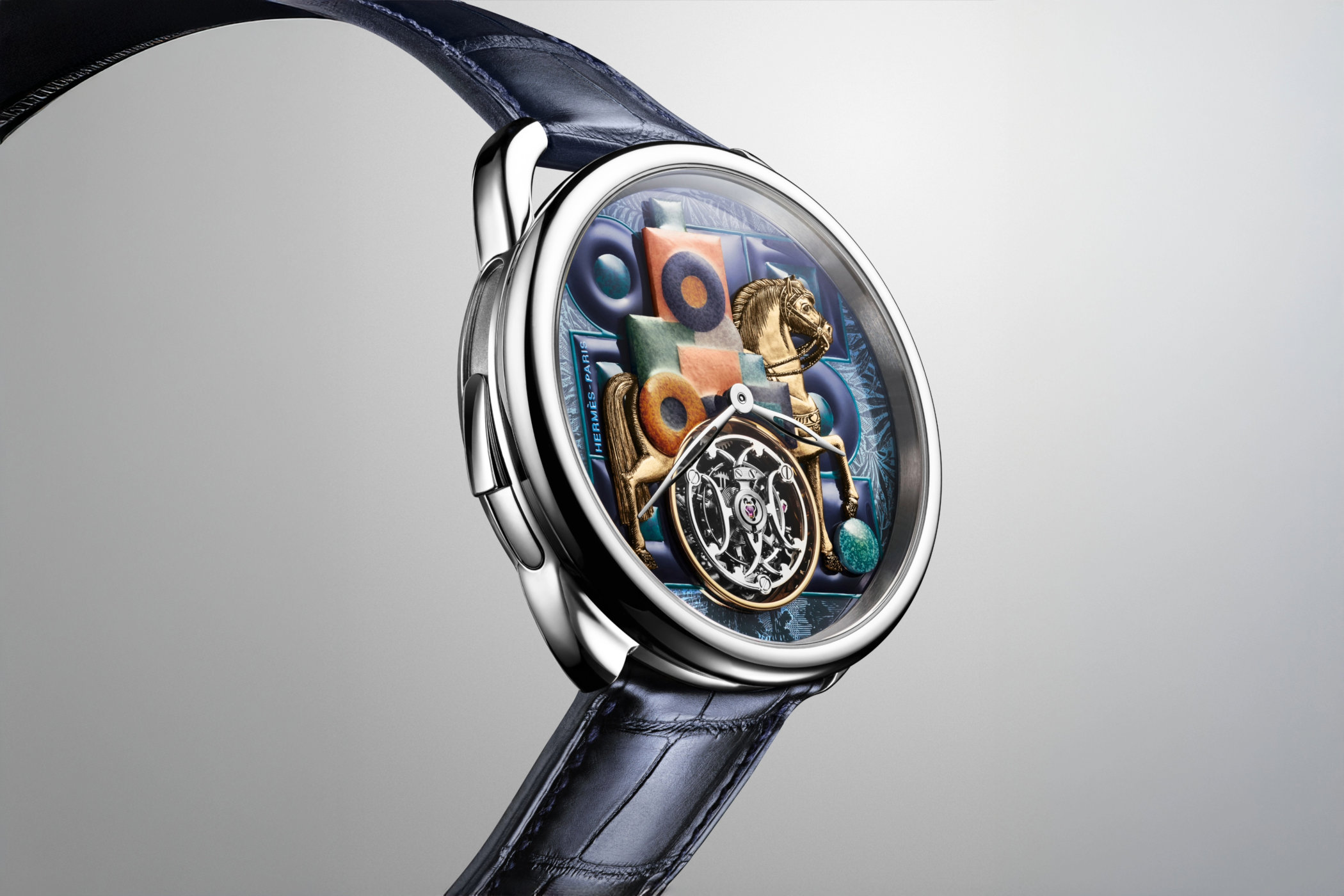
Hermès's distinctive contribution to contemporary watchmaking has been its sense of playfulness. The Arceau Le Temps Suspendu (2011) allows the wearer to stop the hands on demand via a pusher - not to stop the movement (which continues internally), but to let the wearer "take time out" from the clock; releasing the pusher sends the hands back to the correct position. Other examples include the Arceau L'Heure de la Lune (2019) with twin mother-of-pearl moon discs, and the Cut collection (2024) with an unusual octagonal-into-circle case geometry. Retail spans ~CHF 3,500 (steel Arceau quartz) through CHF 100,000+ for Les Arts Traditionnels enamel-dial pieces. La Montre Hermès produces roughly 80,000 watches per year - significant volume, but a small portion of the group's revenue, reflecting watchmaking's position as a refined extension of the broader Hermès universe.





Comments
No comments yet, be the first to weigh in.