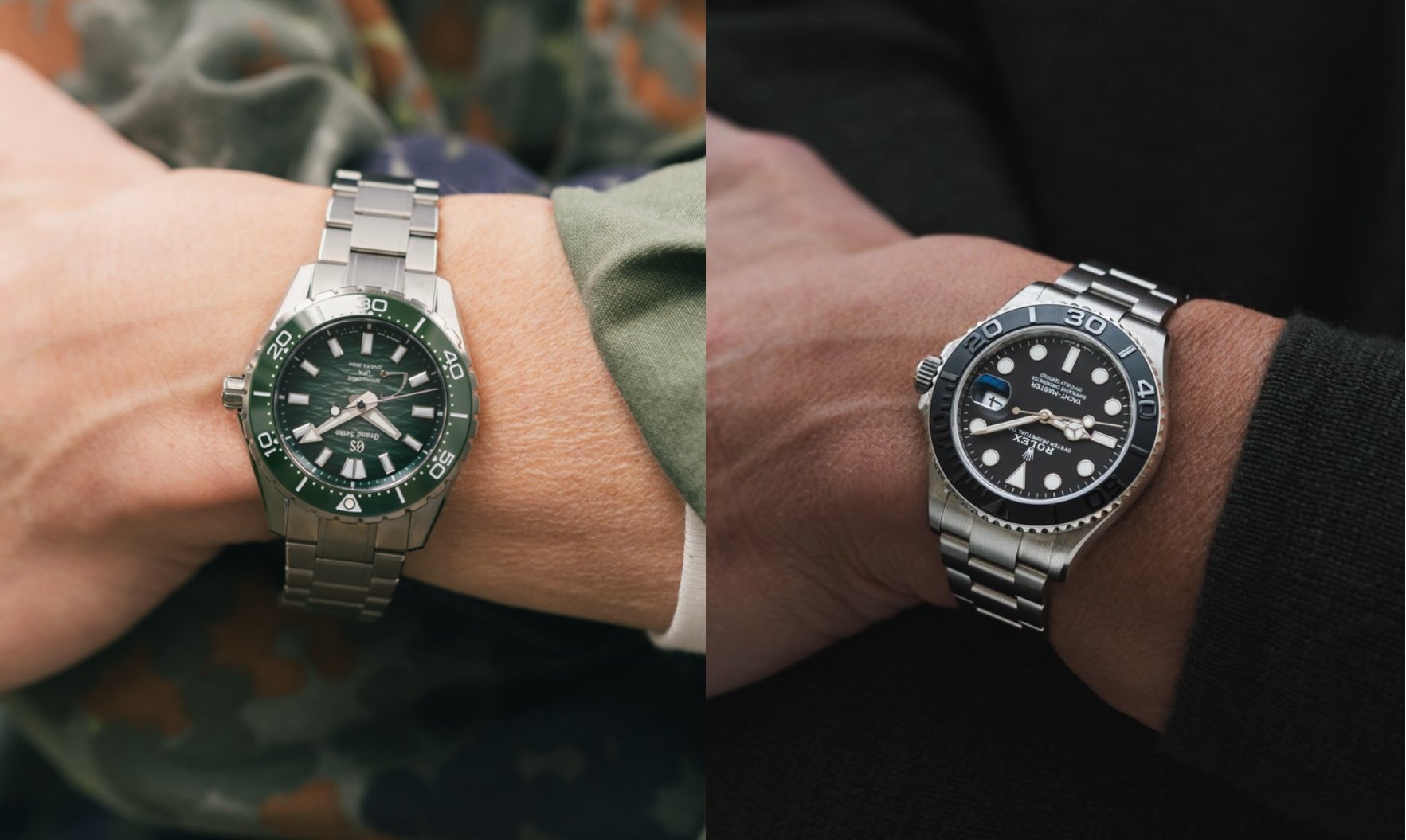
The Yacht-Master arrived in 1992 as Rolex's first new sport-watch line in nearly two decades. The original Ref. 16628 was solid 18k yellow gold with a knurled bidirectional rotating bezel, sitting between the tool-watch Submariner and the dress-luxury Datejust. The bidirectional bezel was the line's defining feature: marked 0-60 like a Submariner but free to rotate in either direction for course-keeping calculations on a sailboat.
Rolex expanded the Yacht-Master line aggressively across the 1990s and 2000s. The steel + platinum Ref. 16622 (1999) introduced the Rolesium material designation: 904L steel case and bracelet with platinum bezel, dial, and crown. The platinum bezel and contrasting brushed-steel case became the line's most-recognised configuration. Three case sizes followed: 35mm, 40mm, and (briefly) 29mm, before the line settled on 37mm and 40mm as the standard sizes.
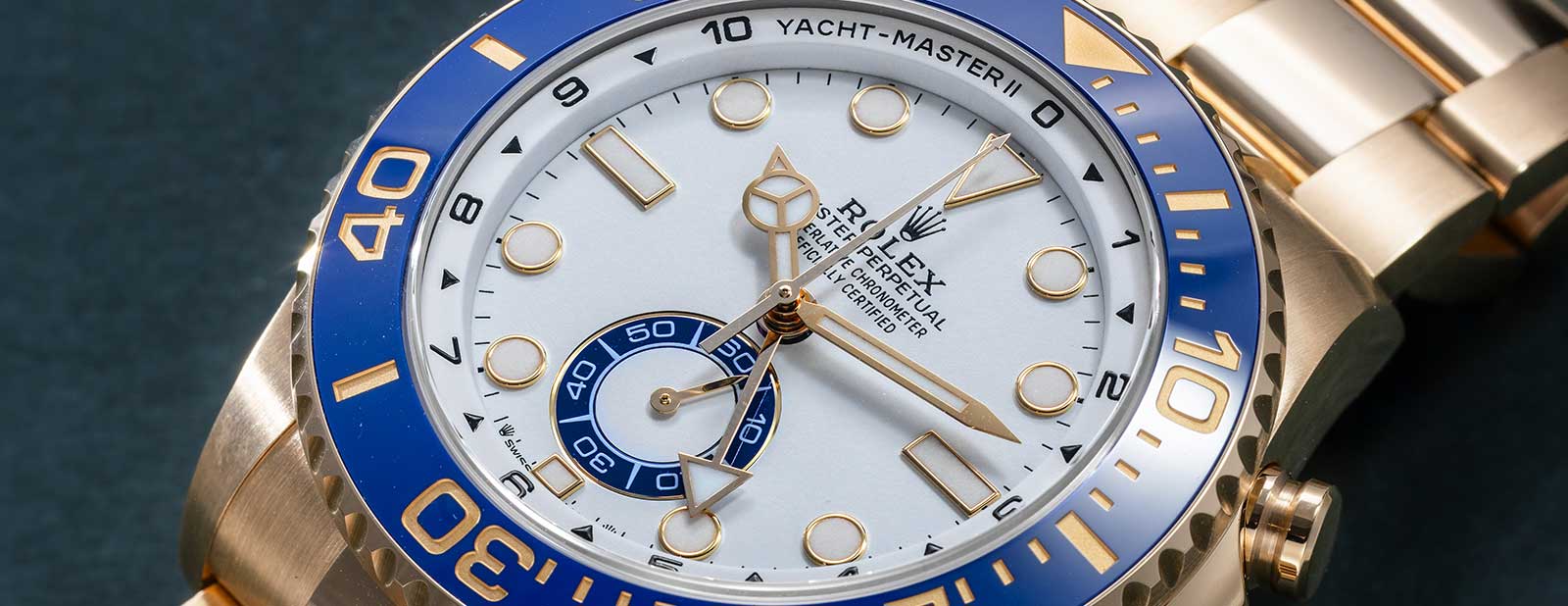
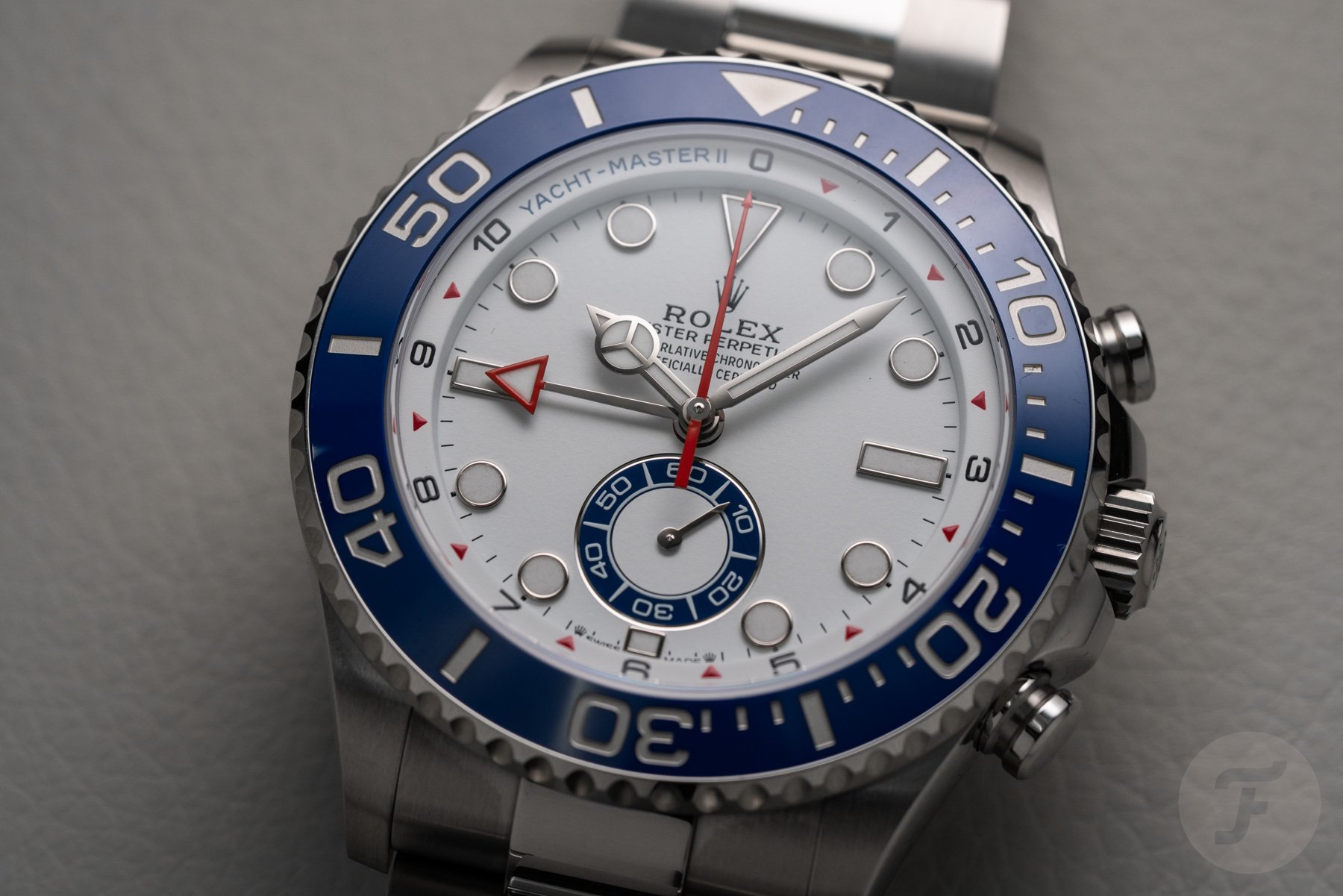
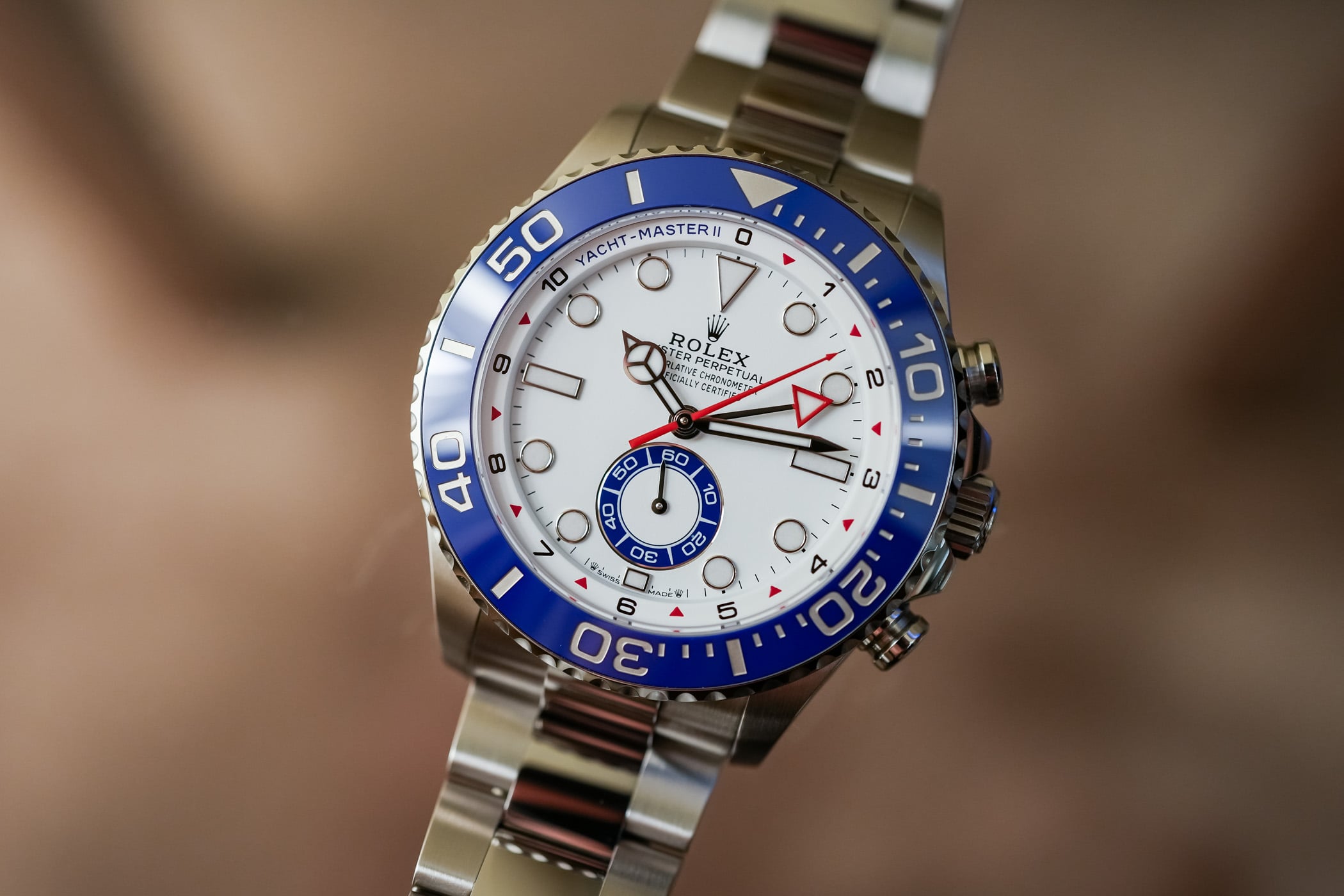
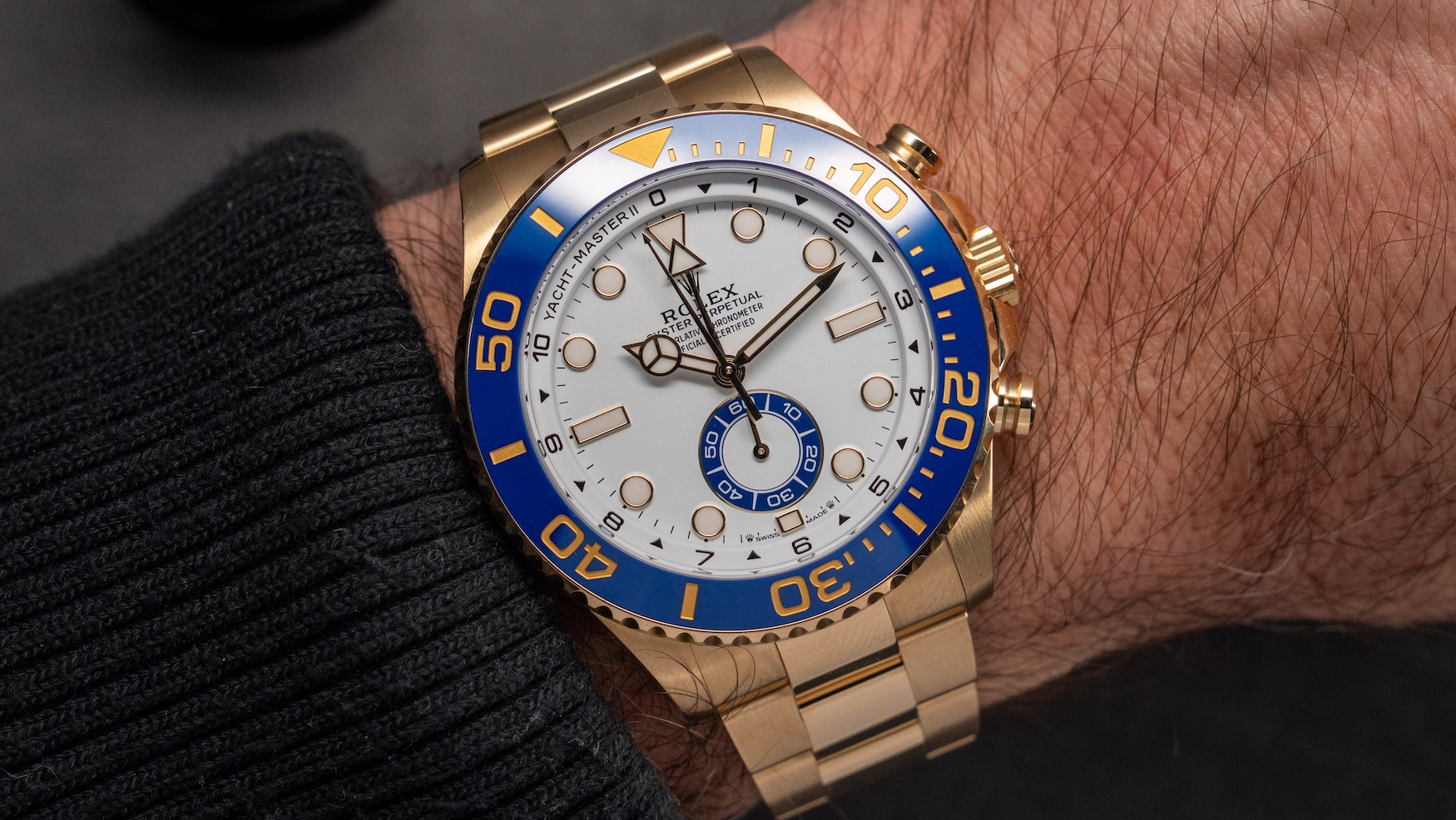
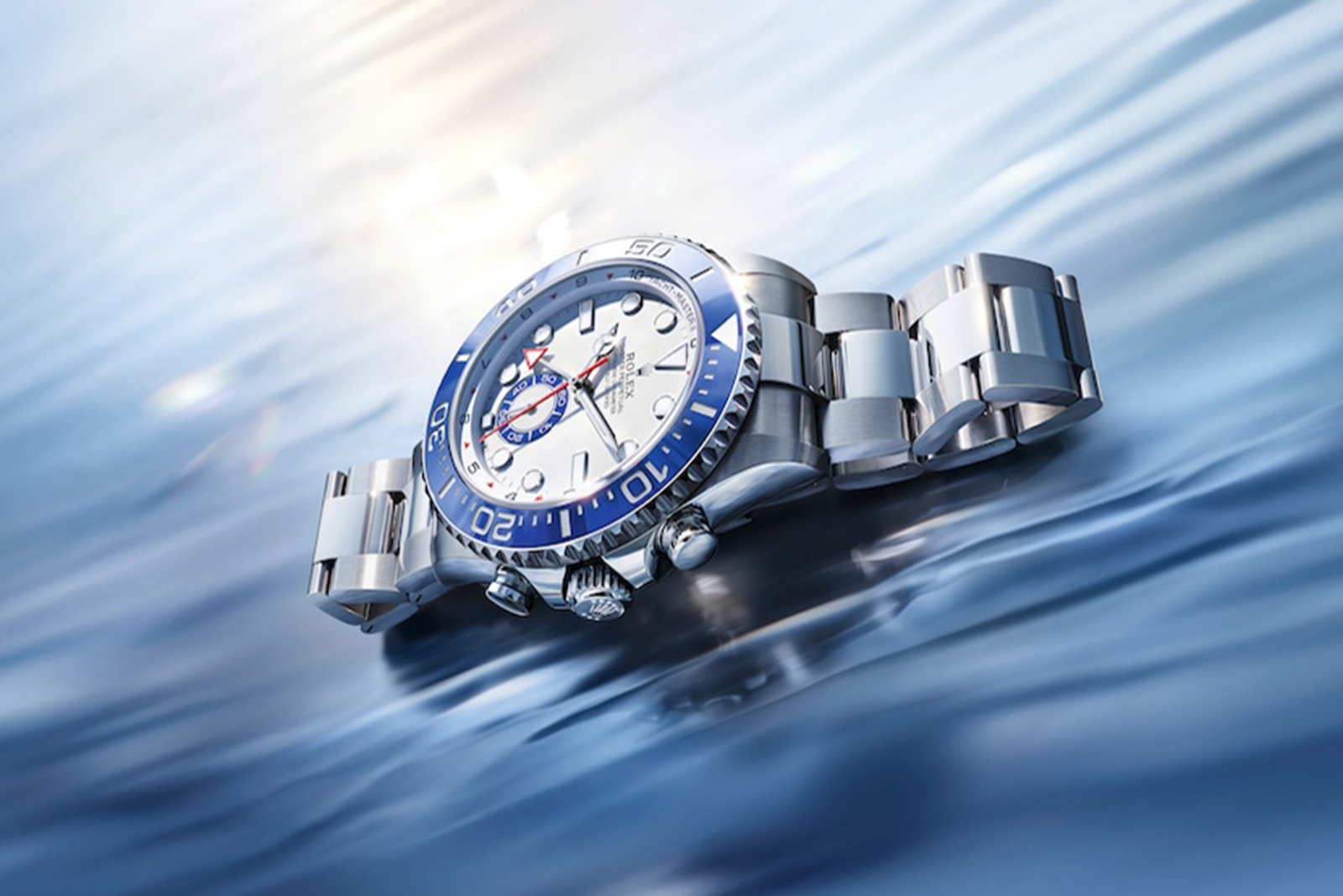
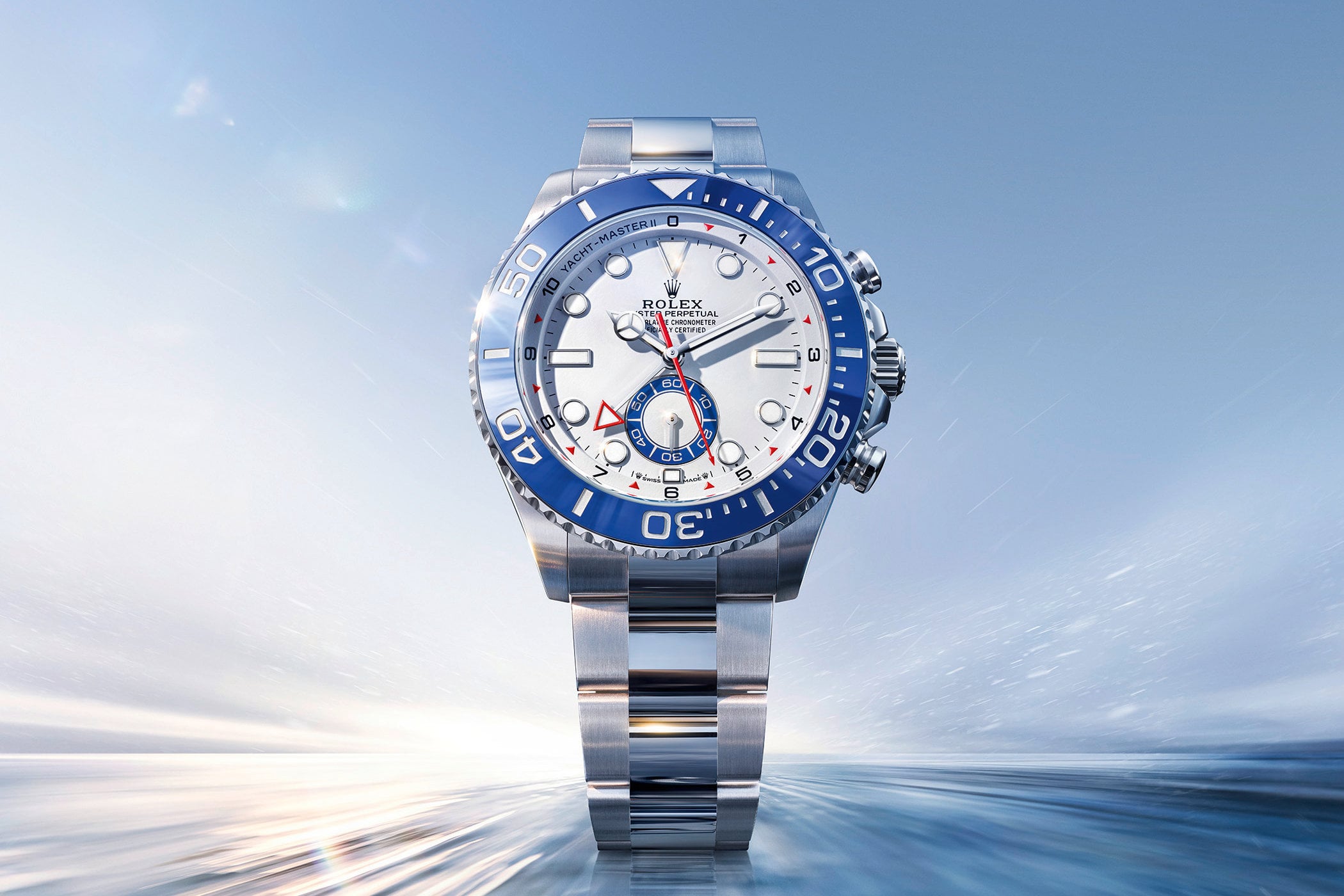
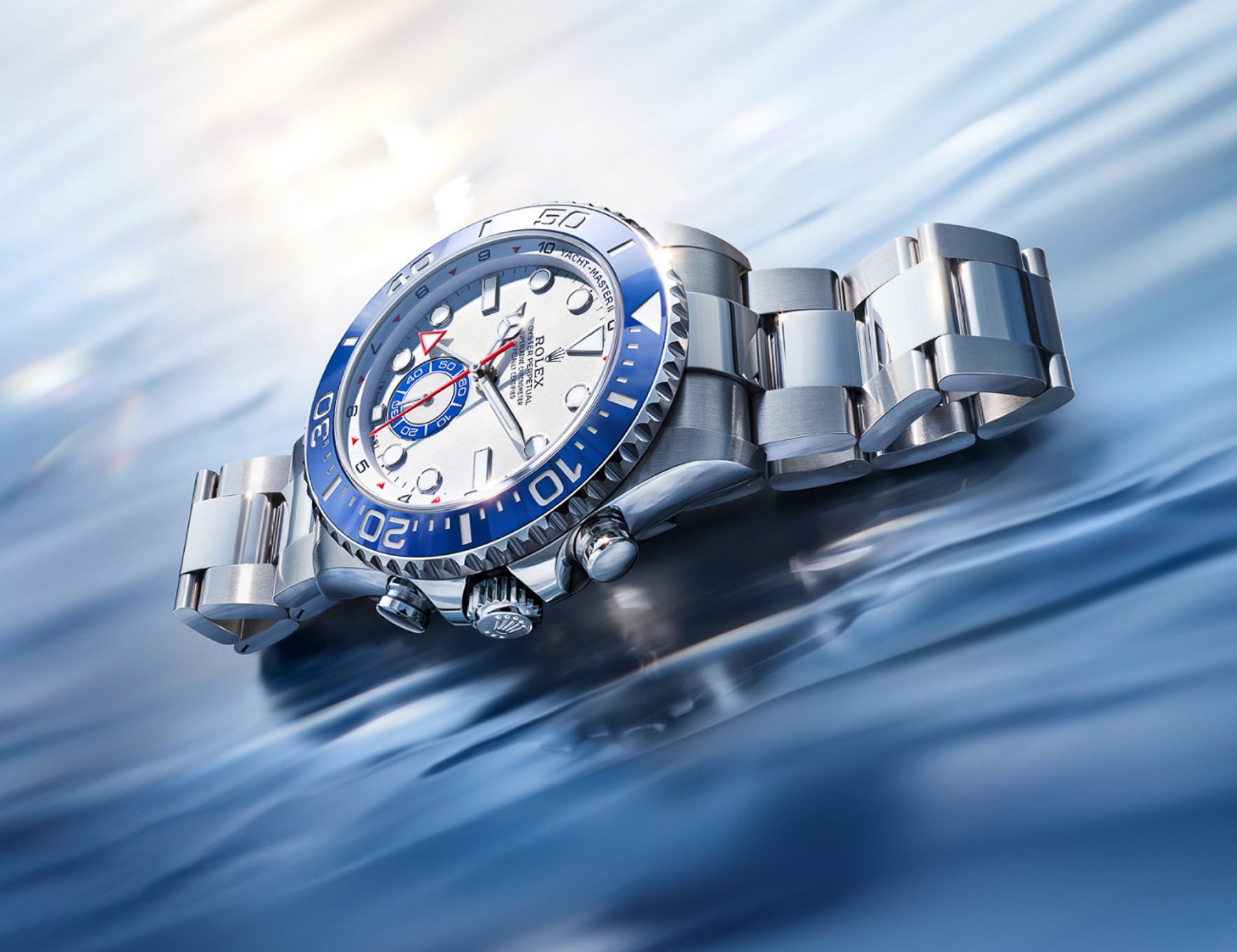
The Yacht-Master II Ref. 116681 arrived in 2007 with a regatta countdown chronograph: a programmable 1-10-minute countdown timer used by sailing crews approaching the start line. 44mm case, in-house Cal. 4161 chronograph, and the Ring Command bezel that interacts with the movement to set the countdown. The Yacht-Master II remains a niche reference; the standard Yacht-Master is the volume product.
Modern Yacht-Master references include the Ref. 226658 in solid 18k yellow gold (42mm, Oysterflex strap, 2019), the Ref. 226659 in solid 18k white gold (42mm, ceramic bezel, 2019), and the breakthrough Ref. 226627 in RLX titanium launched at Watches and Wonders 2023, the first-ever titanium Rolex production reference. Cal. 3235 across all 42mm references, 70-hour reserve, Superlative Chronometer (-2/+2 sec/day). Retail spans ~€13,500 (RLX titanium) to ~€55,000 (solid white gold).



Comments
No comments yet, be the first to weigh in.