Jun 28, 2020
The Awesome Door Handle Built Like a Split-Seconds Mechanism
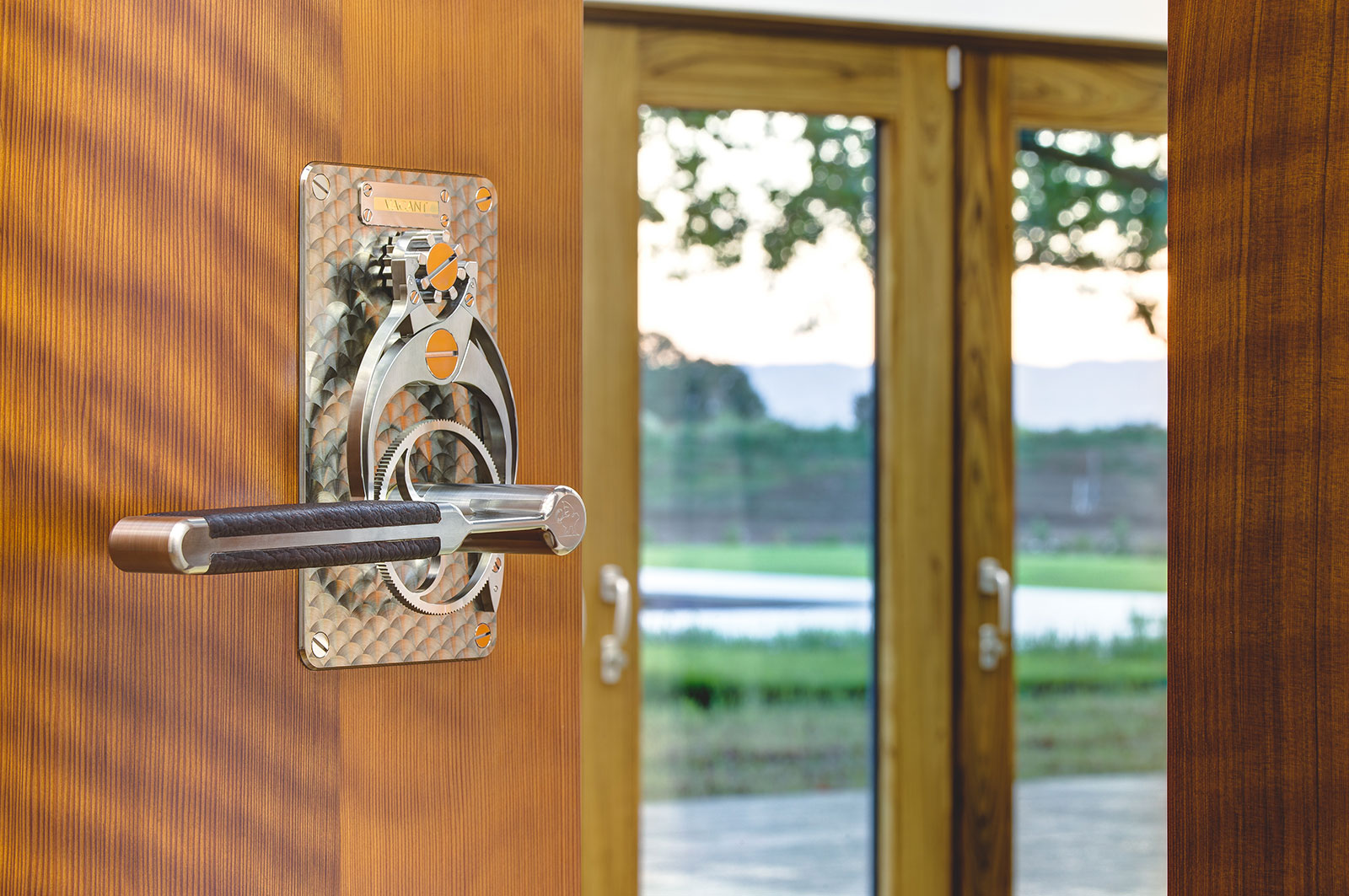
Established by a robotics entrepreneur, Sick Toiz specialises in, well, “sick toys” – exceptional objects with a mechanical bent that have been produced with high-end methods and then finished by hand. Amongst its most extraordinary, and preposterous, creations is the Rattrapante Passage Lock, a door lock and handle that functions like a bona fide split-seconds mechanism. Initial thoughts The Rattrapante Passage Lock is an ordinarily trivial item – it is in essence a door knob – executed to an excruciatingly high standard. Clearly catered for a niche clientele who have an innate appreciation of engineering, finishing, and machining, the Passage Lock costs US$63,500. It is ridiculous, but also incredible. Sick Toiz founder Tyler Schilling obviously spared no expense in building an ultra-complex door handle, either in design, manufacturing, or finishing. The components, for instance, are made on a five-axis CNC machine, instead of a four-axis CNC machine, which would have simpler and probably yielded a barely discernible difference. Even the spokes of the split-seconds wheel have bevelled edges. Something like this is only possible when conceived by someone who genuinely appreciates such things and importantly, someone who can afford to back such a project as a hobby. An engineer’s eye The man behind Sick Toiz, Tyler Schilling, is a nerd in the best sense of the word. Having grown up with a father who was mechanically inclined but a doctor by profession, Mr Schil...
 Time+Tide