Richard Mille Introduces the RM 65-01 Automatic Split-Seconds Chronograph
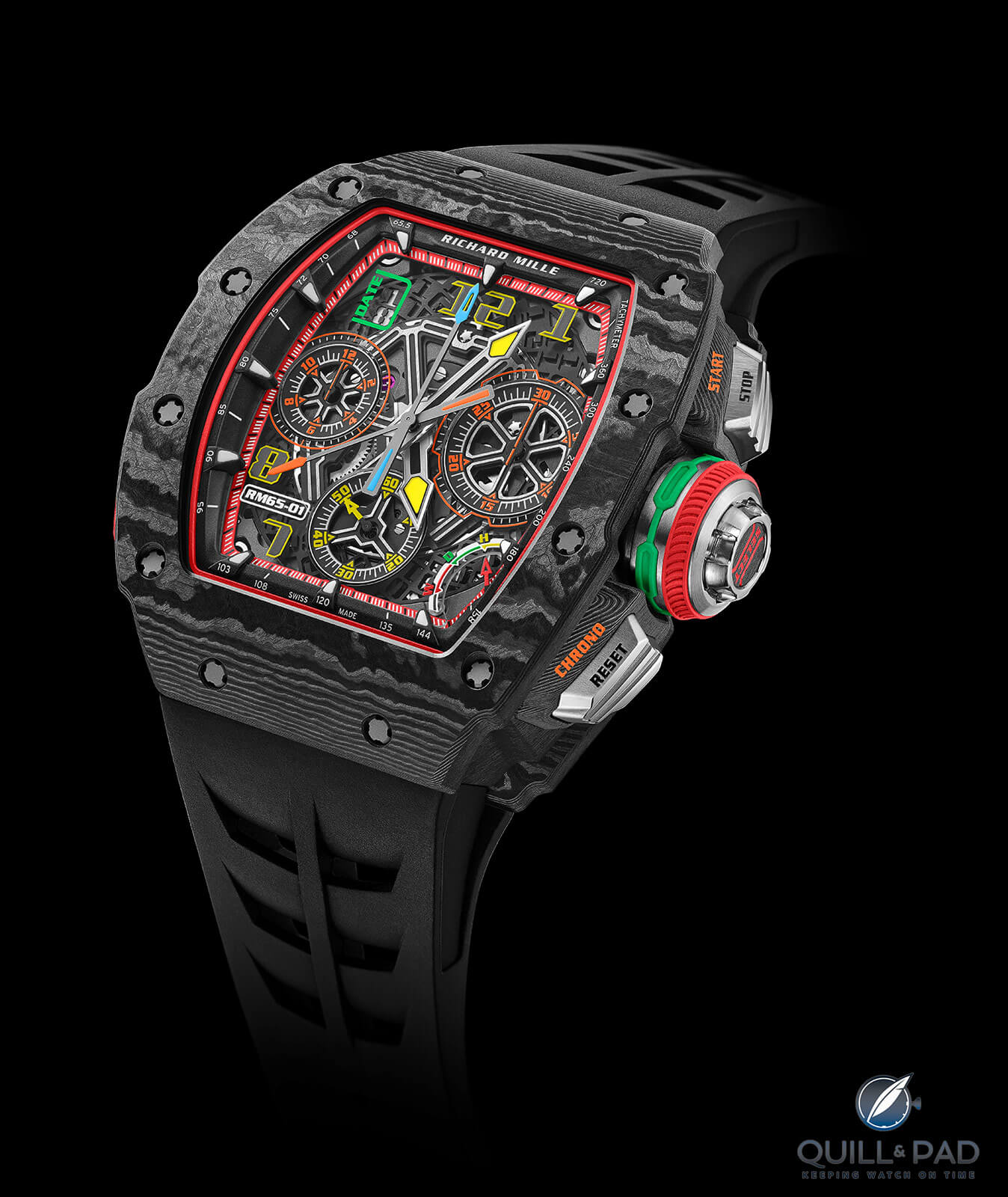
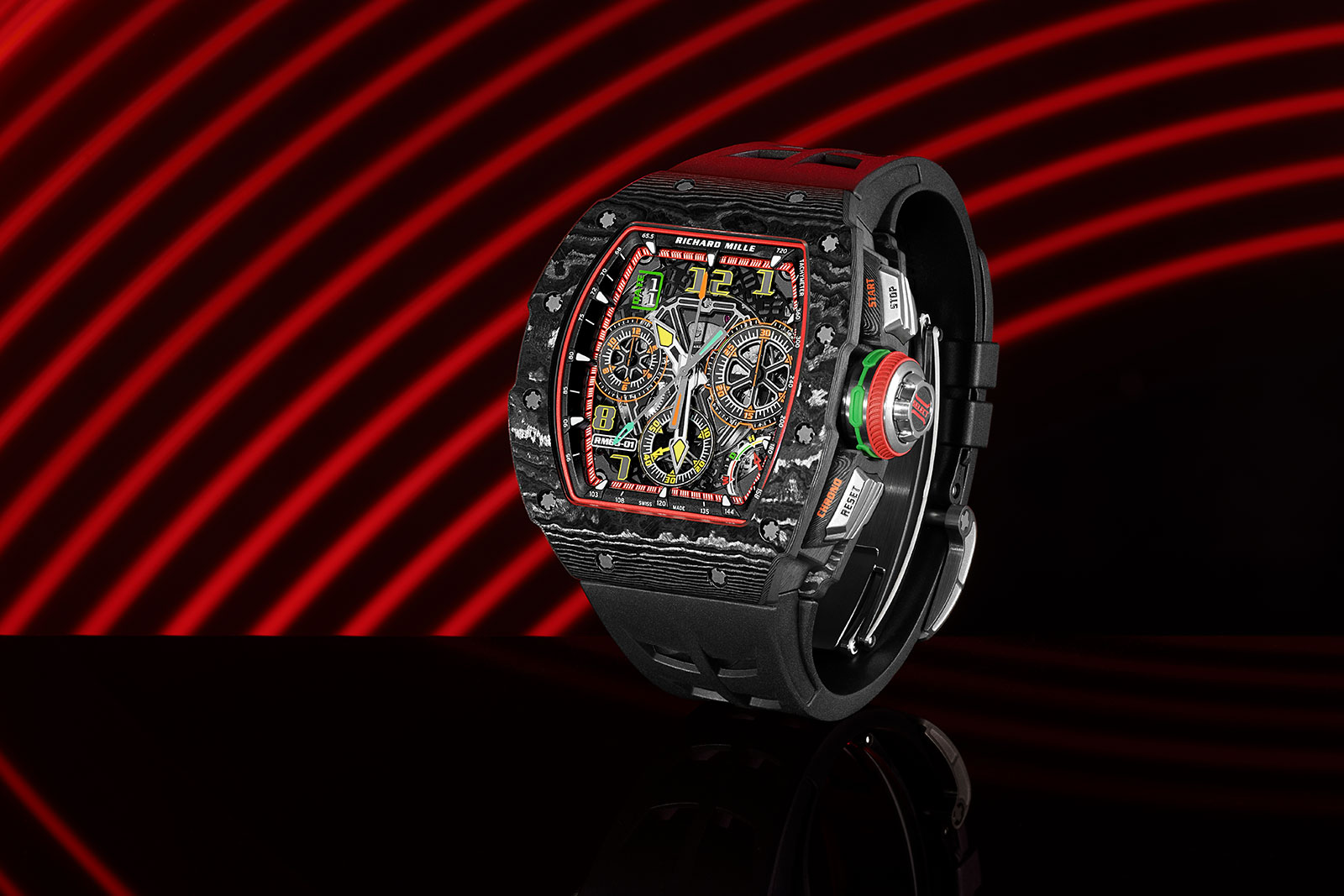
Hot on the heels of the RM 72-01 powered by the brand’s first in-house chronograph movement, Richard Mille has just introduced the RM 65-01 Automatic Split-Seconds Chronograph, continuing its historical focus on ultra high-end chronographs, which began with RM 004 of 2003. Not only is the RM 65-01 the first self-winding split-seconds chronograph from Richard Mille, it’ll also be the brand’s first serially produced watch with the complication, joining watches like the RM 11 as a mainstay of the line up. Initial thoughts Highly-complex chronographs are embedded in Richard Mille’s DNA – the company’s first chronograph was RM 004, which was a hand-wind, split-seconds powered by a Renaud & Papi movement. And in the space of a year, Richard Mille has unveiled two all-new chronographs, starting with the RM 72-01, and now the RM 65-01. RM 65-01 in Carbon NTPT The RM 65-01 is typically Richard Mille in style and materials, exuding sportiness with its techno-industrial movement finish, skeletonised dial, and multicoloured indicators. On any other watch, the colours would look like the designers are trying too hard, but in the RM 65-01, they just work. The movement, however, is notable for being a technically accomplished calibre produced by Vaucher, the respect movement specialist that’s a sister company of Parmigiani. Historically Vaucher has only supplied movements for the brand’s entry-level timepieces, while the more complicated calibres were made by Renaud ...
 Quill & Pad