The Observatory Chronometers that Timed the Tour de France
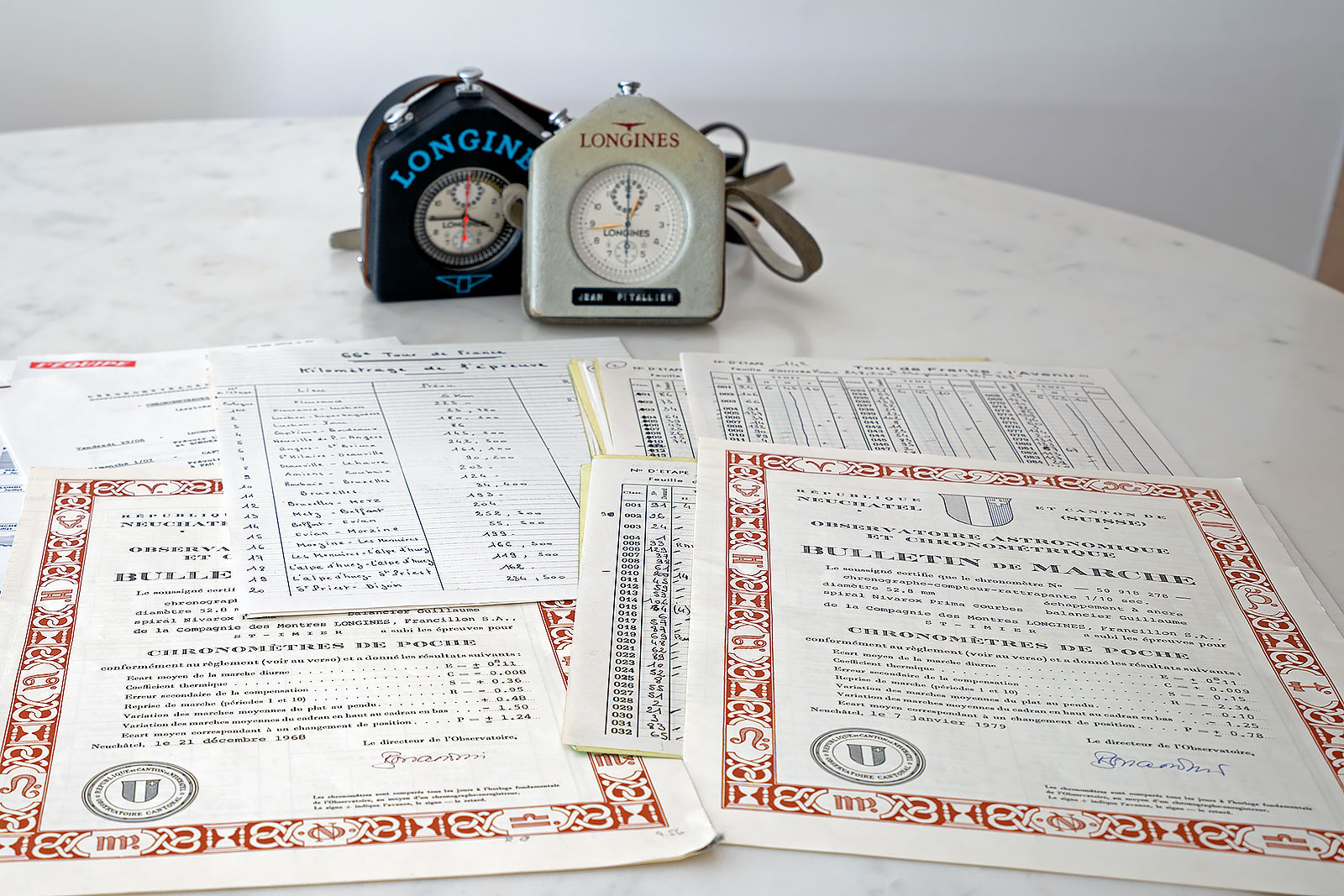
Watches once owned by prominent personalities are captivating. Paul Newman’s “Paul Newman” Daytona, the Rolex “Bao Dai”, Buzz Aldrin’s Speedmaster Moonwatch, the Henry Graves Supercomplication, and even J. Pierpont Morgan’s lost pocket watch, are amongst most sought after timepieces in the world. In fact, a good number of the most expensive watches ever sold at auction have notable provenance, which turns a mere watch into a historical artefact. Probably the most important timekeepers in cycling, these are a pair of Longines split-seconds stop watches – refs. 7411 and 8350 respectively – that were used by Jean Pitallier, the former president of the French Cycling Federation, to time the Tour de France in the fading glory days of mechanical sports timing, just before quartz stopwatches took over. In fact, the pair of stopwatches are not merely chronographs, but also observatory certified chronometers. Watchmaking once represented the cutting edge research of mechanical engineering. Observatory time trials at Neuchatel, Geneva or Kew were rigorous scientific affairs, with movements Peseux 260 and Zenith 135 competing to be the most accurate movement in the world. But such movements were three-hand, time-only. Aside from tourbillon movements, very few complicated calibres were submitted to timing contests. Mr Pitallier’s pair of Longines were both certified by the Neuchatel observatory. The swan song of competitive timekeeping In modern day watch collectin...
 Time+Tide