Hodinkee
Just Because: The Watches Of The Year Of The Horse
A look at some horse-themed special editions as we gallop into the Lunar New Year.
18,912 articles · 2,715 videos found · page 162 of 721
Hodinkee
A look at some horse-themed special editions as we gallop into the Lunar New Year.
Monochrome
There’s absolutely no stopping the phenomenal rise and popularity of natural stone dials! Surpassing the typical short lifespan of a trend, the natural stone dial that surged in popularity in the 1960s and 1970s is here to stay. From micro-brands to mainstream giants and everything in between, it seems like everyone has been captivated by […]
Hodinkee
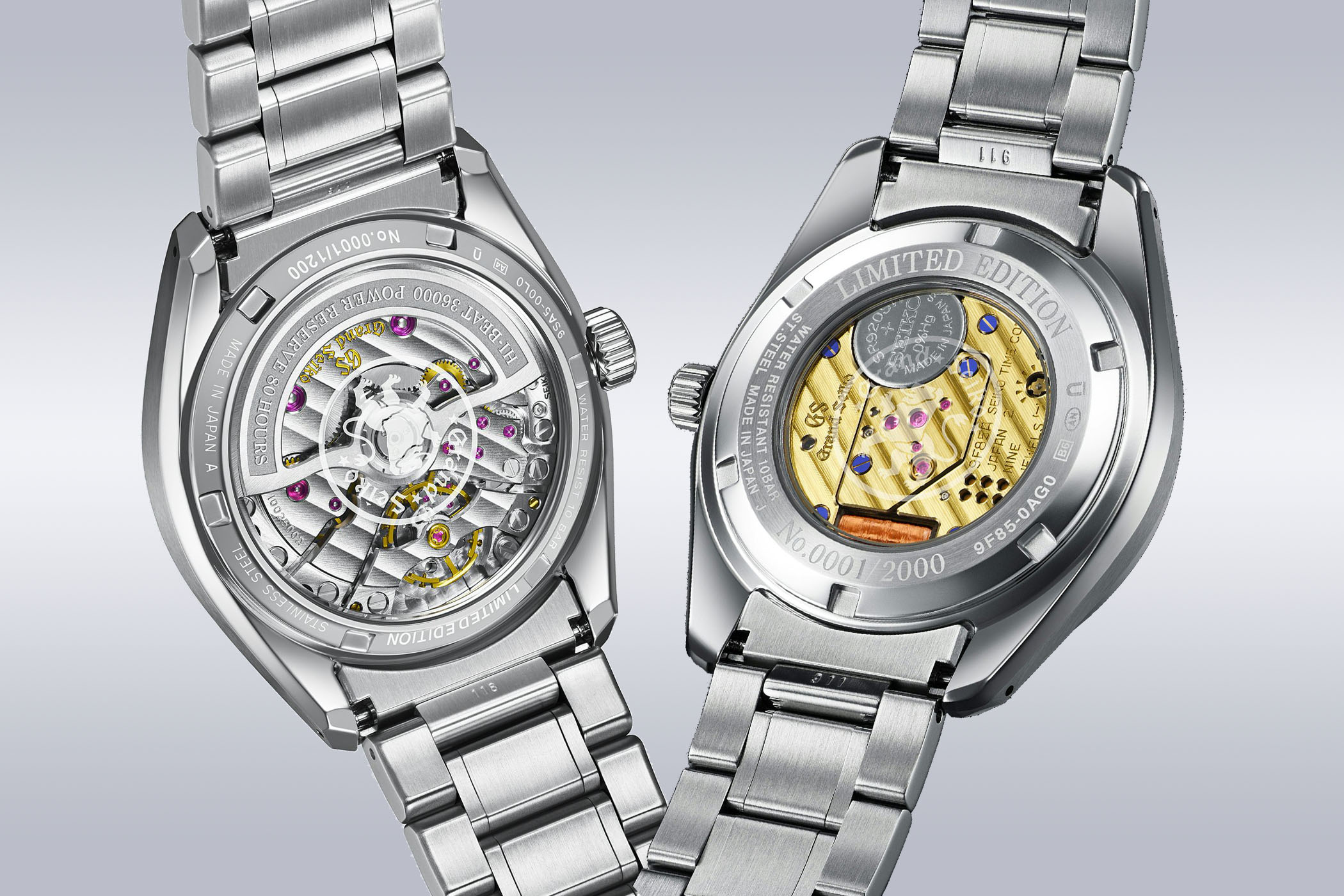
A brand new movement supports a downsized spin on a classic GS design.
Worn & Wound
There is nothing more effective than the swap of a digit on the calendar to send the whole world into self-reflection mode. As we collectively adjust to a six that replaced a five, many of us have the best intention of making changes that stick around long enough to see that six turn into a seven. Personally, I find there is no better exercise to guide new resolutions than to take stock of the old ones. Non-watch related, dry January turned into dry 2025, and I’m down two links (normal people measure progress in pounds, but bracelet size has become my preferred watch nerd metric). I resumed progress on that half-finished MBA that’s been hanging over my head, and I spent more time playing board games with my kids than the year before. Watch-specific, after five years of constant buying and selling, I decided to go an entire year without purchasing any new watches. Even though it was a lofty goal and one that collectors seeking change often fantasize about without following through, I actually managed to spend 2025 without a substantial #NWA (new watch announcement) post on Instagram. In full transparency, I did pick up a couple of cheap vintage quartz pieces. But us watch enthusiasts have clever ways of rationalizing why certain purchases don’t count (I think we can all agree G-SHOCKs fall into this bucket), and I’m pretending like those pickups don’t exist. After all, neither were “new” and one has already found a new home. During this prolonged period of...
Worn & Wound
For the third year in a row, the Worn & Wound team will be heading to London in March for British Watchmakers’ Day. This event, in a very short period of time, has become one of the premier events on the watch enthusiast community’s calendar. A total of 48 UK based brands will be exhibiting at this year’s event, and just like last year we expect there will be collector gatherings and meetups both planned and more informal happening throughout the weekend across London. This, of course, is just a thing that happens when watch collectors converge as they will on March 7. As has been the case over the last two years, a big part of the story of British Watchmakers’ Day is likely to be the limited edition releases presented by brands and made available for sale on the day of the event. This year, 26 brands are expected to launch limited editions that you can purchase and take home with you as a memento of the big day. For the first time, the event organizers have stipulated that any limited edition launched on the day of the show be made in an edition of not more than 50, a move to protect the exclusivity of these releases to show attendees and to ensure that all of the LEs collectively amount to something genuinely limited in scope. We will of course have coverage on the ground in London when the show gets underway, including live photos and social media coverage of as many limited editions as we can get on our wrists. But for now, here are five British Watchmakers’ ...
Video
Teddy Baldassarre
If there is one element of watch ownership that speaks to the human psyche more than almost any other, it's the notion that what you wear is unique to you. And it's true, there simply isn't another watch out there with your dings in the case or your aged strap. No material creates such allure through the aging process as bronze. And watch designers have known this for some time. With wear, your bronze watch case will evolve far quicker and more obviously than any steel case (swimming in salt water really speeds things up!). Bronze is a copper alloy generally containing around 12% tin. Its discovery dates back several millennium BC. Before giving way to cheaper iron and stronger steel, the Bronze Age lasted almost three millennia. Bronze possesses a number of advantageous properties. And the versatility of its application has continued its use right up to modern day. One of those properties is its resistance to salt water corrosion. Typically, when exposed, bronze only oxidizes at the surface, forming a protective layer over the underlying metal. In the past, this made bronze the material of choice for boat and ship fittings. (Prior to the wide employment of stainless steel.) It also featured in early diving equipment. More recently, it has spurred a growing trend of tool watches. Not all bronze watches are created equal though. That’s why we’ve put together this hand-picked selection of some of, what we feel are, the best bronze watches for 2026 - enjoy! [toc-section h...
Revolution
Teddy Baldassarre
Inside the cockpit of a Formula 1 car, temperatures can climb beyond 120º F and braking forces routinely reach 5 Gs. A driver’s heart rate can sit north of 170 bpm for nearly two hours. In a sport where thousandths of a second determine grid positions, F1 drivers operate in a world defined by extreme speed, pressure, and precision. In such environments, a watch worn by a race car driver has to be about far more than a sponsorship logo. Motorsport places unique demands on a timepiece, turning it into a rolling stress test of vibration, G-forces, heat, and shock, so drivers must choose watches that are capable of surviving all these conditions. And while Formula 1 is awash in watch branding, splashed across helmets, race suits, pit walls, and podium backdrops, the most authentic connection between motorsport and watchmaking is ultimately found on the wrists of the drivers themselves. Let’s jump into 10 of the best watches worn by F1 drivers. [toc-section heading="Isack Hadjar: TAG Heuer Formula 1 Automatic x Oracle Red Bull Racing Chronograph"] Algerian-French racing driver Isack Hadjar is a standout in the junior formulas and was the 19th driver promoted to F1 through Red Bull’s notoriously selective academy. Now the second driver on the Red Bulls team (after a stint with the Visa Cash App Racing Bulls last season), Isack wears a TAG Heuer Formula 1 Chronograph to accompany him around the track. His watch is a special edition measuring 44mm in robust but lightweight ...
Hodinkee
Ahead of the new F1 season, IWC announces its first collaboration with an F1 driver.
Worn & Wound
Recently, over the course of a brutally cold weekend here in Concord, NH, I rewatched last year’s F1, the Brad Pitt vehicle that is essentially a very long advertisement for the sport for which it is named. It’s a fun movie, and even though it was made for giant screens and deafening surround sound systems, it played just fine at home as a fairly standard sports movie. I had been wanting to give the film another look as it was recently nominated for Best Picture at the Academy Awards (a bit of a surprise to most observers) and figured it was time to see how it stood up to a repeat viewing. The answer is that it’s still really enjoyable popcorn fare, but my one real reservation is in the almost nonstop product placement. IWC watches factor heavily into the texture of the film itself. If you look closely, you can see a watch or the IWC logo in more scenes than not. It speaks to the importance of the relationship between IWC and F1, so I was not at all surprised when I learned that IWC’s first big novelty release of the year would be a pair of watches representing a collaboration between the brand and F1 driver George Russell, who races for the Mercedes-AMG PETRONAS team, which IWC has had a longstanding relationship with. Unlike previous watches IWC has released as part of their partnership with Mercedes-AMG PETRONAS, this one is tied to a specific driver. Rather than the teal color highlighted in those earlier watches, these feature a more traditional blue hue, ...
Video
Teddy Baldassarre
As we all well know by now, the watch-collecting hobby can get hyper-specific. Today, I am wading into the weeds of one of the most highly specialized sub-genres of the Seiko collecting universe, that of Japanese Domestic Market pieces from the brand, which I will be referring to here on out as JDM Seikos. Down below, I’m going to walk you through, first and foremost, what the term JDM Seiko actually means, then get into the most universally coveted models, and similar watches that you can more easily find in the brand’s international repertoire. [toc-section heading="JDM Seikos vs. “Japanese-Made”Seikos"] Image: Provenance Watches Given that Seiko is one of Japan’s most significant and historic watchmakers, you might be asking, as you find yourself here in this section, “Seiko is a Japanese brand, so aren’t all Seikos Japanese-Made?” As with most things, the answer is not as straightforward as the question. If we were to base our answer on the framework dictated by the U.S. Trade Commission standards, any watch that has a movement assembled in Japan is good enough to be considered Japanese-made. This casts a pretty wide net. Japan, on the other hand, follows the more rigorous parameters set by the APEC (Asia-Pacific Economic Cooperation Forum). Based on APEC standards, a watch movement and dial components must be assembled in Japan to rightfully claim “Japanese Made” status. Across its catalog, if Seiko can rightly claim the “Japanese Made” label ...
Worn & Wound
Few other watchmakers enjoyed as much success and cachet as Heuer, especially during the fervent 1960s and 1970s. Not only had it launched one of the world’s first automatic chronographs, but it pushed the envelope on modern design with midcentury-cool chronographs like the uniquely square Monaco. Heuer was riding high on the glamor of Grand Prix: the Heuer shield was as indelible to the backdrops of Monza and Le Mans as Ferrari, Porsche, and McLaren themselves as the official timekeeper of Formula One. But, inevitably, the quartz revolution came for Heuer. Jack Heuer was the third-generation CEO of the company that bore his name, and he had been a savvy marketer, personally hawking chronographs to drivers like Jo Siffert and Nikki Lauda. By the 1980s, however, he found himself backed into a corner, and in 1982, he was forced to sell the company to Piaget and Lemania-a humiliating low point in his life, as he recounted in his autobiography. Yet, before he departed, he gave Heuer one saving grace. In 1979, he commissioned Heuer’s first dive watch, the Professional Series. At a trade show Jack had overheard a brief conversation about the unreliability of existing dive watches, and he aimed to emulate Rolex’s success with the Submariner and Sea-Dweller. (Incidentally, Rolex owned half of Heuer’s stock market shares, and nearly took over the company around this time.) Photo by Blake Rong Heuer had spent the decade building an electronic timing division, which b...
Teddy Baldassarre
If you'd like to be considered for the next installment of our Real Collectors series, fill out our form here.
Teddy Baldassarre
Fundamentally, mechanical and quartz movements do the same thing: they both tell thetime. But the ways in which they both do it couldn’t be more different. Not to get into acomparison guide here, but in a nutshell: a mechanical watch is powered by a mainspringthat’s either wound by hand or automatically through wrist movement. Energy is releasedthrough a complex system of gears, an escapement, and a balance wheel that beats steadily back and forth. There’s no battery, just centuries-old engineering refined to an art form. These watches aren’t the most accurate, but accuracy isn’t really the point. Craftsmanship, tradition, and the emotional connection are. Quartz watches, on the other hand, are powered by a battery and use an electrical current to make a quartz crystal vibrate at 32,768 times per second. That vibration is incredibly stable, which is why quartz watches are vastly more accurate and require far less maintenance. They’re practical, reliable, and often more durable for everyday use, as well as being notably more affordable. Neither system is inherently “better,” though. Mechanical watches speak to passion and heritage, while quartz prioritizes precision and convenience. Ultimately, it’s less about the movement inside and more about what you want your watch to represent on your wrist. [toc-section heading="Next-Level Accuracy"] Some watches measure accuracy in seconds per day, others by seconds per month. Butthere also exists a small group of t...
Monochrome
The first mechanical clocks were actually bell towers without dials or hands. Bells would simply ring to mark the hours or special events, starting in the late 13th century in Europe (Italy and Germany to be specific). The name “clock” even comes from the Latin word for bell, clocca. Among the most famous of these […]
Video
Monochrome
There’s no denying that we’re currently facing a global decline in the luxury goods demand, with sales affected by uncertainties in China, the undeniable effect of US tariffs on exports to the region and several conflicts around the world. Last year, despite this challenging environment, powerhouse LVMH, the world’s largest luxury conglomerate, reported a moderate […]
Two Broke Watch Snobs
Explore hands-on dive watch testing and identify which models survive daily use. Get clear insights into durability, comfort, and real ownership trade-offs.
Monochrome
With temperatures dropping well below zero, and our small country of the Netherlands struggling with a thick layer of snow this past week, you can always rely on us to bring the heat. And it’s not only in our petite habitat that snow, ice and cold weather have an impact on daily life, but in […]
Monochrome
At the dawn of mechanical time, hands weren’t a thing as bells would chime to signal an event or relay the hours. These giant mechanical bell towers were seen in Europe throughout the Middle Ages, with examples like the Salisbury Cathedral clock in the 14th century still functioning today (after restoration, of course). These early […]
Worn & Wound
Joe Ottati is the owner of Ottati Car Detailing, a founder of VALT Auto Club, and a part-time Auction Specialist for Cars & Bids. He is also a co-host of the VALT podcast, which can be found on YouTube. Soft-spoken but always ready for a chat, many Bay Area car enthusiasts have likely had a conversation with Joe Ottati from the other side of a folding table, beneath a big VALT Auto Club tent. As one of the club’s founders, Ottati’s dedication to growing the car scene in the Bay Area and keeping it as inclusive and positive as possible can easily be seen in the way he interacts with everyone that comes through the tent: with kindness and small hints of the vast wealth of car knowledge within. But cars aren’t Ottati’s only hobby; he extends that interest in all things mechanical to his wrist, too. Like most of us watch nerds, Ottati’s first timepiece came in the form of a Casio. As an 8th grade graduation gift, he received a green G-SHOCK, a watch that he still owns. “It still keeps accurate time on the same battery, fourteen years later,” he says. We are currency outside his shop in Concord, where he details cars as his main job. Inside, a smörgåsbord of European beauties lie in wait, but he steers the conversation back to watches, first. “After graduating high school, I was gifted an Autodromo Stradale, which was my first mechanical watch,” he explains, “I wore it literally every day for years.” The exhibition caseback displaying the Miyota moveme...
Video
Hodinkee
A personal reflection of a crazy year in the industry.
Hodinkee
How the watch industry navigated its most structurally challenging year in a decade and what to look out for in 2026.
Two Broke Watch Snobs
A list for watch nerds. We went hands-on with cult favorites you rarely hear about, deep insights and real wrist-time value.
Monochrome
Seiko has influenced and continues to shape modern horology as only a few watchmakers can. From its origins in 1881, when Kintaro Hattori opened a small shop in Tokyo, to becoming a global powerhouse in precision timekeeping, Seiko’s history is a register of constant innovation. Over the decades, the brand has delivered some of watchmaking’s […]
Two Broke Watch Snobs
Looking for your first mechanical watch? We share proven, hands-on picks we’ve worn and tested, so you can start confidently without wasting time and money.
Video
Question, suggestion, or just want to say hi? Drop a note.