Watch brandsWatch wikiWatch videosVariousWatch calendarSaved articles
PopularRolexOmegaPatek PhilippeAudemars PiguetTudorGrand SeikoCartierSeikoIWCTAG HeuerBreitlingJaeger-LeCoultreA. Lange & SohneZenith

Results for Hairspring

107 articles found · page 2 of 4

Related pages

Wiki · Guide
Hairspring

The coiled spring that controls the balance wheel; Huygens 1675, Breguet overcoil 1795.

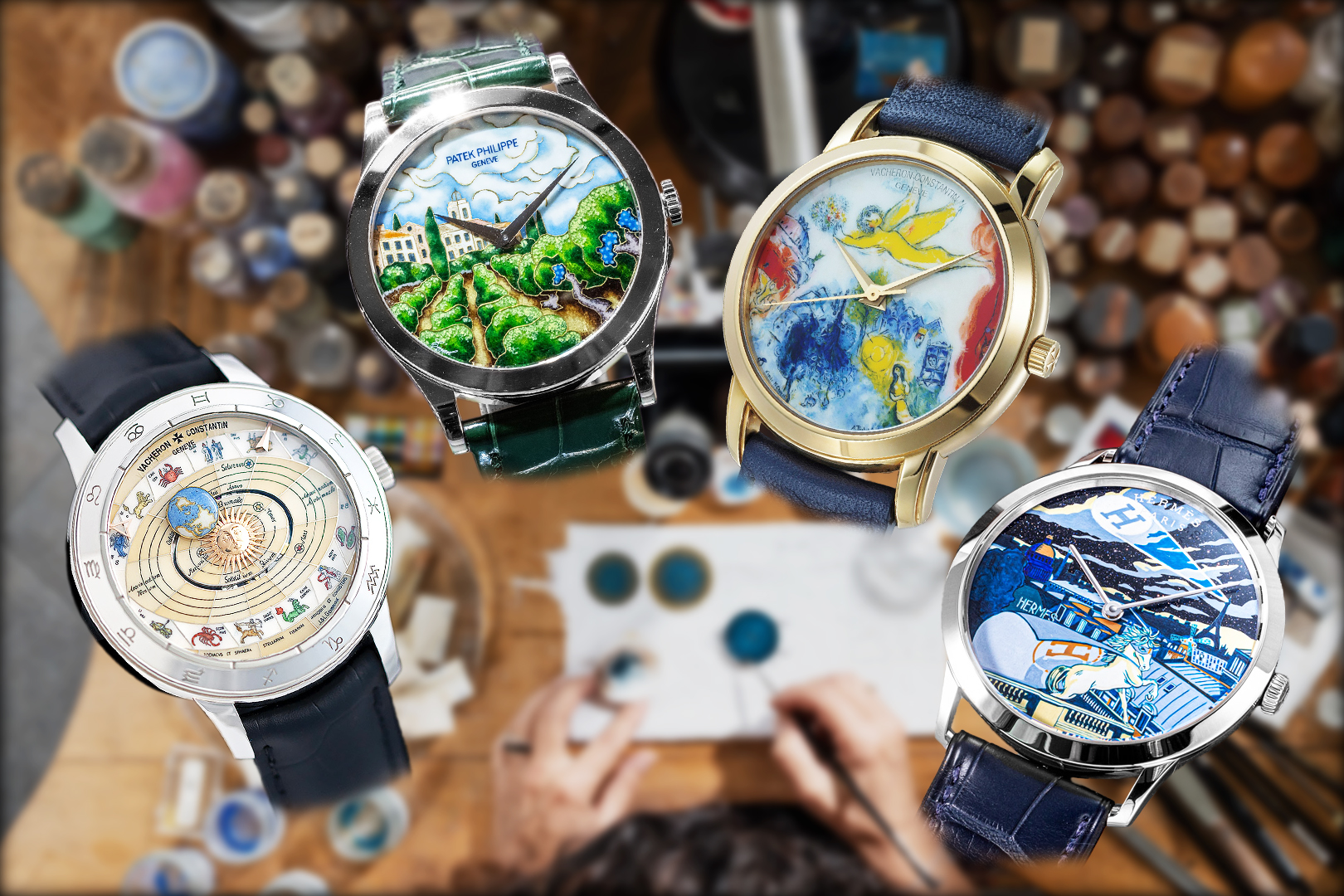
Face Value: Why Painting on Watch Dials is Art SJX Watches
Vacheron Constantin s Masterpiece Jan 27, 2026

Face Value: Why Painting on Watch Dials is Art

Fine watches have pulled double duty as decorative objects since before the invention of the hairspring in 1675. In this sense, one could almost argue that watches have been linked to art since before they were even watches in the modern sense. This relationship emerged early in part because both types of objects were made primarily for the same clientele: wealthy elite in Europe and elsewhere. Though art and watches exist for different reasons, they are both often created with eternity in mind. The noble materials and timeless designs of many fine watches, especially those of the quality that would normally be paired with a work of art, also help justify the painstaking (and costly) work of artisanal decoration, which can, in some cases, take more than a year for a single work of miniature art. Introduction to miniature painting Of all the forms of decoration that have been applied to watches, miniature paintings are an especially important genre. Historically, these miniature masterpieces have been produced primarily in enamel, though acrylic paint is increasingly used today. Much has been written about the art of miniature painting, and it would not be an exaggeration to call it a dying art, since the number of living practitioners seems to have rarely exceeded half a dozen at any given time over the past century. Vacheron Constantin’s Masterpiece on Your Wrist programme is a partnership with the Metropolitan Museum of Art in New York that allows customers to commissi...

Down to the Wire: De Bethune’s In-House Hairsprings SJX Watches
De Bethune s In-House Hairsprings De Dec 10, 2025

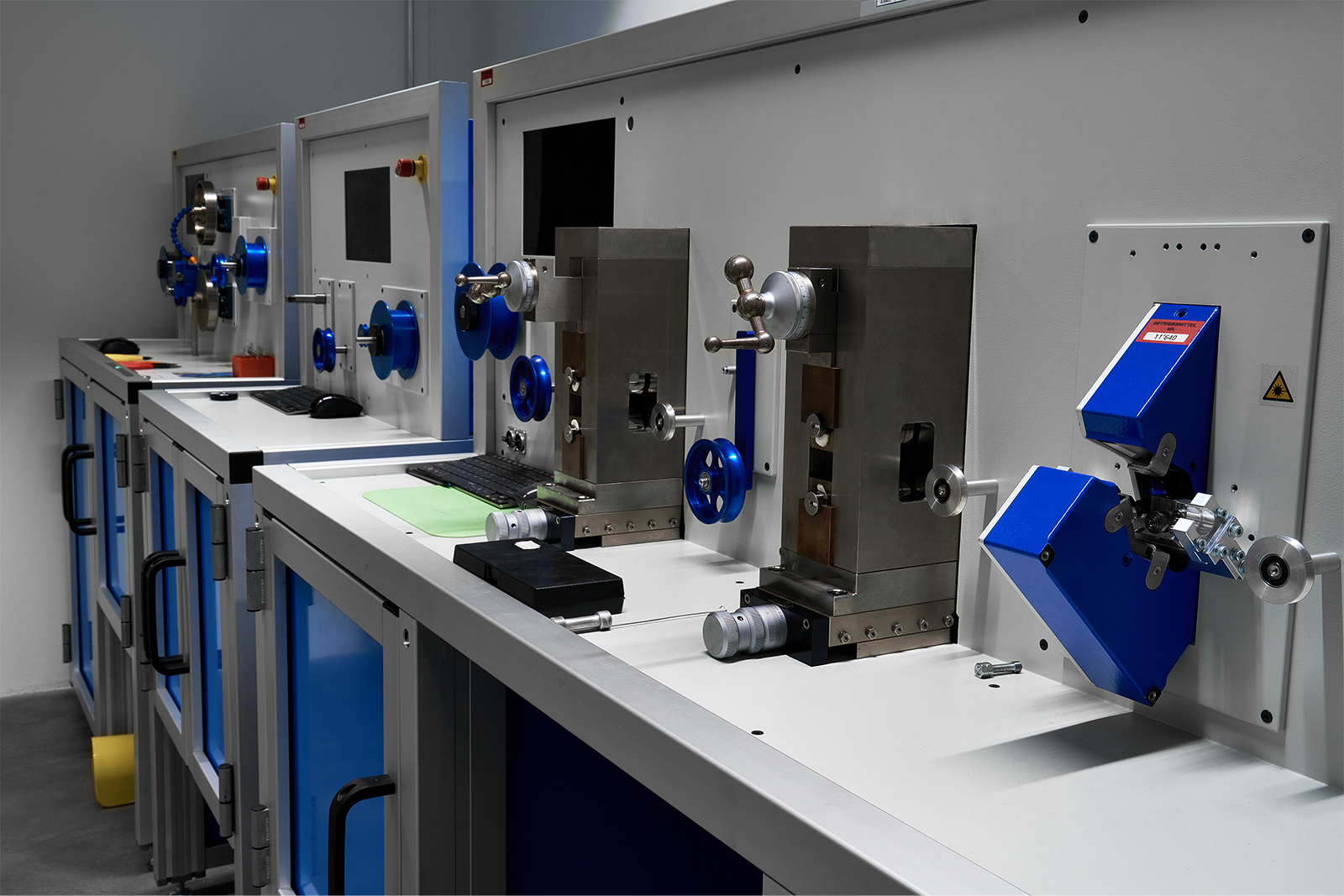
Down to the Wire: De Bethune’s In-House Hairsprings

De Bethune plans to bring hairspring production in house, aiming to become one of the very few firms able to process alloy wire into a finished balance hairspring. This requires De Bethune’s new hairspring workshop to master wire drawing, rolling, cutting, heat treatment, and assembly. The rationale? “Externally produced hairsprings meet standards based on averages that do not enable fine adjustment of the dimensions to suit a particular balance wheel or its specific positioning in a calibre,” according to De Bethune. De Bethune’s “flat end curve” mated to a hairspring sourced from a supplier. Initial thoughts As De Bethune explains it, making its own hairsprings will allow the brand to tailor its hairspring to a specific balance or movement. Since its founding in 2002, De Bethune has presented itself as being on the cutting edge of chronometry, debuting a new balance design every year from 2004 to 2010. The brand was also quick to embrace silicon, and even briefly attempted a kilohertz magnetic oscillator system, Résonique. A new year, a new balance. Sometimes two new balances. Given De Bethune’s focus on chronometry, making its own hairsprings seems like a natural next step. However, there is a reason so few brands make their own hairsprings: the process is a difficult and demanding one that benefits greatly from economies of scale. For example, H. Moser & Cie. makes less than 4,000 watches per year, however, its sister company Precision Engineering claims...

In-Depth: Understanding Isochronism and Oscillators SJX Watches
Breguet overcoils Dec 10, 2025

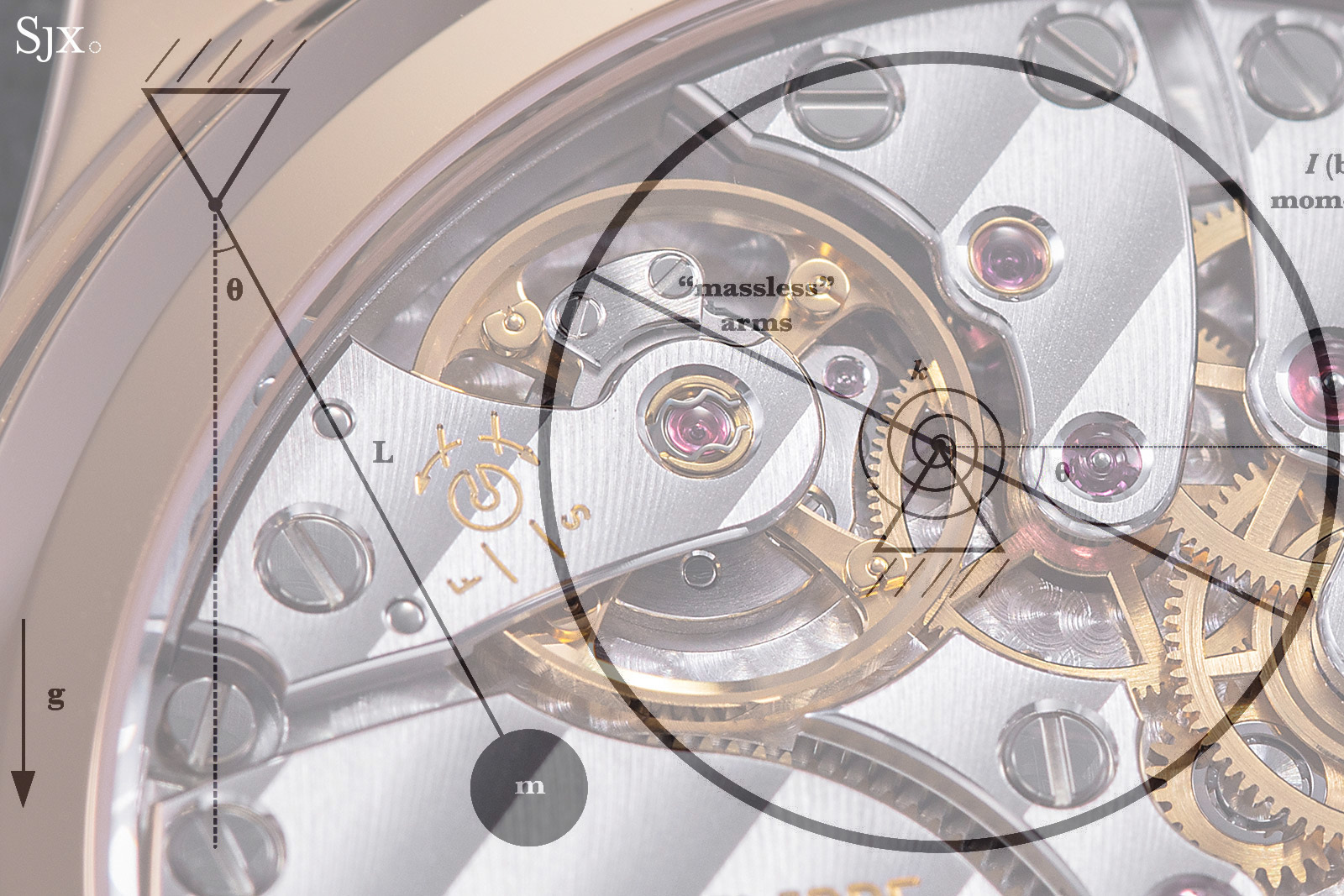
In-Depth: Understanding Isochronism and Oscillators

The beginning of 2025 marked the 350th anniversary of the hairspring, the invention that made portable precision timekeeping possible. To commemorate the occasion, we published a series of deep dives covering the disputes around its invention, the evolution of spring materials over the years and the finer rules of forming Breguet overcoils. This final instalment examines isochronism. Some initial definitions and considerations A proper and universal definition of isochronism is: the property of an oscillatory system to maintain the same period of vibration despite variation in environmental factors. This implies that a vibrational system’s behaviour is inherent and external factors should not influence its frequency.  A few basic terms help frame the discussion. The period, measured in seconds, is the time taken for the oscillator to travel from one extreme position, through equilibrium, and back again. Frequency, measured in Hertz, is the inverse of the period; a system with a constant period can serve as a stable timebase. The amplitude is the distance swept by the oscillator from the equilibrium point to its extreme position. In practical terms, when saying that a sprung balance has an amplitude of 330°, it means the balance wheel rotates a full 330° in one direction from its equilibrium point before swinging back.  Figure I. Anatomy of a sinusoidal wave. In watchmaking parlance, isochronism means that an oscillator keeps the same period, regardless of its amplit...

How to Demagnetize A Watch Teddy Baldassarre
Omega Dec 3, 2025

How to Demagnetize A Watch

Since their invention hundreds of years ago, watches and other timekeepers have had one consistent and implacable foe: magnetism. Magnetic fields are the arch-enemy of a watch’s ability to run reliably and accurately, as they can adversely affect the tiny metal parts in a traditional mechanical movement like the wheels, gears, and hairspring. The ill effects of magnetic fields on watches’ reliability first emerged as early as the 1920s, when electrical power became more ubiquitous in both homes and businesses, and the challenges for watchmakers have only multiplied in the years since.  Today, we’re surrounded by magnetic fields in almost every area of our everyday lives, from microwave ovens and refrigerators to computers, cell phones, and electrical motors. The watch industry’s decades-long battle against magnetic fields, explored in greater detail in this article, has been a largely successful one, with the use of protective inner cages and non-ferrous movement components now commonplace. Omega, for example, makes watches with movements that can resist magnetism up to 15,000 gauss, as in the Railmaster watch shown above. However, most of us, at one time or another, have still experienced a situation in which a watch falls victim to being magnetized, and it can be a bit intimidating to figure out how to fix it. [toc-section heading="How to Tell if Your Watch is Magnetized"] A watch that has had its movement magnetized might be difficult to notice at first. It mig...

Highlights: Complications on Bracelets at Christie’s Hong Kong SJX Watches
Patek Philippe Nov 24, 2025

Highlights: Complications on Bracelets at Christie’s Hong Kong

The uniform of high complications almost invariably includes a leather strap; a metal bracelet remains an uncommon pairing with, say, a grande sonnerie. Christie’s upcoming Hong Kong auction, however, brings an unexpected abundance of complicated watches on bracelets for collectors who prefer metal, including notable examples from Patek Philippe and A. Lange & Söhne. This season’s sale is anchored by two major private collections, most prominently the second part of The Chronicle Collection, the first half of which was dispersed earlier in the spring. The consignor began collecting in the 1990s, a fact reflected in the depth of neo-vintage highlights throughout the catalogue. Lot 2442 - Patek Philippe ref. 3448⁄8 with Possibly Unique Ruby Dial The Patek Philippe ref. 3448 was the first self-winding perpetual calendar produced in series. According to movement numbers, it is likely 586 were made in total - this lug-less example was one of the first made. Beyond its historical interest, the ref. 3448 is underpinned by one of – if not the – most beautiful automatic movements ever made: the cal. 27-460 Q. Looks aside, it was one of the most technically competent automatics of its era, with an overcoil hairspring, free-sprung balance, and bi-directional winding using a cam and pawl system. Atop this worthy base calibre, the ref. 3448 adds the iconic windows perpetual calendar by none other than Victorin Piguet. The ‘/8’ in ref. 3448/8 suffix denotes the style ...

Tokyo Retailer Shellman Celebrates Christiaan Huygens SJX Watches
Nov 17, 2025

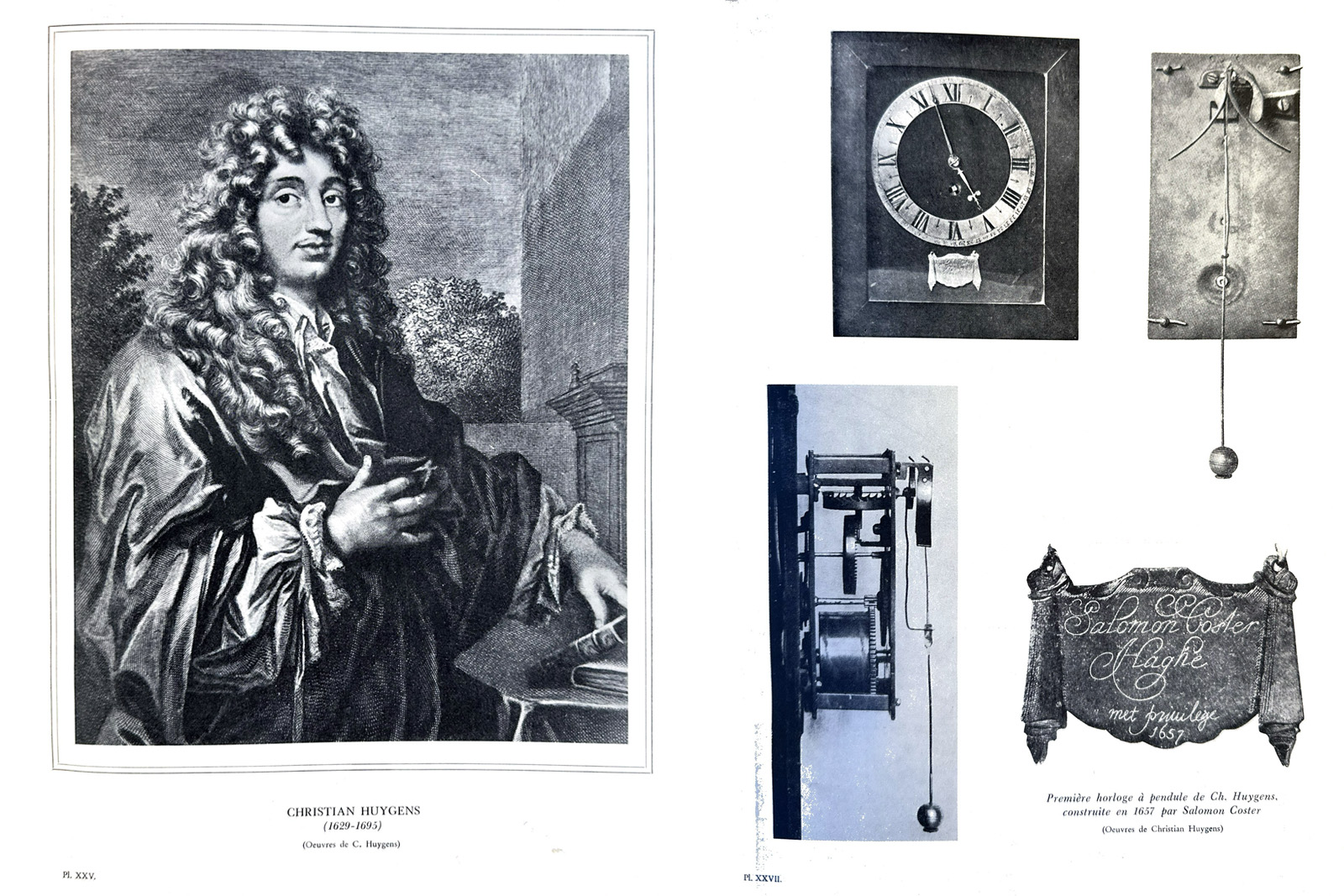
Tokyo Retailer Shellman Celebrates Christiaan Huygens

In order to mark the spiral hairspring’s 350th anniversary and celebrate its inventor Christiaan Huygens (1629 – 1695), Japanese watch retailer Shellman presents a two-week exhibition event in Tokyo, The Origins of Time = Astronomy. Opening November 19 and slated to run through December 2, the Shellman exhibit is a collaboration with the Musée International d’Horlogerie (MIH) in La Chaux-de-Fonds, and showcases the larger extent of Huygens’ work, from horology to optical observation devices. Themed around the Dutch scientist credited with building the first pendulum clock and with inventing the hairspring, the exhibit also explores larger fields of horology, with a focus on astronomy and modern independent watchmaking. Original drawings showing early attempts at making a sprung balance. Beyond his practical applications in horology, Huygens left marks on many other scientific fields, from geometry to physics and astronomy. He notably discovered Saturn’s largest moon Titan and cemented the wave theory of light propagation. One could say that he was interested in the celestial bodies as much as he was in understanding motion and measuring time here on Earth. In his honour, the exhibit leans on the astronomical theme as well.  The exhibition is accompanied by a selection of special watches available for sale. Visitors will have the chance to acquire the world’s smallest wristwatch planetarium, the Planetarium Christiaan Huygens Limited Edition, created by the Du...

In-Depth - The Return of the TAG Heuer TH-Carbonspring Oscillator, Inside new Carbon Monaco and Carrera Models Monochrome
TAG Heuer TH-Carbonspring Oscillator Inside new Sep 4, 2025

In-Depth - The Return of the TAG Heuer TH-Carbonspring Oscillator, Inside new Carbon Monaco and Carrera Models

Since Christiaan Huygens paired a balance wheel and spiral spring in 1675, the hairspring has been the beating heart of every mechanical watch. Its material has always dictated chronometric performance. Steel, used for centuries, suffered from magnetism and temperature drift. Special alloys developed in the 20th century improved reliability – from Elinvar to Nivarox/Nivachron, made […]

TAG Heuer Introduces Carbon Monaco And Carrera Models Equipped With The Revolutionary TH-Carbonspring Fratello
TAG Heuer Introduces Carbon Monaco Sep 4, 2025

TAG Heuer Introduces Carbon Monaco And Carrera Models Equipped With The Revolutionary TH-Carbonspring

Watch brands are constantly pushing the boundaries of new materials. Several brands have proprietary ones that they use for cases, dials, and hands, but using new materials for calibers happens far less frequently. Today, TAG Heuer introduces a carbon hairspring as a revolutionary next step in material use for watch movements. The innovative TH-Carbonspring was […] Visit TAG Heuer Introduces Carbon Monaco And Carrera Models Equipped With The Revolutionary TH-Carbonspring to read the full article.

TAG Heuer debuts two chronographs with revolutionary carbon hairsprings, a technology they’ve been developing for almost a decade Time+Tide
TAG Heuer debuts two chronographs Sep 4, 2025

TAG Heuer debuts two chronographs with revolutionary carbon hairsprings, a technology they’ve been developing for almost a decade

Have TAG finally perfected carbon hairspring technology, and will this be a game changer - for them and the rest of the watch industry?The post TAG Heuer debuts two chronographs with revolutionary carbon hairsprings, a technology they’ve been developing for almost a decade appeared first on Time+Tide Watches.

Interview: Kari Voutilianen on Urban Jürgensen and Artisanal Watchmaking SJX Watches
Voutilainen Aug 6, 2025

Interview: Kari Voutilianen on Urban Jürgensen and Artisanal Watchmaking

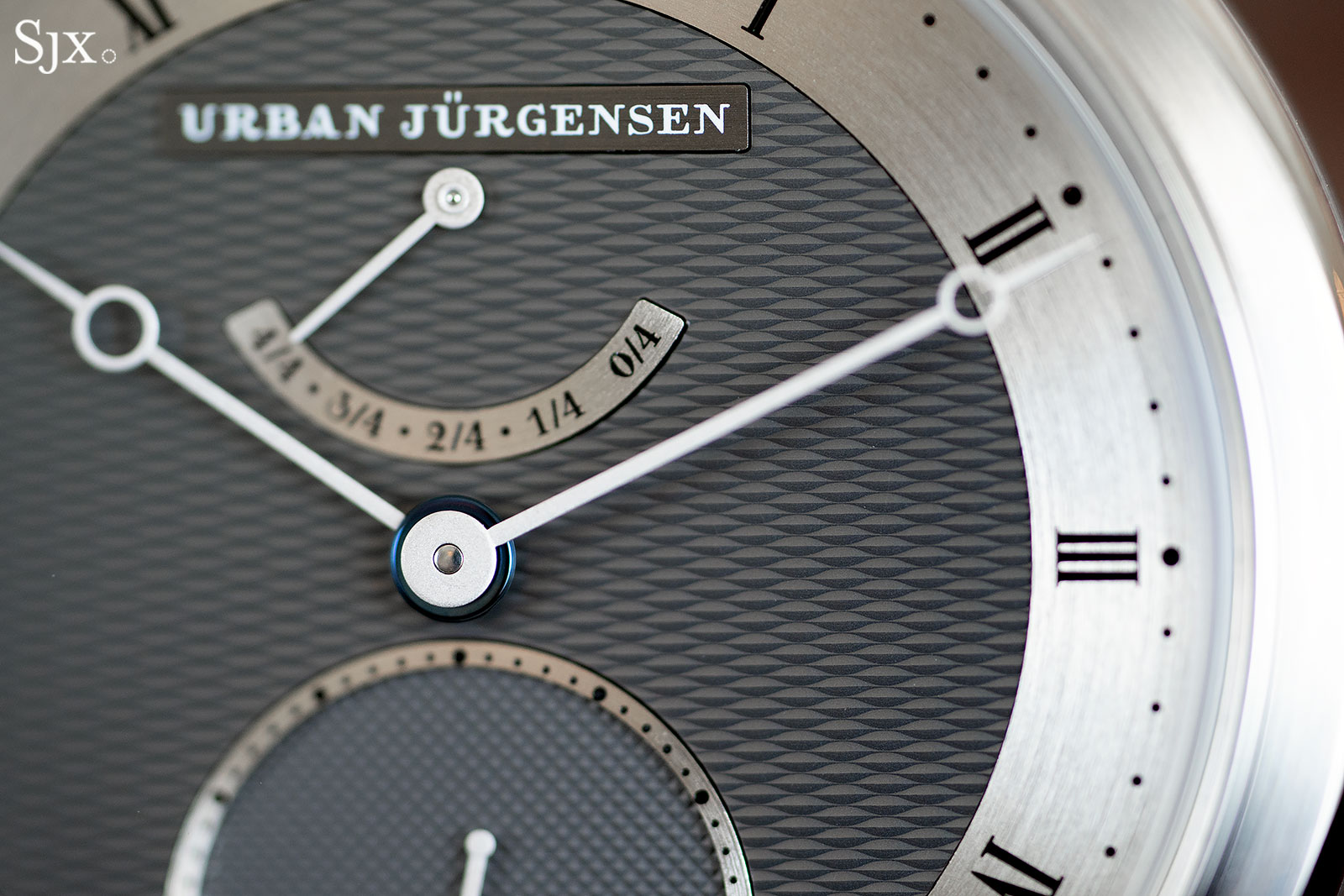
Urban Jürgensen made its comeback earlier this year with an impressive line-up that includes the flagship UJ-1 Tourbillon. Much of the credit for the brand’s watches and watchmaking goes to Kari Voutilainen. Mr Voutilainen has imbued Urban Jürgensen’s watches with the high standards of quality synonymous with his own brand, resulting in watches that are equally exquisitely craft and steeply priced, but arguably worth it. Though best known for his eponymous brand, Mr Voutilainen is also co-chief executive of Urban Jürgensen (and also a minority shareholder). His fellow steward of the Danish marque that is now headquartered in Bienne, Switzerland, is Alex Rosenfield. While Mr Voutilainen is in charge of watchmaking, Mr Rosenfield leads marketing and branding. From left: Kari Voutilainen, Andrew Rosenfield, and Alex Rosenfield. Image – Urban Jürgensen Given the opportunity to speak at length with Mr Voutilainen, I could not refuse. We discussed the true nature of artisanal work, ranging from movement decoration to guilloche, the details of Urban Jürgensen’s movements, and more. You can find his insightful answers below. But interestingly, my conversation with Mr Voutilainen reminded me of the first time I met him, which was at Baselworld 2006 when he launched the Masterpiece Chronograph (with a special hairspring from what turned out to be a questionable supplier). Even two decades ago, well before he was famous, Mr Voutilainen was passionate about the same thing...

Gunsmith Dewey Vicknair Returns with Second Handmade Watch SJX Watches
May 28, 2025

Gunsmith Dewey Vicknair Returns with Second Handmade Watch

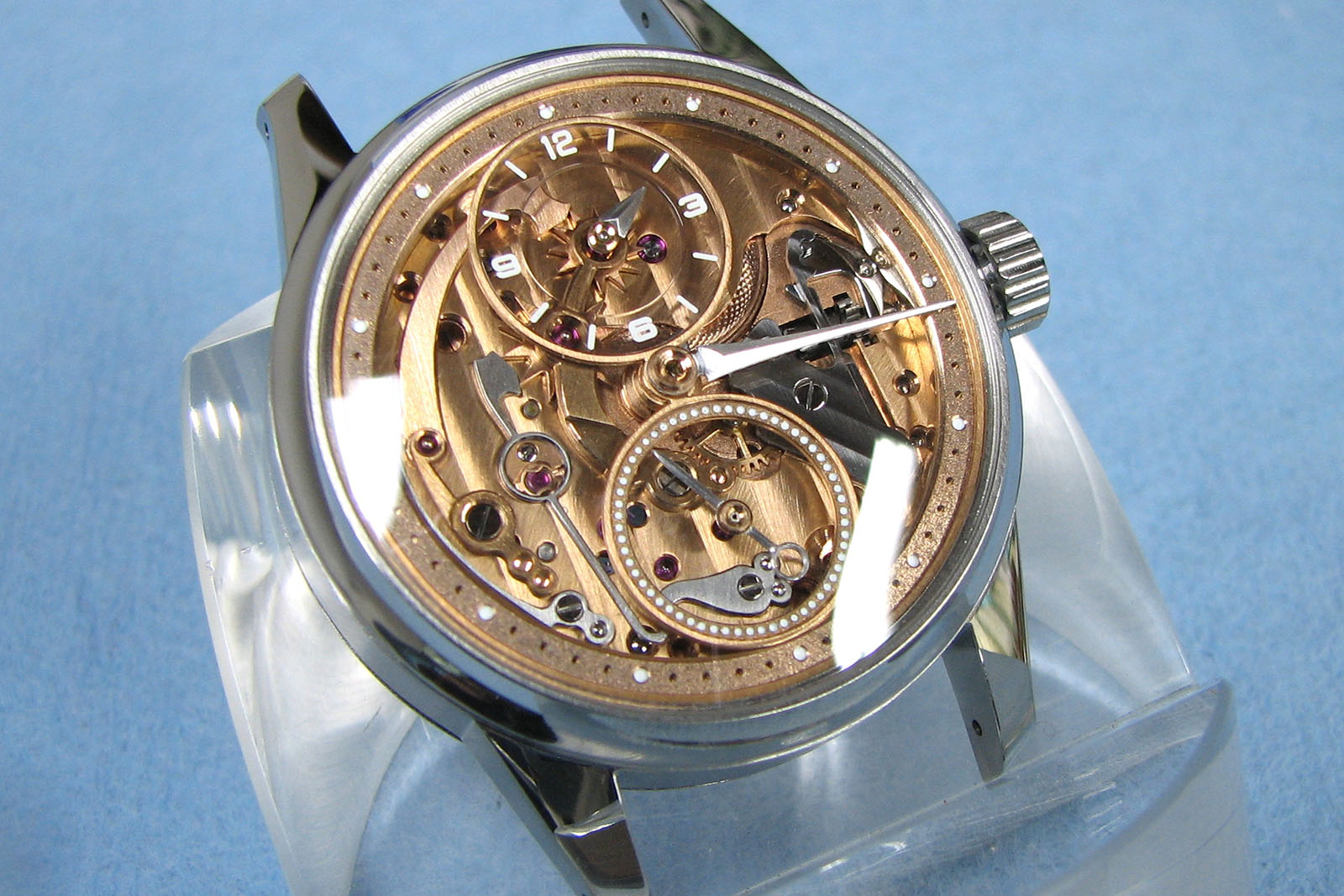
A year ago, we covered a self-taught watchmaker who built his first piece by watch, Dewey Vicknair. Now the American gunsmith has completed his second watch, a regulator with a jump hour function that’s once again hand-made. He published a comprehensive photo essay detailing the steps in manufacturing the watch, which is a worthwhile read for anyone interested in a contemporary, yet fully manual watchmaking process.  Initial thoughts The story of Mr. Vicknair is unlike most independent watchmakers. Now in his mid-fifties, he long ago built his reputation as a maker and restorer of firearms before turning to watchmaking. Self-taught, Mr. Vicknair is definitely a quick study; he adapted his metal-working skills to horology and produced his first watch swiftly. Even more interesting, perhaps, is the way he creates his own tooling. From a vertical drill press to various cutters and even custom tweezers for bending the hairspring overcoil, Mr. Vicknair seems able to build any tool to cater to his requirements.  Artisanal watchmakers usually use restored vintage machines when making watches, but it is very rare that they develop the tools themselves. Mr. Vicknair’s extensive experience as a gunsmith gives him an excellent understanding of machinery that cannot simply be taught in watchmaking schools. His work is clearly that of a very talented mechanical craftsman who just happens to have mastered watchmaking – after having mastered gunsmithing.  The watch itself is pre...

Highlights: A Noteworthy Trio from Patek Philippe at Phillips Geneva SJX Watches
Patek Philippe May 5, 2025

Highlights: A Noteworthy Trio from Patek Philippe at Phillips Geneva

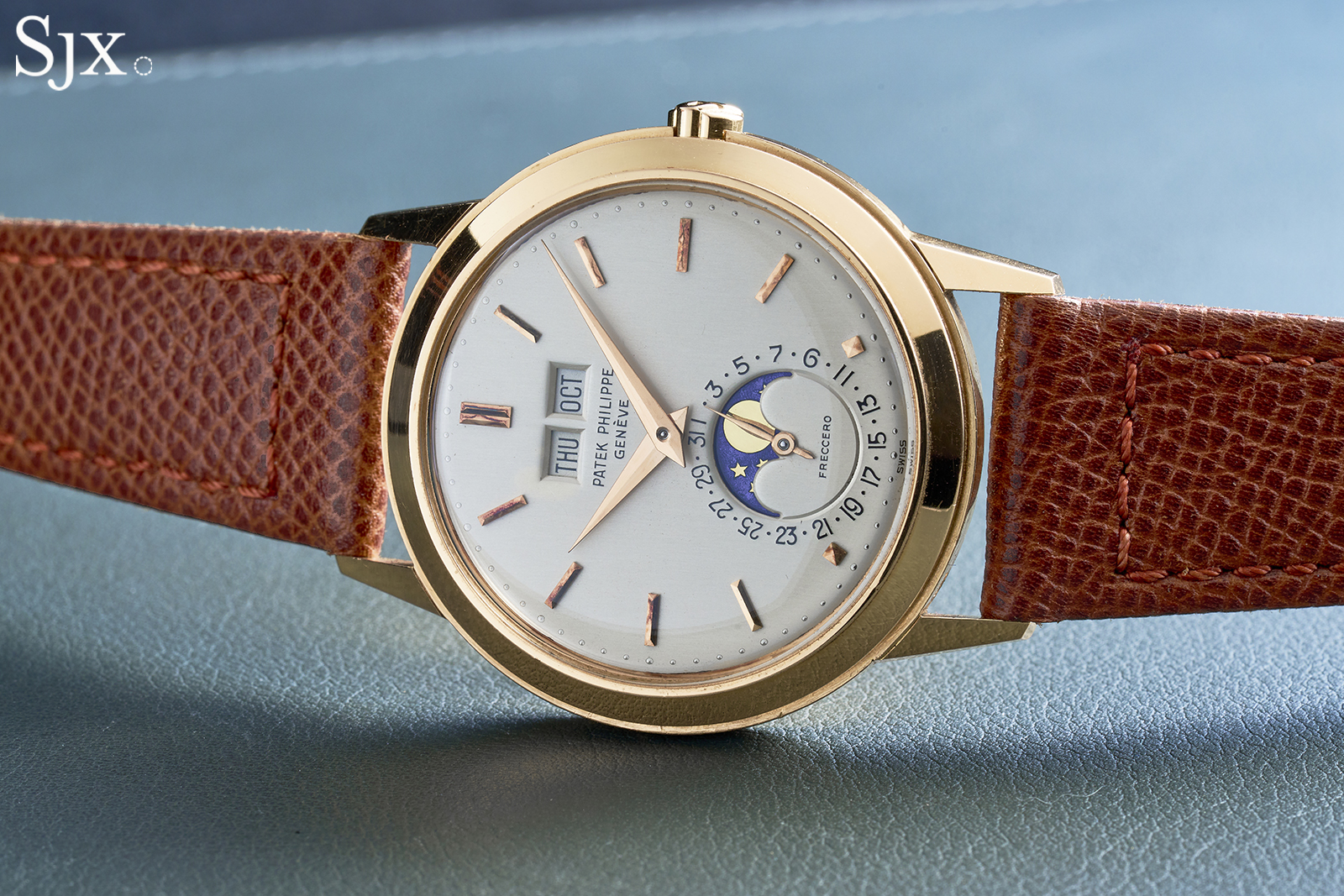
It’s hard to stand out among the 194-lots in Phillips’ incredibly stacked upcoming Geneva auction. The catalog for The Geneva Watch Auction: XXI includes 36 watches from Patek Philippe, including familiar favorites like two ref. 5004s and an assortment of Nautilus and Aquanaut models. But three watches are especially notable. These highlights are led by the only known ref. 3448 “Padellone” perpetual calendar in pink gold – a retailer-signed example at that – followed by a landmark “grand” complication with Hagmann case, and a Beyer-signed pocket watch with a portal to Amsterdam on the back. The auction takes place on May 10 and 11, 2025, at the Hotel President Wilson in Geneva. Lot 74: Patek Philippe ref. 3448 in pink gold signed “Freccero” Patek Philippe’s first self-winding perpetual calendar, the ref. 3448, was primarily made in yellow or white gold – except for this example in pink gold. Besides the unique case material, this also has a retailer-signed dial. In addition, it’s in incredible condition, with unpolished lugs so sharp you could almost cut yourself. It features an early “second series” dial, with a “dimple” style minute track and engraved, enamelled markings. Even though the movement inside the ref. 3448 is one of the most beautiful automatics ever made, the cal. 27-460 doesn’t skate by on pretty privilege. The calibre is technically competent: with a free-sprung gyro-max balance, overcoil hairspring, and Patek Philippe’...

Insight: Regulating a Mechanical Watch Movement SJX Watches
Patek Philippe Mar 7, 2025

Insight: Regulating a Mechanical Watch Movement

A mechanical watch is not always spot on; less-than-perfect timekeeping can happen, often due to an unruly oscillator. The solution is direct adjustments to the hairspring and balance assembly, either slowing down or speeding up the oscillator, a practice known as regulation. Watchmakers have devised multiple innovations to achieve this, including the free-sprung balance, exemplified by the Gyromax of Patek Philippe and Microstella of Rolex. While a simple concept in principle, the mechanics and practice of regulation are nuanced. Here we’ll delve into the theory of regulation and the primary regulating systems: the curb-pin regulator and the free-sprung (or variable inertia) balance. The Lange L043.4 with a screwed balance inspired by pocket watches Basic concepts In order to better understand watch regulation, we need to first cover some of the basic physics behind the watch oscillator: The component responsible for the running rate of a movement is its regulating organ. The regulating organ is made up of a hairspring paired to a balance, which together are also known as a harmonic oscillator. The natural oscillation period is the time it takes the balance to make a full swing, back and forth. The period is made up of two vibrations, one for each direction of the balance motion, with the escapement being unlocked at each vibration. Notably, the natural period of a balance wheel is intrinsic to itself and does not depend on the escapement type or the going train ratio. ...

Ulysse Nardin Taps Designer Amoureuxpeintre for a Minimalist Skeleton SJX Watches
Ulysse Nardin Taps Designer Amoureuxpeintre Jan 30, 2025

Ulysse Nardin Taps Designer Amoureuxpeintre for a Minimalist Skeleton

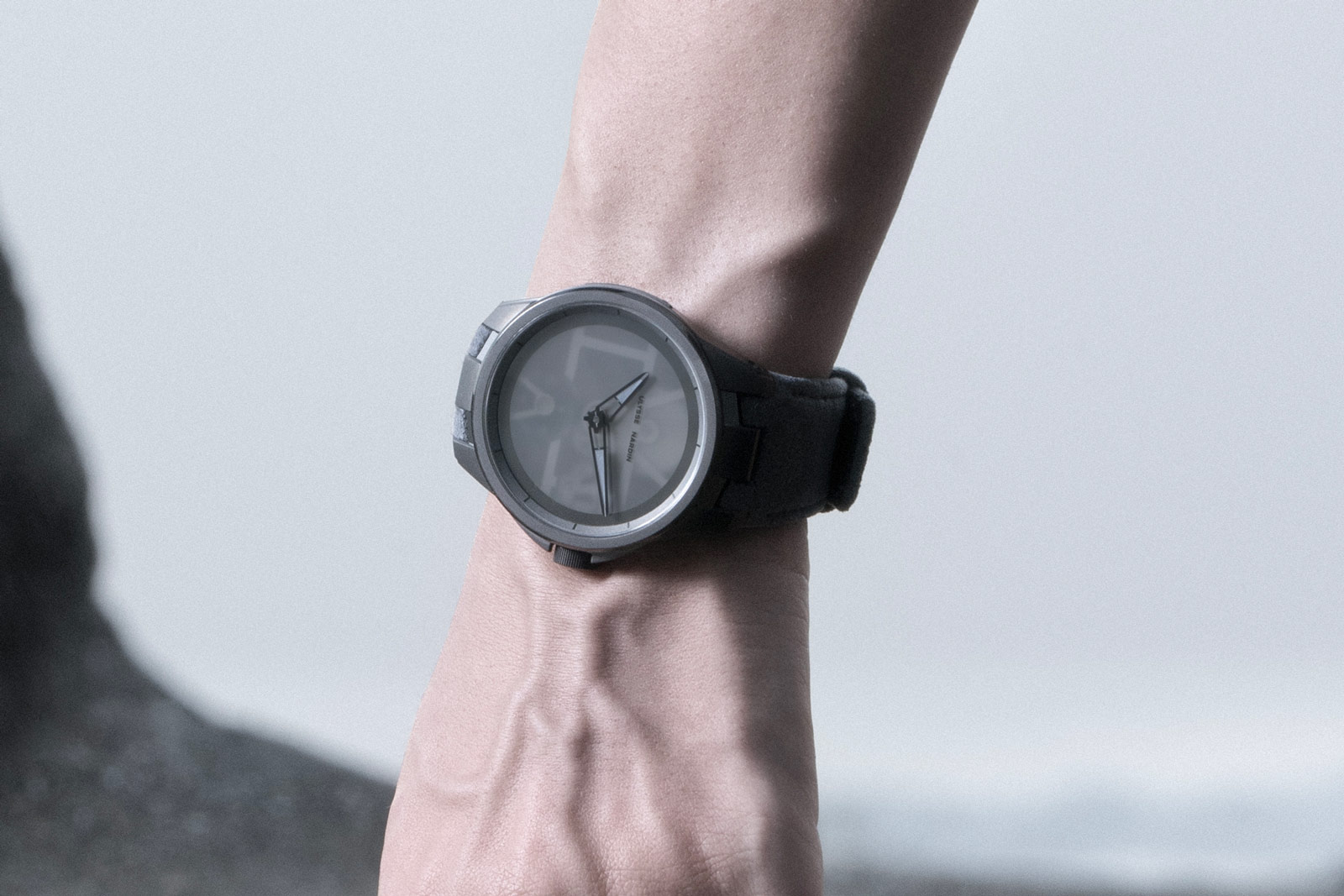
A monochromatic reinterpretation of Ulysse Nardin’s skeleton watch with a prominent “X”, the Blast “Amoureuxpeintre” is a collaboration with Vsevolod “Sever” Cherepanov, a Kyrgyz streetwear designer also known as Amoureuxpeintre who was one of the first to use augmented reality prints on fabric. Restrained and minimalist, the new Blast has a 42 mm sandblasted titanium case and an unusual frosted sapphire dial that partially hides the skeletonised “X” movement, leaving the calibre only faintly visible. According to Ulysse Nardin, the artist drew inspiration for the design from frosted glass panels found in offices. Initial thoughts Renowned for pioneering silicon components in mechanical watchmaking with its groundbreaking Freak, Ulysse Nardin has made some odd design choices in recent years, including the decision to make the letter “X” a centrepiece of its designs. The collaboration with Amoureuxpeintre hides the “X” and transforms the Blast case into something low-key with its all-black finish, and the result is a surprisingly different, and appealing watch. Styling aside, the latest Blast is typical Ulysse Nardin in terms of mechanics, which is to say accomplished. Although the Blast collection does not share the same status or historical significance of the Freak, it still demonstrates Ulysse Nardin’s commitment to contemporary horology with a high-spec, in-house movement that has all of its regulator – hairspring, balance, escape, and pal...

Insight: Updated Criteria for the Patek Philippe Seal SJX Watches
Patek Philippe Seal Patek Philippe had Dec 8, 2024

Insight: Updated Criteria for the Patek Philippe Seal

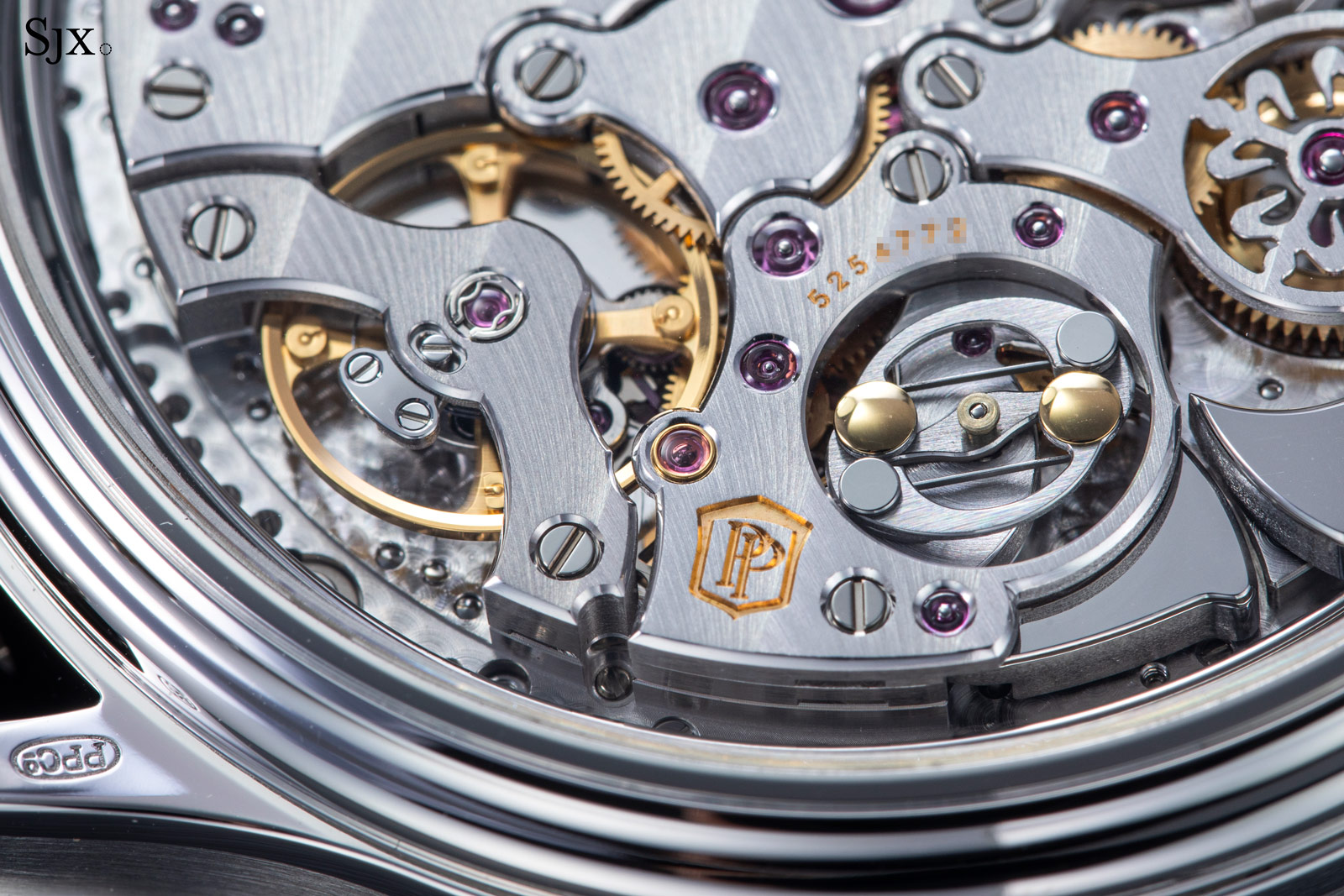
Patek Philippe had an active 2024, not just because of the launch of the ref. 5330G World Time with Date, a massive collection of Rare Handcrafts, and of course the Cubitus. But equally notable was the announcement of updates to the Patek Philippe Seal. Buried on the last page of its 2024 Watches & Wonders brochure was some fine print about some updates to the brand’s internal certification that superseded the longstanding Poinçon de Genève in 2009. The updates applied to two things that watch enthusiasts love to argue about: water resistance and rate accuracy. Officially rated to 30 m and -1/+2 seconds a day Initial thoughts Water resistance is never far from the minds of watch geeks, so it’s no surprise that this is dominated the discourse when the announcement was made earlier in the year; the idea of a Nautilus rated to just 30 m was concerning to many. Apparently even the fact that the watch itself was unchanged did little to quiet the nerves. Perhaps because people enjoy the opportunity to punch up, far more attention was paid to the issue of water resistance than the meaningful updates made to timekeeping testing and certification, which cement Patek Philippe’s position as the leader in high-end mechanical timekeeping at scale. The cal. 240 PS CI J LU of the Cubitus ref. 5822P also features a Spiromax hairspring, clearly visible Thirty meters But let’s get water resistance out of the way. Patek Philippe now guarantees all of its water-resistant watches to ...

Rado Over-Pole Review Two Broke Watch Snobs
Rado Over-Pole Review Sep 16, 2024

Rado Over-Pole Review

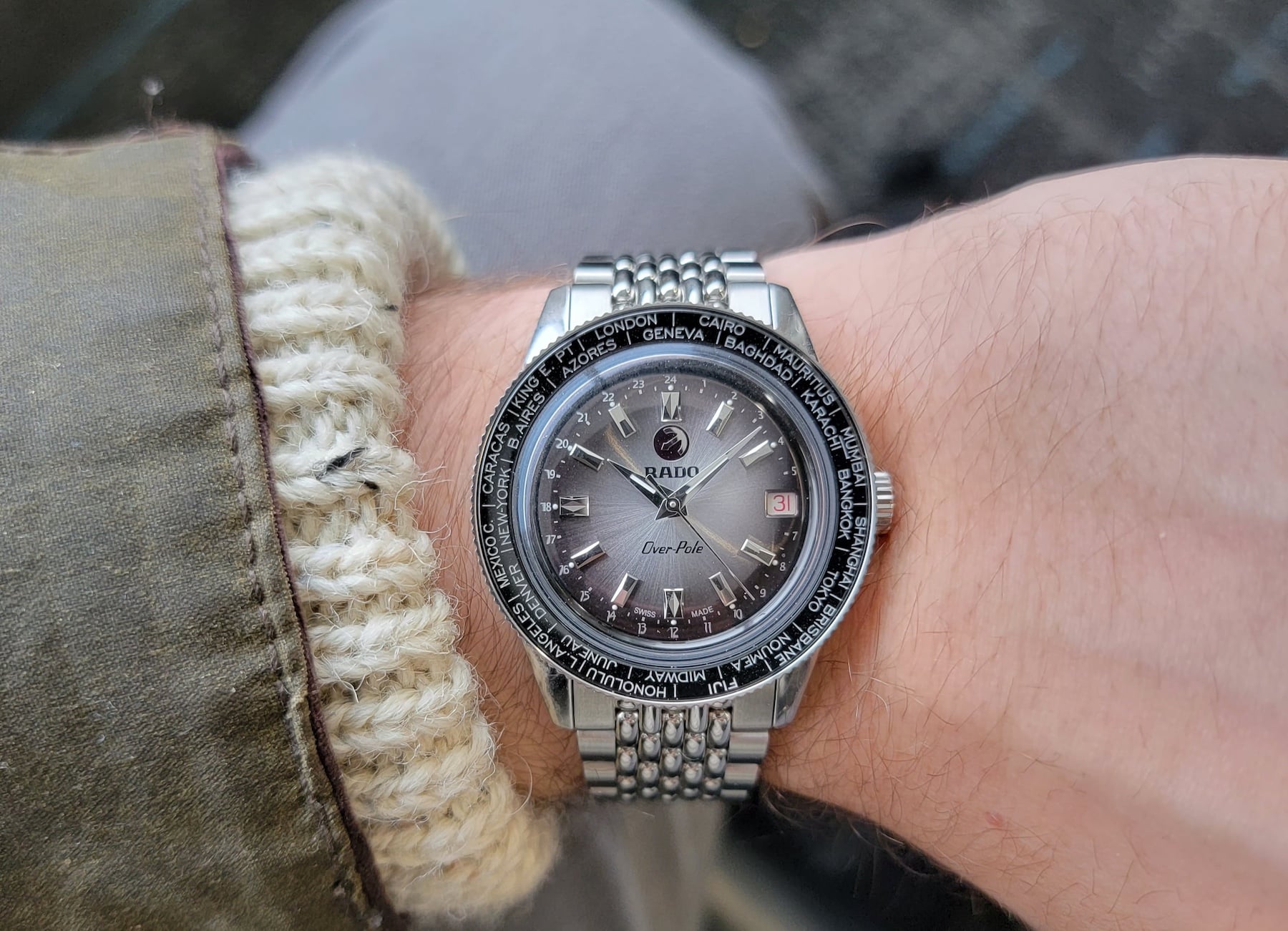
In 2022, Rado re-released the Over-Pole as a limited edition of 1,965 pieces. The diameter remains as svelte as the original at 37mm. The height of the case is 10.4mm, and the lug-to-lug is 43mm. The lug width is 19mm, and it has a water resistance rating of 100m, though it does not have a screw-down crown. The case is fully polished. Interestingly, Rado chose to use a manually-wound movement for this reissue, rather than the automatic movement an original Over-Pole would have used. The movement is known as the Rado R862, and is modified from a Powermatic 80 found in other Swatch group watches. It has 80 hours of power reserve, and the Nivachron hairspring to increase its anti-magnetic properties. The movement is well finished, and can be seen through the watch’s transparent caseback.

Hands On: Tudor Black Bay 41 Ref. 7941A1A0NU SJX Watches
Tudor Black Bay 41 Ref Jul 16, 2024

Hands On: Tudor Black Bay 41 Ref. 7941A1A0NU

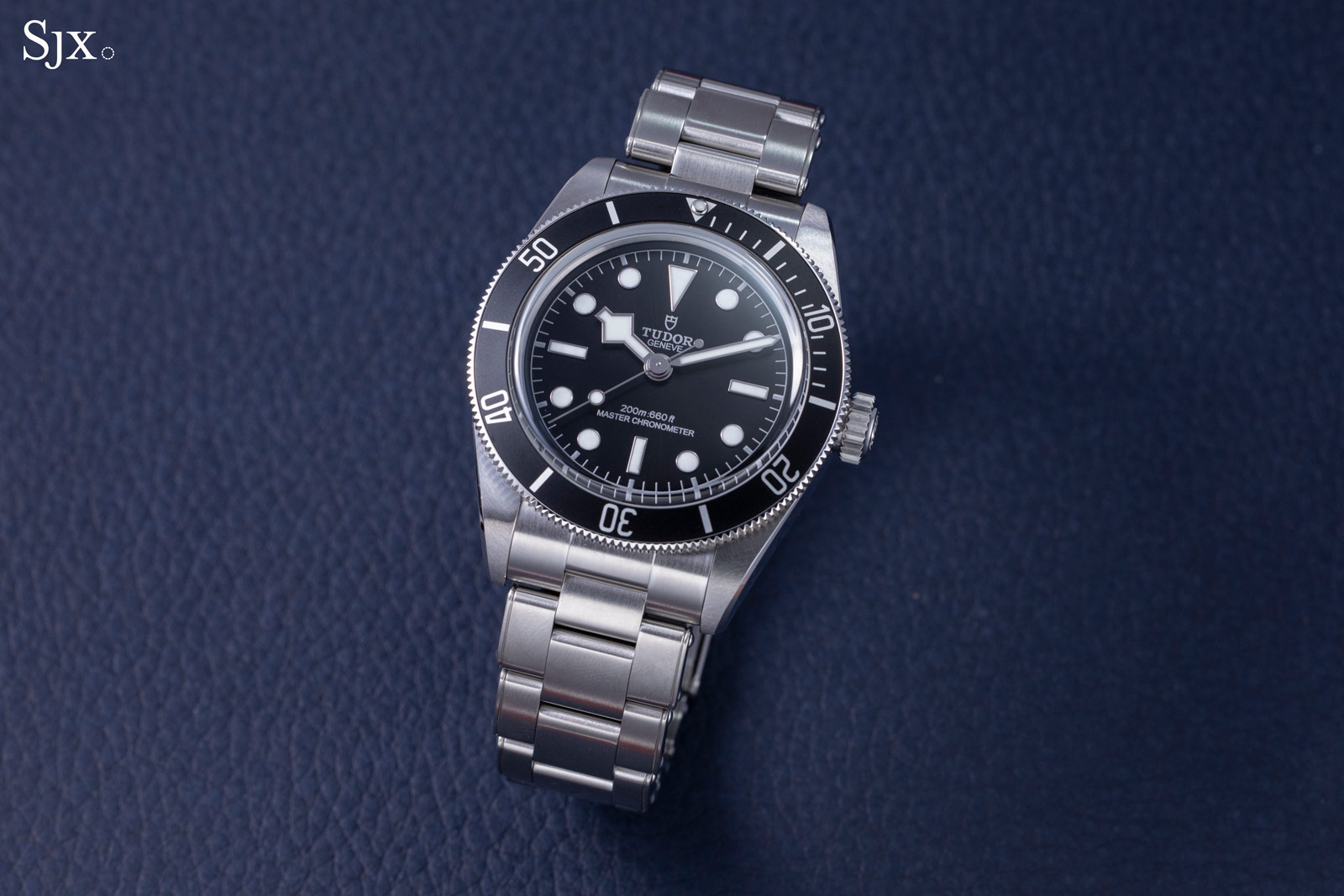
Among Tudor’s new releases for 2024, the most conservative is undoubtedly the Black Bay 41 METAS ref. 7941A1A0NU, which offers a monochrome, black-and-white alternative to the gilt-and-burgundy ref. M7941A1A0RU-0003 introduced last year. Initial thoughts The new Black Bay 41 (BB41) feels instantly familiar. In fact, it’s a little surprising that it wasn’t already in the collection, being about at straightforward as a contemporary dive watch can be. But what it lacks in surprise, it makes up for in simple, tangible quality. While the BB41 was the original Black Bay – launched a dozen years ago now – it now sits atop a range that also includes the smaller Black Bay 58 and even more compact Black Bay 54. The BB41 METAS’ dimensions of 41 mm by 13.6 mm thick mean it wears similar to a modern Rolex Submariner; those looking for vintage proportions should consider the BB58 and BB54. Of course, the big news is METAS certification for the MT5602-U movement, which now carries a “U” suffix to identify it as a METAS-certified Master Chronometer. The differences from the standard MT5602 used to date are likely minimal, since the movement has always had a silicon hairspring, one of the most important features for resisting the METAS standard’s 15,000 gauss anti-magnetism test. The difference, therefore, is that the movement’s high-performance specs have been confirmed by an independent test. Tudor is all about value, and the BB41 METAS is no exception. Available with...

Obituary: Antoine Simonin, WOSTEP Director, Educator, and Bookseller SJX Watches
May 28, 2024

Obituary: Antoine Simonin, WOSTEP Director, Educator, and Bookseller

Antoine Simonin (1938-2024), who died on May 20 at the age of 84, left his mark on generations of watchmakers and watchmaking enthusiasts. He will be best remembered as the director of WOSTEP (Watches Of Switzerland Training Educational Program) from 1976 to 2003. Simonin was a person obsessed with the transmission of watchmaking knowledge, and sought to make WOSTEP an instrument for the international dissemination of watchmaking mastery. Founded in 1966, WOSTEP sought to train watchmakers capable of maintaining and repairing Swiss-made watches according to the standards laid out by their makers, the Swiss watch industry. Over time, its courses have been taught in English, French, German, Japanese, Swedish, and Mandarin. “I studied at WOSTEP under Antoine Simonin in 1987 and 1991,” says Peter Speake, the watchmaker best known for founding Speake-Marin, “He was instrumental in keeping WOSTEP going during that difficult industry period, subsequently influencing the careers and friendships of many watchmakers, directly and indirectly, playing a significant role in the lives of many crossing multiple generations.” Recounts another student, Paul Francis Madden, now himself an instructor at WOSTEP, “I was a student in 1987, back when the staff at WOSTEP was only Mr Simonin and his wife Josiane… It came to showing him my first hairspring… He slowly spun my balance wheel in his callipers, scrutinising it for what seemed like an eternity, and all without saying a sing...

Ulysse Nardin Introduces the Military-Inspired Diver OPS SJX Watches
Ulysse Nardin Introduces May 27, 2024

Ulysse Nardin Introduces the Military-Inspired Diver OPS

Ulysse Nardin just dropped the Diver Net OPS and Diver X Skeleton OPS, a pair of military-inspired sports watches made from sustainable materials. Dressed in olive drab and black, the two watches utilise recycled steel and carbon composites, and even nylon straps made from fishing nets. Though the emphasis on sustainability and styling are clearly modern, the basis of the watches is historical: the design is modelled on the shipborne marine chronometers Ulysse Nardin was once famous for. The Diver X Skeleton OPS with its open dial Initial Thoughts Ulysse Nardin opted for more restrained aesthetics for the new Diver Duo, instead of the brighter colours found on past models. The Diver Net OPS in particular has a low-key, functional look. Notably, the trademark “X” motif on its dial – which you either love or hate – is not particularly obvious. I find the “X” too bold on some other designs, but here it works better with the military-esque look of the dial. However, both the materials and movements found inside the two watches reflect the brand’s focus on advanced, industrial watchmaking. The Diver Net OPS, for example, is an entry-level model but still equipped with an in-house movement with a silicon hairspring and free-sprung balance, along with a diamond-coated escapement. The Diver Net OPS And the use of recycled materials is also interesting. The carbon composite parts of the case are offcuts from the aircraft manufacturing, which according to the brand red...

Vertex Commemorates D-Day with the M36 Worn & Wound
Casio n May 20, 2024

Vertex Commemorates D-Day with the M36

This coming June 6 marks the 80th anniversary of D-Day. Vertex, the UK based watch brand headed by Don Cochrane, supplied 1,776 watches to British forces on D-Day, and to commemorate the occasion the brand has released a new reference. The M36 feels very much like a watch that Vertex could have produced at any time, but it makes particular sense in the context of the D-Day anniversary. It’s impossible to look at a watch in this style (and these proportions) from a brand with the history of Vertex and not think about the past.  The M36 was conceived as a watch that would borrow significantly from vintage military issued timepieces. To a certain extent, all Vertex watches do this. It’s in the brand’s DNA and is inescapable in the watches they make. But the M36 goes a few steps further. The case, for one, is a compact 36mm in size, which is true to the vintage watches that Vertex would have supplied, and makes the new watch a solid option for virtually anyone today. The sapphire crystal is box shaped as opposed to domed, which gives it an additional layer of vintage charm, and the straightforward dial layout with large Arabic numerals and a railroad minutes track are right in line with WWII era watches.  The watch runs on a workhorse automatic Sellita caliber and is equipped with an anti-magnetic Nivarox hairspring. The crown screws down, and provides 100 meters of water resistance. There’s also plenty of molded X1 Super-LumiNova on the dial, which if it glows anyth...

H. Moser Introduces a Pair of Streamliners on Rubber Straps with the Alpine F1 Team Worn & Wound
H. Moser Introduces May 8, 2024

H. Moser Introduces a Pair of Streamliners on Rubber Straps with the Alpine F1 Team

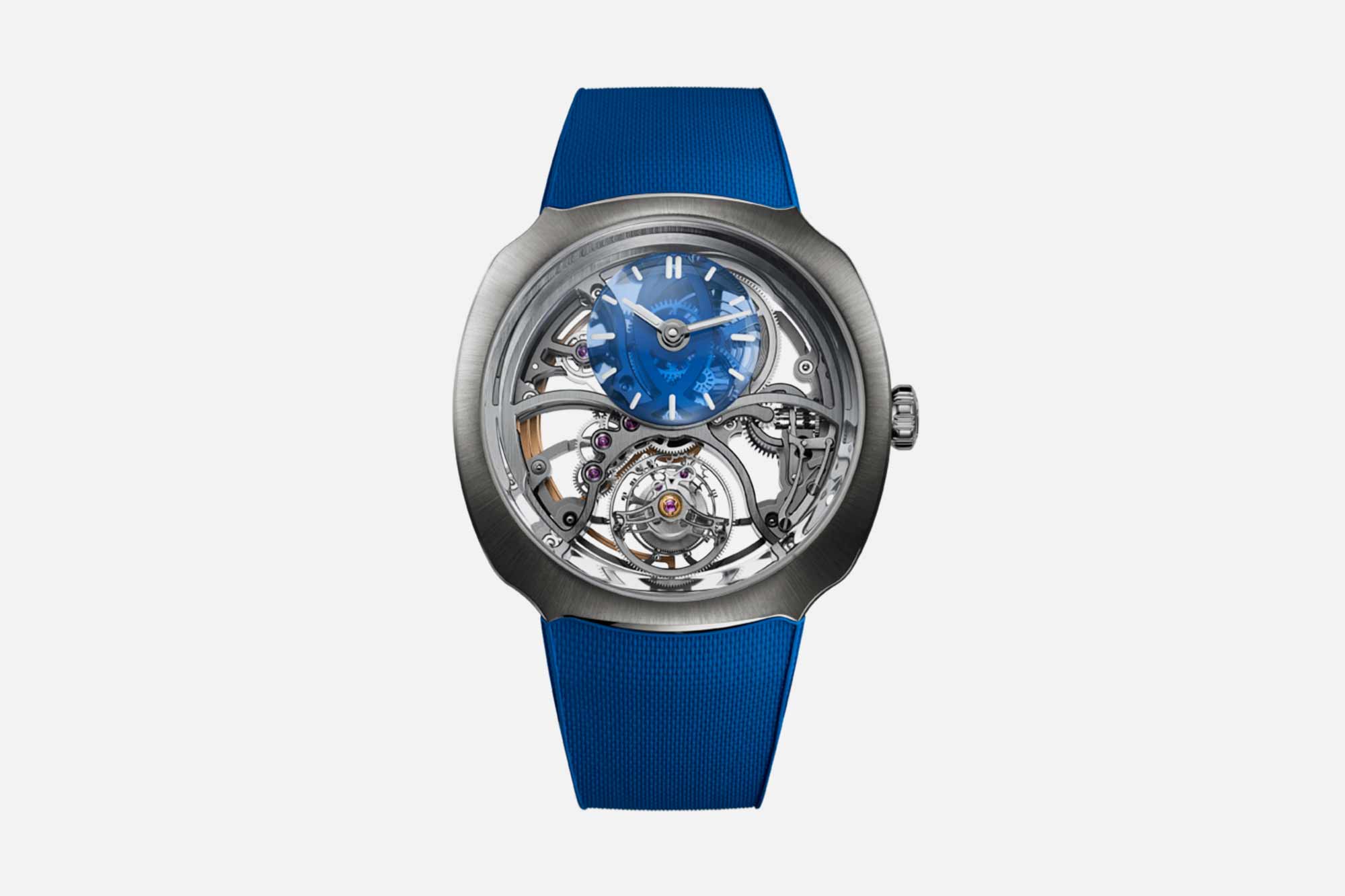
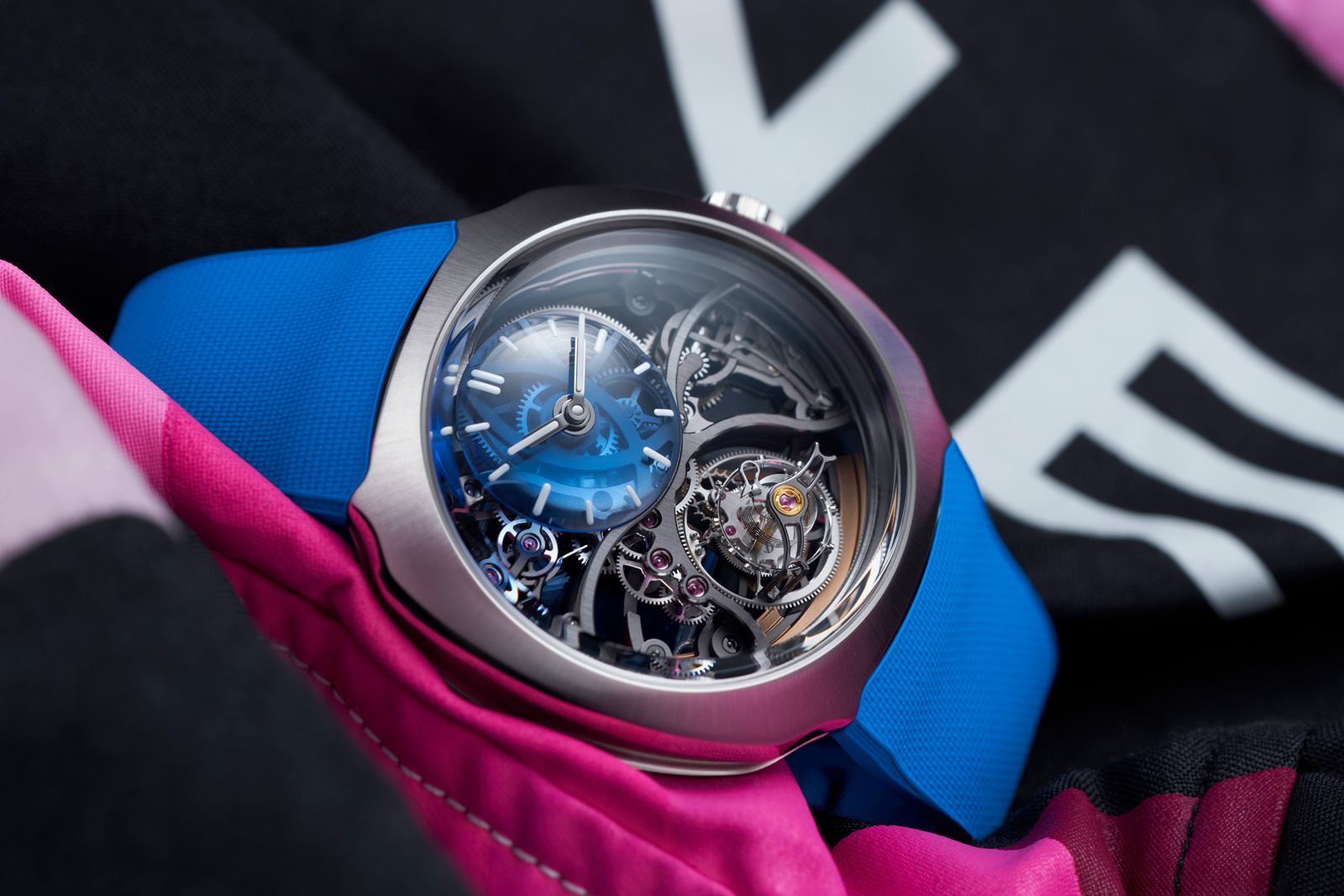
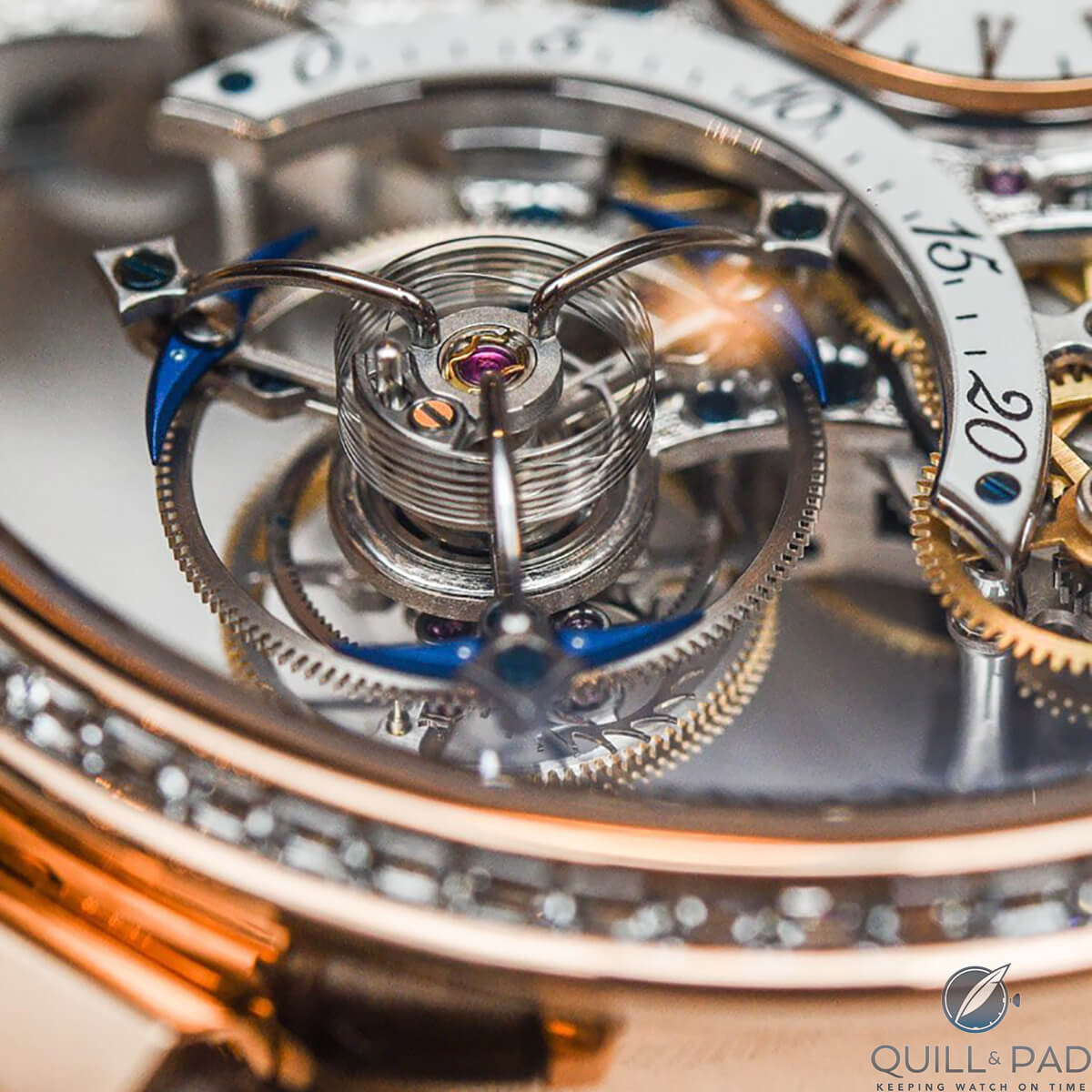
One of my favorite Watches & Wonders experiences these past few years was the brief time I got to spend with the Moser Pioneer Cylindrical Tourbillon. All tourbillons are special, of course, but this one is especially unique and I found it to be genuinely kind of awe inspiring in person. As the name of the watch implies, the cylindrical hairspring wraps around the balance spindle vertically, giving what is already a fairly dramatic watch an even more profound sense of depth. It’s a particularly challenging watchmaking feat to pull off, but pays dividends, according to Moser, in reducing friction and improving isochronism, both of which play a role in a more stable rate through the duration of the movement’s power reserve.  In the last few weeks, Moser has been busy introducing two new versions of their most impressive tourbillon, this time as part of the Streamliner collection of watches, and in both cases in partnership with the BWT Alpine F1 Team. The watches take a similar aesthetic approach seen in the Pioneer Cylindrical Tourbillon, with a skeletonized dial that prominently highlights the flying tourbillon at 6:00, and a decentralized dial at the 12:00 position. The difference of course is that now we have this complication in a Streamliner case (and on a rubber strap) for a watch (a pair of watches, actually) that might just be the sportiest Moser has ever made. Both versions of the watch use synthetic, translucent minerals for the small decentralized dials. For...

H. Moser & Cie. Launches the Streamliner Cylindrical Tourbillon Skeleton “Alpine” SJX Watches
H. Moser & Cie Launches Apr 24, 2024

H. Moser & Cie. Launches the Streamliner Cylindrical Tourbillon Skeleton “Alpine”

With its sponsorship of Renault’s Formula 1 team, H. Moser & Cie. has created a limited edition for the occasion, the Streamliner Cylindrical Tourbillon Skeleton Alpine Limited Edition. This combines the brand’s unusual cylindrical tourbillon with its sporty Streamliner presented for the first on a strap instead of a bracelet. Initial thoughts  In the wake of its deal with the Alpine Motorsports, Renault’s sports car division, Moser’s latest limited edition is hardly a surprise. The concept of an open-worked tourbillon in a modern, sporty case is not a new one, but this is technically novel thanks to the tall cylindrical hairspring inside the tourbillon carriage, made possible thanks to Moser’s sister company that produces hairsprings. Fortunately this is not a typical F1 watch dressed in team colours and sporting a logo. The entire face is devoid of branding and Alpine’s trademark blue instead forms the transparent sub-dial at 12 that contrasts with the anthracite bridges below.  The removal of the bracelet, however, also removes some of the character of the Streamliner. This looks less distinctive than the typical Streamliner on a bracelet. That is not a permanent problem since a bracelet can be installed, and since the case is steel, at presumably moderate cost. The Alpine edition retails for CHF89,000, a CHF10,000 increase over the recent Streamliner Tourbillon Skeleton that has a bracelet but no cylindrical hairspring. All things consider, the premium is...

Thomas Aubert Wins 2024 F.P. Journe Young Talent Competition SJX Watches
F.P. Journe Young Talent Competition Established Apr 21, 2024

Thomas Aubert Wins 2024 F.P. Journe Young Talent Competition

Established in 2015, the F.P. Journe Young Talent Competition is an annual affair to recognise the next generation of watchmakers. Applicants present a timepiece of their own design and construction, which is judged by on its complexity, craftsmanship, and aesthetics by a jury including Philippe Dufour, Giulio Papi, and Francois-Paul Journe. While last year’s winner was a Swiss-Italian clockmaker, this year’s winner is 23-year-old Frenchman Thomas Aubert, who entered his wristwatch Séléné, a unique piece crafted in his final year at the Edgar Faure High School in Morteau, France. Amongst the standout features of the Séléné is its key-winding and -setting as well as the clever “shooting star” display on the back. The Séléné pays tribute to classical watchmaking in both style and technique, but each reinterpreted with a modern twist. As is often the case with such school watches, the movement is based on the Unitas 6497, although it underwent extensive reworking. For example, the timepiece doesn’t feature a crown; instead winding and time-setting are done via a key that goes into dedicated slots on the case back.  The front of the Séléné is classical and tastefully done, with a “grated” finish on the dial that is set on a frosted plate backdrop. The exposed balance bridge is mirror polished and chamfered. The screwed balance beats at 2.5 Hz and features a prominent Breguet overcoil hairspring. Mr Aubert is fascinated by astronomy, a passion that he...

H. Moser Introduces a Skeletonized Streamliner Tourbillon in Steel Worn & Wound
H. Moser Introduces Apr 12, 2024

H. Moser Introduces a Skeletonized Streamliner Tourbillon in Steel

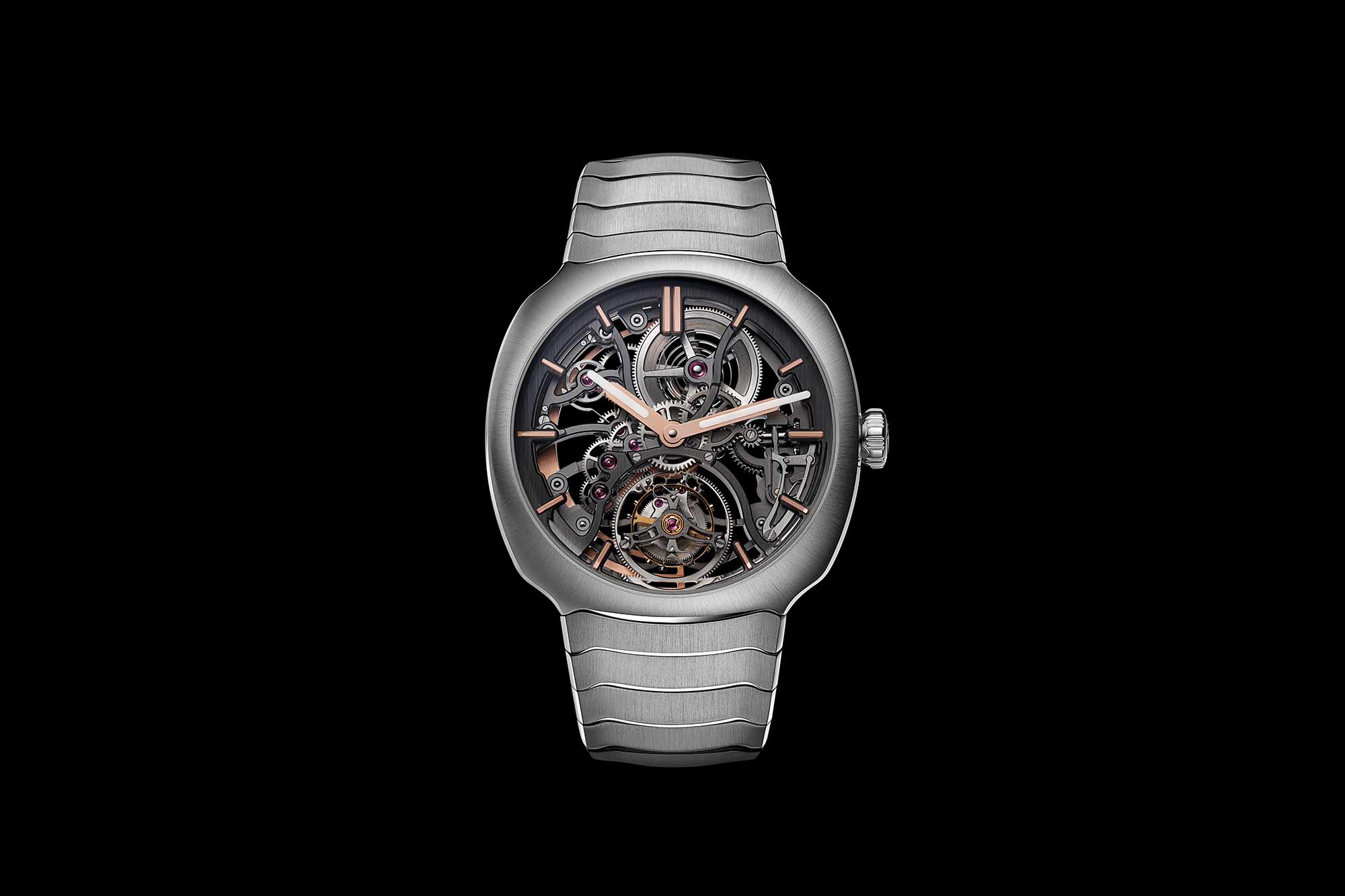
Just in time for Watches & Wonders 2024, H. Moser & Cie. has unveiled the Streamliner Tourbillon Skeleton Double Hairspring. In other words? Moser has produced a dramatically skeletonized flying tourbillon movement with their signature double hairspring, and they’ve put it in a Streamliner. It’s been a few years now since H. Moser & Cie. released the very first Streamliner, and there can be no doubt that in a very short time, that watch has come to represent the brand in a very real way. Since the launch of the H. Moser & Cie. Streamliner Flyback Chronograph four years ago, Moser’s somewhat quirky entry into the integrated bracelet market has seen a steady stream of new releases and added complication, and today sees yet another new execution. This isn’t one of those new releases that shows us a bunch of things we’ve never seen before, but rather draws from several disparate threads that have been floating around the Moser universe and ties them together into a single, compelling package. The Streamliner Tourbillon Skeleton builds on the premise of the Streamliner Tourbillon Vantablack that Zach reviewed back in 2022. But where that watch hid its movement behind literally as black a dial as you can possibly find, this year’s release goes in another direction, one more in line with another 2022 Moser release, the Pioneer Cylindrical Tourbillon. What results is a watch that is exactly what you might expect, given the name on the tin. The Streamliner Tourbillon Sk...

H. Moser & Cie goes fully see-through with the Streamliner Tourbillon Skeleton Time+Tide
H. Moser & Cie goes fully Apr 8, 2024

H. Moser & Cie goes fully see-through with the Streamliner Tourbillon Skeleton

The second skeleton model from the independent watchmaker, it uses the same codes but in a new look. Highly complex with a double hairspring tourbillon at 6 o’clock. A great, yet pricey addition to the skeletonised integrated sports watch segment, at $86,900. The Streamliner has become an incredibly popular offering from independent watchmaker H. Moser … ContinuedThe post H. Moser & Cie goes fully see-through with the Streamliner Tourbillon Skeleton appeared first on Time+Tide Watches.

The Ulysse Nardin Freak - The Saga of a Scientific Timepiece Part III SJX Watches
Patek Philippe Mar 31, 2024

The Ulysse Nardin Freak - The Saga of a Scientific Timepiece Part III

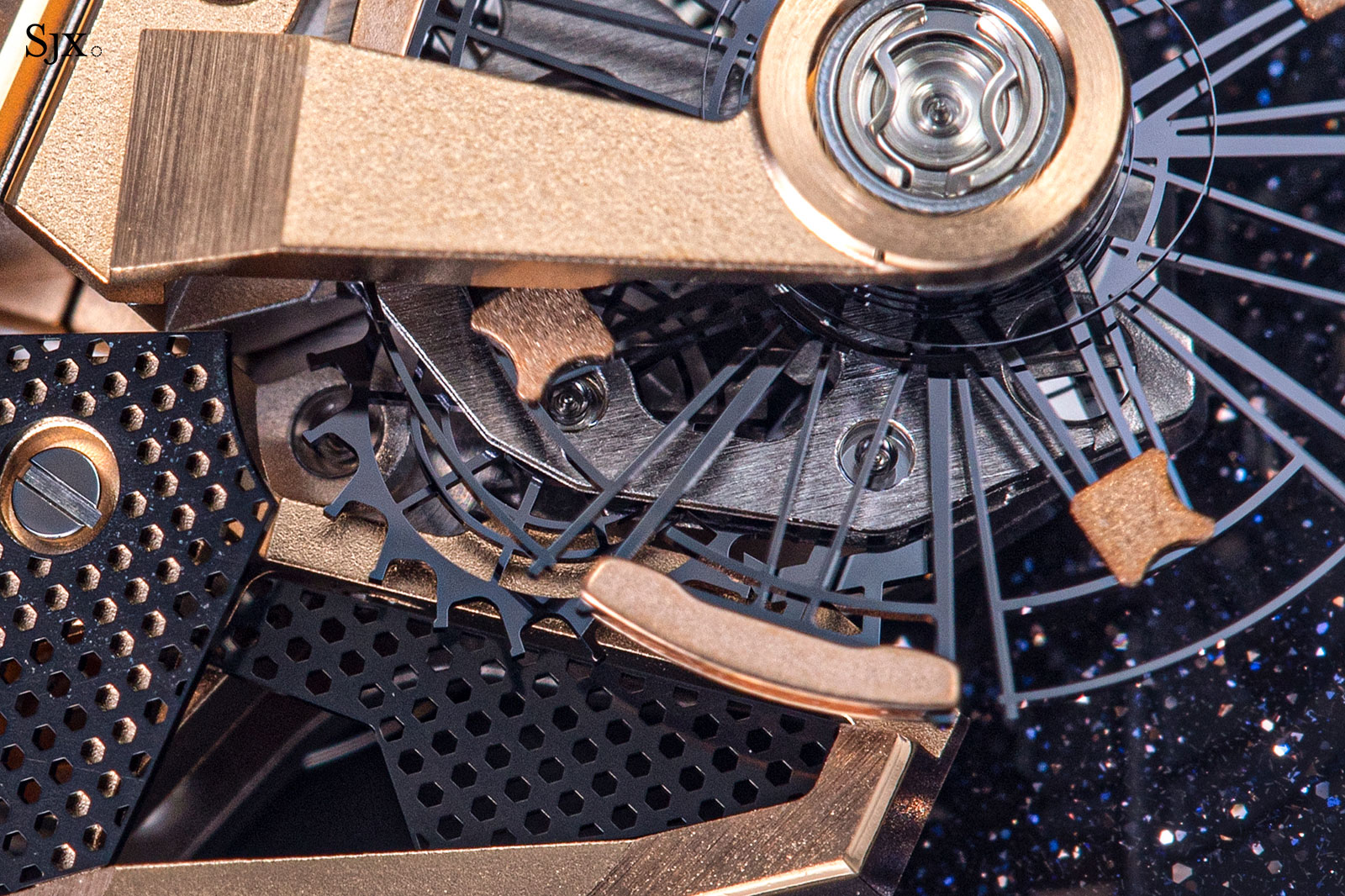
An outlandish concept that originally sprang from the mind of Carole Forestier Kasapi, the Ulysse Nardin Freak of 2001 was perfected by Dr Ludwig Oechslin and then made reality thanks to the advent of silicon in watchmaking. Lightweight and magnetism resistant, silicon was used for the escape wheels but that was only the beginning of the story. [This story, the third and final instalment in the series, details the history of silicium, the proprietary Ulysse Nardin silicium hairspring, and the patented Grinder rotor. The Saga of a Scientific Timepiece Part I covers the origins of the Freak, from its conception to realisation, as well as its distinguishing characteristics, namely the inventive movement construction and unique escapement. Part II deals with the evolution of the unique, high-performance escapement.] Silicon, Silicium, Silinvar Now used interchangeably with silicon, silicium is actually French for “silicon”, but now it is also used as the trade name for the proprietary form of silicon used by Ulysse Nardin for movement components, namely silicon with a hard oxide outer layer that gives the material thermocompensating properties. Silicium was developed by Swiss scientific institute Centre Suisse d’Electronique et de Microtechnique (CSEM) in collaboration with Ulysse Nardin. Notably, the material is also known as Silinvar, which resulted from a separated but related CSEM project backed by a consortium made up of Rolex, Patek Philippe and Swatch Group. As a ...

The Ulysse Nardin Freak - The Saga of a Scientific Timepiece Part II SJX Watches
Ulysse Nardin Freak – Mar 26, 2024

The Ulysse Nardin Freak - The Saga of a Scientific Timepiece Part II

Having explored the origins of the Ulysse Nardin Freak, from its concept by Carole Forestier Kasapi to its realisation by Dr Ludwig Oechslin, we now turn to the Freak’s more recent innovations, starting with the Dual Ulysse Escapement. [This story explains the evolution of the unique, high-performance escapement of the Freak. Part I, covers the origins of the Freak, from its conception to realisation, as well as its distinguishing characteristics, namely the inventive movement construction and innovative escapement. Part III details the history of silicium, the proprietary Ulysse Nardin silicium hairspring, and the patented Grinder rotor.] A new and improved version of the Dual Direct escapement in the original 2001 Freak, the Dual Ulysse made its debut in 2005 inside the Freak 28’000 V/H, colloquially known as the Freak 2. Slightly larger than the original model but otherwise very similar, the Freak 2 operated at 28,000 beats per hour (4 Hz), a higher frequency than the 21,600 beats per hour (3 Hz) of the original Freak. One of the factors which made possible the increase in frequency was the revised escapement christened the Dual Ulysse Escapement. A diagram showing the key parts of the Dual Ulysse Escapement. Image – Ulysse Nardin The Dual Ulysse Escapement Another creation of Dr Oechslin’s, the Dual Ulysse departs from the classical natural escapement à la Breguet that the original Dual Direct Escapement was based on, but it still bears some resemblance to its...

The Ulysse Nardin Freak - The Saga of a Scientific Timepiece Part I SJX Watches
Ulysse Nardin Freak – Feb 2, 2024

The Ulysse Nardin Freak - The Saga of a Scientific Timepiece Part I

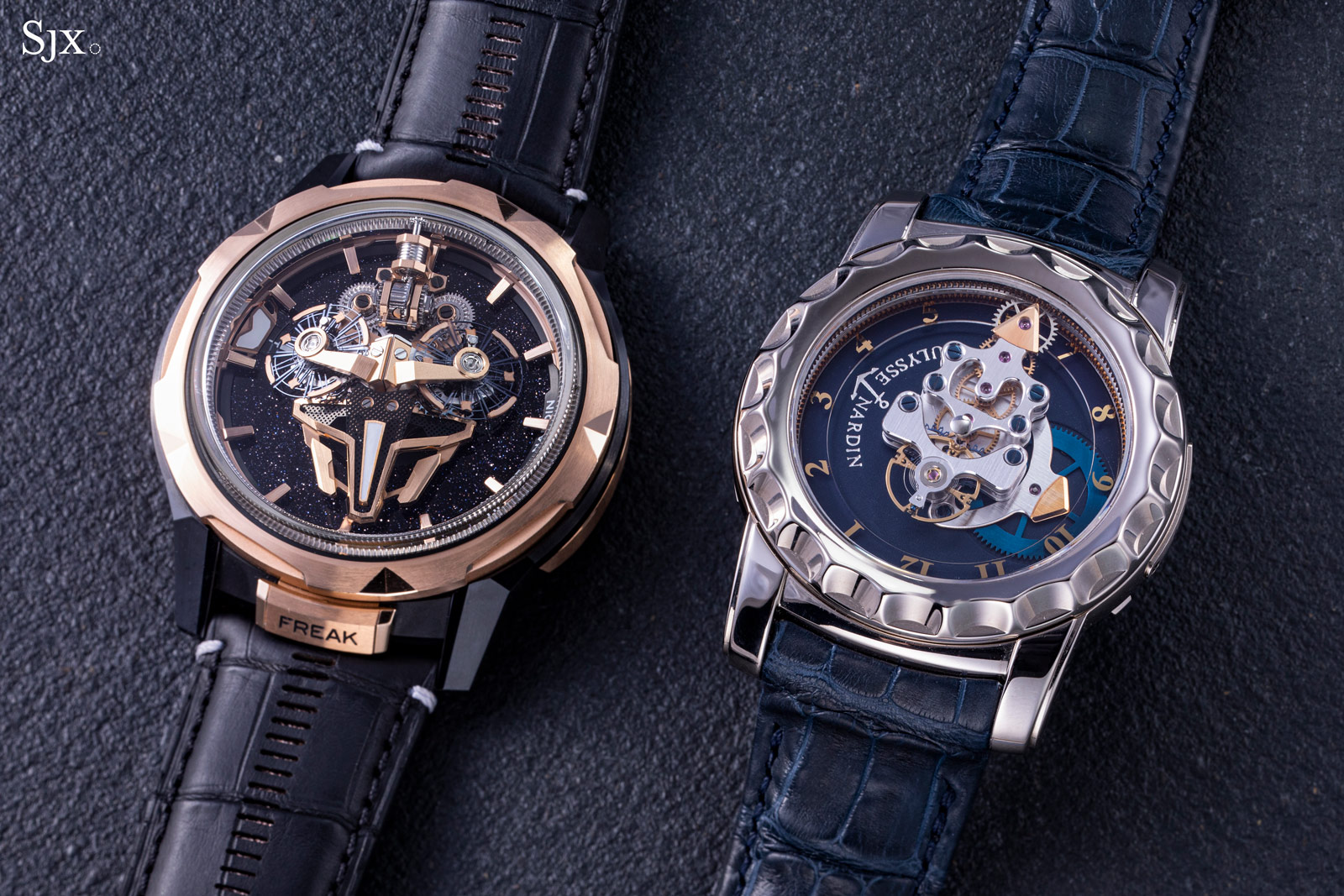
Novel ways of telling the time or exhibiting the movement have long been the focus of the avant-garde horologists. Independent watchmakers like Ressence or Urwerk have built their brands on doing away with conventional hands. Such idiosyncratic approaches to watchmaking challenge the traditions of horology, making for a more interesting horological landscape. Even before Urwerk introduced the pioneering three-dimensional cubic hour display in 2005, there was the Ulysse Nardin Freak. Launched in 2001, the Freak literally changed the face of watchmaking by transposing the movement into the dial. Two decades after its launch, the Freak is still regarded as a landmark for its audacity, from both aesthetic and technical perspective. [This story covers the origins of the Freak, from its conception to realisation, as well as its distinguishing characteristics, namely the inventive movement construction and unique escapement. Part II deals with the evolution of the unique, high-performance escapement, while Part III details the history of silicium, the proprietary Ulysse Nardin silicium hairspring, and the patented Grinder rotor.] The origins The beginning of the Freak lay in 1997, when Carole Forestier-Kasapi, then a young and talented movement designer who only recently graduated from technical college, won the Prix de la Fondation Abraham-Louis Breguet, a contest conceived to mark A.-L. Breguet’s 250th birthday that sought to recognise watchmaking ingenuity. Now the head of m...