 Revolution
Introducing the Ulysse Nardin Freak X Razzle Dazzle
The flying carrousel equipped Freak X receives a dose of artistry inspired by naval camouflage and Cubist art.
35 articles found · page 2 of 2
Revolution
The flying carrousel equipped Freak X receives a dose of artistry inspired by naval camouflage and Cubist art.
 Revolution
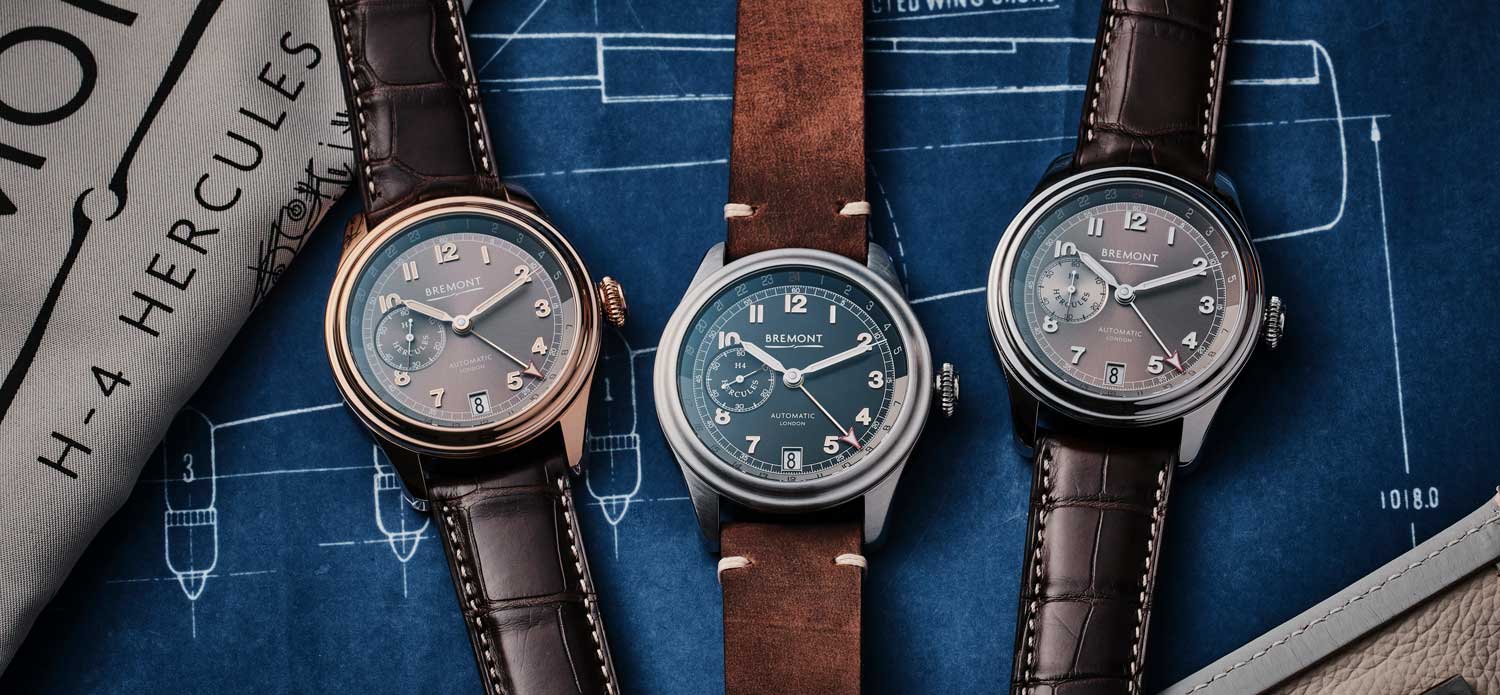
Bremont pays tribute to the H-4 Hercules a crazily large aircraft originally designed to carry allied tanks over the Atlantic during the Second World War.
 SJX Watches
Known for its innovative, avant-garde complications and cases inspired by sci-fi, Urwerk’s latest creation is doubly interesting. The UR-100 SpaceTime takes the astronomical theme even further with two quirky, celestial indicators – and it is also priced as an entry-level model. The UR-100 utilises the brand’s signature wandering-hours satellite display, where conventional hands are replaced by a semi-circular minute gauge, across which three discs mounted on a carousel sweep successively. It was originally invented in the 17th century for a Vatican City clock, then popularised for wristwatches in the early 1990s by Audemars Piguet with the Star Wheel. But it was Urwerk that took the wandering hours into the 21st century when it launched at UR-103 in 2003; though it was not the first Urwerk wristwatch, the UR-103 was the watch that put the brand on the map (and the recent UR-105 is a nod to the original). Celestial hours On the UR-100 SpaceTime, the hours wander even further: once the red minute pointer completes 60 minutes (or an hour), it disappears under a bridge and reappears through a cutout at 10 o’clock to indicate the distance travelled from the Earth’s rotation on its own axis, as measured at the equator, or 555km every 20 minutes. Another red pointer at two o’clock measures the distance travelled by the Earth orbiting the Sun, which is 35,740km every 20 minutes. Both astronomical distance displays, however, are a philosophical exercis...
 Revolution
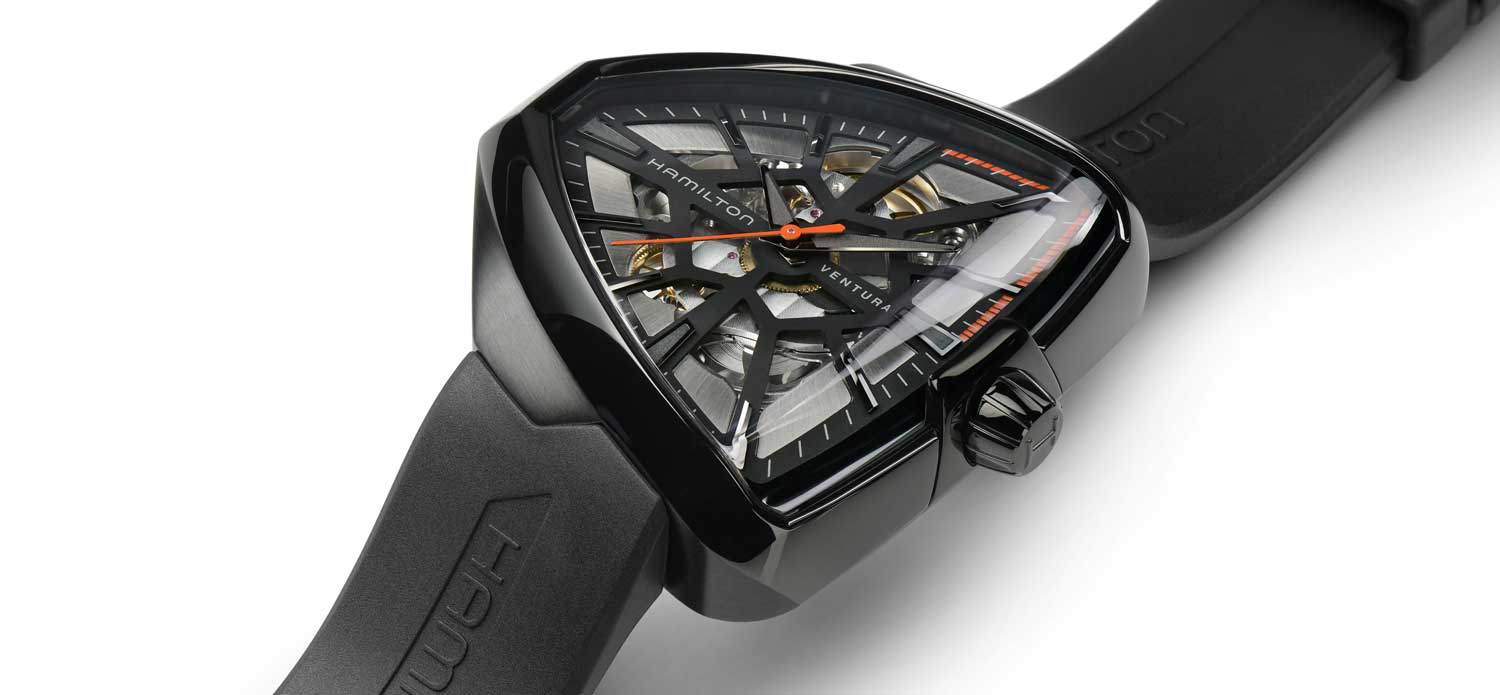
Hamilton kicked off the 2019 season with a superb pop-up exhibition at London’s Carousel Restaurant in Marylebone.
 Deployant
Highlights from Ulysse Nardin. The theme this year is X. Different. Daring. Exciting. We start with the Freak X. New movement. No dial. No hands. Hours and mins indicated by the now familiar flying carousel. Four references Ti (blue and black) CHF 21,000. Gold CHF 30,000 and Carbonium CHF 24,000. And a non-tourbillon version atRead More
Question, suggestion, or just want to say hi? Drop a note.