Watch brandsWatch wikiWatch videosVariousWatch calendarSaved articles
PopularRolexOmegaPatek PhilippeAudemars PiguetTudorGrand SeikoCartierSeikoIWCTAG HeuerBreitlingJaeger-LeCoultreA. Lange & SohneZenith

Results for Zaratsu Polishing

36 articles found · page 2 of 2

Frosted gold is very, very underrated Time+Tide
Dec 7, 2019

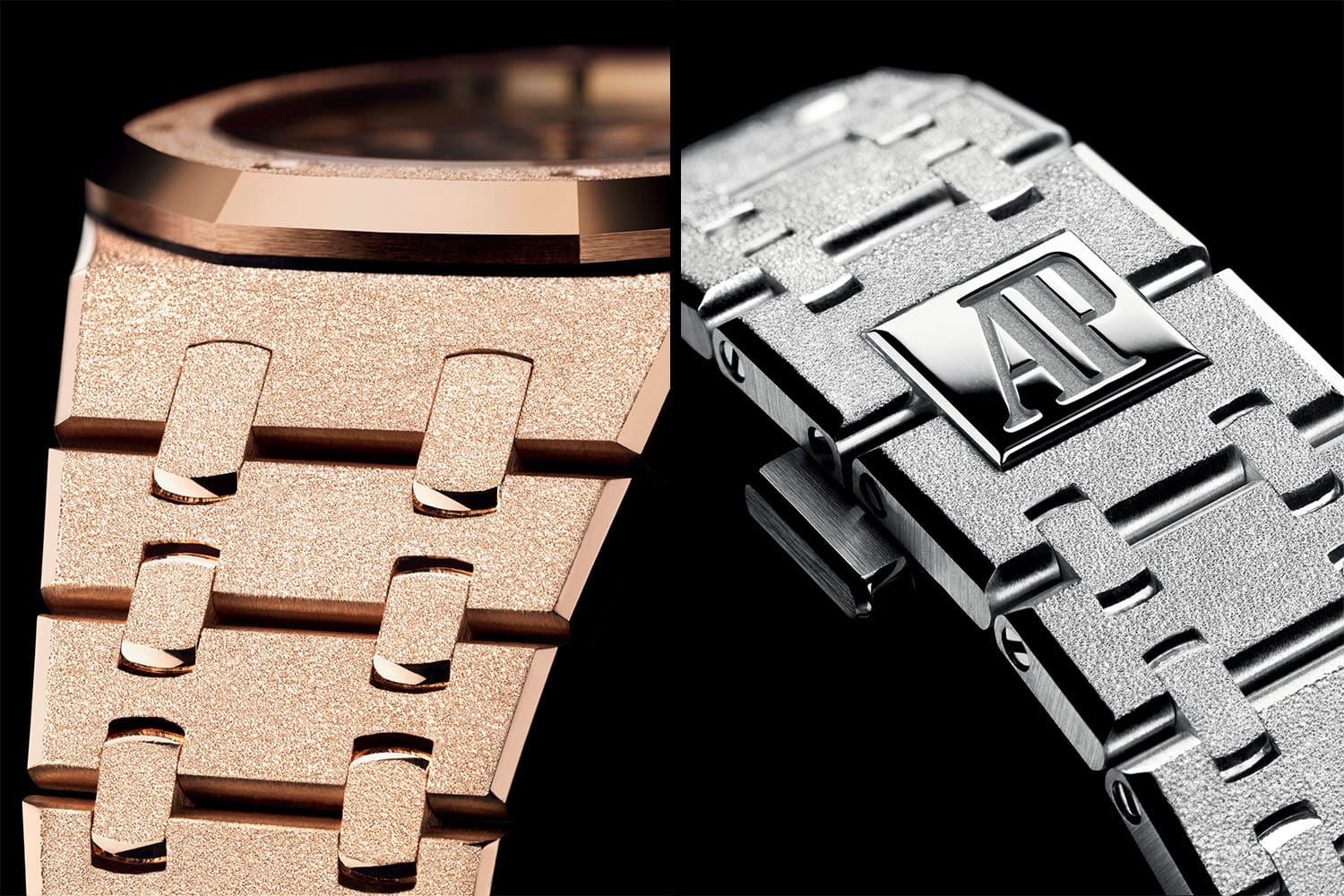
Frosted gold is very, very underrated

Editor’s note: There are lots of ways that watchmakers like to decorate their micromechanical marvels, such as engraving, polishing, brushing or even Côtes de Genève inside the case. While all of these techniques are wonderfully effective when done well, one of the most visually impressive (and generally underrated) techniques to finish a watch is hammering … ContinuedThe post Frosted gold is very, very underrated appeared first on Time+Tide Watches.

Kikuchi Nakagawa Introduces the Murakumo White Dial SJX Watches
Patek Philippe Calatrava ref 96 considered Nov 28, 2019

Kikuchi Nakagawa Introduces the Murakumo White Dial

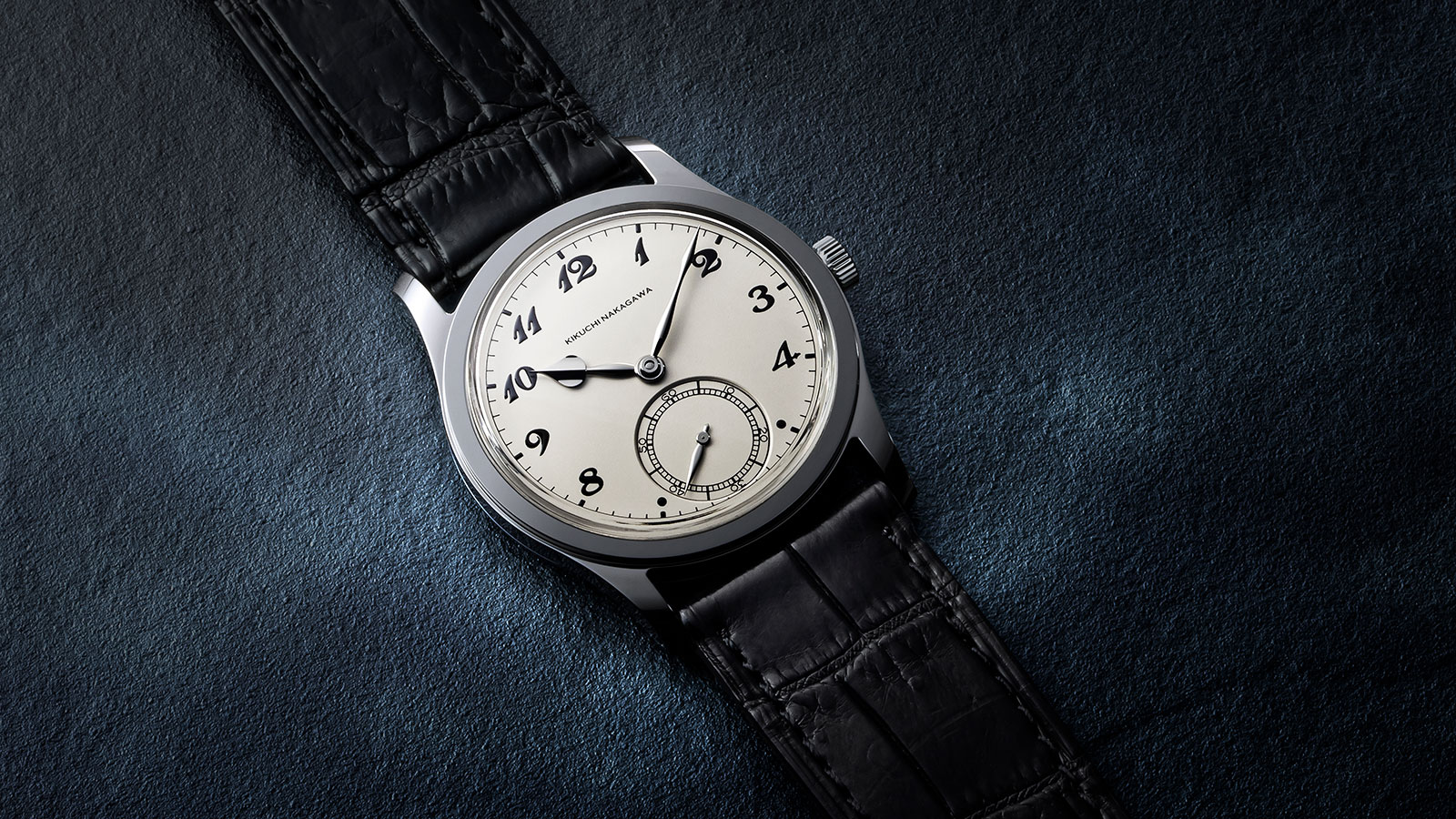
Unveiled last year as the debut product of Kikuchi Nakagawa, the Murakumo is modelled on the 1930s Patek Philippe Calatrava ref. 96, considered by its founders as the ideal classical men’s wristwatch. Originally available only with a matte black dial, Kikuchi Nakagawa has now unveiled its inverse – the Murakumo with white dial and black numerals. Black polishing Founded by a pair of Japanese watchmakers, Yusuke Kikuchi and Tomonari Nakagawa – with Mr Nakagawa having worked at Citizen as it developed the tourbillon – the brand is all about two things: components supplied by the very best Japanese specialists (save for the dial and movement), and exceptional black polishing of all the external steel parts. The three-dimensional hands are made by precision machine shop Yuki Precision, while the case and buckle are courtesy of Matsuura Works. The parts are all black polished by hand, creating a remarkably flat, mirror-like surface. With some Swiss help The dial on the other hand, comes from Swiss supplier Gilwatch, located in Geneva. Particular attention was paid to the printed numerals, which require several layers of pad printing in order to give them height. Also from Switzerland is the movement, which is a Vaucher VMF 5401. Though high quality in finish and construction – variants of the same calibre are used by Hermes, Richard Mille and Parmigiani – the movement is relatively pedestrian compared to the rest of the Murakumo. That being said, Kikuchi Nakagawa...

Editorial: Movement Finishing in the Instagram Age SJX Watches
Sep 10, 2019

Editorial: Movement Finishing in the Instagram Age

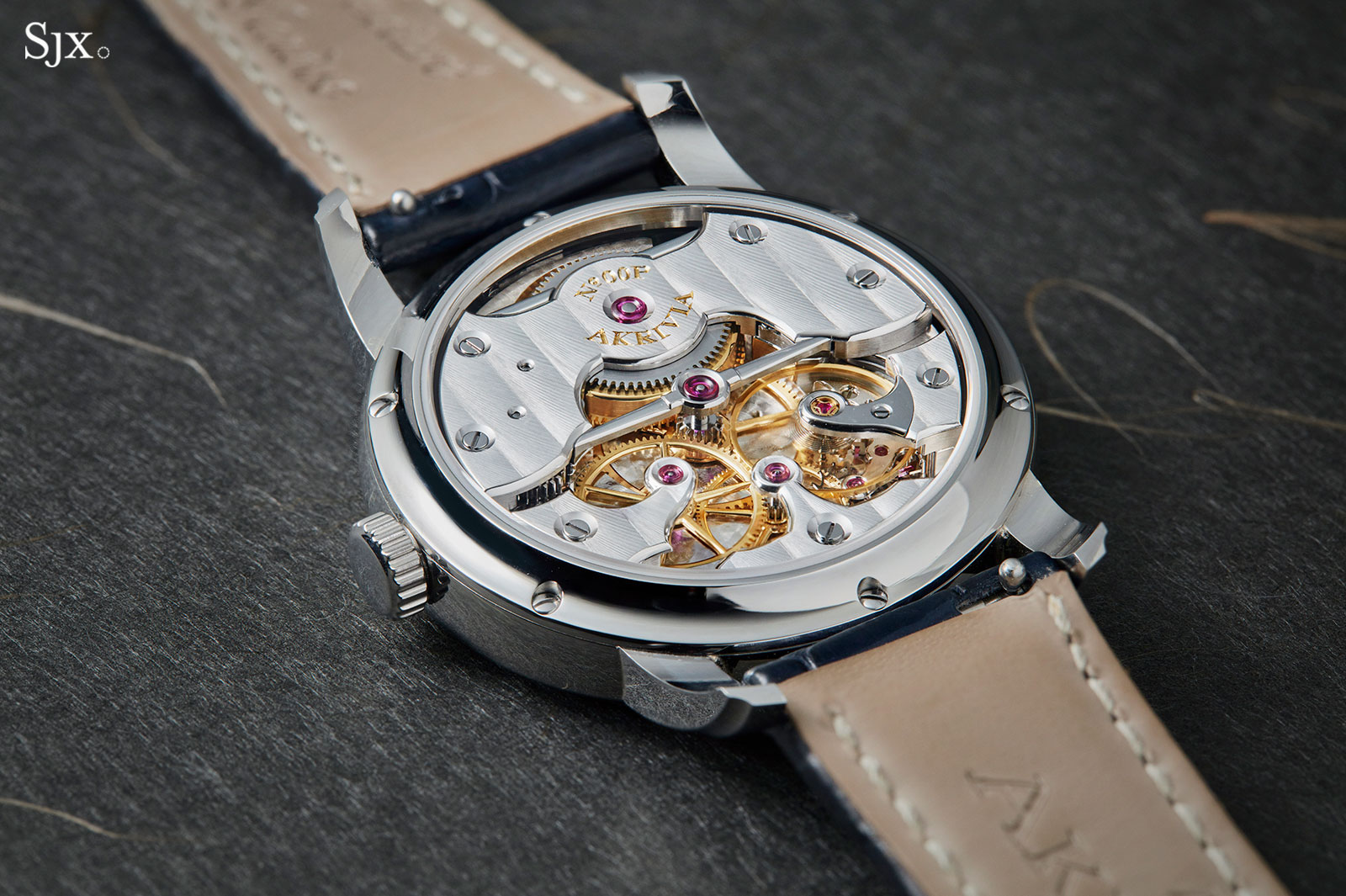
Thanks to Instagram, and social media in general, fine watchmaking has become something of a spectator sport. Roger W. Smith’s YouTube channel has over 10,000 subscribers, and though he produces only about a dozen watches per year, his video about polishing the flanks of pinions has been viewed more than 115,000 times. Akrivia, which produces watches on a similar scale, has almost 40,000 followers on Instagram and their videos, which focus on hand finishing techniques, get thousands of views and likes. These numbers suggest a huge appetite among watch enthusiasts for information about movement construction and finishing. Yet while collectors now have unprecedented access to this kind of information, finishing is a highly nuanced topic that doesn’t readily lend itself to the brevity of an Instagram comment. This can make it difficult, especially for new collectors, to understand how finishing fits into the overall value proposition offered by a fine watch. What is finishing and why it matters Finishing is the process by which the components of a watch movement are treated between fabrication and final assembly. At lower price points, finishing is done by machine. At higher price points, it is often applied by hand. The results of good hand finishing are unmistakable, often cited as the main reason for drastic price differences between watches. I asked Akrivia founder Rexhep Rexhepi about the value of hand finishing, and he replied, “Let’s face facts – the differe...

Piaget’s Polo Combines the Flying Tourbillon and Moonphase SJX Watches
Piaget s Polo Combines Feb 11, 2025

Piaget’s Polo Combines the Flying Tourbillon and Moonphase

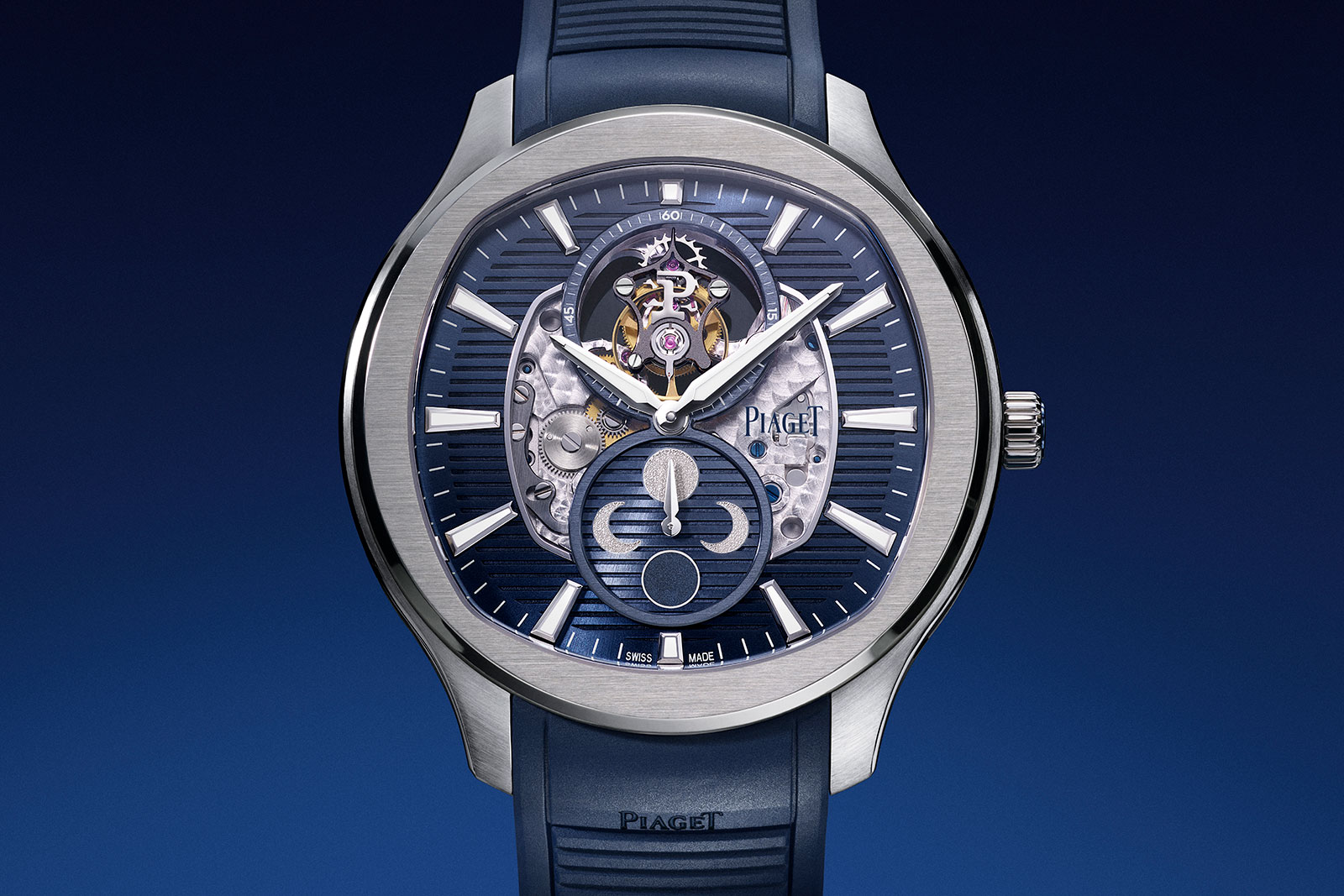
Piaget is dialling up the complexity of its popular sorts watch with the Polo Flying Tourbillon Moonphase. Housed in a 44 mm, cushion-shaped titanium case, the new Polo features a partially open-worked dial that reveals the flying tourbillon - with cage topped by a stylised “P” - alongside a moon-phase indicator at six o’clock. Interestingly, the ultra-thin cal. 642P inside is a form movement in a tonneau shape. Initial thoughts The Polo Flying Tourbillon Moonphase adds an interesting pair of complications to the Polo, but without impacting the simplicity or symmetry of the dial. It’s a high-end alternative to the more affordable Polo models, like the Skeleton Ceramic, but it is also the largest Polo at 44 mm in diameter. This will affect wearability, making it versatile than the smaller-format Polo models. That said, because the movement is ultra-thin, the large case has an elegant, thin profile. As an aside, an open back would have been a welcome addition, since it would provide a view of the tonneau-shaped movement. Tourbillon This 44 mm cushion-shaped titanium case is finished with alternating mirror polishing and satin-brushing, complemented by blue-coated inserts on the case flanks. Water-resistant to 100 m, it frames a partially open-worked dial that’s finished with horizontal fluting as is standard for the Polo. Visible from both the front and back, the flying tourbillon is framed by a blue seconds ring on the dial, allowing the cage to double up as ...