 SJX Watches
Insight: Bidirectional versus Unidirectional Winding
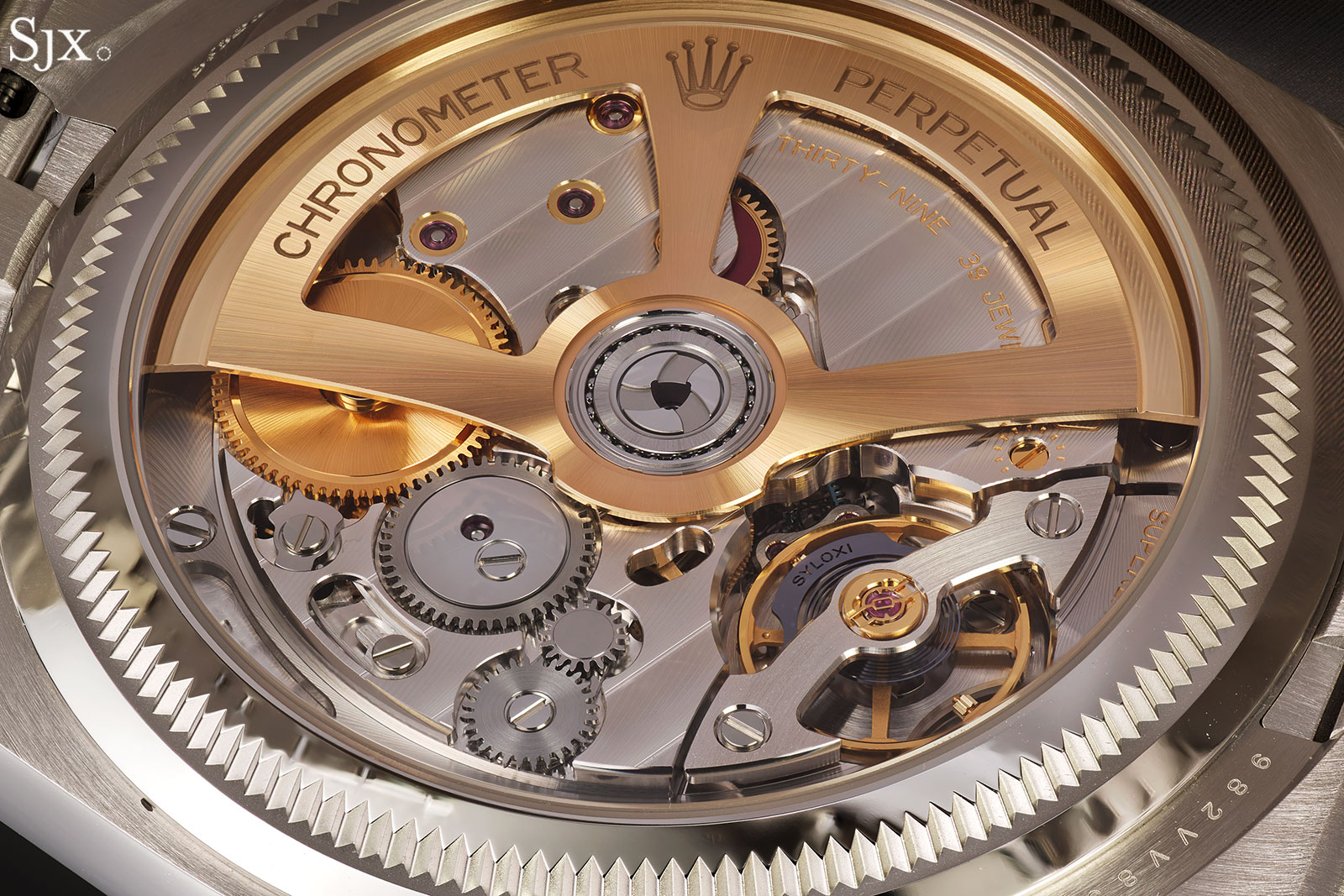
One of the quieter debates still ongoing in the horological world revolves around the difference in winding efficiency between unidirectional and bidirectional winding mechanisms. There are two schools of thought on the subject: some watchmakers remain convinced that a bidirectional winding mechanism is the clear winner in terms of efficiency, while a second group claims there are no real performance gains over simpler unidirectional winding mechanisms. Harvesting energy The basic idea behind automatic watches is to harvest energy from the wearer’s natural arm movements to wind the mainspring. The rotor is an unbalanced mass (its axis of rotation doesn’t coincide with its center of mass) that is subject to both gravity and the inertial forces exerted by the wearer. As the watch moves through different positions, the rotor spins in unpredictable bursts, generating substantial kinetic energy. A winding mechanism then turns the fast revolutions of the rotor into slower but more torque-heavy turns that wind the mainspring. Common transmission ratios cited by horological textbooks range between 1:110 and 1:180 — meaning that the barrel click wheel only makes one turn for every 110 to 180 turns of the rotor. In short, the winding mechanism transforms the erratic kinetic energy of the rotor into potential elastic energy, stored inside the mainspring’s coils. A short history Much like any sub-genre of horology, the history of automatic winding is lengthy and nuanced. This ...