Deployant
Review: Manufacture Royale 1770 Micromegas Revolution
Review of Manufacture Royale 1770 Micromegas Revolution with price, hands-on analysis and live high resolution photographs.
949 articles · 8 videos found · page 29 of 32
Bracelet that flows directly from the case without separate end-links. Genta\'s 1972 Royal Oak innovation.
Every AP Royal Oak: 5402ST A-Series, 14790, 15400, 15500, 15510, Jumbo 15202 / 16202, Chronograph 26240.
Swatch's plastic Royal Oak needs an actual strap the moment you get it home. Here are the four makers doing colour-matched integrated-lug Royal Pop straps in leather, rubber, canvas and everything else. Prices, colour ranges, quality, and which to buy per watch reference.
Gérald Genta's overnight 1971 sketch that invented the luxury steel sports watch.
Deployant
Review of Manufacture Royale 1770 Micromegas Revolution with price, hands-on analysis and live high resolution photographs.
Deployant
Full hands on review of the Manufacture Royale 1770 Voltige with live pictures, specifications and price.
Deployant
Review of Manufacture Royale 1770 Micromegas with analysis, hands-on session, full specifications and prices. BaselWorld 2015 Novelty.
Revolution
Recently I paid a brief visit to one of the smaller Independent brands; ‘Manufacture Royale’. Now you may think; again another new watch brand? Well yes and no. Manufacture Royale was in fact already established in 1770. The extravagante brand has been re-born in 2010, is now in the safe hands of Alexis Gouten, Marc […]
Revolution
Marc Guten, Co-Founder of Manufacture Royale shows us the new 1770 Flying Tourbillon and the Androgyne Tourbillon, two watches with an amazing case design. Interviewed by Adi Soon.
Monochrome
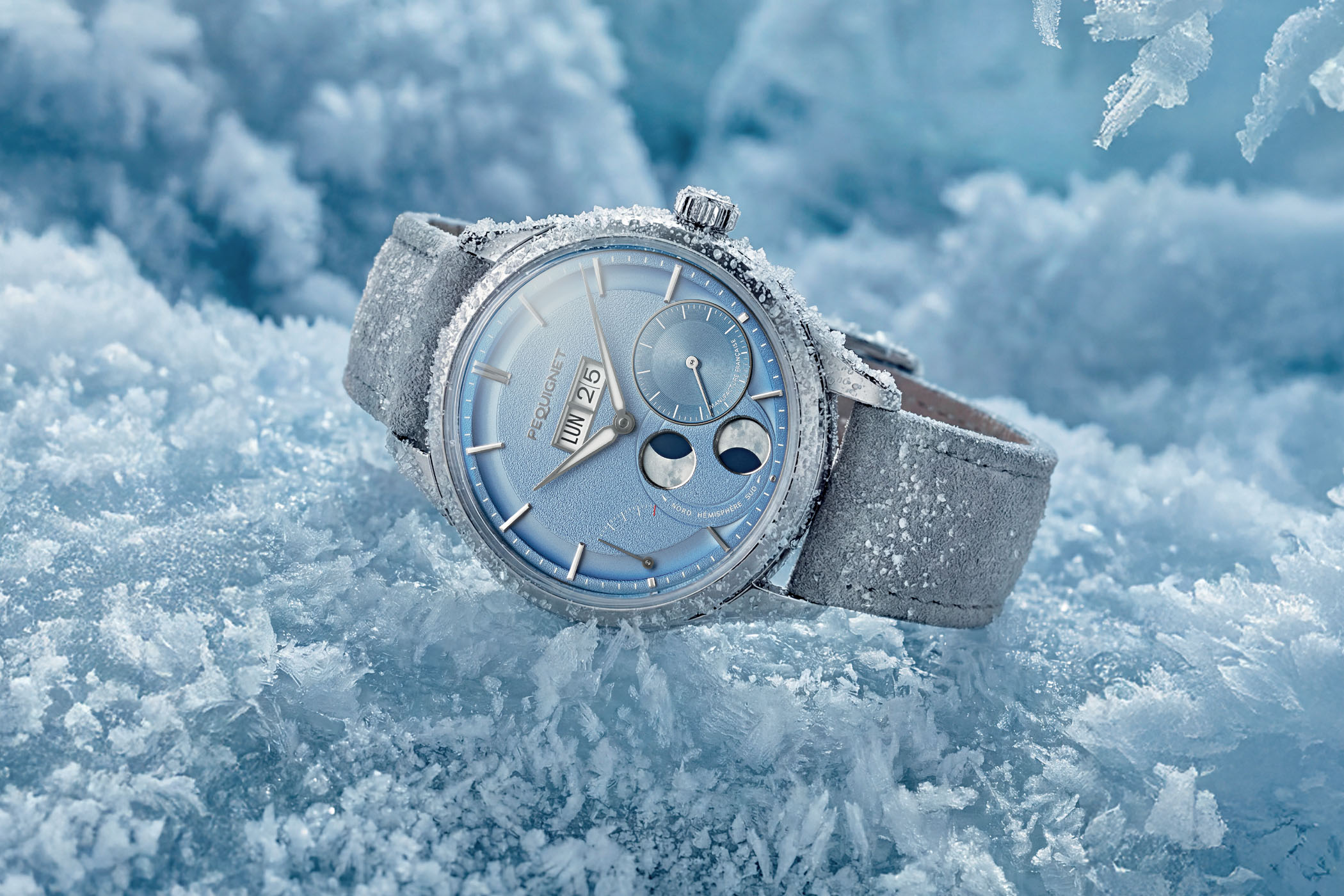
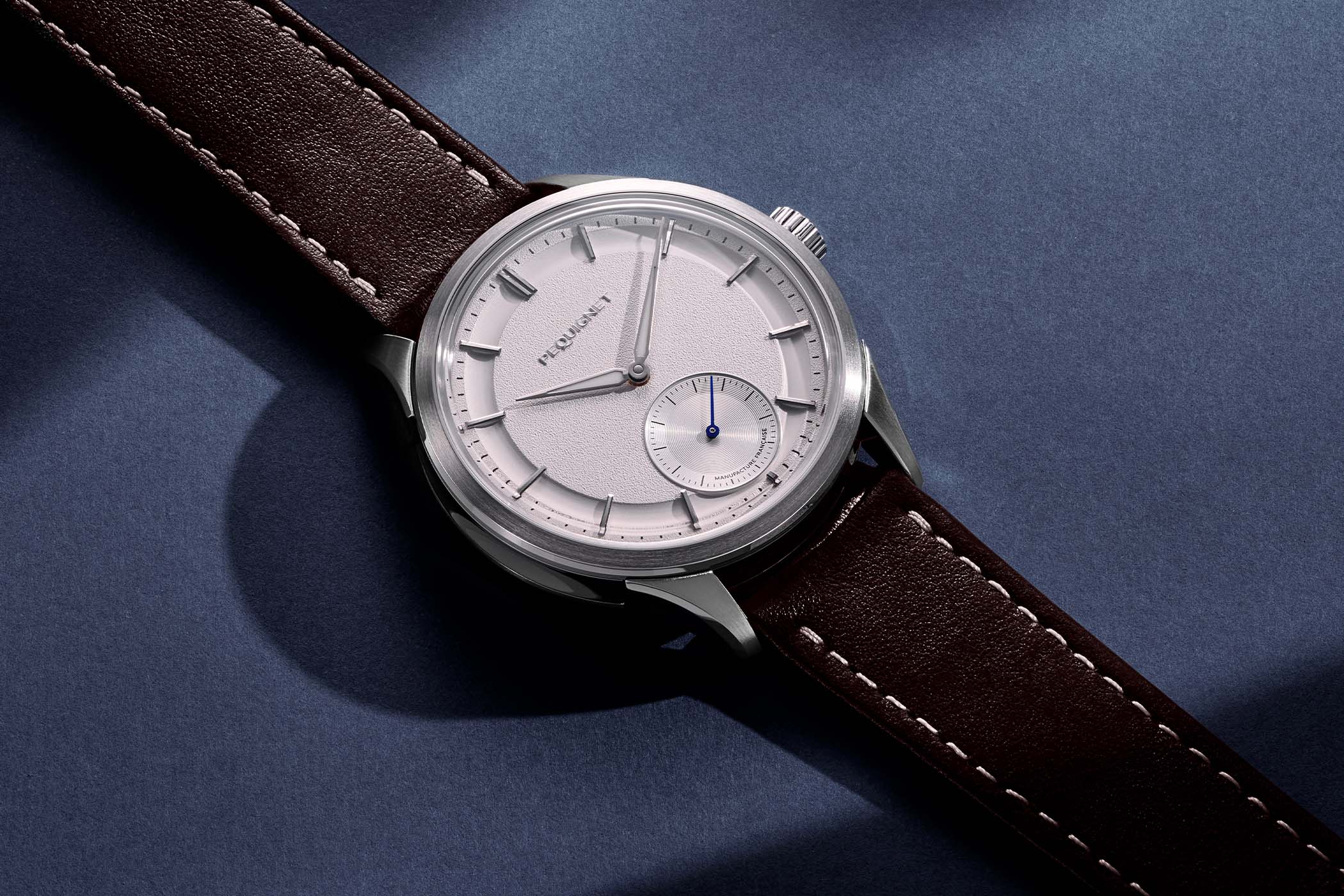
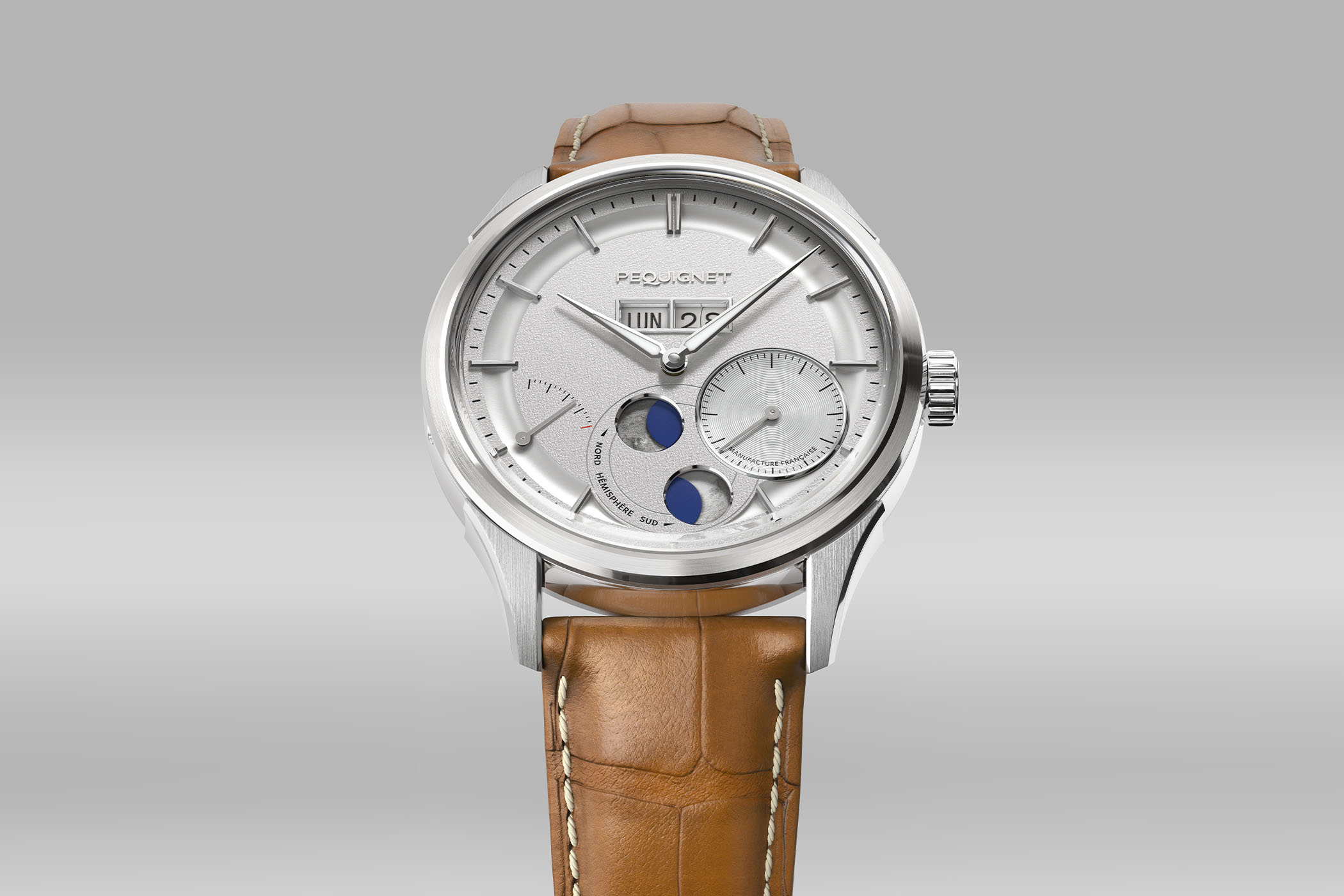
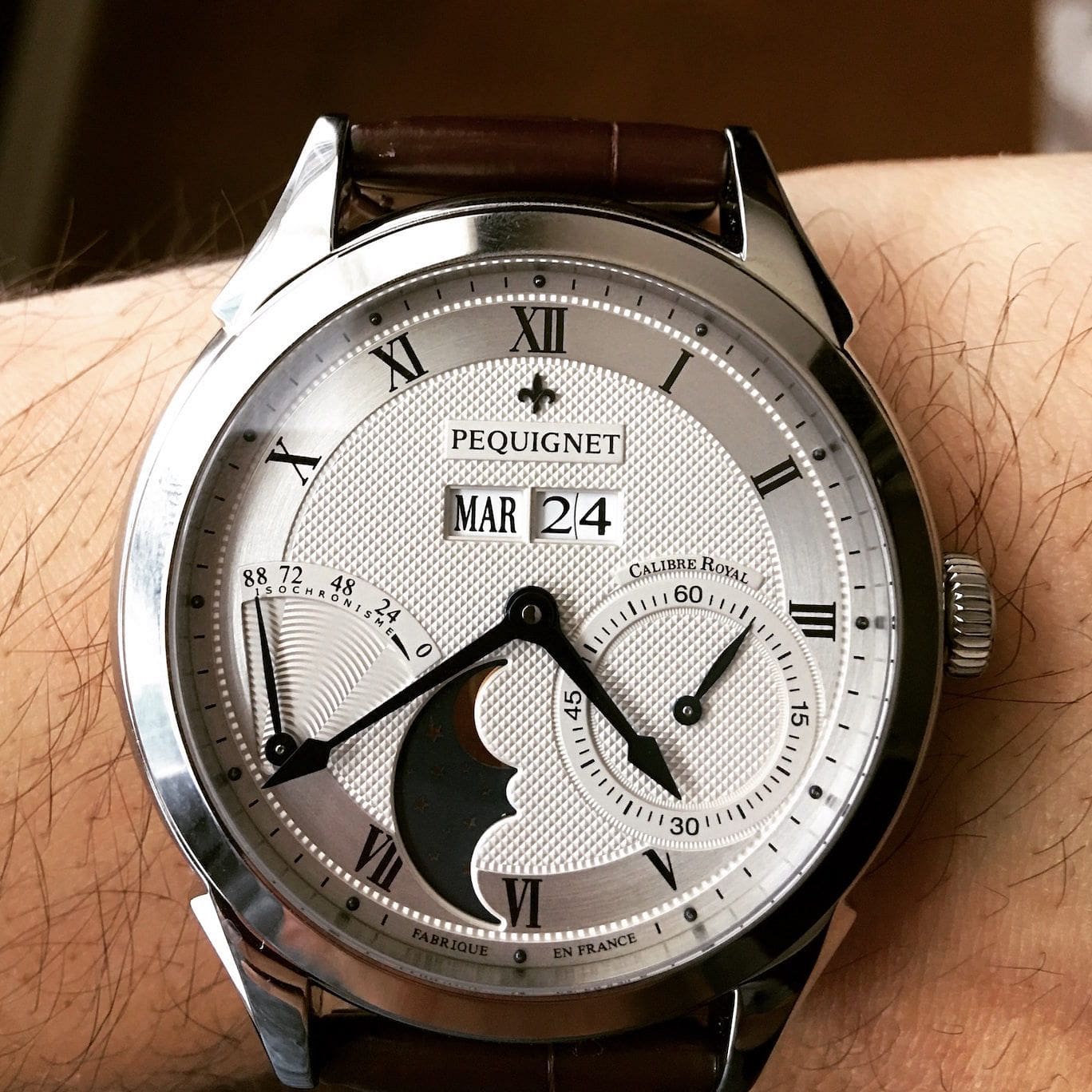
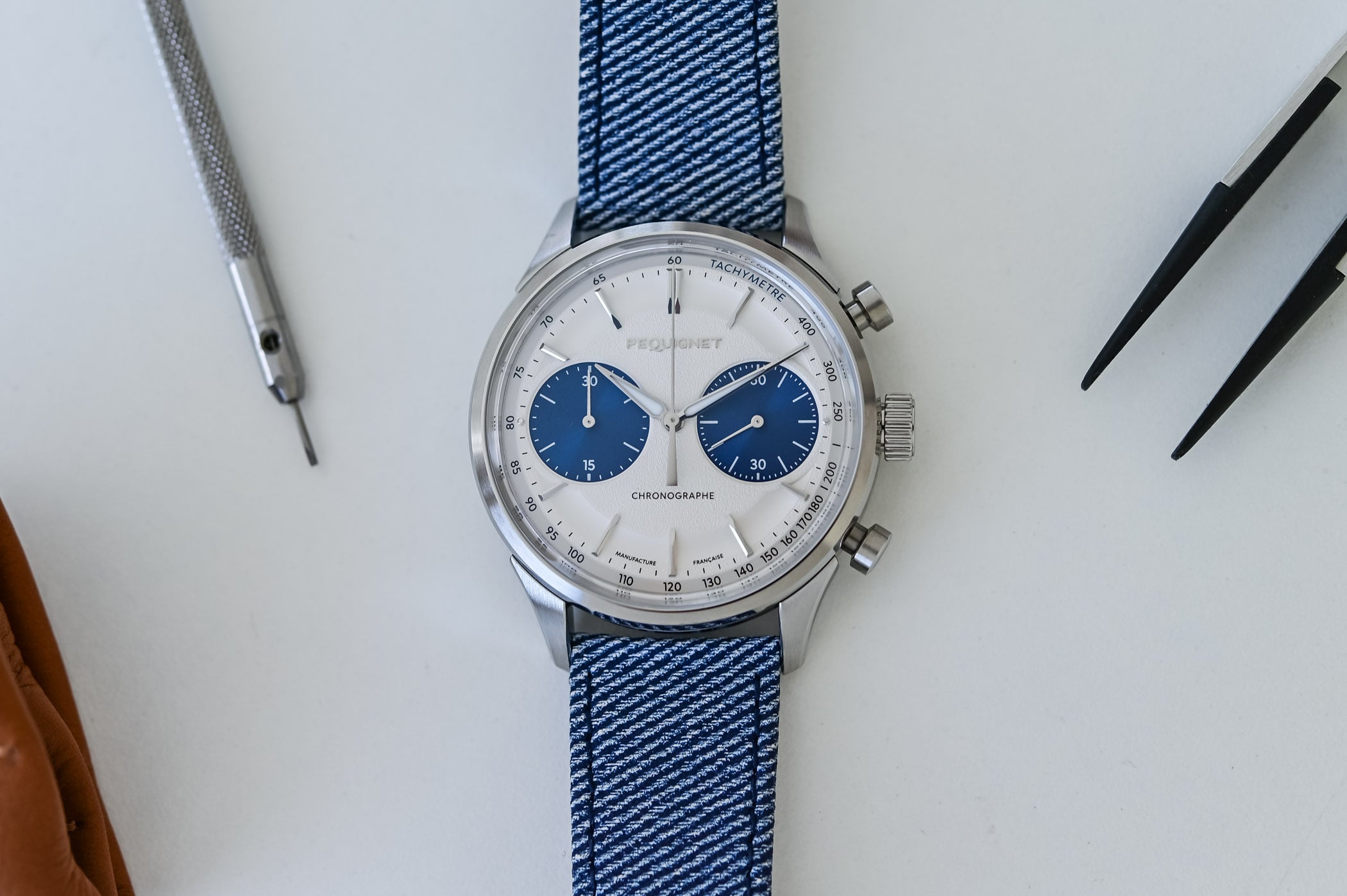
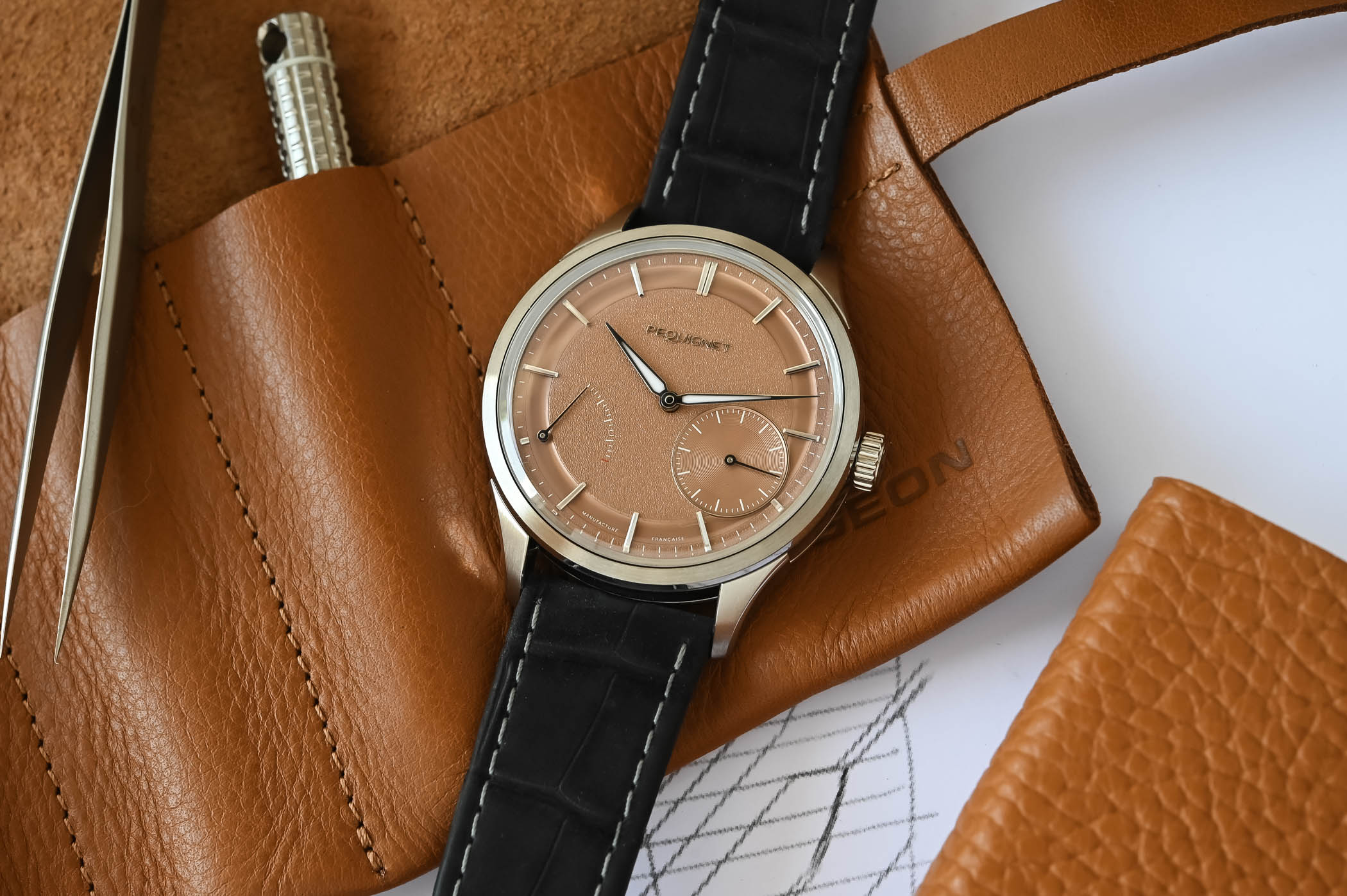
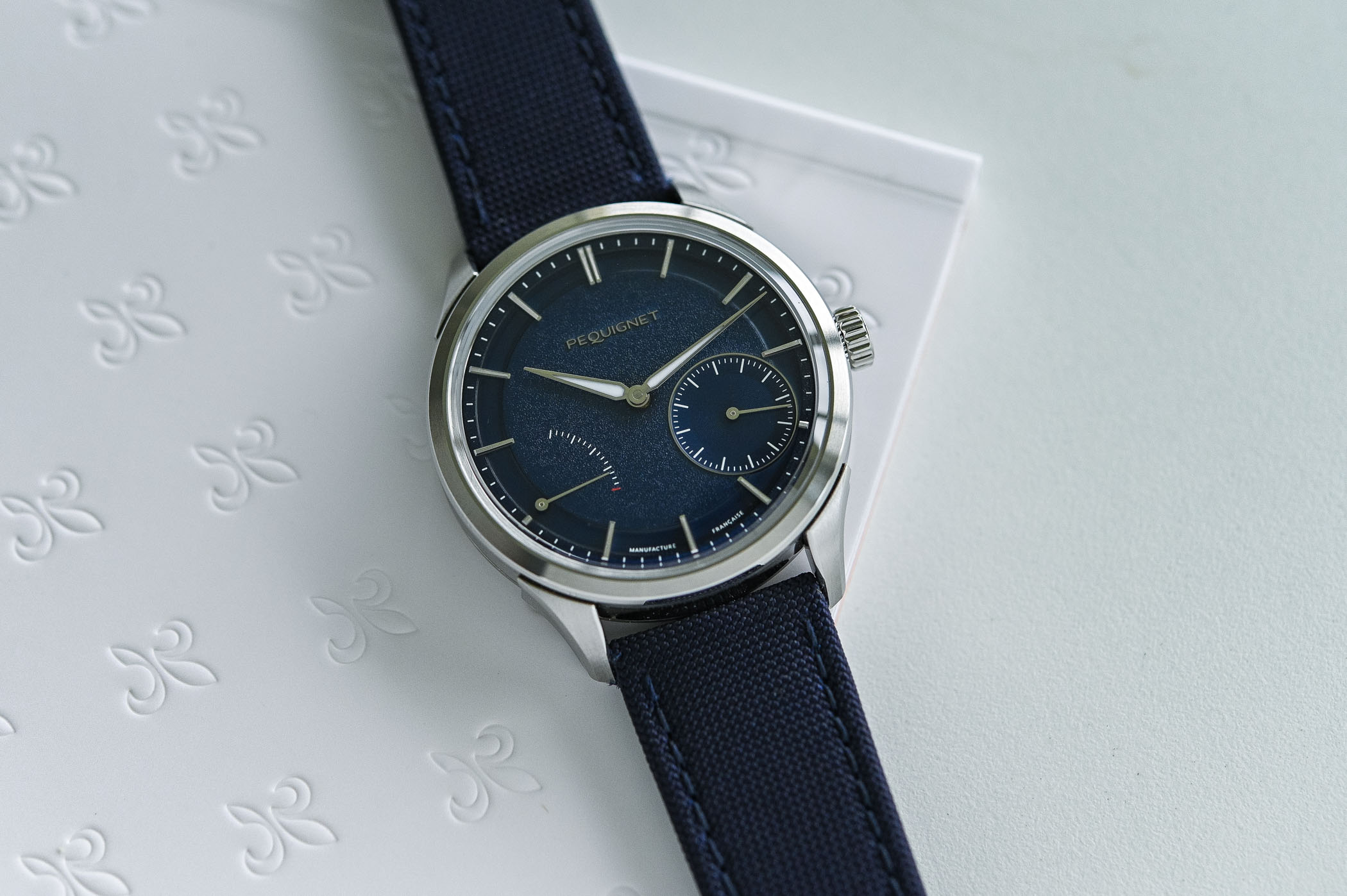
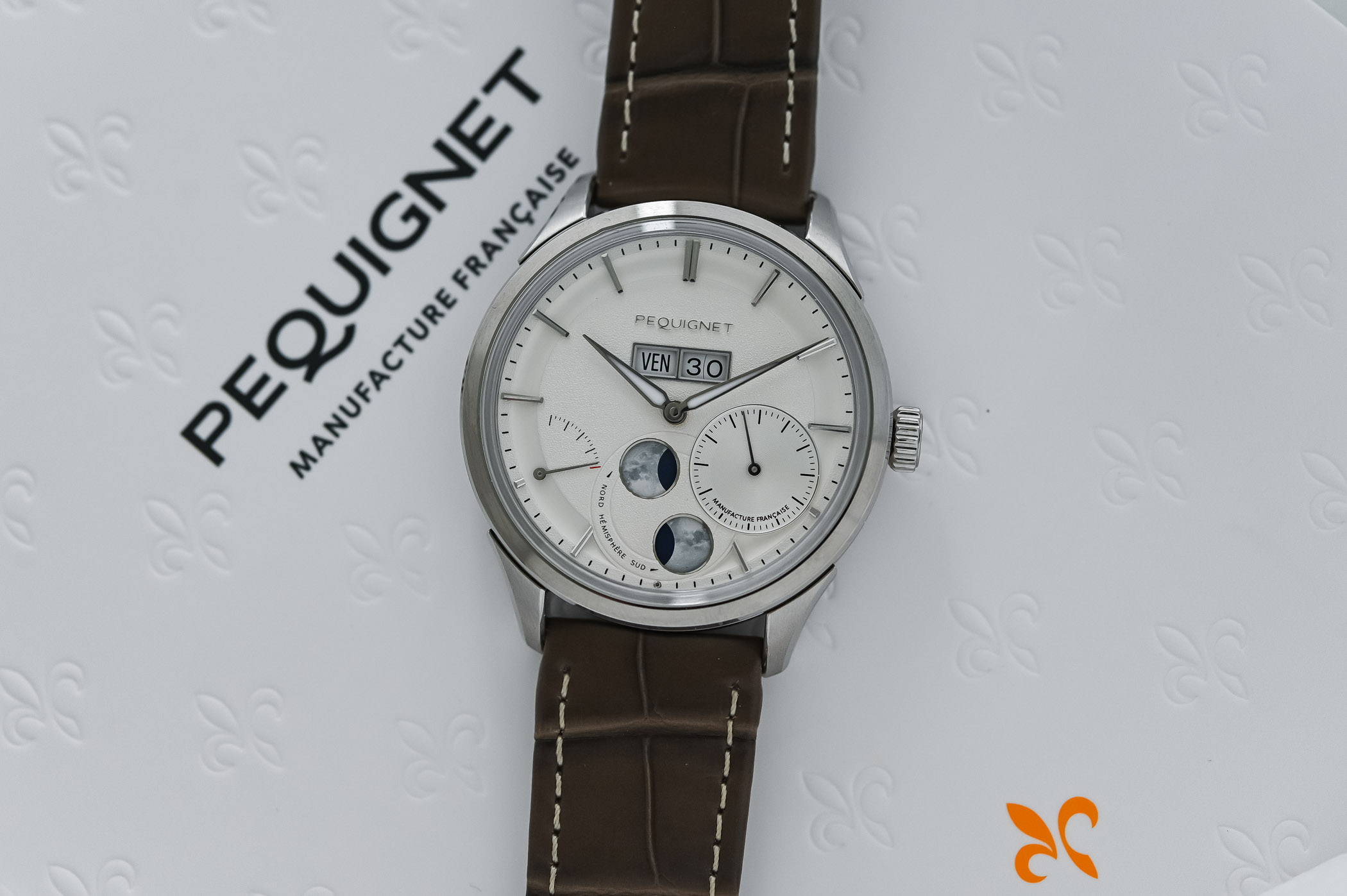
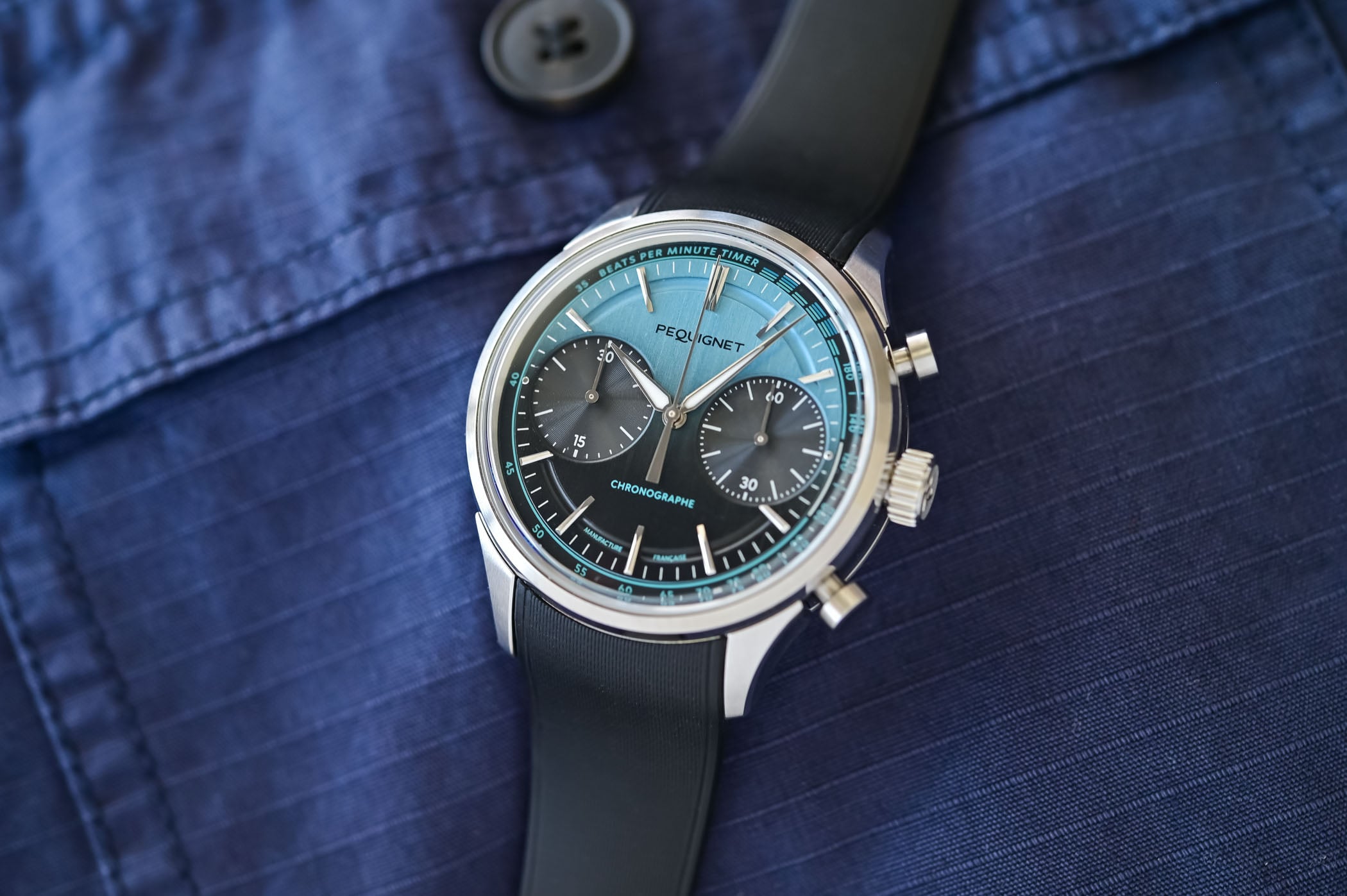
Just a stone’s throw north of Neuchâtel, Switzerland and crossing the border into France, you will stumble upon a town called Morteau. Much like Le Locle and the Vallée de Joux are for the Swiss, Morteau is the heart of French mechanical watchmaking. It is here that you will find the Pequignet manufacture, a company […]
Monochrome
There is something happening in terms of watchmaking in France at the moment… Something quite interesting, if I must be honest, and I’m not saying this only because I’m French. We’re witnessing a resurgence of French watchmaking, with brands such as Yema delivering accessible watches equipped with made-in-France manufacture movements, or Trilobe recently unveiling an […]
Monochrome
France’s golden age of horology during the 17th and 18th centuries produced notable figures like Julien Le Roy, Ferdinand Berthoud and Abraham-Louis Breguet. And it’s fair to say that had it not been for the expulsion of French Protestants following the revocation of the Edict of Nantes in 1685 by King Louis XIV, Swiss watchmaking […]
Monochrome
French watchmaking is enjoying a renaissance today marked by the revival of extinct names and new micro-brands braving the arena. However, none of them can boast Pequignet’s claim to fame as “one of the only French Manufactures of Haute Horlogerie.” Following a period of trials and tribulations, Pequignet is back in business with a refreshed […]
Who wants a longer power reserve? C'mon down!
Two Broke Watch Snobs
Ok, listen up - if you're an Egyptologist or a member of the Queen's Royal Guard then we got questions. Do you regularly listen to our show? What watches are you allowed to wear? Can you wear a watch? Oh, and Kaz discovers the wonders of actually remembering to use his freaking inhaler on air - asthma be damned!
Hodinkee
What We Know Gerald Charles, known for their Maestro cases, continues to evolve that idea at this year's Geneva Watch Days, but this is the first time they've offered something where every piece is genuinely unique. It's based on a Gérald Genta design from 2007 called the Sarawak, a diamond-and-ruby integrated-bracelet watch created for the Royal family of Sarawak—unknown to the public until 2024—and the direct ancestor of the Masterlink. It's impressive to see the brand continue to iterate on Genta's own designs, decades on. The case looks familiar—it's a classic Maestro, coming in as a square at 38mm x 38mm. The svelte dimensions continue inside: a profile just 7.99mm thin, aided by the 2.67mm movement. There are three colorways here—Golden Rose, Rhodium, and Golden Yellow. The dial is clearly the focal point here, bringing a new element to the Masterlink lineup. Each dial is individually hand-hammered by an artisan at Gerald Charles's atelier in Geneva. It's made of maillechort—also known as German silver or nickel silver, a copper-nickel-zinc alloy — and is typically used for movement bridges and plates rather than dials. It wasn't chosen because it's easy to work with—quite the opposite: it requires longer production times, wears tools faster, and results in a higher rejection rate. Since each dial is hammered by hand, no two are identical, and there are no applied indexes here, leaving the hundreds of small facets in full view. Inside is the ultra-th...
Worn & Wound
From the imposing astronomical clocks of Tudor England to the exquisite pendant watches of Victorian Britain, timekeeping has long been a symbol of power, prestige, and technological marvel within Europe’s royal courts. This new series explores the fascinating evolution of clocks and watches crafted specifically for royalty, tracing how these intricate masterpieces reflected the tastes, ambitions, and innovations of monarchs. Through the lens of craftsmanship, artistry, and historical significance, we reveal how these royal timepieces marked the passage of dynasties and empires. King George III, who reigned from 1760 to 1820, had a deep interest in science, particularly astronomy, horology, mathematics, and natural philosophy. He was one of the most scientifically minded British monarchs and commissioned several important horological instruments and supported scientific institutions during his reign. King George III (1738–1820) is often remembered for his struggles with mental illness during his long reign, but he was also deeply engaged in science, astronomy, and horology. Although his interest did not necessarily come directly from his grandfather, King George II, there are examples of important commissions made prior to him succeeding to the throne. One such piece is the magnificent Grand Orrery below made by leading London maker, Thomas Wright in 1733. Image 1 – George II’s Grand Orrery, Fleet Street, made by Thomas Wright, c.1733. King’s College London © T...
Monochrome
Awake is adding three new versions to its Son Mai collection, with Frosted Leaf Storm, Blood Moon, and Lagoon variants. The Frosted Leaf first appeared in 2025 with blue, green, and moka dials, followed by the Royal Red and Royal Blue versions, each with its own take on the lacquer work. It also gave the […]
Worn & Wound
I’m not quite sure that it would be correct to say that pocket watches are “having a moment,” but I’ve certainly thought and written about pocket watches more in 2026 than in any year I can remember. Mostly that’s due to an approximately two week stretch earlier this year when the entire watch community was focused like a laser beam on the Royal Pop. I’m not exactly sure what happened since (has anyone actually seen a Royal Pop in the wild?) but that Swatch x Audemars Piguet collab remains one of the biggest stories of the year, even if they flew a little too close to the sun. There was also this Timex desk clock, which is basically a pocket watch with an integrated stand, and of course this new Horological Machine from MB&F;, which is not a pocket watch at all, but exists in that “watch as desk object” world and kind of begs the user to take the strap off the case for mounting purposes, leaving you with what amounts to a pocket watch without the chain or lanyard. OK, that last one might be a stretch. But nevertheless, when a press release from Bangalore Watch Company came through to let me know that the India based brand had created a midcentury style pocket watch, I started to think about the possibility that we might be in the midst of a trend. I don’t actually think we are – pocket watches perhaps are a little over the line on the anachronistic spectrum to catch on with enough people to make this a thing in 2026, but it’s a nice looking clock reg...
Worn & Wound
From the imposing astronomical clocks of Tudor England to the exquisite pendant watches of Victorian Britain, timekeeping has long been a symbol of power, prestige, and technological marvel within Europe’s royal courts. This new series explores the fascinating evolution of clocks and watches crafted specifically for royalty, tracing how these intricate masterpieces reflected the tastes, ambitions, and innovations of monarchs. Through the lens of craftsmanship, artistry, and historical significance, we reveal how these royal timepieces marked the passage of dynasties and empires. Maria Theresa was the ruler of the Habsburg monarchy from 1740 until her death in 1780, and the only woman to hold the position in her own right. Though crowned as Archduchess of Austria and Queen of Hungary and Bohemia, her true authority came from willpower, reform, and image-making. Maria Theresa ruled not as a king in disguise, but as a monarch in her own right, one who embraced both tradition and the flux of the Enlightenment. Horology, like art and music, became part of her sovereign language and a way to express her modernising ambitions and cultivated authority. Maria Theresa was born in Vienna on the 13th of May 1717, the eldest daughter of Emperor Charles VI and Empress Elisabeth Christine of Brunswick-Wolfenbüttel. As a child of the Habsburg dynasty, she grew up in the Hofburg Palace (below) surrounded by the rituals and splendour of imperial court life. Although her father’s hopes ...
SJX Watches
In episode 46 of the SJX Podcast, we examine the Swiss watch industry’s June export figures, which confirm the strength of the American market and reveal the impact of the Royal Pop. The episode also explores Rolex’s unexpected activity in clockmaking, beginning with the brand’s patents for a traditional inclined-plane clock that was hiding in plain sight at Watches & Wonders. We also share impressions of the Rolex Submariner Desk Clock released late last year — a conservative-looking but impressively constructed object powered by an unusually sophisticated quartz movement. Listen now on Apple Podcasts, Spotify, and YouTube.
Worn & Wound
From the imposing astronomical clocks of Tudor England to the exquisite pendant watches of Victorian Britain, timekeeping has long been a symbol of power, prestige, and technological marvel within Europe’s royal courts. This new series explores the fascinating evolution of clocks and watches crafted specifically for royalty, tracing how these intricate masterpieces reflected the tastes, ambitions, and innovations of monarchs. Through the lens of craftsmanship, artistry, and historical significance, we reveal how these royal timepieces marked the passage of dynasties and empires. Louis XIV (1638–1715), the ‘Sun King’, was not only a patron of the arts but also an avid collector of scientific instruments, clocks, and watches. His interest reflected both his fascination with astronomy and mechanics, and his desire to project royal magnificence through technological marvels. Louis XIV ascended to the throne of France as a child, inheriting the crown at just four years old after the death of his father, Louis XIII. His early years were shaped by regency under his mother, Anne of Austria, and the powerful guidance of Cardinal Mazarin, who navigated the kingdom through internal rebellions and European conflicts. Emerging from this formative period, Louis assumed full control of the kingdom at the age of 23, determined to consolidate royal authority and establish himself as the embodiment of absolute monarchy. His rise to power was not just a succession of events, but th...
Worn & Wound
I don’t really have a ton of evidence to support this, but I have a vague sense that clocks are maybe about to have a moment. There seem to be some signs. There’s the Audemars Piguet x Swatch collaboration, which, for all the ink spilled about the disaster of a rollout, has the potential (still!) to be a big pop culture moment this year, and I have a feeling many future owners of the Royal Pop will use it as a desk clock in some fashion. There was the recent launch of a new Horological Machine from MB&F; which is, basically, a big robot clock. Earlier this year, a real highlight of the Louis Vuitton slate was a clock made in partnership with L’Epée (also a collaborator on the MB&F;). It just seems like an unusual amount of clock activity, coupled with a similarly unusual amount of interest in said clocks. That leads me to one of the more unexpected and interesting things I’ve seen from Timex in a bit, the new Waterbury America 250 Table Clock. Part of a series of releases commemorating the 250th anniversary of the signing of the Declaration of Independence, the clock draws on classic pocket watch design language and is a pretty attractive hunk of stainless steel that I think would look good on many a desk, whether it belongs to a watch lover or not. The clock case is a mix of brushed and polished steel, with star accents along the caseband and a guilloche engraving with a gold tone emblem on the retractable lid. A button on the side of the case releases the lid ...
Monochrome
Bremont’s lineup of rugged pilot and military tool watches has earned the British brand commissions for bespoke watches for military personnel and specialist groups around the world. Since 2019, Bremont has been permitted to use the signs, symbols and heraldic badges of the Ministry of Defence’s (MoD) three armed services – the Royal Navy, the […]
Monochrome
When Monovant introduced the Rheon Royal Lapis last year, the young Greek brand delivered a watch that was simple, sturdy, and regal. The deep blue lapis lazuli dial with a tiny diamond made a statement without relying on excess. Its clean display suggested that perhaps we need much less than we think we do. Apologies […]
Worn & Wound
From the imposing astronomical clocks of Tudor England to the exquisite pendant watches of Victorian Britain, timekeeping has long been a symbol of power, prestige, and technological marvel within Europe’s royal courts. This new series explores the fascinating evolution of clocks and watches crafted specifically for royalty, tracing how these intricate masterpieces reflected the tastes, ambitions, and innovations of monarchs. Through the lens of craftsmanship, artistry, and historical significance, we reveal how these royal timepieces marked the passage of dynasties and empires. King Philip II (1527–1598) inherited a globe-spanning empire from his father Charles V and, after 1580, also ruled Portugal. A devout champion of the Counter-Reformation, he centralised government, built the vast monastery-palace of San Lorenzo de El Escorial, and presided over Spain’s political zenith. His court prized scientific instruments and clocks as emblems of order and piety. Philip was part of the great Habsburg dynasty and the son of the Holy Roman emperor Charles V. From time to time, the emperor wrote Philip secret letters, impressing on him the high duties to which God had called him and warning him against trusting any of his advisers too much. Philip, a very dutiful son, took this advice to heart. During his reign the Spanish empire attained its greatest power, extent, and influence, though he failed to suppress the revolt of the Netherlands and lost the ‘Invincible Armada’...
Monochrome
Timing, as they say, is everything. Hot on the heels of Audemars Piguet and Swatch’s Royal Pop pocket watch, the most hyped release of the century, teased with cryptic ads, countdowns and endless speculation, Ochs und Junior arrives with a timely proposal of a pendant/pocket watch. Not everybody has the nerve to follow a headline-grabbing […]
Time+Tide
Things have simmered down a little bit, at least compared to the recent Royal Pop pandemonium. However, there were some deeper-cut headlines over the last week or so, with some strong weekend viewing to dive into. Russell Crowe is smitten with his Parmigiani Fleurier Tonda PF @igp366 #paris #rolandgarros #parmigianifleurier #farrenprice ♬ Éblouie par … Continued
Deployant
We have seen many watch brands coming together to do collaborations. So, before the launch of the Royal Pop, we take a look at what is currently available.
Worn & Wound
From the imposing astronomical clocks of Tudor England to the exquisite pendant watches of Victorian Britain, timekeeping has long been a symbol of power, prestige, and technological marvel within Europe’s royal courts. This new series explores the fascinating evolution of clocks and watches crafted specifically for royalty, tracing how these intricate masterpieces reflected the tastes, ambitions, and innovations of monarchs. Through the lens of craftsmanship, artistry, and historical significance, we reveal how these royal timepieces marked the passage of dynasties and empires. Cosimo I de’ Medici (1519–1574), the first Grand Duke of Tuscany, is remembered as a masterful statesman who unified Florence’s power. Yet behind his political authority lay a profound curiosity for the sciences, especially the study of the heavens and the measurement of time. The Medici family rose to power in Florence primarily through their wealth and strategic use of the Medici Bank, which became the largest and most powerful bank in Europe during the 15th century. They leveraged this financial power to influence Florentine politics, eventually establishing themselves as the de facto rulers of the city, although they maintained the appearance of a republic. They used their wealth and influence to transform Florence into a leading capital of trading and a place for the greatest creators to work and develop incredible scientific instruments, such as the clock in the Cathedral of Santa...
Monochrome
Long before the civilian world discovered the brand, Panerai was producing precision naval instruments for the Royal Italian Navy. A military secret until the early 1990s, Panerai’s work with the Italian Navy led to the development, in 1916, of a radium-based luminous compound patented by the brand as Radiomir. Following the first-generation Radiomir combat dive […]
Quill & Pad
Torn between Breguet and Patek Philippe? We compare their royal histories, iconic movements, and market value to help you choose your masterpiece. The post Old-World Guilloché vs. The Geneva Tradition: Breguet and Patek Philippe Compared appeared first on Quill & Pad.
SJX Watches
Abraham-Louis Breguet’s No. 160 exists first as legend. The standard account describes a secret commission for Marie Antoinette, incomplete when she faced execution, requiring forty-four years to finish. Theft, recovery, mystery, and royal romance: the narrative contains all the necessary elements of mythology. Yet this fame is recent. From its 1783 inscription in the order books through the 19th century, the watch remained largely unknown outside the Breguet workshop but for a few private collectors. Only when Sir David Lionel Salomons acquired it, nearly 140 years later, did the wider horological world learn of its existence, thanks to his careful cataloging and the watch’s public exhibition in 1923. Salomons gave credit to Breguet’s mastery on a scale previously unrecognised, establishing No. 160 as the supreme example of complicated watchmaking and the prime masterpiece of its maker. Sir David Lionel Salomons’s 1921 work on Breguet and the collection he assembled seems to be the first source to mention Marie Antoinette. Image SJX composite – Sotheby’s Subsequently, many sources have reported that the commission demanded every known watch complication and that no time constraints or limits were placed on its design or cost. The workshop records, however, tell a story that differs from both obscurity and legend. No. 160 appears in the 1783 order books as three words: “No. 160, Montre d’Or.” The entry stands alone, anonymous, unexplained and without cont...
Hodinkee
These next classes will be hosted by Tiny Jewel Box, Atlanta Watch Society, and Oak & Oscar.
Question, suggestion, or just want to say hi? Drop a note.