Deployant
New: F. P. Journe Chronomètre à Résonance 2020 with Editorial Commentary & Analysis
F. P. Journe celebrates 20 years of the Chronomètre à Résonance with a new rendition of the resonance watch, with a new movement - the caliber 1520.
3,333 articles · 17 videos found · page 37 of 112
Deployant
F. P. Journe celebrates 20 years of the Chronomètre à Résonance with a new rendition of the resonance watch, with a new movement - the caliber 1520.
Deployant
We love that the popular chronograph gets an upgrade to an in-house chronograph caliber. This is very important for IWC to stay competitive especially with Georges Kern's Breitling B01 chronograph caliber. At around the same price but with a stock movement, the older model Portugieser Chronograph would become a party joke without the much needed upgrade.
The Privé Collection Asymétrique debuts with an openworked in-house movement, caliber 9623 MC
Two Broke Watch Snobs
Powering the Datron is the base Caliber 319 PHC movement. However, you’re probably more familiar with its alias, “El Primero,” as marketed by Zenith. The two are virtually identical. As “the first automatic chronograph..."
The third-generation watchmaker will discuss the evolution of Caliber 321. (The movement that went to the Moon!)
Deployant
Breguet’s big novelty this year is the new Classique Tourbillon Squelette 5935. Ultra thin caliber 581 automatic movement with peripheral rotor has about 50% of the mass removed in the skeletonising process. The case in RG, 41mm. Next the range of the Reine de Naples is extended with two new additions. One with a blueRead More
Deployant
F. Berthoud has always been a favorite of ours. And this Basel, they introduce a new caliber. Equipped with an age of the moon display, the movement is based FB-1 but 30% of the caliber has been reworked to add the new functionality. The age of the moon is displayed on a sector dial atRead More
Time+Tide
Grand Seiko has, in the lead-up to Baselworld, just announced a brand new movement for the Elegance Collection, four new manually wound, slender watches (three of them limited editions) that look very promising indeed. First things first, this collection is powered by a new manually wound caliber, the 9S63, the brand’s first in eight years. … ContinuedThe post INTRODUCING: Grand Seiko has just announced four new slim manual-wind models in the Elegance Collection and, yes, the dials are off the charts appeared first on Time+Tide Watches.
Deployant
We divi right into the novelty. The Bridge. The first rectangular case with a firm movement. New caliber from LF. Two dial variations. In white enamel grand feu and in slate grey silver dial. CHF33,000 before taxes and CHF 37,000 for the enamel dial. Spherical sapphire over the dial. Laurent Ferrier Gallet Traveller and theRead More
Deployant
The in-house caliber PF110 in the Parmigiani Ionica was developed by Michel Parmigiani, and features a 8 day handwound movement in a tonneau form shape.
Time+Tide
In the wonderful world of Grand Seiko, if it’s not using a quartz crystal – and, yes, that includes the Spring Drive – then inside is a Caliber 9S movement. Introduced in 1998, the Caliber 9S is the staple of all mechanical Grand Seikos and forms the base for everything from humble three-handers to hi-beats … ContinuedThe post HANDS-ON: The Grand Seiko Blue Ceramic Hi-Beat GMT “Special” Limited Edition appeared first on Time+Tide Watches.
Oris’ manual-winding 10-day power-reserve movement now comes with a universally appealing GMT function in the Caliber 114.
Deployant
Today, we look at the Lang and Heyne Johann. This is one of Marco Lang’s earlier works with a simple three handed movement. The Johann uses Caliber I, which is the first caliber created by this brand. The Johann is available in six variants, and the one we had our extended hands-on session and whichRead More
Revolution
Basel Fair, 1957; Piaget stunned the world with the introduction of Caliber 9P. The importance of this movement for Piaget cannot be stressed enough. With a diameter of 20.5mm and a thickness of just 2mm it is not only one of the “founding fathers” of Piaget’s ultra-thin tradition, but it also provided Piaget’s designers the […]
Revolution
Audemars Piguet has its Gerald Genta designed Royal Oak. A steel watch/steel bracelet model with automatic caliber which is highly praised by the watch incrowd. Patek Philippe has its counterpart, the Nautilus, also designed by Gerald Genta and sharing that same concept of a steel case / steel bracelet and automatic movement. Similarly, since 1978, […]
SJX Watches
Having remade – and refined – its first-ever wristwatch, Louis Vuitton now does the same for the second. The Monterey Ceramic is a reimagining of the LV II of 1988, preserving the Gae Aulenti-designed case and dial but in modern, high-end materials and execution. As with the earlier Monterey in 18k gold, the new model in ceramic does away with the quartz movement of the 1988 original and replaces it with an in-house automatic calibre. The case has been scaled up a little to accommodate the calibre, but retains the proportions and quirky form of the original. But unlike last year’s model, the Monterey Ceramic is regular production. Initial thoughts The Monterey Ceramic is basically a more affordable iteration of last year’s limited edition in 18k gold. It retains the same design, movement, but replaces gold with ceramic (and steel), and the fired enamel dial with a lacquered one. Even with these changes, the Monterey Ceramic is still a far more sophisticated watch than its 1988 inspiration. I like the styling of the 1988 originals, and the modern-day reissues both manage to capture the look and feel of the originals. The Monterey Ceramic in particular sticks to the case diameter of the original, albeit a little thicker, but sticks closely enough to the proportions of the LV II. The Monterey Ceramic is priced like a modern-day luxury watch, but it has the intrinsic features to justify the price. The Monterey Ceramic costs €19,000 before taxes, which is less than a ...
Monochrome
A name with historical importance at Seiko, the Speedtimer refers to early wrist chronographs created by the brand back in 1969. Alongside Zenith and the Heuer/Hamilton/Breiling venture, Seiko was among the first three brands to launch an automatic chronograph movement with its calibre 6139 inside a watch named the Speedtimer. In recent years, this name […]
Monochrome
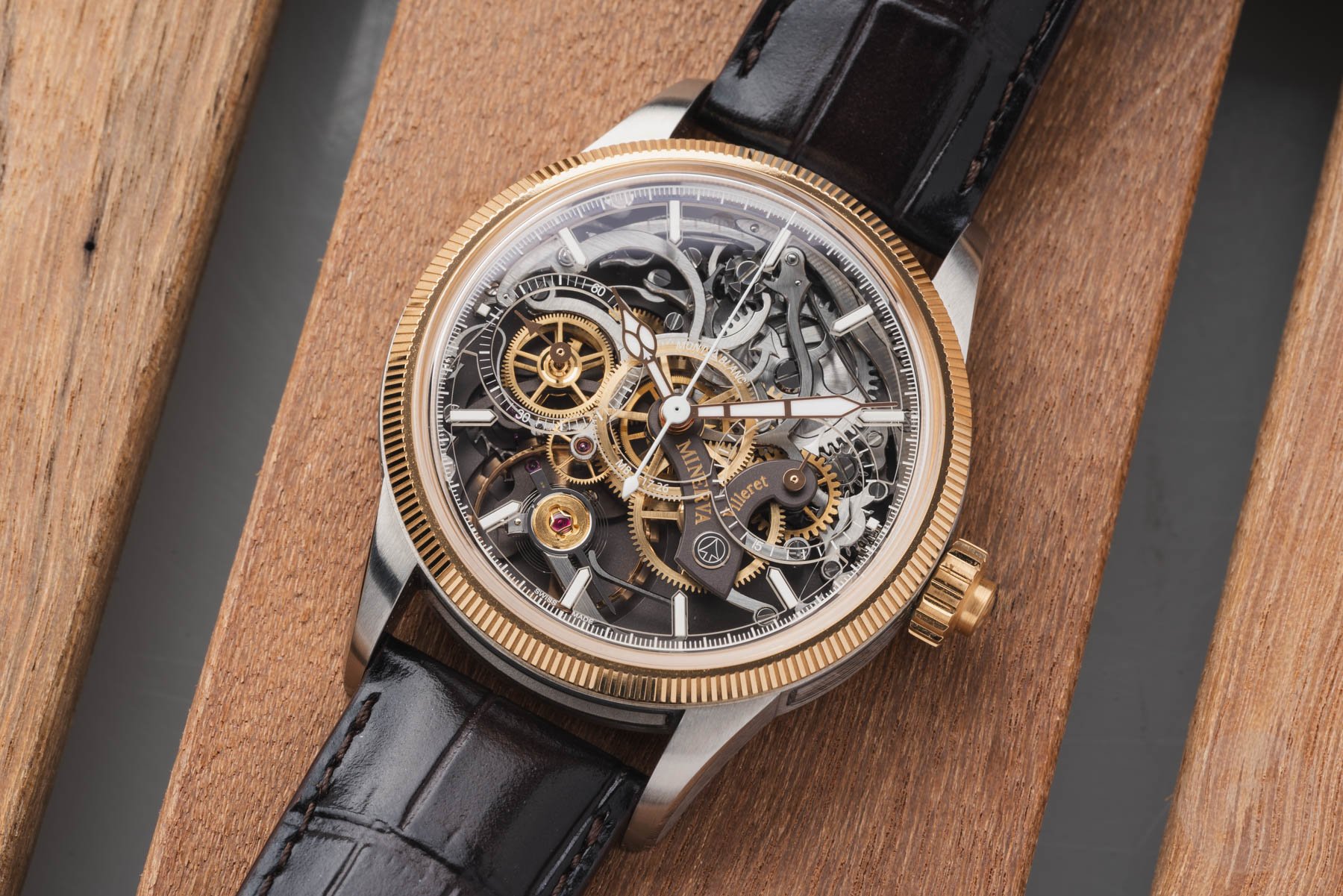
Minerva‘s Unveiled Chronograph series is an exercise in turning conventional watchmaking inside out. Instead of hiding the movement under the dial, which would require taking the watch off the wrist to admire its calibre through the display caseback, the manufacture reverses its architecture, making the chronograph mechanism and its distinctive hand-finished components the main attraction […]
Monochrome
Singer Reimagined releases the Heritage V72, a handsome chronograph powered by a restored new-old-stock Valjoux 72 movement. Beyond an exercise in restoration, Singer pays tribute to the calibre’s iconic architecture, revealing its hidden attributes through elevated finishings that far surpass those of the original movement. Presented in a compact 38.8mm case with a glassbox caseback, […]
SJX Watches
A visual staple of grande sonnerie watches is a pair of large, highly finished and intriguing-looking click wheels. Continuing our exploration of various horological energy systems — including winding efficiency and the fusee and chain — we examine the linkage of ratchets, clicks and wide-toothed gears that comprise the winding works of some of the industry’s best chiming watches. A Patek Philippe grande sonnerie movement from 1915. One crown for two barrels The grande sonnerie is rightfully considered the pinnacle of chiming complications. With the ability to automatically sound the hours and quarters, a grande sonnerie requires heaps of power to keep it going over the course of a day. As a result, most grande sonnerie movements rely on a second mainspring barrel that is isolated from the timekeeping going train. The requirement for independent barrels stems from the different rates at which the barrels unwind. The striking works require a faster-turning barrel that’s only active for short periods, while the going train feeds from a slow and steady barrel. Audemars Piguet Grande Sonnerie pocket watch crafted by Philippe Dufour. As the barrels discharge unevenly, it makes sense that they cannot be wound in sync. Winding both mainsprings in sync would typically over-strain one of them since their winding states are rarely the same at any given time. Although the two barrels themselves are separated, they often share the same winding train. Now a signature of Vallée...
Monochrome
RGM Watch Company has never been a brand to chase trends or pop culture. Founded in 1992 by Roland G. Murphy in Pennsylvania, the brand has built its reputation on traditional watchmaking, producing around 400 watches annually while preserving crafts such as engine turning, movement decoration, and even in-house calibre production. Its latest release, however, […]
SJX Watches
Twenty years since the original Venus’s debut, Dutch independent Christiaan van der Klaauw (CVDK) upgrades the concept with the Venus Annual Calendar featuring a stellar automatic movement and an austere new “astronomical” dial. The Annual Calendar supplements the more traditional Venus Zodiac, which shares the same 38 mm case and upgraded base calibre. Initial thoughts The next generation of CVDK’s Venus comes in two flavours that act as foils to each other, pitched by the brand as representing astronomy and astrology. While the Zodiac variant is a familiar blue aventurine glass affair, much like the original Venus launched back in 2006, the instrument-like white Annual Calendar version is new to the Venus family. Western sun-sign astrology divides the sky into 30° slices, each named after a constellation such as Virgo or Scorpio, with whichever slice the sun occupies being the current sign. CVDK’s planetariums normally include both an annual calendar and the 12 signs of the zodiac, so dropping the latter might seem like a loss for an astronomical watch. The duo would make an ideal set, but are currently only solid individually. However, these popular sun-signs do not match the actual locations nor sizes of the constellations. For example, the slice marked ︎ for Cancer actually contains the Gemini constellation, while Sagittarius (︎) accommodates Sagittarius and Scorpio. In some ways, the zodiacs were just bloat, and separating the two makes both watches st...
SJX Watches
The second-generation Ulysse Nardin (UN) Freak X proves that good things can come in small(er) packages, with an all-new micro-rotor calibre powering the Freak’s signature ‘flying carousel’ architecture. The new movement debuts in a smaller 41 mm steel case with an interchangeable strap system. Initial thoughts There’s a lot to like about the updated Freak X. It retains the wandering tourbillon-style architecture that UN describes as a flying carousel, powered by an all-new micro-rotor calibre that’s been upgraded with the brand’s DiamonSil escapement package. It’s also noticeably smaller than the outgoing model, while boasting superior water resistance thanks in part to the collection’s first screw-down crown. Strap options have been expanded thanks to an interchangeable strap system that includes a stainless steel bracelet. These upgrades come with a modest increase to retail pricing, which starts at US$41,200 — essentially the same price as one of the special edition versions of the first-generation Freak X. Some will mourn the ‘downgrade’ from titanium to steel, but that’s a relatively minor issue given the reduced case size, and furthermore the release of titanium options in the future seems all but guaranteed. Smaller but better When the Freak debuted 25 years ago, it shocked the industry with its novel construction, which integrated the entire going train and escapement into an enormous minutes hand. The Freak X keeps the overall look mostly ...
Worn & Wound
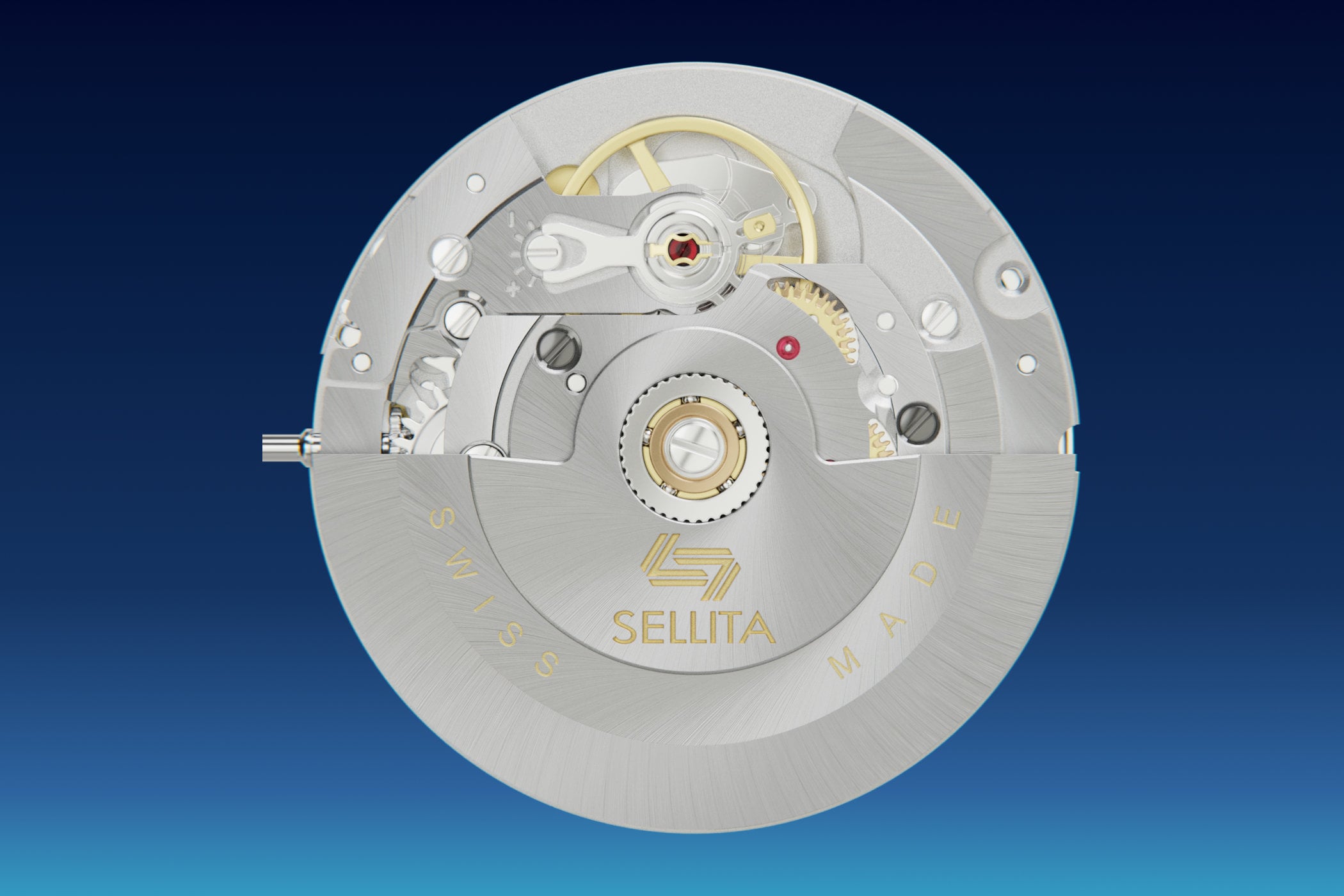
Typically, not a lot happens in the world of third-party mechanical watch movements. The ETA2824 reigned supreme for decades until Swatch Group stopped openly supplying them, giving way primarily to Sellita, Soprod, and La Joux Perret on the Swiss side, and Miyota and Seiko on the Japanese side. For the most part, the catalogs of those brands stayed relatively unchanged for many years, but now, it appears that there’s a bit of an arms race happening. The days of 42-hour power reserves are over, and brands are now vying for features and specifications once limited to more expensive calibers; to that end, there have been a series of interesting events/releases. First, the COSC announced the creation of the “Excellence Chronometer” standard with a -2/+4 accuracy standard among other considerations. Sellita launched the SW200-2 Power + movements with 65-hour reserves, new gear trains, and other improvements. The CEO of La Joux Perret spoke about the upcoming G-200 caliber, which will feature a 72-hour reserve and antimagnetic properties, on the Hodinkee podcast. And this week, a very exciting new automatic was announced by a surprising source: Ronda. The R150 launched in 2016 Ronda is a well-known Swiss manufacturer that was founded in 1946. Over their 80 years of existence, they have specialized in many things, from component manufacturing to ebauchés and full mechanical movements to, beginning in the 1970s, quartz calibers, which is what they are best known for today....
Monochrome
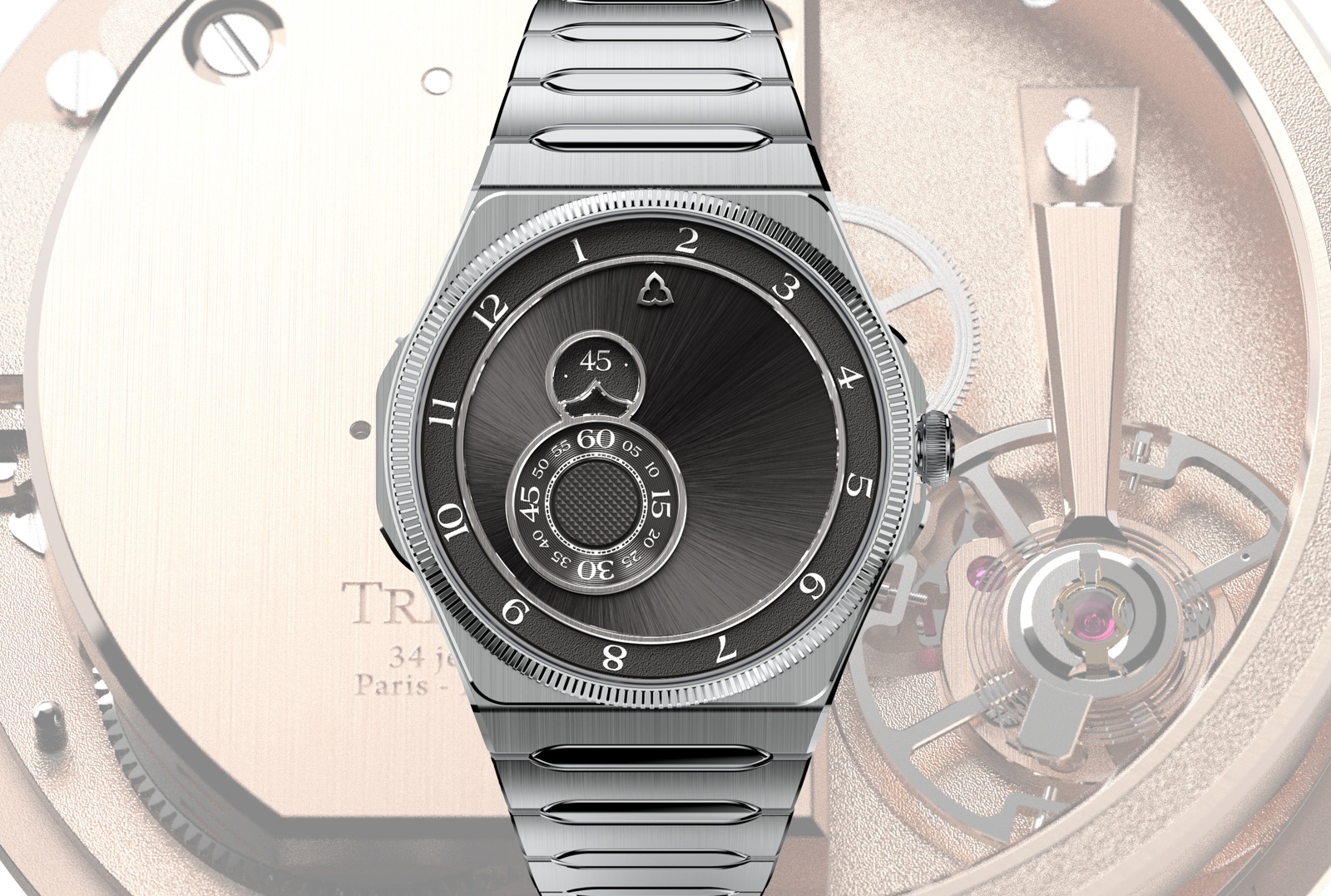
One of the pleasant surprises of 2025 and a game-changer for the very young, Paris-based independent brand, the Trilobe Trente-Deux entered the competitive integrated-bracelet sports watch segment. More importantly, however, it debuted the Calibre X-Nihilo, Trilobe’s first in-house movement, developed, produced, and assembled in Paris. Less than a year later, Trilobe expanded the collection with […]
SJX Watches
For much of the past quarter-century, Zenith has built its brand on the back of the El Primero — a fast-beating chronograph calibre that debuted in 1969. But last year — for its 160th anniversary — the brand revived the time-only calibre 135 – a legendary competition calibre originally developed in the late 1940s. The reborn movement debuted within a new collection — the GFJ — named after founder Georges Favre-Jacot. To better understand what lies behind the relaunch of the cal. 135, we talked to Romain Marietta, Chief Product Officer at Zenith. David Serra, Technical Director of Movement Development, provided additional production insights. As Mr Marietta explains, the relaunch of the cal. 135 opens a new chapter for Zenith — more exclusive and more artisanal, featuring precious materials, elevated finishing and a classical aesthetic inspired by the designs of the 1950s. In short, closer to the independent watchmakers’ approach and to their audience. And this is only the beginning — the Le Locle-based brand has plans to further develop both the calibre and the collection. The interview was edited for length and clarity. Yannick Nardin (YN): Let’s start at the beginning: what makes cal. 135 so special? Romain Marietta (RM): For context, it was produced from 1949 until 1962. At the time, the pursuit of precision had a real genuine meaning. Watchmakers measured their strength, stature and reputation through the prizes they won. This movement was created f...
Teddy Baldassarre
The classically-inspired integrated bracelet Tudor Royal collection gets major mechanical upgrades for 2026.
SJX Watches
Among the independent brands officially exhibiting at Watches & Wonders, Ressence was a standout. The design-forward Belgian independent took a major step forward with the Type 11, powered by the brand’s first proprietary calibre, the RW-01. The Type 11 is tangibly appealing and priced well considering both its unique design and technical content. Initial thoughts When I first saw images of the Type 11 and its RW-01 movement, I had the same feeling as when Urwerk launched the EMC back in 2013. At the time, the EMC felt like the start of a new era for a brand that had, up to that point, primarily put its proprietary modules atop widely available off-the-shelf calibres. The EMC proved Urwerk was willing to rethink the movement in its entirety to realise a specific vision. The RW-01 reveals Ressence is moving in that same direction. After 15 years of adapting its Ressence Orbital Convex System (ROCS) modules to ETA-derived calibres, the brand has taken the next step in its development and partnered with an adept supplier to construct a proprietary movement uniquely suited to its signature design. The new calibre was engineered with Ressence’s ROCS module in mind. The movement layout appears purpose-built for winding and setting via the case back, lacking an ordinary stem, and dual serially coupled mainspring barrels extend the power reserve to 60 hours — quite long considering the mass of the ROCS module. While I would have been delighted to see a free-sprung balance, I...
SJX Watches
Continuing with a practice that began last year, Tudor has announced a limited edition as this year’s Formula 1 season kicks off. As with last year’s edition, the Black Bay Chrono “Carbon 26” is modelled on the livery of the racing car of Visa Cash App Racing Bulls (VCARB). It’s otherwise identical to last year’s model, which means it is lightweight, well priced, and equipped with the high-spec MT5813 movement. Initial thoughts The Carbon 26 is essentially last year’s watch with a new dial, but I like the new yellow and white livery than last year’s white and blue. The colours are subjective, but the value proposition of the watch remains objectively excellent (though the price has risen largely due to the strength of the Swiss franc). The Carbon 26 is still competitively priced next to its rivals. As an aside, I hope Tudor will eventually incorporate more design elements from its historical motor racing chronographs, like the Monte Carlo, into its modern-day F1 editions like the Carbon 26. The Carbon 26 is clearly a Black Bay – the “snowflake” hands are a giveaway – but the Black Bay is a dive watch rather than one for the road. Carbon inside and out The Carbon 26 gets its name from the carbon fibre composite case and bezel, which have a patterned surface typical of the material. The type of composite employed here is more subtle appearance-wise compared to other composites used in watchmaking, so at a distance the case appears a flat black. Thoug...
Monochrome
Jaeger-LeCoultre revisits one of its most important contemporary tourbillon movements with the new Master Grande Tradition Tourbillon Jumping Date. While the underlying Calibre 978 is familiar to collectors, the latest iteration restructures the movement’s architecture. Featuring a partially openworked dial, the tourbillon, signature jumping date mechanism, and 24-hour display come to the fore. Paying homage […]
Question, suggestion, or just want to say hi? Drop a note.