 Hodinkee
Aziz Ansari Puts A 1978 Rolex Daytona Center Stage In 'Good Fortune'
In his feature directorial debut, Ansari gives a vintage Rolex Daytona a starring role-and teams up with Craft + Tailored's Cameron Barr to make it all real.
2,507 articles · 64 videos found · page 46 of 86
Hodinkee
In his feature directorial debut, Ansari gives a vintage Rolex Daytona a starring role-and teams up with Craft + Tailored's Cameron Barr to make it all real.
 Fratello
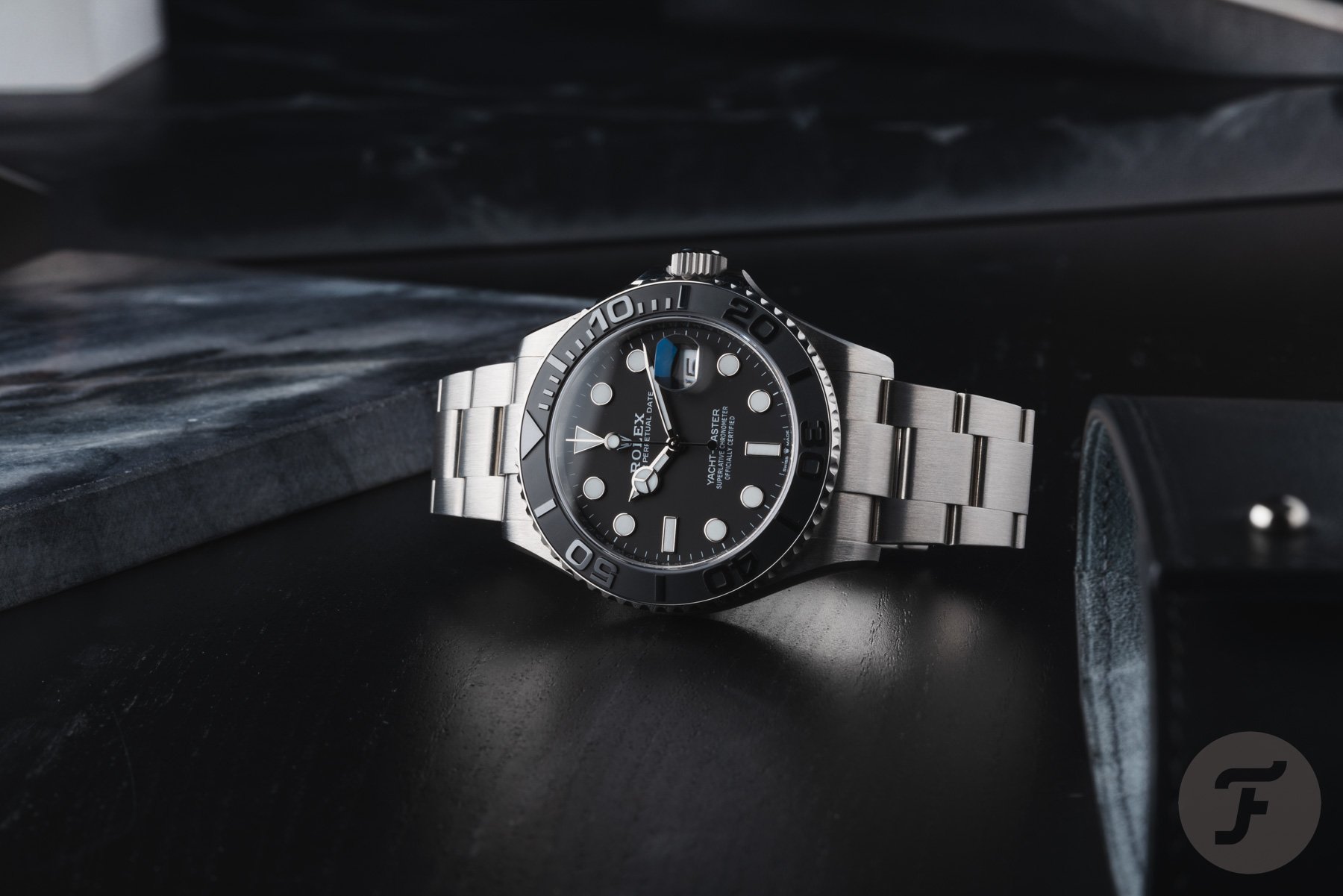
Another Friday, another list! This week, we’re following up last week’s article about ceramic watches with our favorite titanium ones. After all, it just made sense to dive deeper into the world of modern materials used for watches. While titanium has been around for quite a few decades in the watch world, it’s still considered […] Visit Fratello’s Top 5 Titanium Watches Of Recent Years - Featuring Rolex, Grand Seiko, Zenith, And More to read the full article.
 Time+Tide
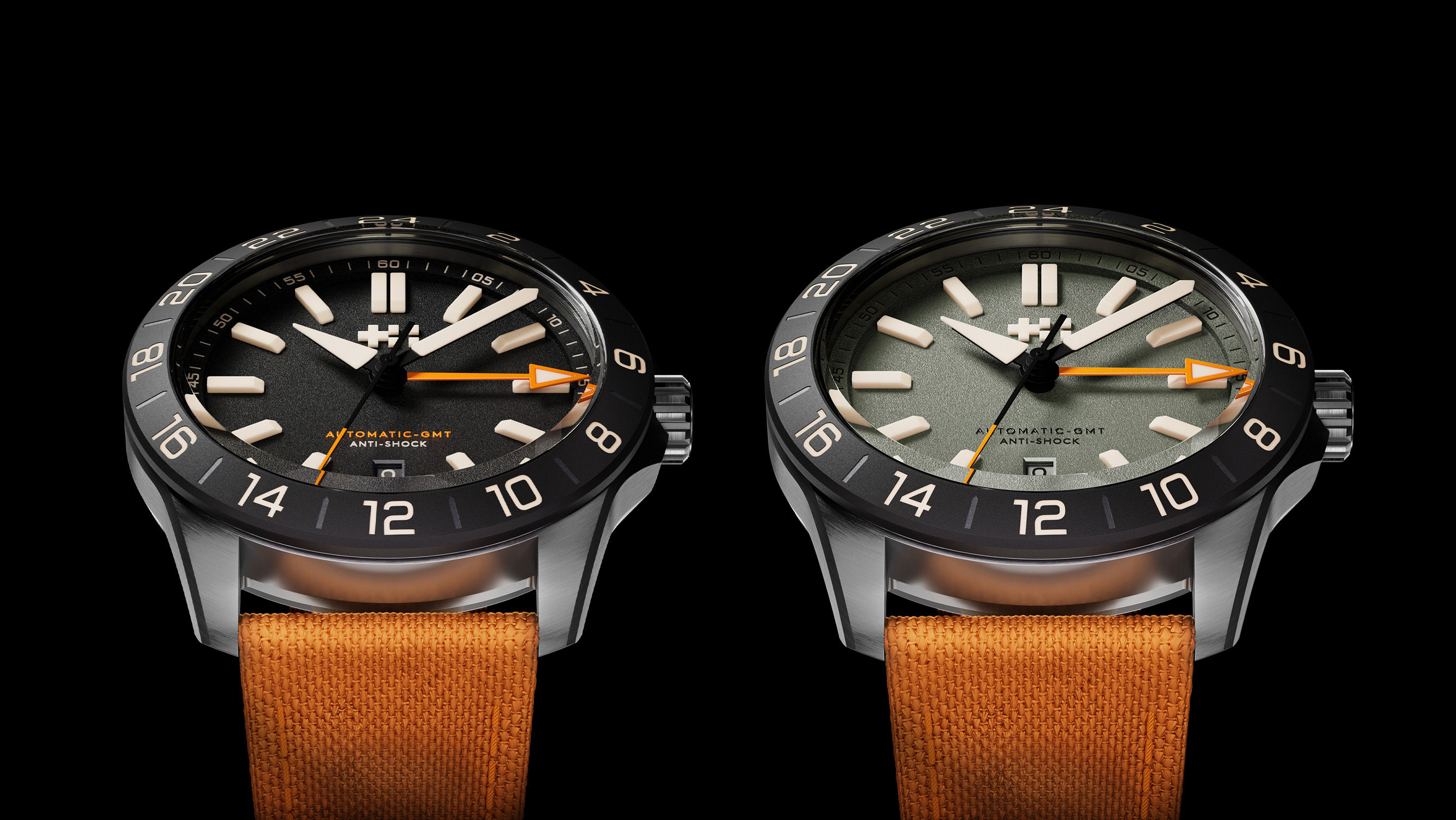
Christopher Ward has reinvented its adventurer's GMT, scaling it up and giving it a technical and aesthetic makeover.The post Extreme measures: Christopher Ward delivers a hardcore explorer’s watch with the C63 Sealander Extreme GMT appeared first on Time+Tide Watches.
 Teddy Baldassarre
All watchmakers with decades or even centuries of history have some designs, lines, or collections that become timeless icons, and others that get lost to history. Here in the 21st century, all of them are subject to various revivals and reissues before being shelved again. Today, we’re going in-depth with a watch that’s recently gotten the axe from Rolex’s contemporary catalog - and one that might be its quirkiest tool watch ever - the Rolex Milgauss. With its easily identifiable lightning-bolt hand and origins as a companion for scientists, the Milgauss has never quite achieved the years-long waitlist fandom that many other staples from the brand have achieved over the years, and back in 2023, the Crown shelved its unconventional tool watch from production. Maybe it’s an example of always wanting what you can’t easily have, but in recent years, the Milgauss has been attracting a renewed interest at odds with its overlooked reputation. Down below, we’re going to walk through the history of how the Milgauss came to be, explore how the collection has changed over time, and use one model as a case study for its sudden spike in popularity. So, if any of that piques your interest, or if you are already in the cult of Milgauss fandom, keep scrolling, and away we go. Rolex Milgauss History As we all are already well aware, Rolex's 120-year historical archive is full of record-breaking, boundary-clearing leaps in mechanical timekeeping. From releasing the first ...
 Teddy Baldassarre
The Rolex GMT-Master II is one of the most popular timepieces in the world, and the "Batman" and "Batgirl" versions, with their alluring black-and-blue colorways, are on many a collector's wish list. But what makes a Batman a Batman, and a Batgirl a Batgirl, and what exactly differentiates these two watches, so similar at first glance, from each other? Here we explore what makes "Rolex Batman vs. Batgirl" such a compelling matchup, and why the debate on the nicknames themselves is so intriguing. Lead image by Bonhams and Sotheby's Before Batman: A Brief History of the Rolex GMT-Master When it hit the market in 1955, one year after its unveiling, the Rolex GMT-Master was both trend-setting and genre-defining in its now-iconic conception. The original GMT-Master (Ref. 6542) was the first watch capable of displaying the time in two separate time zones thanks to the clever addition of a fourth, central 24-hour hand and a bidirectional rotating 24-hour bezel. The initials in the watch’s name signify “Greenwich Mean Time,” the system of world timekeeping based on the calculation of mean solar time from the Royal Observatory in Greenwich, London. This dual-time functionality was an innovation devised for, and developed in cooperation with, the original watch’s intended users: pilots for Pan American Airlines, at the time one of the U.S.A.’s leading commercial carriers. In that so-called Golden Age of commercial aviation, the growth of long-haul and international flights...
 Fratello
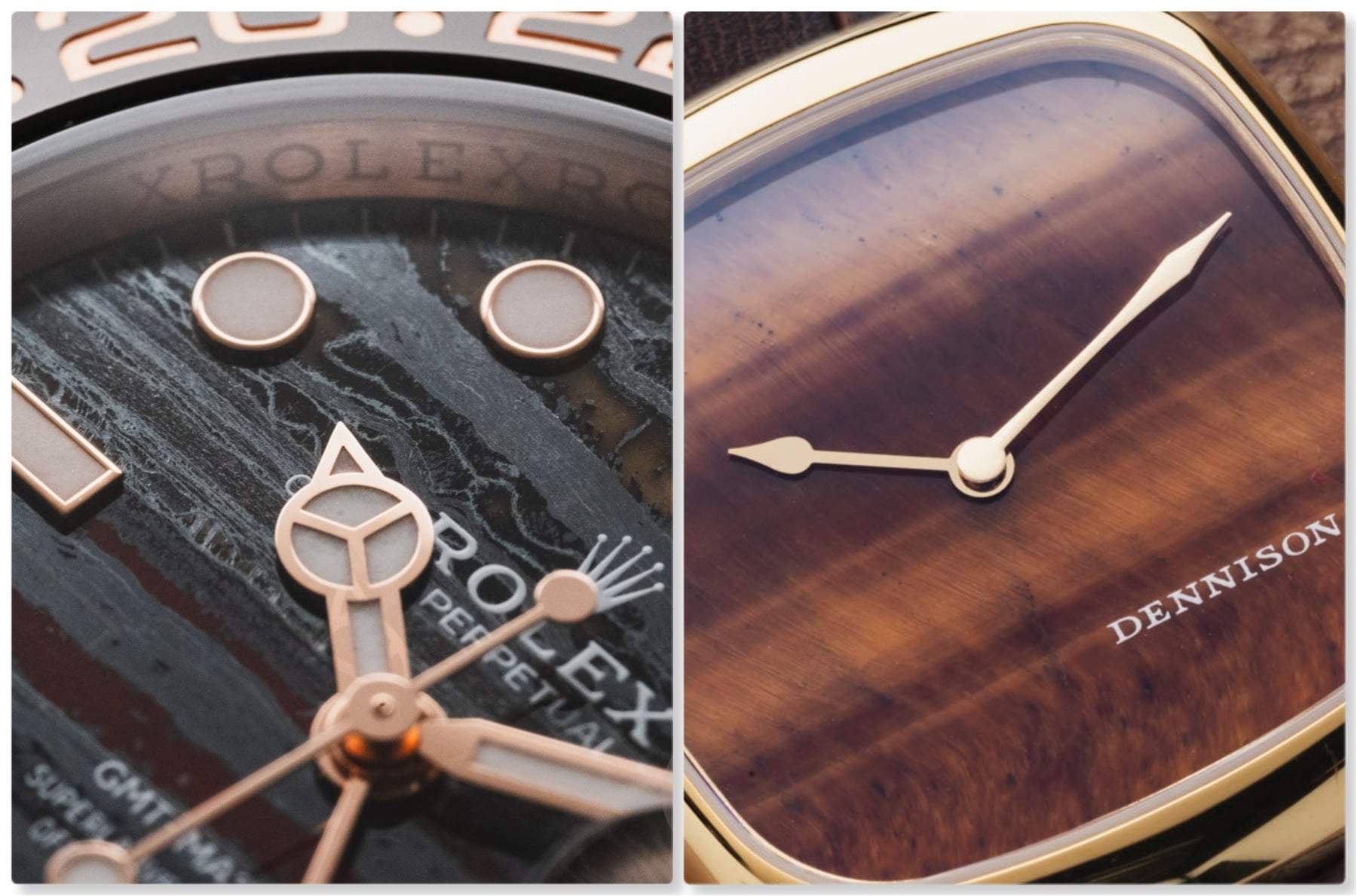
Would you rock a stone-dial watch? I would. And I also could. Previously, only a handful of brands ventured into stone dials, and those that did reserved them for highly expensive pieces. Today, however, technological advancements have made stone dials far more accessible to produce. This benefits watchmakers and watch fans: smaller brands can now […] Visit Rock On! Stone-Dial Watches For Every Budget - Including Dennison, Piaget, Baltic, And Rolex to read the full article.
 Hodinkee
Worn by the British swimmer in 1927, this historic watch is a symbol of endurance and one of the most important pieces in the history of Rolex.
 WatchAdvice
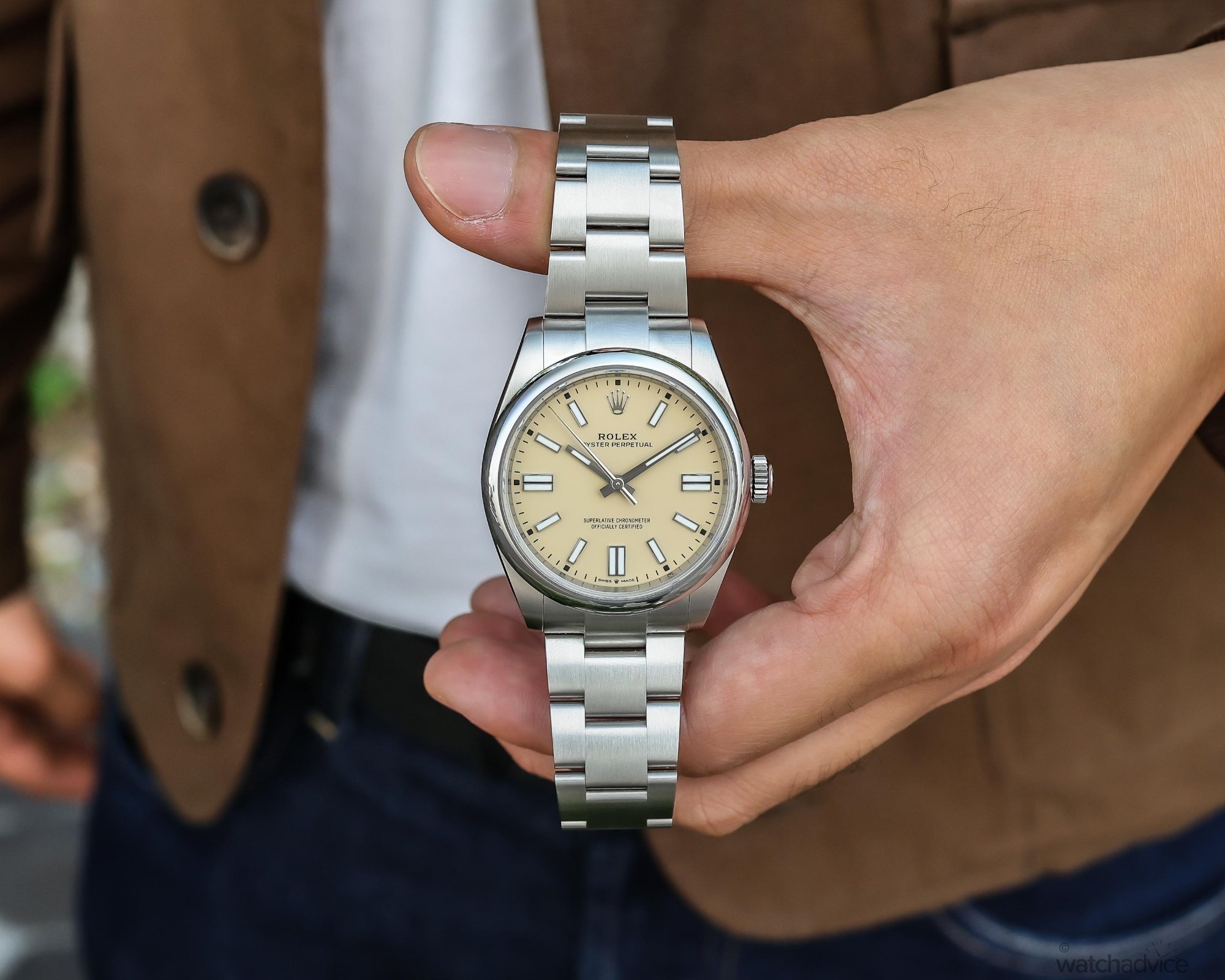
In a roster packed to the rafters with hype-laden icons, the Rolex Oyster Perpetual is deceptively simple. Or is it too simple? Let’s find out! What We Love: Simplistic, no-nonsense design and colour Solid, unobtrusive wearability A true GADA (Go Anywhere, Do Anything) watch What We Don’t: Overshadowed by other Rolex models Lacks modern quality-of-life updates Date or no date? Overall Rating: 8.5/10 Value for Money: 8/10 Wearability: 9/10 Design: 8/10 Build Quality: 9/10 Consistency is a hard thing to come by in the watch industry. Very few brands have managed to achieve it, and even fewer watches can truly be called consistent hits. Off the top of my head, I can probably name only a handful of brands and models that have managed to not only succeed but hold that sweet spot. Longines, Vacheron Constantin, and even Panerai all come to mind — but if you want to talk about longevity, you have to talk about the Crown. Since their founding in 1905, Rolex has been one of the most consistent brands in history. The numbers speak for themselves: the company has held the number one spot for revenue in the luxury Swiss watch industry since at least 2017, according to the Morgan Stanley LuxeConsult reports. But the evidence also lies in their catalogue. Much of Rolex’s mainline collection has become inseparable from the brand’s identity, thanks to timeless, slow-changing designs, robust functionality, and uncompromising craftsmanship. Their watches have changed so little...
 Teddy Baldassarre
The Rolex "crown" logo is one of the most recognizable brand marks in the world, signifying the Swiss watchmaker's international renown for exclusivity, luxury, and prestige of ownership. It has been around longer than you probably realize, and, much in keeping with the ethos of Rolex, has seen very little change (although that's not to say it's been entirely unchanged) over its decades-long existence. Here's what you should know about Rolex's legendary corporate symbol and the role it continues to play in defining Rolex as a world leader in luxury watches. Origin of Rolex Brand Name Before the Rolex logo came the Rolex brand name. And unbeknownst to many enthusiasts these days, their favorite brand’s name has not always been Rolex. The original name, Wilsdorf & Davis, referenced the surnames of Hans Wilsdorf (above), a German entrepreneur schooled in the business of Swiss watchmaking, and his partner and brother-in-law, Alfred Davis, who founded the original company in London’s Hatton Garden commercial district in 1905. Wilsdorf was an early proponent of wristwatches, which in those days before World War I were still not as widely popular among gentlemen as pocket watches. The company assembled watches from cases and movements imported from Switzerland, where Wilsdorf had previously worked for a watch manufacturer and exporter, and exported them throughout the British Empire. Wilsdorf bought out Davis’s share of the company in 1919, right around the same time that...
 Teddy Baldassarre
In 2023, Rolex released the special edition Daytona Le Mans celebrating the 100th anniversary of the 24 Hours of Le Mans race. This began something of an annual tradition of Rolex introducing a new iteration of their rarest and most desirable chronograph in precious metal with a few distinguishing features that has collectors fawning over them. I doubt anyone isn't familiar with the Rolex Daytona but for anyone needing a refresher, I would recommend this review of the modern reference. But before we get into these contemporary models, I want to briefly discuss the Paul Newman Daytona as so many design touches and throwbacks on the Rolex Le Mans are tied directly to these legendary vintage Rolex Chronographs. The real parallel here has to do with the dial about which our Mark Bernardo has said: "The model - now regarded as the first “official” Daytona, though that name would not regularly appear on dials until later versions - also featured the two-tone dial arrangement, with contrasting main dial and subdial colors, that we now refer to in shorthand as “panda."...the Rolex Daytona Ref. 6239 with a so-called “exotic” dial, highlighted by some very particular details. Its main dial was an off-white cream color, punctuated by black subdials at 3, 6, and 9 o’clock with square-ended hashmarks and Art Deco-style numerals. Other aspects of the “exotic” Daytona dial include a crosshairs motif on the subdials, which appear in a contrasting hue from the main dial...
 Teddy Baldassarre
Aside from the watch that was made legendary by Paul Newman - and which would forever, unofficially, carry the famous actor’s name - there is probably no version of the Rolex Daytona that is more coveted than the “Rainbow” models that bring a meticulously designed and eye-catchingly beautiful assortment of colorful precious stones to the bezel, case, and dial of the motorsport-inspired luxury chronograph. Here is the story behind the Rolex Daytona “Rainbow” and why it has become yet another smash hit for the Crown in the 21st Century. To start off, it’s worth answering the question, “Why is the Rolex Daytona so famous in the first place?” The model’s success story begins in 1962, when Rolex, hot on the heels of other genre-defining watch releases like the Explorer, GMT-Master, and Submariner several years earlier, became the official timekeeper of the “Great American Race,” the Daytona 500. In celebration of the partnership, the Swiss brand introduced its original “Cosmograph” racing-inspired chronograph watch the following year. The watch, notable for its tachymeter bezel and three-register dial design, adopted the name “Daytona” shortly thereafter and really took the enthusiast community by storm when actor, director, and part-time racecar driver Paul Newman began wearing one regularly. Newman became a big-screen icon in the 1970s, around the same time that auto racing took off in popularity as a spectator sport, and this confluence of...
 Hodinkee
Trump in the Rolex suite at tennis final gives hope frosty U.S./Swiss trade relations could thaw.
 Teddy Baldassarre
The Rolex Submariner Ref. 126610LV (or, the Rolex Starbucks, as it has come to be known) was released alongside an entirely updated Submariner collection during the peak pandemic days of late summer 2020. I’ll get into that broader collection update later, but the Starbucks was one of the more attention-grabbing Submariners, given how it went back to the original colorway of the first “Green Sub.” A little context for those not wholly ensconced in the minutae of niche watch references: the first of these was the Rolex Submariner Ref. 16610LV, which dates all the way back to 2003 when it was released to celebrate the 50th anniversary of the Submariner. You may better know the 16610LV from its “Kermit” nickname due to its then-novel use of a vibrant green aluminum bezel. This watch was produced until 2010 and is beloved by collectors. One of my favorite instances of celebrity watch spotting was when I noticed Martin Scorsese wearing a Kermit during the filming of Killers of the Flower Moon back in 2023. Following the discontinuation of the Kermit, Rolex released the Submariner Ref. 116610LV in 2010. This model, of course, would go on to be dubbed the “Hulk,” courtesy of its green ceramic bezel and matching green dial. The Rolex Hulk debuted to hot demand alongside the Submariner Ref. 116610LN due to these being the first updated Submariners, with Rolex’s proprietary Cerachrom ceramic bezel and Maxi case, to be made available in steel (the white-gold Submarin...
 Fratello
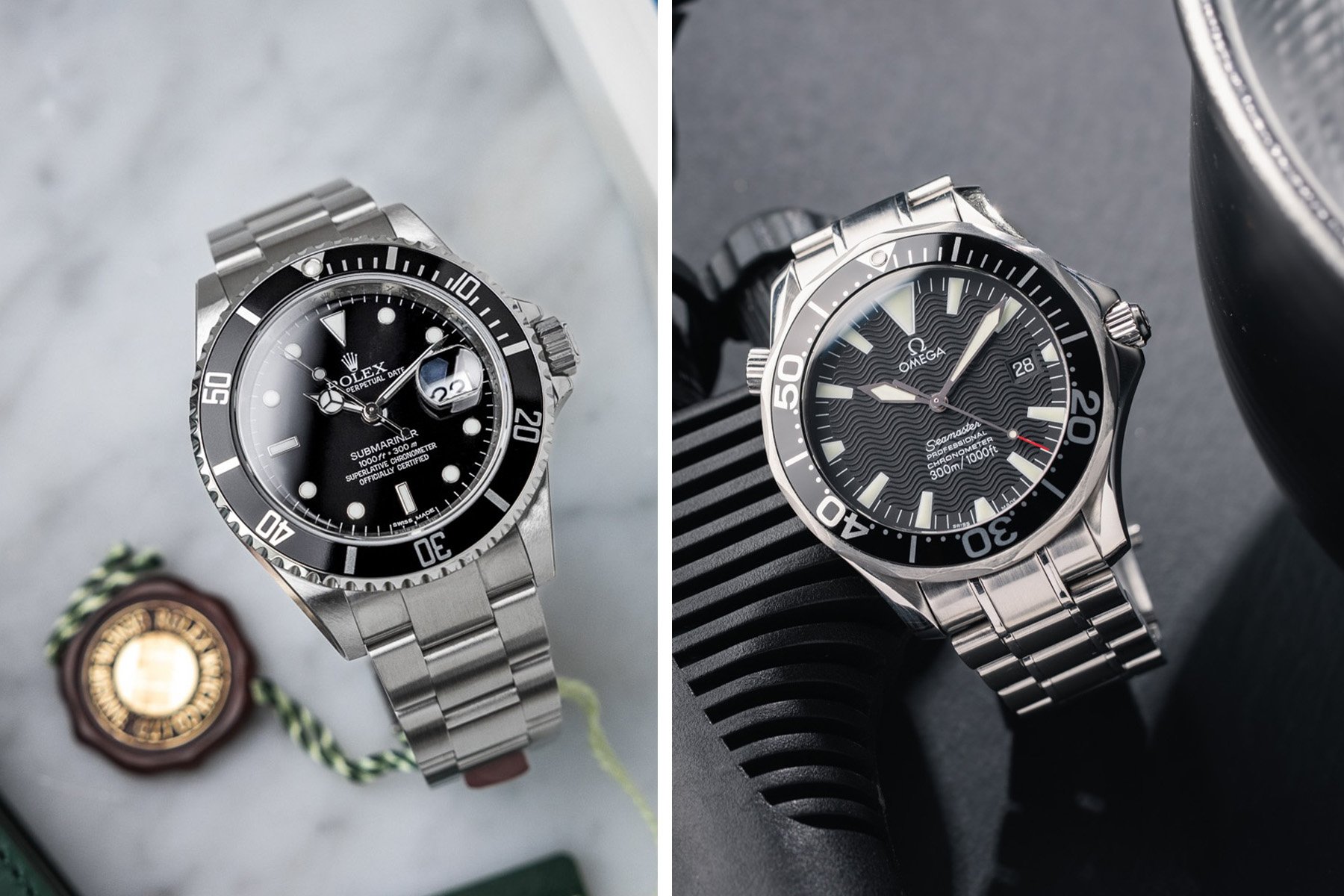
Welcome back to our weekly Sunday Morning Showdown! This week, after several battles between modern watches, we are going back in time. Daan and Thomas will pit two neo-vintage divers against each other. Daan will defend the Omega Seamaster 2254.50, while Thomas will champion the Rolex Submariner 16610. With slender cases, sapphire crystals, aluminum bezel […] Visit Sunday Morning Showdown: Rolex Submariner 16610 Vs. Omega Seamaster 2254.50 to read the full article.
 Teddy Baldassarre
The Rolex Daytona is a tricky watch to discuss these days. It’s difficult to separate the watch itself from its status as a barometer to the health of the entire second-hand market — a position that the watch itself surely never asked to be put into. Everyone has an opinion on the Daytona, and these days, those opinions seem to lean more negative due mostly to what it has come to represent. As such, it rarely gets a fair crack at an honest judgment. In fact, it’s a watch I generally shy away from discussing publicly. But I’ve always liked the Daytona, and I take pleasure in wearing mine in non-watch-enthusiast environments. That’s because, behind all the speculation and hype culture, there’s a genuinely good sports watch that’s almost never seen as such. After a year of owning the reference 126500 Rolex Daytona Panda dial introduced in 2023, and amidst a cooling second-hand market, I think it’s time to change that. Let’s start off by confronting the reality of this watch. The MSRP of the steel Daytona Reference 126500 in either black or white dial (dark or light, in Rolex parlance) is $16,000. The same watches trade for between $27,000 and $32,000 in the open market. This is a serious discrepancy, but it does seem to have stabilized from a high point in 2021. In fact, it seems to be slowly coming down, but not nearly to a price that the watch merits, if you ask me. At its MSRP, the Daytona is a legitimately great watch, but only just. At ~$30,000, this ...
 Teddy Baldassarre
Rolex has made many lasting contributions to the world of watchmaking since its foundation in 1905, not the least of which has been an array of massively popular and widely emulated bracelet designs. Here we take a close look at every type of Rolex bracelet, what makes it special, and which Rolex watches, if any, are using them today. Rolex Oyster Bracelet Rolex’s iconic Oyster bracelet is the template from which many other three-link bracelet styles have been drawn. Its name comes from its association with the Oyster case - introduced by Rolex founder Hans Wilsdorf in 1926, and the most water-resistant watch case that had been made up to that point - and for which the original version of this bracelet served as an extension. Oyster bracelets are recognizable for their wide center links bordered by thinner end-links. Rolex patented the design in 1947 and fitted one on a watch in 1948. In the early versions, the links were riveted; these were phased out in favor of a “folding” style in 1967, which eventually gave way to the modern, solid-link style in 1975. Oyster bracelets come equipped with the accompanying Oysterlock clasp, a triple-deployant metal clasp with a safety-lock mechanism. Three-link bracelets like the Oyster and its various descendants are particularly popular on sports watches and dive watches, and this bracelet appears, as you’d expect on most of Rolex’s most popular “professional” models, including the Submariner, GMT-Master II, Explorer,...
 Monochrome
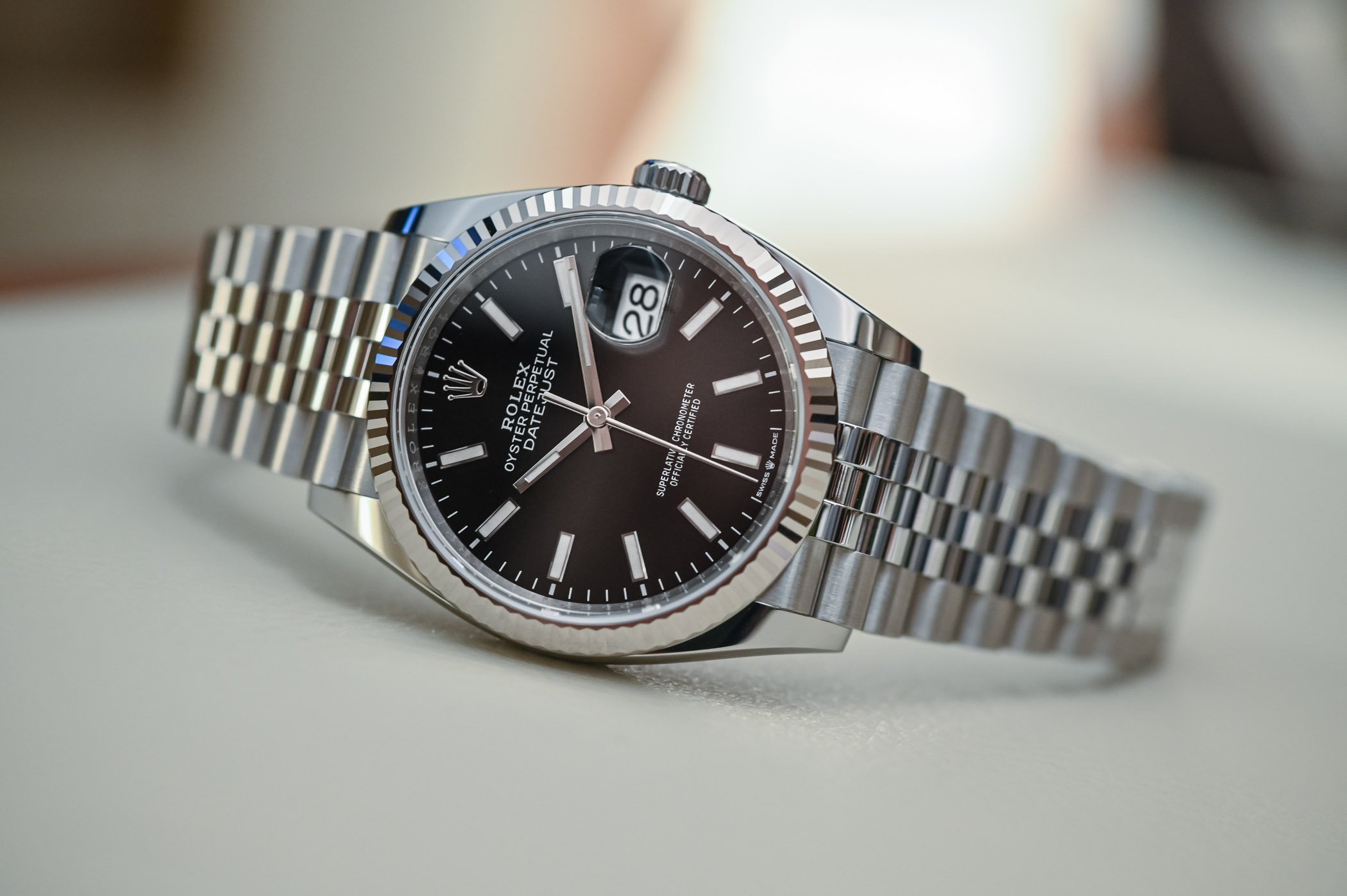
Many companies have that one model that really epitomises the brand, even if it’s not the flagship product. Toyota has the Camry, Omega has the Speedmaster, and Rolex has the Datejust (you thought I was going to say Submariner). It’s among the longest running models in Rolex’s portfolio and boasts many of the signature features […]
 Teddy Baldassarre
Before getting into the so-called "Bruce Wayne Rolex," let's establish some context. The Rolex GMT-Master is one of the Crown’s most popular models when it comes to the Professional line. It’s been an icon going back to its release in 1954, born out of a partnership with PanAm (in reality, it was a masterfully executed piece of marketing) that gave way to a new jet-setting, time-zone-malleable timekeeper. Since then, the GMT-Master (now the GMT-Master II, incorporating an even more user-friendly dual-time indication) has stood alongside the Datejust and Submariner as a core icon for the brand. It has also represented a platform for innovation for Rolex, being the first model line to see the brand transition to its “Super Case” format and its use of Cerachrom bezel tech. This paved the way for the introduction of a new, steel GMT-Master II in the late aughts with a black Cerachrom bezel insert, a green GMT hand, and green dial text. This stood for years as the most under-the-radar option for potential GMT-Master II buyers that didn’t feel comfortable slapping on a "Batman" or a "Pepsi." However, like many other popular models, it was discontinued. We saw echoes of its design materialize in form of the “Lefty” GMT, with its bi-color green-and-black bezel and matching green GMT hand. But the “Sprite” didn’t strike the same chord as that discontinued OG. Then the 70th anniversary of the GMT-Master rolled around in 2024, and Rolex surprised us all when it re...
 Quill & Pad
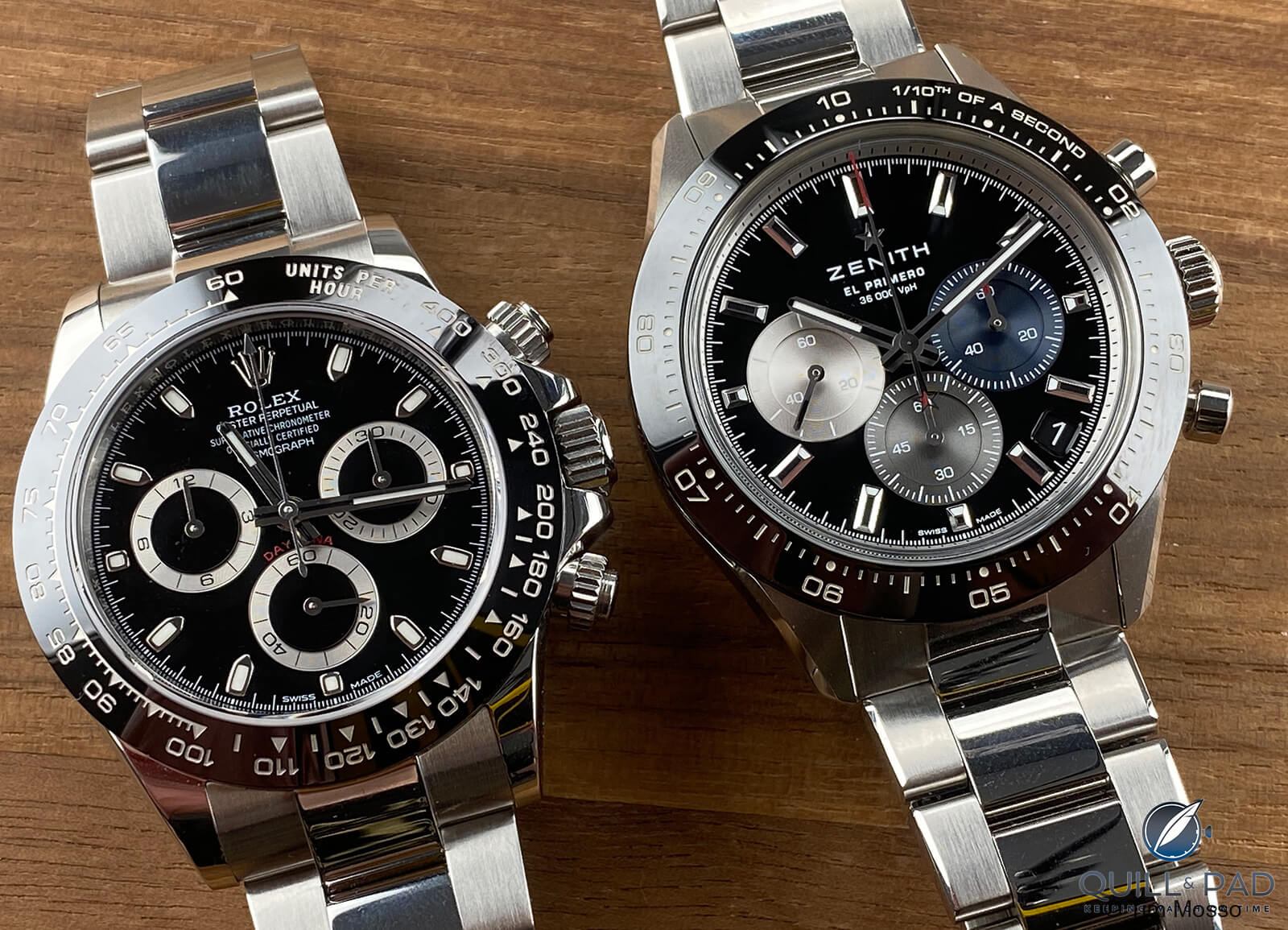
Day one for the Zenith Chronomaster Sport was January 21, 2021. And it seemed like everyone had the same reaction: “That is one aggressive Rolex tribute.” Tim Mosso thinks that the Chronomaster Sport is a distinctive product with its own identity and takes a look here at how it stacks up against the ever-popular Rolex Cosmograph Daytona.
 Teddy Baldassarre
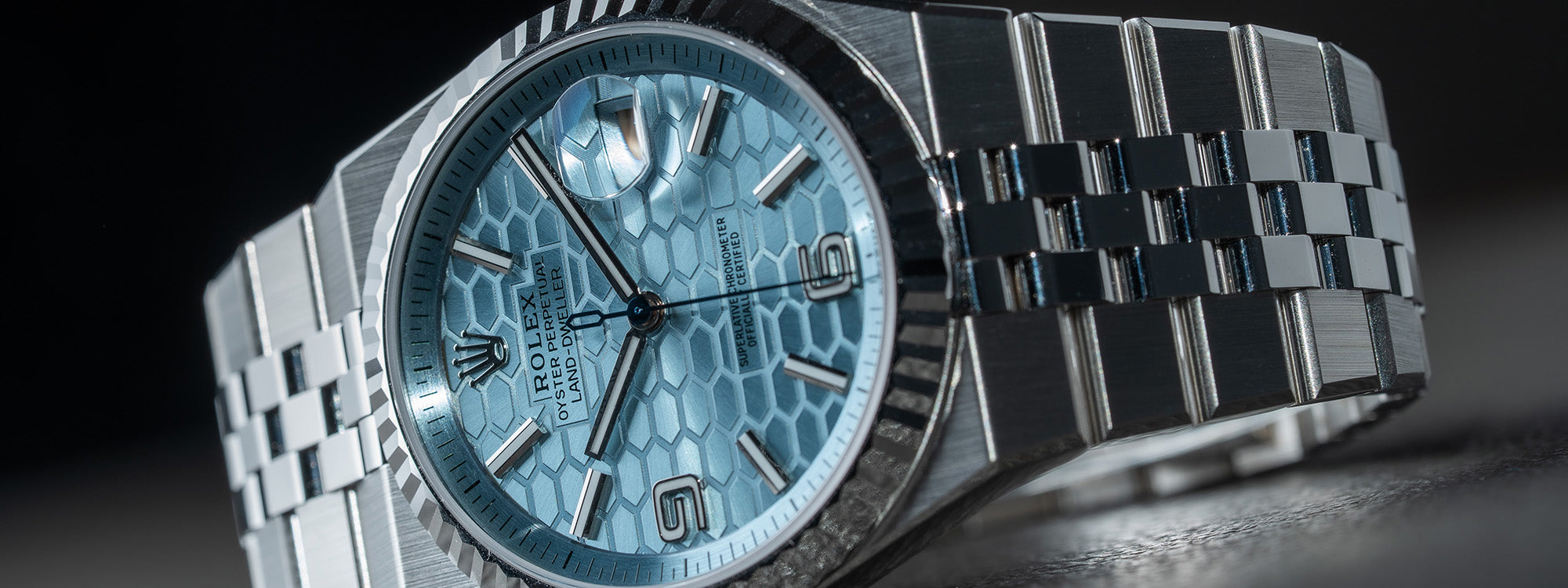
It's no understatement to say that the Rolex Land-Dweller was the talk of Watches & Wonders 2025, which took place in Geneva a few months ago. A new Rolex collection with an integrated bracelet and a brand new movement? Well, we would expect no less. There is something fundamentally earth-shaking about massive shifts in the Rolex atmosphere. Mixed metaphors aside, just because we have seen Rolex develop and launch an entirely new collection quite recently (with the 1908, released just two years ago, in 2023), it doesn’t make it normal. Before that it was the Sky-Dweller, and years before that, there were variations on the Yacht-Master. The launch of the Land-Dweller proved to be one of those milestone moments. The Land-Dweller is the product of 18 new patents specific to this watch, as Rolex has developed an entirely new watch both inside and out. No, this is not a new complication, but it is a brand-new approach to timekeeping. It marks the first development of a new escapement system at this scale since the arrival of the Co-Axial escapement from Omega some twenty-five ago. In short this is big news. As you likely have seen by now, Teddy and I had the chance to see this watch up close and personal ahead of this year's Watches & Wonders a few months ago (you can find our full video hands-on review on YouTube now) and were also lucky enough to do it prior to a lot of the pre-release noise really reaching peak volume. That is to say, we were able to learn about the mech...
 Quill & Pad
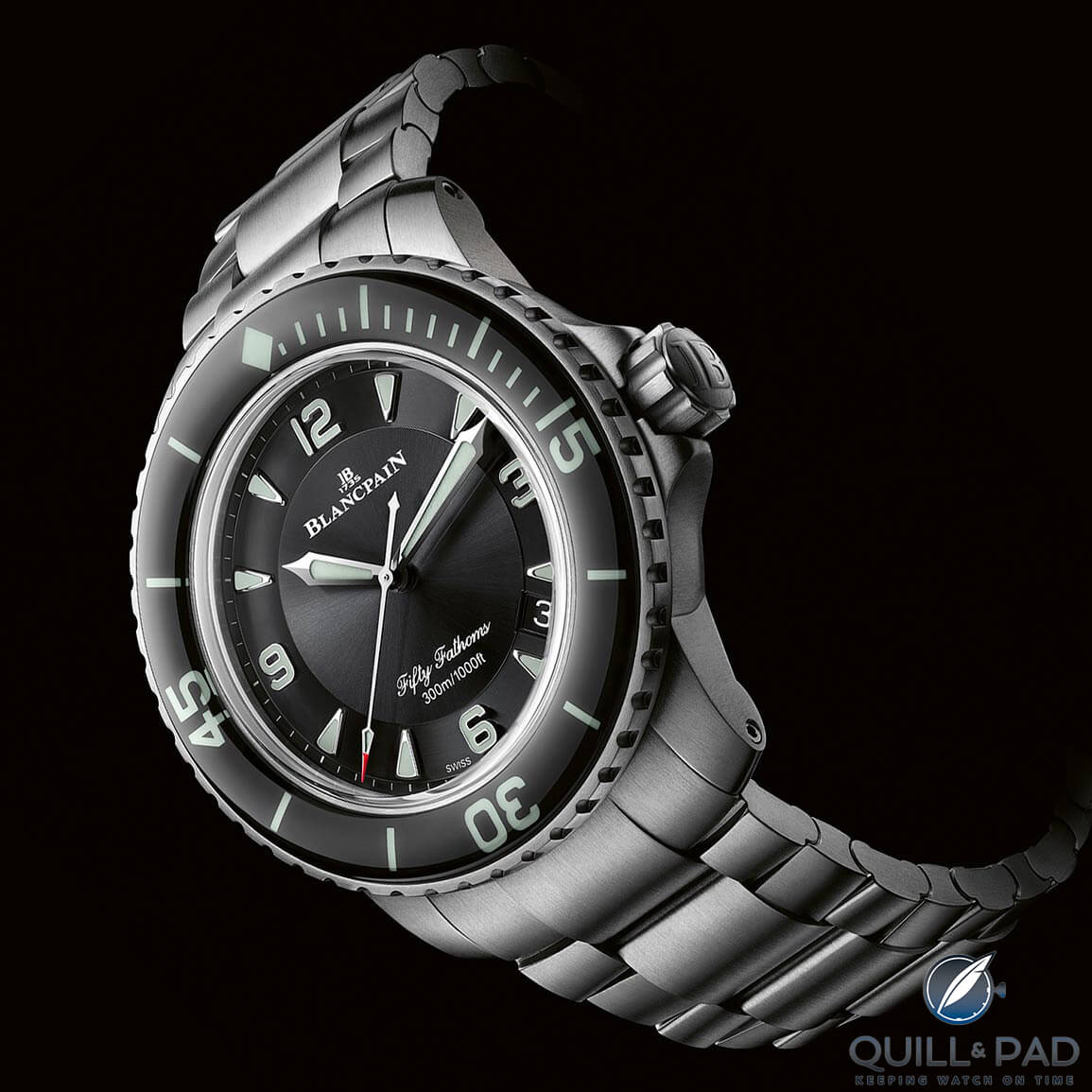
Many think that the Rolex Submariner is the first modern dive watch, however that crown belongs to the Blancpain Fifty Fathoms, which became the blueprint for all modern divers’ watches.
 SJX Watches
In a surprising move from the conservative watchmaker, Rolex has quietly set up Rolex Quantum SA, a new entity dedicated to atomic timekeeping, the most precise form of timekeeping ever invented by man. Rolex chief executive Jean-Frederic Dufour will sit on the board of Rolex Quantum, with engineer Fabien Droz serving as director of the venture. With Rolex Quantum, the watchmaker plans to develop and sell atomic clocks, conceivably for industrial or scientific purposes. Being somewhat removed from the core Rolex offering of wristwatches, the atomic clocks will be developed separate from the main Rolex brand. The new venture strengthens the brand’s ties with CSEM (Swiss Center for Electronics and Microtechnology), the Swiss technical institute most famous in watchmaking for having developing silicon component for watch movements. The venture will benefit from Rolex’ broad industrial research and development capabilities, while also leveraging CSEM’s experience with atomic timekeeping. The establishment of Rolex Quantum was first reported by Swiss newspaper Arcinfo. Neuchâtel timing Despite the cutting edge nature of its work, Rolex Quantum will be located on historic grounds, namely on the same street as the Neuchâtel Observatory, which is current home to CSEM’s atomic timekeeping laboratory. The location also has historical resonance as the city has long played a role in watchmaking and chronometry over the years. Abraham-Louis Breguet was born there and the obs...
 Fratello
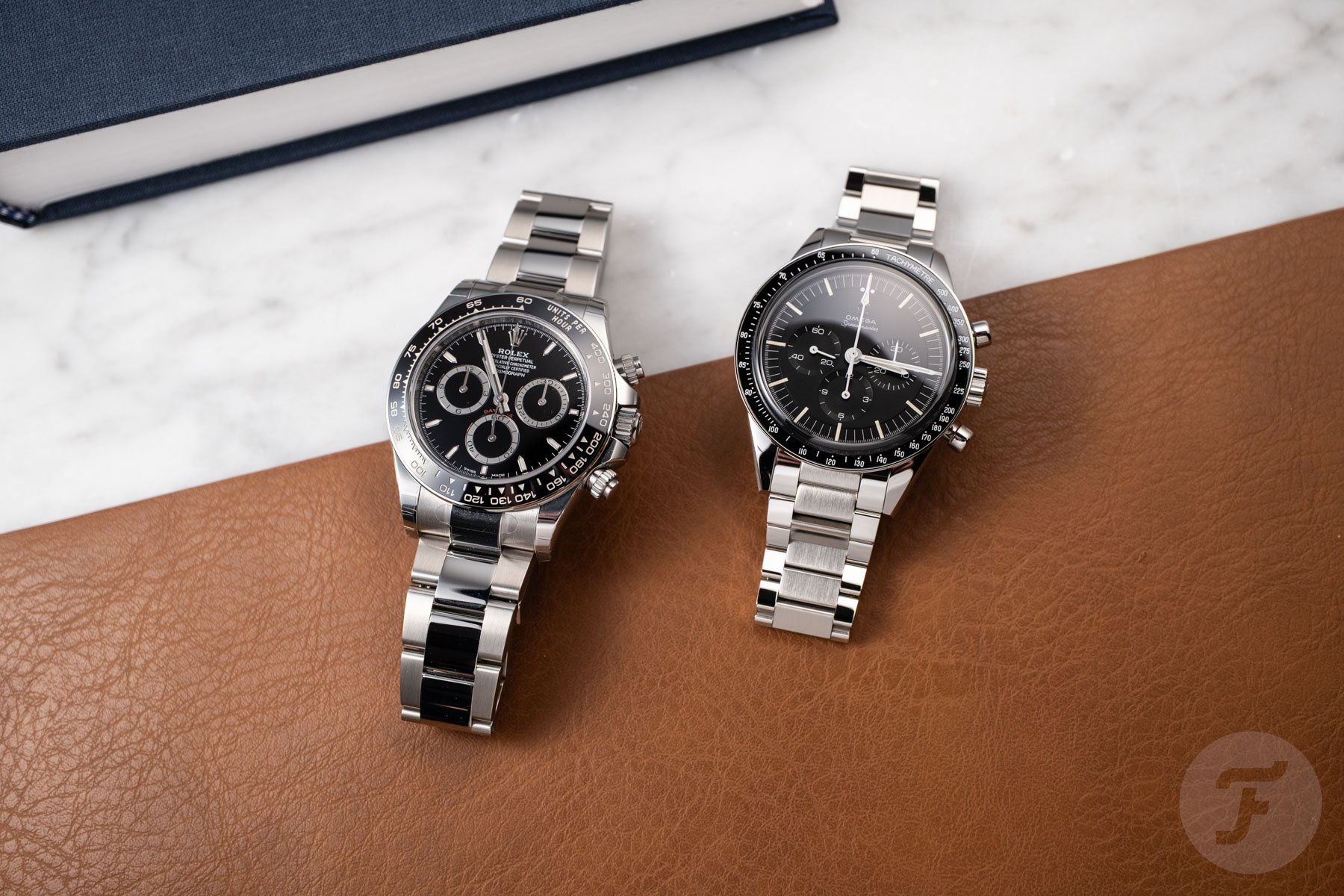
It’s Sunday, so it’s time to wake up with a nice cup of coffee and another Sunday Morning Showdown. This week, Mike and Jorg picked two absolute heavy hitters to face off in this battle of stainless steel chronographs. Mike picked the current Rolex Cosmograph Daytona ref. 126500LN, while Jorg picked the Omega Speedmaster Calibre […] Visit Sunday Morning Showdown: Omega Speedmaster Calibre 321 Vs. Rolex Cosmograph Daytona to read the full article.
 Teddy Baldassarre
The Rolex Submariner enjoys a nearly impeccable resume these days, and is largely seen as the modern dive watch archetype, having first set the template in 1954. The Submariner has seen a steady evolution during its production span, and remains essentially the same today as it was in the ‘50s and ‘60s. It’s a simple watch to understand and enjoy, and while modern Rolex aren’t quite the same function-forward tools they once were, the Submariner remains a symbol of that connection. It’s also just as capable as ever. There have been many transitional references throughout the Submariner’s life, but there is one reference in particular that has drawn the ire of the enthusiast community, and that is the reference 114060 produced between 2012 and 2020. Today, I’ll be taking a look at why that is, and offering a few words in defense of this outlier. Rolex Submariner 114060 Case and Wearability The Submariner has been a ~40mm watch since the late ‘50s, and while the reference 124060 officially changed that, moving to a 41mm diameter, it was the 114060 before it that was the first to really push the envelope of that label. While the shiny new ceramic bezel got most of the attention when this generation of the Submariner was introduced, it was the new so-called "muscle case" that would raise eyebrows. Rolex doesn’t generally succumb to trends, but it’s worth noting that this period was marked by increasing case sizes, and as a result, the 114060 (and its more c...
 Hodinkee
Watches from 2023 are being listed and sold by authorized dealers under the Rolex Certified Pre-Owned program.
 Hodinkee
In our last hands-on of this year's Rolex Daytonas, we look at colorful dials and what makes a good nickname.
 Fratello
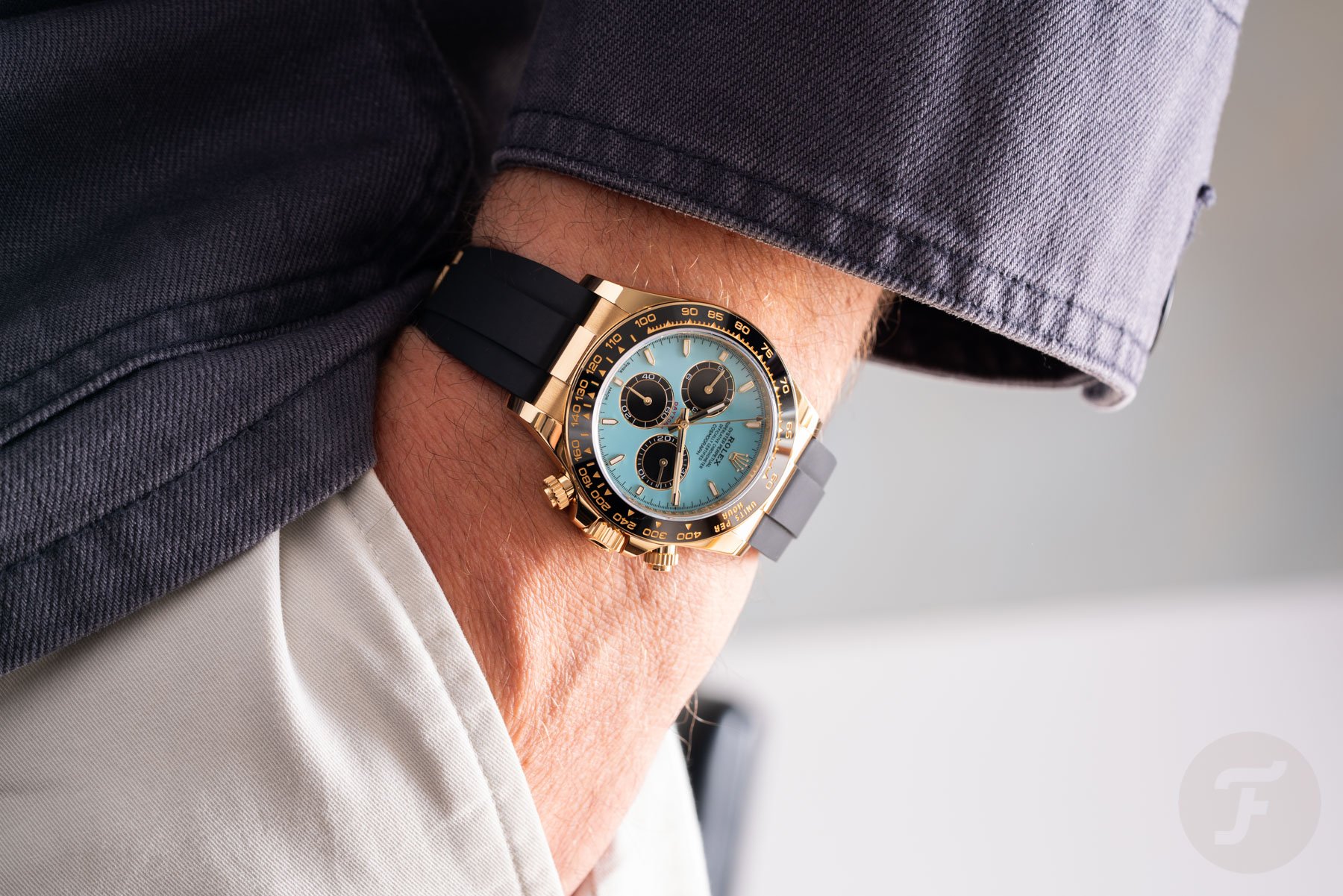
In the last installment of our series on our favorite summer watches, Robert-Jan took a slightly different approach that I loved. Connecting watches to destinations made it more personal. Additionally, it sparked a lively discussion on a variety of topics in the comments. But my brain is also wired similarly to his. Whenever I think […] Visit Fratello Summer Watch Picks 2025: Jorg’s Favorites From Tudor, Laventure, Nomos, And Rolex to read the full article.
 Hodinkee
While Wimbledon fever gripped the city, the tennis legend held court at Rolex's newest European boutique in a gathering that reminded us why he transcends sport.
 Fratello
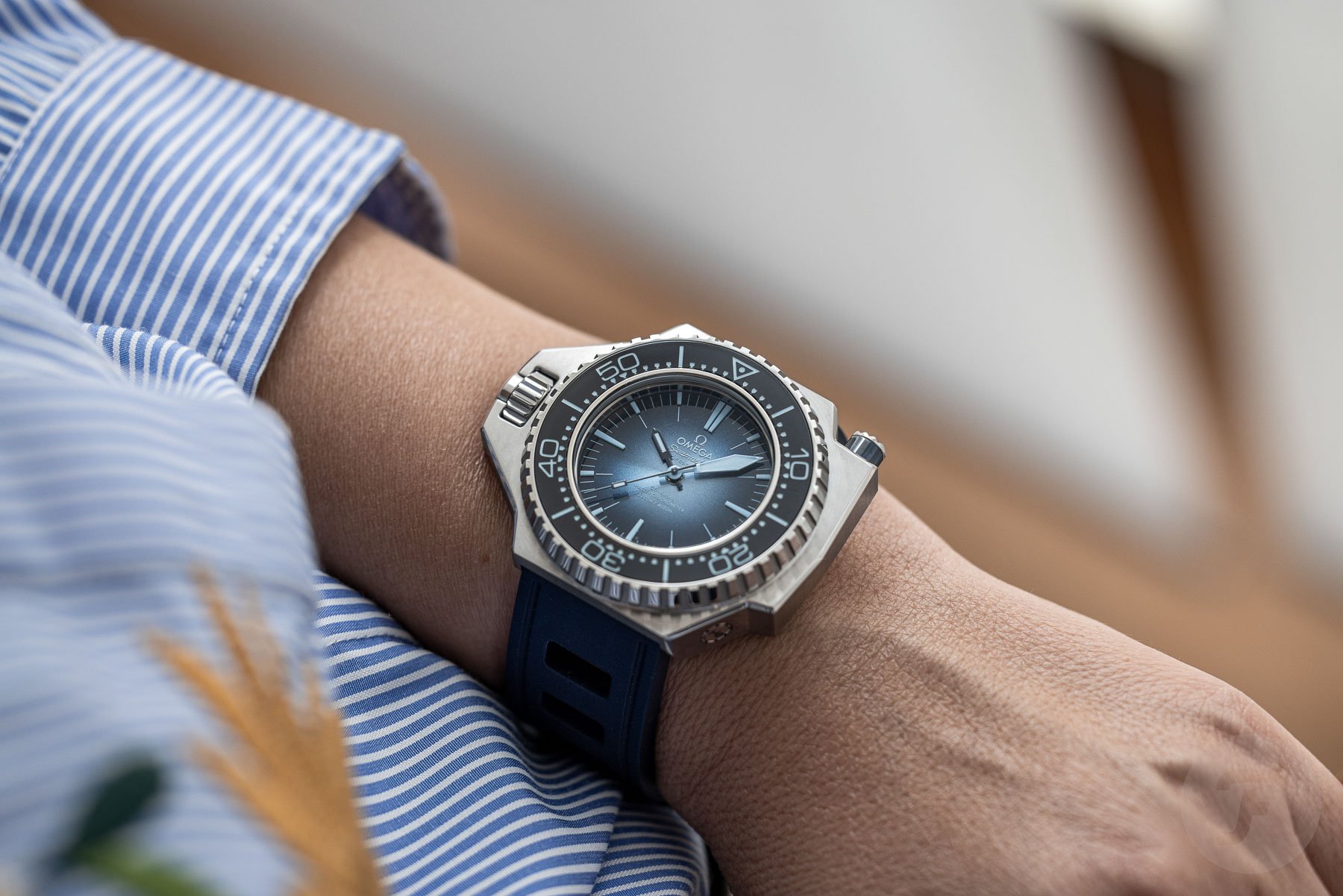
Yes, I know this series is supposed to be about watches for summer, but is there such a thing as a typical summer watch? I think I’ll go against the grain and refer to my picks as “holiday watches” instead, as preparing for a vacation is when I carefully select the watch (or watches) I […] Visit Fratello Summer Watch Picks 2025: RJ’s Choices From Rolex, Omega, Grand Seiko, And G-Shock to read the full article.
 Teddy Baldassarre
If you are into watches and watch collecting, you have heard of the “Paul Newman Rolex,” have heard of it spoken of with reverence and awe, and have perhaps even longed to possess or at least see one yourself. But how did this watch - a very specific version of the Rolex Daytona - become the celebrity watch of all celebrity watches, as well as the né plus ultra representing the absolute highest echelon of watch connoisseurship? It’s a story of watch marketing savvy and market serendipity that spans the globe from Geneva to Daytona, from Cleveland to Hollywood. Rolex was riding a hot streak of successes in the 1950s and early ‘60s. The Swiss company had already introduced to the market the definitive luxury divers’ watch, the Submariner; the quintessential luxury travel watch, the GMT-Master; and even an understated, rugged outdoor watch, the Explorer, that became a star in its one right by virtue of its role in the historic summit of Mount Everest. The one popular category that Rolex had yet to really crack was the emerging genre of motorsport-inspired wrist chronographs, an area in which brands like Heuer (today’s TAG Heuer), Longines, and Breitling had a substantial head start. Rolex boldly jumped into the fray, introducing its first “pre-Daytona” wristwatch chronograph, Ref. 6234, in 1955, and its successor, Ref. 6238, in 1962. Both were 36mm steel watches outfitted with manually wound Valjoux 72 calibers, and both had dials that read simply “Chro...
Question, suggestion, or just want to say hi? Drop a note.