In-Depth II: Grand Seiko Kodo Constant-Force Tourbillon SLGT003
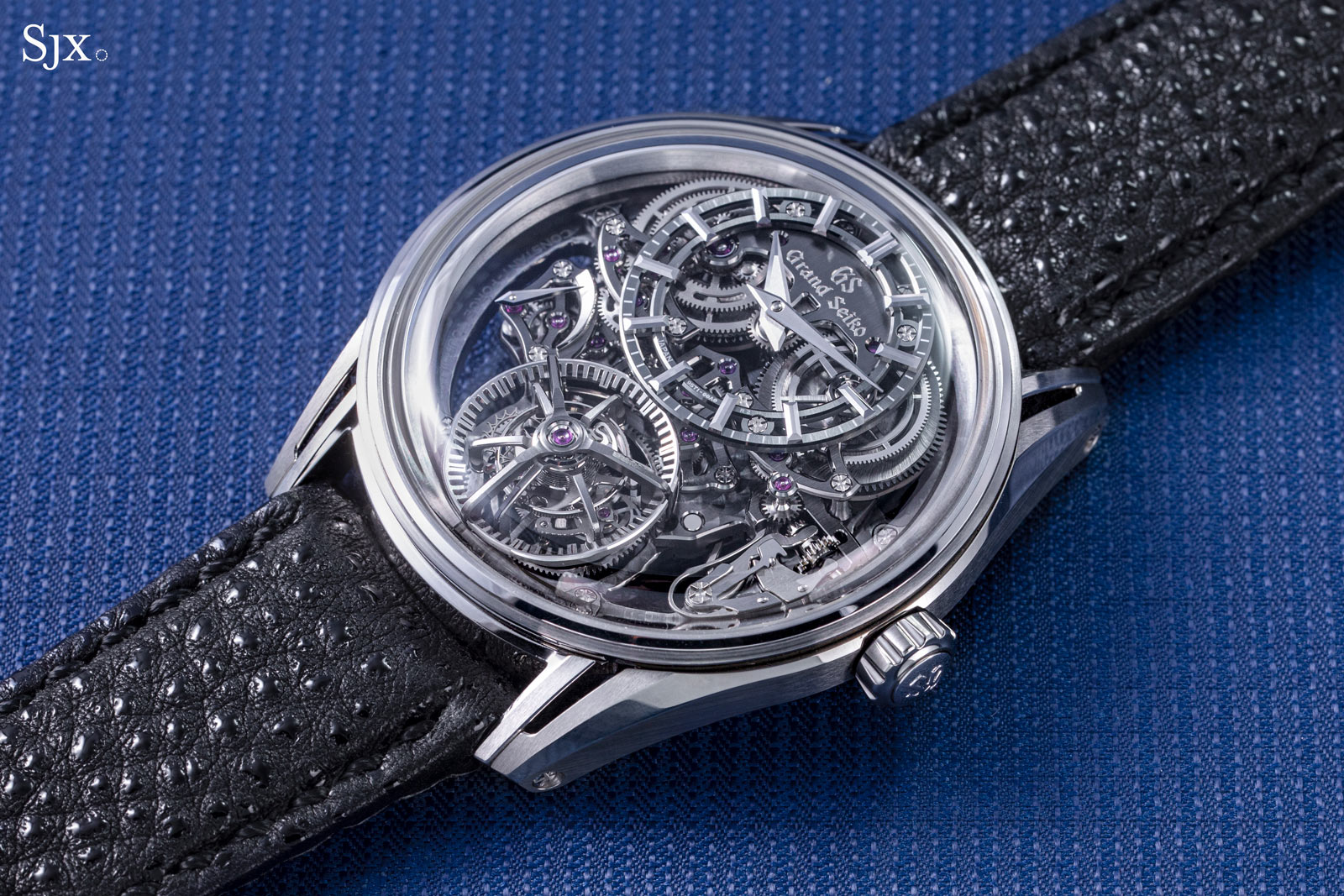
Having delved into the origins, concept, and design of the Grand Seiko Kodo Constant-Force Tourbillon SLGT003, we now turn to the granularity of its technical qualities. The Kodo is first and foremost a chronometer in the vein of the watches that lay behind the founding of Grand Seiko (GS). A brand focused on precision timekeeping since its establishment in 1960, the opening act of GS in its first decade was competing in observatory chronometer trials at Neuchatel and Geneva – and winning, much to the horror of the Swiss. Several decades later the brand is still pursuing perfect accuracy in both mechanical, quartz, and hybrid formats, most notably with the novel Spring Drive. The Kodo powered by the cal. 9ST1 is the latest, and arguably greatest, endeavour in chronometric precision from GS. But it is like no GS that has come before it. Rather than rely on modern technology and materials, the Kodo instead revisits traditional mechanical solutions, namely as the constant-force mechanism and tourbillon. Combining the two in a wristwatch mark a milestone for GS, or any Japanese watchmaker for that matter. To understand the mechanical systems within the Kodo, we must first understand the fundamental challenges in precision timekeeping. The factors that influence precision fall into two categories, the first related to the barrel or energy supply, and the second, gravity’s effect on the balance or oscillator. Energy challenges The barrel is the source of energy in a conve...
 Time+Tide