 Hodinkee
Introducing: J.N. Shapiro's First Complication, A Monopusher Chronograph
Made for the Boston-based independent collectors' group Escapement, the new watch sets the stage for future releases from Shapiro.
322 articles · 2 videos found · page 6 of 11
Hodinkee
Made for the Boston-based independent collectors' group Escapement, the new watch sets the stage for future releases from Shapiro.
 Teddy Baldassarre
For many watch collectors, acquiring one's first tourbillon watch is a Holy Grail, a rite of passage into the upper echelons of horological connoisseurship. If you're new to the watch appreciation game, however, you may be wondering what all the fuss is about. What is so special about tourbillon watches, anyway, and what makes them so desirable to so many while still being so prohibitively expensive for most? The short answer is that a tourbillon is, in this day and age, less of a necessity and more of a badge of historical high-watchmaking excellence. For a more detailed explanation, read on. The First Tourbillons and Early Innovations The inventor of the tourbillon is a name that is likely familiar to watch connoisseurs. Abraham-Louis Breguet (1747-1823), a native of Switzerland who plied his trade as a watchmaker in Paris, was one of horology’s most significant historical figures, among whose many innovations was the first self-winding movement, the first repeater movement with a gong, one of the earliest constant-force escapements, and the device that he famously patented in 1801, the so-called tourbillon escapement. While the tourbillon is today considered by many to be a complication, like a chronograph or calendar mechanism, its original purpose was a fully practical one, to compensate for the ill effects of gravity on the movement of a pocket watch and thus improve its long-term accuracy. Remember, in Breguet’s time, watches were not worn on wrists, where ...
 Teddy Baldassarre
While Switzerland is regarded today as the world leader of watchmaking, Great Britain can lay claim to a wealth of horological milestones throughout its history as well. From Thomas Mudge’s development of the lever escapement in 1755 to John Harrison’s invention of the marine chronometer in 1759 to the innovations of clockmaker Thomas Tompion and his protegé George Graham in the areas of science and astronomy, England was an undisputed leader in timekeeping throughout the 18th and 19th centuries. The 20th century brought the decline of the British Empire and, with it, British watchmaking, as nations like Switzerland, Germany, and (for a while) the United States stepped in with modern mass-production techniques while the Brits held fast to traditional, artisanal methods. The United Kingdom essentially ceased being a major producer of timepieces by the end of World War II, but as the 21st Century dawned, a handful of entrepreneurial Britons have made great strides in bringing high-end watchmaking back to their native land, establishing new brands - and in some cases, resurrecting old ones - to make watches that appeal to today’s discerning enthusiasts in the U.K. and across the world. Whether the focus is military-style tool watches, avant-garde complications at approachable prices, or ultra-high-end pieces for well-heeled collectors, each brand boasts an identity that is proudly British and at the same time distinct from its peers. Here are 15 British watch bran...
 Teddy Baldassarre
It's no understatement to say that the Rolex Land-Dweller was the talk of Watches & Wonders 2025, which took place in Geneva a few months ago. A new Rolex collection with an integrated bracelet and a brand new movement? Well, we would expect no less. There is something fundamentally earth-shaking about massive shifts in the Rolex atmosphere. Mixed metaphors aside, just because we have seen Rolex develop and launch an entirely new collection quite recently (with the 1908, released just two years ago, in 2023), it doesn’t make it normal. Before that it was the Sky-Dweller, and years before that, there were variations on the Yacht-Master. The launch of the Land-Dweller proved to be one of those milestone moments. The Land-Dweller is the product of 18 new patents specific to this watch, as Rolex has developed an entirely new watch both inside and out. No, this is not a new complication, but it is a brand-new approach to timekeeping. It marks the first development of a new escapement system at this scale since the arrival of the Co-Axial escapement from Omega some twenty-five ago. In short this is big news. As you likely have seen by now, Teddy and I had the chance to see this watch up close and personal ahead of this year's Watches & Wonders a few months ago (you can find our full video hands-on review on YouTube now) and were also lucky enough to do it prior to a lot of the pre-release noise really reaching peak volume. That is to say, we were able to learn about the mech...
 Monochrome
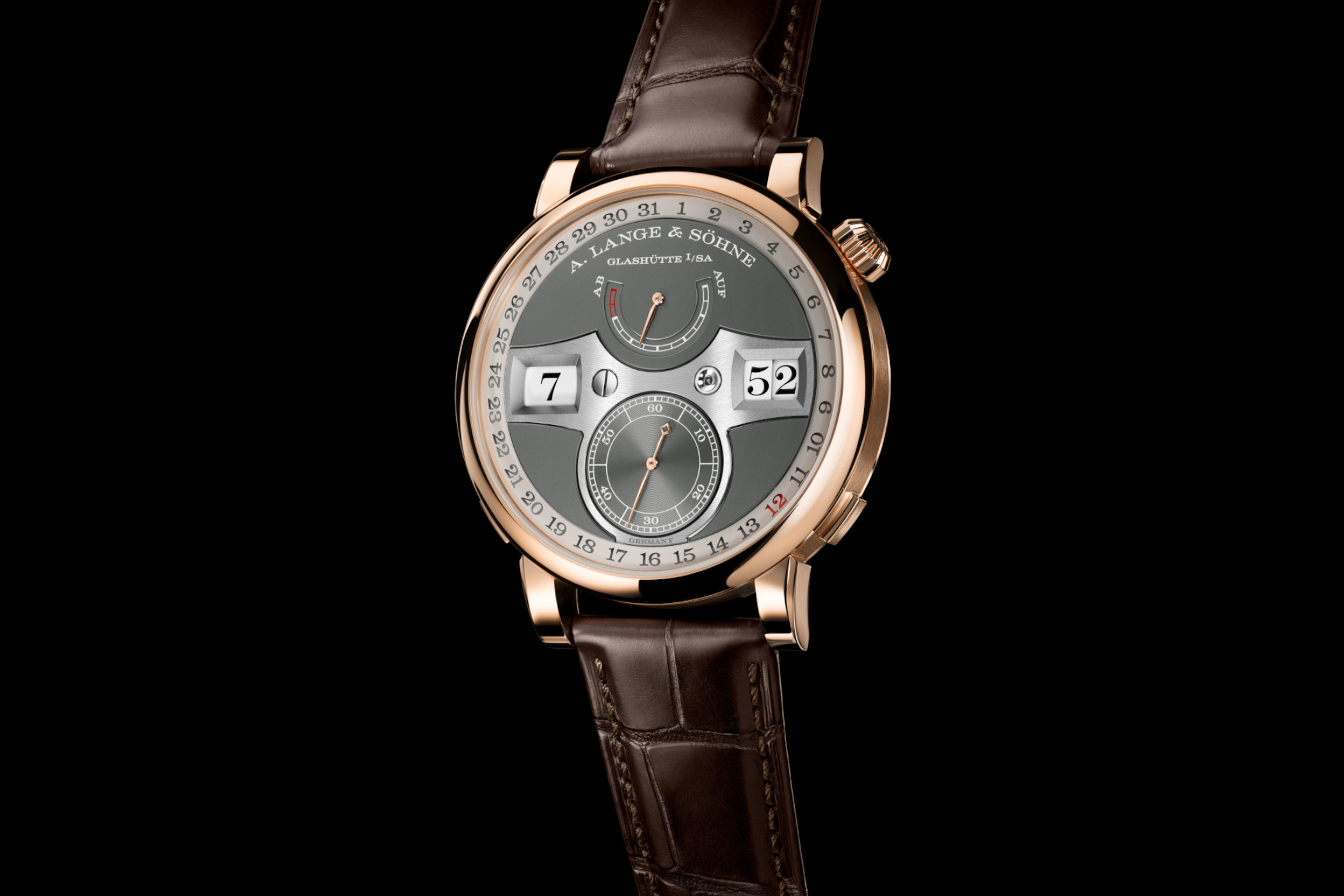
When A. Lange & Söhne first revealed the Zeitwerk in 2009, it marked a bold break from convention. A high-end Saxon watch that abandoned the familiar hands-on-dial format in favour of a purely mechanical digital time display, large jumping numerals for the hours and minutes, powered by an ingenious constant-force escapement. Since its introduction, the […]
 Teddy Baldassarre
Among the many questions a novice watch enthusiast is faced with, “Mechanical vs. Automatic Movement?” is one of the most basic, yet one whose answer is a bit more complex than a simple A-or-B explanation. In fact, “mechanical or automatic” isn’t even really framing the choice correctly. In the article below, we attempt to clarify the subject and answer the most pressing questions about these tiny engines inside your watch. What is a Mechanical Movement? A mechanical movement, like the Nomos DUW caliber below, uses a coiled metal spring, called a mainspring, that releases energy as it uncoils through a series of gears to drive a weighted, oscillating wheel called a balance wheel. The balance wheel’s oscillations are linked to an escapement, which periodically releases the gear train to move the hands forward to record the passing of hours, minutes, and seconds. In short, a mechanical movement in a watch is any type of movement that uses no batteries or electronic components to function - which makes them different from more modern inventions, like quartz, Spring Drive, and solar movements. Technical developments over the centuries are what led to the two types of mechanical movements we’re discussing here. Originally, the movement’s mainspring needed to be wound periodically by hand - first by a key, then by a small knob called a crown that was attached via a stem to the movement. Later, a type of movement was developed that could be wound “automatica...
 Worn & Wound
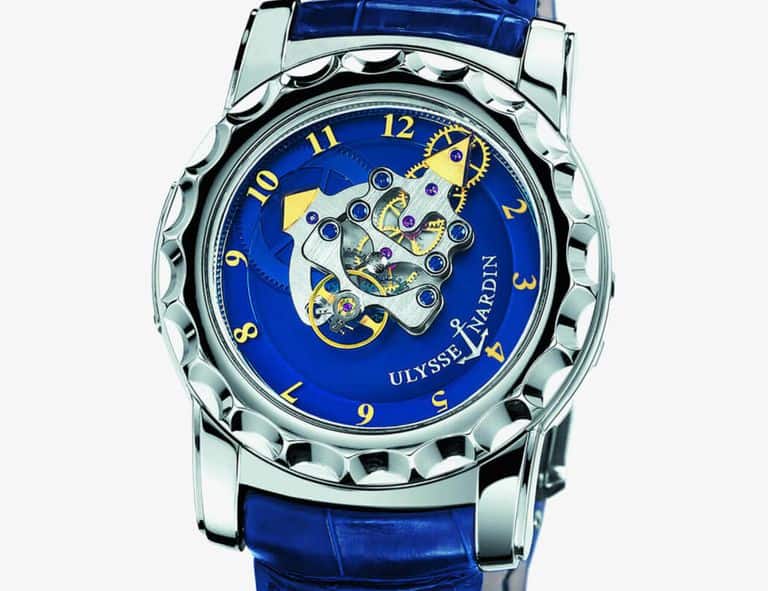
When Ulysse Nardin unveiled the Freak in 2001, it set off a chain of events that forever changed the course of history for the brand and for the industry at large. The model seamlessly flexed a combination of technical and design achievements. The Freak offered material innovation that was far ahead of its time, introducing the use of silicon in the escapement wheels-a technology that is now used by almost every major watch brand from Rolex to Patek Philippe, Girard-Perregaux, Breitling, and Jaeger-LeCoultre, just to name a few. It also presented an entirely new set of aesthetic codes for watch design with an expression of time that notably lacked a traditional dial, hands, or crown. With the Freak’s overall success, it immediately established the brand as a thought leader, an innovator, and (perhaps most importantly) a rebel in an industry often paralyzed by its reverence and steadfast commitment to tradition. In the nearly 25-years since the first Freak, we have seen Ulysse Nardin infuse this spirit in each subsequent Freak model and its catalog at large-from the Blast collection to its UFO clocks and, most recently, in its record breaking Diver [Air], the world’s lightest mechanical dive watch. The first Freak We all know record setting has become a bit of a thing in watchmaking. Particularly in the past decade or so, we have witnessed brands embark on the race to claim the next world record title. Since 2014, Bulgari has set a whopping ten for the ultra-thi...
 Monochrome
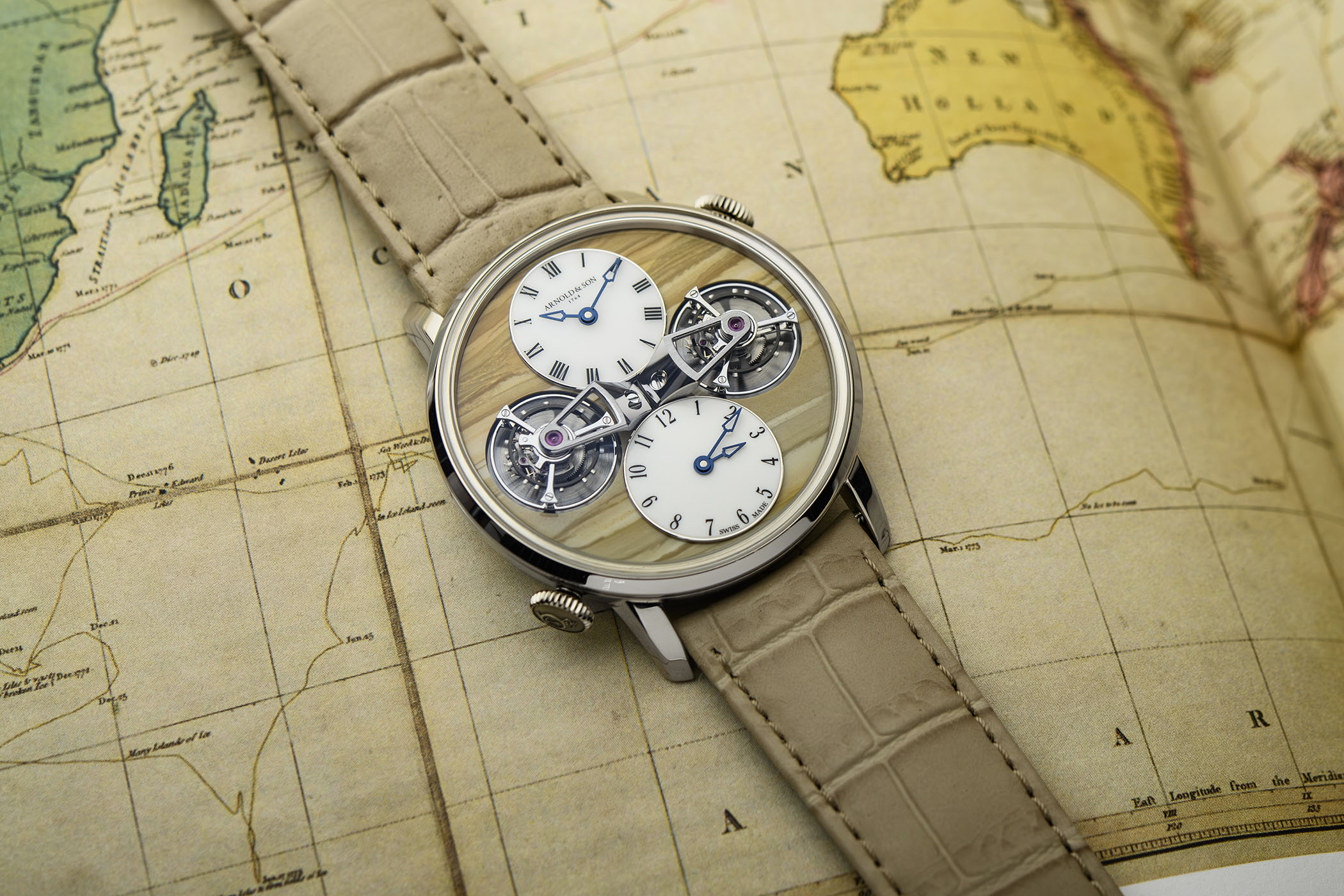
In 2014, Arnold & Son marked 250 years of John Arnold’s horological legacy with the debut of the Double Tourbillon Escapement, a timepiece that introduced a mechanically ambitious concept: two independent time displays, each driven by its gear train and regulated by its tourbillon. This duality, both technical and aesthetic, was made possible through separate […]
 Teddy Baldassarre
Watch movements, like the engines in cars, are the mechanisms that make the whole thing run, and if you're new to the world of avid watch enthusiasm, there's more to learn about them, and how they work, than you think. In this comprehensive guide to watch movements, we will attempt to answer every question that you might have about movements - their different types, their important parts, who makes them, and even a bit of history and trivia. What is a Mechanical Movement? A mechanical movement, the oldest type of movement in horology, uses a coiled metal spring, called a mainspring, that releases energy as it uncoils through a series of gears to drive a weighted, oscillating wheel called a balance wheel. The balance wheel’s oscillations are linked to an escapement, which periodically releases the gear train to move the hands forward to record the passing of hours, minutes, and seconds. Originally, the mainspring needed to be wound periodically by hand, first by a key, then by a winding crown attached via a stem to the movement. Later, a type of movement was developed that could be wound “automatically,” through the motions of the wearer’s wrist. What is the difference between a mechanical movement and an automatic movement? It isn’t really a question of difference: the latter is simply a specific type of the former, à la a Cognac and a brandy. The two main types of mechanical movements are manually wound (or “hand-winding”), in which the user needs to p...
 SJX Watches
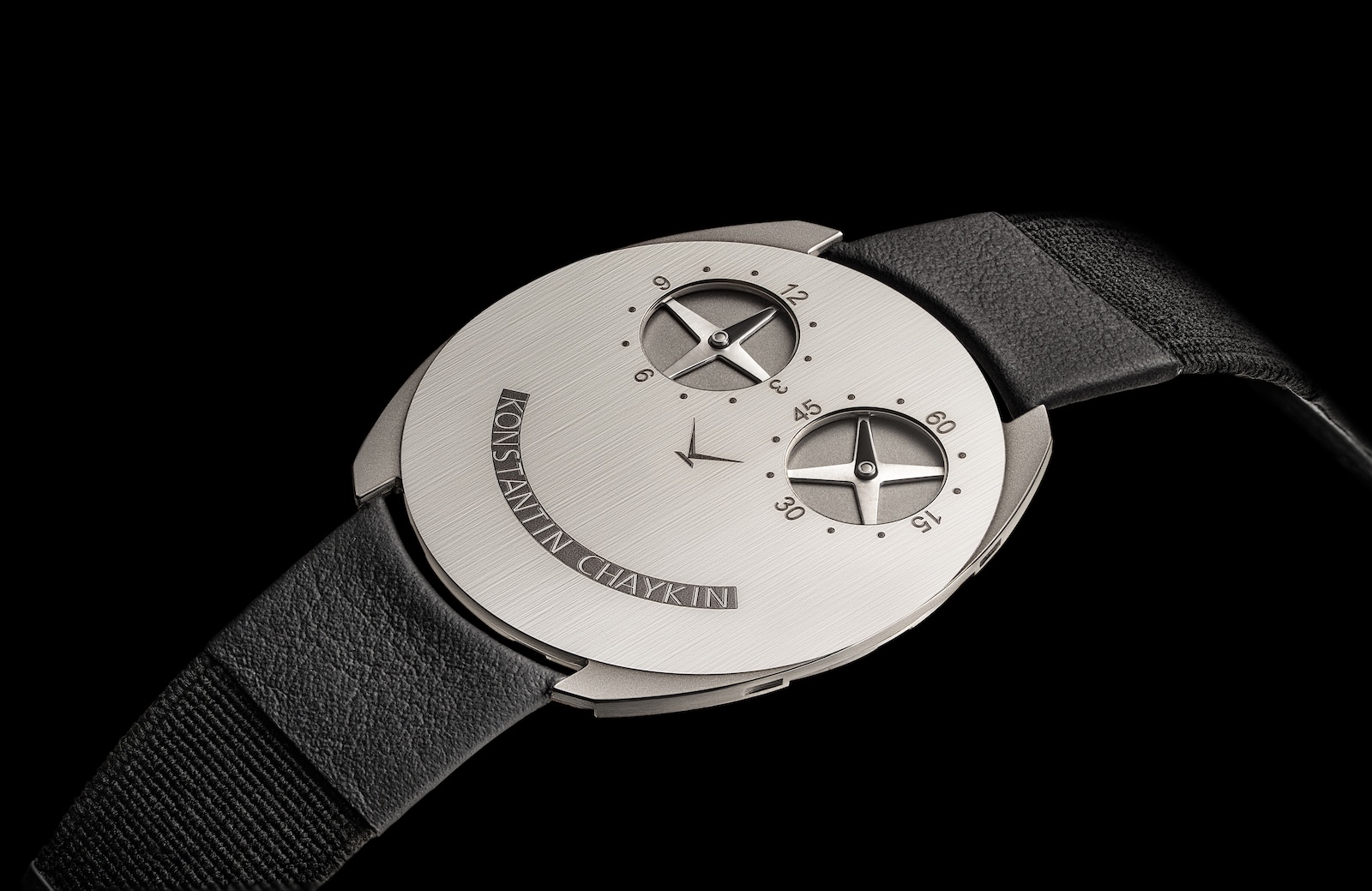
If you want to own the world’s thinnest mechanical watch, the Konstantin Chaykin ThinKing, you’ll have to fight for it at The Geneva Watch Auction: XXI, which will see the first production example go under the hammer. The 1.65 mm stature of the ThinKing is even more impressive coming from a small Russian independent watchmaker, considering previous records were set by big Swiss brands ranging from Piaget to Richard Mille. Notably, this is not the first time a landmark release has been trusted to an auction that isn’t linked to a charity. The most famous example of this was the Patek Philippe Calibre 89 (ref. 989J) back in 1989 at Antiquorum’s thematic sale. The ThinKing will be sold in the first session of the auction, which starts on May 10, 2025, at 2 pm. The ThinKing in profile. Image – Phillips Mr Chaykin achieved the record-setting height with clever construction, including a “double balance wheel” system that places an intermediate wheel between the balance and escapement, allowing both to sit on the same plane. Another notable technical feature is a barrel that is open on both sides, and no thicker than the mainspring itself. And unlike most serially-produced Konstantin Chaykin watches, each ThinKing is made, finished, and assembled by Mr Chaykin himself. Wearability is enhanced by the bolt-on protective shroud in titanium christened “PalanKing”. This increases the height to 5.4 mm, but adds key-less setting and winding, and automatic winding by a...
 SJX Watches
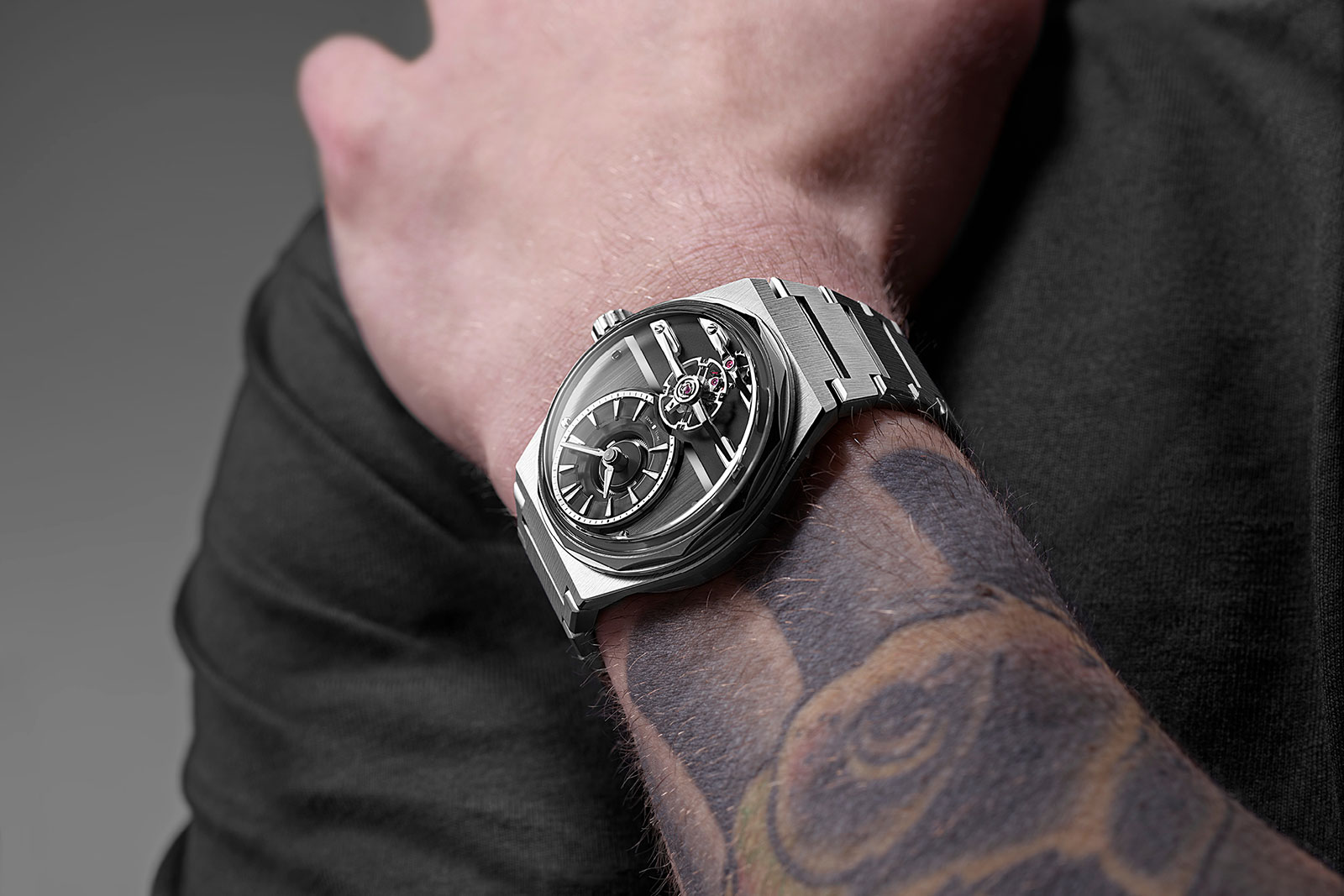
Out to replicate the success of the Bel Canto and prove it’s not a one-hit wonder, Christopher Ward has introduced the C12 Loco. While the integrated bracelet look is now commonplace, the Loco breaks new ground for the British brand in terms of its differentiated movement architecture, and features an inverted free-sprung balance on the dial side of the watch. Spiritual successor to the Bel Canto, the C12 Loco paints a picture of Christopher Ward’s ambitions as a brand. Like Louis Erard, which is on a similar mission to make traditional craft and independent design more accessible, Christopher Ward is looking to redefine what collectors should expect from entry level watchmaking. Initial thoughts The Twelve is Christopher Ward’s foray into integrated bracelet sport watches. Its launch in 2023 was not without some controversy, being seen as too similar to the Czapek Antarctique; it turned out both designs came from the mind of designer Adrian Buchmann. Despite the rocky start, the collection has been a commercial success and the brand has done a commendable job developing the line-up and keeping prices in check. The Loco is the most ambitious Twelve to-date, with an off-center time display that opens up space at six o’clock for an exposed balance wheel and escapement. Like the Bel Canto, the watch does not feature the Christopher Ward brand name on the dial. In an era when attention is the name of the game, it’s nice to see a small brand with the confidence to let...
 SJX Watches
The third iteration of De Bethune’s swivelling, double-faced watch is the Kind of Two GMT “Season 3” conceived in collaboration with American rapper and watch enthusiast Swizz Beatz. Powered by the hand-wound DB2517 movement, the watch indicates one time zone on the front and another on the reverse, with both sides able to be worn face up thanks to patented, pivoting “floating” lugs. Initial thoughts The Kind of Two series employs a useful reversible case, cleverly using the “floating” lug construction of the DB28 to create a double-faced watch. Here one dial is traditional with blued steel hands, and the other an open-worked face revealing the movement that also has a regulator-style display for the second time zone. The clever approach with a unique movement is typical De Bethune, although this loses some novelty as the third double-faced watch in the De Bethune line-up. The Kind of Two GMT is definitely one of the most elaborate two time zone watches on the market, but at over US$200,000, it is pricey for a GMT, even by the standards of independent watchmaking (Voutilainen’s GMT, for instance, costs less). Two-faced The “Season 3” edition adopts a restrained palette of black and gold with blue accents. The 43.3 mm by 11.4 mm case is titanium and zirconium, with blued steel hands and a blue-and-black guilloche dial centre on the front showing local time. Notably, this dial includes a jumping seconds that is driven by a secondary escapement visible on ...
 SJX Watches
Grand Seiko’s flagship chronograph gets a new dial with the Tentagraph SLGC007 that just launched at Watches & Wonders 2025. Nearly identical to its predecessor, the SLGC001 with a dark blue dial, the new iteration distinguishes itself through a striking grey dial embossed with a pattern inspired by freshly fallen snow. This is matched with contrasting black sub-dials that coordinate seamlessly with the ceramic bezel, setting it apart from the earlier model. Initial thoughts The SLGC001 was a significant milestone for Grand Seiko - serving as the brand’s first mechanical chronograph - the new iteration of the Tentagraph is a just cosmetic variant. It has all the strengths and weaknesses of the original, though the dial is more attractive. This refreshed dial is far more appealing than the original in blue, as blue is somewhat overused in sports watches. The “panda”-esque black registers are also a nice touch that add to the sporty design. Priced at US$14,700, the Tentagraph SLGC007 is priced reasonably – but not quite the same value proposition as the average Grand Seiko. The Tentagraph has an impressive list of features, most obviously the in-house cal. 9SC5 with Grand Seiko’s proprietary Dual Impulse Escapement, and a high level of fit and finish, but the movement is modular in construction, which should not be a case for a flagship chronograph from a respected watchmaker. Nature inspired once again As is often the case with Grand Seiko dials, the SLGC007...
 Teddy Baldassarre
Watches & Wonders 2025 has come and gone and there was no shortage of unexpected releases and divided opinions. The editorial team here at Teddy was on the ground covering all the new launches, and afterward we asked them to name their favorite release from the show. It’s not an easy task, but we are going to have a few more of these post-show Editors’ Picks articles in the coming days that will expound a bit more on what we thought. For now, let’s get to our overall favorite picks from Watches & Wonders 2025. Danny Milton: Rolex Land-Dweller I won't belabor the point here, considering I penned about 2,000 words on this watch at launch, and helped produce our hands-on coverage at embargo. The Land-Dweller is seriously big news, and in all candor, is the watch of the show, full stop. It plays on nostalgia via its callback to the design language of integrated sports watches from Rolex in the 1970s. It introduces an entirely new design template in the modern Rolex context via a new case; a new, flat Jubilee bracelet; patented stick markers; new open applied numerals; new hands; a new counterweight on the seconds hand; and a new honeycomb dial, not to mention a new fluted bezel design. But the real star of the show is a silicon escapement made from the ground up. Dynapulse is perhaps Rolex's greatest innovation and results in a new 5Hz beat rate while maintaining accuracy, shock resistance and antimagnetic properties. But above all else, the watch honestly looks and wear...
 SJX Watches
Grand Seiko’s flagship mechanical chronograph has been reimagined as the Sports Collection Tokyo Lion Tentagraph SLGC009. Executed in the brand’s proprietary “Brilliant Hard Titanium”, the oversized, facetted case is inspired by the paw of a lion, the historical emblem of Grand Seiko. This is the first time the Tentagraph movement is being combined with the Tokyo Lion case, setting it apart from the original model that was in the classic Grand Seiko Evolution 9 design. Initial thoughts While the original Tentagraph was conventional in style, the Tokyo Lion edition is big and bold. The watch has presence on the wrist. The case is large at 43 mm wide and almost 16 mm high, with its many facetted surfaces catching the light nicely. While the concept of a lion-inspired case might sound gimmicky, the new Tentagraph has its own appeal. The size and style makes this less of a low-key everyday watch than the first Tentagraph, but definitely more striking and original. Even though the Tokyo Lion case is arguably an acquired taste, I like this more than the original. At US$16,400, the Tokyo Lion Tentagraph is one of Grand Seiko’s priciest models in non-precious metal. But it is a flagship watch with a latest-generation movement, the cal. 9SC5, which incorporates the proprietary Dual Impulse Escapement and a free-sprung balance. The only shortcoming of the watch is the modular construction of the movement. Ten beats per second While the Tokyo Lion case design has been emplo...
 Hodinkee
A major leap forward in movement technology, featuring a new indirect impulse escapement and high frequency movement that confirms the Crown's industrial manufacturing prowess.
 Worn & Wound
2022: the Kodo constant force tourbillon. 2023: the Tentagraph hi-beat mechanical chronograph. 2024: the 9SA4 manual wound, hi-beat, dual-impulse escapement caliber, and Kodo Daybreak. It’s easy to forget that Grand Seiko has brought the proverbial heat to Watches & Wonders every year since the fair started, unveiling something that one could call “revolutionary” for the brand, if on varying scales. Well, it’s looking like 2025 will continue the trend with the introduction of Spring Drive Caliber 9RB2, the first caliber with U.F.A., or Ultra Fine Accuracy, designation. Before proceeding, there are two important concepts to understand: Spring Drive and Grand Seiko’s history with acronyms (which, if you know, feel free to jump two paragraphs ahead). Starting with the former, the elevator pitch, which I will take from our article dedicated to the topic is “Spring Drive combines the best of mechanical watchmaking and the best of quartz timekeeping to create a state-of-the-art caliber that lacks the weaknesses inherent to both of these movements.” A bit deeper, Spring Drive movements use the energy stored in a traditional mainspring to drive their proprietary “Tri-synchro” regulator, which replaces the classic lever escapement. It consists of a glide wheel, the rate of which is controlled by an electromagnetic brake, and is essentially regulated by an integrated circuit with a quartz oscillator. The result is a mechanical movement with quartz-like accuracy and...
 SJX Watches
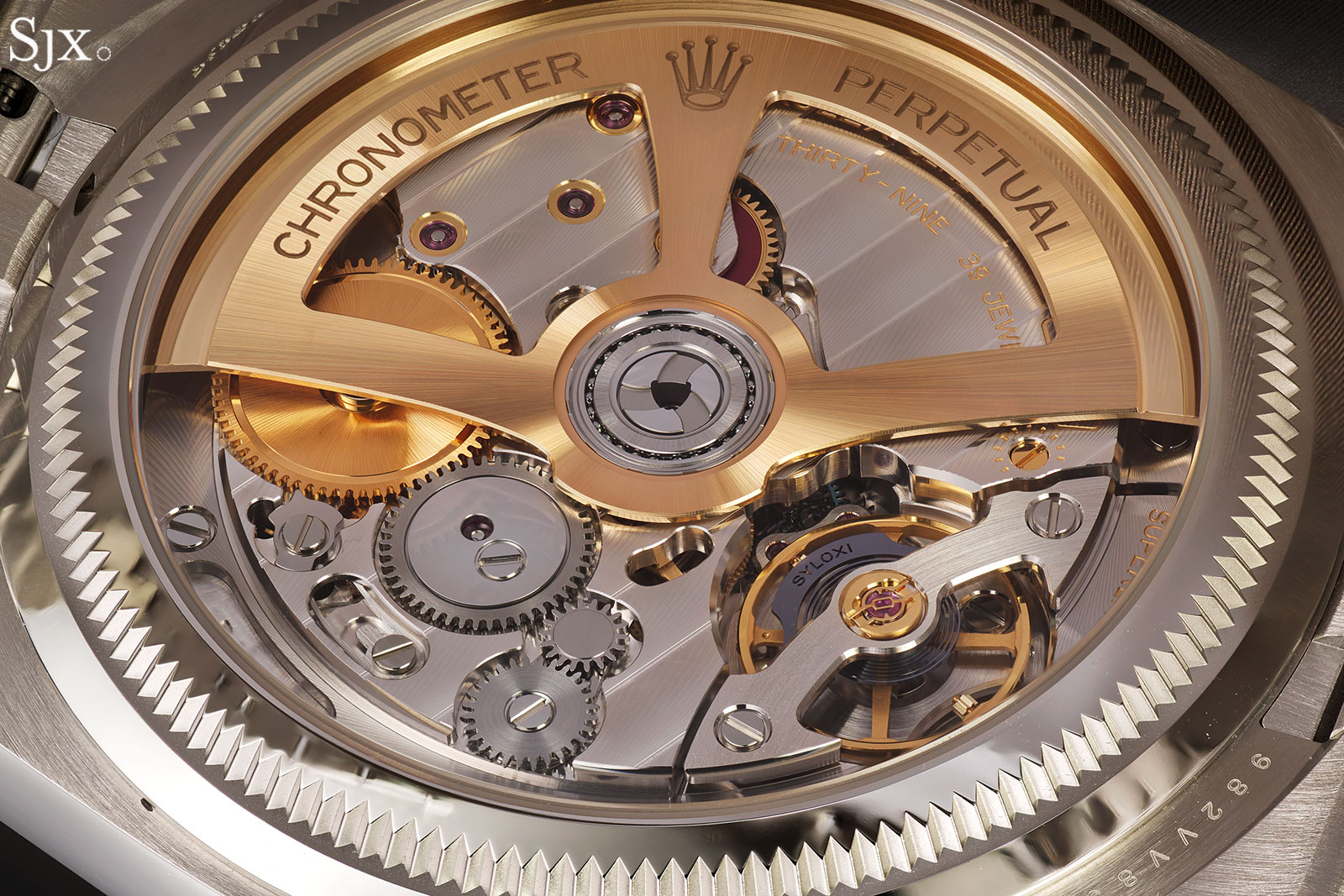
Rolex has entered uncharted territory with the Land-Dweller, arguably the most advanced and radical creation from a hitherto conservative brand. The Land-Dweller is significant, perhaps even game changing, not because of the integrated bracelet or patented solid lume, but because of the cal. 7135, a new calibre with an all-new double-wheel escapement known as Dynapulse and a ceramic balance staff. (This story details the technical advances in the movement; for a review of the watch, check out the accompanying story.) The Land-Dweller 40 mm in platinum The fundamentals Why is it significant, or even game changing? The cal. 7135 is the first in-house, serial production Rolex movement that is high frequency, beating at 5 Hz or 36,000 beats per hour. All things being equal, a higher frequency promises superior timekeeping. Despite the higher frequency, the cal. 7135 still has a 66-hour power reserve. That’s thanks in part to the Dynapulse escapement which is 30% more efficient than a conventional Swiss lever escapement, while occupying essentially the same volume of space. The balance assembly of the cal. 7135 Dynapulse is one of several innovations that make the cal. 7135 a landmark, especially since it will be produced at scale. While Rolex has traditionally been associated with incremental innovation, the cal. 7135 is a revolution. The Land-Dweller is the subject of 32 filed patents, 18 of which are unique to the watch. Moreover, 16 of the patents unique to the watch are ...
 SJX Watches
The most discussed debut of Watches & Wonders 2025, the Rolex Land-Dweller is an entirely new model with a new case and bracelet, but that’s not why it is significant. While Rolex is conventionally associated with incremental innovation, the Land-Dweller is game changing. Not because of the design, but because it’s equipped with perhaps the ultimate mechanical movement produced at scale in contemporary watchmaking, a calibre that’s the subject of 16 patents. (The finer technical details can be found in our accompanying story.) The cal. 7135 inside the Land-Dweller is a new, sophisticated calibre equipped with an indirect-impulse, double-wheel escapement that’s entirely in silicon – christened Dynapulse – matched with a ceramic balance pivot. And it’s a high-frequency calibre running at 5 Hz or 36,000 beats per hour. Cumulatively, that makes for a superior timekeeper on the wrist. The Land-Dweller debuts in two sizes, 36 mm and 40 mm, in three basic variants: white Rolesor, Everose gold, and platinum. There are also a handful of high-jeweller versions. The Land-Dweller in white Rolesor on Roger Federer’s wrist. Image – Rolex Initial thoughts The Land-Dweller is both surprising and predictable. The styling is surprising; the integrated bracelet echoes historical watches like the Oysterquartz and ref. 5100 Beta 21 but I never expected it. The Land-Dweller looks and feels surprising for a Rolex Oyster. At 9.7 mm it’s the slimmest Oyster Perpetual in the cat...
 SJX Watches
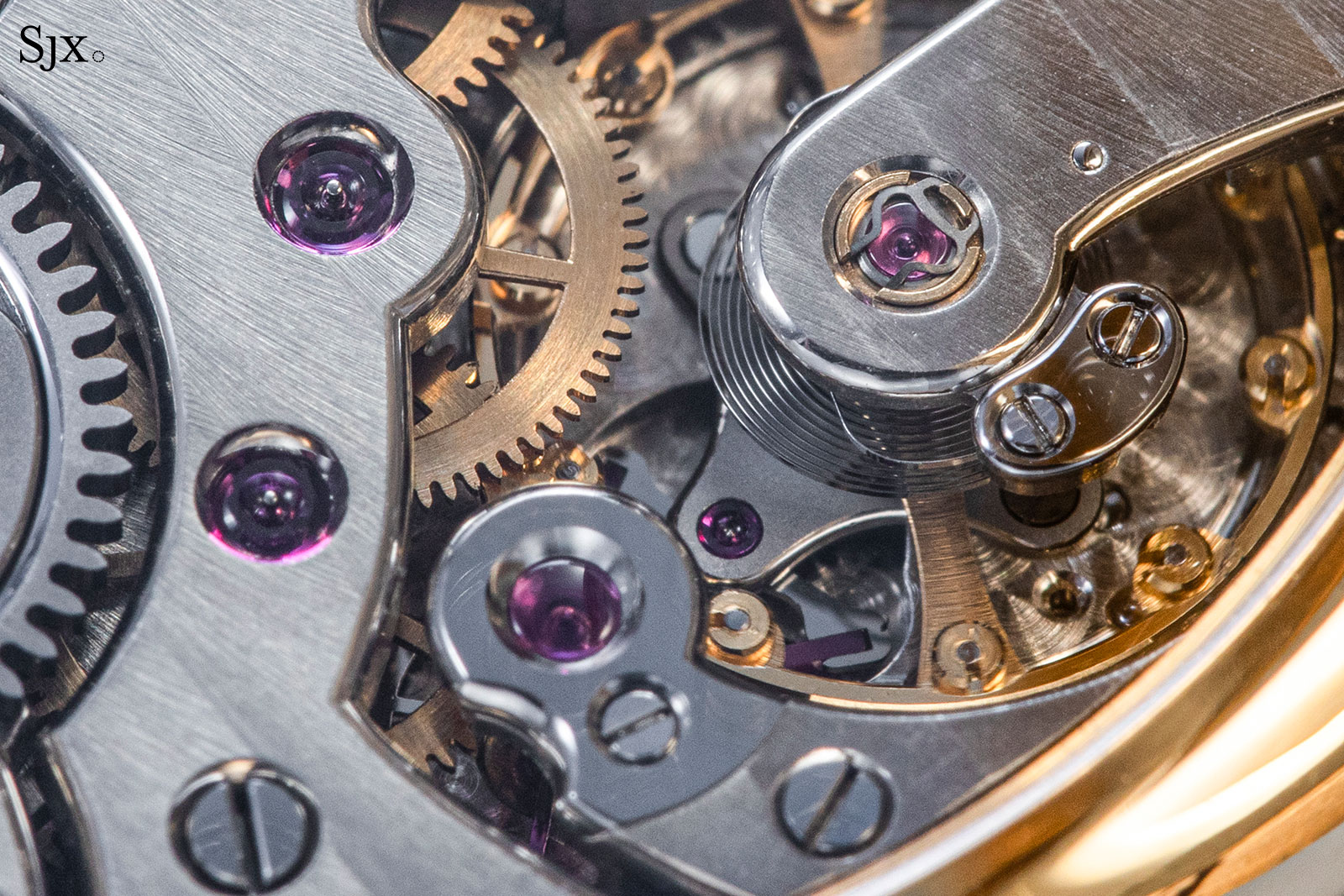
A mechanical watch is not always spot on; less-than-perfect timekeeping can happen, often due to an unruly oscillator. The solution is direct adjustments to the hairspring and balance assembly, either slowing down or speeding up the oscillator, a practice known as regulation. Watchmakers have devised multiple innovations to achieve this, including the free-sprung balance, exemplified by the Gyromax of Patek Philippe and Microstella of Rolex. While a simple concept in principle, the mechanics and practice of regulation are nuanced. Here we’ll delve into the theory of regulation and the primary regulating systems: the curb-pin regulator and the free-sprung (or variable inertia) balance. The Lange L043.4 with a screwed balance inspired by pocket watches Basic concepts In order to better understand watch regulation, we need to first cover some of the basic physics behind the watch oscillator: The component responsible for the running rate of a movement is its regulating organ. The regulating organ is made up of a hairspring paired to a balance, which together are also known as a harmonic oscillator. The natural oscillation period is the time it takes the balance to make a full swing, back and forth. The period is made up of two vibrations, one for each direction of the balance motion, with the escapement being unlocked at each vibration. Notably, the natural period of a balance wheel is intrinsic to itself and does not depend on the escapement type or the going train ratio. ...
 Hodinkee
These next rounds of classes will be hosted by the Carolina Watch Club, the Escapement Club, EsperLuxe and the Waltham Museum.
 SJX Watches
Grand Seiko announced in September last year a vintage remake inspired by the 45GS of 1968, the Heritage Collection 45GS Re-creation, which was launched as the SLGW005 in steel and the SLGW004 in yellow gold. In contrast to the many recent Grand Seiko releases with modern styling, the 45SG Re-creation is refreshing in being a revival of an iconic design, right down to the double-signed dial. Yet, the model also sports the brand’s latest generation manual-wind movement, the 9SA4. As the more accessible model of the two – retail is a little under US$10,000 – the steel SLGW005 deserves a closer look to understand how it smartly melds old and new. Initial thoughts Aesthetically, the SLGW005 stands out as a distinctively vintage design, from the case and dial to the buckle. This is all the more so since it is the first release since Grand Seiko’s rebranding in 2017, when all models eliminated “Seiko” in favour of only “Grand Seiko”, to feature the brand’s historical double-signed “Seiko” and “GS” dial. I am personally fond of this detail, as the double logo balances the dial aesthetically. But preferences aside, the external components are indeed excellent, from the dial work down to the faceted case. Despite the traditional exterior, the internals are modern – almost paradoxically so. Sporting the brand’s proprietary Dual Impulse Escapement, the 9SA4 inside is entirely different than the 1960s cal. 4520 found in the 45GS. On paper, it is a high-s...
 Worn & Wound
Thomas Schnelle’s journey began in northern Germany, where he pursued studies in toolmaking. After completing his technical college education, Schnelle found himself at a crossroads. While he contemplated studying design, a lack of confidence initially held him back. It was at this juncture that fate intervened, leading him to Chronoswiss, then owned and operated by Gerd-Rüdiger Lang in Munich. Chronowiss and Lang could be a long story in itself since Lang had mentored and influenced a lot of the next generation of watchmakers and brands. In 1991, 21-year-old Schnelle approached Lang, and it paid off when Lang entrusted the young newcomer with a significant project – creating a series of 99 escapement models. Schnelle officially started his career in the watchmaking industry as a supplier to Chronoswiss, later becoming a freelancer for the Bavarian brand. In 1995, Schnelle completed his watchmaking studies in Würzburg, and had the honor to be recognized as Germany’s best young watchmaker in competition. He continued to work as a freelancer for Chronoswiss until 2012, when Lang sold the company to the Ebstein family in Switzerland. Schnelle also repaired Cartier Tank watches for nearly 20 years for the Richemont group. He even took on side projects like milling air stream chambers for Infineon, and offering his technical design services. In August 2024, I visited Schnelle at his home atelier in Munich, and his workshop was filled with photographs, technical de...
 SJX Watches
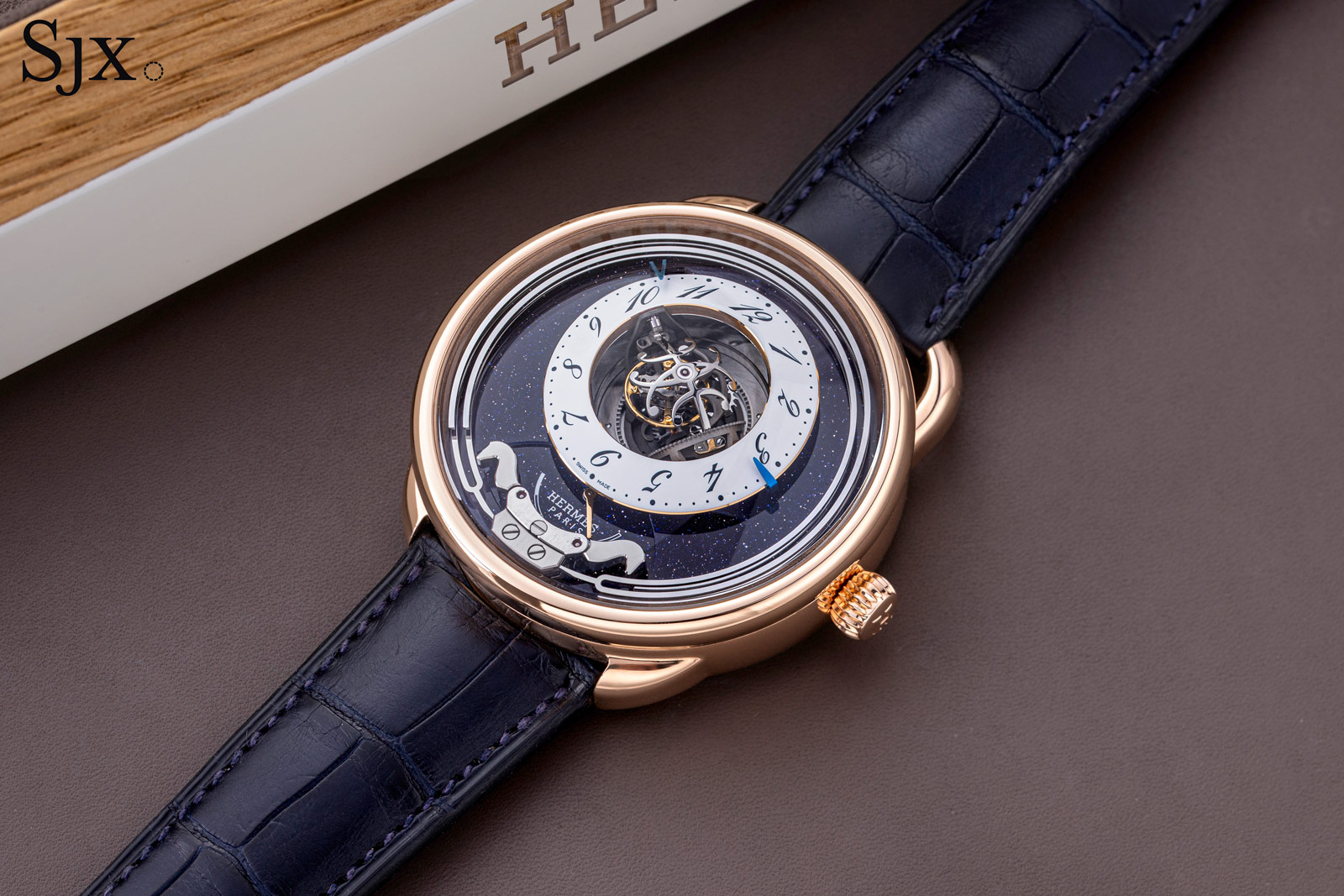
Hermès is a brand with a distinctive, often whimsical, visual identity that translates well across products, even on its most complicated watches like the Arceau Duc Attelé, which combines a triple-axis central tourbillon (containing a high-frequency escapement) with a minute repeater featuring novel “tuning fork” gongs. Large, thick, and very complex, the Duc Attelé still manages to capture the elegant aesthetic of the brand, even in subtle details of the H1926 movement, like horse-shaped hammers for the repeater. Customised for Hermès, the calibre has an intricate, dense construction but is recognisable as being produced by a specialist. Initial thoughts The Duc Attelé demonstrates the strength of the Hermès house style. On the front, it looks elegant despite the size, while the movement feels appropriate even though it is third party. The watch does sit big on the wrist, though the titanium version is a little lighter in weight and visually smaller due to its dark colours. But the Arceau case has tiny lugs, so it doesn’t feel clunky. And although the case is almost 20 mm high, a good part of that is due to the highly domed crystal that accommodates the tourbillon’s height. All of the design elements, however, give it an elegant feel. These include the Breguet numerals on the domed chapter ring and the “Lift” motif tourbillon cage modelled on the elevator in the brand’s flagship store in Paris. But more than anything else, this is a watch characterise...
 SJX Watches
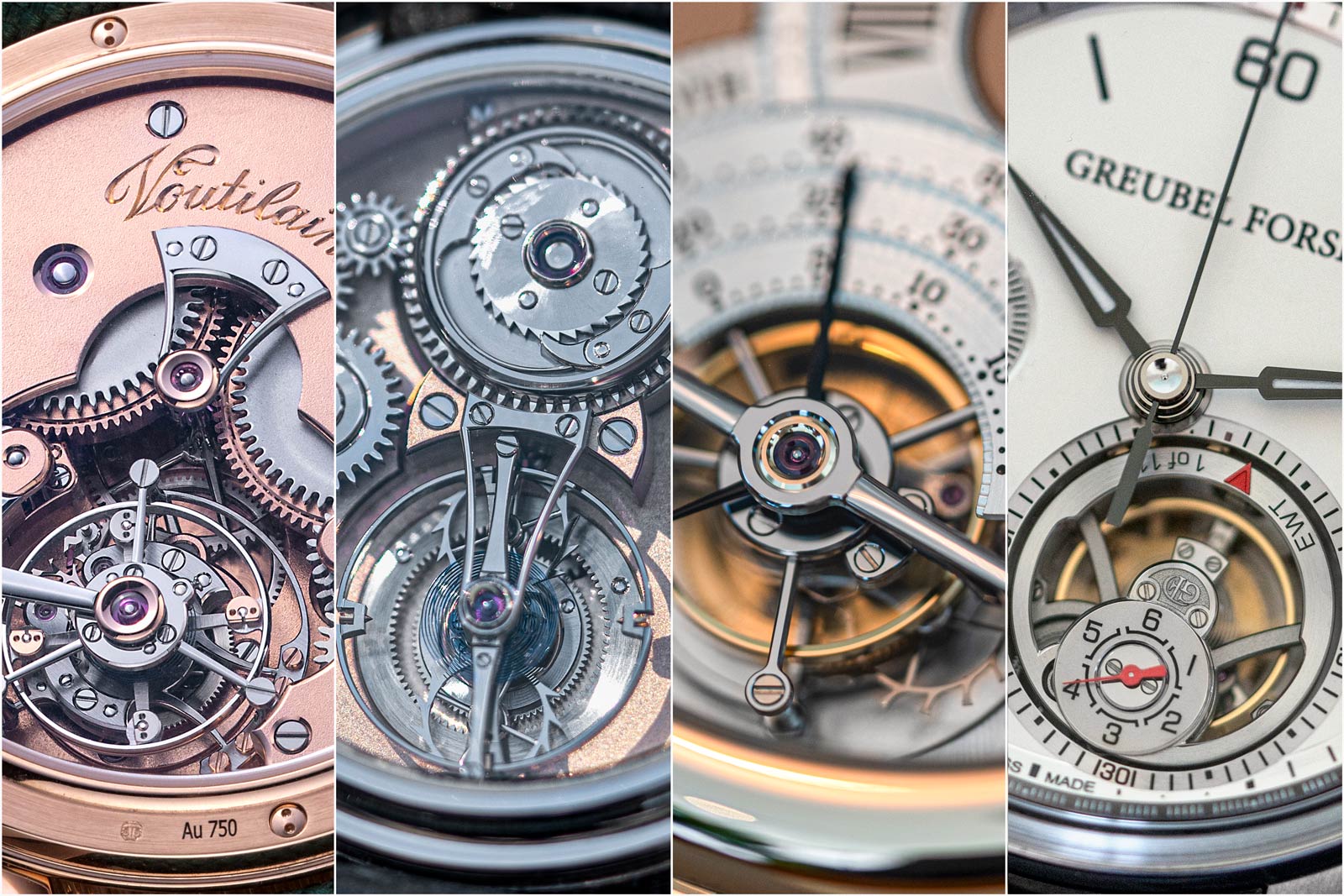
Independent watchmaking continued its hot streak in 2024, with interest and demand for this niche segment holding up better amidst an industry-wide slowdown. But surprisingly – or unsurprisingly depending on how you look at it – there were relatively few outstanding new creations from the indies. A handful, however, did stand out. We look at the team’s highlights of the year, which range from Konstantin Chaykin’s thinnest-watch-ever to the debut by Swiss-based Japanese watchmaker Takahiro Aigaki. Aigaki Direct-Impulse Tourbillon – Brandon Moore I still remember the moment I stumbled across Takahiko Aigaki’s Instagram profile earlier this year, because the close-up image of the tourbillon cage made me do a double take. Sure, it was well finished, but in 2024 good finishing no longer provides the competitive advantage it once did; the top end of the market is just too competitive. No, what struck me was the unusual double direct-impulse escapement. When the Direct-Impulse Tourbillon was finally revealed, it was worth the wait. While arguably a bit plain on the outside, the movement exhibits a degree of grace and technicality that is still quite rare. The watch is truly a sleeper, in the sense that the case and dial reveal little of the horological magic within. Daniel Roth Tourbillon – Brandon Moore It’s counterintuitive to be writing about the launch of the Daniel Roth brand in 2024, considering the man himself was one of the seminal independent watchmakers ...
 SJX Watches
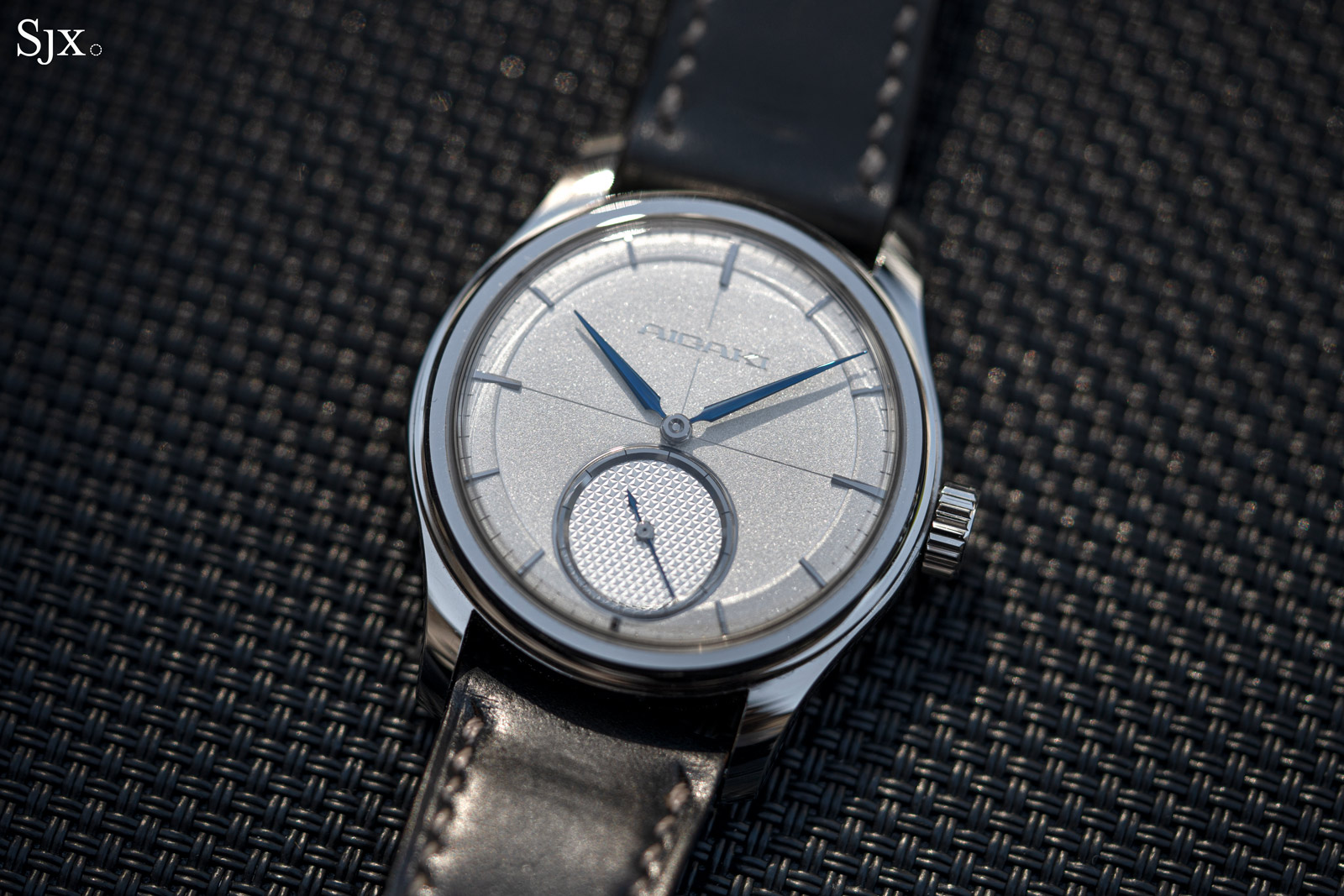
Founded by a Japanese transplant to Switzerland, Aigaki is making its debut with the impressive Direct-Impulse Tourbillon. Though relatively youthful, brand founder Takahiko Aigaki is a watchmaker of the old school who developed the watch and then makes almost all of it by hand. Produced almost entirely in Takahiko Aigaki’s own home-workshop with hand-operated tools, the Tourbillon is characterised by its hand-engraved silver dial and a finely-finished movement combining unique architecture with a proprietary escapement. Initial thoughts I’ve been following Aigaki on Instagram for several months, having become intrigued by the unusual in-line architecture of the movement, and its symmetrical direct-impulse escapement. Initially, only the movement components were shown, but even this sneak peak was enough to pique my interest. Now that the watch has been unveiled, I feel like it was worth the wait. The Tourbillon is a compact, 37 mm timepiece with a clean aesthetic and domed crystal that lends it something of a vintage feel. On its face, the appearance is simple, but the watch instantly conveys the sensation of a finely-crafted object, especially when you turn it over. But even on the front, the details of the dial give away the fact that it is hand-made. Interestingly, there is no ink or paint used on the dial. All of the dial markings and elements are hand-engraved using traditional tools; the brand name is engraved with a hand-operated pantograph. The Tourbillon is v...
 Hodinkee
The founder of Lederer Timepieces will discuss the history and evolution of the escapement.
 SJX Watches
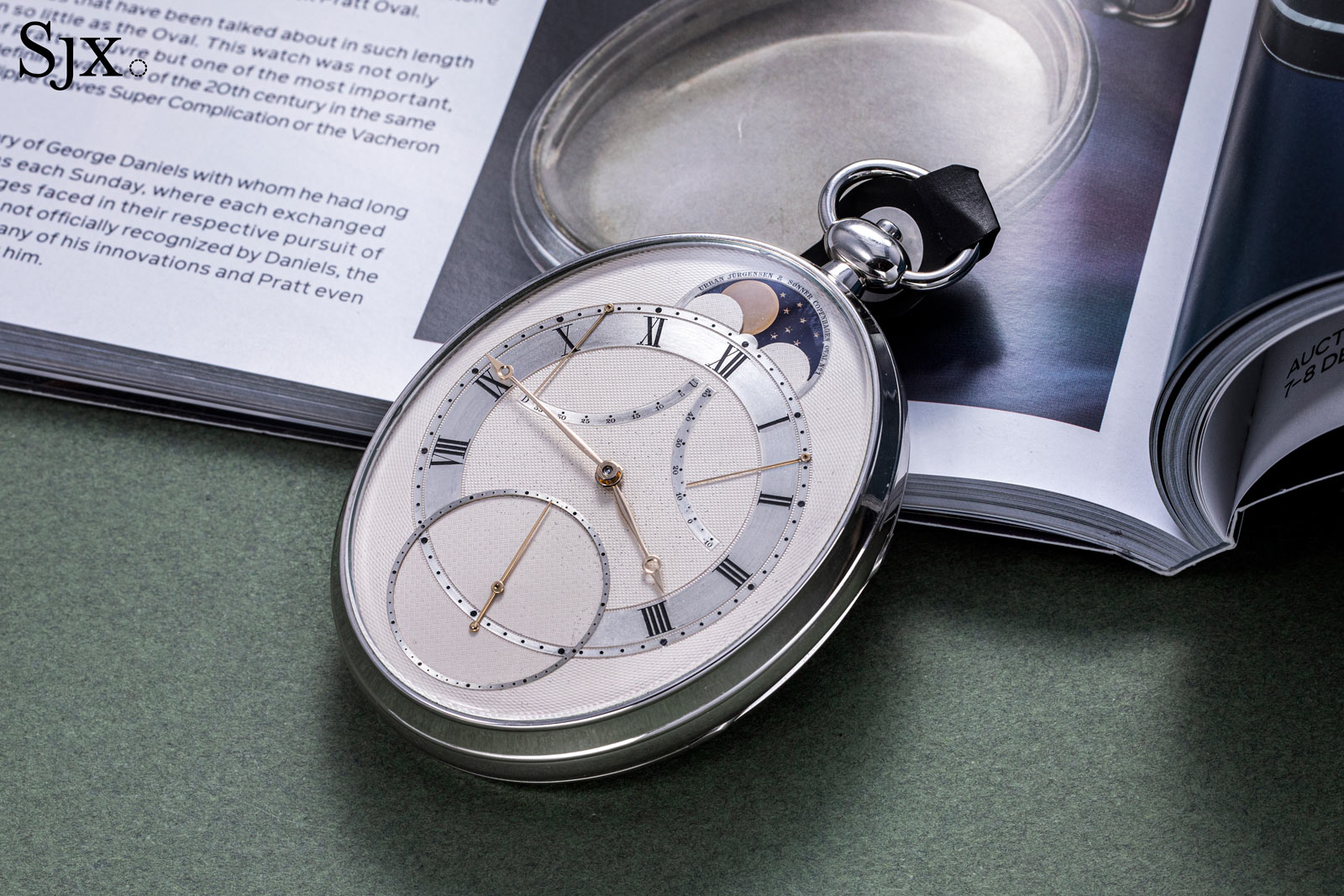
A storied example of artisanal independent watchmaking, The Oval was the masterpiece by Derek Pratt (1938-2009), perhaps the greatest unknown watchmaker. Pratt began work on the Oval in 1982 as his magnum opus, the ultimate realisation of his aesthetic and technical vision. While his work for Urban Jürgensen is perhaps his best known, Pratt was an independent watchmaker with a diverse repertoire, including working with George Daniels on the co-axial escapement. Amongst his creations was a replica of John Harrison’s H4 marine chronometer. These projects, as well as the fact that the Oval was mostly hand made, meant the pocket watch took some two decades to complete. Although it’s a sizeable watch, the Oval is finely detailed, reflecting the high level of Pratt’s craft and the years he invested in creating the watch from scratch. Beyond its artisanal execution, the Oval also stands out for its technical achievement. Besides a detent escapement, the Oval also contains a horological first – a constant force mechanism integrated within the tourbillon – along with a thermometer, power reserve display, and moon phase on the dial. We took an in-depth look at the Oval in 2021, thanks to its current owner, Dr Helmut Crott. But now as the Oval heads to the auction block at Phillips, it’s worth one last look before it disappears into a collection. A two-decade odyssey A contemporary and friend of George Daniels (1926-2011), Pratt was one of the most talented horologists o...
 SJX Watches
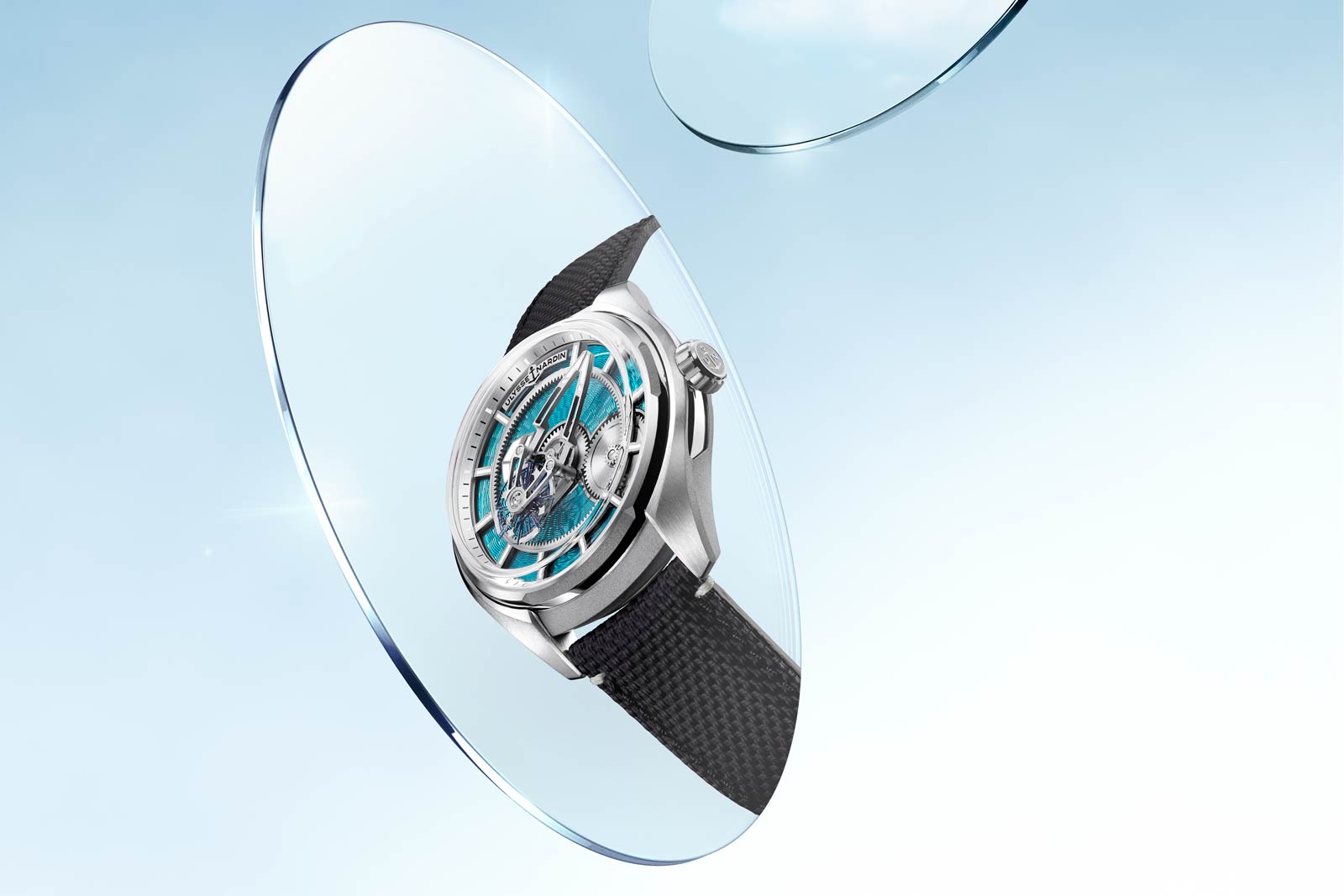
Ulysse Nardin’s entry-level Freak has been dressed up with a flinque enamel dial in a limited edition for Ahmed Seddiqi & Sons, the Middle East’s most prominent luxury watch retailer. The Freak X Enamel Seddiqi features a “Yas Blue” guilloché enamel dial with the signature carousel carrying an oversized oscillator and silicon escapement that acts as a minute hand. Initial thoughts The Freak X is a descendent of the original Freak, but simplified for user-friendliness and affordability. The Seddiqi edition combines the appeal of the Freak X with an artisan ally decorated dial – a combination of contrasts that are complementary. While the enamel might seem contrary to the high-tech nature of the Freak X, it complements the aesthetics of the watch. The striking, translucent enamel forms a pleasing backdrop for the carousel. Priced at AED154,000 or around US$42,000, the Freak X Enamel Seddiqi is a little more expensive than the base model Freak X, but still amongst the most affordable Freak models. Inversed calibre In 2001, Ulysse Nardin revolutionised watchmaking the Freak, a watch that reimagined the conventions of movement construction with an unprecedented design that relocated the going train and oscillator to double as the minute hand. And the watch was the first-ever application of silicon in watchmaking. The Freak X has the trademark carousel minute hand, but features a convenient automatic movement and crown, eliminating the need to wind the watch every f...
 SJX Watches
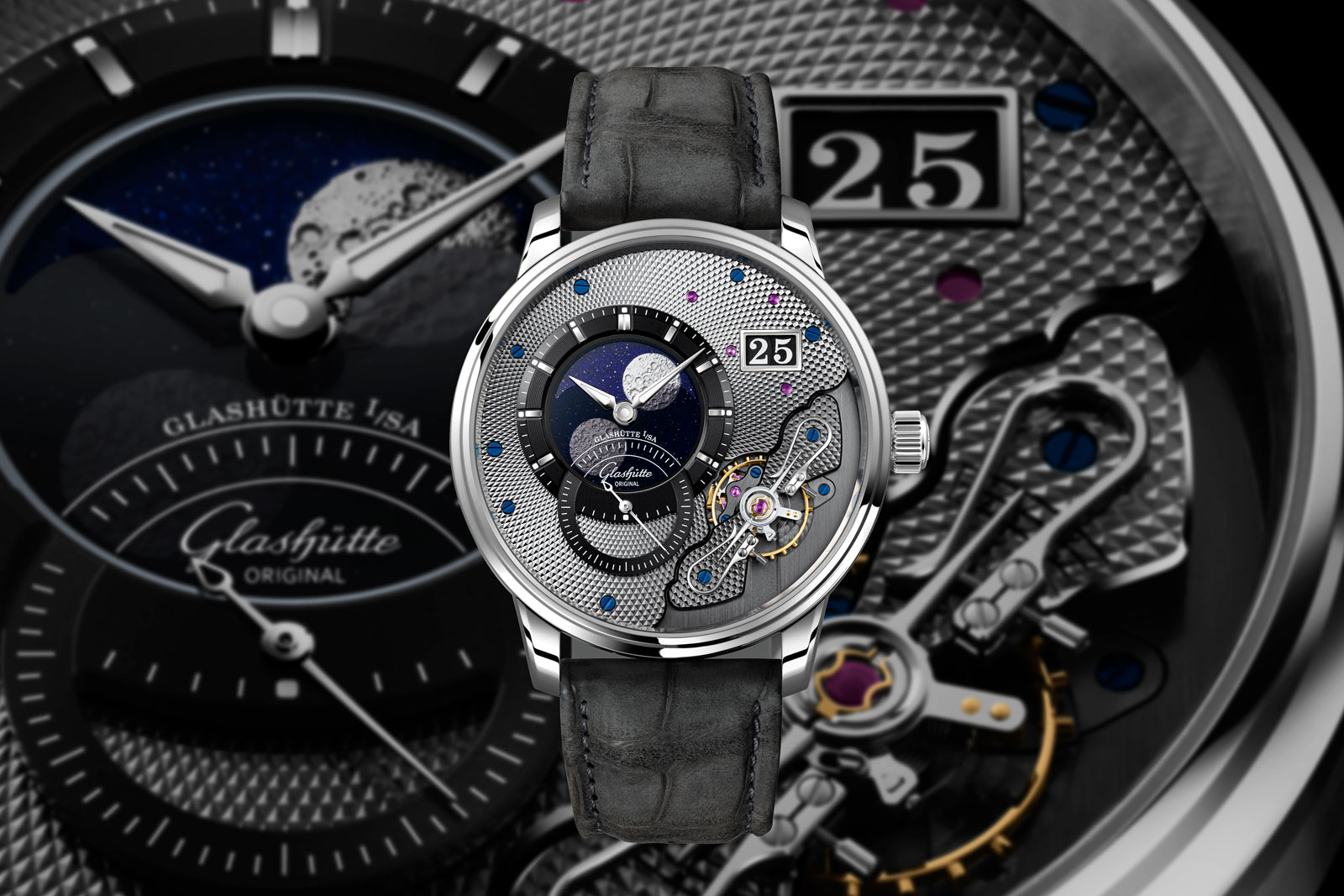
One of the first brands to invert a movement and showcase it on the dial, Glashütte Original just released the PanoLunarInverse, a sibling of the PanoLunarTourbillon and PanoMaticInverse. Like the earlier models, the PanoLunarInverse has key parts of the movement on the dial, including the balance wheel, escapement, and three-quarter plate that’s finished with with pyramid guilloche. In addition, it features the brand’s oversized Panorama date at two o’clock and a large moon phase display. Initial thoughts Older Pano models tended to be conservative in style. The PanoLunarInverse, on the other hand, is modern in colour and decoration, setting it apart from its Pano siblings. The inverted construction is made more interesting with the pyramid guilloche, while the moon phase adds a bit of romance to the technical appearance of the dial. Some models in Glashütte Original’s Pano collection bring to mind the asymmetrical dial layout of another German brand (which is partly why Glashütte Original has never escaped the shadows of its peers), but the PanoLunarInverse feels original because of the combination of colour, decoration, and complication. Priced at US$42,600, the PanoLunarInverse is one of the pricier watches in the Pano collection, but it is reasonably priced considering the platinum case and movement decoration. This is typical of Glashütte Original, which sits in the accessible high horology segment alongside brands like Jaeger-LeCoultre. Inverse German wa...
Question, suggestion, or just want to say hi? Drop a note.