 Revolution
Results for Journe Elegante
635 articles · 4 videos found · page 6 of 22
Revolution
 Revolution
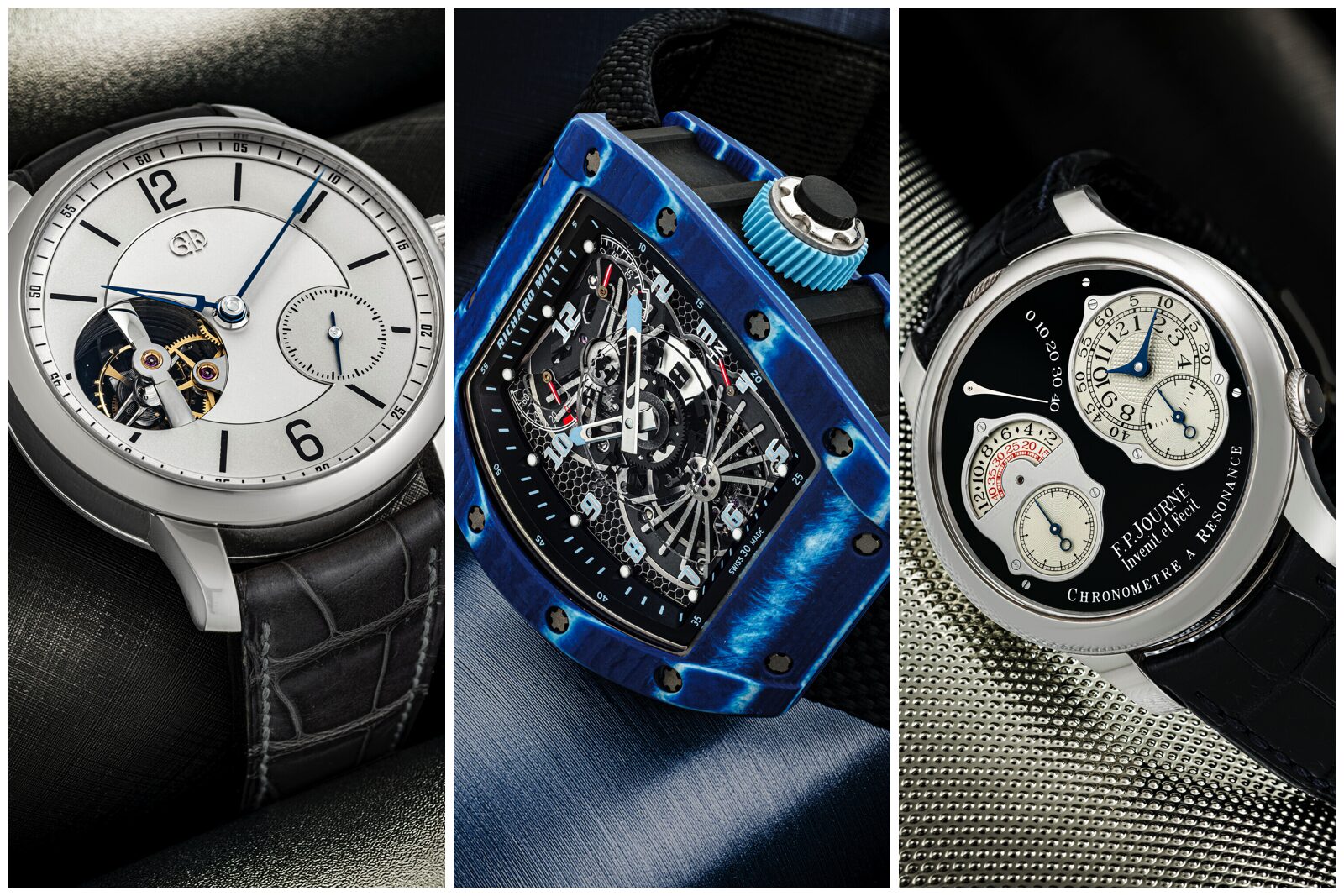
Phillips Watches Presents Le Concours de Complexité - A F.P. Journe Watch Collection
 Revolution
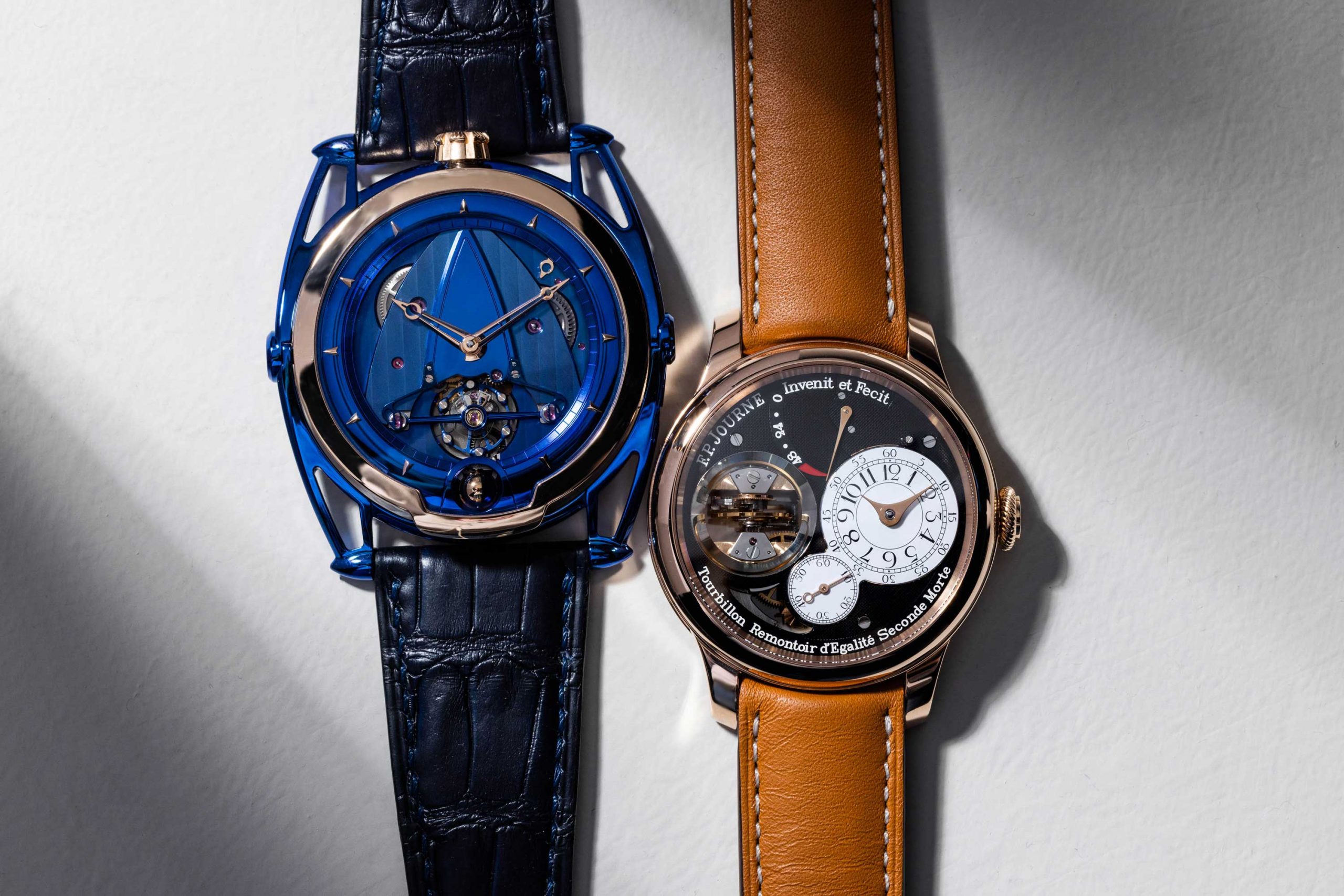
WatchBox Stages F.P. Journe and De Bethune Retrospective Exhibition
 Hodinkee
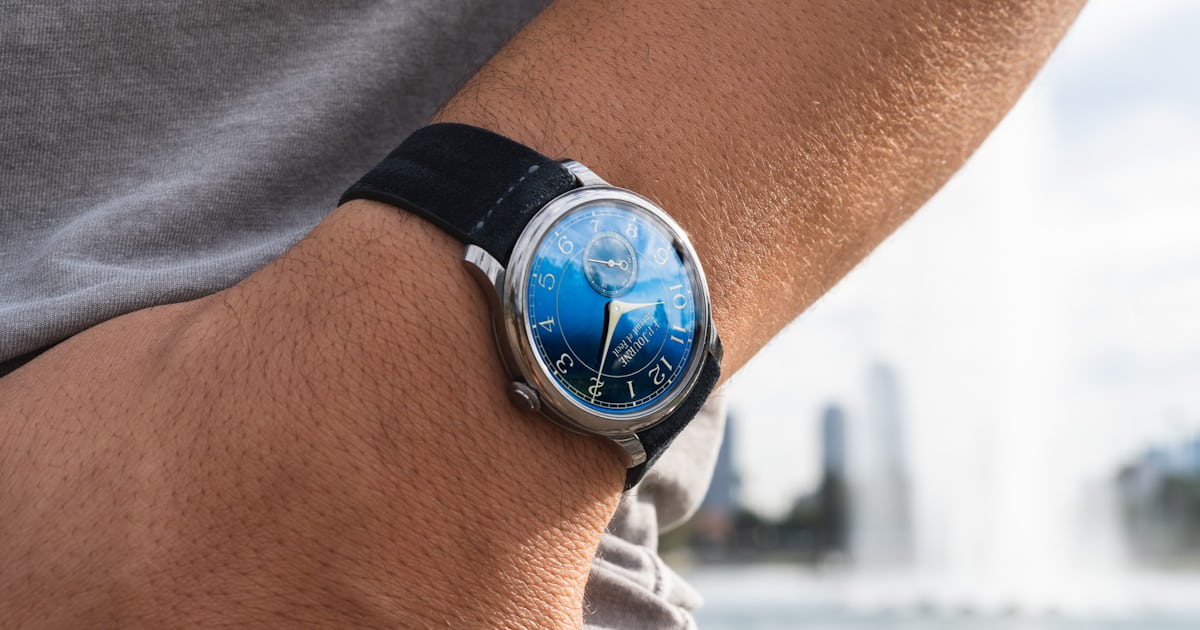
A Week On The Wrist: The Search Is Over - This Entry Level F.P. Journe Chronomètre Bleu Is My New Favorite Watch
For now, at least.
 Revolution
Two Decades of Complexity & Beauty - the Pivotal Collections by F.P. Journe and De Bethune
 Hodinkee
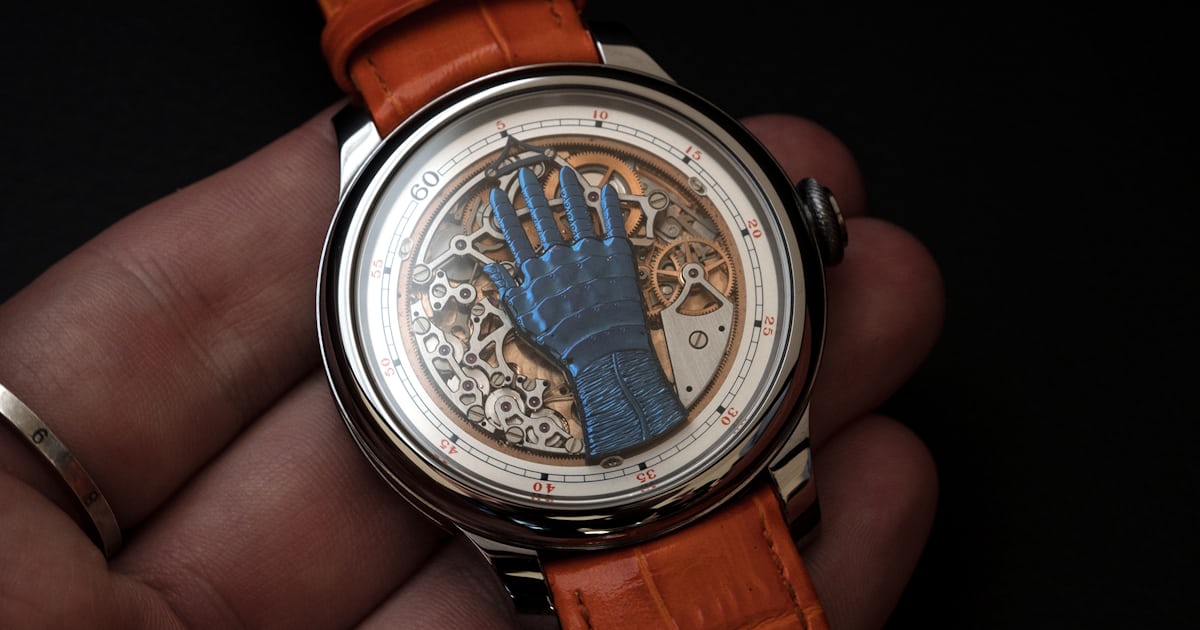
Interview: Francis Ford Coppola And F.P. Journe On Their Sensational Only Watch Collaboration
The godfather of cinema made the prince of independent watchmaking an offer he couldn't refuse.
 Hodinkee
Auctions: The F.P. Journe × Francis Ford Coppola FFC Blue Sells For Over $4.5 Million At Only Watch 2021, A New Record
Boom goes the dynamite.
 Hodinkee
Auctions: A Daytona With World Cup Provenance, A Piaget Designed By F.P. Journe, And What In The World Is The Kairos Collection? Here Are The Best Of The Rest At Auction This Week
Sotheby's, Christie's, And Antiquorum brought the goods.
 Hodinkee
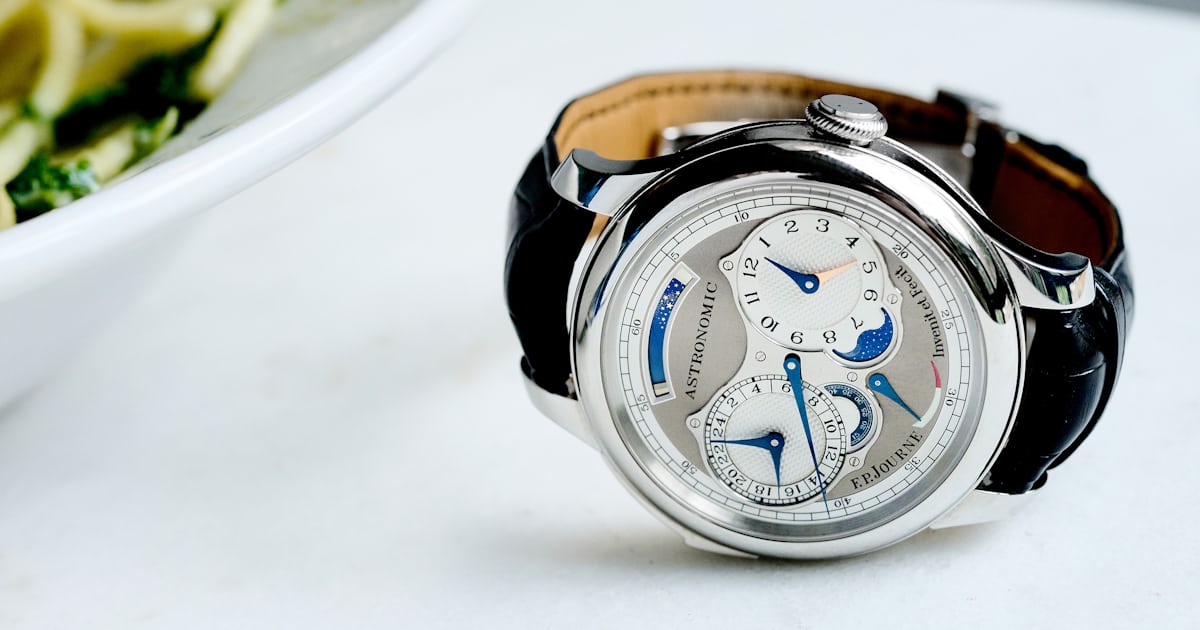
Hands-On: F.P. Journe's Most Complicated Creation Is An Easy-Wearing Tool Watch
The Astronomic Souveraine has its eyes on the stars but remains firmly down-to-earth.
 Hodinkee
Hands-On: I Want The All-New F.P. Journe Vagabondage To Lock Me Up And Throw Away The Key
The indie superstar's 2022 hero piece highlights the influence of early 2000s watchmaking.
 Hodinkee
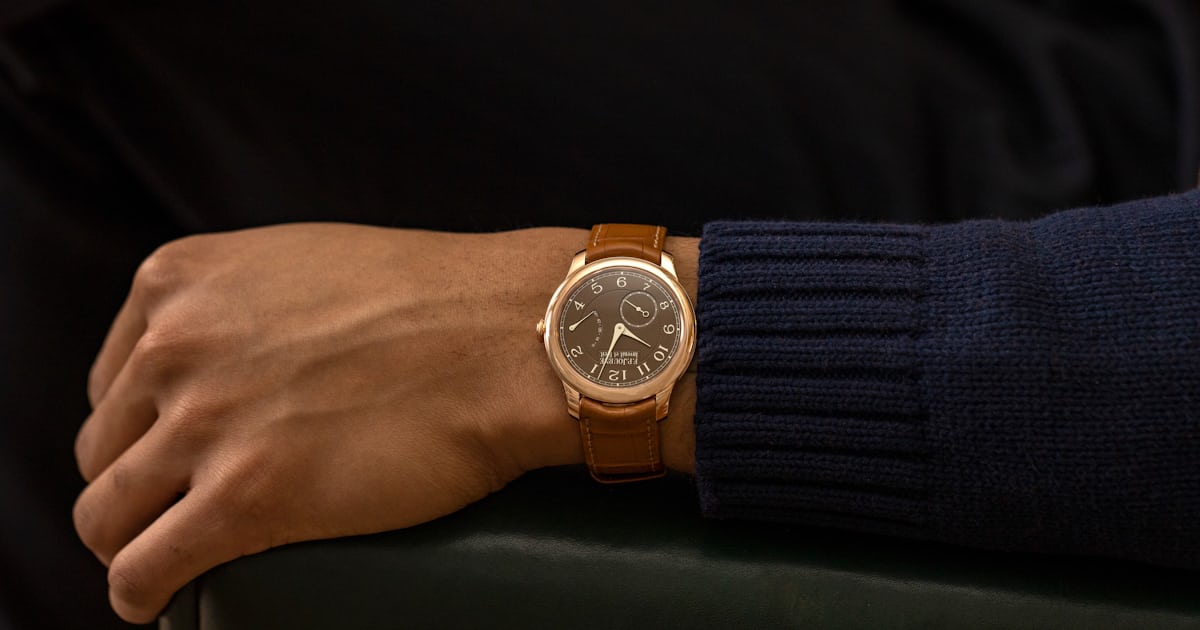
Entry Level: The Chronomètre Souverain Havana Is A Solid-Gold Starting Point Into The World Of F.P. Journe
We're headed down to Havana to navigate price hikes and quartz qualifiers.
 SJX Watches
Auction Watch: “New Old Stock” Rolex Milgauss Ref. 1019 and F.P. Journe Octa Chrono 38 mm
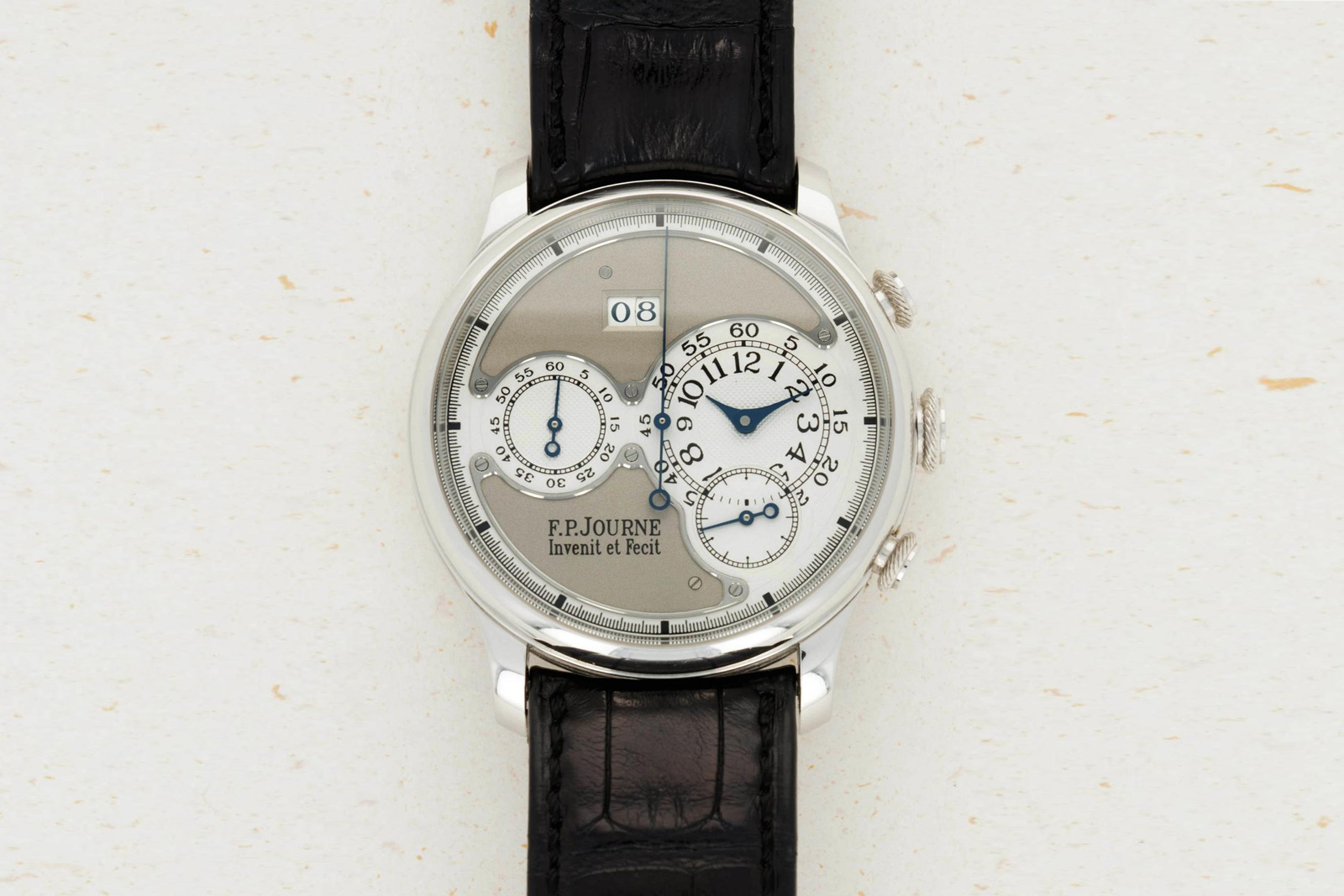
A newcomer to the world of watch auctions, Loupe This was founded by a pair of industry veterans and operates in a distinctly 21st century manner: sales are conducted entirely online, with about ten watches on the block at any one time. The offerings on Loupe This are diverse. In December 2021 it sold an example of our Habring2 Erwin “Star” for US$15,400 including fees, while the latest to go under the hammer are two interesting, long-discontinued watches from notable watchmakers based in Geneva – but otherwise radically different. One is the a Rolex Milgauss ref. 1019 – in pristine, “new old stock” condition – and the other, an F.P. Journe Octa Chronographe 38 mm. Rolex Milgauss ref. 1019 Produced from 1960 to 1988, the ref. 1019 was the longest-running reference of the Milgauss, the brand’s famous magnetism-resistant watch conceived for engineers and nuclear scientists. Despite the lengthy production run, the ref. 1019 is relatively rare because the model wasn’t produced in sizeable numbers for the simple reason that it didn’t sell well. In fact, Rolex discontinued the Milgauss altogether in 1988, before reviving it some two decades later. While the rarity certainly boosts its appeal, the ref. 1019 is attractive and unusual for being one of the most fuss-free Rolex “Professional” sports watch. The ref. 1019 is also the simplest version of the Milgauss, doing without the rotating bezel or “lightning” seconds hand found on earlier models. It ...
 Quill & Pad
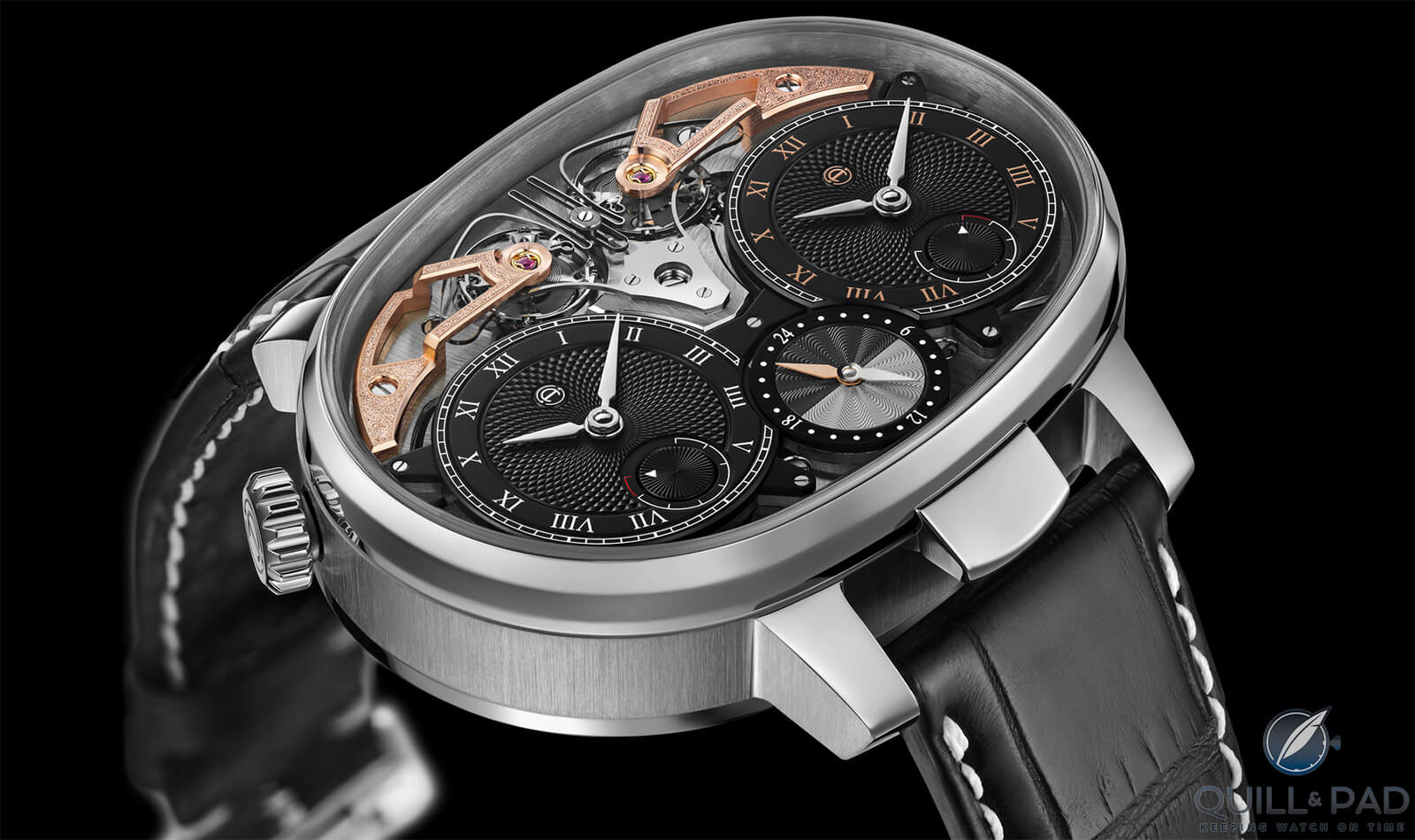
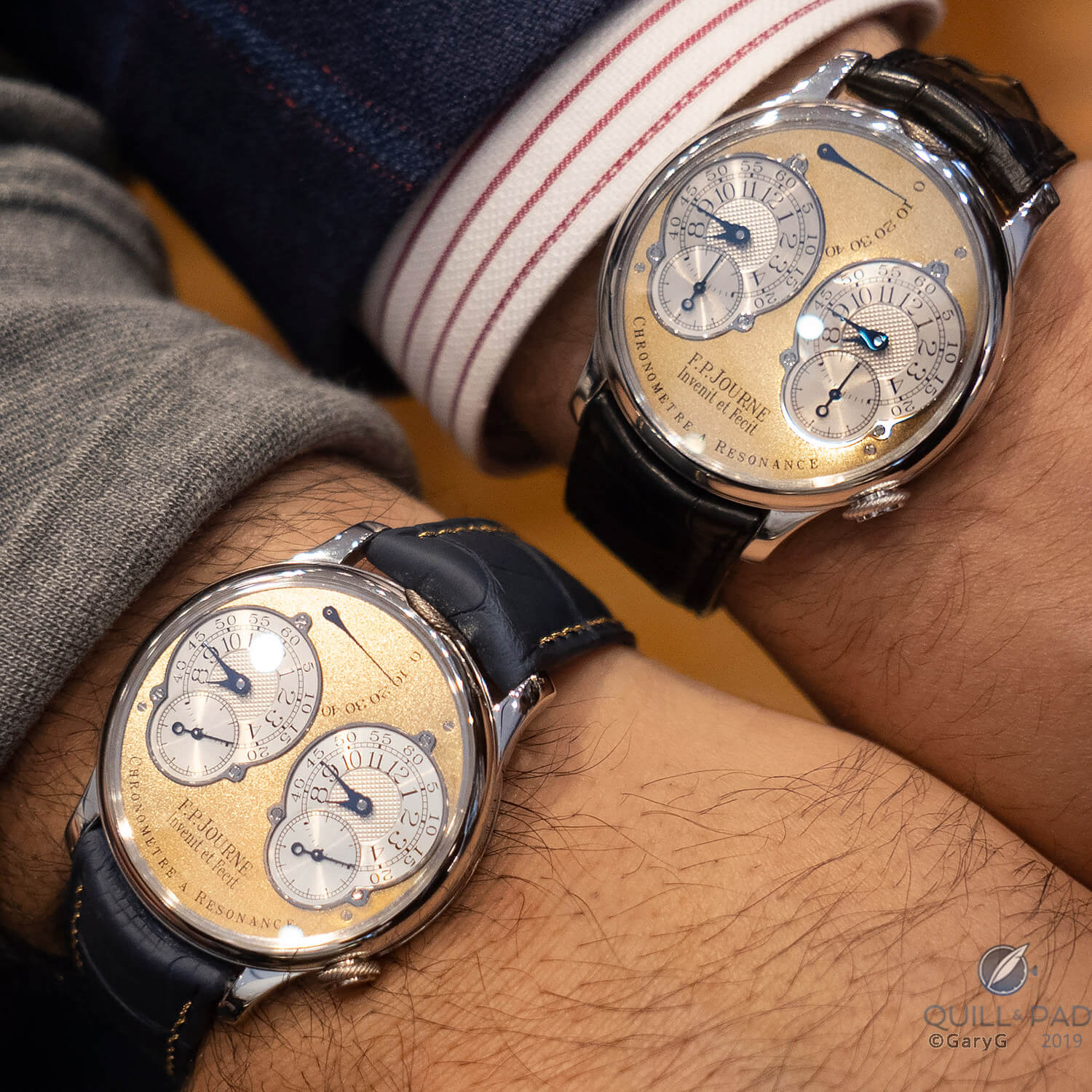
Understanding Resonance, Featuring The F.P. Journe Chronomètre à Résonance, Armin Strom Mirrored Force Resonance, And Haldimann H2 Flying Resonance - Reprise
Resonance. No, it is not a Tesla-themed Evanescence cover band. Resonance is a physics principle that, to be honest, most people will never need to know to go about their daily lives. So what is all the hubbub about resonance? It’s a word that is, even in the watch world, so mysterious and rare that it is heard only once or twice a decade. In this article Joshua Munchow explains how resonance works and why it matters.
 SJX Watches
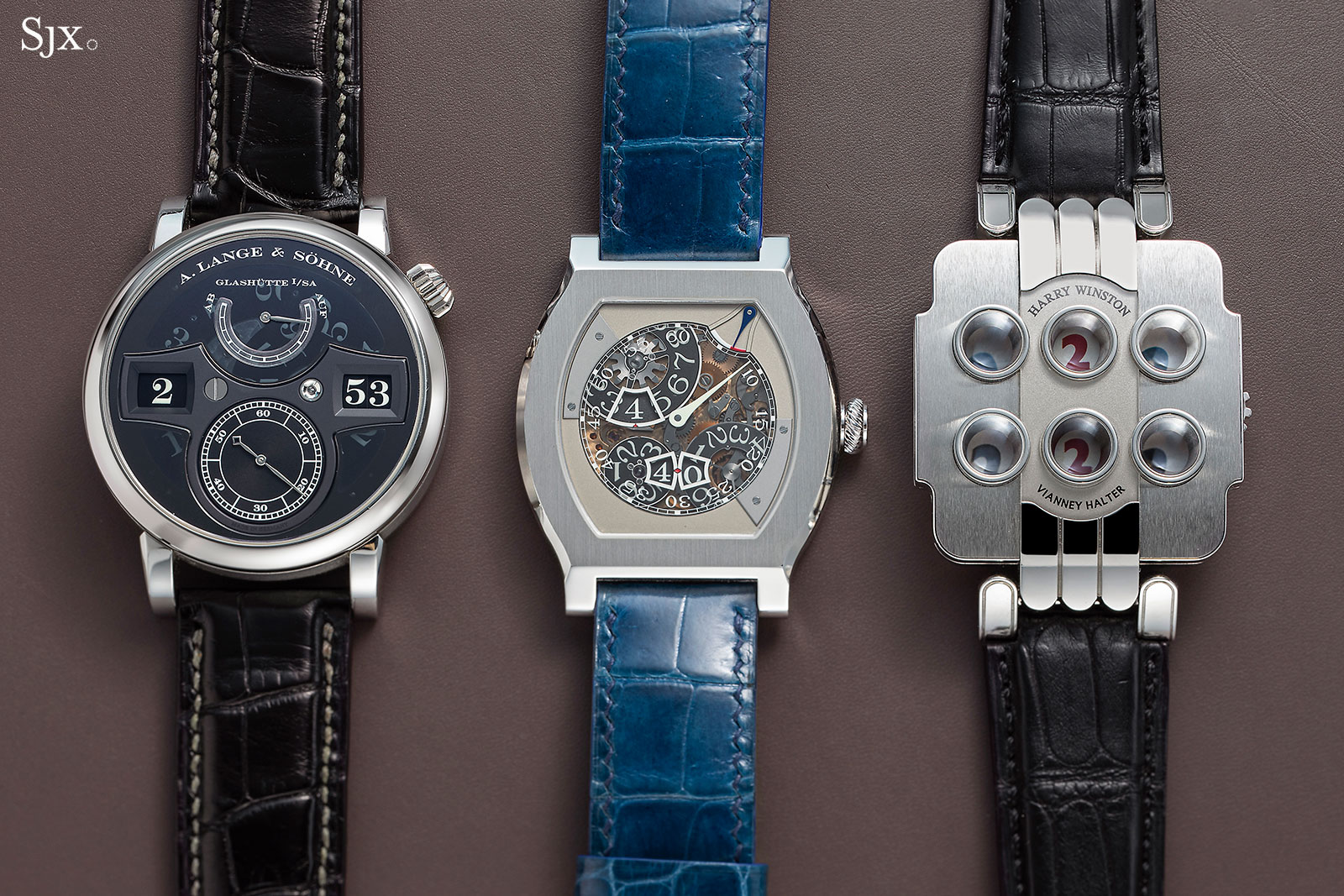
In-Depth: The Digital Icons - Lange Zeitwerk, F.P. Journe Vagabondage, and Harry Winston Opus 3
Digital time displays might seem like a modern invention but they have been found in watches since the early 1800s. Digital displays are found in clocks from even farther back – Lange’s trademark oversized date was inspired by the five-minute, digital clock built by Ferdinand-Adolph Lange for Dresden’s Semper opera house that opened in 1841. But the biggest advances in mechanical digital time displays – with jumping indications – all arrived soon after the turn of the millennium. And the most important are just three – the A. Lange & Söhne Zeitwerk, F.P. Journe Vagabondage III, and Harry Winston Opus 3 – and now we’re going to put them side by side. The five-minute clock that sits just above the stage in the Semperoper, showing 07:30 pm. Photo – A. Lange & Söhne An new, old idea Watches with a single digital display, namely a jumping hours, date as far back as the early 19th century. Enough of them were made that such pocket watches appear regularly at auction. But a single digital display does not a digital watch make. The watch with a jumping, double-digital time display – and hence a true digital watch – was invented in 1883 when Austrian engineer Josef Pallweber patented a mechanism that indicated the time with discs, read through two windows, one for the hours and other, the minutes. He licensed the patent to a handful of watch brands, though it is IWC that is most closely associated with the Pallweber display. At the same time, it is importa...
 Revolution
Introducing the F.P. Journe Octa Automatique 20th Anniversary Limited Edition
 Hodinkee
The Video Vault: Inside The Workshops Of Philippe Dufour, F.P. Journe, And Roger Smith
Revisiting three of the top independent watchmakers working today.
 Quill & Pad
Resonance Watches Compared: F.P. Journe vs. Armin Strom vs. Beat Haldimann, And The Pros And Cons Of Each
Many people believe resonance to be very rare, when in fact every single timekeeping device (yes, even quartz) is a resonant mechanism. But clocks and watches featuring resonance as we generally understand it in watchmaking are few and far between. In the last few decades, less than a handful of highly skilled watchmakers have taken up the challenge of creating a resonance watch. Here, Joshua Munchow looks at the pros and cons of the different approaches taken by the three leaders in this technology.
 Hodinkee
Auctions: F.P. Journe Souscription Tourbillon, Chronomètre À Résonance Hammer For Over $2.5 Million At Phillips Geneva Watch Auction XI
It's a good day to be independent.
 Hodinkee
Auctions: A Souscription F.P. Journe Chronomètre À Résonance And Tourbillon Souverain, Coming Up At Phillips Geneva Watch Auction 11
Two watches of enormous horological and historical importance, from a single collection.
 Hodinkee
In-Depth: The New F.P. Journe Chronomètre à Résonance, Explained
The 20th anniversary Chronomètre à Résonance is the most technically advanced yet.
 Hodinkee
Auctions: The F.P. Journe Astronomic Blue Sells For CHF 1.8 Million At Only Watch 2019
This is rare air for independent watchmaking.
 Hodinkee
Business News: F.P. Journe Announces Collaboration With Firehouse Horology, A New York - Based Balance Spring Maker
European art and American technology in one watch.
 Revolution
First Look: F.P. Journe at SIHH 2019
 Revolution
Chanel Acquires Minority Stake in F.P. Journe - Why We Should’ve Seen This One Coming
 Revolution
The F.P. Journe Chronographe Monopoussoir Rattrapante for Only Watch 2017
 SJX Watches
Highlights: Notable Independents at Phillips Hong Kong
Phillips’ spring auction season wraps up with The Hong Kong Watch Auction: XXII on May 30 – 31. As is now the norm, independent watchmakers have carved out a significant section of the catalogue including the usual suspects from F.P. Journe and Philippe Dufour, as well as rare showings from under-the-radar makers like Oscillon and Yosuke Sekiguchi. Lot 878 – Oscillon L’instant de Vérité Despite how hot the indie segment has become, Oscillon has largely stayed under the radar, perhaps due to its intensely cerebral nature, or because the brand only produces about five watches per year. The duo behind the brand, Dominique Buser and Cyrano Devanthey, are collectors of pre-computerised watchmaking machines. Their collection is so extensive that they can produce all movement parts – save for the jewels and shock protection – under their own roof using these machines. Even putting this context aside, the watches themselves are still mechanically interesting. The most striking detail is the bowtie-shaped balance, which is harder to poise and less aerodynamic than a conventional annular balance, but looks much cooler. L’instant de Vérité uses an unusual tensator constant-force spring. To explain this, consider a tape measure. The force required to pull more length from a tape measure doesn’t noticeably increase regardless of the length already paid out. Now imagine hooking the end of the tape to a pulley, so that turning the pulley (winding) pulls tape out, and ...
 SJX Watches
Highlights: Exotic Mechanics at Christie’s Hong Kong
A menagerie of exotic movements features in Christie’s upcoming Hong Kong auction, Important Watches: Featuring “Kronos: Titans of Time”, “The Eternity” and “The Chronicle” Collections, from Double Splits and double movements to torque management and monitoring. Lot 2352 – F.P. Journe Chronomètre À Résonance (Brass Movement) While the current iteration of the Chronomètre À Résonance is far more elaborate, using a differential to split the trains — each of which contains its own constant force device — this early F.P. Journe Chronomètre À Résonance with its 18k pink gold dial was much more ambitious in its time, developed by an upstart restorationist from Paris in a market that was hostile to independent brands compared to today. Resonance timepieces, or more accurately, those using coupled oscillators, can be traced all the way back to Christiaan Huygens, also known for inventing the pendulum clock and many, many contributions to mathematics and the sciences. He described the coupling of his pendulum clocks as an “an odd kind of sympathy” and sought to exploit this dampening effect to make pendulum clocks viable at sea, though this was ultimately unsuccessful. It would take more than a hundred years for Abraham-Louis Breguet — often hailed as the greatest watchmaker — to bring this phenomena to a watch, and then almost two hundred more for arguably the greatest living watchmaker to bring it to the wrist. That was, of course, François-P...
 Hodinkee
Introducing: The Baltic x SpaceOne 'Seconde Majeure' - A Jump Hour à Paris (Live Pics)
What We Know French watchmaking is on an absolute tear lately. Even setting aside F.P. Journe (yes, he's based in Switzerland, but he is French), there's a growing list of brands pushing things forward in interesting ways. Two of the more relevant names in this case are Baltic and SpaceOne, the latter a collaboration between Théo Auffret of Auffret Paris and Guillaume Laidet, who has played a major role in reviving some major brands. Both have become important players in the more affordable end of independent watchmaking, but from very different angles. SpaceOne leans heavily futuristic, while Baltic—and Auffret more broadly—tend to stay rooted in classic design. That's what makes the new Seconde Majure from Baltic x SpaceOne so interesting. It feels like the watch someone with more traditional tastes, like me, has been waiting for. The Seconde Majeure might not come as a surprise to everyone. Baltic and SpaceOne were showing the watch around during Time to Watches in Geneva a few weeks ago, and they also sent over a prototype for me to preview ahead of launch. One quick note there: all of the photos I took were with the crown pulled out, so keep that in mind as you scroll through. For everyone else, you might need to catch up pretty quickly, especially since the watch is only available for a very limited time. But what you'll quickly see is that the watch is attractive for something affordable. And remarkably compact. Measuring 38.5mm by 12.5mm with a 47.5mm lug-to-l...
 SJX Watches
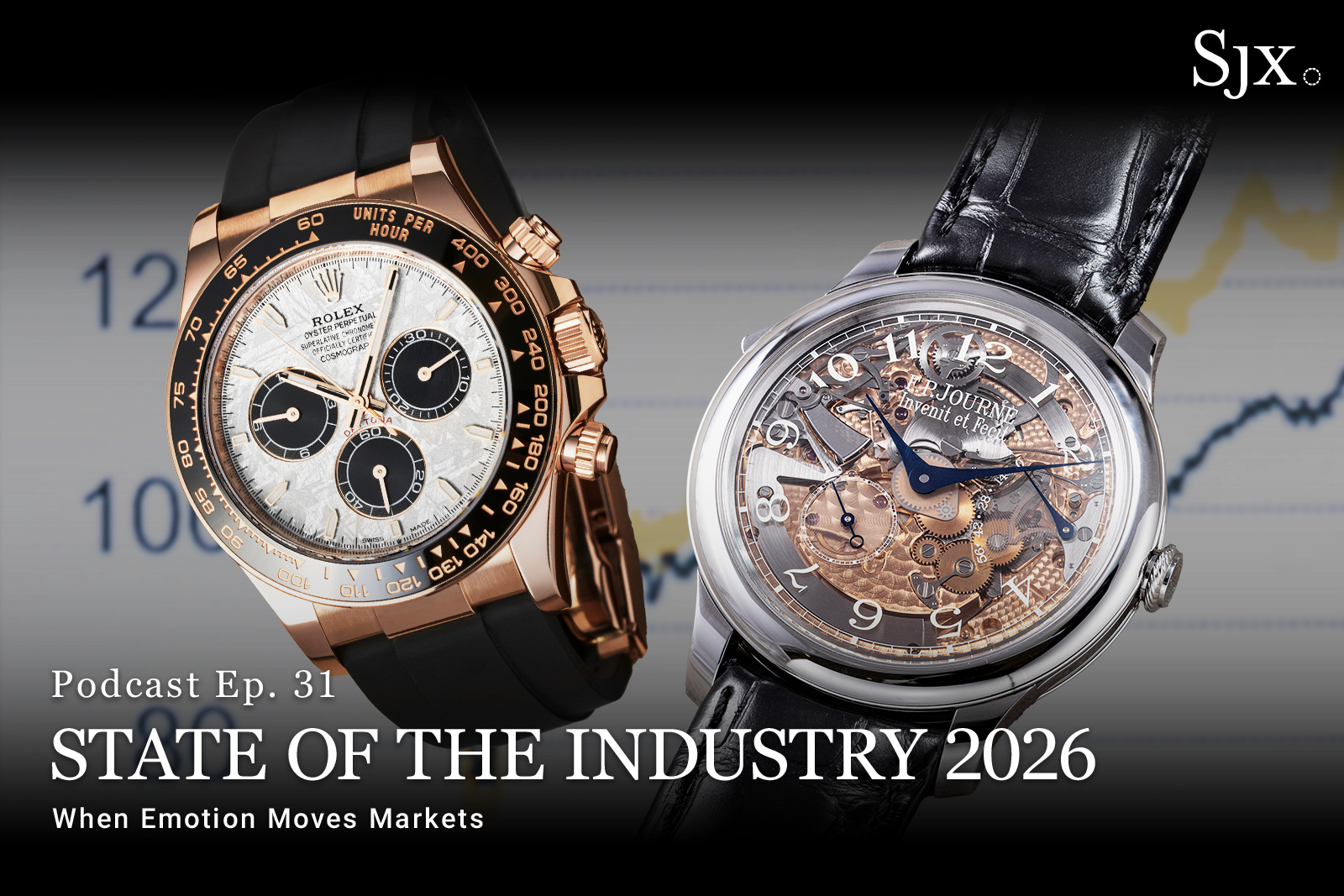
SJX Podcast: State of the Industry 2026
Episode 31 of the SJX Podcast digs into two major industry reports - one from Vontobel on the primary market and one from EveryWatch on the secondary - and what they reveal about where value is concentrating in the watch industry. SJX and Brandon discuss the K-shaped nature of the market, the dominance of F.P. Journe among independents, and Cartier’s remarkable ability to sell across every price tier. The discussion also touches on the role of emotion in driving purchase decisions, the financialisation of the hobby, and why market reports have limited utility for collectors. Listen now on Apple Podcasts, Spotify, and YouTube.
 SJX Watches
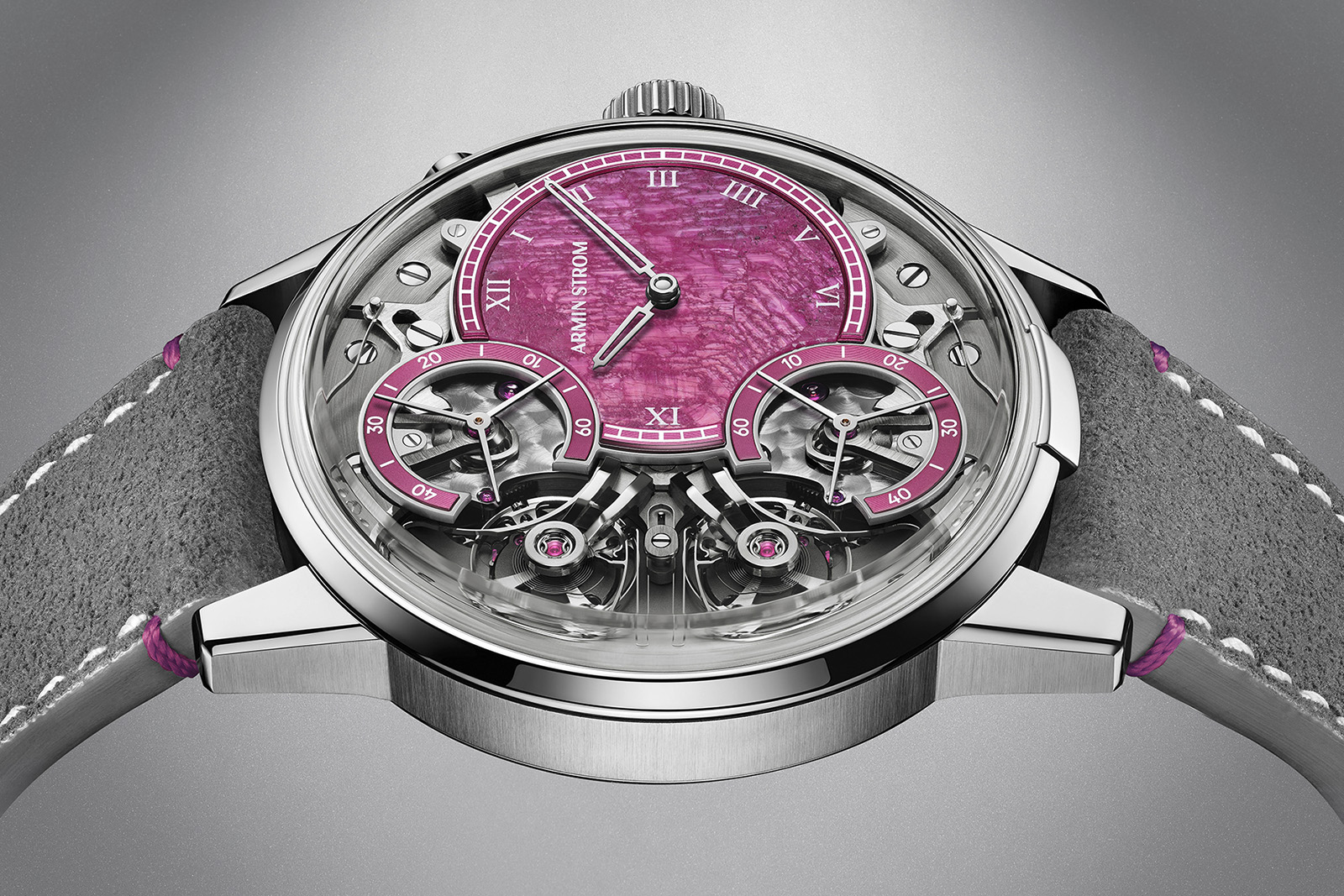
Ruby Resonance from Armin Strom
Independent watchmaker Armin Strom has upgraded its flagship complication with a precious stone dial. The Mirrored Force Resonance Ruby is a five-piece limited edition with a dial cut from natural ruby. Initial thoughts Armin Strom is arguably the second-most prominent watchmaker (after F.P. Journe) to successfully bring “resonance” watches to market. We extensively covered the subject of coupled oscillator watches recently, which examines Armin Strom’s unique approach to achieving this mysterious effect. Within this narrow niche, Armin Strom’s Mirrored Force series is certainly the broadest collection of resonance watches on the market, with multiple movements and many variations exploiting the almost magic coupling between two sprung balances. This new limited edition employs the familiar in-house caliber ARF21, which connects the two hairspring by a long, swivelling blade spring - dubbed the Resonance Clutch Spring. While the movement is certainly well known, this particular iteration of the watch is quite surprising: a thin slice of natural ruby serves as the dial, with all the imperfections and liveliness of a natural mineral. Using a ruby dial is not only aesthetically appealing but poetic for a mechanical watch. The jewels serving as bearings inside every movement are synthetic rubies - a fancy sort of industrial mineral glass. The uneven bright pink and violet shades of the Mirrored Force Resonance Ruby’s dial assure us there is nothing artificial...