 SJX Watches
A. Lange & Söhne Unveils the Saxonia Thin Aventurine in Pink Gold
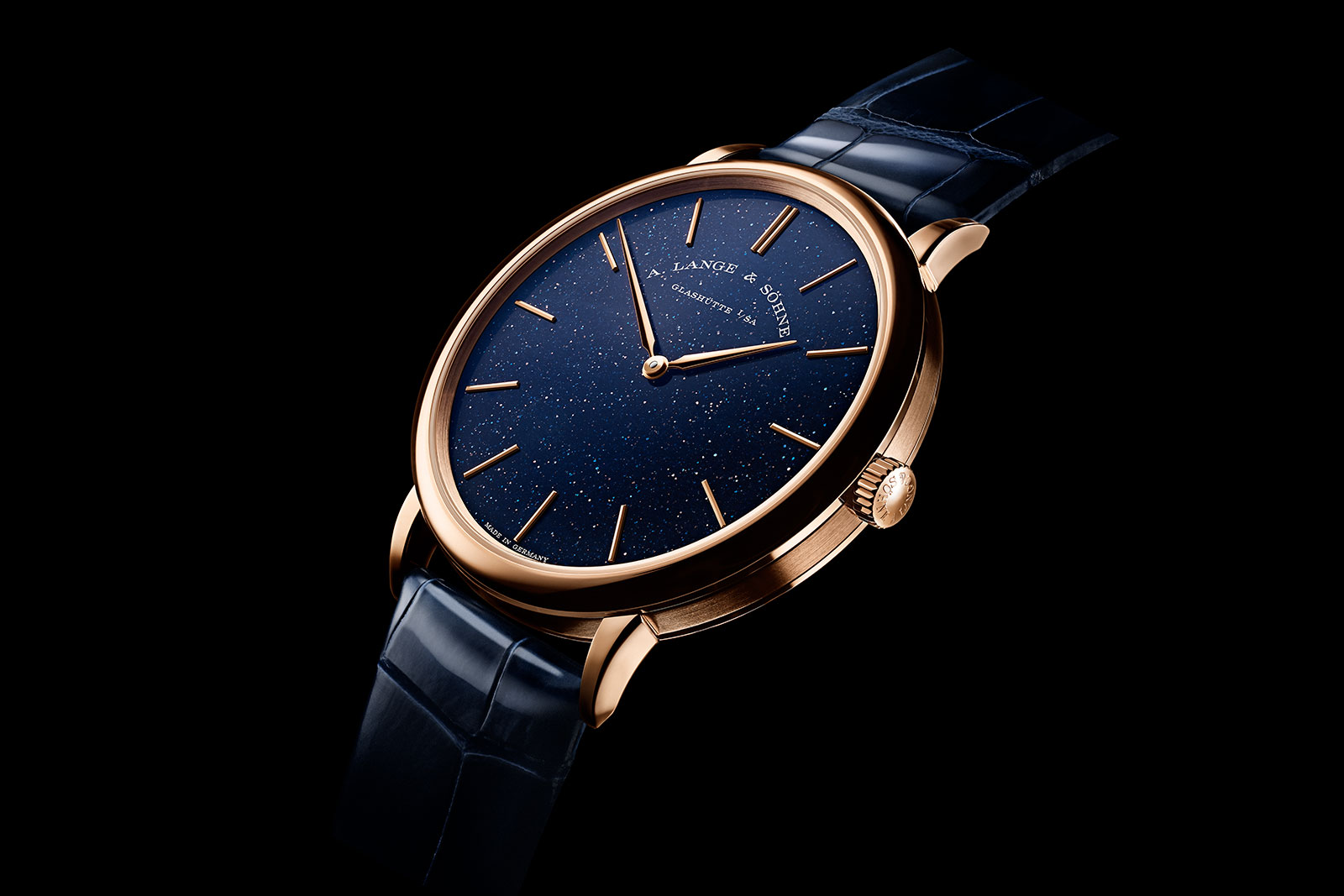
Three months after Watches & Wonders 2021 (where it debuted the Triple Split in pink gold amongst others), A. Lange & Söhne is now back with more new releases, as is now the norm with watch fairs having gone online. Of the trio of new launches, the Saxonia Thin is the simplest, but no less striking. Clad in lively, blue aventurine glass and pink gold, the watch has a rich, sparkly aesthetic quite antithetical to the fuss-free style usually associated with the German watchmaker. Initial thoughts While flourishes like the aventurine-glass dial are uncommon for Lange in general, the sparkly glass dial is not new. In fact, the material was first used in the white gold Saxonia Thin back in 2017. The brand followed up with the same but with a black aventurine-glass dial last December, and then the pair of Little Lange 1 Moon Phase earlier this year. That’s four models with aventurine glass dials in as many years. The new model is a first, in that it matches the blue aventurine-glass dial with a pink gold case, giving the watch a warm aesthetic not found in earlier versions, or even the broader catalogue where the combination of pink gold and blue is found only on the recent Triple Split. This is no doubt a good news for collectors that already have everything from the brand and want something different. Still, the frequency of aventurine-glass inevitably chips away at its uniqueness. One nitpick I have about the watch is personal – I find the Saxonia Thin too wide and f...