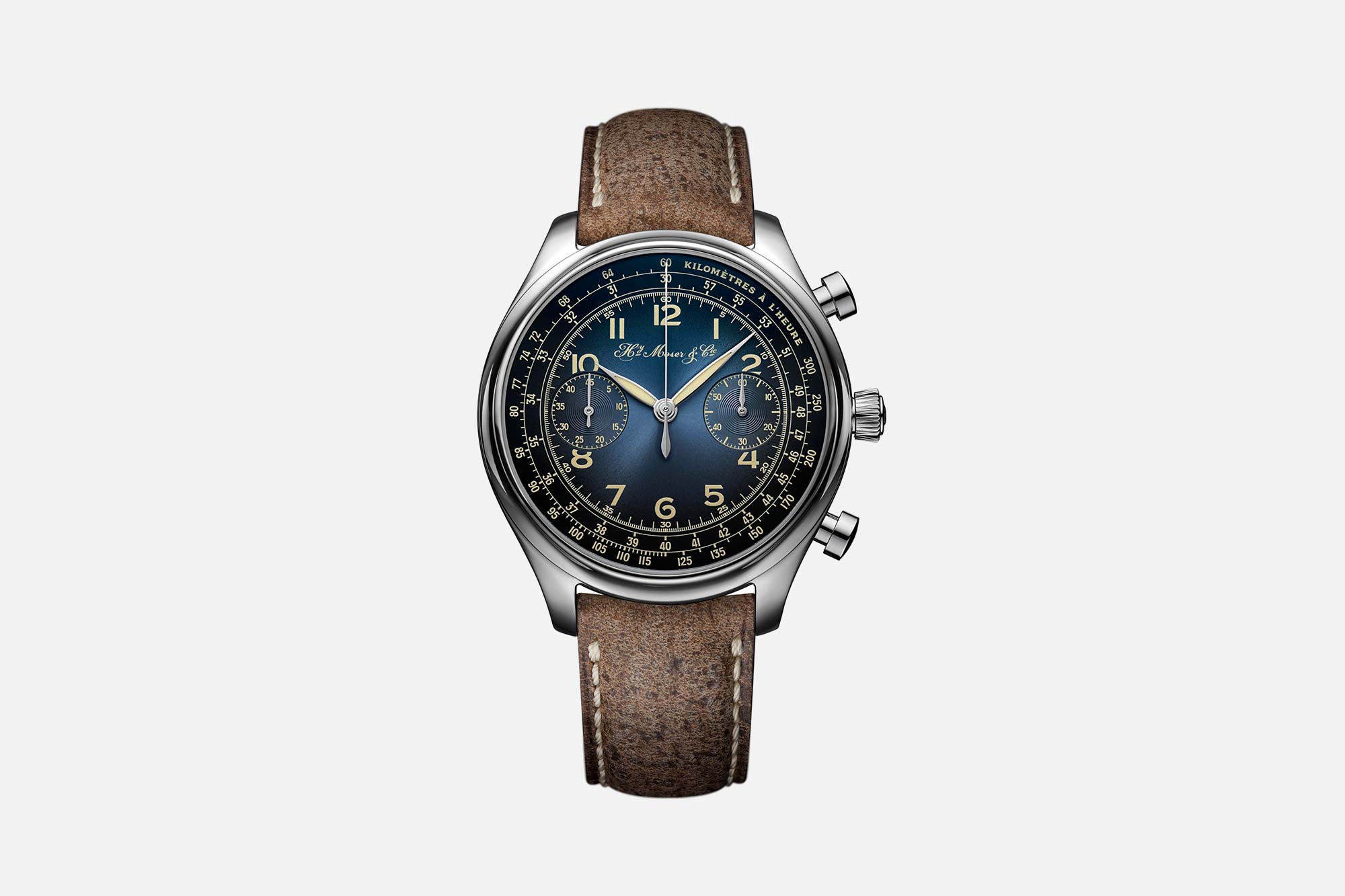
The Latest Massena LAB Collaboration is a Rare Heritage Inspired Moser
If you’ve been paying any attention to H. Moser & Cie. over the last few years, one thing should be abundantly clear - the Swiss watchmaker likes to keep things simple. While they may occasionally indulge themselves with an overwhelming quantity of dial text, or acquiesce to the need for a chronograph scale, Moser has increasingly adopted a minimalist approach in their watch design, with wide open expanses of dial and invisible logos taking center stage alongside hammered enamel finishes, minute repeater strikers, and elegantly finished hands. Today, Moser is throwing all that out, and, in partnership with Massena LAB, the brand is looking back to its history for what is, in many ways, its most traditional release in years. The Endeavour Chronograph Compax would, from anyone else, barely qualify as newsworthy. After all, what brand hasn’t dipped back into the well to create a historically-minded steel sports watch in recent years? Moser hasn’t, and that’s what makes this collaboration so interesting. Even the Heritage model, the closest the brand has come to the format, isn’t so much a recreation as a reimagination, a consideration not of how to make an old watch feel new, but a thought exercise in what H. Moser & Cie. might have made were the modern brand to find themselves in a different era. This new watch is not that. Though not a direct reproduction of any particular model, the new Endeavour Chronograph Compax is a genuine reflection on Moser’s history...
 Fratello