 Deployant
Winners announced: IG mini-contest: #SpringDriveSunday
We ran a mini-contest on Instagram (@Deployant) with hashtag #SpringDriveSunday. We announce the winner for the prize of a Seiko Spring Drive lapel pin.
3,112 articles · 997 videos found · page 70 of 137
Deployant
We ran a mini-contest on Instagram (@Deployant) with hashtag #SpringDriveSunday. We announce the winner for the prize of a Seiko Spring Drive lapel pin.
 Two Broke Watch Snobs
Woo! Our 2K follower giveaway is live! Just scroll to the bottom of our site and sign up for the bi-monthly newsletter then BAM - you're entered to win a Seiko SKX007 (entries open from 7/10/2017 to 7/24/2017).
 Two Broke Watch Snobs
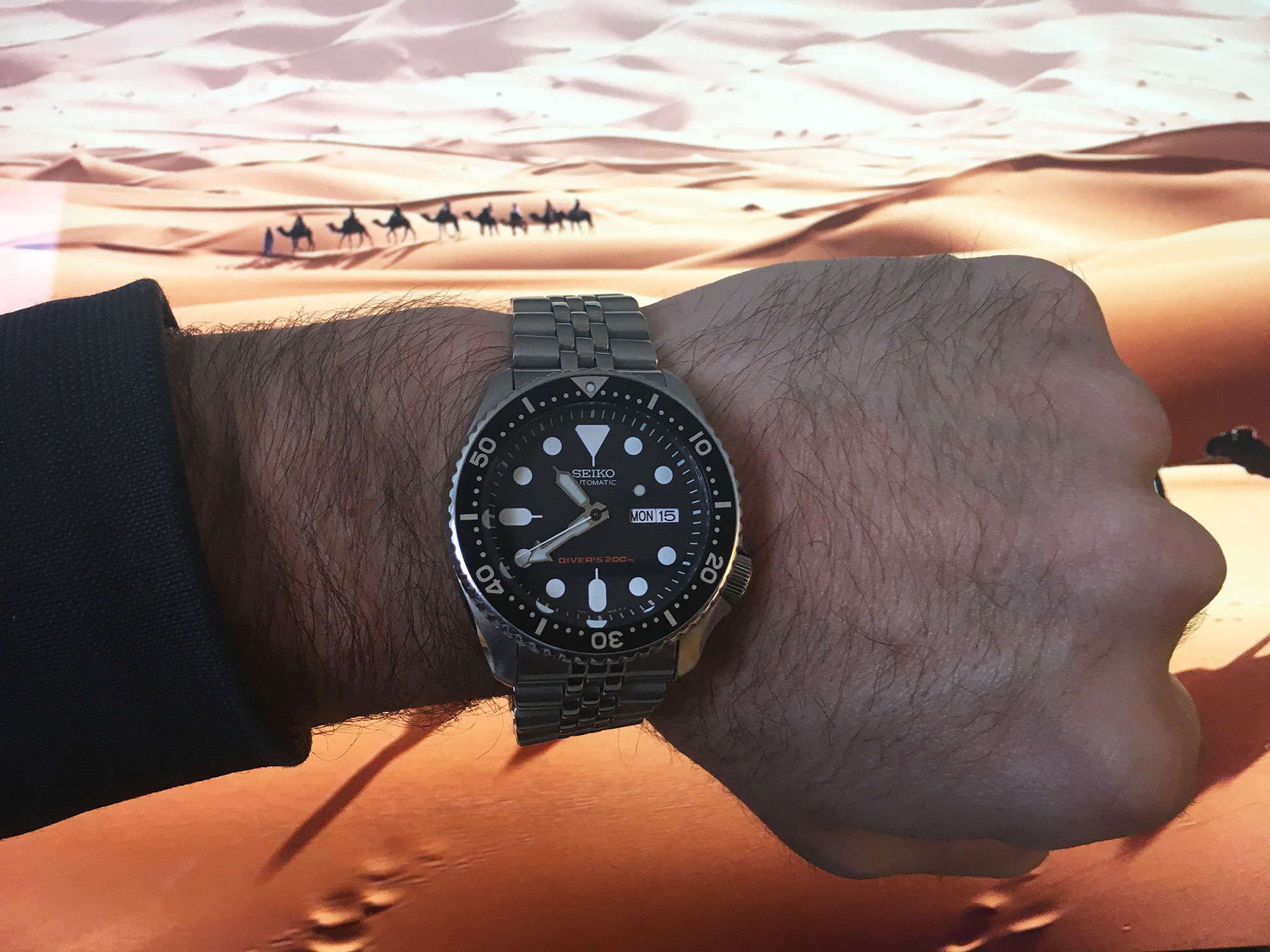
Reader Fred Nicolaus shares his Seiko SKX007 buying adventure and shows us how much of a maddening process it can be.
Two Broke Watch Snobs
Pay that $2500 dental bill? Or just get a Grand Seiko Quartz and call it a day? This is just one of the many questions we tackle in this week's episode! Plus Kaz is going strong with his #watchfast with the Casio MDV106 dive watch.
Two Broke Watch Snobs
Mike and Kaz are joined by a super special guest! Nick Harris from Orion Watches jumps on air to talk about microbrands in the US, the Seiko modding culture, and a whole lot more.
 Video
Video
 Deployant
Review: Credor Eichi II. A hands-on analytical review of the elusive watch from Seiko's Micro Artisan Studios. High res pics, comparisons, specs and price.
 Two Broke Watch Snobs
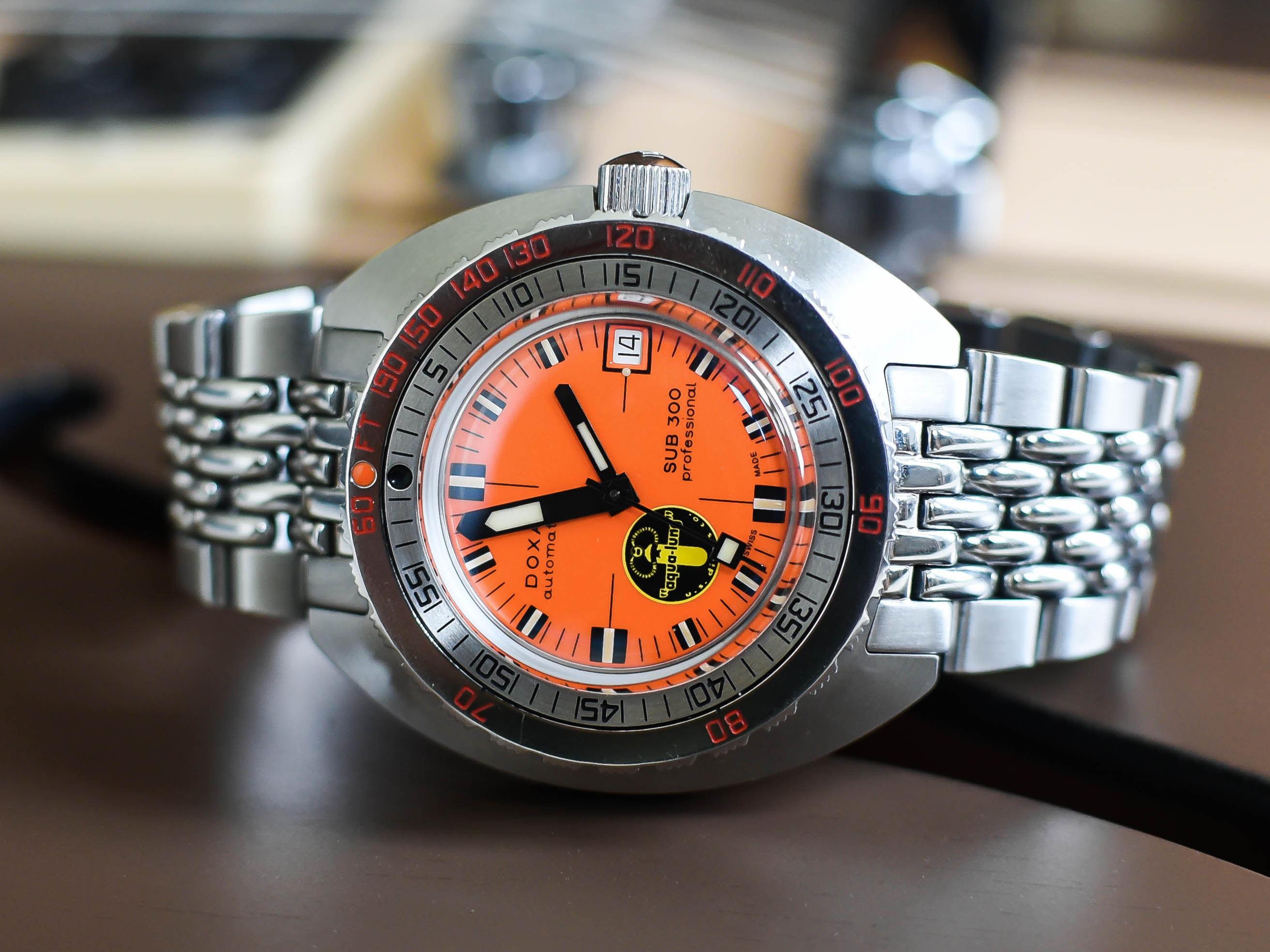
So what's the deal with brightly colored dive watches and the design manufacturers pursue for the sake of legibility under water? Are these models more desirable or functional than others? Why are some brightly colored Seikos so difficult to find?
 Teddy Baldassarre
An outsized part of Seiko’s history is within its dive watch heritage, going all the way back to 1965 with the company's first dedicated diver, the 150-meter 62MAS, released as the 6217-8000, and later, its larger-crowned sibling, the 6217-8001. It was the beginning of a lineage that went on to include legendary references like the Willard, the Turtle, the Marinemaster, the Tuna, and the SKX, just to name a small assortment of them. Today, Seiko’s broad dive-watch lineup is well-known for its rugged dependability: from the entry-level Prospex models to the elevated Luxe variants like the Seiko SPB149, there’s a Seiko diver for every enthusiast. Seiko has paid tribute to the 62MAS design in the past with limited editions, but in the 2020s, the brand has seen a slew of regular-production, and short-lived models – like the SPB143, 239, and 149, which stand as the most faithful renderings of the 62MAS, characterized by the brand as the Prospex 1965 Heritage Diver’s Watch. Although this model family came with different dial variants at its 40.5mm case size, today, we’re going to showcase the discontinued SPB149 before looking at the current production SPB143 and other modern day options which continue the 62MAS legacy. We will go through the standard points of its case, wear, dial, and movement, and then share concluding remarks about its overall legacy in 2025. Seiko SPB149 Context In Spring of 2020, Seiko dropped a quartet of watches - the SPB143, SPB145, SPB1...
 Teddy Baldassarre
Seiko divers might very well be some of the most sought-after in the enthusiast community. I say “enthusiast” because they aren’t always the entry point into Seiko, or into watches, for that matter, for the everyday consumer. I would think something like an entry-level Presage or any watch fit for the office is more desired in that regard. But, we don’t call them desk divers for nothing, and I personally have worn and still wear Seiko divers to work, but that’s neither here nor there. In fact, the same can be said of the subject watch for today’s review: The Seiko SNE573 as well as other variants of the 38.5mm Prospex Solar Divers like the SNE583 and SNE585, which were discontinued this past Summer. Its discontinuation adds it to a hallowed list of watches that have received similar treatment by Seiko, namely the vaunted SKX series, which has achieved iconic status rivaled by a small few watches in history. But we can also add a bevvy of Willard-esque Prospex models to the list including the SPB 153 green Willard – a personal favorite. When a Seiko dive watch goes the way of the trees, it achieves a kind of immortality and heightened demand that takes a once value-packed product into a new pricing universe, but less talk about price and more talk about a handsome piece of solar diving kit that is no longer commercially available in an official capacity at retail. Seiko SNE573 Brief History I use the word “brief” because, well, this watch had quite a short...
 Teddy Baldassarre
Seiko’s Alpinist collection is welcoming a new member this week with the release of a new GMT reference featuring a dial inspired by the hornbill, a tropical bird of Southeast Asia. The watch is a Land Alpinist using the brand’s 6R54 caliber, and while this is an existing configuration released back in 2023, there are a few unique details here worth noting - from dial textures and colors to the black bezel piece. This watch is not only a celebration of the majestic hornbill, but also an expansion of the Alpinist platform that goes beyond the existing framework, hopefully opening the door to more expressive variations moving ahead. The Alpinist GMT was released in 2023 in what felt like a very natural move for the collection. As part of the Prospex Land family, the new Alpinist references utilized a fixed, 24-hour steel bezel and an internally rotating compass bezel. Use of the 6R54 allowed the addition of a 24-hour hand into the mix; however this is the so-called “caller” style of GMT hand, meaning the hour hand cannot be set independently on the go. Still, it’s a welcome addition to the modern series carrying forth Seiko’s historic Alpinist name, and retains the charming design of the original. This newest reference to the collection is the SPB493J, and it mixes up the formula just enough to stand apart from the rest. This watch uses base blacks set against the steel 39.5mm case and bracelet, with the inclusion of a deep green color used for the rotating inn...
 Video
Video
 Hodinkee
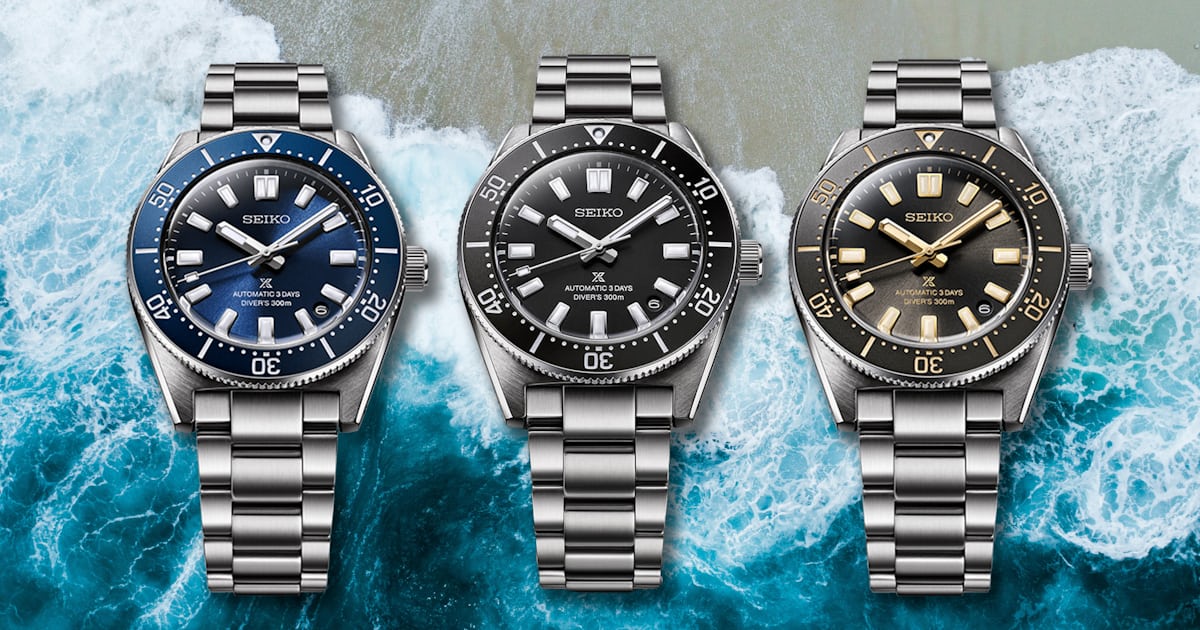
Refining Seiko's hit diver for 2024 with new proportions, deeper depths, and a new position for the date.
 SJX Watches
Nineteen-sixty nine was a watershed year in watchmaking – the culmination of the race for the world’s first automatic chronograph. It was a three-way contest between two Swiss watchmakers and one from Japan. Both Swiss movements – the Zenith El Primero and the Heuer-Breitling-Buren-Dubois-Depraz Caliber 11 – have enjoyed a following to this day, but the third – the Seiko 6139 Speedtimer – remains relatively obscure as it went out of production in 1979. The 6139 was a single-register chronograph with a 30-minute totaliser at six o’clock and a quickset day-date display. Crucially, it had a column wheel and vertical clutch. And an even lesser known fact is that Seiko produced its first chronograph – the “Crown” with a column-wheel and mono-pusher – just five years before, in 1964 to coincide with that year’s Tokyo Olympic Games. In short, the 1960s were a major decade for Seiko in terms of chronographs. The Seiko “Crown” chronograph of 1964 with its characteristic black plastic bezel Hence, to mark the 50th anniversary of its first automatic chronograph, as well as the 55th anniversary of its first chronograph, Seiko has unveiled a pair of limited editions, both chronographs, naturally. The two editions are each limited to 1000 pieces and powered by the same calibre, the in-house cal. 8R48 that was introduced in 2014. The first and the more modern looking of the two, is the Prospex 50th Anniversary Automatic Chronograph ref. SRQ029. I...
 Hodinkee
We don't often get excited about athlete-watch LEs – but like Ohtani, this one is different.
 Hodinkee
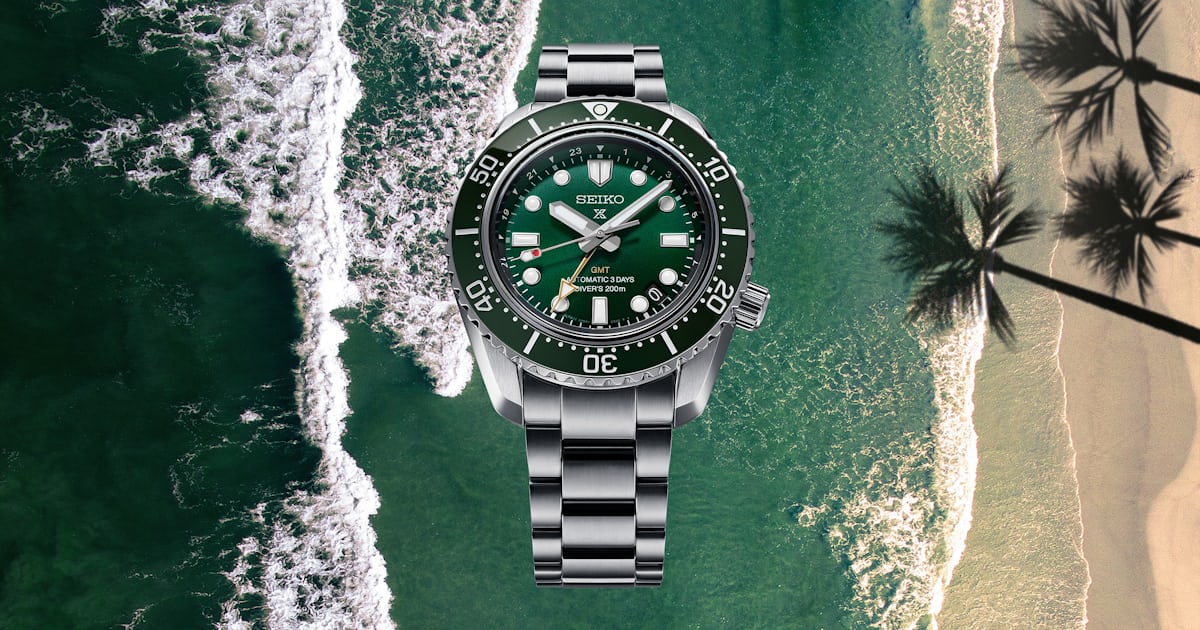
Not just more, but we're talking a higher-spec Dive-GMT with a brand new movement.
 Hodinkee
The brand's high-spec sporty chronograph gets a blue dial.
 Video
Video
 Hodinkee
Back at it again and thinner than ever.
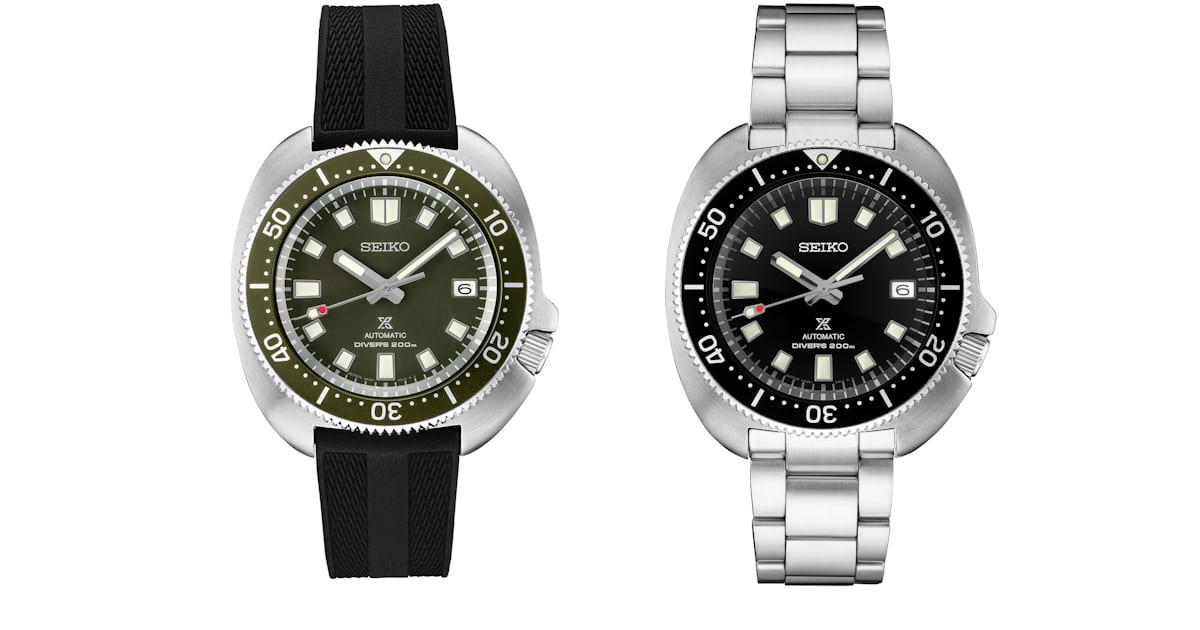 Hodinkee
It smells like ... victory.
 Teddy Baldassarre Videos
Teddy Baldassarre is an authorized luxury watch retailer of brands like TUDOR, OMEGA, IWC, Grand Seiko, Breitling, Blancpain, Glashütte Original, Zenith, Longines, ORIS, MIDO, Tissot, Hamilton, NOMOS Glashütte, Baume & Mercier, and more.
 Teddy Baldassarre
Last year, we saw a trio of new Seiko Samurai watches that aimed to broaden the collection’s appeal within the Prospex family. It’s fairly well understood that the Samurai has been seen as the odd man out among the “Seiko with a nickname” family, but why exactly is that? Well, it doesn’t have that vintage heritage, having only debuted in 2004. Also, the second generation has been around since 2017, and since then, tastes have certainly changed. The 44mm-wide case is a little too big for today’s tastes, where conventional wisdom puts anything above 42mm safely in the “huge” category (the case has been pretty thick, as well) . And while models like the Turtle, SKX007, or Willard (or even Tuna and Arnie) have rounded cases, the Samurai’s case has a very sharp and almost aggressively angular design that, again, is not for everyone. Wisely, Seiko’s third-generation Samurai addresses that persistent case-size issue while giving the dial a refresh too. Fortunately, the angular case is a bit more refined, yet no less geometrical. Sorry, that’s just part of the Samurai’s identity. Seiko Samurai Case and Bracelet First off, yes - the new Seiko Samurai has taken design cues from the Shogun. If that makes it not a “true Samurai,” then so be it, but the end result is one good-looking watch. The case improves over that of the second generation in just about every meaningful way (the older case is still available alongside this new iteration). First off, it ...
 Teddy Baldassarre
Among today’s Seiko watch models and collections, it’s fair to say that the Seiko Astron does not receive nearly the amount of love from enthusiasts and collectors as do its contemporaries, like the Prospex and Presage models and even the budget-friendly 5 Sport series. And yet I believe a substantial case can be made that the Astron — at least, the first watch to bear that name, way back at the collection’s inception in 1969 — is the most important watch of the 20th Century. The first watch to the market with a quartz movement, the Seiko Astron was a game-changer for the entire watch industry, with an impact that is still being felt today. When Seiko revived the Astron in 2012 after a long hiatus, it was with the recognition that the model represented a quantum leap in watchmaking technology and the determination to take it to the next level. Seiko has fulfilled that promise with subsequent editions of the modern Astron, which brought GPS technology into watchmaking much as the original brought quartz. Here is the story of the Seiko Astron and its 50-plus-year journey to the cutting edge of technology. The Road to Quartz: 1952 - 1968 The quartz watch movement, as with many other groundbreaking inventions, did not emerge from a single burst of creative vision, but ultimately proved to be the most workable version of many such mechanisms, all aimed toward addressing the same industry-wide challenge. As I explore in greater depth in my article on the History of Tim...
 Video
Video
 Worn & Wound
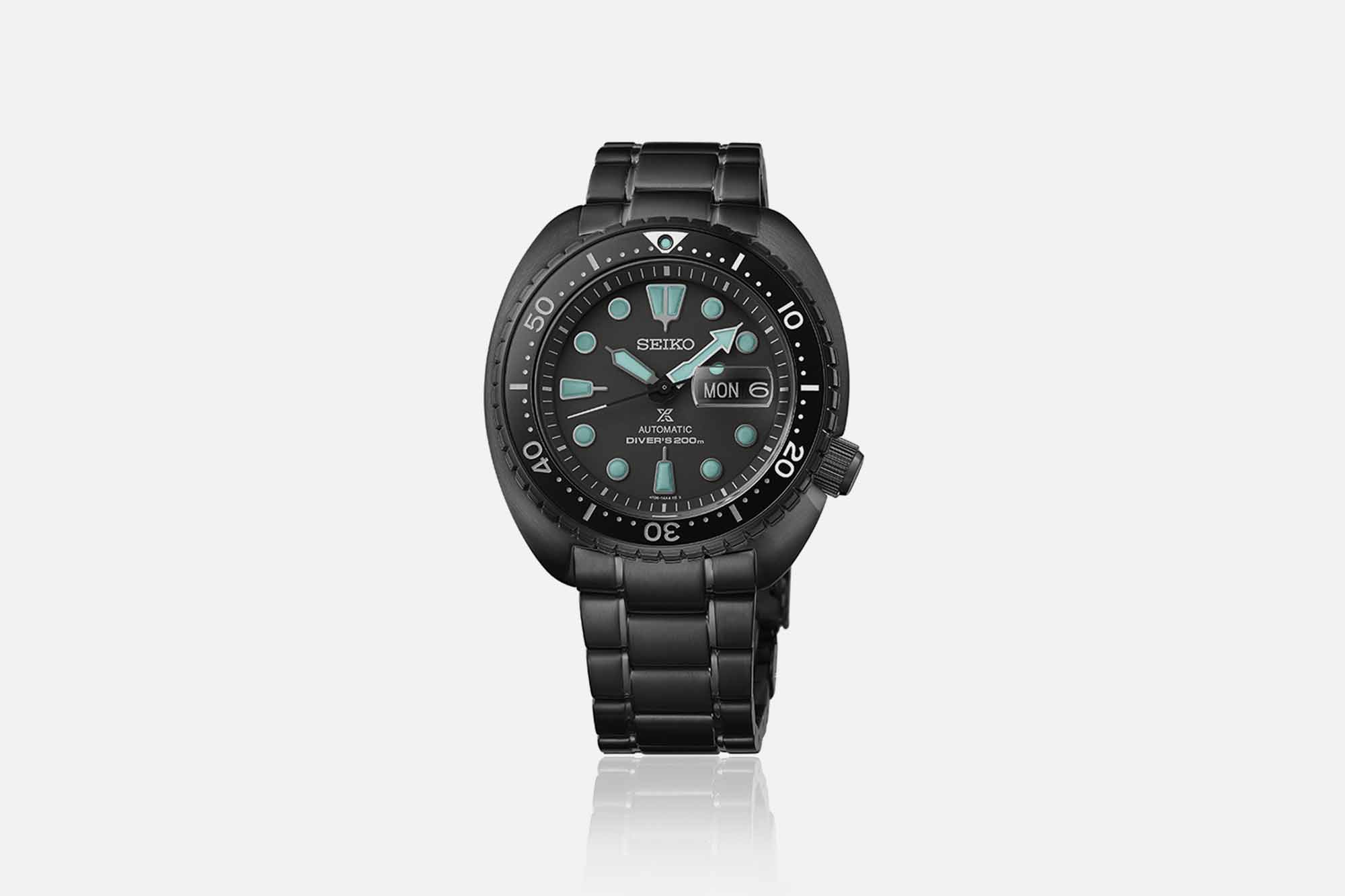
There is a particular appeal to a stealthed-out tool watch. Maybe it’s the idea that the original design has been placed on the backburner for a more urgent, clandestine, reason. Or the ironic low-key aesthetic that often makes even more of a visual impact. We’ve seen various brands take the “blackout” approach, from Omega to Tudor, and the results are typically pretty intriguing. Seiko currently has a trio of black and orange watches under the Prospex collection that it calls “The Black Series”, but today it infuses the lineup with two new references that take things a step further by eliminating any colored accents and going for an (almost) all-out black look. These are the new 2024 Black Series SRPK43 and SSC923. The first of the new references, the SRPK43 is a familiar form but with a new face. It is 45mm wide but with a stout 47.4mm lug to lug measurement. Thickness is 13.2mm. The turtle-style stainless steel case and accompanying bracelet are, naturally, all black, as is the unidirectional ceramic bezel. In a nice touch, the day and date wheels have matching black backgrounds. The only use of color is in the lume, which Seiko calls “Green Lumibrite Pro”. In the light, it is a pale green; at night it shines a more vivid green. The intended effect is to give the impression of peering through night vision goggles, and we’ll have to see the watches in person to assess how well Seiko has hit their mark. The SRPK43 is powered by the automatically-windin...
 Teddy Baldassarre
Straight from both the Grand Seiko & Credor booths at Watches & Wonders, we sit down with Joe Kirk to discuss what's new from each of these premiere Japanese Brands.
 Hodinkee
Higher specs, smaller measurements. It might be a perfect dive watch for Grand Seiko.
 Teddy Baldassarre
Grand Seiko has done something remarkable at Watches and Wonders for 2026. The headline story is the launch of the new Spring Drive UFA Ushio 300 divers, and on top of that, a new smaller case size. The new divers are available in two dial variations, the blue SLGB023 and the green SLGB025. Of course, the main attracti
 Teddy Baldassarre
Typically when quartz watches are brought up in regards to the Grand Seiko catalog as a whole, they're thought of as entry points to the brand. However, there is much more to the story than "just" being a quartz movement, Grand Seiko has a lot more to offer here. Sit down with Teddy and Joe Kirk to discuss the merits o
 Video
Video
Question, suggestion, or just want to say hi? Drop a note.