Hublot Introduces the Meca-10 Clock
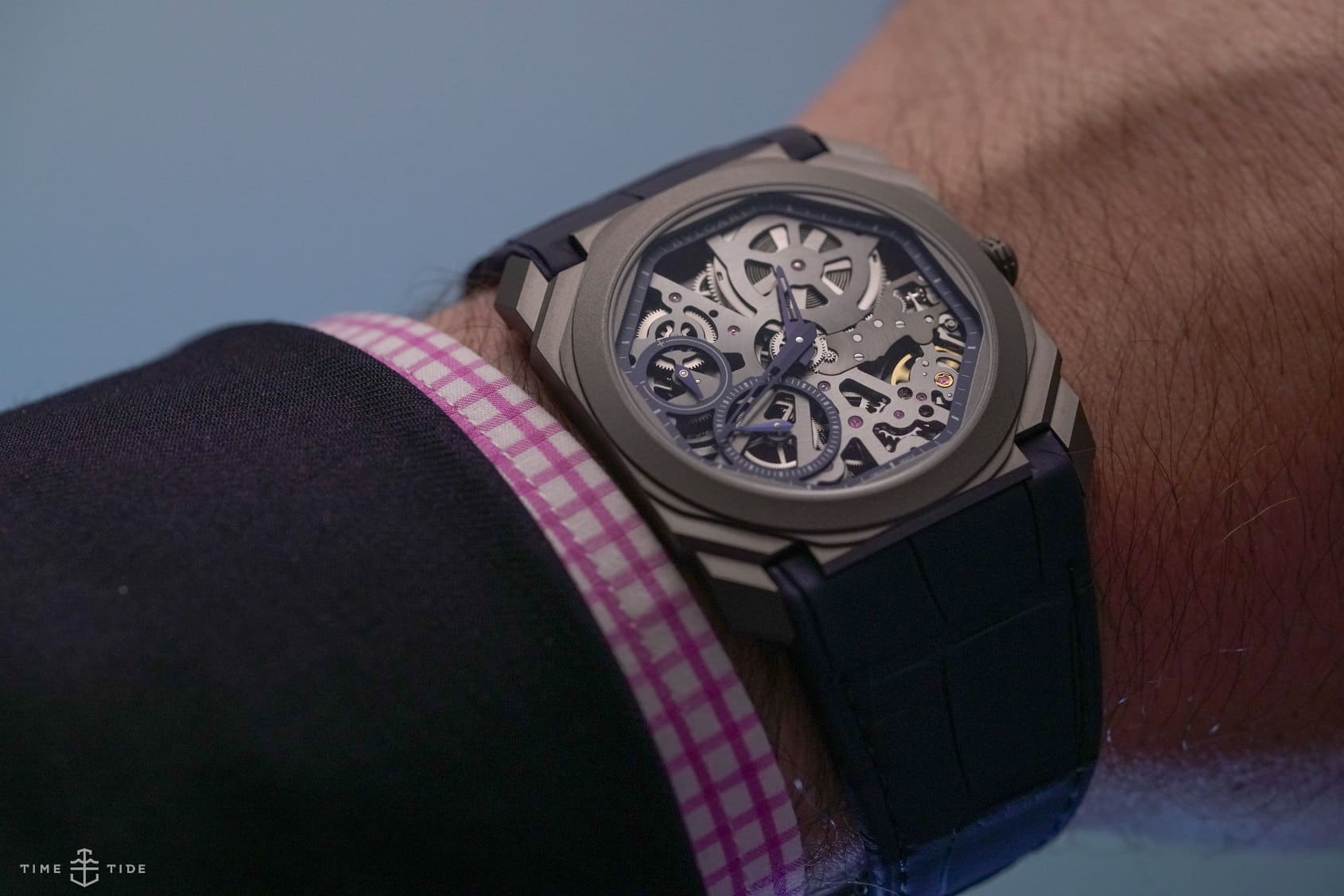
Time-only but visually and mechanically interesting, the Hublot Meca-10 wristwatch has a skeleton movement inspired by Meccano, the children’s construction toy. Now it’s been blown up – by a multiple of four – to create the Meca-10 Clock. Created in collaboration with Swiss clockmaker L’Epée, best known for the clocks it has made for MB&F; and Chanel, the Meca-10 Clock retains all of the key features of its wristwatch counterpart, namely the skeletonised construction and lengthy, 10-day running time. The clock and the watch that inspired it Initial thoughts Compared to the prolific, sci-fi clocks of MB&F;, the Meca-10 is more traditional. But it sets itself apart technically with its purpose-built, 10-day movement. In contrast, clocks by other brands express themselves in terms of case architecture, and mostly rely on the same the L’Epée 8-day movement. The Meca-10 has a straightforward, square case that resembles the typical Hublot Big Bang. The highlight is the movement, which originated in Hublot’s own movement development department led by Matthias Buttet, the brand’s resident technical guru, and subsequently built by L’Epee. The result is a clock that is legible and mechanically interesting, just like the Meca-10 wristwatch, giving the clock a similar sort of appeal. But the Meca-10 clock is surprisingly expensive, starting at US$47,400 for the steel version. That can be justified to a degree by the unique movement, but it’s still twice the pric...