Watch brandsWatch wikiWatch videosVariousWatch calendarSaved articles
PopularRolexOmegaPatek PhilippeAudemars PiguetTudorGrand SeikoCartierSeikoIWCTAG HeuerBreitlingJaeger-LeCoultreA. Lange & SohneZenith

Results for Escapement

289 articles · 13 videos found · page 9 of 11

Related pages

Wiki · Guide
Escapement

The component that transfers energy from mainspring to balance wheel in controlled pulses.

Up Close: Ulysse Nardin Blast Tourbillon SJX Watches
Ulysse Nardin Blast Tourbillon Ulysse Nardin Sep 5, 2020

Up Close: Ulysse Nardin Blast Tourbillon

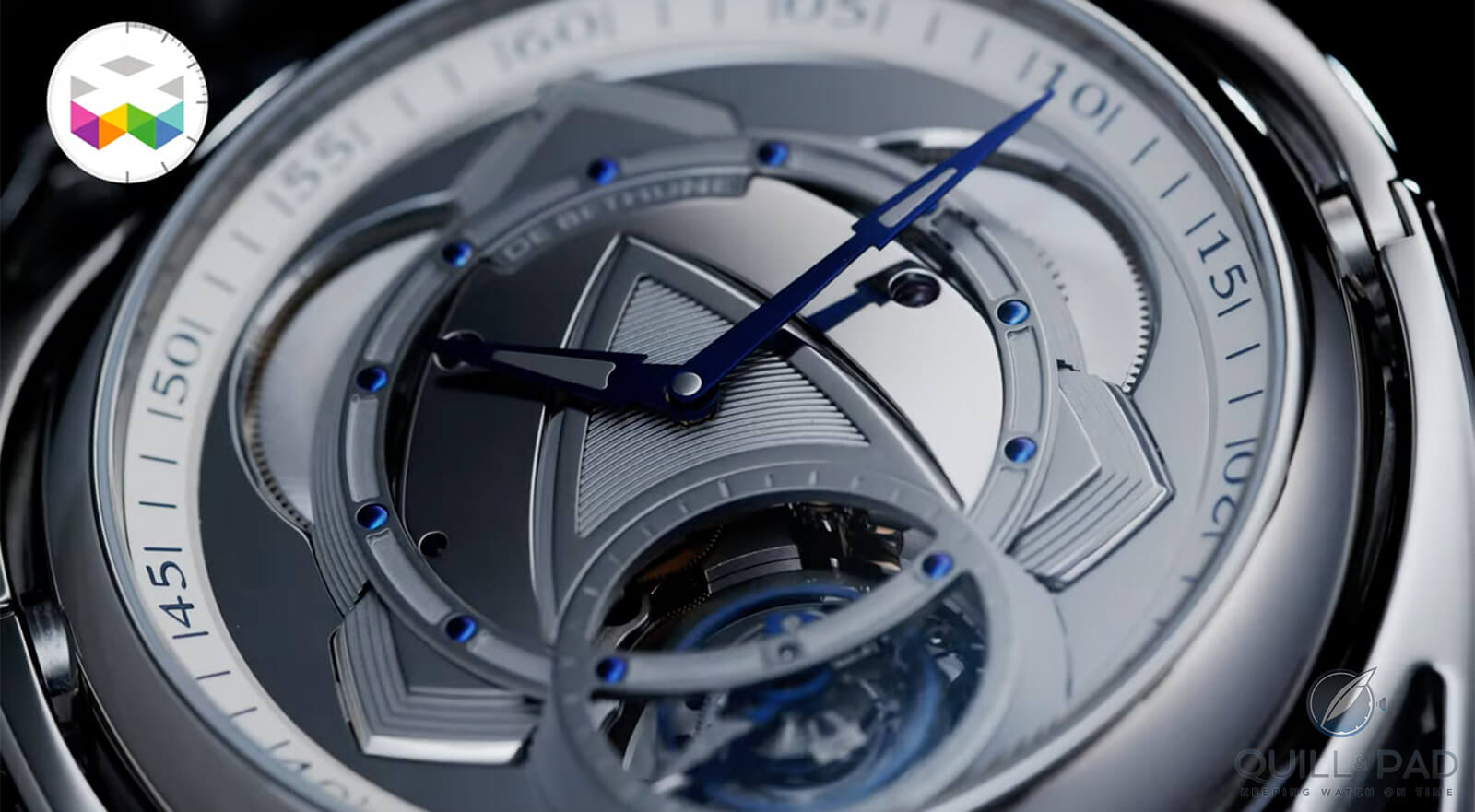
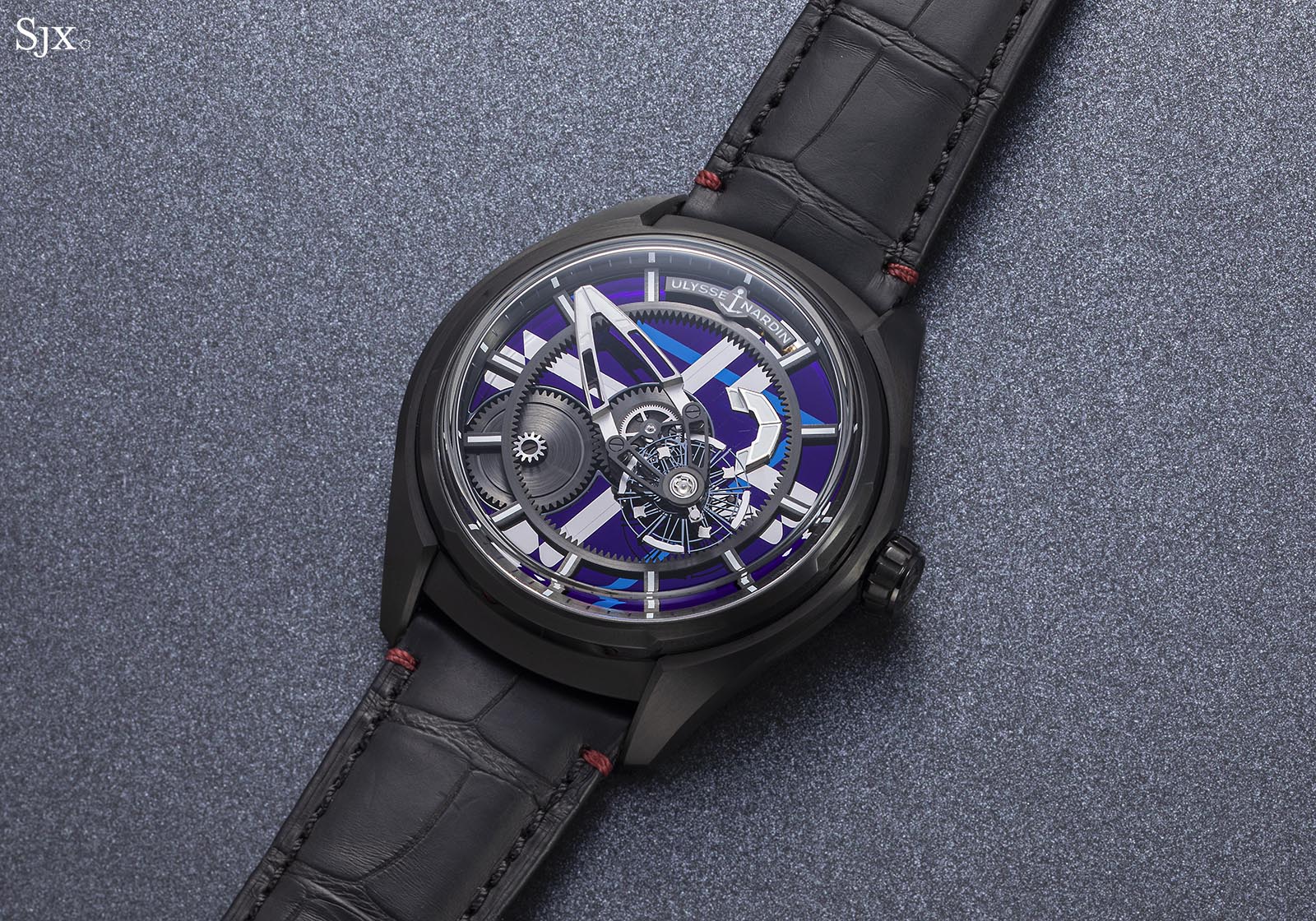
Ulysse Nardin (UN) excels at excellent in-house movements, even for its most affordable, time-only watches. Its watches cases, on the other hand, are typically straightforward – they do the job, but are far from fancy. Just launched at Geneva Watch Days, the Blast Tourbillon is a step in the fancier-case direction. Fronted by a strikingly facetted – and contrast finished – upper plate, the case of the Blast is novel without being too much (though it is a bit much combined with the “X” skeleton movement). And the Blast also sits surprisingly well on the wrist despite its large size. But true to UN’s technically-oriented watchmaking, the Blast is not merely new livery for an old movement. Instead the UN-172 movement within is a new calibre featuring an extensively skeletonised construction – that retains the “X” motif the brand is overly fond of – as well as the signature full-kit silicon oscillator. Initial thoughts The Blast combines an interesting case with an elaborate movement – automatic, skeletonised, and a tourbillon featuring a silicon escapement and hairspring – for not very much money as such things go. With the base model retailing for US$44,000 for the base model, the Blast is priced well. The case is the highlight – finished well and wearable despite its size. The Blast is a big watch at 45 mm in diameter, though it feels notably slimmer than its 13 mm height, partly due to the case height-to-diameter ratio. The fit is good for a wat...

Bernhard Lederer Debuts the Central Impulse Chronometer Prototype SJX Watches
Aug 25, 2020

Bernhard Lederer Debuts the Central Impulse Chronometer Prototype

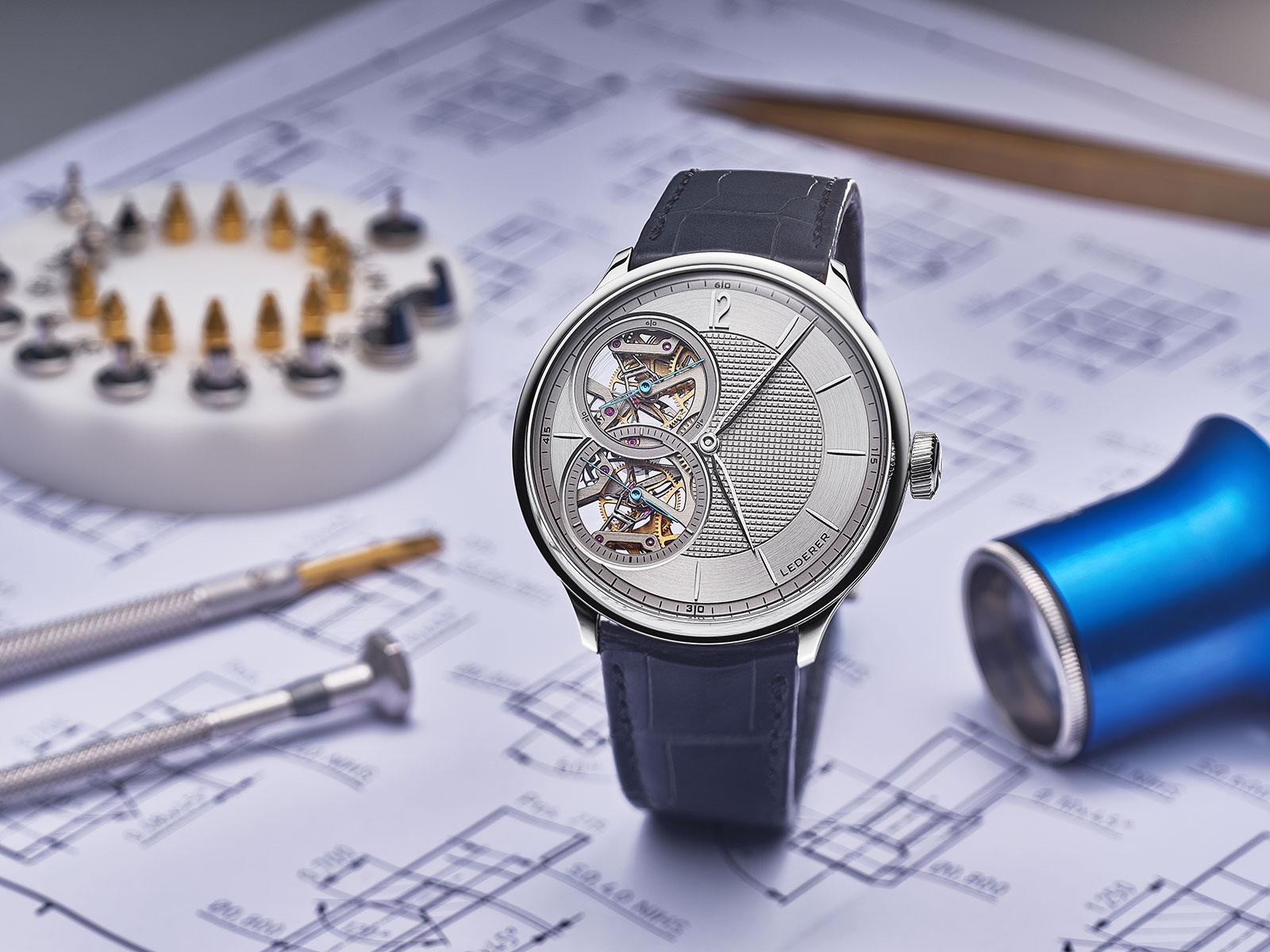
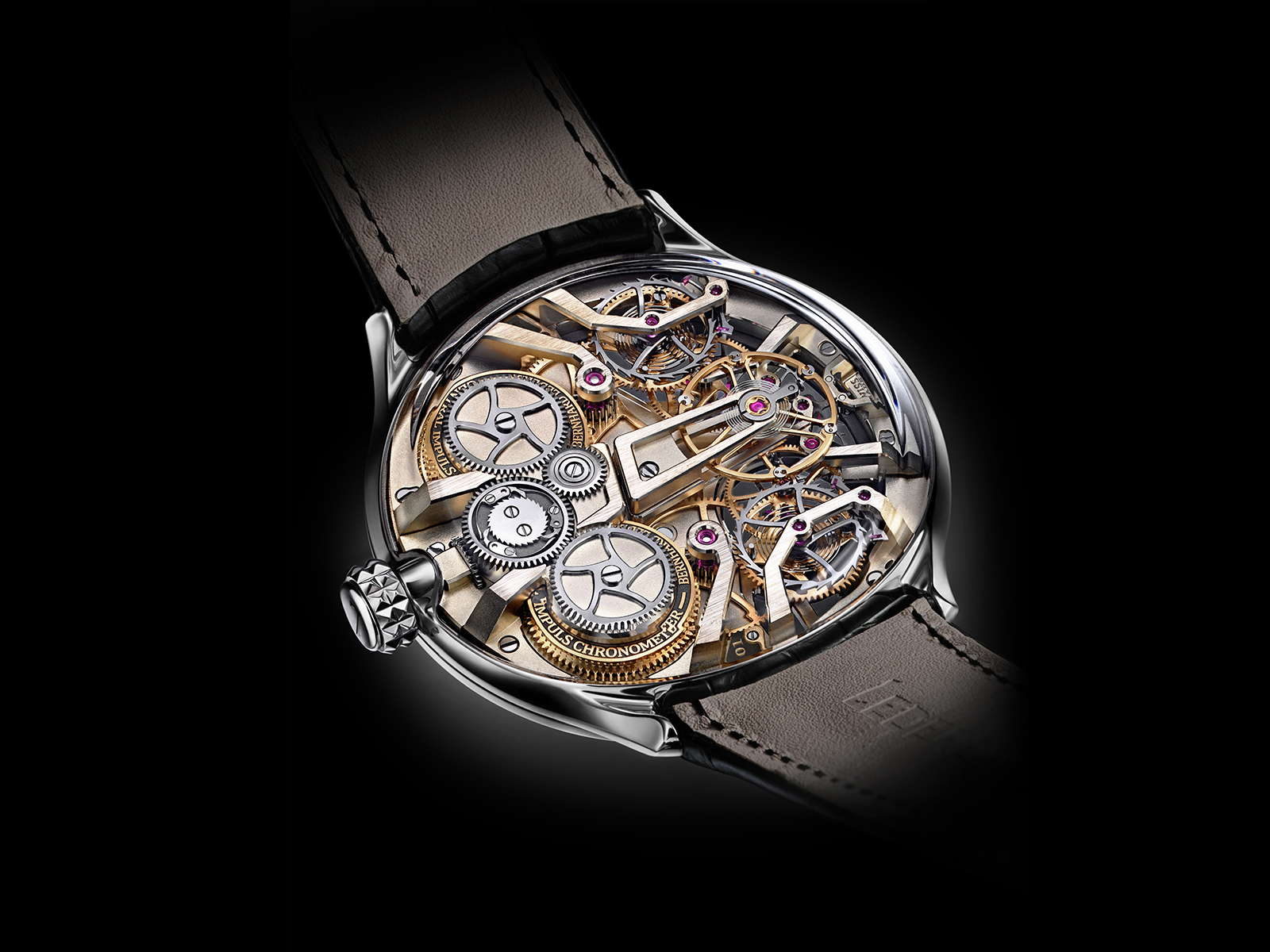
A member of the Académie Horlogère des Créateurs Indépendants (AHCI) since its founding in 1985, Bernhard Lederer is a veteran of independent watchmaking. Though known amongst collectors for having founded the brand BLU in 2002, Mr Lederer is more of a watchmaker’s watchmaker, supplying movements and complications via his company MHM (short for “Manufacture de Haute Horlogerie et Micromécanique”). Born in Germany but based in Switzerland for decades, Mr Lederer’s technical prowess is on full view with his latest creation – the Central Impulse Chronometer (CIC). Seemingly a mere three-hand wristwatch on the front, the CIC is a actually a significant accomplishment – and undoubtedly one of the most notable watches of 2020 from a technical perspective. The movement is equipped with a natural escapements as well as dual gear trains. The construction is familiar – Mr Lederer describes it as a tribute to the late George Daniels and his landmark Space Traveller pocket watch – but improved and refined with the addition a remontoir d’egalité constant force mechanism for each going train. Initial thoughts With seemingly everything already having been done in watchmaking, it is not often that we encounter a genuinely interesting – and improved – twist to an already uncommon escapement. Here Mr Lederer rejuvenates the centuries-old idea of the natural escapement, but elevated by the added complexity and performance gains of twin remontoir going tr...

Insight: Barraud’s Weight and the Marine Chronometer SJX Watches
Aug 21, 2020

Insight: Barraud’s Weight and the Marine Chronometer

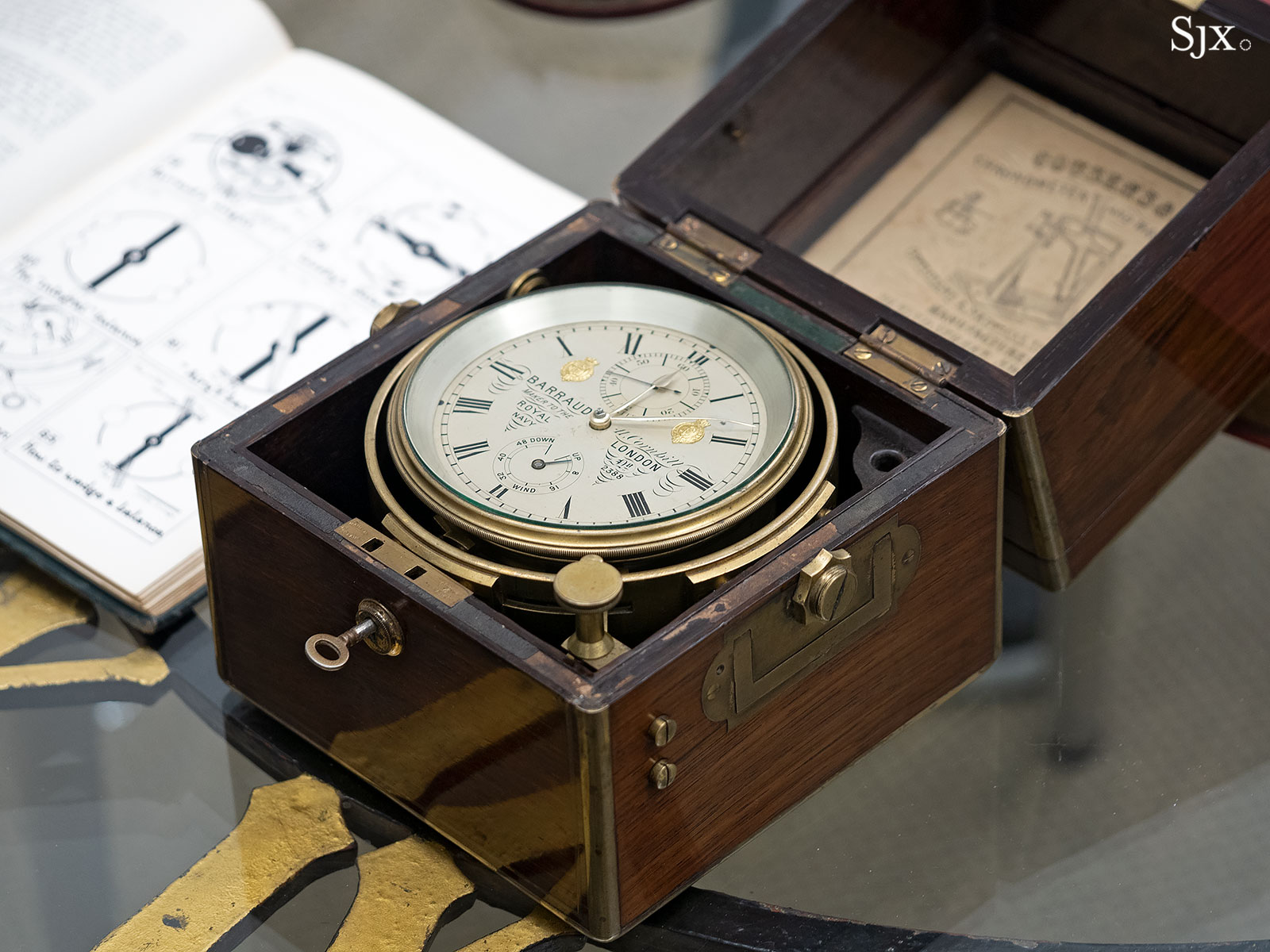
Although precision watchmaking is today mostly synonymous with Switzerland, the oft forgotten truth is that much of the technological progress and development in horology during the 18th and early 19th centuries originated in England. The preeminence of English watchmaking during that period is perhaps personified by John Harrison, the carpenter-turned-clockmaker best known for his invention of the marine chronometer. Harrison and his contemporaries advanced horology in an era where the pursuit of accurate timekeeping was of national importance for the United Kingdom: the marine chronometer enabled ships to traverse the highs seas while maintaining positional accuracy over extremely long distances, an achievement that no doubt helped the rise of the globe-spanning British Empire. The curious chronometer On a recent visit to Charles Frodsham & Co Ltd. – the English chronometer manufacturer now run by Philip Whyte and Richard Stenning that’s making wristwatches equipped with a natural escapement – a rather curious timekeeper from England’s heyday as a watch and clockmaking nation emerged. Dating to 1845, it was marine chronometer no. 2388 manufactured by Barraud, later Barraud & Lund, a now defunct English watchmaker (though a descendant of the company, Lund & Blockley, remains in operation to this day as a retailer in Mumbai). While the well-preserved state of the clock was impressive in itself, closer inspection of the movement revealed a peculiar feature. Sitting...

Petermann Bédat Introduces the 1967 Deadbeat Seconds SJX Watches
Petermann Bédat Jun 18, 2020

Petermann Bédat Introduces the 1967 Deadbeat Seconds

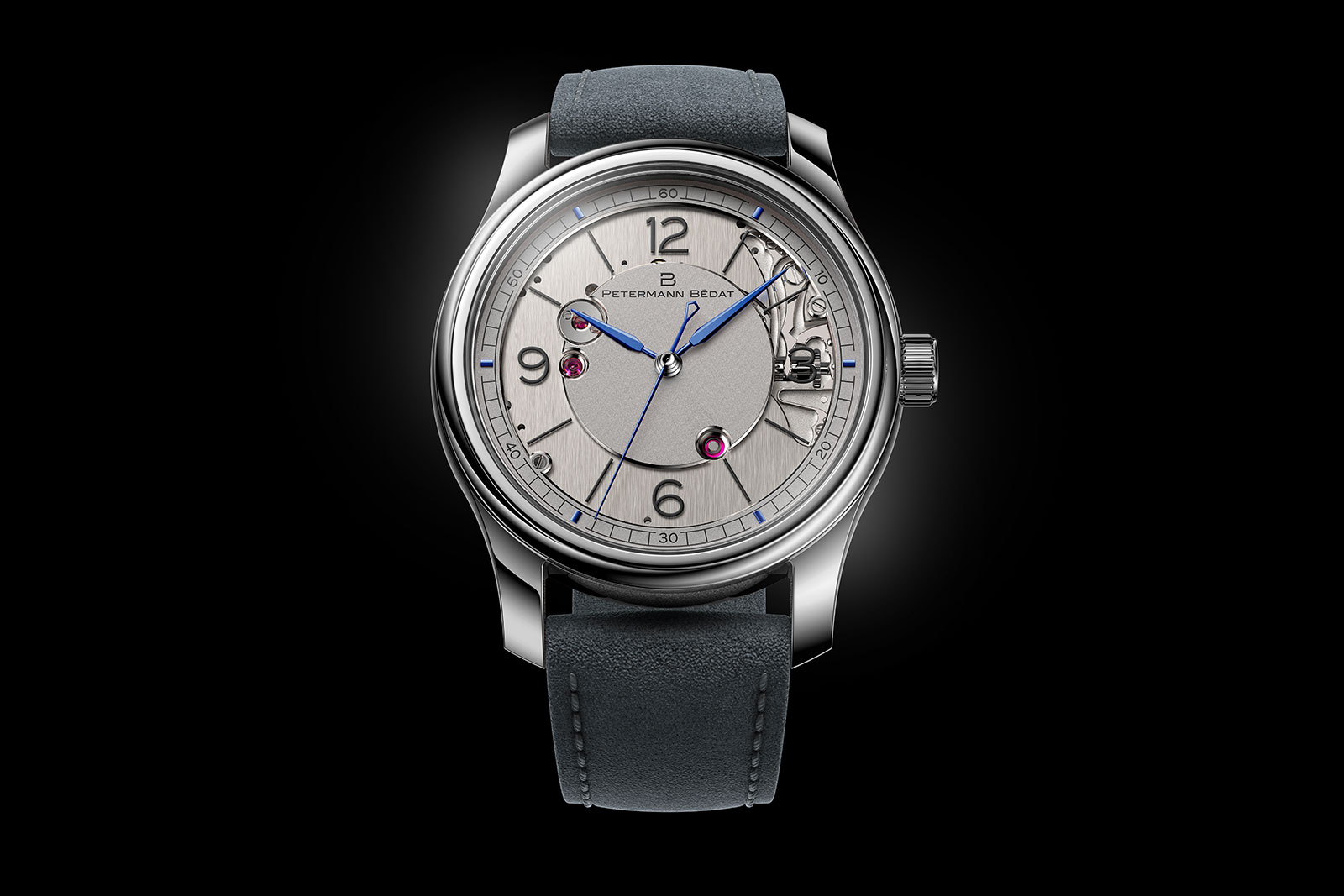
First revealed a year ago as a prototype with a dial that was a work in progress, the Petermann Bédat 1967 wristwatch with an unusual deadbeat seconds mechanism has just been launched in its final form. Mechanically identical to the prototype – it’s equipped a secondary escapement for the jumping seconds – the refined 1967 now has a partially-open dial that shows off the finely-finished keyless works. Initial thoughts The prototype 1967 deadbeat seconds was let down by an uninspiring faux-classical dial, which was a shame, because the movement was executed to an impressively high level. Fortunately, Messrs Petermann and Bedat embarked on a total redesign of the dial. Independent watchmakers don’t often make drastic changes to designs in response to criticism, but the two did so, and the result is a success. The new 1967 is a handsome watch that manages to look modern while evoking classical dial design. In fact, the new dial is essentially a “sector” dial with a sapphire chapter ring, a novel combination that has not been done before. And it is matched with Petermann Bédat’s take on classical lance-shaped hands, which complete the contemporary feel. The new 1967 in rose gold. Photo – Petermann Bédat Dial aside, the rest of the watch is largely identical to the prototype. The movement was already excellent and will be almost unchanged in the production versions, although Mr Petermann says that the engraved lettering on the three-quarter plate will be im...

Up Close: Ulysse Nardin Freak X Silicium Marquetry SJX Watches
Ulysse Nardin Freak X Silicium Marquetry Jun 10, 2020

Up Close: Ulysse Nardin Freak X Silicium Marquetry

Revolutionary for its construction and use of silicon, the Ulysse Nardin Freak is still a unique watch almost two decades after its introduction. And the full-featured Freak is still a relatively costly watch, until the Freak X came along last year. The most affordable version of a watch that helped kickstart the age of high-tech mechanical watchmaking, the Freak X retains the essence of its bigger brother while simplifying the rest of the movement. Several iterations of the Freak X have been rolled out since then, including one that ironically takes silicon out of the movement – the Freak X Silicium Marquetry. The watch has a dial decorated with inlaid tiles of iridescent silicon, using the material for its aesthetic potential, rather than the usual functional purposes in the escapement. The Freak X Silicium Marquetry Initial thoughts The Freak X Silicium Marquetry is an aesthetic variant of the standard model, so it’s identical in all respects except the dial finish. A combination of metallic and glassy, the silicon dial is different from any other dial material and suits the look of the watch well. That means the case is compact, so it wears quite well. And more importantly, the watch has a cutting-edge balance wheel amounted on the minute hand, making one revolution an hour. It’s a surprisingly advanced regulator in a watch at this price point, and probably the most advanced of all watches in the price segment. But the Freak X Silicium Marquetry is substantiall...

F.P. Journe Introduces the New Chronomètre à Résonance SJX Watches
F.P. Journe Introduces Apr 28, 2020

F.P. Journe Introduces the New Chronomètre à Résonance

Since its launch in 2000, the Chronomètre à Résonance has perhaps become the quintessential F.P. Journe wristwatch. Still the only wristwatch to rely on the principle of resonance – omitting any mechanical means of transmission – the Résonance has been revamped and improved for its 20th anniversary. While the Résonance was powered by essentially the same calibre (the cal. 1499 in several generations) for its first two decades, the new Chronomètre à Résonance is equipped with the brand-new cal. 1520. Several features set the new movement apart from its predecessor, most notably the use of a single barrel and a remontoir d’egalite constant force mechanism in each going train. Initial thoughts Having learnt a little about the new Résonance from hints dropped by Mr Journe in the past, I was looking forward to this – and the watch lives up to expectations. The basics of the new model are no surprise, since Mr Journe had let on that the movement will incorporate his signature remontoir. The upgrades to the new movement are sensible both in terms of function and timekeeping. Relying on a single barrel eliminates the finicky and occasionally unreliable double-barrel winding mechanism of the original movement. But the remontoir installed in each going train is the crucial upgrade as it optimises the going trains before and after the escapement. In the original Resonance movement, both balance wheels oscillate at an identical amplitude at any one time, but the am...

Up Close: Purnell Escape II Double Tourbillon SJX Watches
Breguet s invention Apr 14, 2020

Up Close: Purnell Escape II Double Tourbillon

Given that the tourbillon was invented for the pocket watch, adapting Abraham-Louis Breguet’s invention for the wristwatch opened the floodgate for tourbillon innovations in the beginning of the 21st century – the golden age of the tourbillon, perhaps technically but surely commercially. In fact, many watchmakers have gone far beyond the traditional concept of a tourbillon since English watchmaker Anthony G. Randall invented the double-axis tourbillon in 1978. But as the years passed, tourbillons evolved into elaborate constructions seemingly just for the sake of visual complexity. And there have been so many of them. For this reason, exotic tourbillons now seem dated, with sophisticated or truly interesting technical solutions being hard to come by. Potter and Purnell But the latest development in tourbillons is one of the most intriguing of recent times: maximising the visual effect of a tourbillon regulator not just by multiplying the axes of rotation, but speeding them up with the use of a specialised escapement invented two centuries ago by Albert H. Potter, a highly regarded American watchmaker based Geneva. The full potential of the Potter escapement was recently realised when it was combined with a carrousel outer cage in the MB&F; LM Thunderdome, the world’s fastest rotating triple-axis tourbillon. But the concept was first applied, arguably in a more elaborate manner, in the Spherion tourbillon of Purnell – which was developed by the same watchmaker behin...

Hands-On: Brivet-Naudot Eccentricity SJX Watches
Mar 30, 2020

Hands-On: Brivet-Naudot Eccentricity

French watchmaker Cyril Brivet-Naudot made his debut two years ago with the Eccentricity, a time-only watch that’s fascinating and impressive on many fronts. Not only is it almost entirely made by hand, the Eccentricity is intriguing in design and mechanics – from the overall architecture to details like the key-winding mechanism and regulator-style time display with a twist, and above all, the proprietary escapement. Just 29 years old, Mr Brivet-Naudot began working on the Eccentricity after graduating from the École Polytechnique Fédérale de Lausanne (EPFL), one of Switzerland’s best technical universities. Prior to that, he earned a diploma in watchmaking from the Lycée Edgar Faure in Morteau, a small town in eastern France that borders Switzerland. The school has gained a reputation for producing imaginative watchmakers, many pursuing a similar style that’s inspired by 19th century pocket watch movements, including Theo Auffret, a peer of Mr Brivet-Naudot. The result of three years of development, the Eccentricity is very much in the same vein as the watches produced by Mr Brivet-Naudot’s fellow graduates. It artfully combines a 19th century aesthetic sensibility with exotic features, including a novel, free-eccentric escapement, for which the watch was named. And it is built by hand: with the exception of the mainspring, hairspring, jewels and crystals, every component of the watch was made from scratch by Mr Brivet-Naudot, without the aid of CNC machine...

Breguet Introduces the Marine Tourbillon Équation Marchante 5887 SJX Watches
Breguet Introduces Mar 21, 2020

Breguet Introduces the Marine Tourbillon Équation Marchante 5887

One of the most exotic Breguet watches in production today, the Marine Tourbillon Équation Marchante 5887 combines a tourbillon regulator, perpetual calendar, and running equation of time. Complexity aside, the watch is mechanically fascinating: the traditional complications within are executed in a modern and practical way. The equation of time, for instance, relies on an open-worked cam produced via the high-tech LIGA photolithography technique. And the tourbillon cage is lightweight titanium with a silicon escapement, while the automatic winding is equipped with a peripheral rotor. Breguet has now introduced a new version of the grand complication, in pink gold with a slate-grey dial. While it is mechanically identical to the two earlier versions – in platinum with a blue dial or pink gold with a silver dial – the new watch is striking and harmonious, shedding a bit of the sports-watch aesthetic of the Marine by way of the richer colours. Being a facelift, the dimensions of the watch remain unchanged. It is still a massive 43.9 mm in width, though a svelte 11.75 mm high, thanks to the ultra-thin movement inside. Like the movement, aesthetics across the case and dial are very much a blend of new and old. The case has the traditional fluted band, but is paired with modern integrated lugs. Similarly, the dial is solid gold and decorated with traditionally-executed guilloche engraved with a rose engine, but in a modern, stylised wave motif. In a nod to the age-o...

Hands-On: Ulysse Nardin Diver X Cape Horn and Nemo Point SJX Watches
Ulysse Nardin Diver X Cape Horn Feb 25, 2020

Hands-On: Ulysse Nardin Diver X Cape Horn and Nemo Point

Dive watches priced below US$10,000 are one of the saturated and competitive segments in watchmaking. The category is dominated by two dive watch icons, the Rolex Submariner and the Omega Seamaster, both of which set the bar high with high-spec, in-house escapements equipped with high-tech hairsprings and next-level chronometer certifications. Ulysse Nardin smartly steered away from the conventional dive-watch look with last year’s new Diver X. Created to mark the brand’s newly-forged partnership with Vendée Globe, a non-stop solo yacht race around the globe, the Diver X Cape Horn and Diver X Nemo Point are a contemporary take on the standard Diver Chronometer 44mm, dressed up in new materials and colours but retaining the same basic specs, namely a 300 m rating and an in-house movement with a proprietary escapement. The Diver X Cape Horn Dubbed the “Everest of the Seas” because of its reputation as the toughest sailing competition in the world, the Vendée Globe is such an arduous journey that the eight races since 1989 have claimed three lives. Competitors have to travel over 40,000 km, a round-the-world trip that takes between two to four months. Unsurprisingly, the twin Diver X editions are aggressively styled and technically robust. Form and function Each named after key points along the Vendée Globe route, the Cape Horn and Nemo Point have the longstanding, symmetrical layout of a Ulysse Nardin diver’s watch – originally inspired by the dial of the br...

In-Depth: The Unfinished George Daniels Watch SJX Watches
Breguet idea while Feb 23, 2020

In-Depth: The Unfinished George Daniels Watch

George Daniels’ contributions to horology, as a watchmaker, historian and educator, were multi-dimensional. Most are widely known, and his watches are now incredibly valuable. But one of his creations – the “Unfinished Daniels” – remains tantalisingly incomplete, residing in the Clockmakers’ Museum within London’s Science Museum (which is also now home to Daniels’ Space Traveller II pocket watch). Even though he completed only a small number of watches – 23 pocket watches and four wristwatches made by hand, along with the serially-produced Millennium watches – Daniels’ inventions, techniques and philosophy have been deeply influential. His successor Roger W. Smith now practices the Daniels method with his own hand-made watches, but other notable watchmakers, including Francois-Paul Journe, have cited Daniels as an inspiration. The unfinished Daniels movement in the George Daniels exhibit in the Clockmakers’ Museum. Photo – Science Museum Like many great watchmakers over the ages, Daniels’ pursued perfect chronometry throughout his career; inventing a novel, superior escapement was perhaps his greatest achievement. And he managed to do it twice. Having observed that the sliding friction in the conventional Swiss lever escapement affects the rate of a movement over time, he set about developing solutions. He invented two escapement types: one inspired by a 18th century Abraham-Louis Breguet idea, while the other was the entirely original and mo...

In-Depth: Why the Position of a Watch Influences Accuracy SJX Watches
Zenith El Primero Feb 2, 2020

In-Depth: Why the Position of a Watch Influences Accuracy

A mechanical watch movement is a tiny-but-complex system made up of components in equilibrium, operating flawlessly. But because the those components are delicate – especially the parts that make up the escapement – its operation can be influenced by external factors,  including shock, moisture, and more commonly, the position of the watch, whether on the wrist or off. The position of a watch determines how gravity affects the moving parts of the movement. In other words, the timekeeping of a watch can vary according to whether it is laid on its back or on its side. That resulting variation is known as positional error, and it is largely because of gravity’s effect on the balance wheel – the oscillator in the regulating organ of the movement. Beyond the position of a watch, positional error is also shaped by factors like the amplitude of the balance wheel, the type of hairspring, and the poise of the balance. All are inextricably linked and must be adjusted just right – properly regulated in watchmaking parlance – in order for a watch to have minimal positional error and thus keep good time. [Editor’s note: In this article we’ll just deal with movements constructed traditionally with conventional materials, leaving out silicon-equipped movements, which are still relatively niche.] The Microstella adjustable-mass balance of the Rolex cal. 4030, which is based on the Zenith El Primero A matter of position The position of a watch significantly affects its ac...

Roger Dubuis Excalibur Huracán Performante: Serious High-Performance Synergy With Lamborghini – Reprise Quill & Pad
Roger Dubuis Excalibur Huracán Performante Serious Feb 2, 2020

Roger Dubuis Excalibur Huracán Performante: Serious High-Performance Synergy With Lamborghini – Reprise

Roger Dubuis and Lamborghini have a special relationship: the watches that have so far come from this still relatively young collaboration have not only been impressive but also suck you into the world of Lamborghini without a car even being in sight. It is almost like the watchmakers at Roger Dubuis have infused this watch with motor oil and replaced the ticking of the escapement with the growl of an Italian high-performance engine. And the Excalibur Huracán Performante is all the evidence you need!

Recommended Watching: Roger W. Smith Explains History of the Mechanical Watch SJX Watches
Roger W. Smith Dec 18, 2019

Recommended Watching: Roger W. Smith Explains History of the Mechanical Watch

Just over two weeks ago the annual George Daniels lecture took place at the City University of London, an institution supported by the late watchmaker’s charitable trust. This year’s speaker at the sold-out event was none other than Roger W. Smith, protege and successor to Daniels. Just over an hour long, including questions, the lecture is erudite, accessible and packed with nerdy trivia, like the fact that a movement running at 28,800 beats per hour will make 252,288,000 vibrations per year. Roger explained the history and rationale behind the mechanical watch, and how watchmakers are working to improve it even today. That naturally led into the lubrication-free co-axial escapement invented by Daniels (pictured above), which Roger delves into in a satisfyingly detailed manner, like comparing the sliding friction of a lever escapement against the tangential impulse of the co-axial. Fortunately, the entire proceedings were recorded and are now available online:  

Auction Watch: Breguet Skeleton 30-Day, Constant Force Clock by Philippe René Jaccard SJX Watches
Breguet Skeleton 30-Day Constant Force Dec 7, 2019

Auction Watch: Breguet Skeleton 30-Day, Constant Force Clock by Philippe René Jaccard

One of the most intriguing timepieces being offered in the final run of watch auctions for 2019 is not a wristwatch, but an incredibly rare table clock made by Breguet in 1934 that’s going under the hammer at Christie’s. It hardly looks like a typical Breguet – having no engine-turning or gilding or blued steel hands – but is remarkably striking, with a skeletonised, architectural movement that is modern-looking despite being 85 years old. Abraham-Louis Breguet is rightly regarded as one of the most important watchmakers in history, whose inventions range from the natural escapement to the tourbillon, while being commercially savvy enough to become a leading watchmaker to the Ottoman Empire. But his descendants ventured into other businesses by the mid 19th century, most notably aviation, so the watchmaking operation was sold by Louis-Clément Breguet, grandson of Abraham-Louis, in 1870 to English watchmaker Edward Brown. The Browns kept the workshop in Paris, though it moved several times over the decades. During the century that the Brown family ran Breguet – Brown’s grandson George sold the company to French jeweller Chaumet in 1969 – the firm mostly retained the signature Breguet style and produced a large variety of timepieces, but in tiny quantities, often relying on external specialists for movements and components. Timepiece no. 3142 This clock is one such timepiece from the period. A unique piece according to the accompanying Breguet museum archive...

In-Depth: MB&F; LM Thunderdome Triple-Axis Tourbillon SJX Watches
Jaeger-LeCoultre unveiled Dec 3, 2019

In-Depth: MB&F; LM Thunderdome Triple-Axis Tourbillon

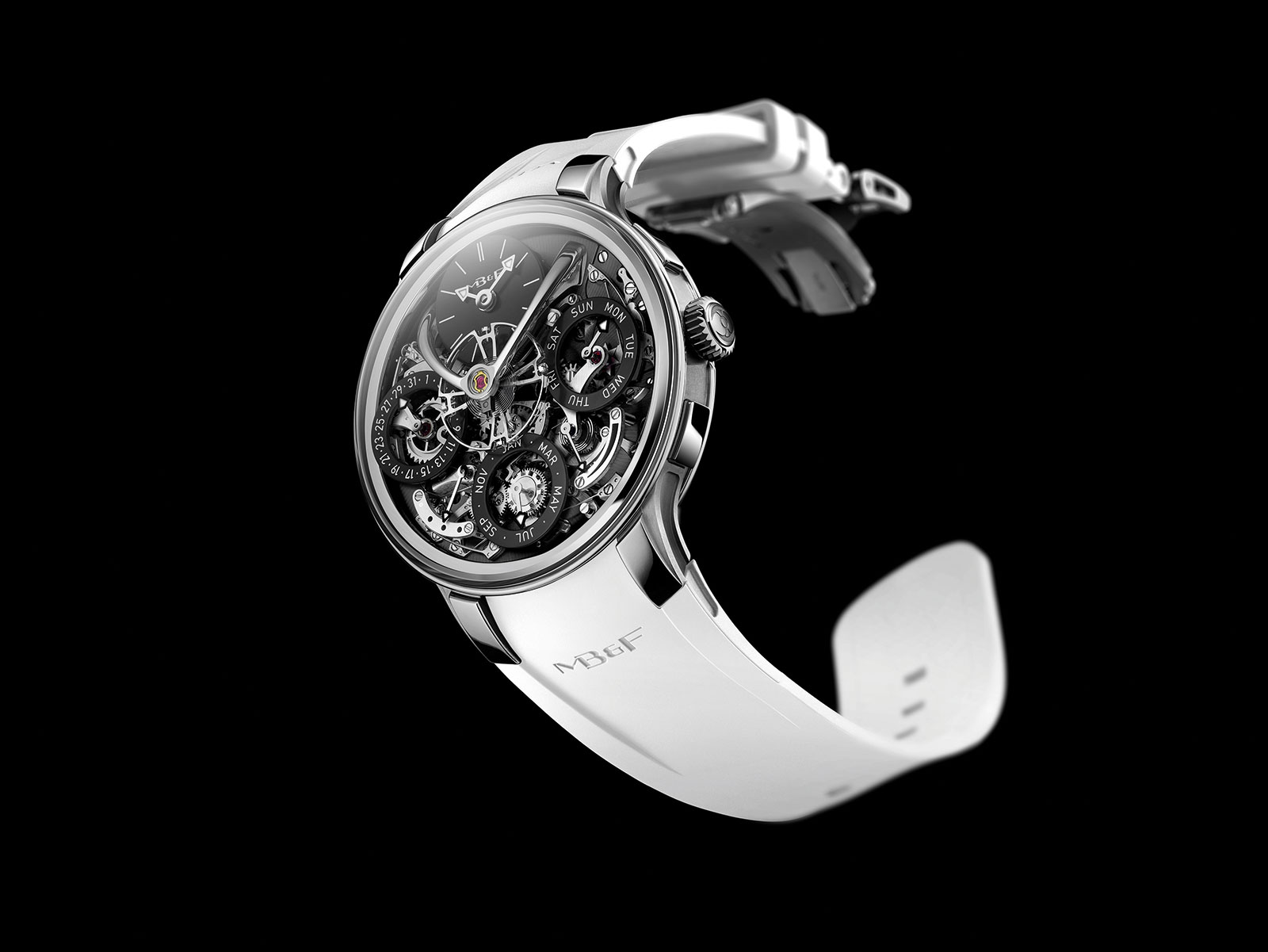
The flying tourbillon wristwatch for women – the Legacy Machine FlyingT – that MB&F; launched last year foreshadowed its latest watch – the Legacy Machine Thunderdome, boasting the fastest ever triple-axis tourbillon developed by independent watchmaker Eric Coudray. No doubt multi-axis tourbillons are hardly new, especially after Jaeger-LeCoultre unveiled its first Gyrotourbillon in 2005 – which was also developed by Mr Coudray – but the LM Thunderdome takes the concept further by every metric, primarily by building on past ideas to achieve higher cage velocities than ever before. Most intriguingly, the Thunderdome movement incorporates a tourbillon lever escapement first devised by Albert H. Potter – a talented American watchmaker who worked in Geneva in the late 19th century – as well as an unusual multi-axis tourbillon that utilises a carrousel for its outermost cage, christened the TriAx. The ingenious construction of the tourbillon is thanks to Mr Coudray, who now runs complications workshop TEC Ebauches and is best known for the numerous exotic tourbillon movements he has developed. After his two-decades at Jaeger-LeCoultre where he became the resident technical genius, Mr Coudray worked for several brands of varying levels of credibility, including at Cabestan where he perfected its vertical tourbillon, and more recently at Cecil Purnell, where he created the Spherion tri-axial tourbillon, which has a similar construction to the Thunderdome. Besides...

Zenith Introduces the Defy El Primero 21 Southeast Asia Editions SJX Watches
TAG Heuer Nov 12, 2019

Zenith Introduces the Defy El Primero 21 Southeast Asia Editions

Produced for the key markets in an important region, the Defy El Primero 21 South East Asia Edition is based on Zenith’s well-priced, 1/100th of a second chronograph, with one edition each for Singapore, Indonesia and Malaysia. All three watches share the same red and white livery – reflecting the colours found in each country’s national flag – but with a respective national landmark printed on the case back. The Defy El Primero 21 is one of two true 1/100th of a second chronographs on the market that are serially produced – the other being the Mikrograph produced by Zenith’s sister company TAG Heuer. Both share a similar movement architecture, but the Mikrograph came first and inspired the construction of the Zenith calibre. Landmarks The colour scheme of the trio is a nod to the flag of each country, all of which happen to include red and white. The power reserve, minute counter, chronograph hands and crown are accented in red. The watch is otherwise mechanically identical to the standard version. It is powered by the self-winding El Primero 9004 movement, which utilises two independent sets of mainsprings, gear trains and balance wheels. The timekeeping escapement runs at a frequency of 5Hz, while the chronograph escapement runs at 50Hz, allowing the watch to resolve to 1/100th of a second. And more so important in a high frequency movement, the escape wheels – the fastest rotating wheel in the transmission system – and pallet forks are made of silicon...

Introducing the Hasta la Vista Revolver 8-Day Table Clock SJX Watches
Chanel Oct 10, 2019

Introducing the Hasta la Vista Revolver 8-Day Table Clock

A recent startup dedicated to creating unusual objects, The Unnamed Society makes its debut with a table clock shaped like the Colt Bisley Model revolver of the early 20th century. The clock is produced by L’Epee 1839, the Swiss clockmaker that is responsible for practically all of the unconventional and avant-garde mechanical clocks of recent years, most famously those designed by MB&F; but also Chanel. But it’s undoubtedly the success of MB&F;’s sci-fi clocks that have compelled various brands, old and new, to develop their own L’Epee 1839 clocks. Named Hasta la Vista, “goodbye” in Spanish, the clock is the shape and size of an actual revolver, measuring 350mm or just under 14 inches long. It’s made of steel and palladium-plated brass, and can be mounted on its accompanying base either via the grip or the barrel. Pictured here with the grip made of horn from the bighorn sheep, as well as engraving on the frame Mechanically it is identical to the 8-day clocks L’Epee 1839 has produced in other shapes and sizes. The time is indicated by two revolving cylinders – one each for the hours and minutes – that take the shape of the rear section of the pistol frame. The escapement, wheel train and mainspring are where the cylinder (which contains the bullets) would be. Winding is accomplished by a key that’s inserted into the end of the barrel. Though it’s a limited edition of 50, each clock can be customised with a variety of options offered for the g...

Our Predictions In The Chronometry Category Of The 2019 Grand Prix d’Horlogerie de Genève (GPHG): Is This Really About Precision? Quill & Pad
Oct 4, 2019

Our Predictions In The Chronometry Category Of The 2019 Grand Prix d’Horlogerie de Genève (GPHG): Is This Really About Precision?

The Grand Prix d'Horlogerie de Genève's 2019 Chronometry category awards mechanical watches comprising at least one tourbillon and/or a special escapement and/or another development improving chronometry (precision timekeeping). Our panel clearly wishes that there were more empirical evidence for the claims of high precision and is split on the winner. What's your favorite?

A closer look at TAG Heuer’s Carrera Heuer 02 Tourbillon in black ceramic  Time+Tide
TAG Heuer s Carrera Heuer 02 Aug 17, 2019

A closer look at TAG Heuer’s Carrera Heuer 02 Tourbillon in black ceramic 

Editor’s note: Earlier this week we had a look at a few TAG Heuer Tourbillons, including the impressive new Nanograph - with its fancy new carbon escapement and yellow highlights. But we’ve also still got the hots for one of the original models, this all-black beauty clad in ultra-tough ceramic. Dark, meet handsome.  Owning a … ContinuedThe post A closer look at TAG Heuer’s Carrera Heuer 02 Tourbillon in black ceramic  appeared first on Time+Tide Watches.

Hands-On: Zenith Defy El Primero Double Tourbillon SJX Watches
TAG Heuer Aug 15, 2019

Hands-On: Zenith Defy El Primero Double Tourbillon

When Zenith unveiled the El Primero Defy 21 two years ago, it was a breakthrough for the brand, offering a 1/100th of a second chronograph with twin regulators for an affordable US$10,000 or so. This year the brand has kicked things up a notch with the El Primero Defy Double tourbillon, which essentially replaces the regular escapements with two tourbillons – one conventional and the other ultra-fast. The high-frequency evolution The new double tourbillon chronograph is a logical evolution of the classic El Primero – albeit accomplished with some help from TAG Heuer – that remained unchanged for decades. Unveiled 50 years ago, the El Primero was the first integrated automatic chronograph, and crucially, the first serially-produced, high-frequency chronograph running at 36,000 beats per hour (bph), allowing it to measure time down to the nearest tenth of a second. It would take 48 years for it to evolve into its first major iteration, the El Primero Defy 21 of 2017, which took the high-precision chronograph to its extreme with a monstrously high frequency of 50Hz, capable of measuring time down to a hundredth of a second. The Defy El Primero 21 launched in 2017 – an exotic chronograph for a basic price While it is true that a higher frequency regulator results in a higher resolution chronograph, it comes at a cost. An ultra-high frequency escapement requires tremendous energy, and the friction generated by the rapid motion of its components in turn mean more f...

Omega Unveils Seamaster Planet Ocean Tokyo 2020 Limited Edition SJX Watches
Omega Unveils Seamaster Planet Ocean Jul 27, 2019

Omega Unveils Seamaster Planet Ocean Tokyo 2020 Limited Edition

As Tokyo counts down to hosting the 2020 Olympics, the games’ official timekeeper is also counting down with progressive rollouts of limited edition watches. Exactly a year to the start of Tokyo 2020, Omega has announced a pair of commemorative dive watches: the Seamaster Aqua Terra Tokyo 2020 and the slightly less interesting Seamaster Planet Ocean Tokyo 2020. Inspired by the Japanese flag, the Seamaster Planet Ocean Tokyo 2020 Limited Edition is clad in white with red accents. It is based on the midsize Planet Ocean, so the steel case is 39.5mm in diameter (the largest size is 43.5mm). Both the dial and bezel insert in white ceramic. The “lollipop” tip of the seconds hand is in red, as is the “20” on the bezel. Inside is the Master Chronometer cal. 8800, a top of the line automatic movement with various innovations designed to ensure good timekeeping over long periods, including a silicon hairspring and Co-Axial escapement. And special alloys used for the escapement ensure it is magnetism-resistant to 15,000 Gauss.   Key facts Diameter: 39.5mm Material: Stainless steel Movement: Master Chronometer Calibre 8800 Functions: Hours, minutes, seconds, and date Winding: Automatic Frequency: 25,200bph, or 3.5Hz Power reserve: 55 hours Strap: Delivered with three options – steel bracelet, rubber strap lined with white crocodile leather, and fabric “NATO” strap. Price and availability The Seamaster Planet Ocean Tokyo 2020 Limited Edition (ref. 522.33.4...

Up Close: Cartier Astromysterieux SJX Watches
Ulysse Nardin Freak Piaget Tourbillon Relatif Jul 4, 2019

Up Close: Cartier Astromysterieux

In 2016, Cartier unveiled one of the most dramatic examples of an orbital regulator – the Astromysterieux – in which the entire movement was suspended in the oculus of the watch dial, mysteriously unencumbered by any visible support. The Astromysterieux sits in the same class of exotic regulators as the Ulysse Nardin Freak, Piaget Tourbillon Relatif, and Jean Dunand Tourbillon Orbital – and unsurprisingly, three of the four were conceived by the same watchmaker. Previously only available in palladium, the brand has now introduced a striking pink gold version with a black guilloche chapter ring. The dimensions of the watch remain unchanged – 43.5mm in diameter with a thickness of just 12mm, making it one of the thinnest, most elegant watches with such an unusual regulator. In the new pink gold version, the black guilloche chapter ring is paired with polished pink gold roman numerals and black Breguet-shaped hands, creating a remarkable contrast. But the true brilliance of the watch lies in the ingenious cal. 9462 MC, for which three patents were filed. The secret to the floating, mysterious movement is in the invisible gearing that is hidden behind the chapter ring. The movement is essentially baguette-shaped, with the minute hand fixed to the barrel bridge, and completes a full rotation on the dial in an hour. The central, carrousel tourbillon The basic idea of a tourbillon is to install the escapement in a mechanically driven platform in order to cr...

The ultimate watch glossary – advanced edition. Beat rates, pallets and more Time+Tide
Jun 22, 2019

The ultimate watch glossary – advanced edition. Beat rates, pallets and more

Editor’s note: If you missed instalments one and two of our glossary, you might want to quickly check them out, because now we’re in part three, we’re starting to get a little more technical. We’re moving beyond the basic parts and starting to explore how they operate together. Tick tock. Escapement The escapement is a … ContinuedThe post The ultimate watch glossary – advanced edition. Beat rates, pallets and more appeared first on Time+Tide Watches.