Hodinkee
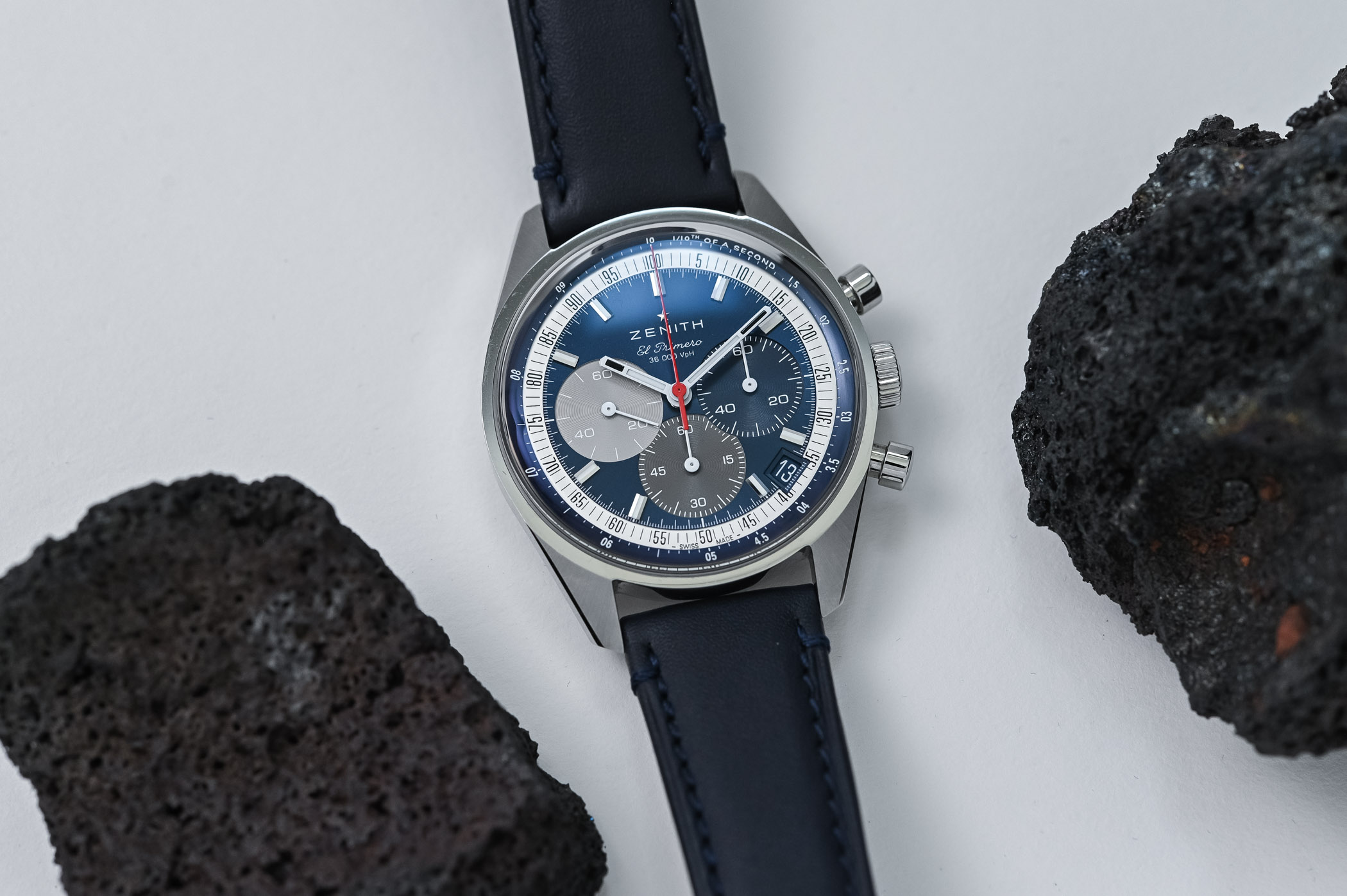
Vintage Watches: A 1970s Zenith El Primero Ref. A386, A 1970s Cartier Gondole, And A 1960s Universal Genève Aero-Compax 'Type B'
Fifteen (new) vintage watches to peruse in the HODINKEE Shop.
43,273 articles · 258 videos found · page 944 of 1452
Hodinkee
Fifteen (new) vintage watches to peruse in the HODINKEE Shop.
Deployant
Full hands-on review with analysis and live photographs of the Panerai Lo Scienziato Luminor 1950 Tourbillon GMT PAM 578
Teddy Baldassarre
Chronograph watches are among the most popular styles of timepieces: iconic models like the Rolex Daytona, Omega Speedmaster, TAG Heuer Carrera, and Breitling Navitimer, for example, have become some of the most famous and collectible watches in the modern era and have contributed to the enduring appeal of the chronograph to generations of enthusiasts. If you're new to the watch game, however, you might be wondering not only what all the buzz is about but what these watches actually do that makes them so special. Read on for a comprehensive primer on chronograph watches, from their earliest ancestors to the most ambitious, avant-garde timekeeping technology available in chronographs today. Chronograph vs. Chronometer As I explore in depth in our guide to chronometers, one of the first hurdles to clear for newcomers to watch appreciation is the clarification of two very common horological categories: Chronometer and Chronograph. Quite simply, a chronometer (from the Greek chronos, meaning time, and meter, meaning measure) is any watch or clock that keeps reliably accurate time, usually as determined by an outside independent testing agency, whereas a chronograph (from chronos and graph, i.e., to “write time”) is any watch or clock with the ability to track and record intervals of time, aka a stopwatch. The terms are not interchangeable but they are also not mutually exclusive: a watch equipped with chronograph functions can also be a chronometer if it has met a s...
Deployant
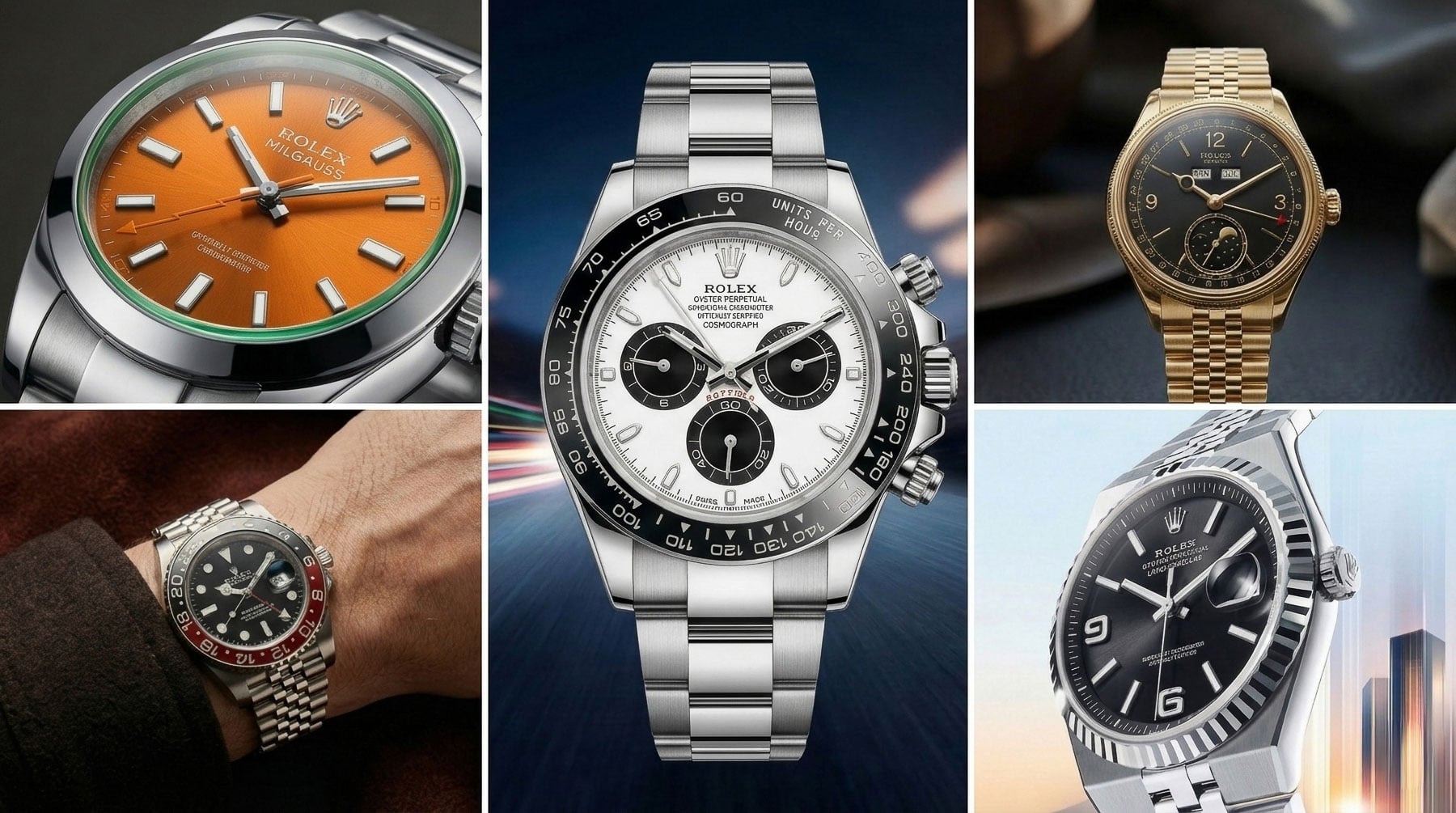
In this year’s Watches and Wonders 2023, Rolex has introduced its new line-up – with highlights from the all-new Perpetual 1908 collection, as well as interesting updates and variants to the Daytona, Yacht-Master, Oyster Perpetual, and Day-Date series. Mark our words, you are looking at the beginning of a new era for Rolex. Press ReleaseRead More
Deployant
SIHH 2015: Panerai PAM 603 Mare Nostrum Titanio
Teddy Baldassarre
In partnership with Phillips auction house, Roger Federer, and Leonardo DiCaprio to benefit the Federer Foundation and Re:wildMore
Quill & Pad
Out of the Big Three, Patek Philippe prices fell the most in both the past month and past year. Audemars Piguet prices were effectively flat in February, and Rolex prices rose very slightly.
Time+Tide
One of the more intriguing releases from Tudor this year - and one that didn’t get quite the attention it otherwise would have, thanks to the show-stealing GMT - was the classically styled 1926. Taking its name from the year the Tudor name was registered, it also owes some design cues to this golden era … ContinuedThe post VIDEO: Tudor’s 1926 is a classic charmer appeared first on Time+Tide Watches.
Deployant
Introducing 2 special editions from Officine Panerai. The Panerai PAM 662 Radiomir 1940 3 Days Acciaio & PAM 663 Luminor 1950 3 Days Acciaio
Deployant
The Panerai Radiomir 1940 10 Days GMT Automatic Oro Rosso Editions from Watches and Wonders
Quill & Pad
If John Keil was to recommend a brand-new functional diver’s watch to a friend who was looking to spend within a certain price range, these would be his suggestions. Or, more specifically, here is what he would purchase himself in a variety of price categories.
Hodinkee
Until now.
Quill & Pad
If John Keil was to recommend a brand-new functional diver’s watch to a friend who was looking to spend within a certain price range, these would be his suggestions. Or, more specifically, here is what he would purchase himself in a variety of price categories.
Revolution’s editors pick holiday watches for each other - in secret.
SJX Watches
The Roger Dubuis (RD) Excalibur Biretrograde Perpetual Calendar is something of a bridge across eras for RD, combining the brand’s seminal biretrograde calendar format with the 2000s-era Excalibur case, executed in RD’s current lavishly layered house style. The revised perpetual calendar module brings plenty of haute horlogerie finishing to the dial side, and should prove more reliable than past iterations as well. Initial thoughts The Excalibur Biretrograde Perpetual is a new model, but it feels like a watch that has always been around, combining several familiar Roger Dubuis elements. Chief among them is the biretrograde format, which has been a staple of the brand since its founding era. When the Excalibur Biretrograde Calendar debuted last year, we speculated that a perpetual version was likely in the pipeline, and we didn’t have to wait long to find out. In terms of design, it’s pure RD through and through. The brand has offered glimpses of a return to its roots — the Hommage La Placide was well-received by neo-vintage enthusiasts — but it’s clear the brand remains committed to this bolder, more flamboyant vision of haute horlogerie that it has been championing since the launch of the Excalibur in 2005, albeit at a smaller size. Of course, the design won’t appeal to everyone, but that might be a good thing. Taste convergence favours the classics, but the polarising Excalibur aesthetic will appeal to those who appreciate traditional watchmaking but are ...
Hodinkee
There are a handful of people in the watch industry whose fingerprints are on nearly every era of watchmaking and enthusiasm, and Michael Friedman is one of them. He's been the kid in the archives of the National Watch and Clock Museum, the specialist at Christie's fielding calls from Eric Clapton, the American who moved to Switzerland to become Audemars Piguet's Head of Complications, and, as of this year, the founder of his own independent watch company. Somewhere in between, he became the answer to a trivia question about a Kendrick Lamar lyric. Friedman will tell you none of that was the plan. Instead, it's the result of a decades-long fascination with why humans decided time was worth decorating in the first place, and he's spent every job since trying to answer that question from a different angle. That fascination started at Clark University in the 1990s, not in a watchmaking program but in a psychology class, where a professor named Bernie Kaplan got Friedman thinking about pattern recognition. From there he wandered into time theory: how different cultures measured it, ordered it, gave it meaning. The throughline he kept coming back to was that objects built to track time, like water clocks, obelisks, and wristwatches, have always been embellished, regardless of what they were worth. That idea, that timekeeping and decoration are inseparable, has quietly run underneath everything Friedman has done since, from advising Clapton on vintage Patek Philippe and Rolex at...
Fratello
Chronoswiss unveils two new stone-dial configurations for its Small Second collection — the Small Second Jasper and Serpentine. These two watches mark the first use of natural stone dials in the brand’s Modern Mechanical era. Each limited edition of 50 pieces retains the same 40 × 50 × 11.5mm case introduced in 2025. Along with […] Visit Chronoswiss Recalls Its Rich History Through Two Stone-Dial Small Second Novelties to read the full article.
SJX Watches
Twenty twenty-six has been a milestone year for Rolex, which is celebrating the 100th anniversary of its signature Oyster case with several commemorative models. While not as innovative as the enamel-dialled Daytona or as surprising as the revised Yacht-Master II, the Oyster Perpetual Day-Date 40 dresses the brand’s flagship time-only watch in a new proprietary gold alloy dubbed “Jubilee” gold and an aventurine stone dial. Initial thoughts Stone dials are everywhere, but as usual Rolex has found a way to stand out by using an unusual mineral. Most brands today source the same few varieties of stone — especially malachite and tiger’s eye — from the same few suppliers, resulting in stone-dialled watches that tend to resemble one another. But with its unusual aventurine dial and muted Jubilee gold case and bracelet, there’s no mistaking the Day-Date 40 for anything else. And this is also actually aventurine stone, rather than the more commonly used and less expensive aventurine glass. The exotic dial and proprietary alloy give the new Day-Date 40 a look that is both distinctive yet coherent with the rest of the collection. Many key Rolex models are perpetually out of stock, underscoring the brand’s commitment to value. While it might seem disingenuous to describe a US$65,700 time-only watch as a good value, the Day-Date 40 in Jubilee gold makes a case for itself. In a perfect world with on-demand availability, this would be a strong value proposition. The A. L...
WatchRider
Citizen has added a limited-edition chapter to the sportier side of the Tsuyosa family. Reference NJ0238-57E is officially called the Tsuyosa Shore, but its textured gradient-black dial, warm gold-coloured accents and steel bracelet give it a noticeably more vintage character than the bright colours usually associated with the collection. A darker Tsuyosa Shore The theme is “Time Slip,” Citizen’s description of a design intended to feel as though it has travelled back from another era. The black dial has a grainy surface rather than a flat glossy finish, while the gold-coloured hands, applied hour markers and bezel scale add warmth without using artificial patina. A cyclops magnifier sits over the date at three o’clock, and the broad markers keep the watch easy to read. This is not simply a standard Tsuyosa with a different dial. The 40 mm stainless-steel case carries a 120-click, unidirectional rotating bezel, making the Shore look closer to a compact retro sports watch. Citizen specifies a thickness of 12.5 mm and a weight of 149 grams. The three-link steel bracelet uses a push-button triple-fold clasp and fits wrists from 142 to 206 mm. Built for everyday water use A sapphire crystal protects the dial, and both the hands and hour markers are luminous. Water resistance is rated at 10 bar, or 100 metres, so swimming and normal water-side use are within its remit. It should not be mistaken for a professional ISO-certified dive watch, but the rotating bezel, strong ...
Hodinkee
What We Know Amida keeps finding new ways to update and reinvent the classic Digitrend driving watch. When we last heard from the brand, they had fashioned a model inspired by the NASA space shuttle missions, a timepiece that demonstrated the range of design and development possibilities of the Digitrend format, which first debuted in the pre-shuttle era way back in 1976 at Basel. Now, it seems, Amida has seen the light. Or rather, it's seen the way to add luminescence material to an open-worked version of the digital jump hour timepiece with the Digitrend OSII Black. Featuring an open sapphire hood showing the DLC-coated workings of the movement and Amida's in-house developed jump hour module, the new model uses an LRD or 'light reflecting display' utilizing prismatic technology that illuminates the digital numerals via Super-LumiNova, for the first time. The Digitrend has never been a watch for everyone. It's quirky, and its time-reading display is unusual, to say the least. But the addition of lume certainly adds to its functionality and represents a welcome upgrade for this new edition that is limited to 150 pieces and goes on sale today on Amida's website. The brand and co-founder Matthieu Allègre say the ongoing improvements, revisions, and tweaks to the Digitrend model line shouldn't be seen as merely more refined or robust versions of the original. Rather, they're designing and producing the model as it would have evolved had the original brand not been am...
Hodinkee
Go Knicks. That is all. Scorekeeping last week's picks: the Grand Seiko sold for $29,700; the Patek Philippe 570 is still available; the Certina CD sold for €120; and the LeCoultre Uniplan sold, but the auction house didn't upload the final price. Strays Photo courtesy Goodwill. Here's a Breguet Classique 5907 on Goodwill. Yes, a Goodwill in Minnesota received, as a donation, a solid-gold Breguet with a four-day power reserve, a manual-wind 510DR movement, a full guilloché dial, Breguet hands, and, as if all that weren't enough, the watch comes with its original box. As Warren G advised, mount up. Beyond that heavy-duty watch in the least likely place, this Dodane Diver is very cool, and this Vincent Calabrese (who also made the Corum Golden Bridge) Wandering Jump Hour on Meticulist is incredibly cool. Apparently, it's my time—or a good time generally—to be excited by rectangular-cased non-Reverso JLC models, and if you've been after a Juvenia Architect, this one seems like it'll be gorgeous once it's cleaned up a bit. I don't know anyone who collects Verity watches, but this diver sure looks great with its classic Monnin case and—there's no other word for it—rad hand set. Finally, here's another IYKYK from Zenith, this time a 40T, which has absolutely nothing going for it other than a beautiful, simple case and a dial marking beneath the handset that has to be one of the coolest movement-related badges on any model I'm aware of. In an effort to balance out last...
SJX Watches
Rolex commands a lot of attention during Watches & Wonders, and this year much of the focus was on the enamel-dialled Daytona — a high-tech, high-priced, off-catalogue variant of one of the hottest watches in the industry. But the brand’s other chronograph, the Oyster Perpetual Yacht-Master II, also got a much-needed — but still unexpected — makeover, transforming it from an ugly duckling into a compelling chronograph for the contrarian collector. Initial thoughts Despite the pre-event teaser posted to social media, the launch of an updated Yacht-Master II still managed to feel like a surprise. The original Yacht-Master II debuted in the pre-financial crisis exuberance of 2007 and exemplified the tastes of the era, being something of the Royal Oak Offshore of the Rolex line-up. It was big and brash but offered enough technical substance to stay intellectually relevant, even as the model lost enthusiasm in collector circles before its discontinuation in 2024. The updated Yacht-Master II improves on the original in every way, dialing back the ostentation and doubling down on the technical merit. The new Yacht-Master II is available in stainless steel or full 18k yellow gold, and offers a decent value proposition in either configuration given the technical sophistication of the calibre and the high quality of make. As the standard-bearer of the luxury watch industry, Rolex could charge more than it does and the brand’s restraint is notable. The full-gold ref. 1266...
SJX Watches
During Watches & Wonders, all eyes are on the major brands exhibiting inside the cavernous Palexpo. Episode 38 of the SJX Podcast rounds up the highlights from the smaller fairs like AHCI and Time to Watches, and the independents exhibiting on their own around town. Among the standouts were Mathieu Cleguer, who debuted a novel escapement of his own design, Dominique Renaud who launched a 1 Hz balance, and Franc Vila, who seems to be entering a new era of creativity. Listen now on Apple Podcasts, Spotify, and YouTube.
SJX Watches
Episode 37 of the SJX Podcast recaps the biggest releases from the brands officially exhibiting at Watches & Wonders 2026. Rolex marked a century of the Oyster case with an enamel-dialled Daytona and new Oyster Perpetuals, but also revised the ugly duckling of the catalogue — the Yacht-Master II — transforming it into an appealing and interesting chronograph. Patek Philippe arguably overshadowed the 50th anniversary of the Nautilus with a new Celestial that’s capable of tracking sunrise and sunset year-round (at least in Geneva). Vacheron Constantin and Grand Seiko introduced titanium sports watches many had been waiting for, and TAG Heuer reinvented the chronograph with a fascinating compliant mechanism. Highlights from the independent brands exhibiting around town will be covered in our next episode. Listen now on Apple Podcasts, Spotify, and YouTube.
SJX Watches
The biggest booth at Watches & Wonders 2026 (W&W;) belonged to Rolex, as it always does. Looming three stories high, the Rolex booth was home to some of the most talked-about and polarising watches of the fair, as it always is. Rolex took the occasion of the centenary of its water-resistant Oyster case to roll out a line-up of surprising watches, perhaps the most unexpected from Rolex in a while. The collection included a Daytona with a fired enamel dial, Boetti-esque Oyster Perpetual, and a return of the little-loved but technically impressive Yachtmaster II. The vast, three-story Rolex booth. Image – Watches & Wonders In a first, Rolex gave its popular sports chronograph a vitreous enamel dial, or grand feu enamel in watchmaking parlance. The industrial and engineering achievement is impressive; it’s not just a new livery and this Daytona is more than meets the eye. The enamel is melted glass, as is tradition, but instead of a metal base, the enamel is on a ceramic substrate that is in turn mounted on a brass plate. While there is some debate whether the ceramic substrate makes it enamel in the traditional sense of the word, I consider it enamel. The new enamel dial harks back to the “porcelain” dial Daytona of yore More importantly, the key characteristic of the dial is thinness, recording-setting thinness in fact, which means that Rolex has achieved an enamel dial with all of the qualities of enamel, lustre, fade-resistance, colour, without compromising thicknes...
SJX Watches
Accomplished movement constructor Dominique Renaud makes a compelling return with the Pulse 60, a slow-beating timepiece featuring a 1 Hz oscillator. An important name in the post-quartz era, Mr Renaud has recently re-emerged alongside Julien Tixier under the Renaud Tixier brand. The Pulse 60 marks his first signed watch in nearly a decade — following the million-dollar DR01 Twelve First, which resulted in a single unique piece. Initial thoughts When speaking today of advancing the theory and practice of horology, the conversation usually centres around cutting-edge materials, novel tribology research or reimagined complications. The Dominique Renaud (DR) Pulse 60 contradicts this trend and instead goes back in time to put a new spin on an old idea. The slow beating 1 Hz Pulse 60 bets on classic chronometry, when heavy balances paired to slow and steady running rates were the champions of precision. Going one step further, DR slowed the oscillator to 1 Hz — or just one oscillation per second. In the era of ever-higher frequencies, the counterintuitive choice seems at first like a deliberate act of self-sabotage. But after analysing the novel movement in the Pulse 60, it’s my opinion that it should prove to be a reliable timekeeper, and more than just a proof of concept. After Antoine Martin’s ill-fated Slow Runner, DR has produced a fully functioning 1 Hz timepiece by employing a smaller balance and — crucially — raising the amplitude ceiling to over 360°....
SJX Watches
True to form, IWC has expanded the Ingenieur Automatic 35 with two new references: a blue dial that completes the mid-sized lineup’s colour palette, and the first gem-set Ingenieur of the modern era. Both are straightforward line extensions but should prove commercially successful, especially in the context of current trends favouring smaller watches. Initial thoughts Vintage watch enthusiasts and buyers with smaller wrists will appreciate these additions to the catalogue, though many mainstream watch buyers dismiss any watch under 36 mm out of hand. That instinct is understandable, but misleading here: integrated bracelet watches wear more substantially than their diameters tend to suggest, and the Ingenieur 35 is a watch best understood on the wrist rather than on paper. With the introduction of a diamond-set two-tone reference, it appears IWC is positioning this size as the unisex choice for both men and women while exploring new formats for a broader appeal. New references in the Ingenieur lineup have arrived in a recognisable pattern. Reintroduced in 2023, the current-generation Ingenieur draws on the design language of Gerald Genta’s original but in a 40 mm steel case, offered from launch with silver and black-dialled variants. The ever-popular blue dial joined the 40 mm lineup a year after the collection’s refresh. The 35 mm size is following a similar pattern after launching last year with black and silver dial options. Inevitably blue The ref. IW324907 will ...
SJX Watches
One of the most influential watchmakers of the post-quartz era has re-emerged with a groundbreaking slow-beat oscillator that cleverly avoids the amplitude constraints typical of such constructions. The Pulse60 is the latest project from Dominique Renaud’s eponymous workshop Haute Horlogerie Dominique Renaud (HHDR), and the first watch to bear his full name in a decade. The Pulse60 runs at just 7,200 times per hour - a frequency of just 1 Hz – a quarter the rate of a conventional movement. Ordinarily, such a slow beat would leave the movement susceptible to external forces, but here it has been combined with a proprietary escapement that overcomes the challenge. While the technical ingenuity is expected given Mr Renaud’s pedigree, the relatively accessible price of under CHF50,000 is unexpected, especially given the state of the market today. Initial thoughts It’s been a decade since Dominique Renaud came out of retirement, but his most public contributions since then have come under the Renaud Tixier banner. Latecomers to independent watchmaking may be less familiar with Mr Renaud’s work, but he played an important role in establishing the contemporary high-end watchmaking landscape. The Pulse60 is the first watch to carry the Dominique Renaud name since the exotic and expensive DR01 Twelve First, which was not made in significant numbers. But unlike its short-lived predecessor, which featured a low-amplitude, high-frequency escapement of Mr Renaud’s own des...
Fratello
There’s something about a tuxedo dial that always gets under my skin. That high-contrast, black-and-white look - usually a dark perimeter surrounding a lighter center - evokes more than legibility; it conjures an entire era of design. Think black-tie parties, cocktail hours, and the sort of aesthetic self-assurance only true contrast can deliver. In the […] Visit Five Tuxedo-Dial Watches To Bring That 20th-Century Charm Back to read the full article.
Teddy Baldassarre
To many watch enthusiasts today, Nivada Grenchen is a boutique watchmaker that seemed to pop up out of nowhere several years ago and quickly found itself in the neo-vintage price-to-value conversation, alongside a handful of other start-up microbrands. But in actuality, the brand turns 100 years old this year, and its retro-stylish, mostly tool-oriented watches are not merely following a trend of evoking a fondly remembered era of watch design; they are actually modern remakes of watches that the brand released decades ago. [toc-section heading="Nivada Grenchen History & Highlights"] Watchmaker Jacob Schneider established the workshop that became the Nivada brand in 1926, in the Swiss town of Grenchen (its Swiss-German name; the French-Swiss call it “Granges”). Unlike many of its contemporaries, which were still focusing on high-luxury timepieces, Nivada Grenchen put its emphasis from the start on practical, reliable tool watches, quickly gaining acclaim for its developments in this area. Schneider’s company also was among the first to merge traditional Swiss watchmaking techniques with emerging industrial technologies. Starting in the 1930s, Nivada Grenchen became one of the first Swiss watchmaking companies to mass produce watches with automatic movements - an invention that had only been around since John Harwood patented the first one in 1923. Nivada Grenchen (the “Grenchen” was officially added to the brand name after litigation by Movado, which was conc...
Question, suggestion, or just want to say hi? Drop a note.