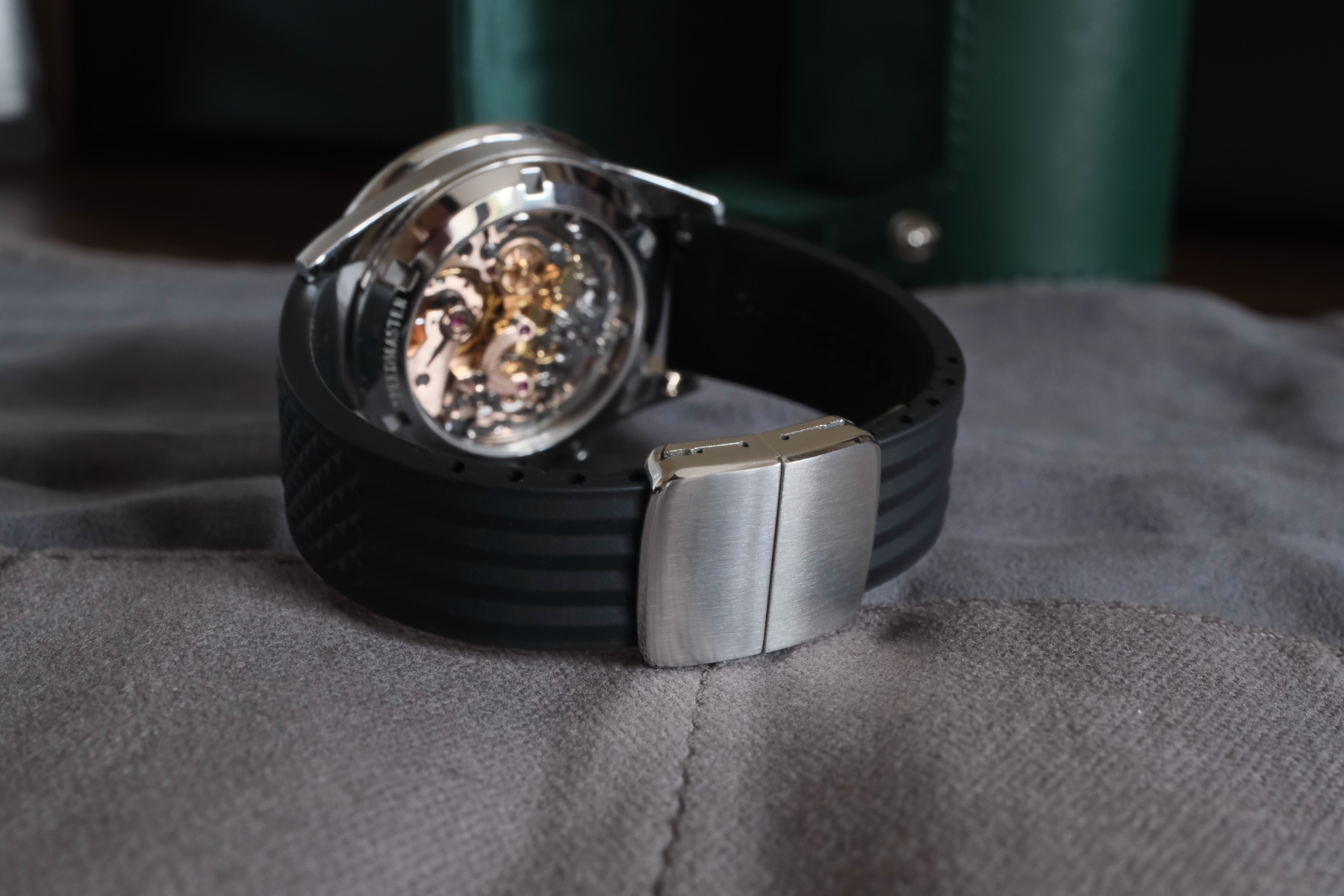
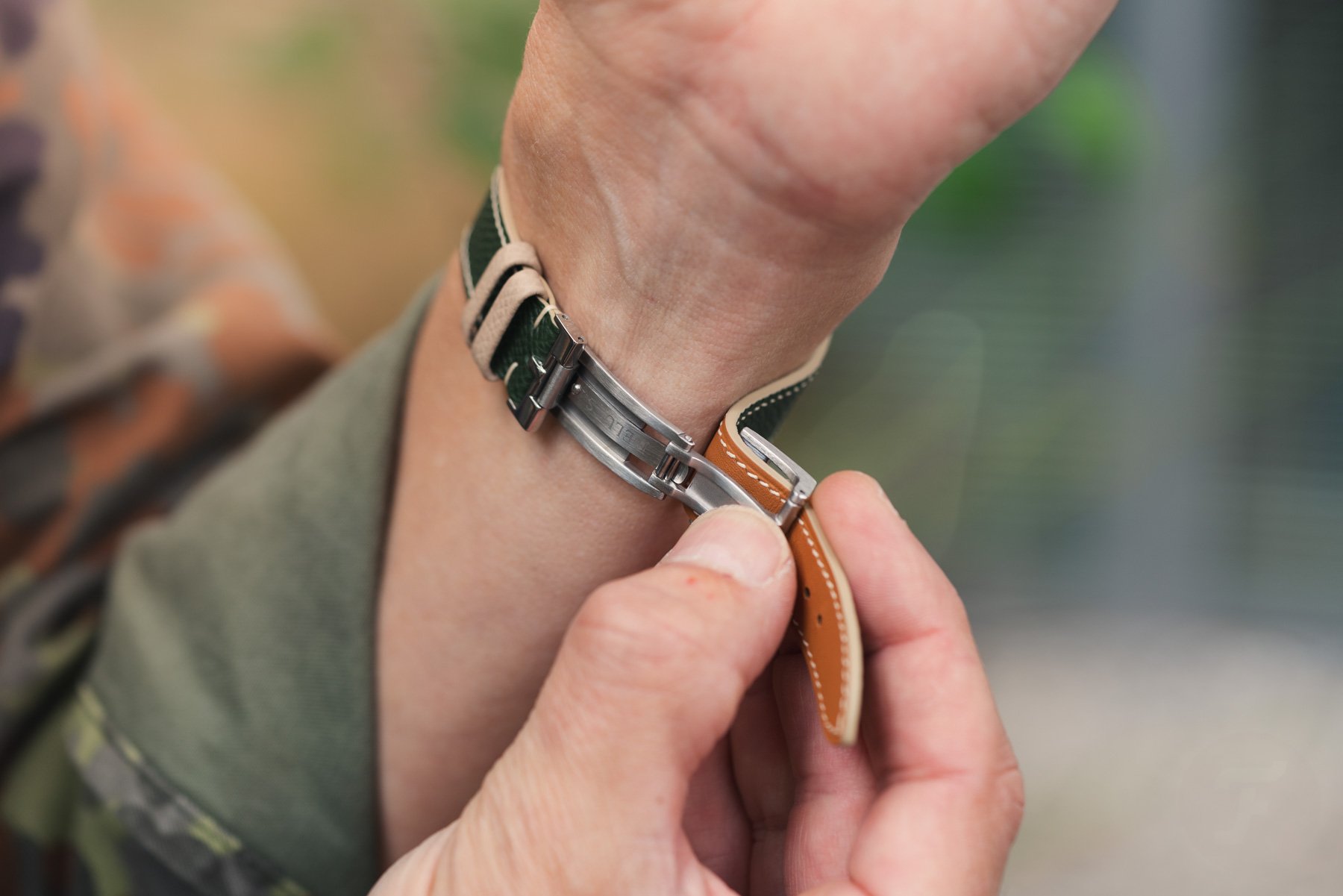
The deployant clasp was patented by Louis Cartier in 1910 for the Cartier Santos, the wristwatch designed for aviator Alberto Santos-Dumont. The original mechanism solved a specific problem: a pilot couldn't easily fasten a buckle while flying, and the leather strap on a buckled watch wore through quickly from repeated cycling through the same hole. Cartier's clasp was a hinged metal frame that folded flat to open and clicked shut to close, with a single setup-time leather adjustment that the wearer never needed to repeat.
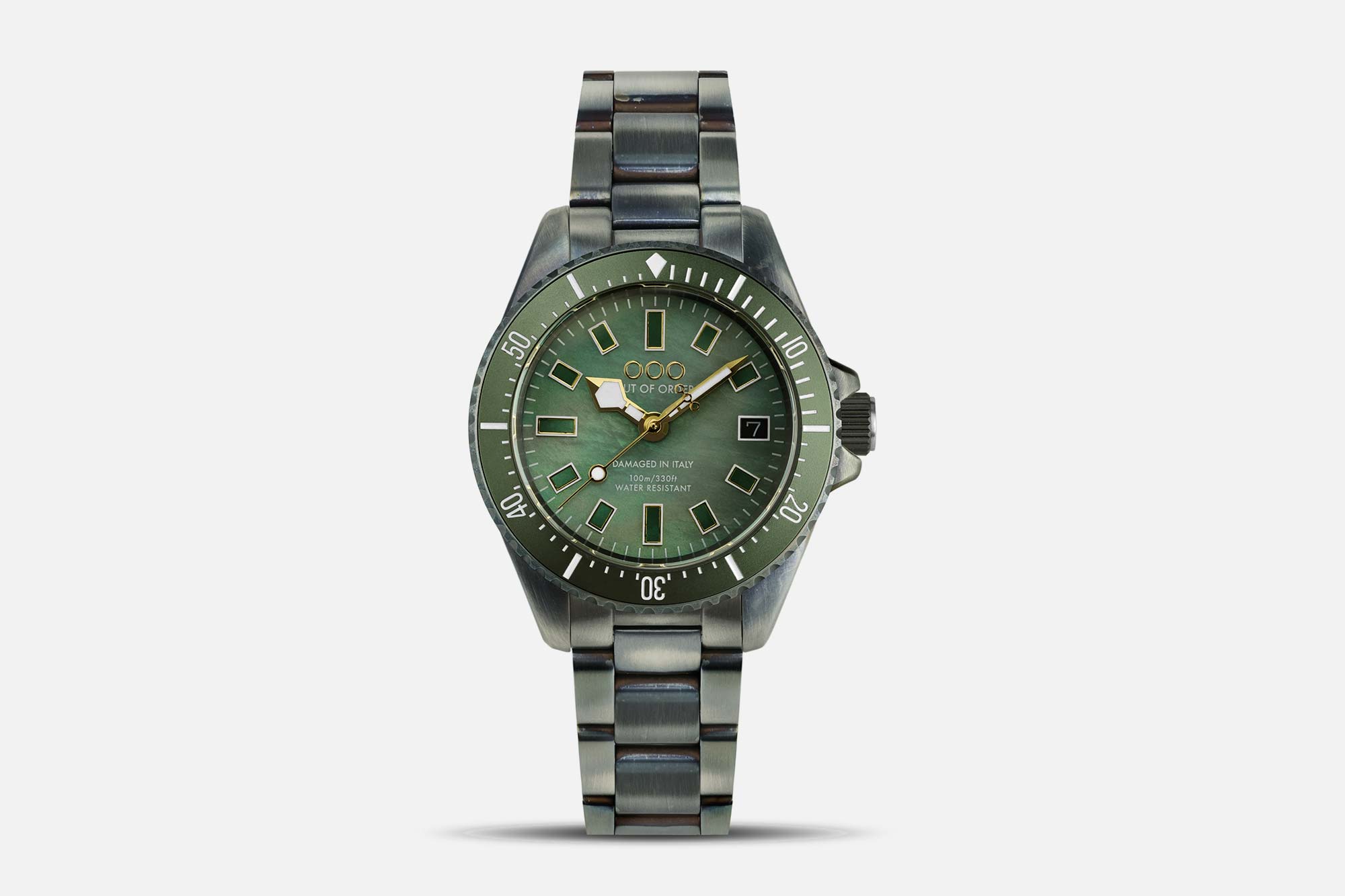
Modern variants split into three families. The butterfly deployant has a central pivot with two folding wings, opening symmetrically; this is the most common luxury-strap configuration. The single-fold (also called the 'tang deployant') has a single hinge with the buckle plate at one end; this is used on smaller-wrist applications and where strap thickness is a concern. The diver-extension clasp on dive bracelets adds a sliding spring extension that lets the wearer accommodate a wetsuit; the same component is found on Rolex's Glidelock, the Tudor T-fit, the Omega Comfort Adjust, and the Seiko Marinemaster.



Comments 1