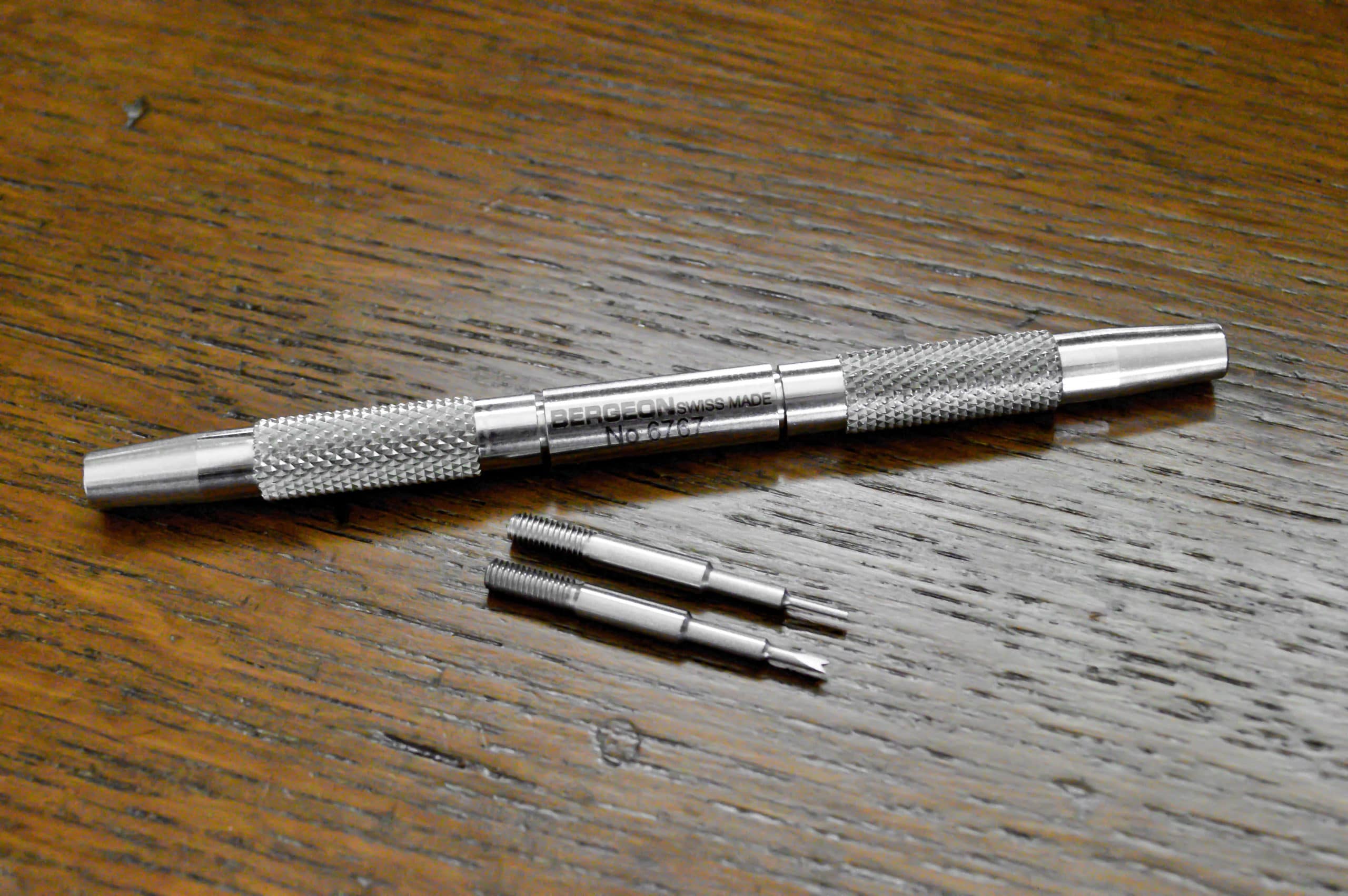
A standard spring bar consists of a hollow steel tube ~1.5-2mm in diameter, internal coil spring, and two telescoping flanged ends. The flanged ends sit in small drilled holes on the inner faces of the watch's lugs. To install or remove a strap, the user uses a forked spring-bar tool to compress one end, freeing the bar from the lug hole. Bar diameter is typically standard (~1.5mm), so the principal sizing variable is length: the bar must match the watch's lug width (the inner distance between the lugs).
Common variants: standard double-flange bars (most watches); shoulderless ('fat') bars, used in dive watches with fixed-bar lugs and certain vintage references; quick-release bars with small sliding tabs that retract the flanges by fingertip pressure (avoid the spring-bar tool, though the bar is otherwise standard). Bar quality varies significantly: cheap bars deform or develop spring fatigue, while watch-brand-original or known-quality aftermarket bars (Bergeon, Watchgecko) hold their springs reliably for years. Replacing spring bars every 2-5 years on heavily-worn watches is a common recommendation.




Comments 1