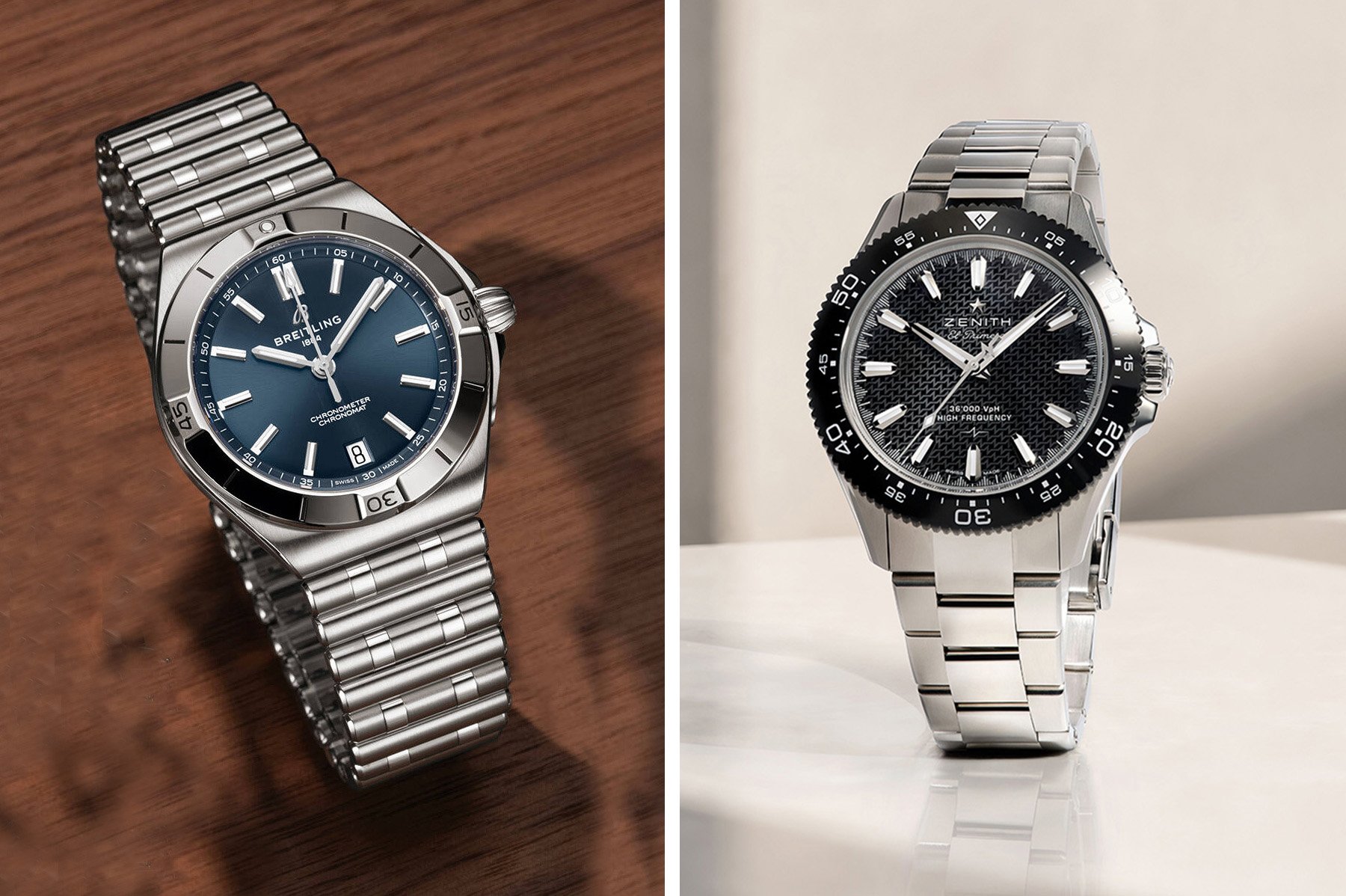
Breitling entered the 1980s in serious trouble. The Quartz Crisis had devastated the brand; founder Willy Breitling sold the company to Ernest Schneider in 1979, and the new owner needed a flagship reference to relaunch the brand. The opportunity came from the Frecce Tricolori, the Italian Air Force's aerobatic display team, which approached Breitling in 1983 wanting a custom watch for the team. Schneider used the project as the launch platform for a new flagship: the Chronomat, designed by Schneider with Frecce Tricolori commander Maggiore Angeli, debuted at Baselworld 1984.
The Chronomat's defining design feature was the rotating bezel with four movable "riders": small bezel-mounted markers at 12, 3, 6, and 9 that the wearer could position by hand to mark a specific time on the bezel scale. The riders were a more rugged take on the conventional dive-bezel pip; they made the Chronomat instantly recognisable on the wrist. The bezel itself was bidirectional and could be used either as a tachymeter or as a timer reference, depending on which way the riders were set. The case was 40mm steel or steel + gold (more substantial than typical 1980s chronographs), the chronograph movement was the Lemania-derived Cal. 11, and the dial featured the brand's signature multiple-counter chronograph layout.
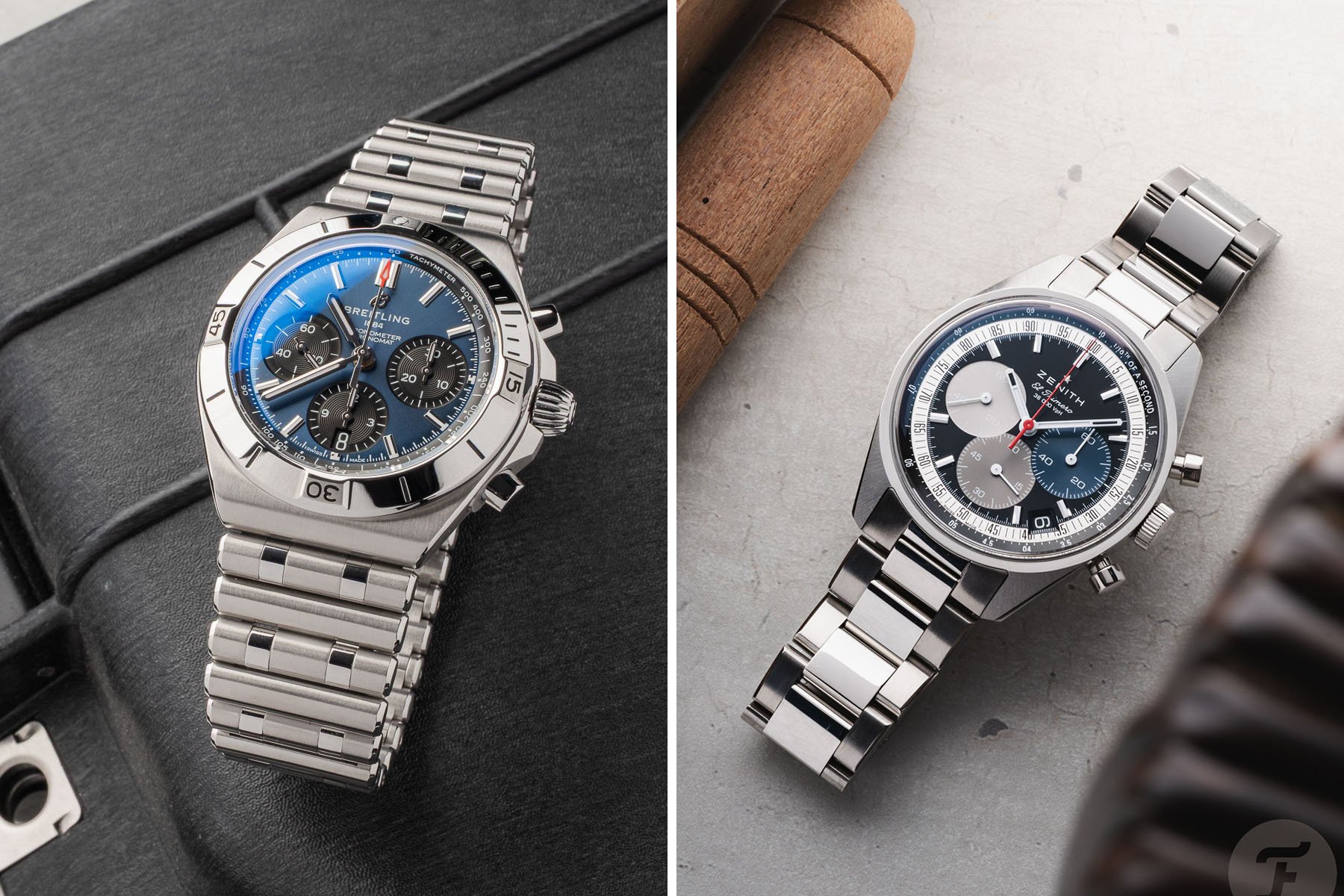
Through the late 1980s and 1990s, the Chronomat became Breitling's bestseller. The movement evolved through the Valjoux 7750 base in the late 1980s and 1990s (Cal. 13 in Breitling nomenclature), and then in 2009 to Breitling's first fully in-house chronograph movement, the Cal. B01: a column-wheel automatic with 70-hour power reserve and 30-minute counter at 3, 12-hour counter at 6, and small seconds at 9. The B01 immediately became the Chronomat's signature movement.
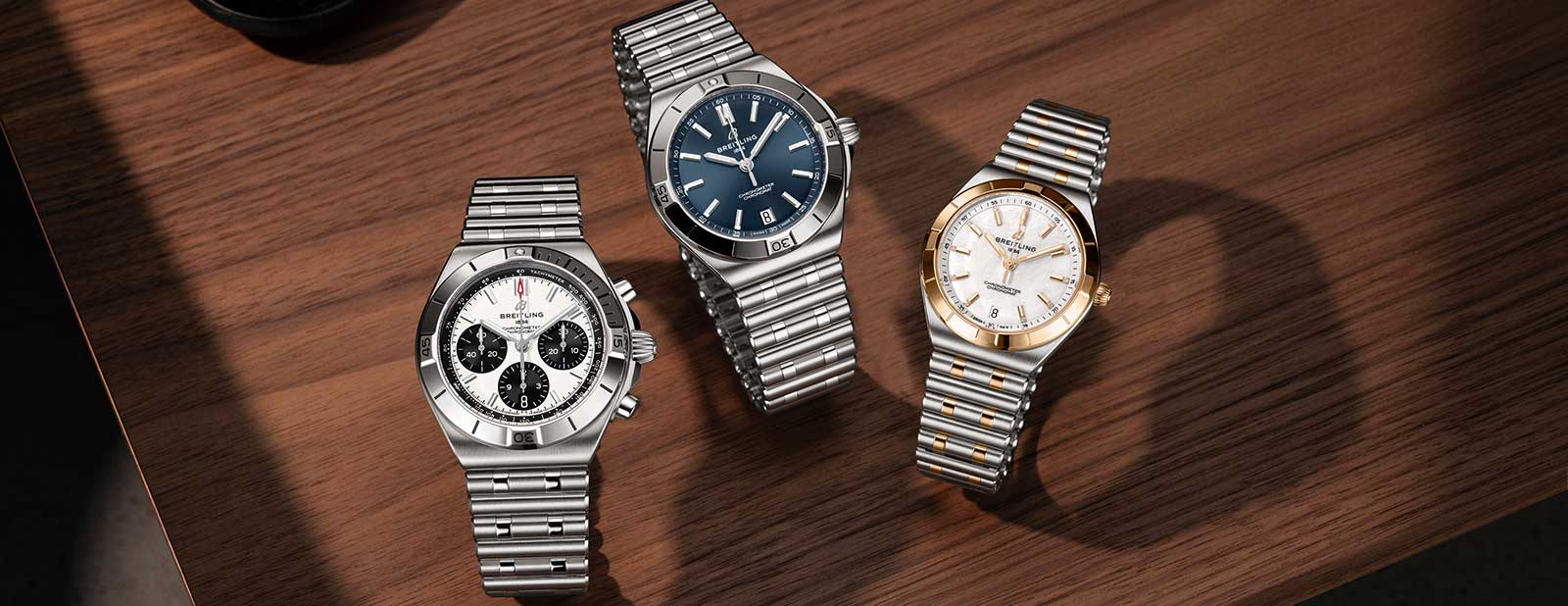
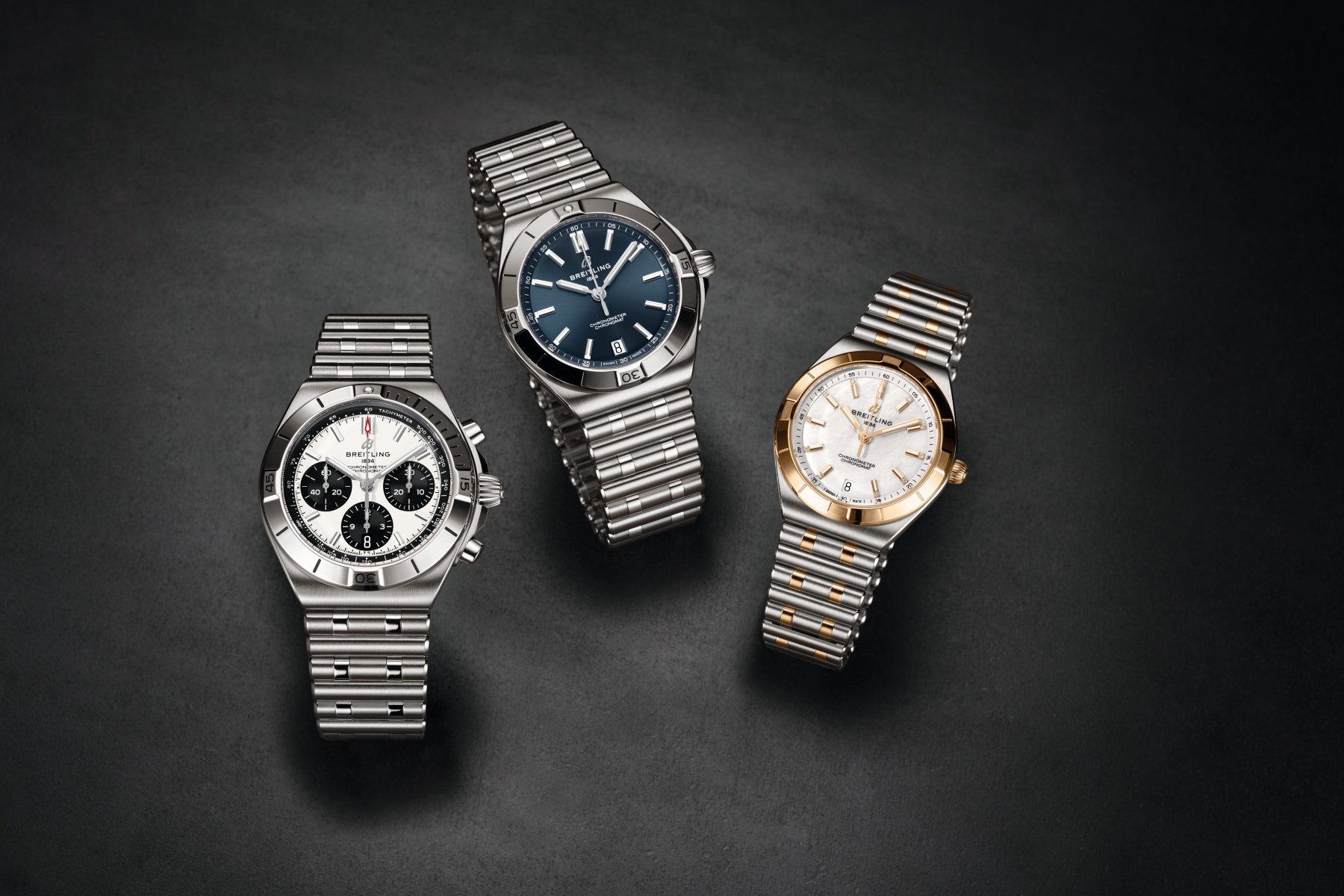
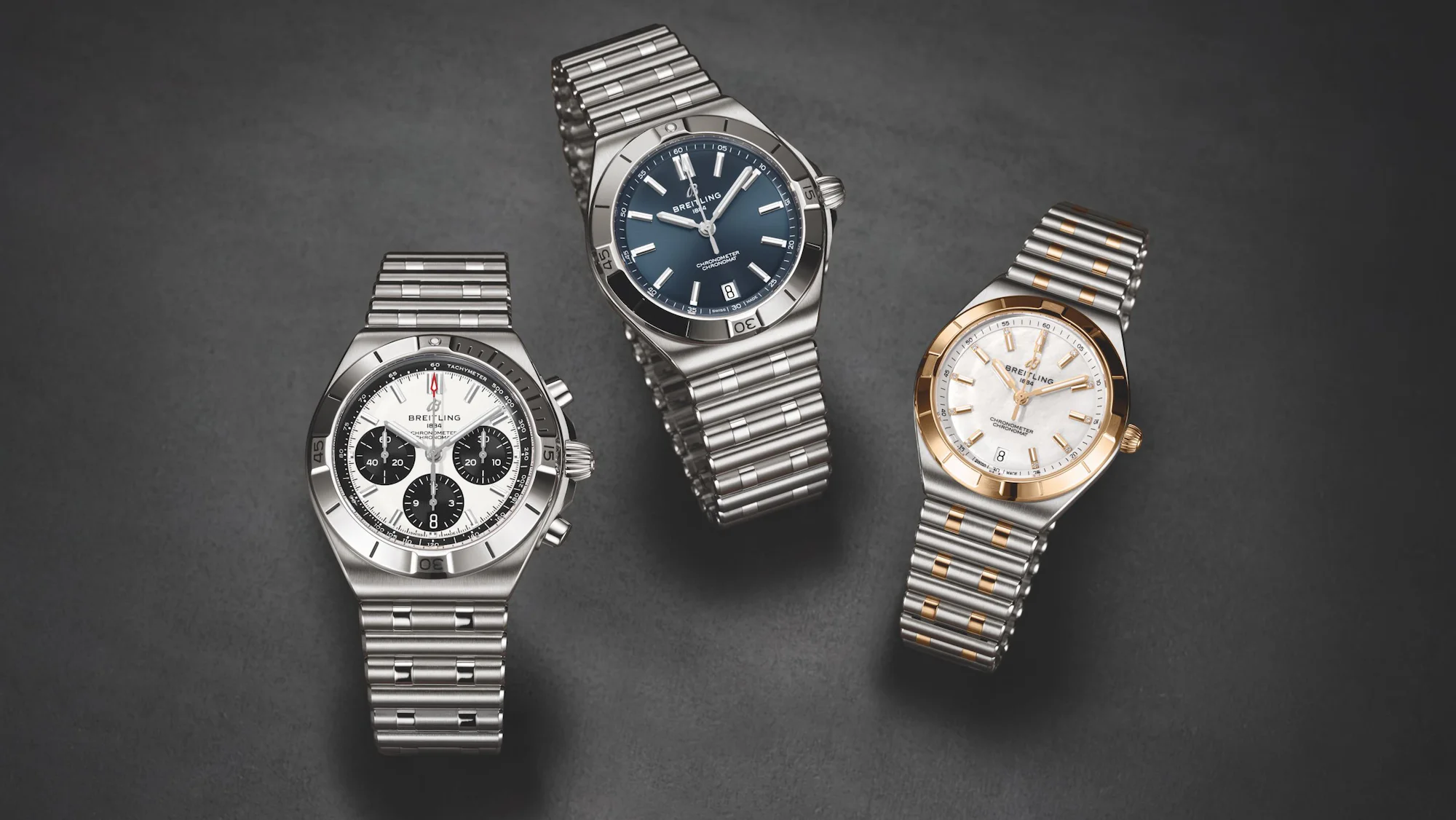
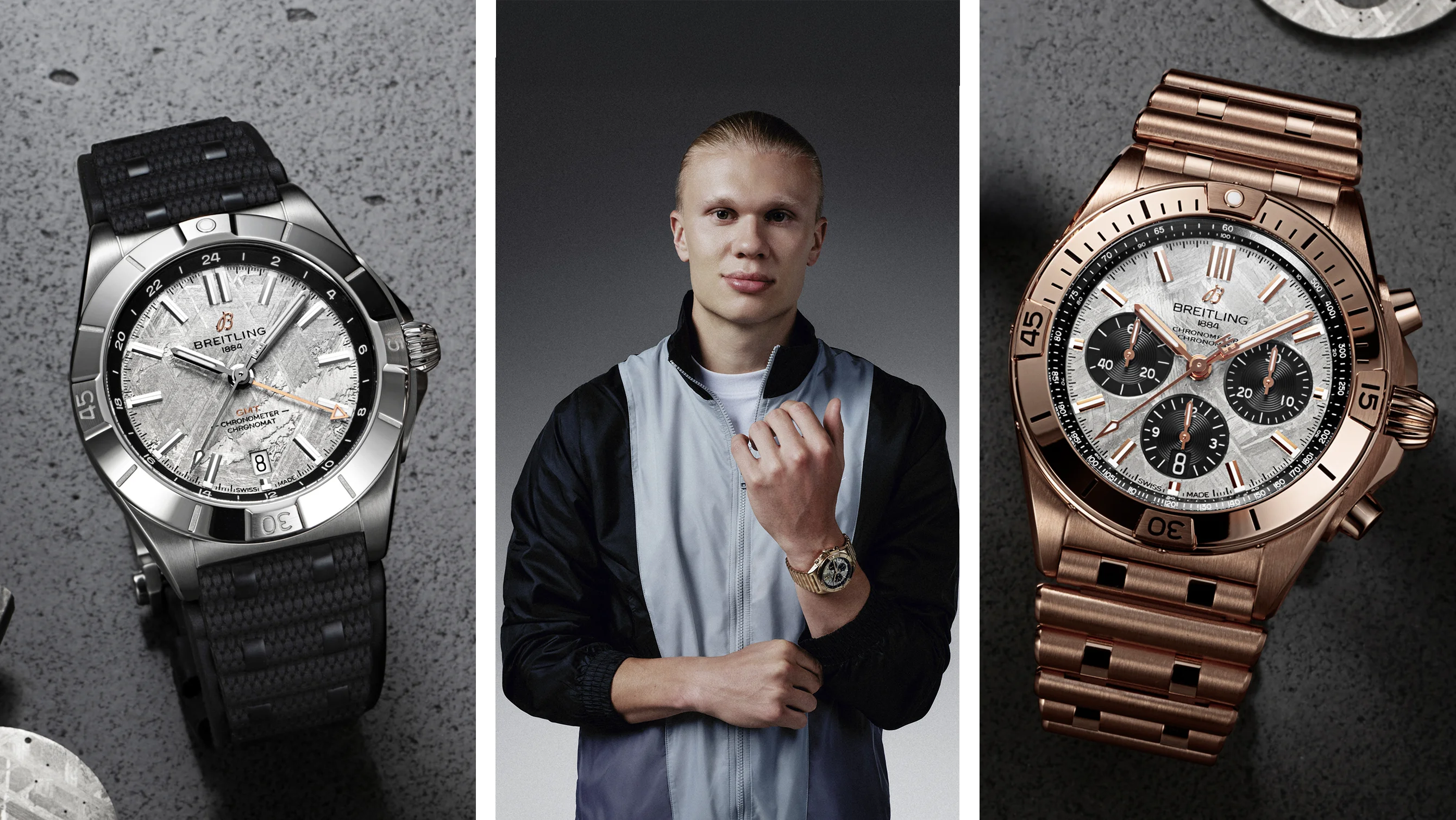
The Chronomat went through a major redesign in 2020 under new CEO Georges Kern. The case shrank from 44mm to 42mm (and a 40mm variant arrived) for slimmer proportions; the dial was simplified; the bracelet was redesigned as a Rouleaux-style seven-row beaded bracelet (replacing the Pilot bracelet of the 1990s-2010s); and the riders bezel was retained as the signature feature. The current Chronomat B01 42 (ref. AB0134) is the modern flagship; smaller 32mm and 36mm three-hand Chronomats target a broader demographic. Retail spans approximately USD 8,800 (B01 42 steel) to USD 25,000+ (red gold). The Chronomat is now Breitling's longest-running flagship at over 40 years.




Comments
No comments yet, be the first to weigh in.