Watch brandsWatch wikiWatch videosVariousWatch calendarSaved articles
WristBuzz Various Compare Rolex Explorer vs Tudor Ranger
⚖ Head-to-head comparison

Rolex Explorer 36 vs Tudor Ranger

Two minimalist 3/6/9 tool watches from sister brands. Rolex Explorer 36 at €7,300 against the much-cheaper Tudor Ranger at €2,900 — same DNA, very different price tier.

Updated 2026-06-15 By Ronald Calls, WristBuzz Editor
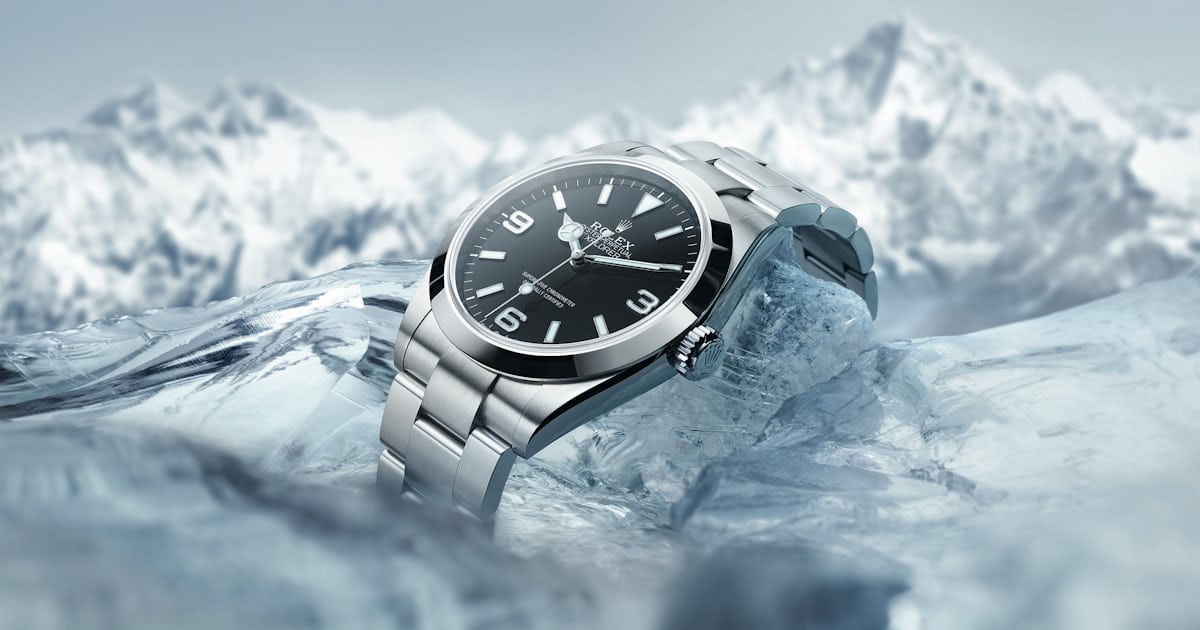
Rolex Explorer 36
Rolex

Explorer 36

124270 · 36mm · 100m
Introduced 1953 (Explorer); 2021 current 36mm ~€7,300
The Mt. Everest watch. Pure 3/6/9 dial.
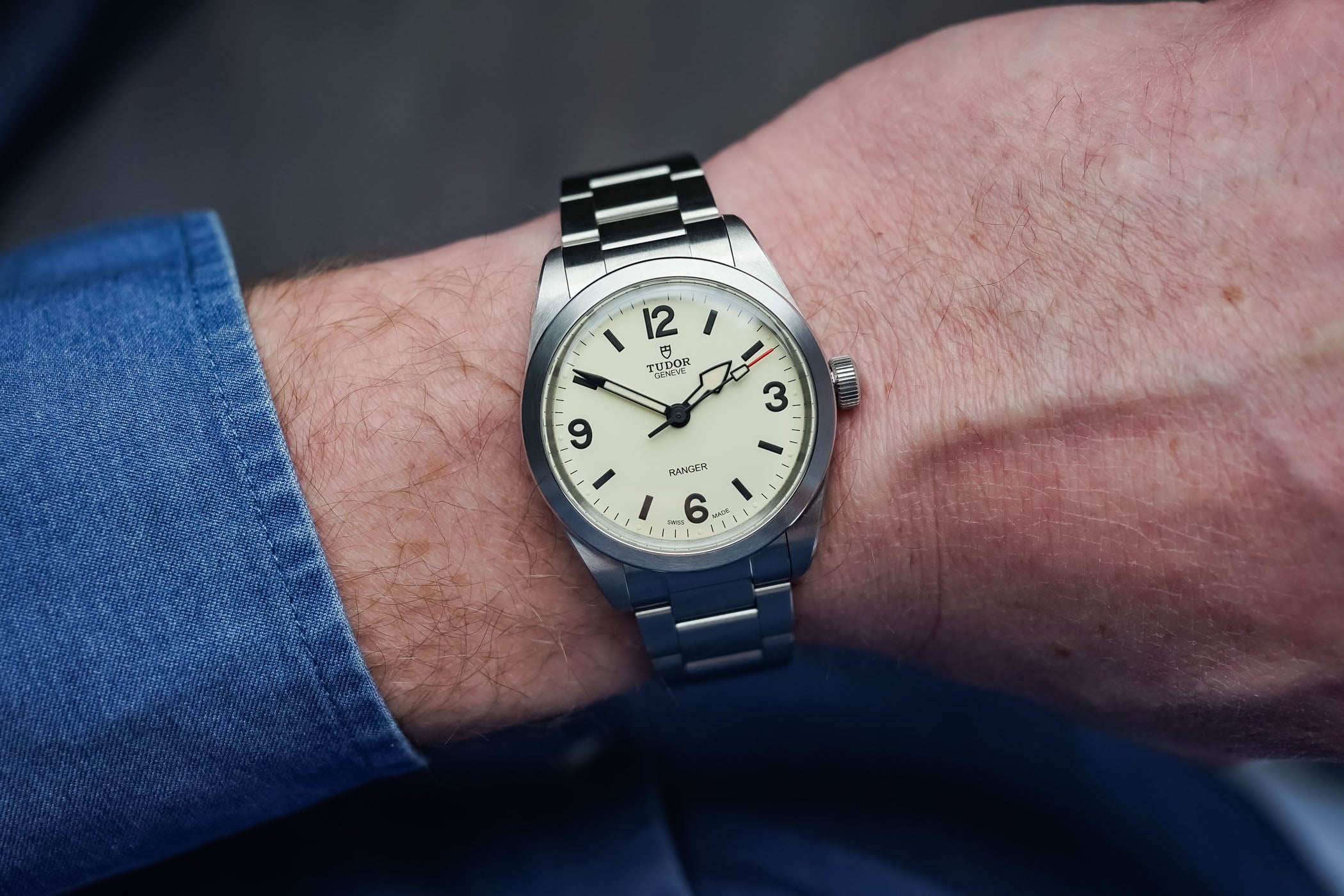
Tudor Ranger
Tudor

Ranger

M79950 · 39mm · 100m
Introduced 1967 (Ranger); 2022 current ref ~€2,900
Tudor's exploration-tool reissue.

Two sister-brand exploration tool watches

Both watches descend from the same 1950s exploration-tool template: black dial, 3/6/9 cardinal numerals, dauphine or pencil hands, no date, no rotating bezel. The Rolex Explorer launched in 1953 to commemorate the Hillary-Tenzing Mt. Everest summit; the Tudor Ranger followed in 1967 as the more accessible sister-brand exploration piece. Tudor reissued the Ranger in 2022 with the modern in-house Cal. MT5402.

Spec sheet

Attribute Rolex Explorer 36 Tudor Ranger
Reference 124270 M79950
Case diameter 36mm × 11.9mm 39mm × 12mm
Water resistance 100m 100m
Movement Cal. 3230 in-house Cal. MT5402 in-house
Reserve 70 hours 70 hours
Certification Superlative Chronometer (-2/+2) COSC (-4/+6)
Bracelet Oyster steel Steel, leather, fabric
Dial Black, 3/6/9 + Mercedes hands Black, 3/6/9 + dauphine hands
Retail ~€7,300 ~€2,900

Sizing decision

Explorer 36 at 36mm × 11.9mm is the canonical proportion (the size the watch was at from 1953 through ~2010, before the brief 39mm 214270 reference; Rolex returned to 36mm in 2021). Fits 6.0"-7.25" wrists.

Tudor Ranger at 39mm × 12mm sits in the modern-tool size range. Fits 6.5"-7.5" comfortably.

Movement and bracelet

Both run in-house calibres with 70-hour reserve. Rolex 3230 is rated tighter (-2/+2 vs Tudor's COSC -4/+6) and finished to a higher standard. Both Oyster-style bracelets (the Explorer's is the canonical Oyster; the Ranger ships with a steel bracelet, brown leather strap, and a fabric NATO at retail). Tudor's three-strap system at €2,900 retail is genuinely good value.

Resale and prestige

Explorer 36 is allocation-light at most ADs (it's not a Submariner or GMT-Master); secondary is roughly retail. Ranger has no allocation pressure. The Explorer carries the Rolex prestige; the Ranger carries Tudor's value-tool positioning.

Pros and cons

Explorer 36 · Pros
  • The 1953 exploration heritage
  • Rolex prestige and resale
  • Mercedes hands (the most-recognised Rolex hand-set)
  • Stronger -2/+2 chronometer rating
Explorer 36 · Cons
  • More expensive at €7,300
  • AD allocation matters at some boutiques
  • Single-strap option (Oyster bracelet only)
Ranger · Pros
  • Less than half the price at €2,900
  • 39mm fits more wrists
  • Three-strap retail option (steel/leather/fabric)
  • Same in-house manufacture (sister-brand)
Ranger · Cons
  • COSC rating only (vs Rolex Superlative)
  • Less prestige
  • Tool-finish a tier below Rolex

Verdict: which one?

If you want the Rolex prestige and the canonical 36mm proportion: Explorer 36. The historical reference and the resale floor justify the price.

If you want a great tool watch for €2,900: Tudor Ranger. Same in-house manufacture, three-strap kit, 70-hour reserve. €4,400 cheaper.

The Ranger is the smarter buy. The Explorer is the right buy if you want a Rolex first.

Common questions

What's the difference between the Rolex Explorer 36 and the Tudor Ranger?
Two minimalist 3/6/9 tool watches from sister brands. Rolex Explorer 36 at €7,300 against the much-cheaper Tudor Ranger at €2,900 — same DNA, very different price tier.
Rolex Explorer 36 or Tudor Ranger: which should you buy?
If you want the Rolex prestige and the canonical 36mm proportion: Explorer 36. The historical reference and the resale floor justify the price.
When were the Explorer 36 and Ranger introduced?
The Rolex Explorer 36 was introduced in 1953 (Explorer); 2021 current 36mm; the Tudor Ranger in 1967 (Ranger); 2022 current ref.

Comments 3

  1. TT
    sister brands, divergent paths. explorer stays true; ranger charts new ground.
  2. Anonymous
    Picked up a Ranger last year specifically because it felt like the Explorer's slightly less precious sibling. Still keeps perfect time, costs less, and I don't stress it on camping trips.
    1. Ravi replying to Anonymous
      That's the smart play financially. Run the numbers: Ranger depreciates maybe 25-30% over five years versus Explorer's 15-20%. Factor in insurance and servicing, and you're looking at roughly half the cost of ownership. Plus you get the same movement, same reliability. The "precious sibling" tax is real, and for a tool watch? Seems hard to justify on a spreadsheet.

Leave a comment

All comments are reviewed before they go live. Email is for our records only - it's never published.