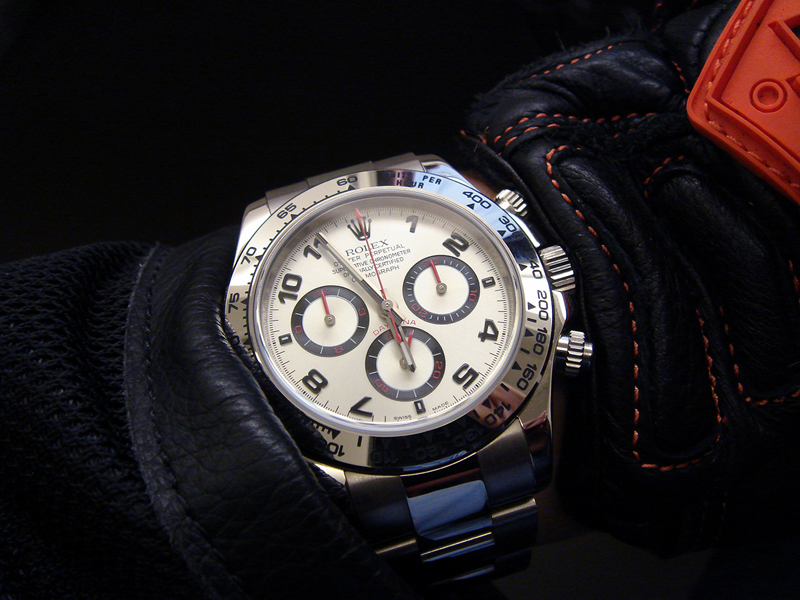
Eric Clapton has built and sold three serious watch collections over his lifetime. His provenance has driven multiple auction records; his eye for under-priced references has shaped the vintage market more than any other living wearer.
He started buying seriously in the late 1970s, focused initially on Patek Philippe perpetual calendars (yellow-gold complicated pieces from the 1950s), and gradually added vintage Rolex Daytonas. Auction houses specifically court the Clapton consignment; his catalogue entries trade at a documented 2 to 3x premium over identical pieces without his provenance.
Unlike most major collectors, Clapton has consistently consigned pieces back to market rather than building a private museum. His view, expressed in interviews, is that watches should circulate.
The watches


Why his provenance matters
Clapton's collecting predates the modern watch-investment market. He bought references that 1980s collectors thought were antiques; the same pieces are now market-defining lots. Christie's and Phillips both list 'ex-Eric Clapton' as a meaningful provenance line in their catalogues, regularly driving 2 to 3x premiums over identical pieces without that history.
The serial-collector pattern
Most major watch collectors hold for life. Clapton circulates: he sells when interest peaks, buys when it cools, and is open about it. That openness has given him insider-tier access at the major Geneva houses for decades.
Comments 1