Jean-Francois Bautte began producing watches in Geneva in 1791, the date today claimed as the foundation of Girard-Perregaux. Following acquisitions and mergers through the 19th century, Constant Girard-Perregaux consolidated the workshops in La Chaux-de-Fonds and gave the firm its modern name through his 1854 marriage to Marie Perregaux. The manufacture has produced complete watches - including its own calibres - at the same La Chaux-de-Fonds address continuously ever since.
In 1867 Constant Girard-Perregaux presented the Tourbillon with Three Gold Bridges at the Paris Universal Exposition. The design replaced the conventional plates and bridges with three parallel gold arrow-shaped bridges arranged vertically across the movement, making the tourbillon cage and its gears visible in a way no other watchmaker had attempted. The Three Gold Bridges remains the defining object of the brand's identity and is still produced today in wristwatch form with the same aesthetic principles.
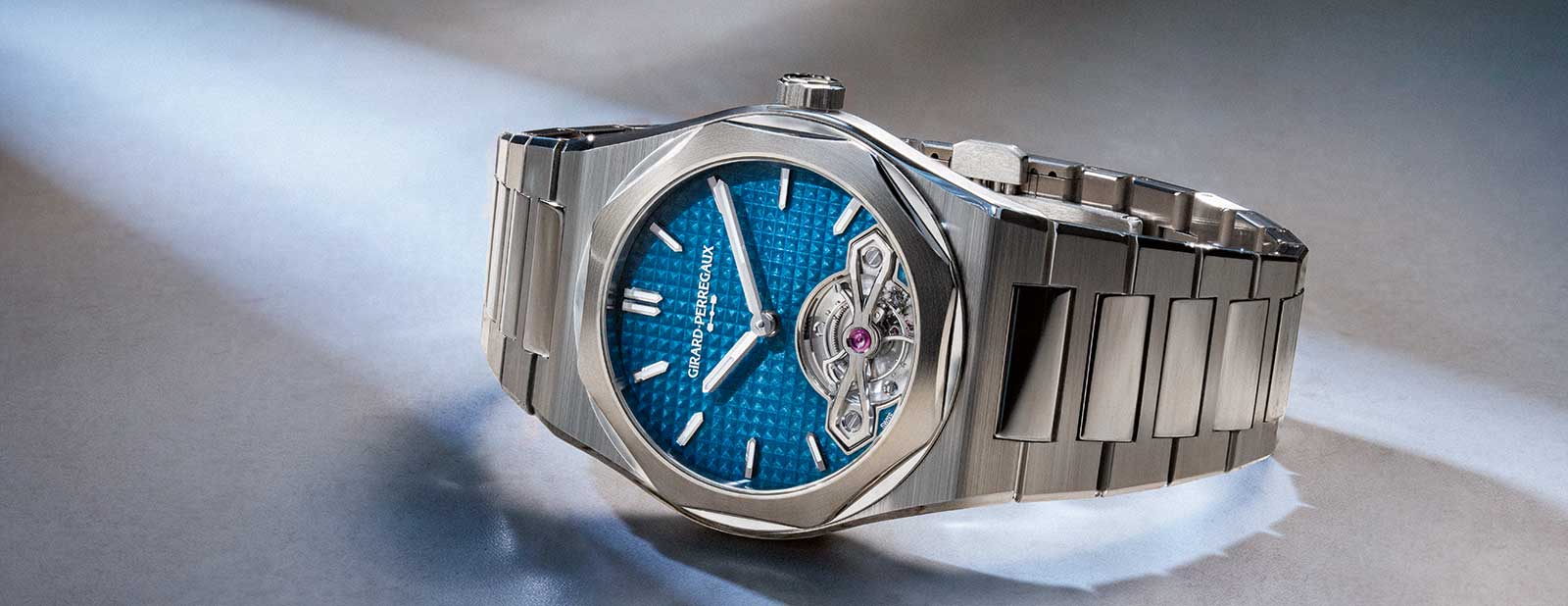
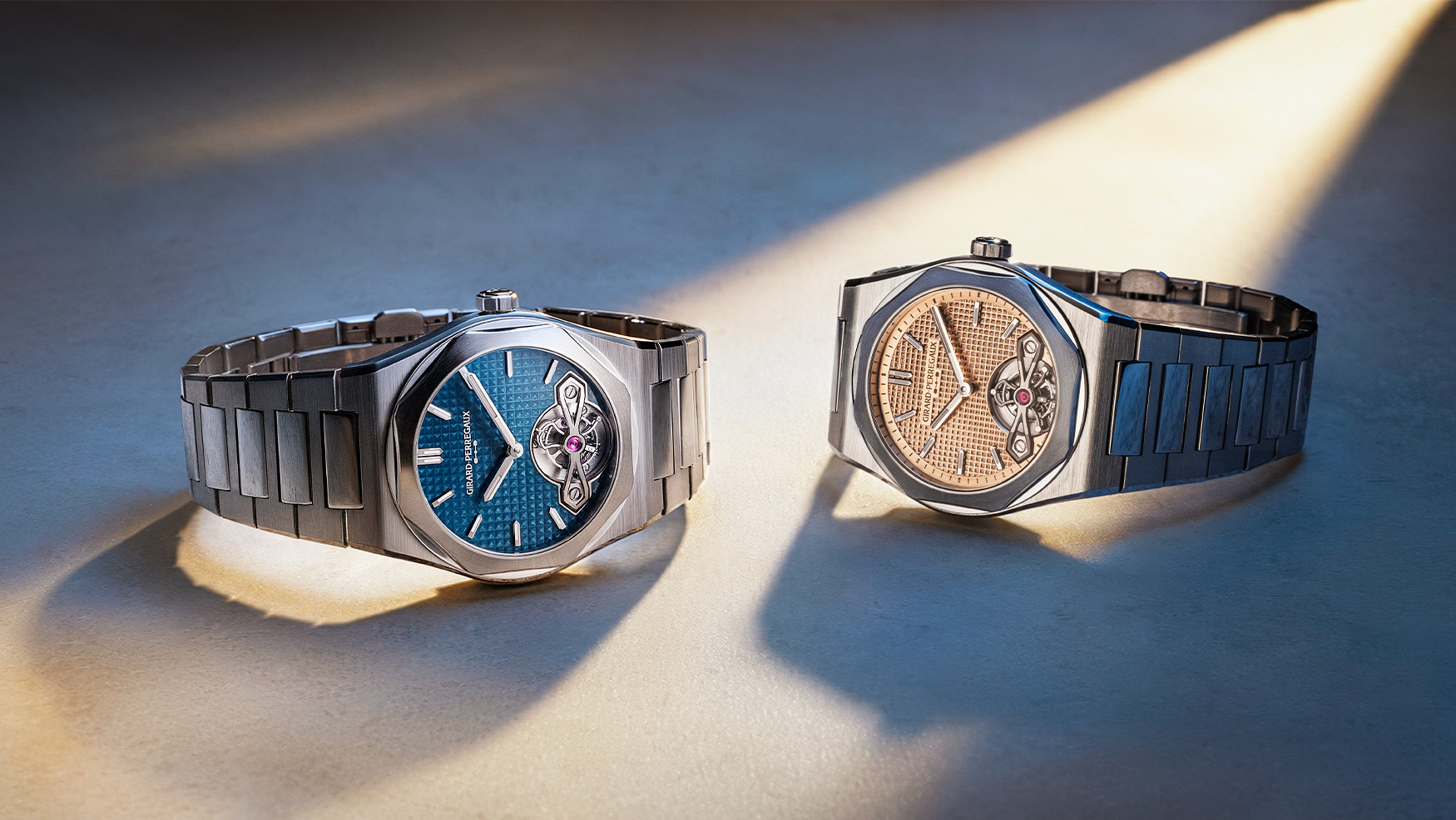
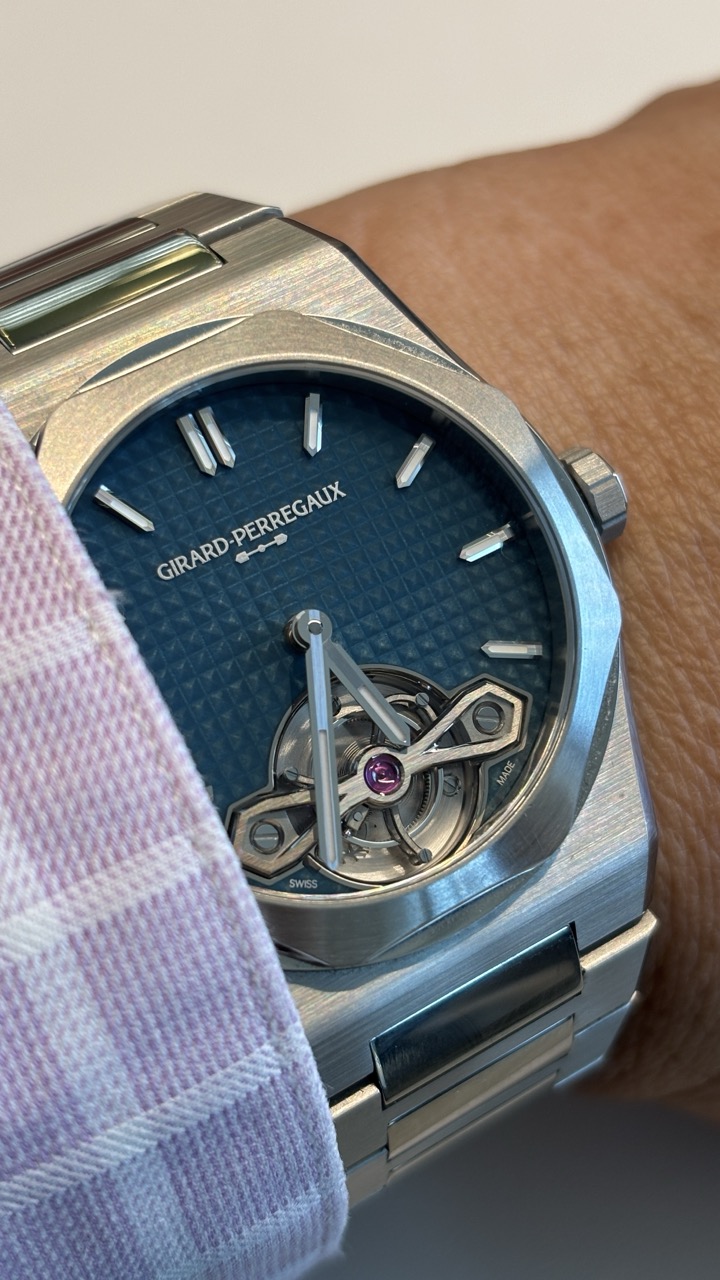
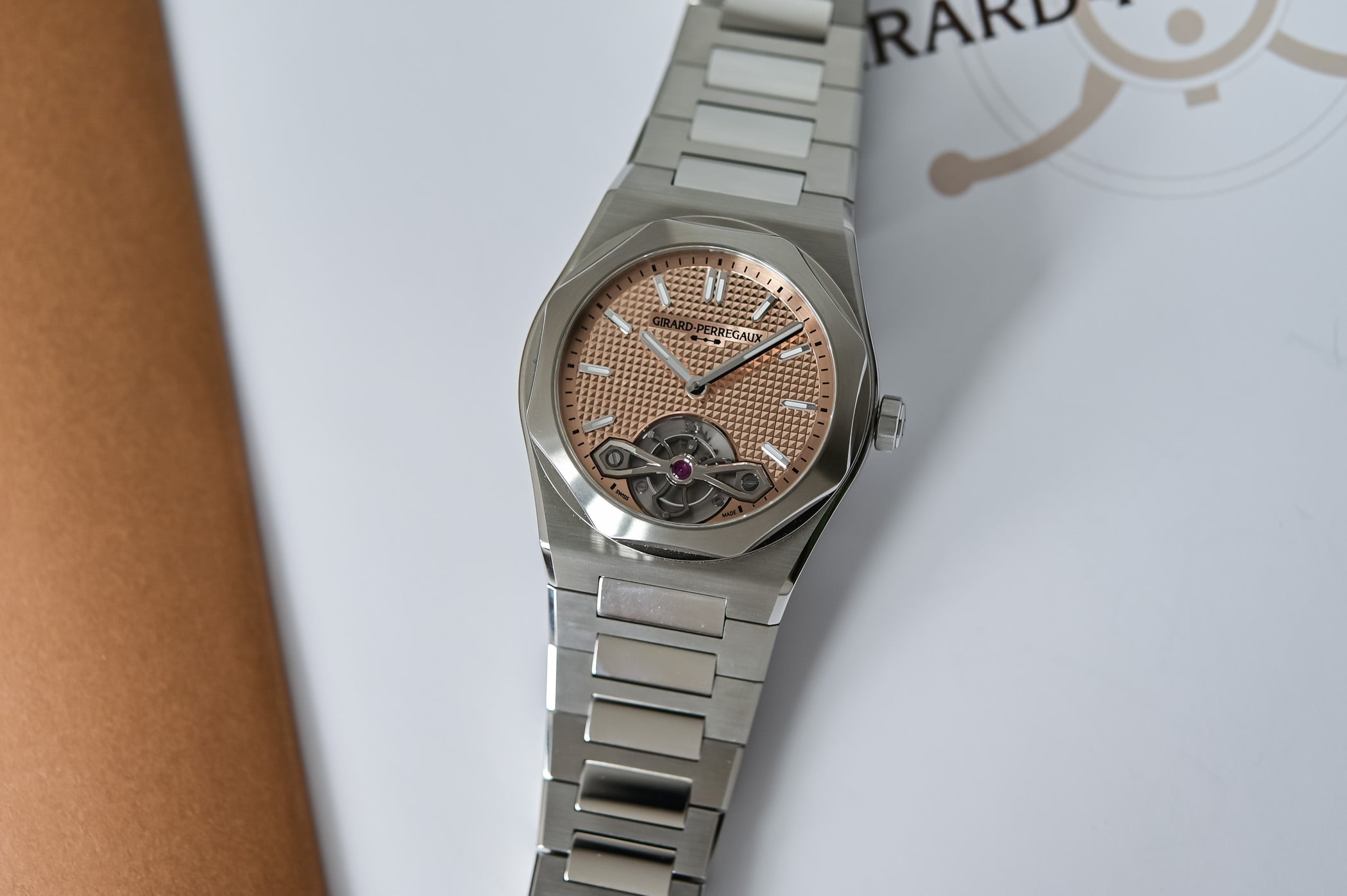
In 1975 Girard-Perregaux launched the Laureato, a sports watch with an octagonal bezel integrated into a steel bracelet - one of the original generation of integrated-bracelet designs alongside the 1972 Royal Oak and the 1976 Nautilus. The Laureato disappeared from the catalogue during the 1990s and 2000s but was relaunched as a full collection in 2016. Today the Laureato sits alongside the Three Bridges family as the two flagship lines. The Kering Group (then PPR) acquired the brand in 2011, grouping it with Ulysse Nardin as the watchmaking division of the broader luxury house.