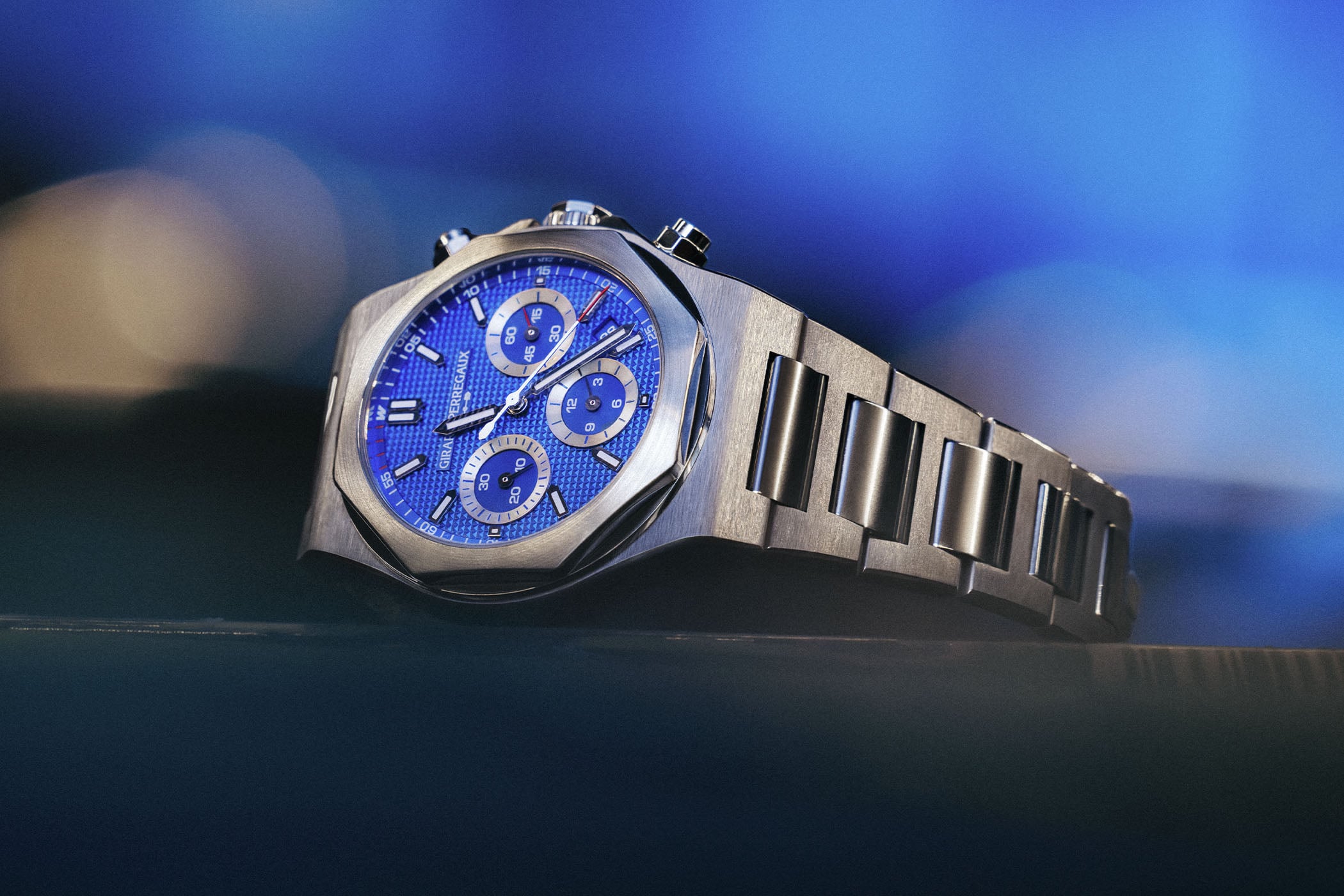
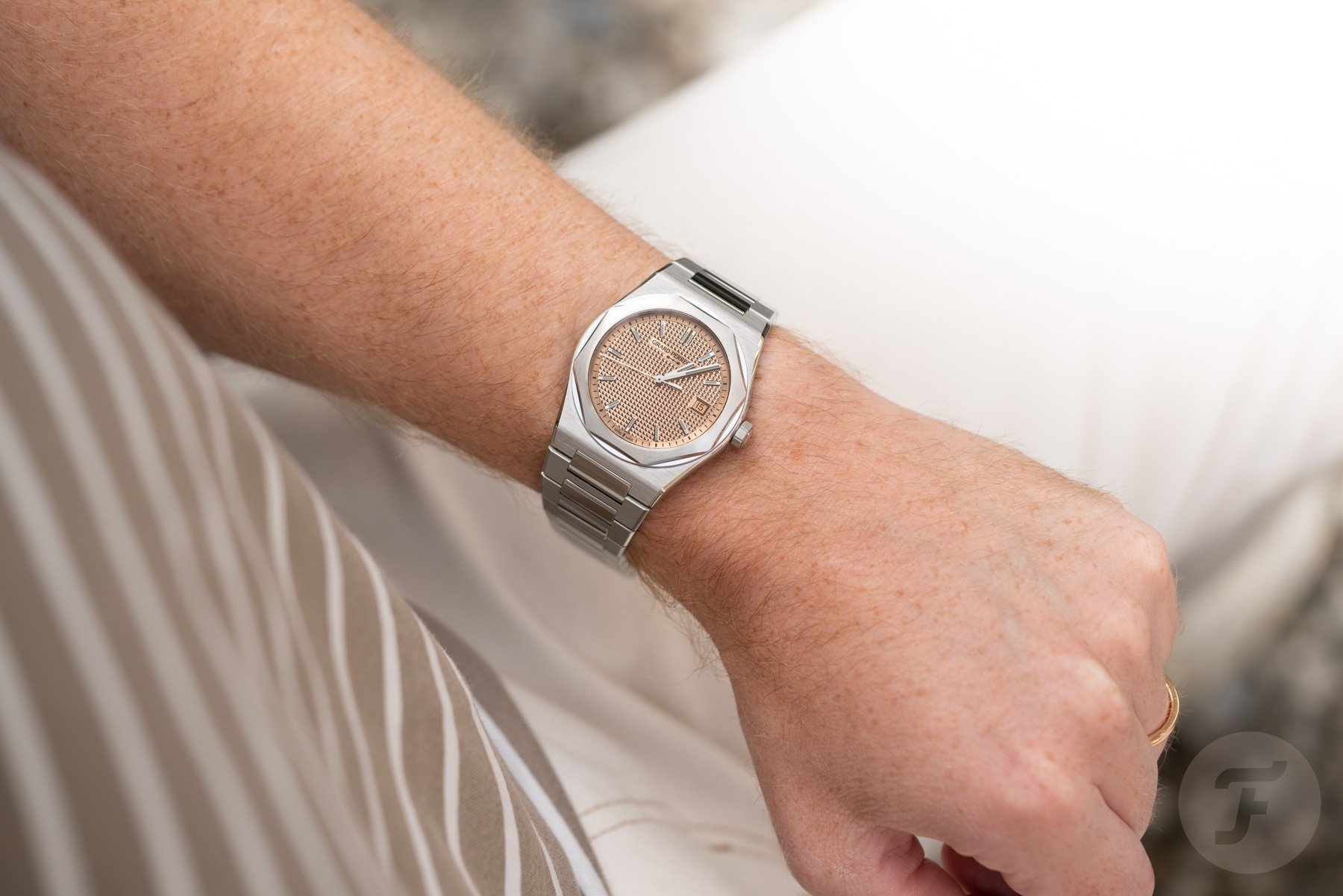
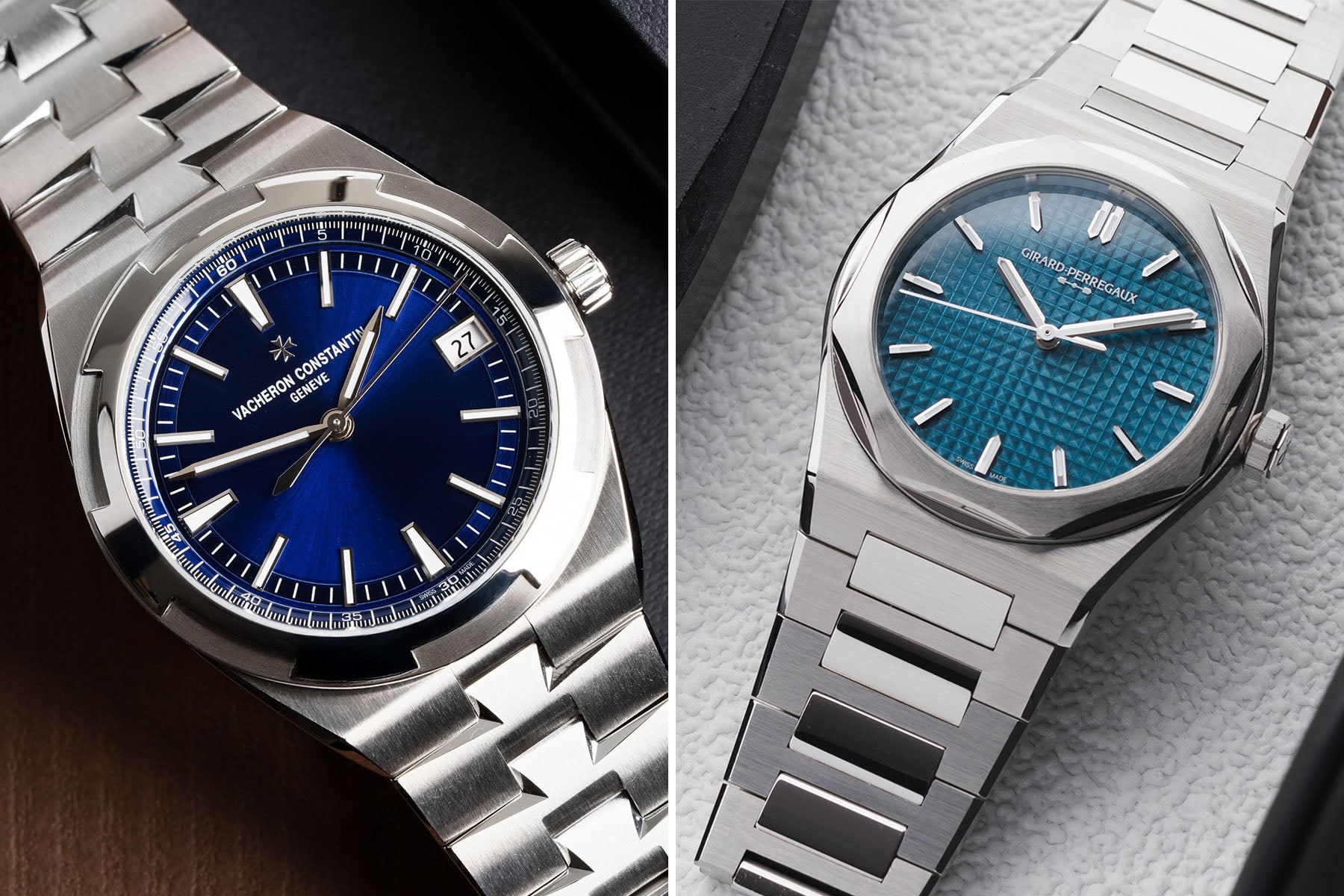
The Laureato was launched by Girard-Perregaux in 1975, three years after Audemars Piguet's Royal Oak (1972) and one year after Patek Philippe's Nautilus (1976, designed 1974). It belongs squarely to the first wave of integrated-bracelet luxury sports watches in steel, but unlike its rivals it was not designed by Gérald Genta. Instead Girard-Perregaux commissioned an Italian design studio in Milan to develop the case, resulting in an octagonal bezel with clear Italian-design DNA, distinct from the Royal Oak's softer bolted octagon.
The original 1975 Laureato was a quartz watch, powered by Girard-Perregaux's Calibre 350, one of the earliest Swiss-made quartz movements and notable for its 32,768 Hz frequency (the industry standard ever since). Positioning the Laureato as a quartz piece was a deliberate bet on new technology in an era when the mechanical-watch industry was in crisis. Early references were 38mm steel cases with Clous de Paris dials, with later variants using gold and two-tone configurations.
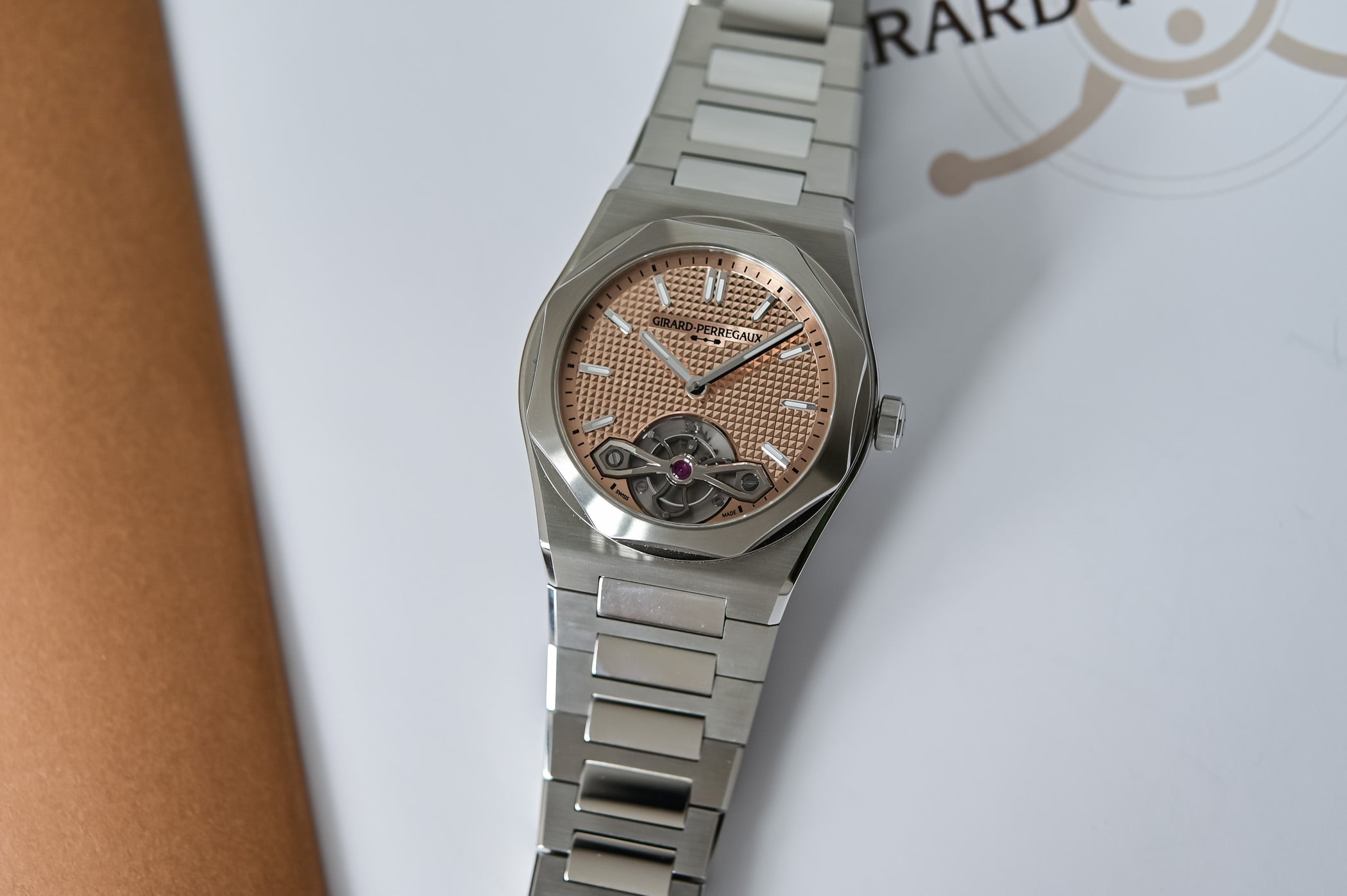
Through the 1980s and 1990s the Laureato was produced intermittently, with mechanical chronograph and automatic variants joining the quartz line, but never with the sustained commercial focus of the Royal Oak. In 2016, for Girard-Perregaux's 225th anniversary, the Laureato was fully revived as the brand's flagship line. The revival carried the original octagonal-bezel silhouette forward, now in 42mm and 38mm automatic mechanical configurations powered by the in-house Calibre GP01800 (25-jewel automatic, 54-hour power reserve), with a rose-gold Clous de Paris dial harking back to the 1975 original.
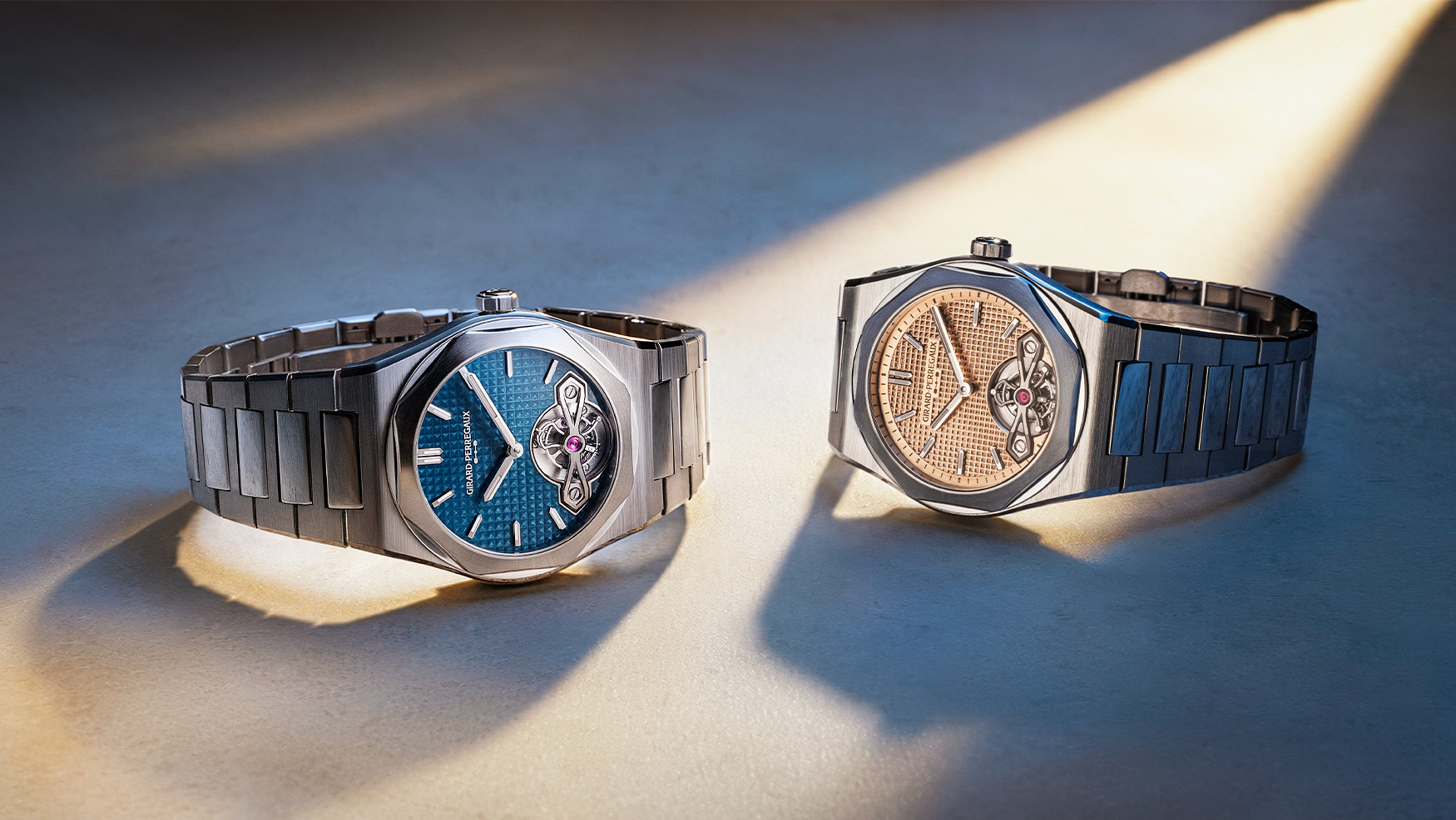
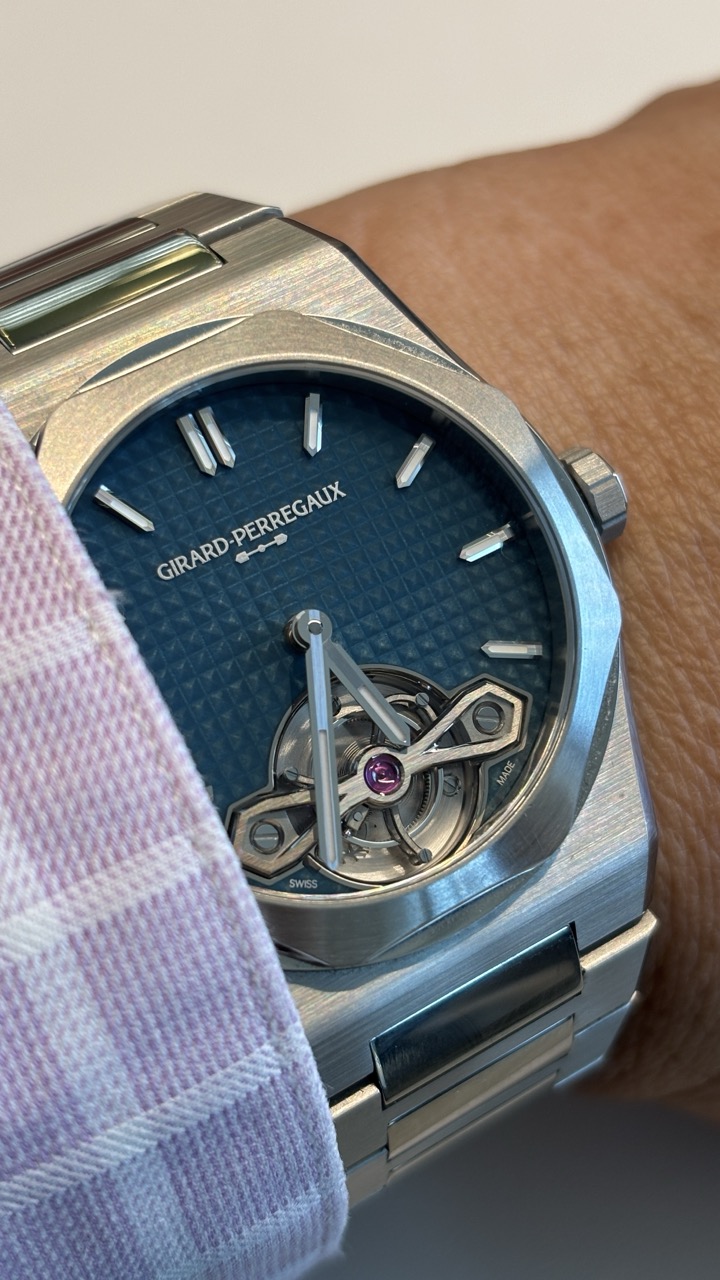
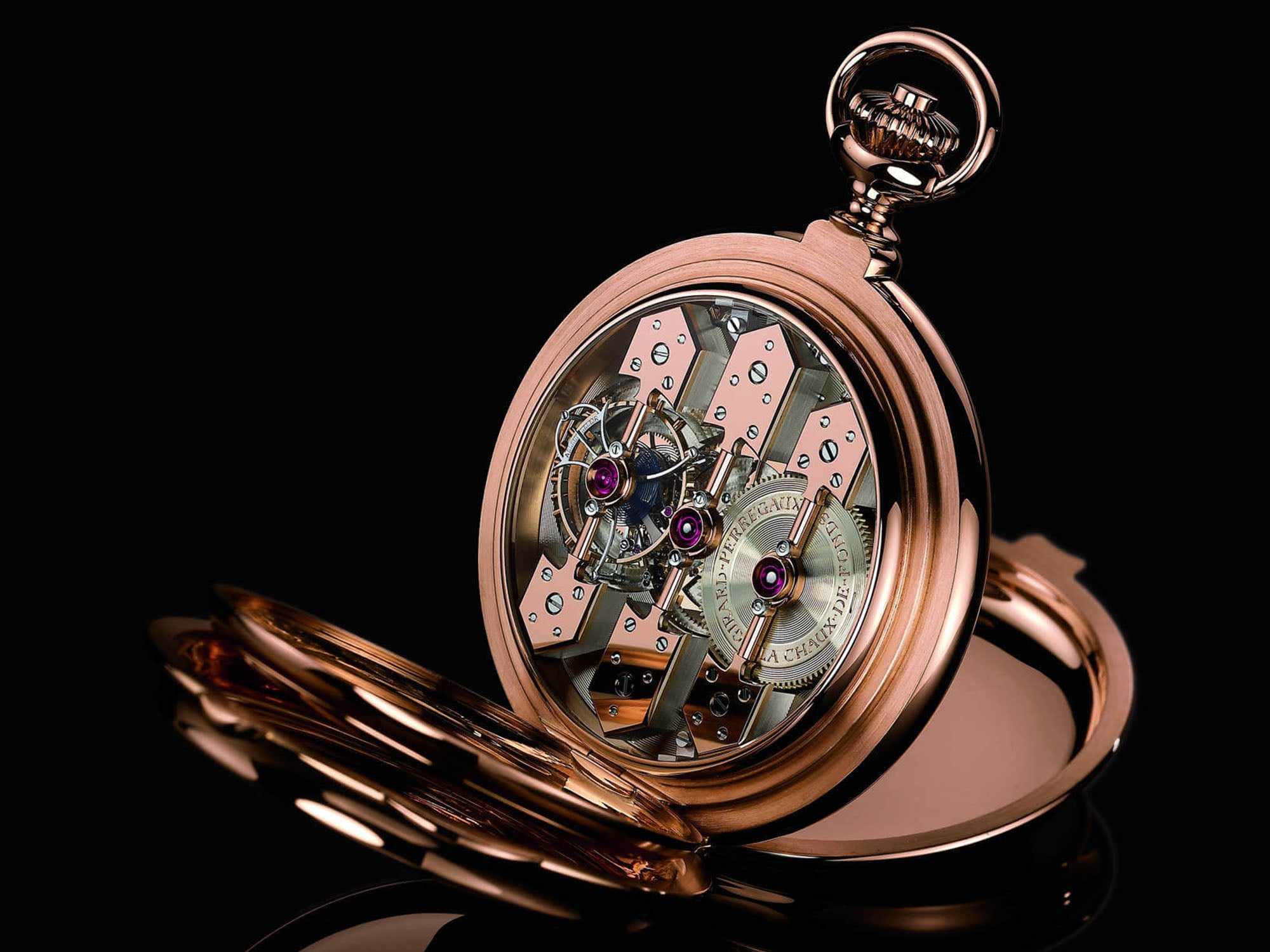
The modern Laureato has expanded into a full collection: chronograph variants, a skeletonised flying tourbillon (Laureato Tourbillon), a ceramic version, and ladies models from 34mm. Retail runs from approximately CHF 12,500 (38mm steel automatic) to CHF 25,000+ (chronograph) and CHF 150,000+ for tourbillons. The Laureato remains the anchor of Girard-Perregaux's modern identity and sits as one of the original and most historically legitimate, if less commercially visible, members of the 1970s integrated-sport-watch family.




Comments
No comments yet, be the first to weigh in.