
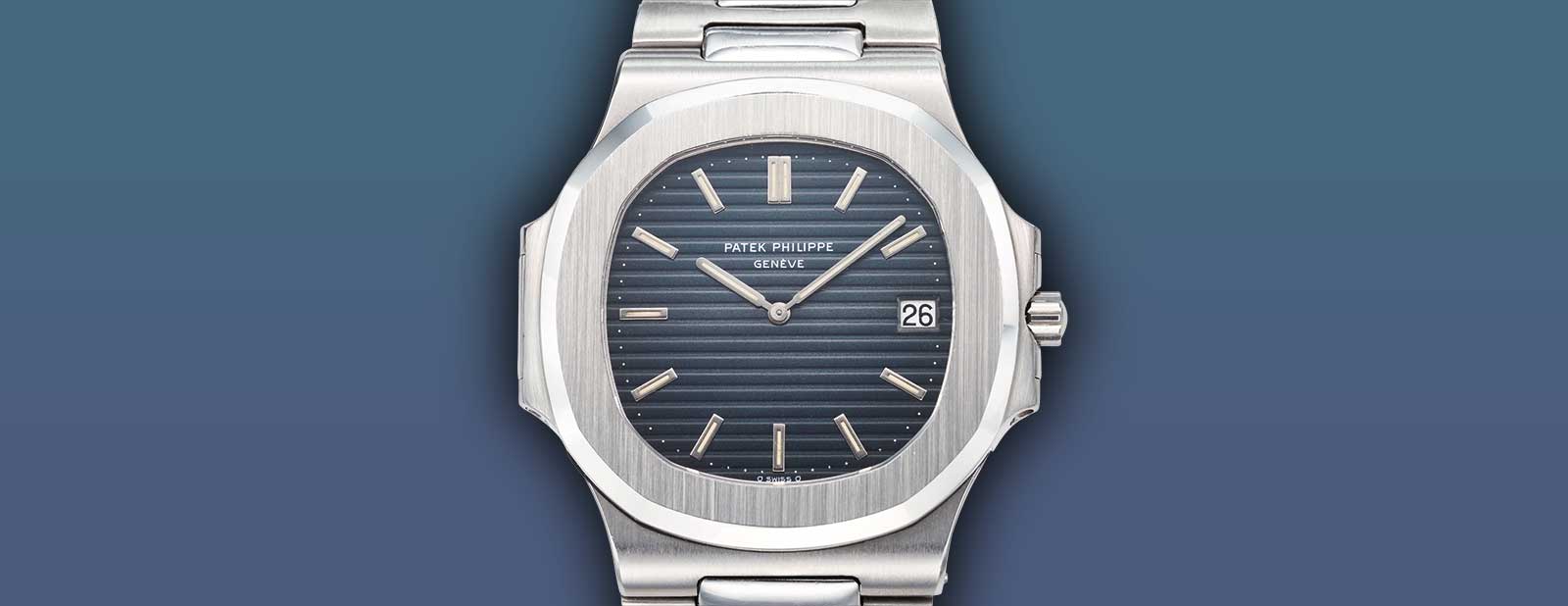
In 1974, independent designer Gerald Genta - already famous for designing the Audemars Piguet Royal Oak in 1972 - was sitting in the restaurant at the Basel Fair when he sketched the Nautilus case on a napkin in approximately five minutes. The design referenced the porthole of a transatlantic ocean liner: a two-piece case held together by two prominent lateral “ears” that served as hinges, a rounded-octagonal bezel, and a horizontally embossed dial. Genta sold the design to Patek Philippe's management, which put the watch into production under ref 3700/1A launched in 1976 and nicknamed the Jumbo for its 42mm diameter - substantially larger than any Patek Philippe dress watch of the era.
The launch was radical for Patek Philippe. Under the direction of Henri Stern, the house had spent a century building its reputation on minute repeaters, perpetual calendars, and the highest-end dress watches of the Geneva tradition, and had never before produced a sports watch or a watch in steel. The 3700/1A was priced at 3,100 Swiss francs, roughly the same as a solid-gold Calatrava from the same catalogue, and the advertising campaign carried the famously provocative slogan “One of the world's most expensive watches is made of steel.” The case construction was itself a technical achievement: a two-piece monobloc front section and caseback held together by four lateral screws through the ear-shaped hinges, without a conventional bezel. The ultra-thin automatic calibre Jaeger-LeCoultre 920, shared with the Royal Oak and the Vacheron 222, completed the package.
Initial reception was cool. Patek customers were skeptical of a sports watch from a house known for classical dress pieces, and sales through the first decade were modest. The Nautilus line gradually expanded through the 1980s and 1990s. The smaller ref 3800/1 at 37.5mm was introduced in 1981 to broaden the range to women and smaller wrists, and remained in production for nearly three decades. Complication references followed: the 3710/1 with power reserve indicator (1998), the 3712 with moon phase and small seconds, the 5712 with a reconfigured moon phase and power reserve layout, and eventually the 5990 travel time chronograph. Through this era, Patek produced the Nautilus in limited numbers - rarely more than a few thousand of the core references per year - and the watch remained a niche preference within the broader Patek catalogue rather than a commercial juggernaut.
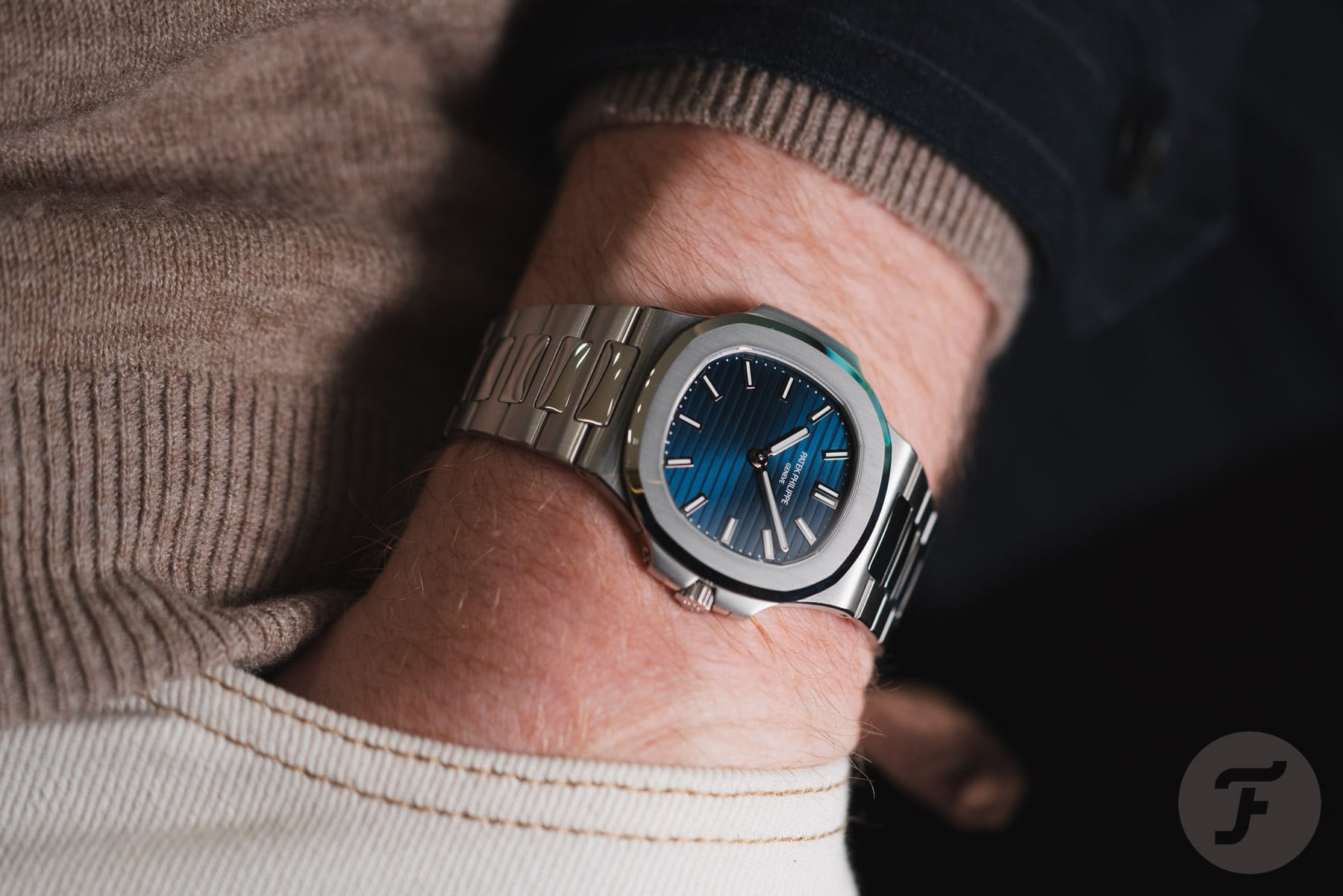
The modern Nautilus explosion began with the ref 5711/1A, introduced in 2006. At 40mm it split the difference between the Jumbo 3700 and the mid-size 3800, featured a blue-gradient embossed dial with horizontal bands, and used the in-house Cal. 324 S C automatic movement (later replaced by the Cal. 26-330 S C with 45-hour power reserve). Through the 2010s the 5711/1A became a cultural object rather than a watch - routinely impossible to purchase at retail, with waiting lists stretching eight to ten years at authorised dealers and secondary-market prices reaching three to four times the official retail price. For a brief period it functioned as an alternative store of value across the enthusiast and investment communities, and was the single most-discussed wristwatch of the decade.
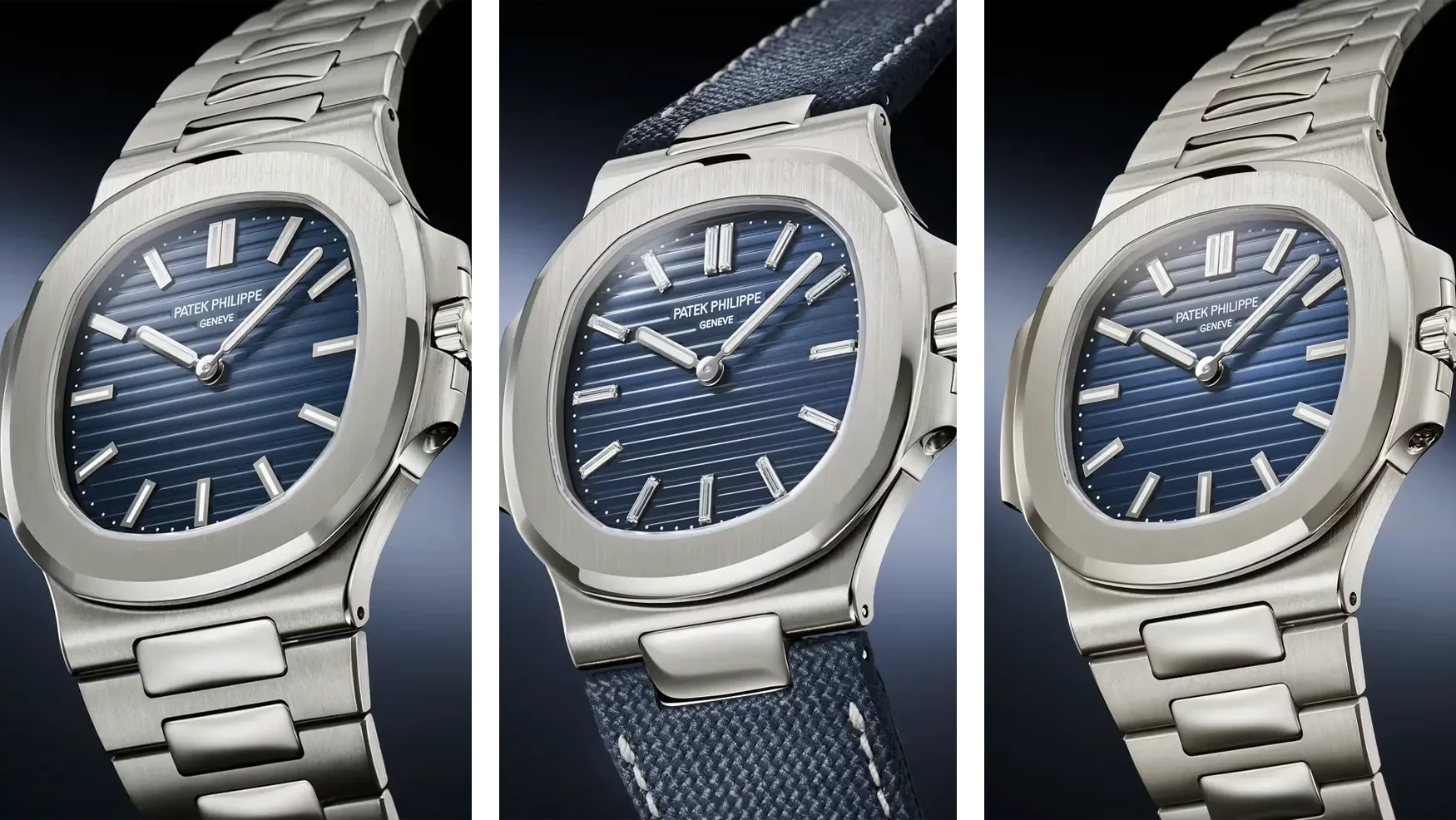
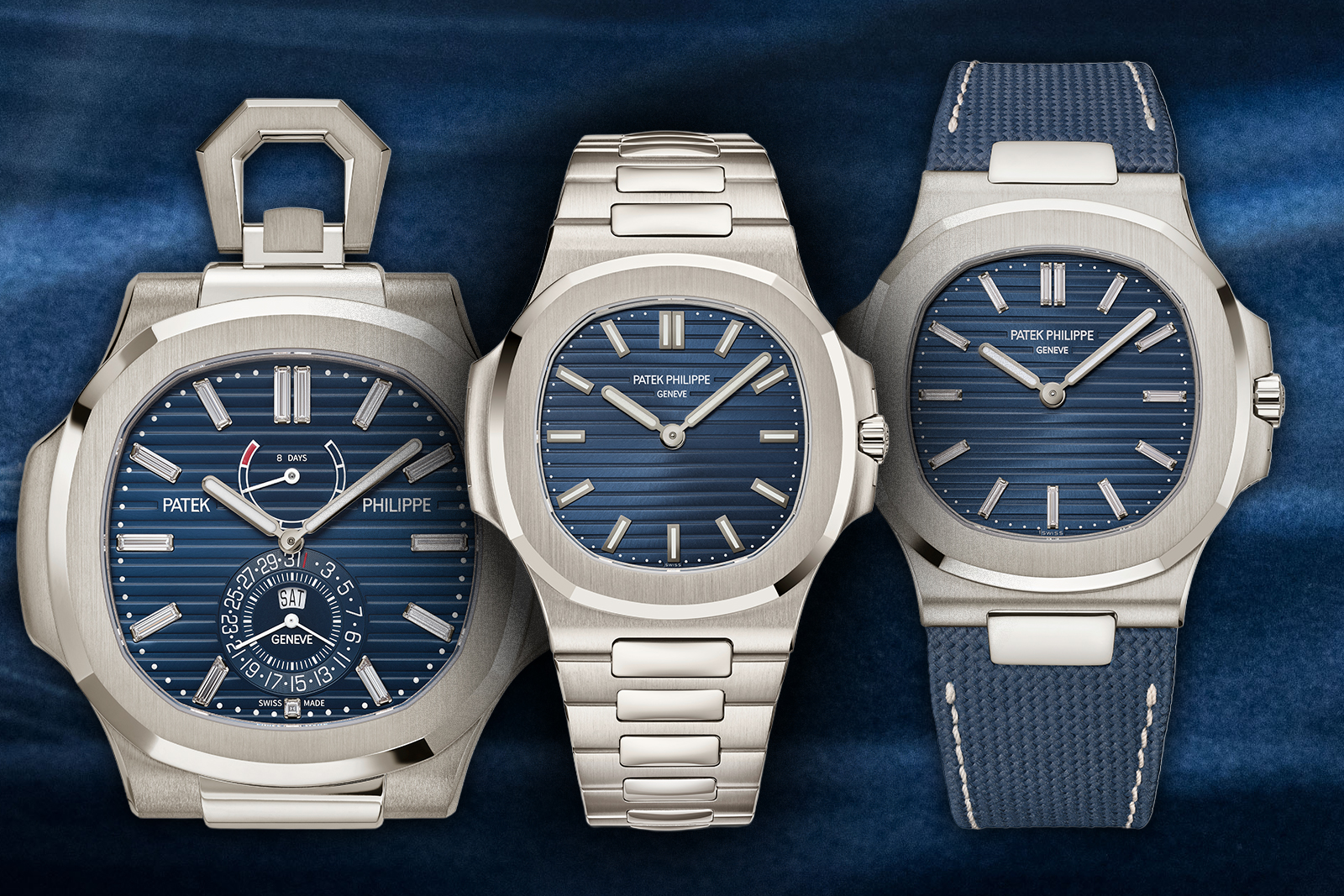
Patek president Thierry Stern made the decision to discontinue the 5711/1A in 2021, reasoning that Patek did not want to be defined by a single reference and needed to protect the perception of scarcity across the broader catalogue. The discontinuation was handled with two farewell editions: the olive-green-dial 5711/1A-014 released in early 2021, and a Tiffany & Co. co-branded variant with a turquoise “Tiffany Blue” dial and “Tiffany & Co.” co-signature. The first example of the Tiffany Blue Nautilus sold at Phillips auction in December 2021 for $6.5 million, setting a new benchmark for the watch-as-cultural-artefact phenomenon. The 2023 ref 5811/1G in white gold has taken over as the core Jumbo reference, featuring the new Cal. 26-330 S C and a redesigned case with a slightly larger 41mm diameter - no longer available in steel, in a clear signal from Patek that the era of the accessible-material Jumbo has ended.




Comments
No comments yet, be the first to weigh in.