
The Calatrava was designed in 1932 as the first watch produced by Patek Philippe under its new ownership by the Stern family, who had acquired the firm during the Depression-era financial collapse that had threatened its survival. Reference 96 - the original Calatrava - launched the new era with a design informed by Bauhaus principles: a minimalist 31mm round case with flat bezel, applied baton hour markers, dauphine hands, a small seconds sub-dial at 6, and no superfluous decoration. It was, and still is, the archetype of the modern dress watch. The name "Calatrava" was taken from the Cross of the Order of Calatrava, a medieval Spanish Christian military order, which had become Patek Philippe's corporate emblem in 1887 and remains on the crown of every Patek today.
Reference 96 remained in production essentially unchanged for four decades and established the compositional rules that every successor Calatrava has followed. Patek Philippe added variations progressively through the 20th century: Ref. 570 (1938, larger 35mm case), Ref. 565 (water-resistant variant), Ref. 1463 (chronograph, technically the Calatrava-Chronograph), and the legendary Ref. 2526 (1953, first Patek automatic - widely regarded as one of the finest wristwatches ever made). Each reference preserved the core Calatrava principle: round case, clean dial, no complications that did not serve legibility, and movement finishing of the highest standard.
The Clous de Paris hobnail bezel was introduced in 1985 with Reference 3919 and became one of the most recognisable Calatrava variants - a subtle textural bezel treatment that read as formal but never austere. This reference ran in production for three decades. Reference 5196 (2005) returned to the strict Ref. 96 template in a modern 37mm case, Reference 5119 (2006) restored the Clous de Paris bezel, and Reference 5227 (2013) introduced a modern hinged dust cover over the case back (a 19th-century Patek Philippe feature) combined with a 39mm case and in-house automatic movement.
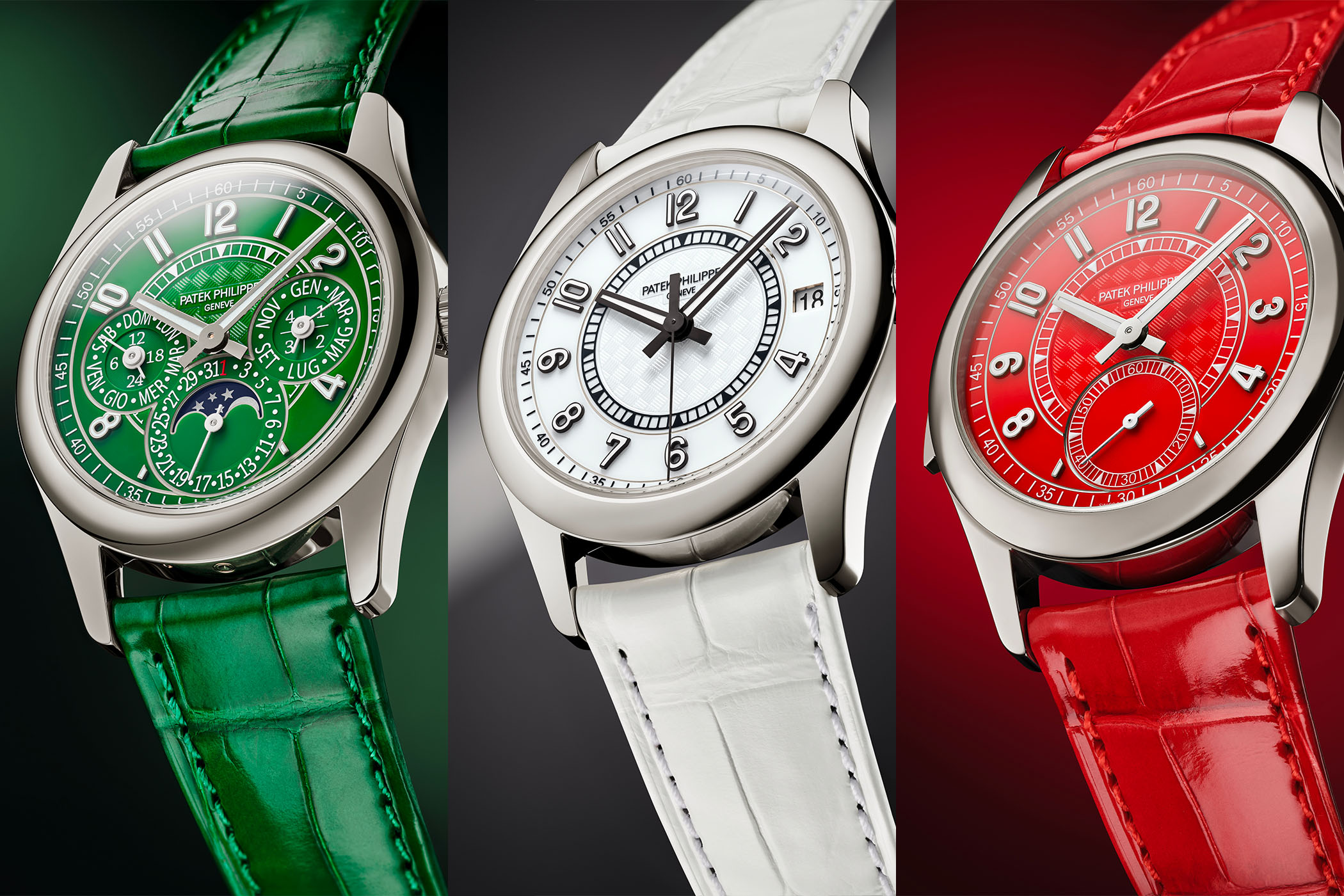
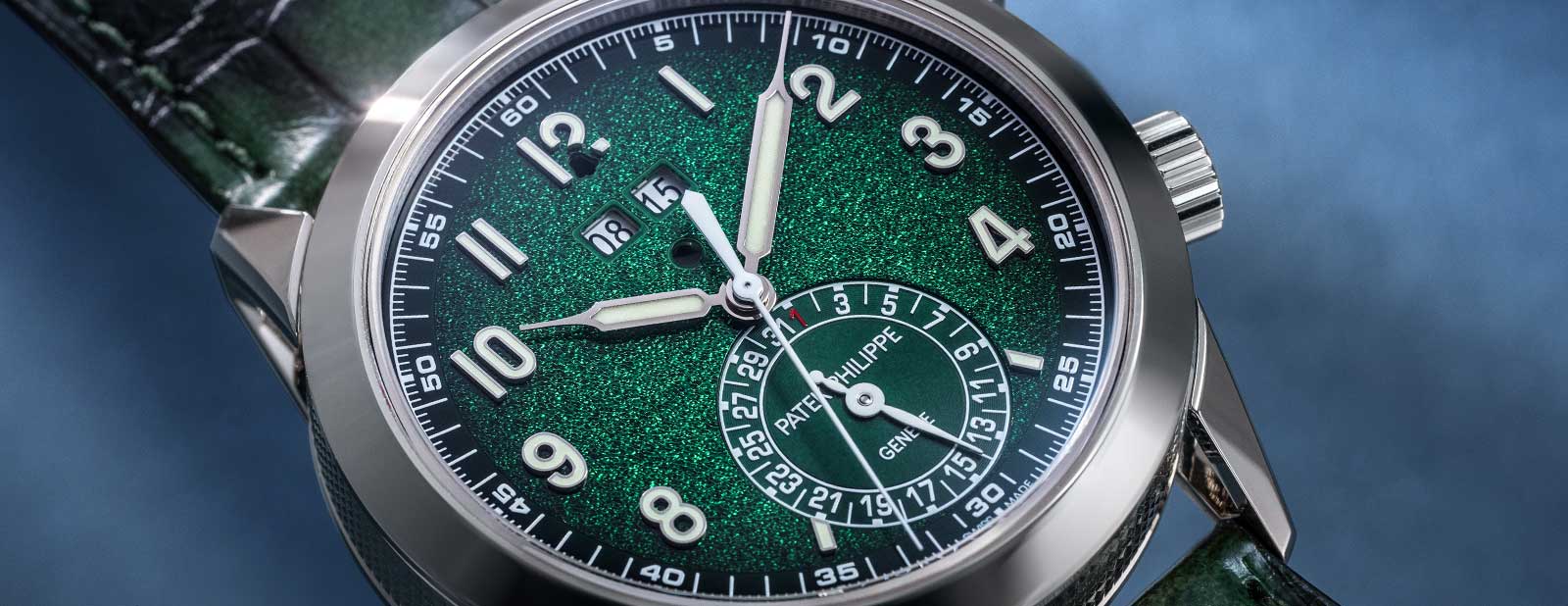
The current flagship is the Reference 6119 (2021), a 39mm hand-wound Calatrava with Clous de Paris bezel and the in-house Calibre 30-255 PS - a new hand-wound movement with twin mainspring barrels, 65-hour power reserve, and METAS-level finishing. Available in white gold, rose gold, and platinum, it is widely considered the definitive modern Calatrava. The Calatrava family in 2024 also includes the 5226 (38mm travel-dial), the 5327 perpetual calendar, and high-complicated pieces including the 5370 Split-Seconds Chronograph and the 5235 Regulator Annual Calendar. Retail: ~$33,000 (6119 white gold) to ~$290,000+ (5370 Split-Seconds). Every serious watch collector eventually owns a Calatrava.




Comments
No comments yet, be the first to weigh in.