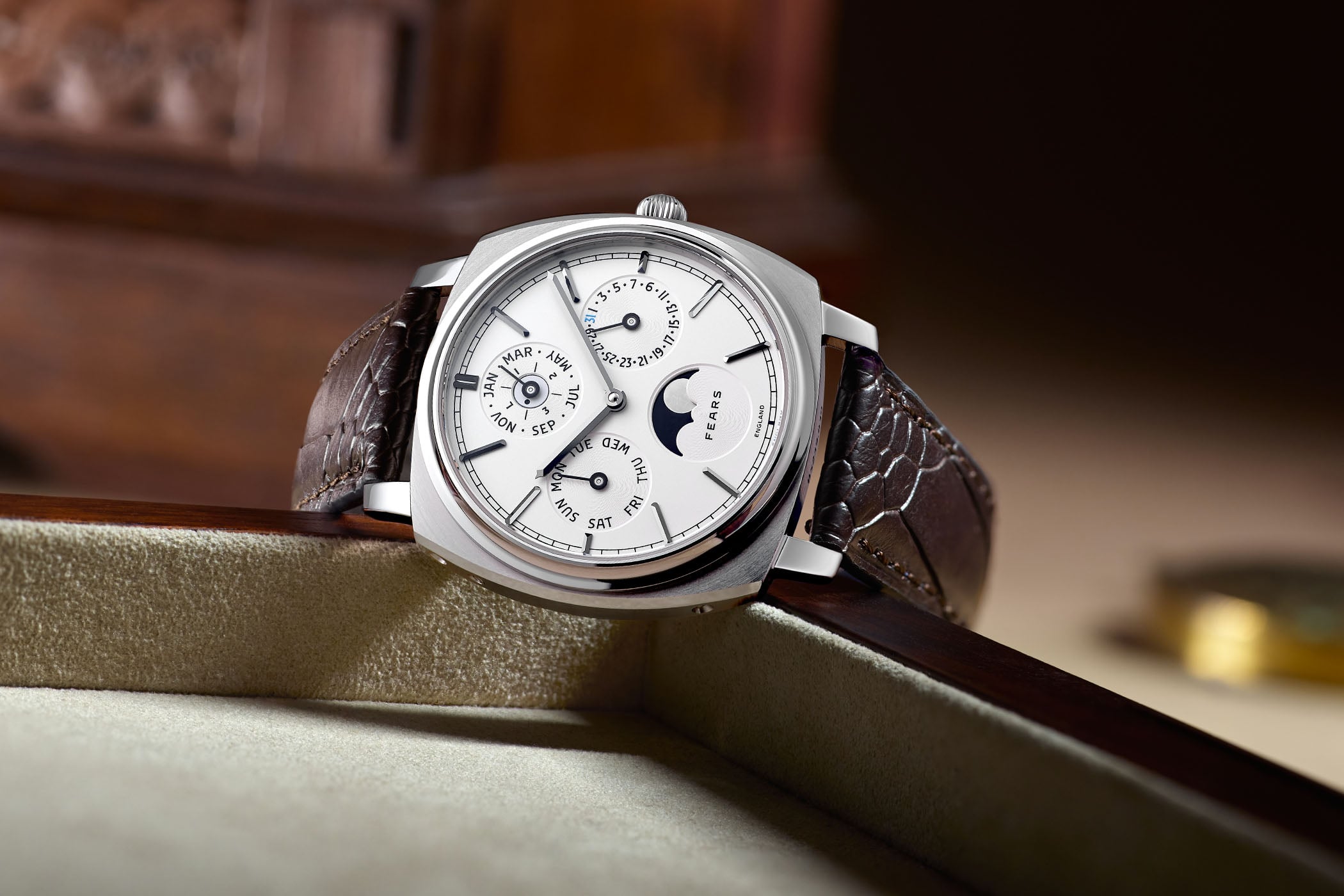
The first mechanical perpetual calendar was built around 1762 by the English watchmaker Thomas Mudge, the same man who invented the Swiss lever escapement used in virtually every modern mechanical watch. Mudge's perpetual calendar pocket watch, now in the British Museum, solved a problem no practical device had ever addressed: a calendar that correctly handled the full Gregorian cycle, accounting for months of 28, 29, 30, or 31 days, and knowing which years were leap years, all mechanically, without battery, computer, or reset.
The engineering challenge is bigger than it first appears. The movement must contain a mechanical "memory" of the calendar's full four-year (1,461-day) cycle. Each day, a 24-hour wheel advances the date counter by one; at the end of each month, a month cam, a shaped disk with varied-depth lobes for 28, 29, 30, and 31-day months, tells the date mechanism when to skip. A second cam, rotating once every 48 months, holds the deepest notch for February in a leap year. If any one of these parts is off by even a few hundredths of a millimetre, the watch miscounts a month. Modern perpetual calendars use a 168-position month-cam with the February-29 logic integrated into a single 48-month disk.
"In our metier, the perpetual calendar is the supreme test. You can make a tourbillon that doesn't perform well and still sell it. A perpetual calendar that skips a day is worthless."- Philippe Dufour, in conversation
The perpetual calendar arrived on the wrist in 1925, when Patek Philippe produced the world's first perpetual-calendar wristwatch, a one-off commissioned piece based on a Victorin Piguet pendant-watch movement from 1898. Patek's first serial perpetual-calendar wristwatch, reference 1526, arrived in 1941, followed by the perpetual-calendar chronograph reference 1518 in 1941, the ultimate Patek collectible, now trading at €3–€10 million depending on condition. Audemars Piguet launched its first perpetual in 1955; Vacheron Constantin 1884; Rolex has never made a serial perpetual calendar.
Every modern perpetual calendar will need one manual correction in its lifetime, on 1 March 2100. The Gregorian calendar rule is that a century year is a leap year only if divisible by 400 (2000 was; 2100 is not). Mechanical perpetuals can't practically encode the 400-year rule, so they treat 2100 as a normal leap year and will show February 29 when the actual date is March 1. The owner will have to push the correctors to skip forward one day. Every one of us will be dead before this happens, but every watch made since the 1980s is already counting down to this appointment.
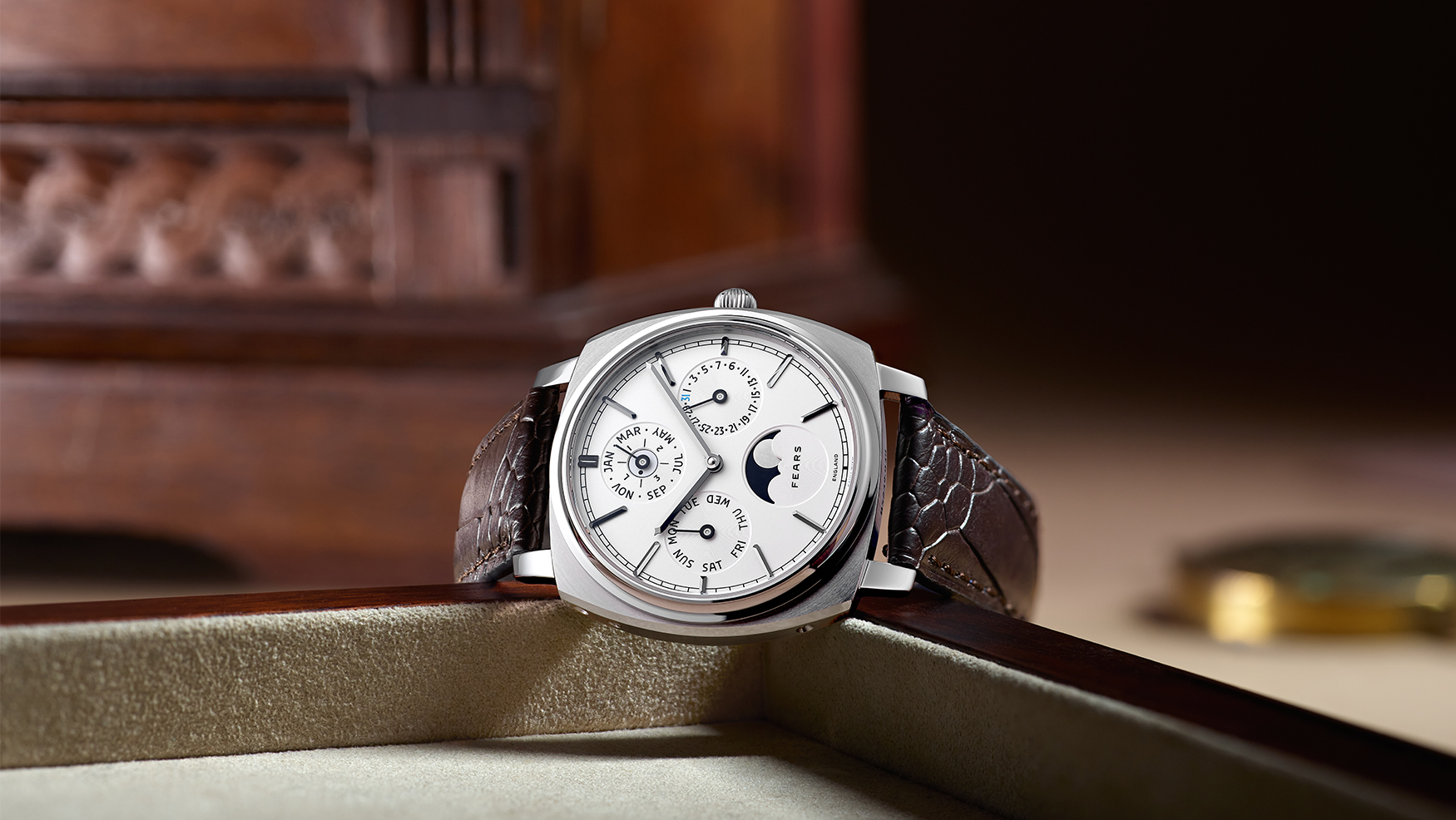
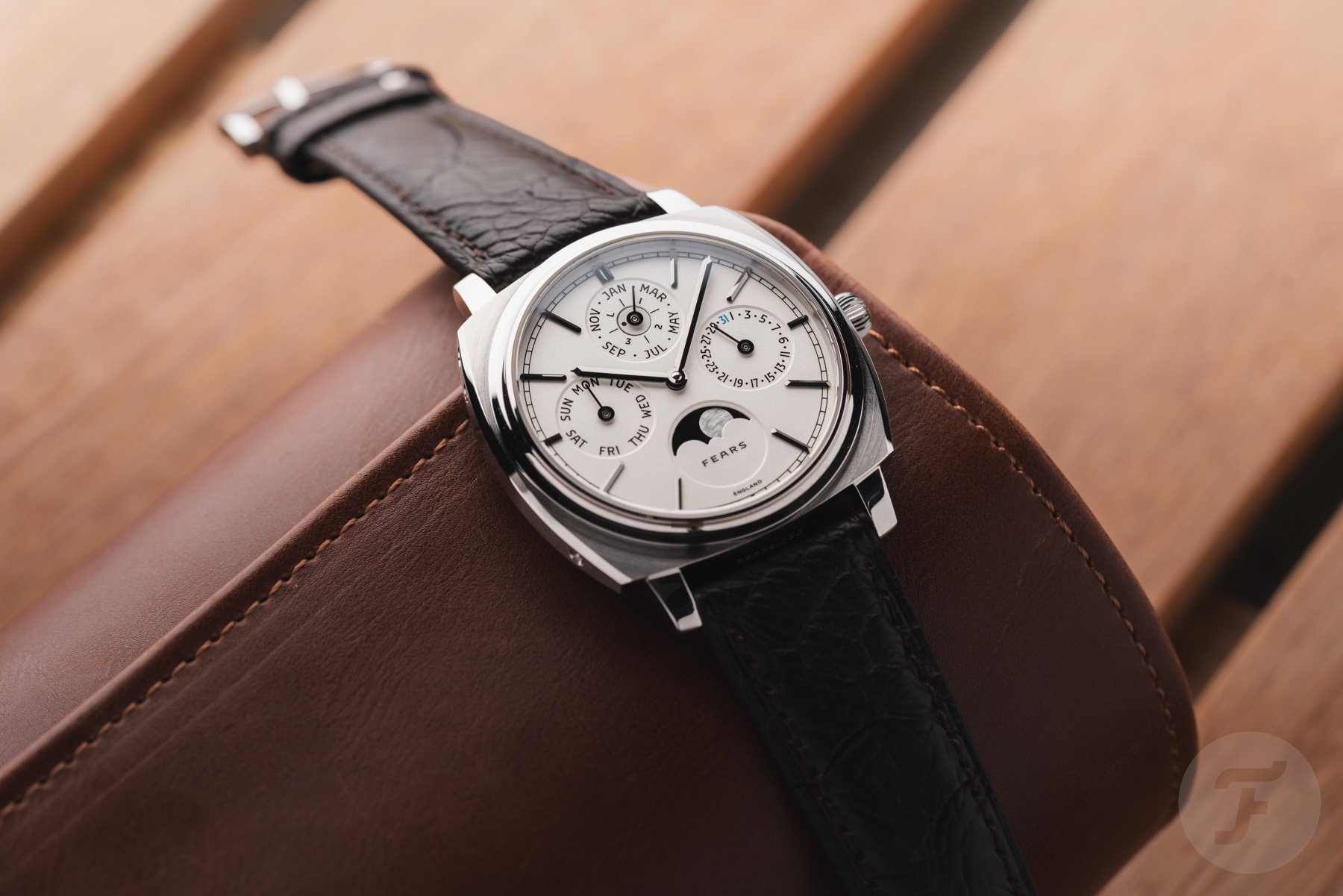
Annual calendars, a simpler relative, introduced by Patek Philippe in 1996 (reference 5035), handle 30- and 31-day months but require a manual adjustment once a year at the end of February. They cost roughly one-fifth of a perpetual and now outsell perpetuals roughly 10 to 1. The equation of time, the sidereal time, and the secular perpetual (valid without correction for 10,000+ years) exist as exotic extensions, but the standard perpetual calendar, day, date, month, leap year, moon phase, four sub-dials on a classical round dial, remains the aristocrat of mechanical complications.







Comments 3