The 1967 joint development
The JLC Cal. 920 / AP 2120 / Patek 28-255 / VC 1120 was a joint-development project between four major manufactures (technically led by Jaeger-LeCoultre) to produce an ultra-thin automatic at 2.45 mm height. The defining engineering: a peripherally-supported full rotor running on a track of four small ceramic balls embedded in the movement plate, replacing the typical central rotor bearing. The peripheral track is what creates the iconic "all-glass-back" aesthetic on the Royal Oak: there is nothing in the centre of the rotor obscuring the movement view. JLC produced the base; each of the four manufactures finished and rebadged it under their own caliber number.
The Royal Oak engine
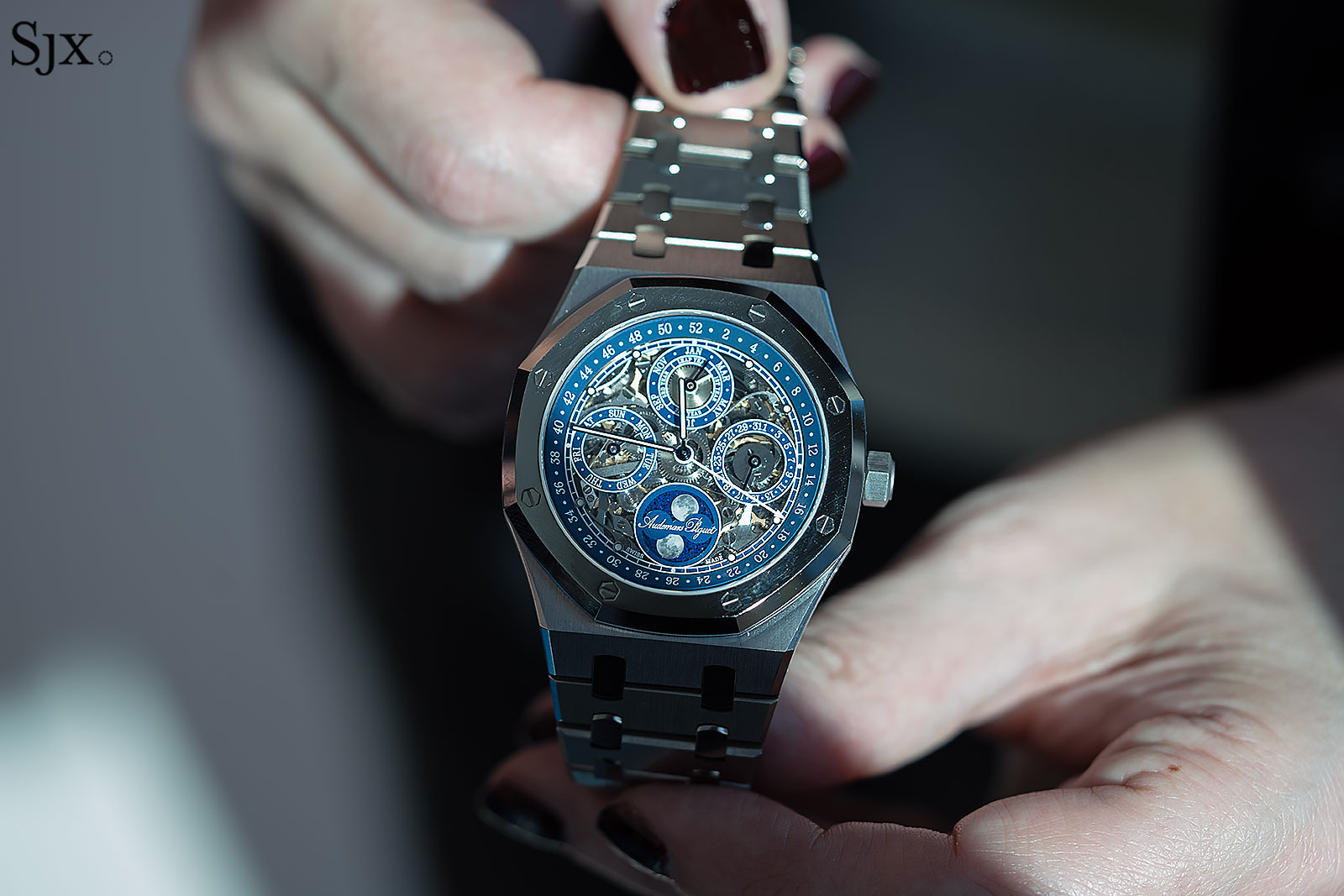
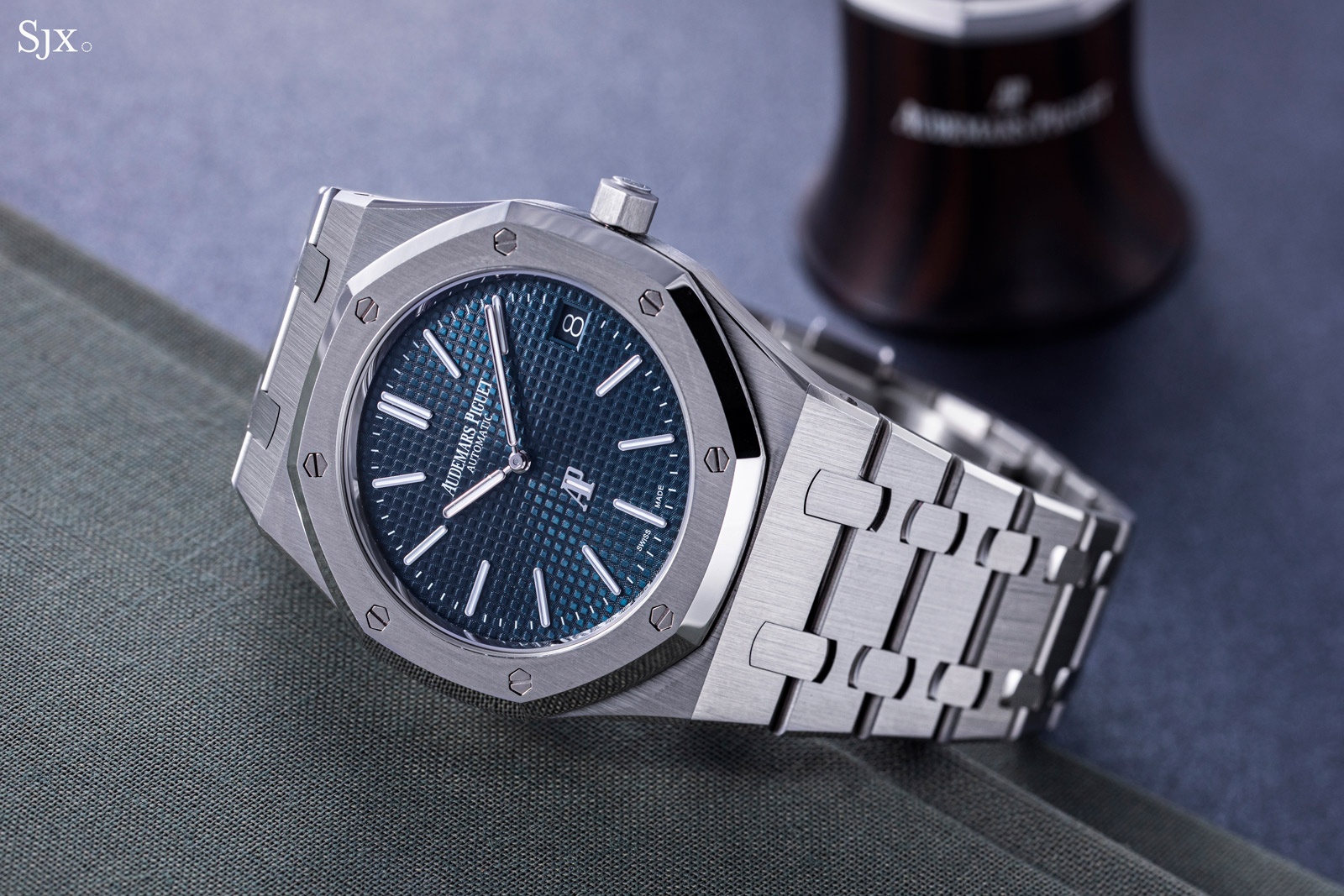
Audemars Piguet's version, Cal. 2120, became the foundation of AP's thin-automatic line. It powered the original 1972 Royal Oak ref. 5402 and remained the basis of the Royal Oak Jumbo for decades. The Cal. 2121 variant added a date complication and went into the Jumbo Extra-Thin ref. 15202 (1993-2022), regarded by collectors as the most authentic execution of the original Genta design. Other 2120-family variants: Cal. 2122 (date and small seconds), Cal. 2120/2802 (perpetual calendar derivative), and a flying-tourbillon version used in select high-end Royal Oak references.
What "peripheral rotor" actually means
In a conventional automatic, the rotor is mounted on a bearing at the centre of the movement, with a hub that takes up several millimetres of vertical space. In the 2120 architecture, the rotor is a full disc that sits flush against the back of the movement, with no central hub at all. Its weight is supported entirely by four small ceramic balls running in a track around the periphery. This sub-millimetre thinness is what allowed the Royal Oak Jumbo to achieve its 7 mm overall case thickness with an automatic movement, an architectural feat that hand-wound watches of the era struggled to beat. The trade-off: the four-ball track is unusually delicate; aged or magnetised 2120s sometimes show ball-track wear that requires specialist service.
The 22-karat gold rotor
AP's 2120 rotor is made from 22-karat gold rather than the tungsten or steel used in cheaper movements. The gold is heavier per unit volume, which gives the rotor more inertia and better winding efficiency at low motion. It also means the rotor is unusually expensive to replace; a service-replacement 2120 rotor through AP currently runs CHF 1,500-2,500 in parts cost alone. The rotor is engraved with AP's "AUDEMARS PIGUET" wordmark and the specific caliber number, visible through the sapphire caseback on every 2120-equipped Royal Oak.
Watches that have used it
Audemars Piguet Royal Oak ref. 5402 (1972-1989, the original Genta design), Royal Oak ref. 14790 (mid-1990s 36 mm), Royal Oak Jumbo Extra-Thin ref. 15202 (1993-2022, the cult collector reference), Royal Oak ref. 15400 (some early refs, before the move to Cal. 3120 in-house), Audemars Piguet John Schaeffer pocket watches (rare). Sister calibers in other brands: JLC Master Ultra-Thin (Cal. 920 base), Patek Calatrava 3554 (Cal. 28-255), Vacheron 222 (Cal. 1120).
End of an era: replaced by the 7121 (2022)
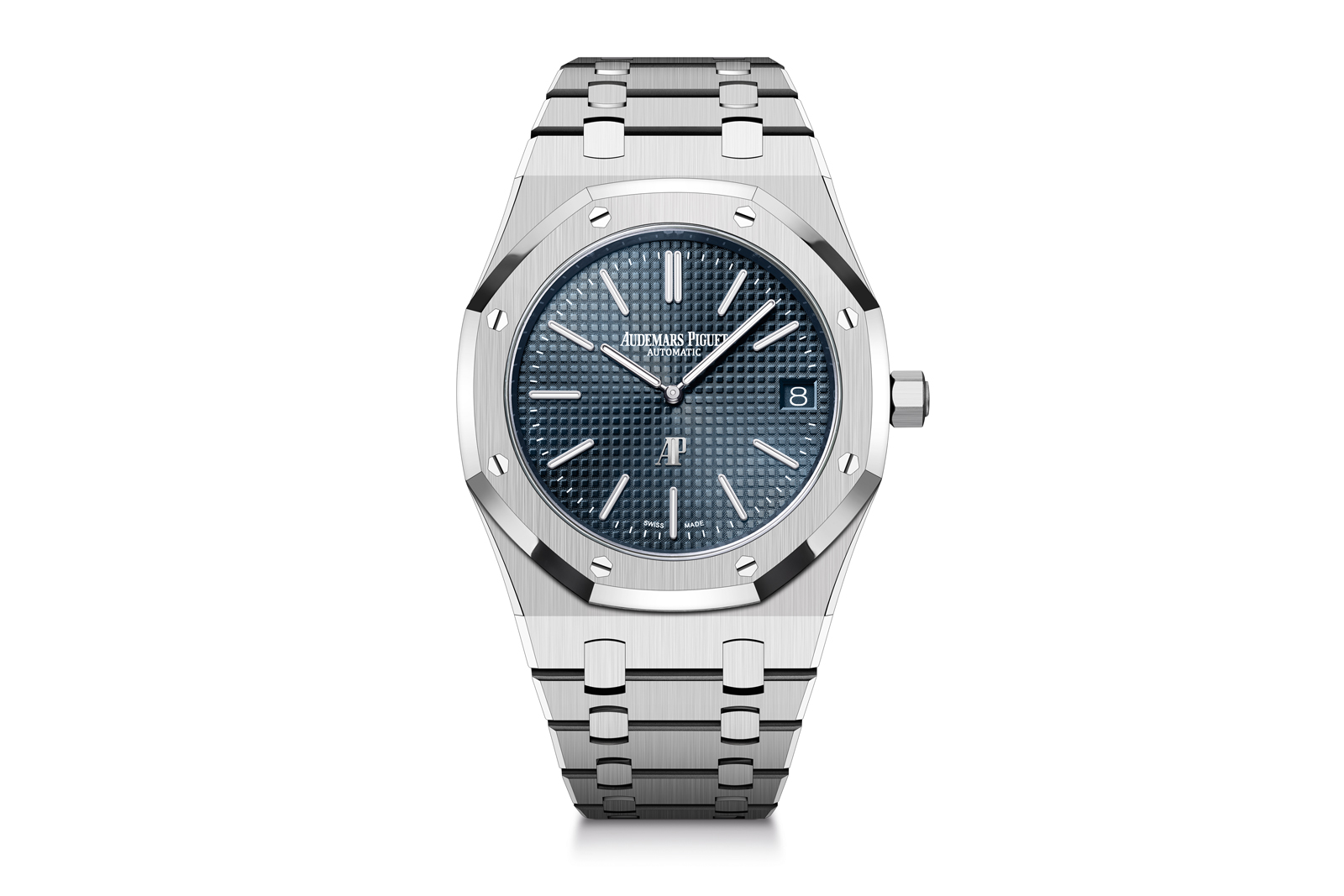
AP retired the Cal. 2120 in 2022 with the launch of the new in-house Cal. 7121 in the Royal Oak Jumbo Extra-Thin ref. 16202. The 7121 keeps the 2.7 mm overall thickness target but uses a fully in-house architecture (no JLC base), a modern central rotor on a single jewel rather than the four-ball peripheral, and a 55-hour power reserve (up from 40 on the 2120). Collector reaction was mixed: the 7121 is technically superior on every spec line, but the 2120's 50-year heritage and the four-ball peripheral rotor remain beloved by Royal Oak purists. The 2120 architecture is still in production at JLC under the Cal. 920 designation. AP service for existing 2120 watches continues in 2026.
Comments 3