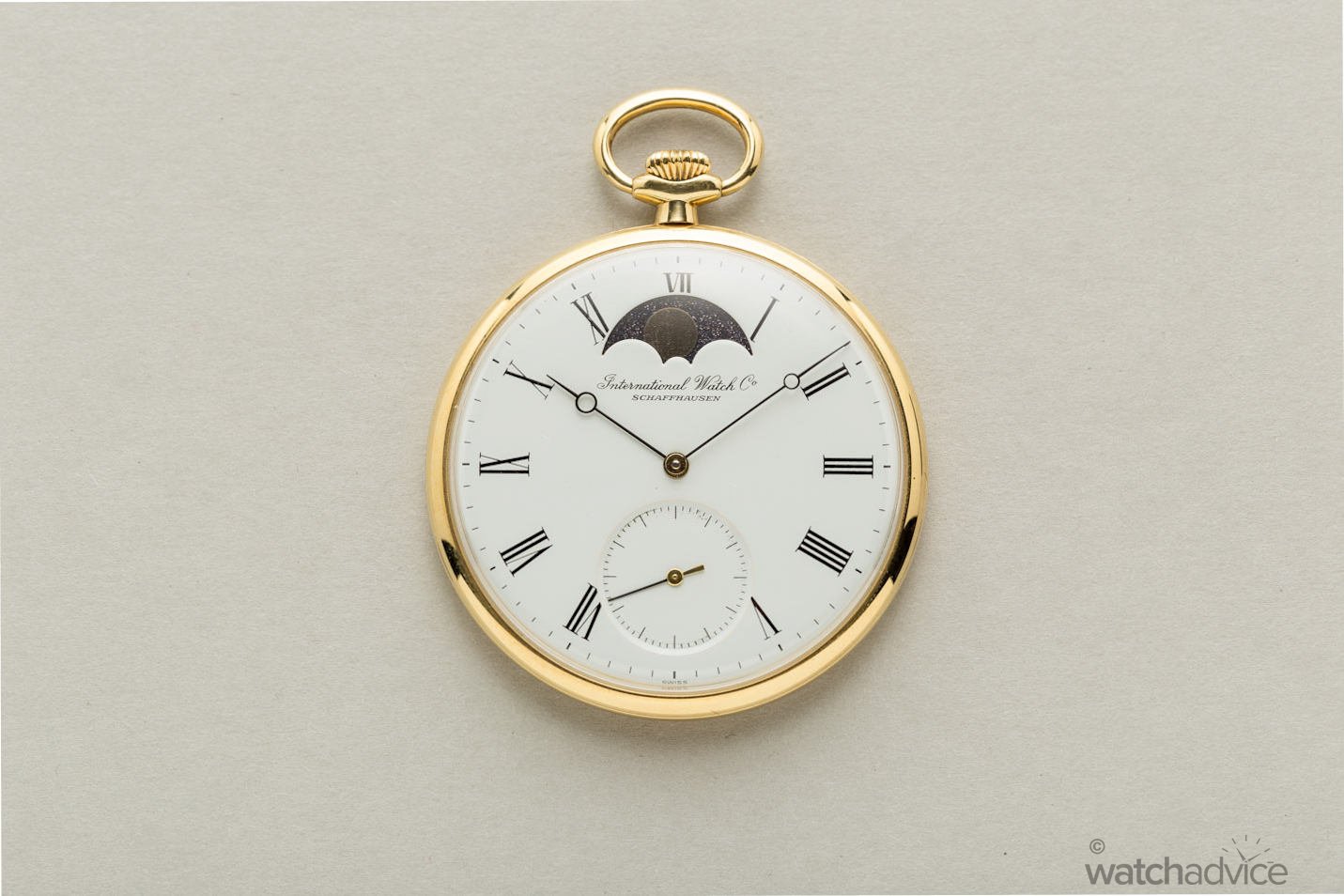
The Portofino launched in 1984 with the ref. 5251, a 46mm wristwatch built around the IWC Cal. 9521, a hand-wound pocket-watch movement that the brand had in its archives. The watch was oversized for the era (most 1984 dress watches were 33-35mm), but the pocket-watch movement gave it precision and visual appearance distinct from the contemporary luxury dress-watch market. The name Portofino came from the small fishing village on the Italian Riviera in Liguria, a fashionable holiday destination for IWC management at the time and the kind of low-key luxury setting the brand wanted to evoke.
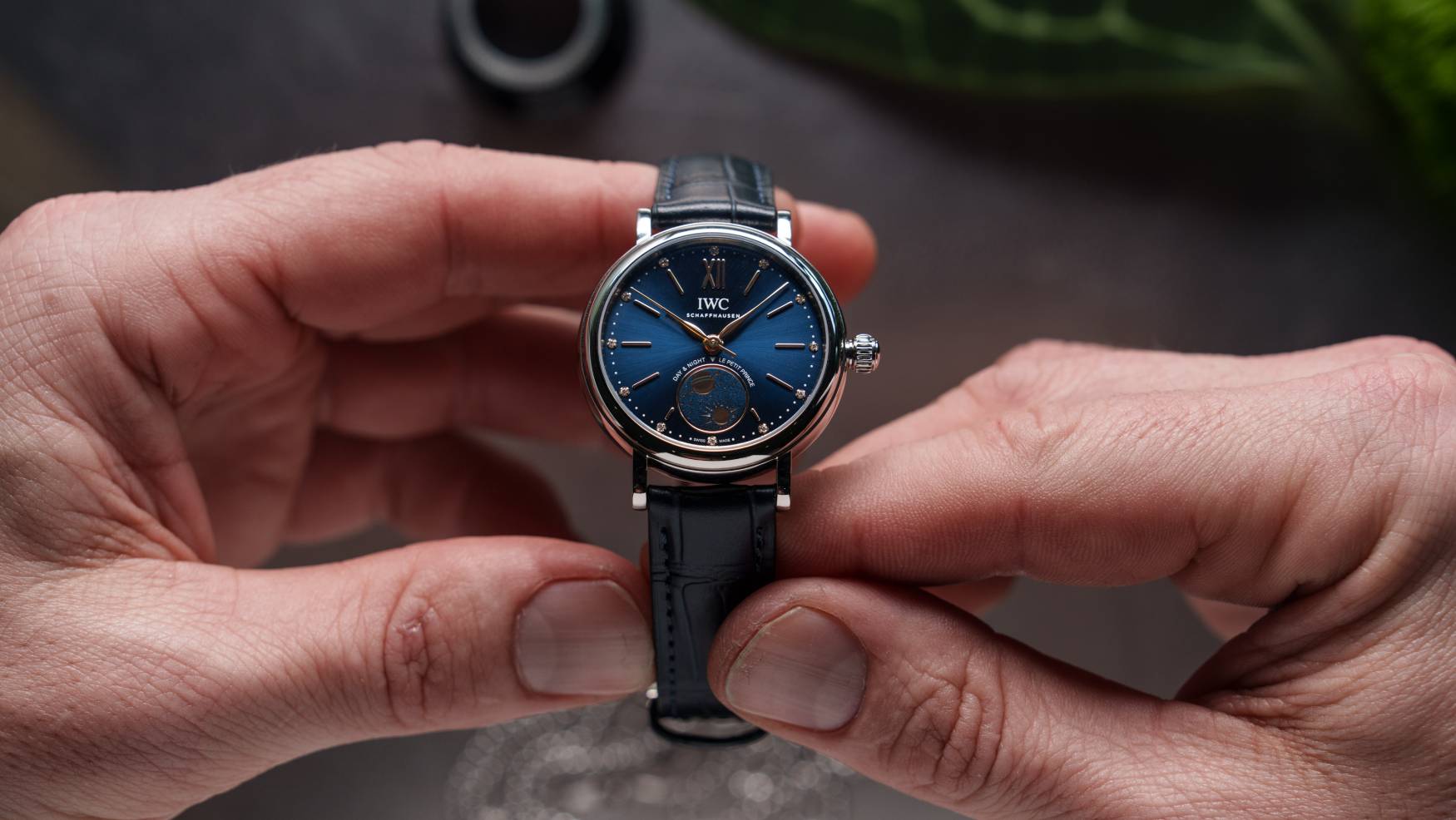
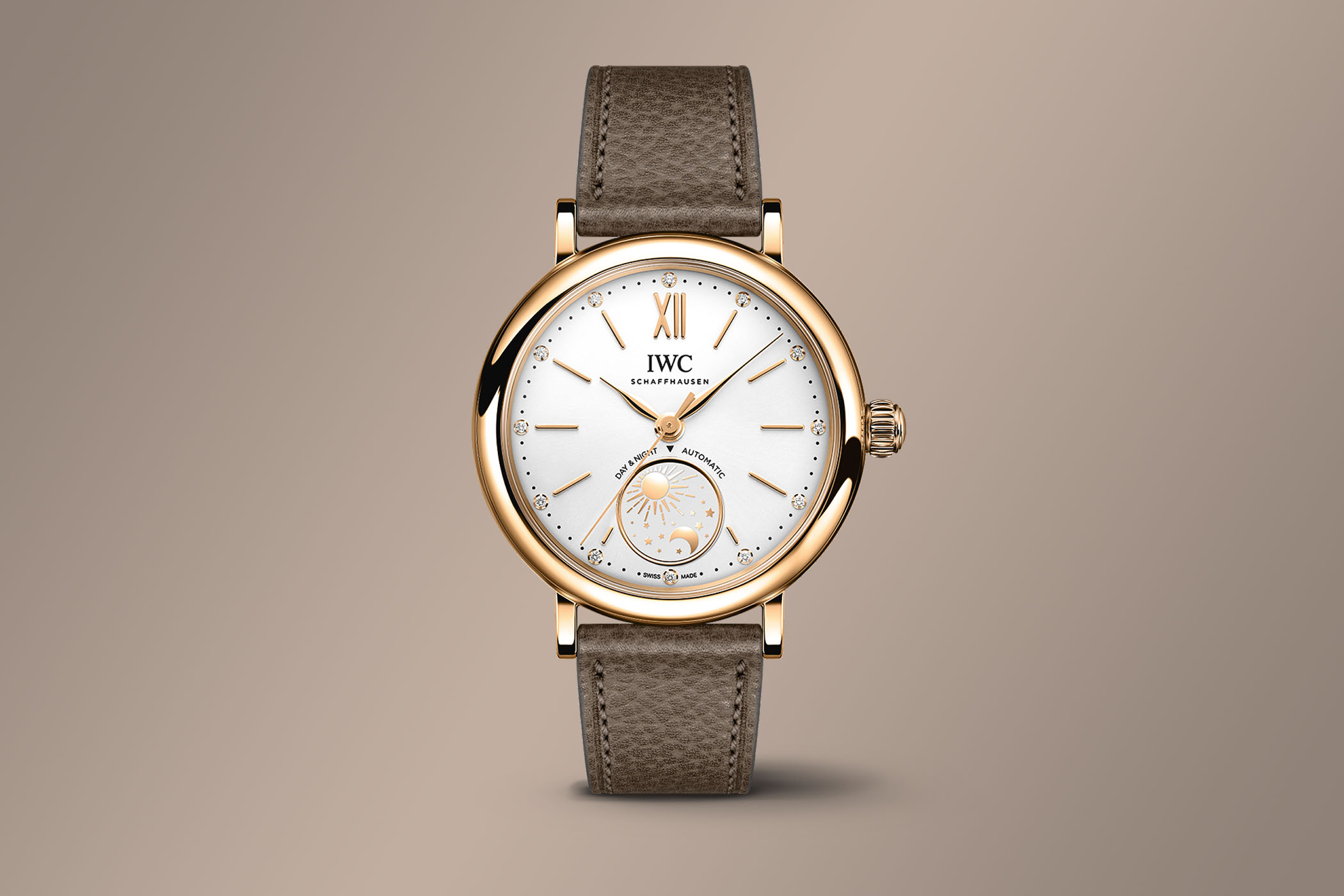
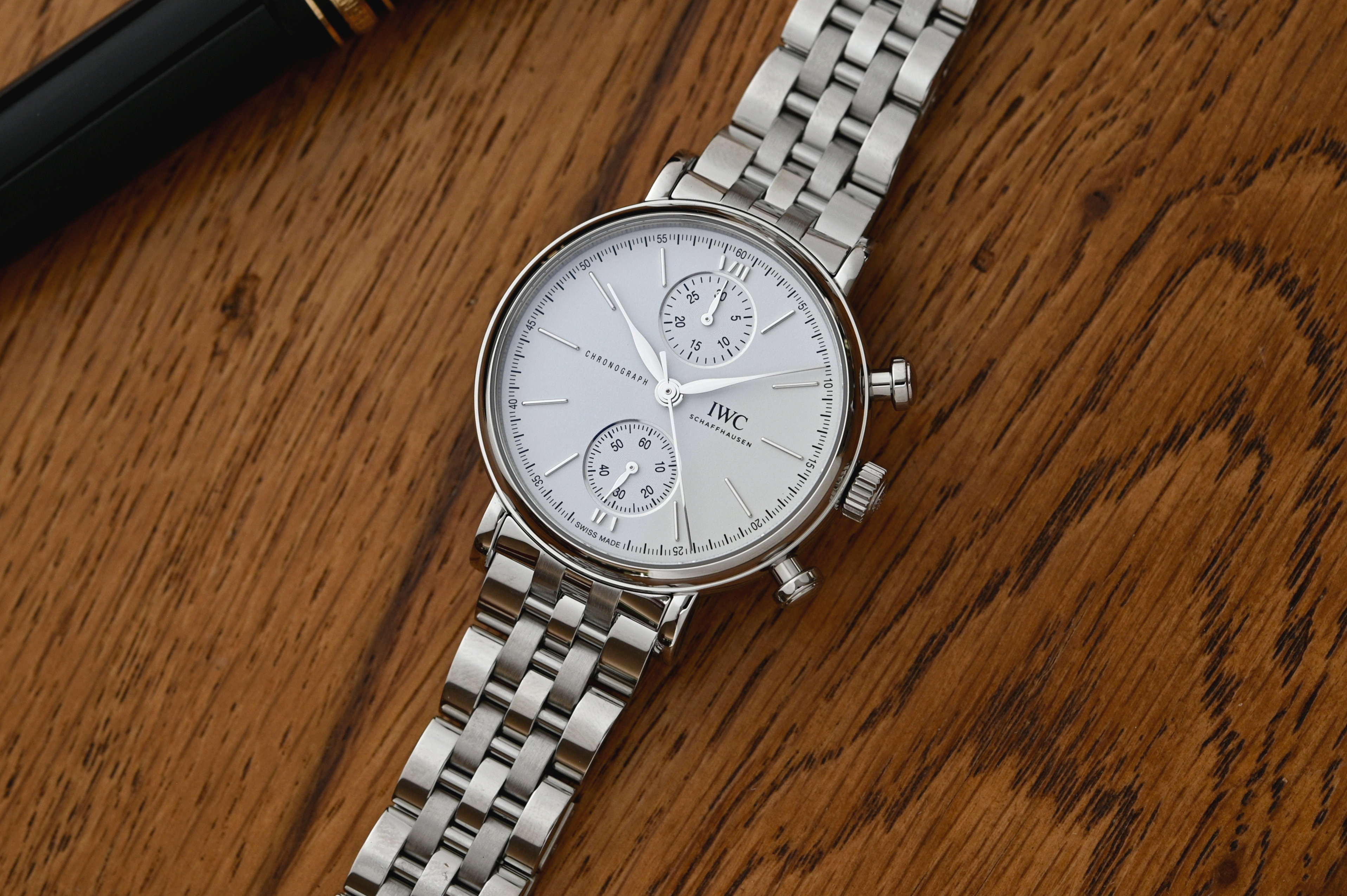
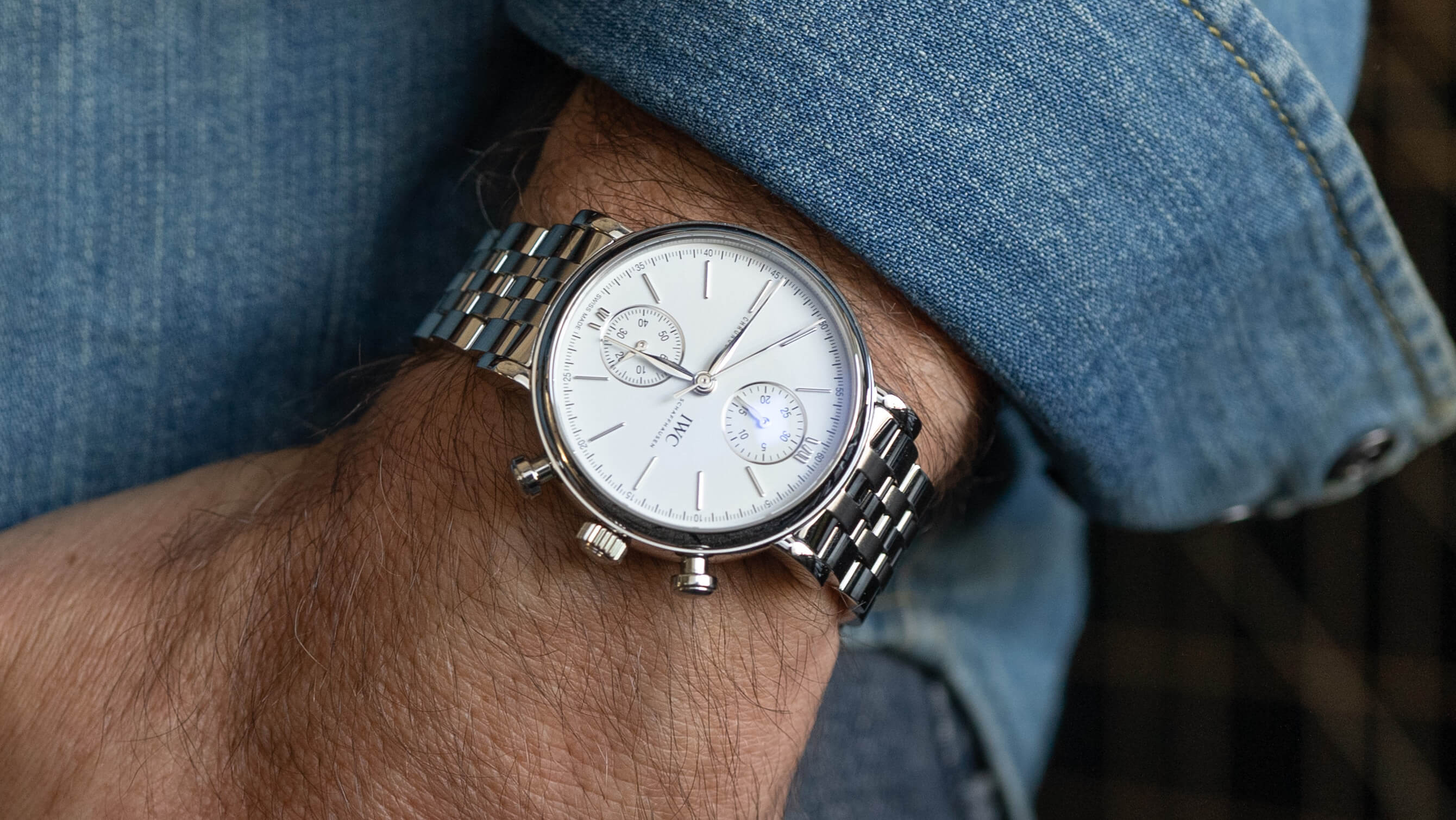
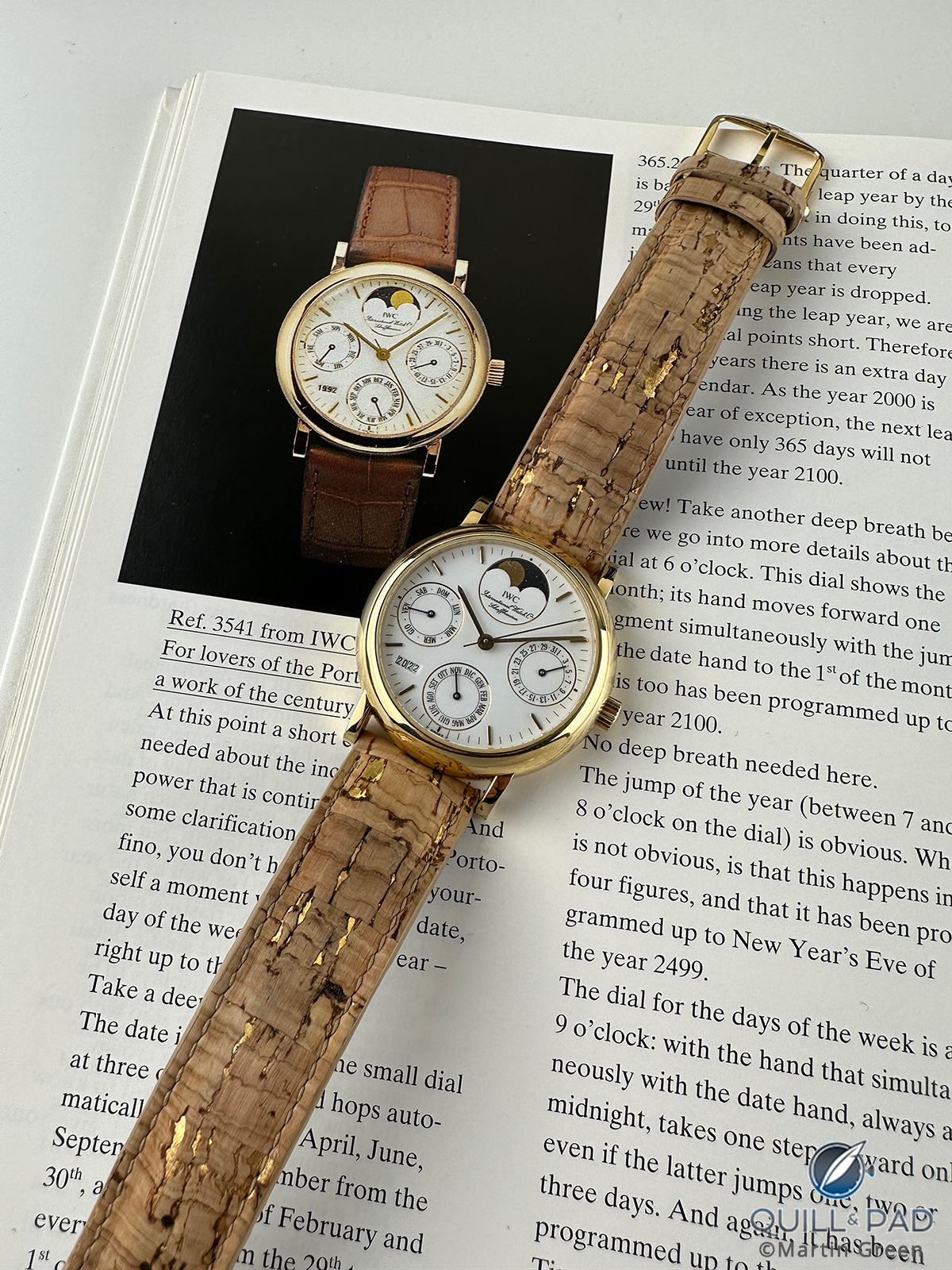
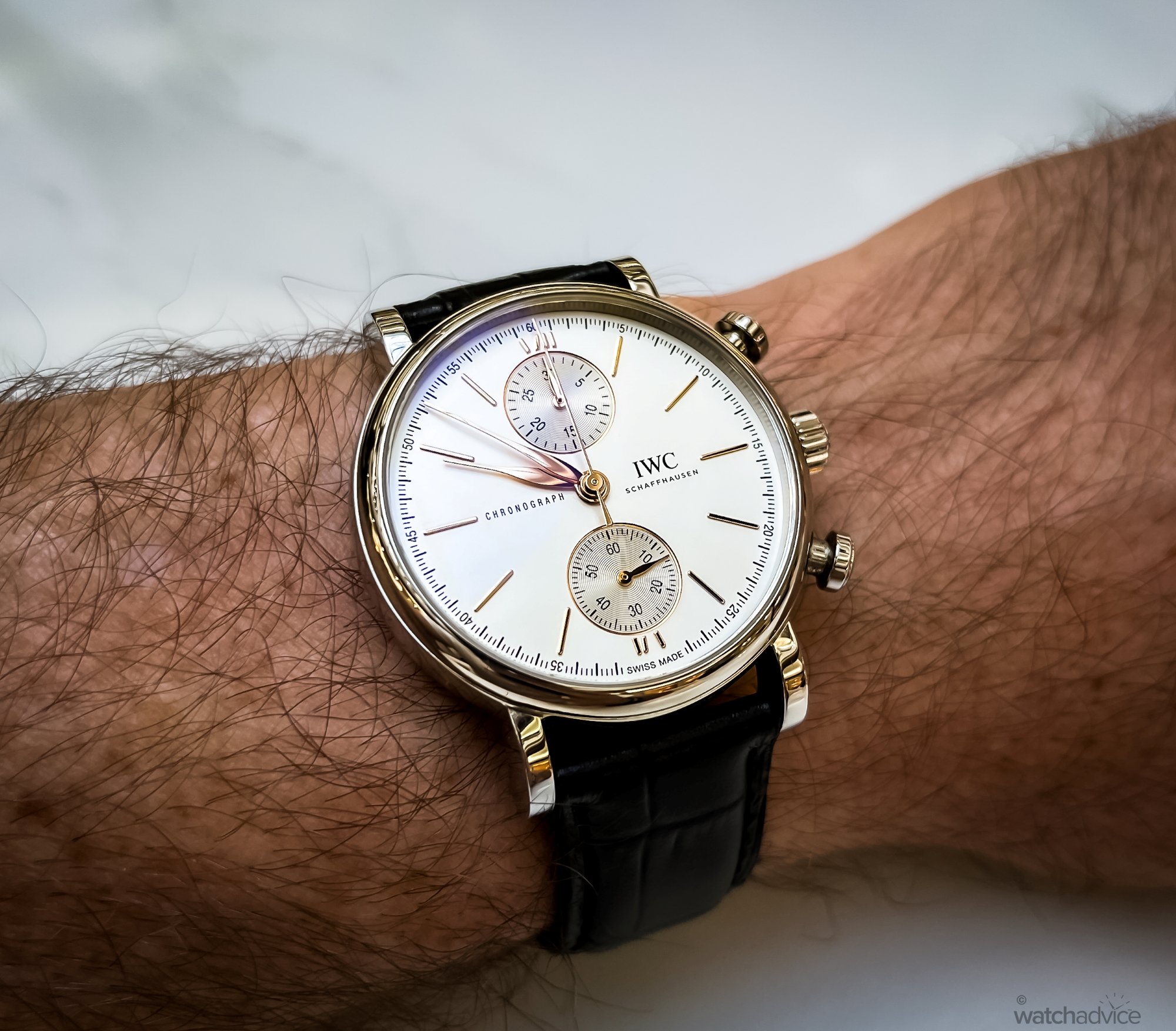
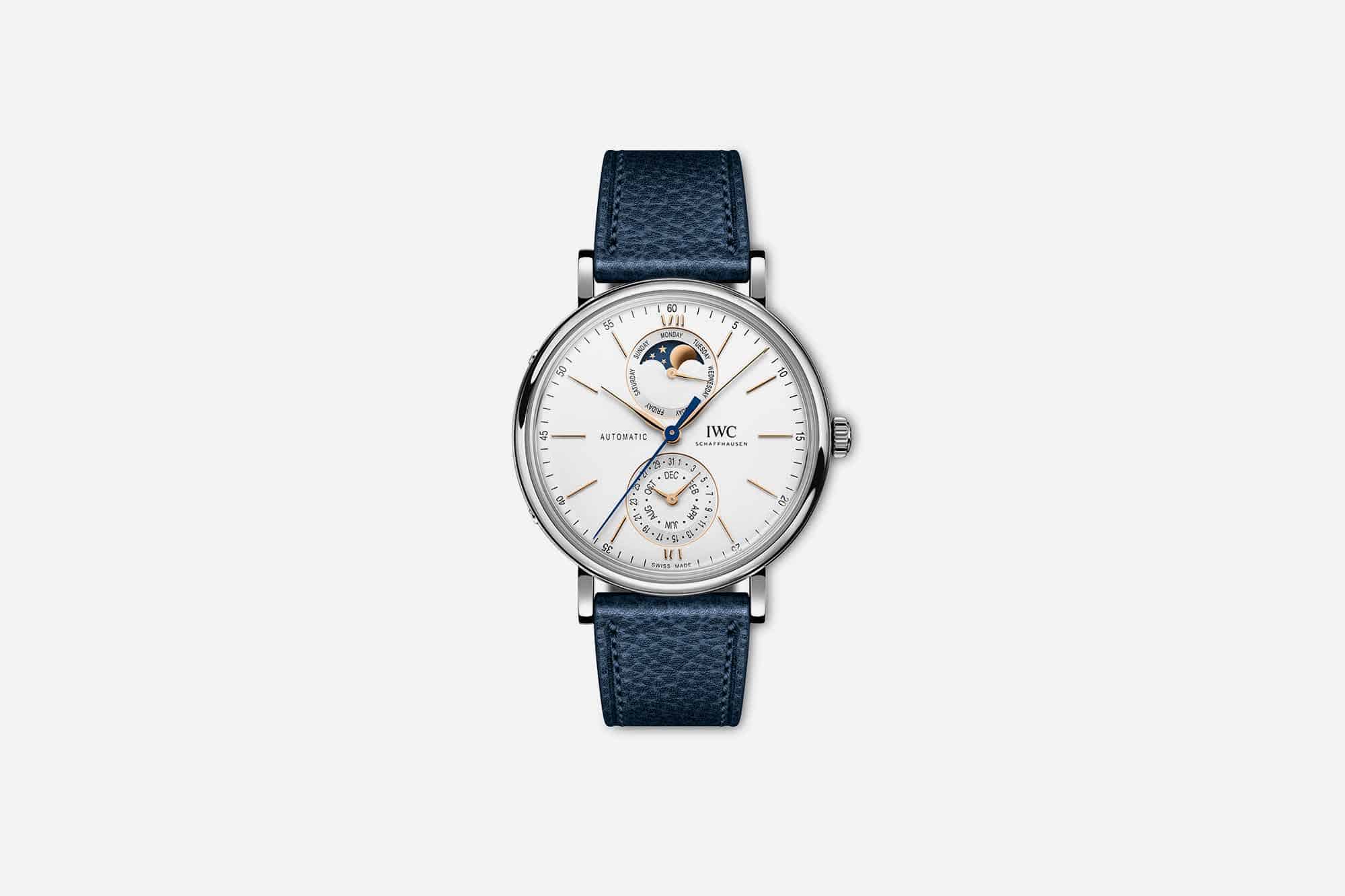
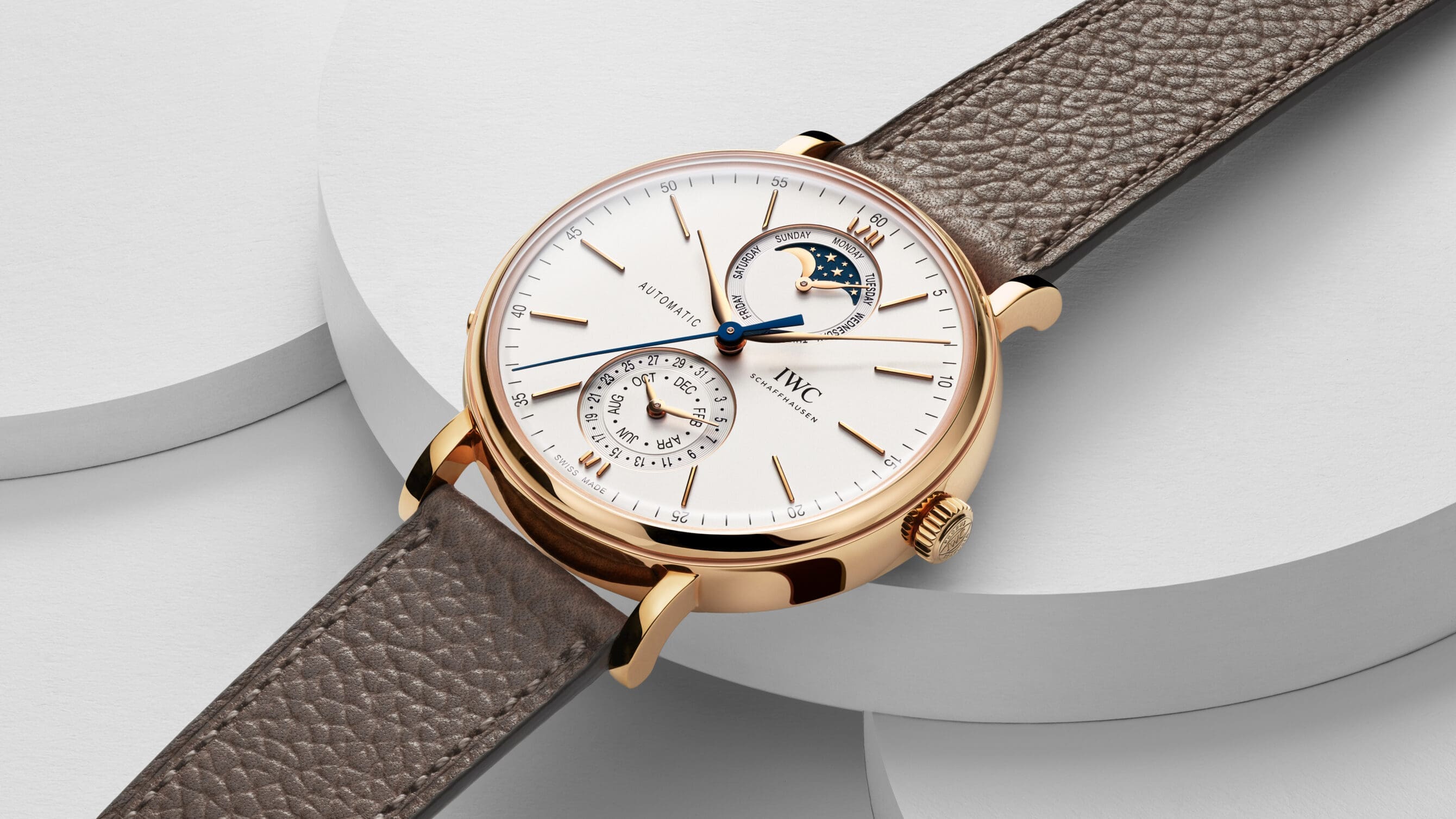
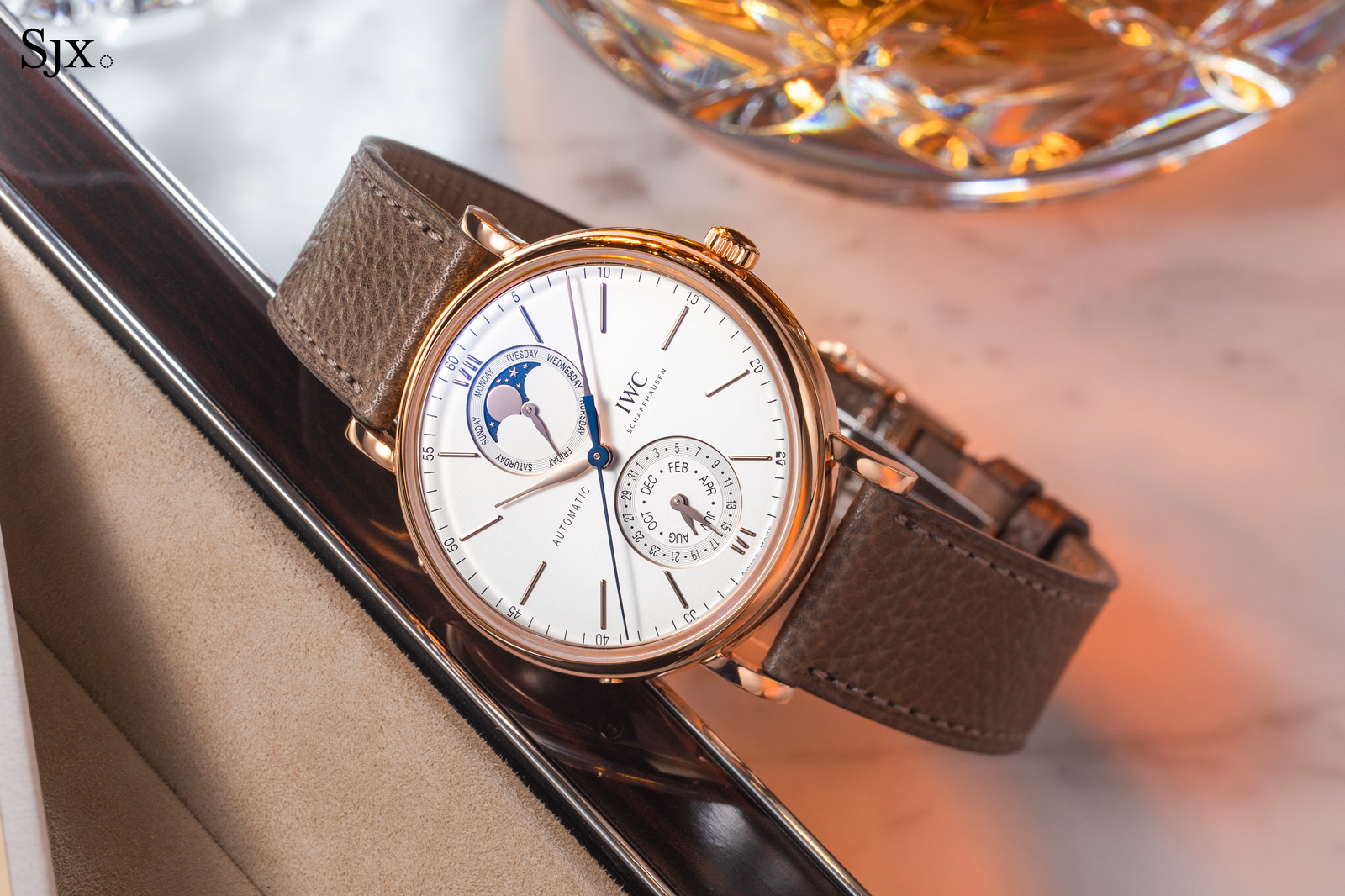
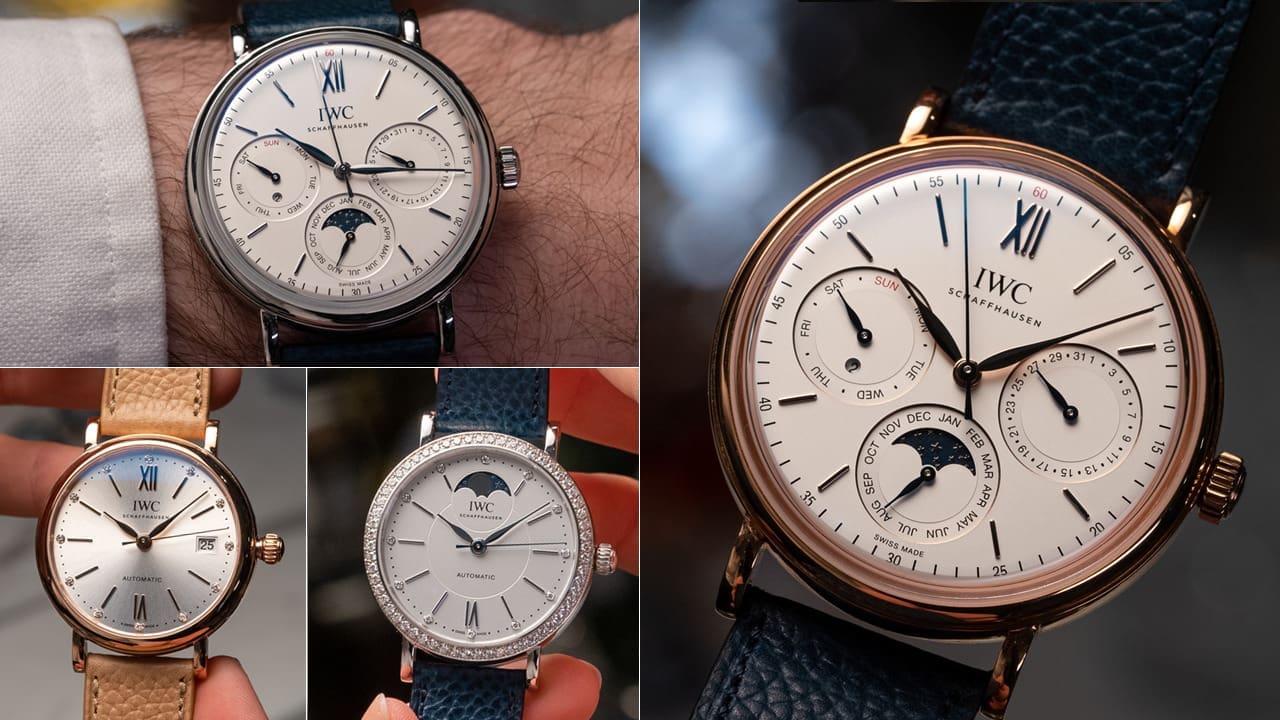
The 1990s saw the Portofino re-positioned at more conventional 38-42mm dress-watch sizes with conventional wristwatch movements (Cal. 35110 automatic, 35111 chronograph, 79320 hand-wound). The 2010 generation under IWC creative direction redesigned the dial with cleaner stick indices, the IWC Probus Scafusia signature at 6 o'clock, and the simplified Portofino case with polished bezel and slimmer profile. The collection expanded to include moonphase, annual calendar, chronograph, day & night display, and perpetual calendar variants, all built on the same dress-watch case template.
The current Portofino catalogue centres on the 40mm Portofino Automatic (ref. IW356502, Cal. 35110 automatic, 42-hour power reserve) at approximately USD 4,500 retail, the most-sold variant. Larger 42mm and 45mm chronograph variants (Cal. 79320, Valjoux 7750-base modular) sit at USD 6,000-9,000. Moonphase, annual calendar, and perpetual calendar variants reach USD 30,000+. Two-tone steel + 18k red gold variants and full 18k red gold precious-metal references sit at the top of the range.
The Portofino has remained one of IWC's most-produced and most-recognised collections. The brand's marketing positioning has consistently emphasised understated, slightly-Italian elegance, with longstanding partnerships with photographer Peter Lindbergh for the brand's print campaigns. The 40mm Automatic is widely regarded as one of the better-value modern dress watches at its price point, balancing in-house movement, IWC's Probus Scafusia chronometer-grade specification, and a classical pocket-watch-derived design vocabulary that has held up across four decades of production.

Comments
No comments yet, be the first to weigh in.