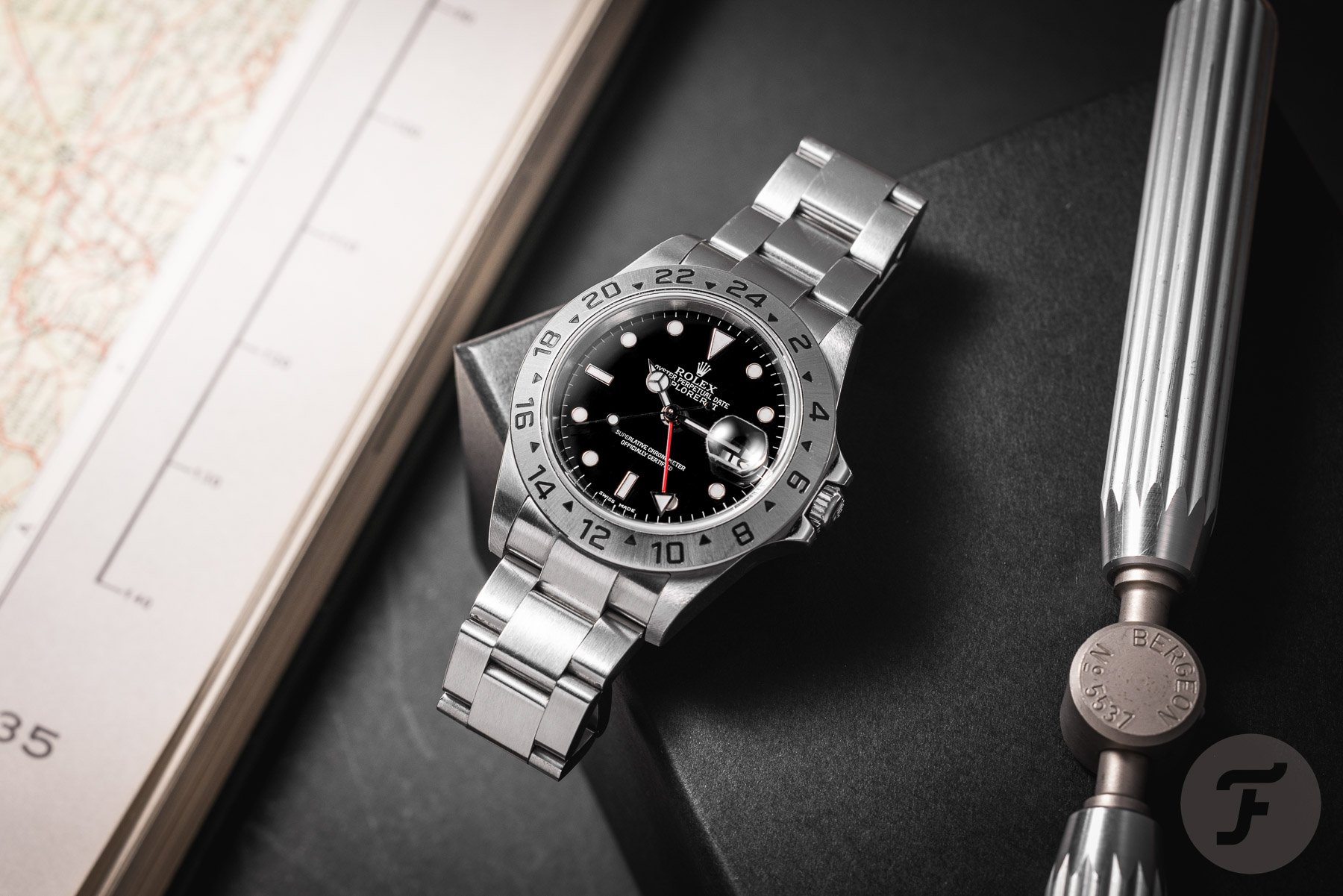
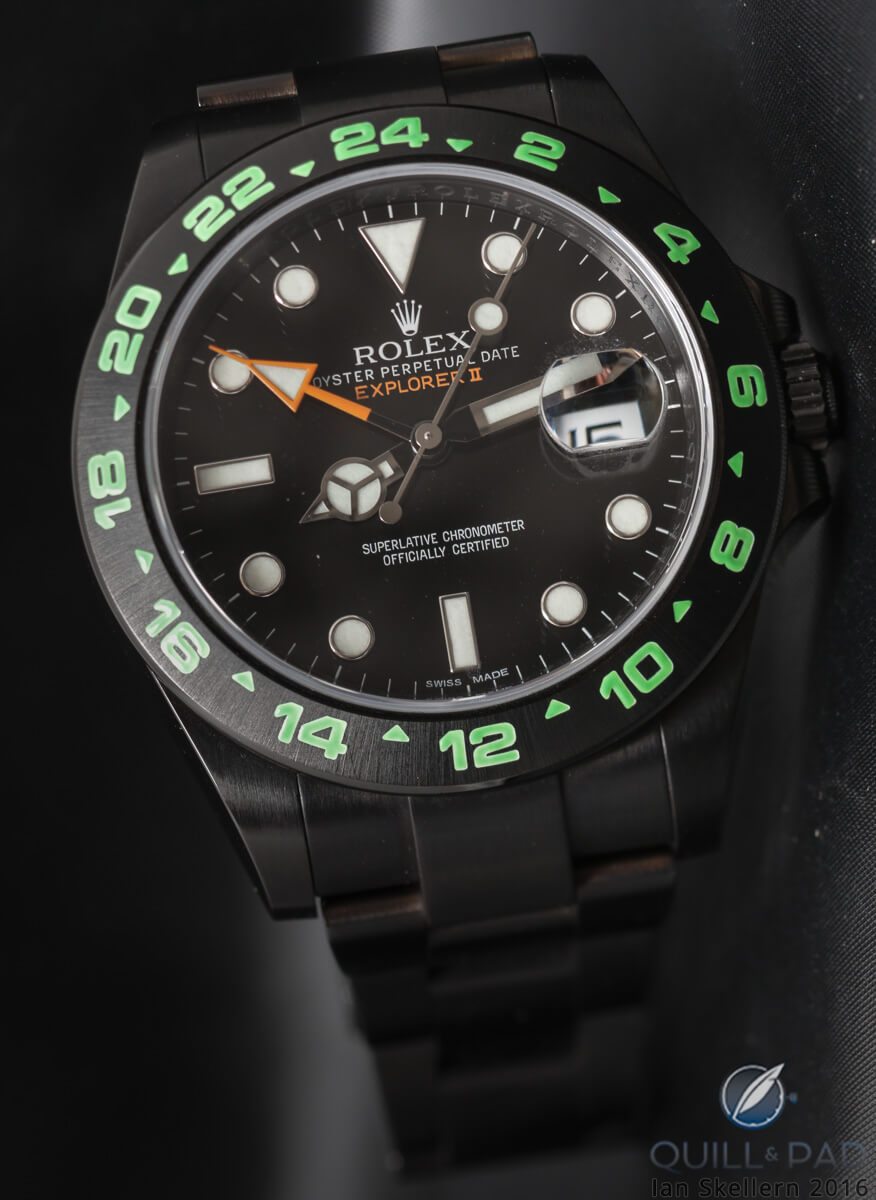
Launched in 1971 as the Ref. 1655, the Rolex Explorer II was designed for a specific niche: cave explorers and polar researchers who spent days at a time in permanent darkness or permanent light, where confusing AM and PM could be a survival issue. The fixed 24-hour bezel and the orange 24-hour hand let them distinguish day from night at a glance.
The Ref. 1655 ran from 1971 through 1985 with the orange 24-hour hand that became its signature. Steve McQueen never actually wore a 1655 (despite the persistent collector nickname "Steve McQueen"); the legend originated from a 1980s-era story that was later debunked, but the nickname stuck and continues to drive 1655 prices today. Original 1655s with orange hands intact trade above CHF 30,000.
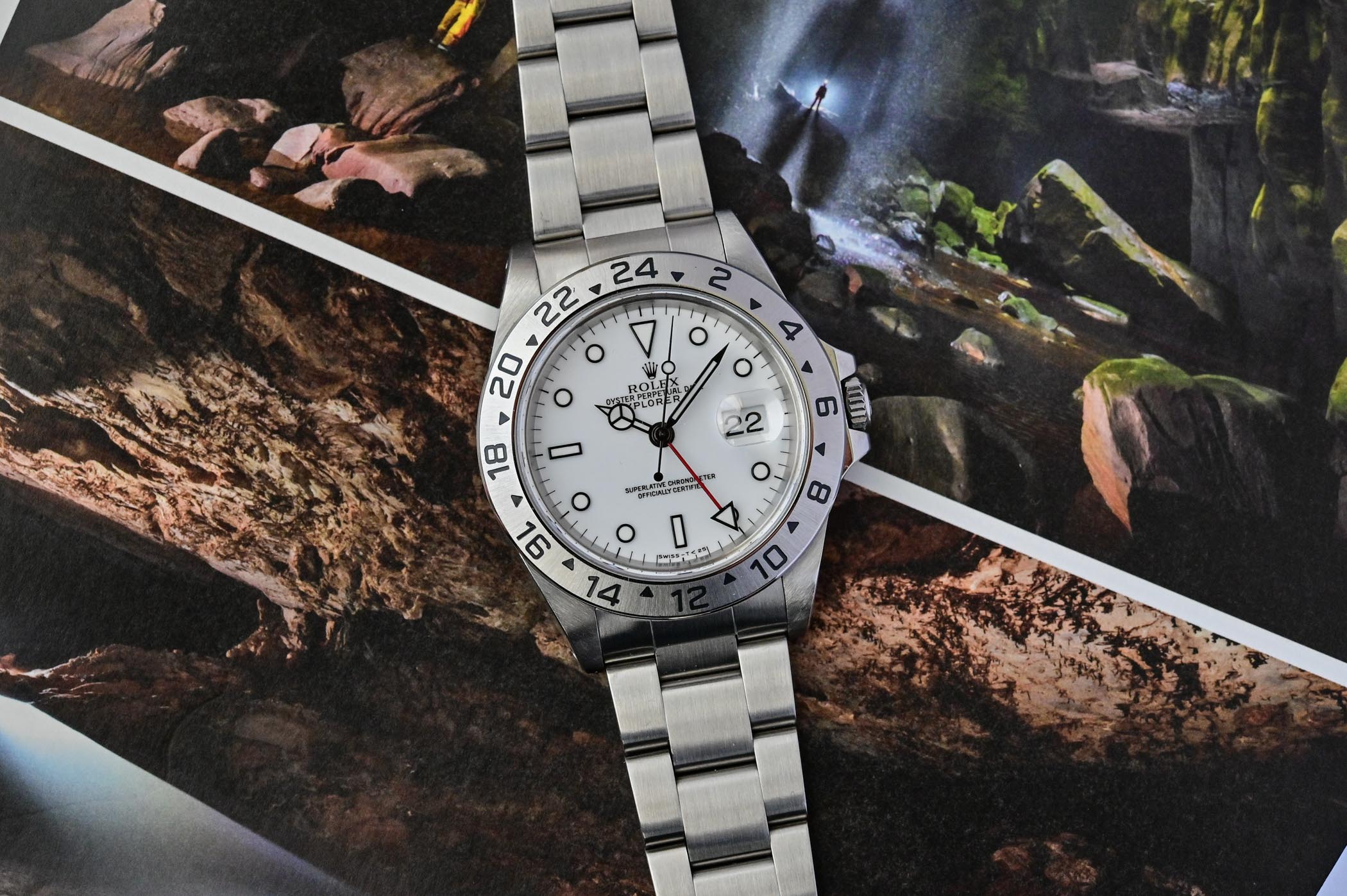
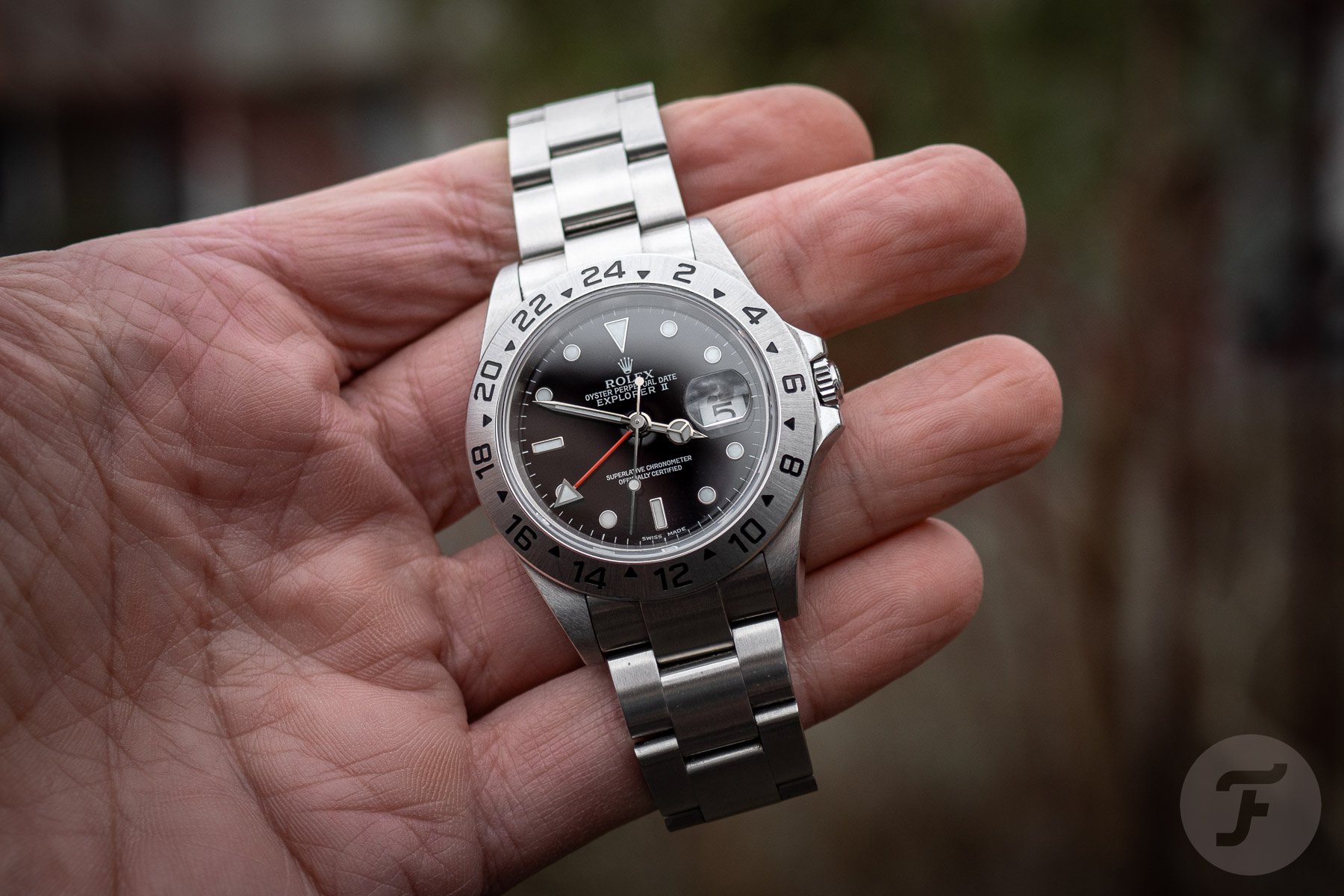
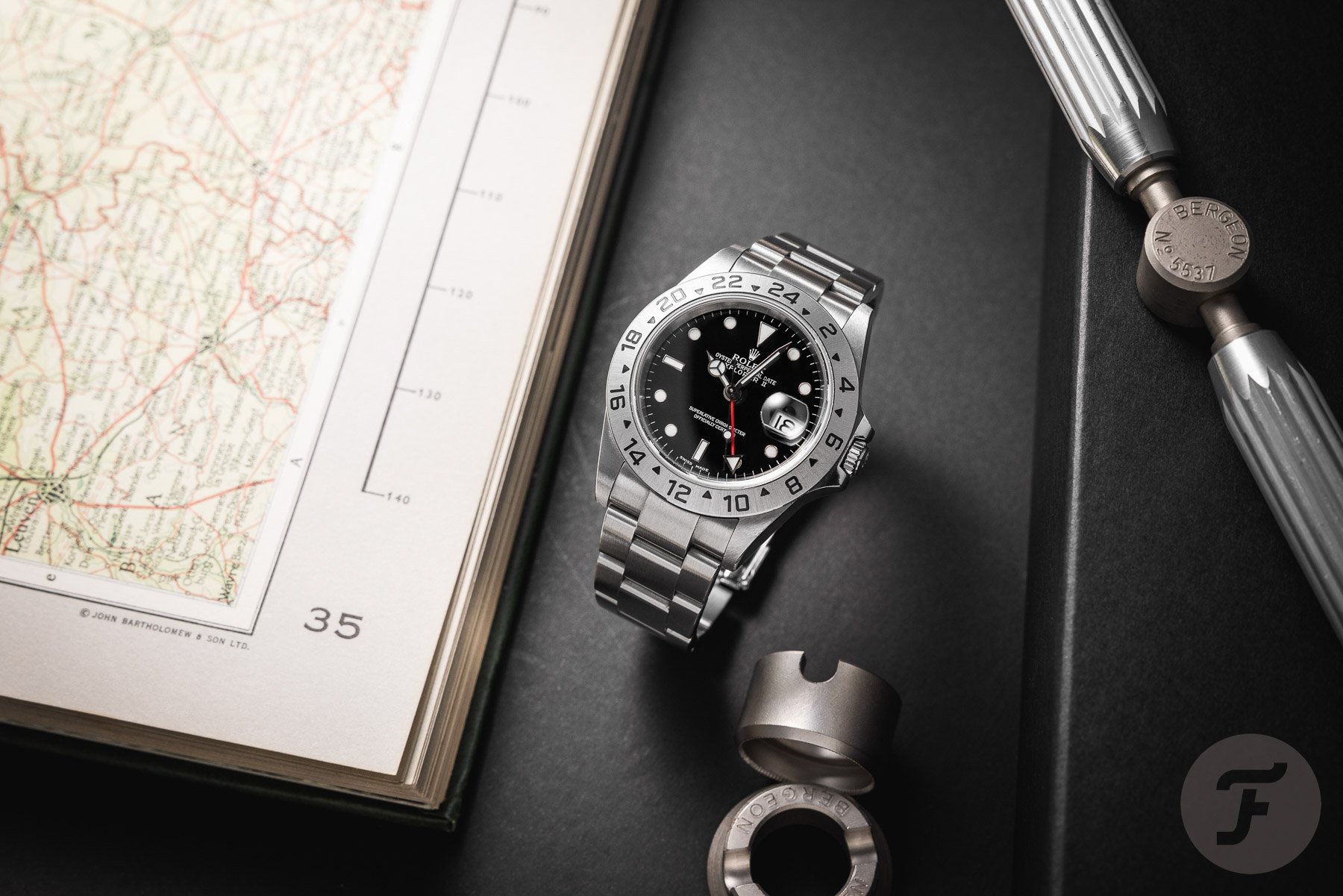
The Ref. 16550 arrived in 1985 with two major changes: a white-dial option (the "Polar") alongside the black, and a redesigned 24-hour hand that could be set independently of the main hour hand, making the watch a true GMT for the first time. The Ref. 16570 (1989-2011) refined the design across two decades. The Ref. 216570 in 2011 grew the case to 42mm and introduced the orange-hand revival on the white "Polar" dial that became the modern collector reference.
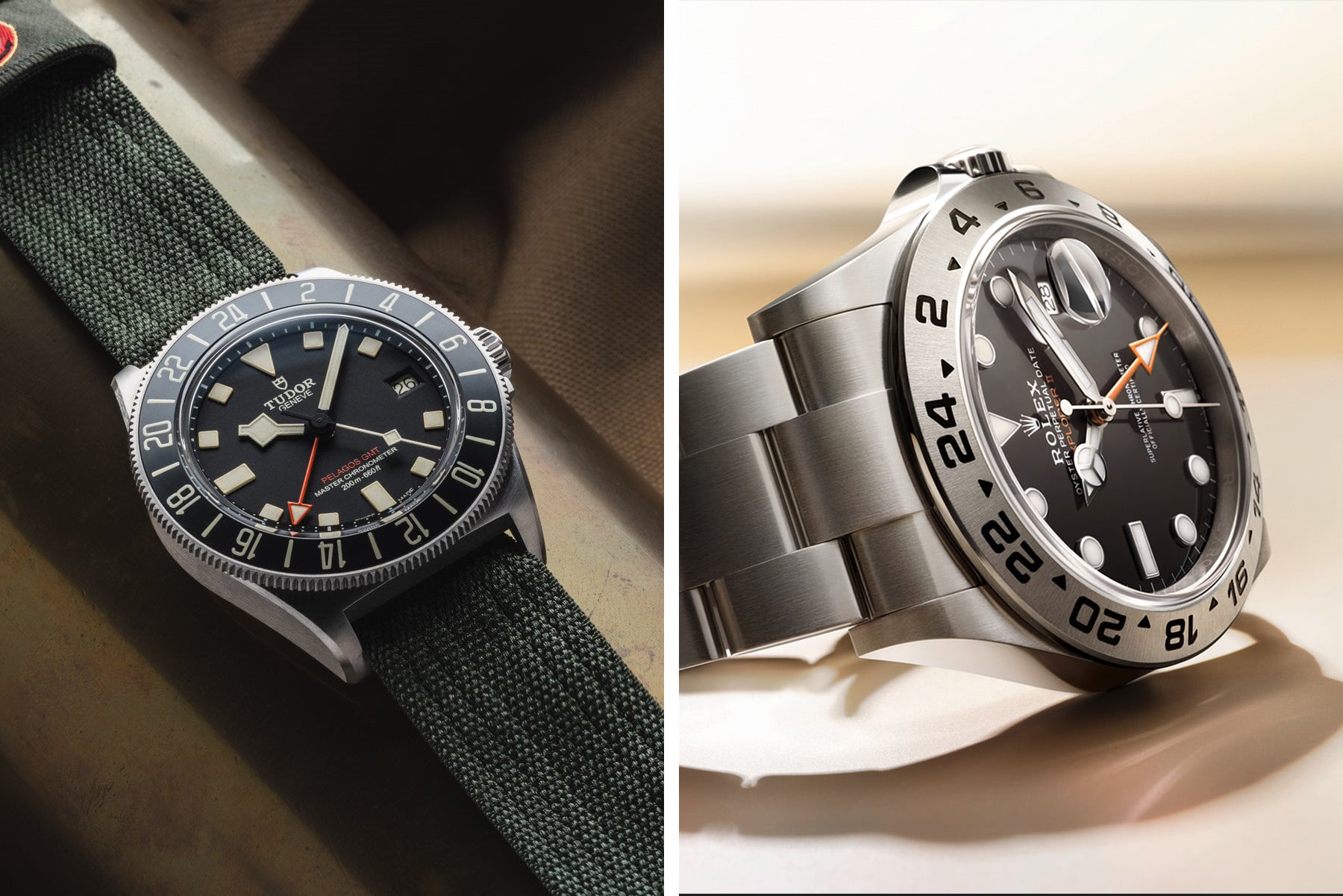
The current Ref. 226570 (2021) runs the Cal. 3285 with 70-hour reserve, Chronergy escapement, and Parachrom blue hairspring. 42mm Oystersteel case, redesigned bracelet, fixed 24-hour bezel in steel. Available in white ("Polar") and black dial configurations. Retail starts at ~€10,000. Allocation is moderate, lighter than the GMT-Master II but tighter than the standard Explorer.


Comments
No comments yet, be the first to weigh in.