Hodinkee
In-Depth: Swatch Group Battles With COMCO Over ETA Movement Sales
At issue is whether Sellita really will be able to compete with ETA in an open market for mechanical watch movements.
7,468 articles · 4,359 videos found · page 11 of 395
How Nicolas Hayek\'s ASUAG/SSIH merger (1983) and Swatch brand launch (March 1983) rescued Swiss watchmaking from the quartz crisis.
Largest Swiss watch employer (~17,000 staff). 18 brands from Breguet/Blancpain at the top to Swatch at entry. ETA SA + Nivarox-FAR. Hayek family controls.
Hodinkee
At issue is whether Sellita really will be able to compete with ETA in an open market for mechanical watch movements.
Hodinkee
Bright lights, big city.
Hodinkee
Our weekly picks of watches from around the web.
Hodinkee
Two hundred reporters, three days, six towns, six brands, zero Baselworld.
Hodinkee
Slim, plastic, and tons of fun.
Video
Revolution
Revolution
Hodinkee
What We Know Rado is a brand that's synonymous with ceramic. If I think about the brand's catalog, the weird, quirky shapes in glossy blacks and whites are what shine above the rest, both metaphorically and literally speaking. But it speaks to the brand and its long history with the material, 40 years in fact, as well as its share of the ceramic watch market around the sub-ten-thousand-dollar price point. Now, Rado is a curious brand within the Swatch Group, as it's not talked about as much in the United States compared to many of the other brands at its price point. And that's certainly due to America being the brand's smallest market by far. Its nickname of "the Rolex of India" certainly carries some weight, thanks to 42% of its business being in India, the Middle East, and Africa. In India, the most populous country in the world, the market share is a whopping 50% of watches between CHF 1,000 and 3,700 (per the brand). This year marks a big anniversary for Rado, commemorating 40 years since the debut of the Integral, the brand's first watch featuring ceramic. And so this occasion brings forth the Integral 40-Year Anniversary edition, an absolute throwback to the original that retains its very definitely 80s look. Clad in shiny black and gold, it preserves the original design's rectangular case, albeit in slightly larger dimensions each way, with a 28mm width and 39.8mm length. The new Integral 40-Year Anniversary (left) and the original (right). Thanks to the Rado R279 ...
SJX Watches
Alongside the launch of the Omega Constellation Observatory, we were among the first members of the public granted access to the Swatch Group’s Laboratoire de Précision (LP), a new independent chronometer testing institute with facilities in Omega’s native Biel/Bienne and Villeret. The new organisation does not redefine chronometer norms, but it has developed a new acoustic certification process that is more automated and provides client brands with a richer performance data set - a unique capability that has implications beyond mere certification. Laboratoire de Précision. Image – Omega Initial thoughts The debut of the Constellation Observatory, the first watch certified by LP and the first-ever two-handed Master Chronometer, was greeted with a mixed feedback from both collectors and the press. Some found the choice to launch a chronometer without a seconds hand heretical, viewing it as a gimmick to promote LP’s new testing process. The Omega Constellation Observatory is the first watch to complete chronometer certification at LP. Regardless of how one feels about the two-handed aspect of the watch - I found the design balanced and appealing, even if the concept is a bit quirky - the launch placed a renewed focus on the way official chronometers are tested and certified. Many were confused by the claimed novelty of acoustic testing, given the universal presence of Witschi machines on watchmakers’ benches. Indeed, the method is not new. What is new is t...
SJX Watches
A new independent voice emerges with the L’Impétrant, the debut watch from Stéphane Pierre, combining a bi-retrograde time display with an architecturally distinctive movement. Put together by an all-star roster of specialists, the L’Impétrant is a fresh take on a familiar format. Initial thoughts The central question with any debuting independent is whether ambition matches execution. Stéphane Pierre’s L’Impétrant is quirky and eccentric - and just as importantly seems well made thanks to the efforts of some 20 contributing specialists across fields such as movement construction, machining, electroplating, stamping and finishing. Given the evergreen popularity of the high-end, time-only format, it may well find its audience. The L’Impétrant’s visual staple is a set of enormous 19 mm retrograde hands - one for the minutes and the other for the hours. The bi-retrograde complication is no longer uncommon, but The L’Impétrant’s overlapping arrangement of the hands, and the luxurious construction of the mechanism, is unusual, helping it stand out within this niche. The mastermind behind the L’Impétrant has had an unusual career. Stéphane Pierre originally trained as a mechanical engineer and, intriguingly, has spent time working for both the Swatch Group and in the military sector. The L’Impétrant is essentially a very high-end time-only watch, and as such it enters a crowded market. However, rather than just developing a basic time-only watch...
Video
SJX Watches
Breguet refreshes its Tradition collection for 2026 with new colourways and expanded grand feu enamel dial options across five references, building on the momentum of the brand’s 250th anniversary year. The line-up spans four automatic variants of the Seconde Rétrograde and one manually wound GMT, all underpinned by the architecturally distinctive cal. 505 that has defined the collection since its 2005 introduction. Initial thoughts Inspired by an original Abraham-Louis Breguet’s montres à tact pocket watch from the late 18th century, the Tradition collection, released in 2005, was Breguet’s first major new model family under Swatch Group management. The central barrel placement and unusual gear train arrangement perfectly captures the essence of the original pocket watches, and this aspect of the design remains as recognisable and distinctive as ever, despite the a growing number of independent watchmakers that have introduced watches with a similar layout. In fact, the cal. 505 is so successful as a contemporary interpretation of Breguet’s work that a variation of it was adapted for use in the award-winning Classique Souscription 2025 introduced last year. For 2026, the Tradition collection has been slightly refreshed with modern colourways and more grand feu enamel dial options. The five new models include four automatic variants of the Seconde Rétrograde, one of which features a diamond-set bezel, and one manually wound reference with a dual-time complicatio...
SJX Watches
At long last, Omega has unveiled the spiritual successor to the beloved ‘Pie Pan’ Constellation, complete with its signature domed dial, observatory medallion, and ‘dog leg’ lugs, the Constellation Observatory. First teased on the wrist of actor Delroy Lindo at the Academy Awards, the Observatory debuts in an expansive range of case materials and dial treatments. The collection also marks the commercial debut of Swatch Group’s Laboratoire de Précision, which has developed a new chronometer testing process capable of certifying two-handed watches. As a result, the Observatory carries the unexpected distinction of being the first Master Chronometer that displays only the hours and minutes. The Observatory in 18k Sedna gold, the brand’s trade name for its proprietary rose gold alloy. Initial thoughts The Observatory embodies Omega’s strengths, capitalising on the brand’s historical pedigree and proprietary materials and technologies, including its own durable alloys and the co-axial escapement. The Observatory in steel. On the other hand, the Observatory suffers somewhat on account of its thickness, relying on a movement platform developed at a time when the trend toward large watches appeared to have no end in sight. That said, the case design does a decent job of reducing the perceived thickness, and it looks and feels thinner than many other watches that share its dimensions on paper. It also demonstrates the immense capabilities of the broader Swatch Grou...
Time+Tide
With Watches and Wonders happening next month, participating (big box) brands have to wait before being able to release any novelties. However, the past seven days have been extremely busy for the independents and Swatch Group brands! We have Credor debuting a new ceramic dial time-only watch, Krayon playing on the Pac Man anniversary, and … ContinuedThe post New releases from Credor, Krayon, Nomos and more appeared first on Time+Tide Watches.
Teddy Baldassarre
Tissot traces its long history back to 1853, when it was founded in Switzerland’s Jura Mountains by the father-son watchmaking team of Charles-Félicien and Charles-Émile Tissot. Today part of the Swatch Group, Tissot can lay claim to several watchmaking milestones throughout its history, including the first pocket watch to display two time zones in 1853; the first watch built to resist magnetism, the Antimagnetique, in 1930; and the first tactile-screen multifunction digital watch, the T-Touch, in 1999, years before the smartwatch would come into existence. Today, Tissot markets more than 4 million watches per year to more than 160 countries and is known for producing what its parent group terms “midrange market” watches that are prized for their price-to-value ratio. Tissot’s 1950s-era Visodate was among the first fleet of watches to introduce an integrated date complication, but the line’s contemporary renditions have continuously flown under the radar within the enthusiast community – until today, that is. New for 2026, the brand has given the collection a complete overhaul, revamping the Visodate to be more everyday-carry friendly than ever without sacrificing its quintessential retro flair. [toc-section heading="History And Context"] Vintage 1950s Tissot Visodate Advertisement The original Tissot Visodate hit shelves in 1953, marking 100 years since Tissot’s founding. It was not the first wristwatch with a date display in a window - that woul...
SJX Watches
One of the longest tenured models in the Audemars Piguet (AP) catalogue, the Royal Oak Selfwinding Chronograph 38 mm has been upgraded with a new manufacture calibre and sapphire case back for the first time, while only slightly tweaking the iconic design and price tag. Inside the new ref. 26450 is the cal. 6401 that incorporates with welcome quality-of-life improvements such as a longer power reserve, higher beat rate, and instantaneous date. The new movement accomplishes all of this without significant tradeoffs in size, but it arguably falls somewhat short in aesthetics. Minor shortcomings aside, the modestly sized Royal Oak Chronograph is a strong offering that enters the field at the top of its class. Initial thoughts In the same fashion as last year’s updated Royal Oak Perpetual Calendar, the new 38 mm Royal Oak Chronograph takes an evolutionary, rather than revolutionary, step forward, being essentially the same watch, only better. AP clearly knows better than to mess with a winning formula, but the brand also faced challenges, both in manufacturing and customer experience, that came with a nearly four-decade-old movement platform, sourced from Swatch Group no less. The changes are slight, even insignificant at first glance, but are the sort things that come to be appreciated with long-term ownership, especially within a smaller collection where increases in power reserve and performance are most noticeable. It even looks slightly better – the dial is less cram...
Video
Worn & Wound
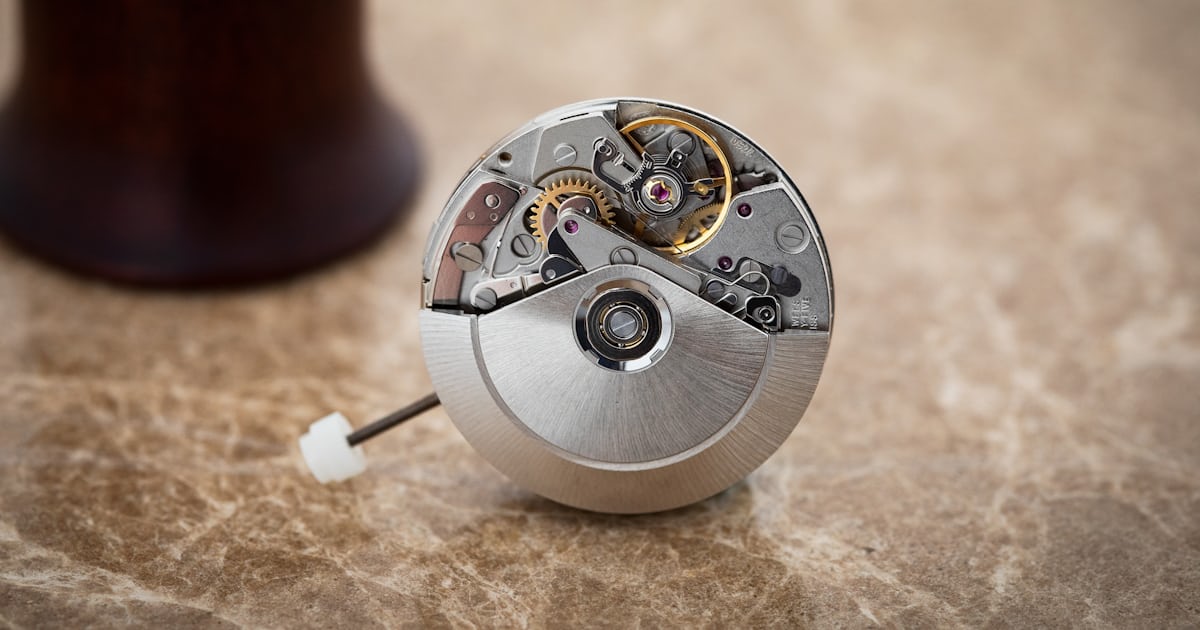
There’s a “don’t change it if it ain’t broke” mentality in Swiss watchmaking. Progress is slow, and it often seems that there’s a general distrust of change. An example of this is in the mechanical movements that power most of our watches. Chances are, you have at least one watch with an ETA 2824 or a movement based on the 2824 in your collection. If you’re like me, you have several. For Swiss-made watches of a certain price point, they are the standard. They are “workhorses” that, while not the most feature-rich, offer reliability and serviceability. And part of the reason for that is that the design has been around, largely unchanged, since the 1970s (the 2824-2, which is the current standard, was released in the 80s). That is, until 2013, when ETA launched 80-hour movements based on the 2824-2. First debuted in a Tissot as the Powermatic 80, ETA nearly doubled the 2824’s power reserve by slowing the escapement’s frequency from 28,800bph to 21,600bph, introducing synthetic components, and increasing the mainspring’s capacity. The biggest update to the 2824 format in a generation (though they no longer use that numbering), as ETA is part of Swatch, these movements gave the group’s catalog of brands under Omega an unexpected edge in the market, but were not available to third-party brands, thus limiting their overall impact. The ETA 2824 featured in a Sinn 556i In 2003, Sellita began supplying movements to third parties as a response to Swatch’s...
Hodinkee
Prices rose for all major watch group brands as primary market prices climbed, but value retention remains weak for most Richemont, Swatch, and LVMH brands, according to the report.
Fratello
This seems to be the week of the reverse pandas at the Swatch Group. You probably already saw the two Speedmaster Professional Moonwatches with glossy black and white dials that Omega launched earlier this week. Now, Hamilton also introduces three new chronograph references. They are all inspired by the vintage racing culture of the ’50s […] Visit Introducing: The Hamilton American Classic Intramatic Chronograph H In Green, Brown, Or Blue to read the full article.
Monochrome
Mido’s flagship Ocean Star collection is a contemporary evolution of its 1940s Ocean Star dive watch family. Often described as an all-round ‘surf and turf’ model, the Ocean Star 200C, introduced in 2021, comes with upgraded features like ceramic inserts and textured, colourful dials and Swatch Group’s latest-generation calibre 80. The new Ocean Star 200C […]
Fratello
We have a fondness for Certina here at Fratello. Now owned by the Swatch Group, the brand offers good bang for your buck with its solid modern lineup of tool and dress watches. But Certina is also one of those brands that is such a treasure trove for vintage-watch hunting, and one of its many […] Visit Why The Certina Argonaut Is A Vintage Gem to read the full article.
Video
SJX Watches
In the run-up to the holidays, Seiko facelifts its high-spec, multi-function quartz watch with the Astron GPS Solar refs. SSJ039 and SSH187 - limited editions of its satellite-linked models. While not available in stores until January, the new references make their public debut almost exactly 56 years to the day when the original Astron, the world’s first quartz wristwatch, was launched on December 25, 1969. Initial thoughts Despite pioneering efforts to develop quartz watches in Switzerland, and the commercialisation of category-defining products like the Swatch, the alpine nation has tended to lag a step behind its rivals from the land of the rising sun when it comes to quartz technology. As quartz watches matured and the underlying technology became commoditised, much of the Swiss watch industry redoubled its focus on mechanical watches, seemingly content to cede quartz leadership to brands like Seiko and Citizen. For their part, the dominant Japanese brands have continued to develop quartz watches with conscientious enthusiasm, bringing solar charging, radio frequency and satellite-based connectivity, and ultra-precise oscillators to maturity. In that context, the Seiko Astron is the embodiment of more than half a century of quartz leadership, and combines several of the brand’s strengths in two distinct limited edition models. Though the four-figure prices may come as a shock to buyers more familiar with offerings from brands like Apple, Garmin, and Casio, the A...
Fratello
This new MoonSwatch Mission to Earthphase Moonshine Gold will become available on December 4th. However, after that date, this MoonSwatch model will be available only when the Swiss see snowflakes. Though it will be for sale at select Swatch boutiques worldwide, it will be subject to local weather conditions in Switzerland. And the sales of […] Visit A Novel Sales Model: This New MoonSwatch Is Only Available When It Snows In Switzerland to read the full article.
Teddy Baldassarre
The Longines Hydroconquest has been around since its debut in 2007 and in that time it has come to be one of the staple entry level luxury dive watches. And it’s certainly for good reason considering just how much quality is on offer for the price which is in no small part thanks to the brand’s positioning under the Swatch Group umbrella. Derived from the classic Longines Conquest collection, the Hydroconquest is a decidedly un-vintage inspired dive watch that rather leans into contemporary design. Given how much safer a vintage-inspired design is these days, I give Longines a lot of credit for developing and nurturing this collection over the last 18 years. After all, having the Legend Diver as a sibling sets a rather high bar. The Hydroconquest was refreshed back in 2018 when it gained a ceramic bezel which, quaint as it might seem today, was not such a universally available option at the price point. Here I will get into the standard model as well as the excellent GMT iteration that was released back in 2023. [toc-section heading="Longines Hydroconquest Case"] This watch is available in several case size iterations ranging from a 32mm quartz model all the way up to a 43mm all black ceramic case iteration. I want to talk about the 41mm size which is also likely the most popular for obvious reasons. Measuring 41mm wide and 11.9mm thick with a 51.1mm lug-to-lug height, the Hydroconquest does stretch out onto the higher side of that 50mm L2L, meaning it wears on the big...
SJX Watches
In just four short years the Tissot PRX has become a runaway success, spawning variants in almost every imaginable size and colour, but the new PRX 38 mm in Damascus steel stands apart. The patterned case and dial give it a tactile, almost artisanal quality rarely seen at this price point, with randomised striations that make each watch unique. Priced at a reasonable premium compared to the standard model, the Damascus steel case and dial of the new PRX are the result of forging and folding multiple steel alloys, which are then etched with acid to reveal a distinctive texture. Initial thoughts The PRX has proven to be widely successful for Tissot, and is now available in countless sizes, colours, and materials. Many are forgettable, but a few stand out. The Damascus steel variant is among the latter. The new PRX in Damascus Steel is one of the best yet, especially in the nearly perfect 38 mm size that will fit well on just about every wrist, big or small. The patterned grey texture found on the case and dial is immediately appealing, and while a full Damascus steel bracelet would have been even better, the leather strap helps keep costs in check and avoids the trap of looking too busy. Like other PRX models, the Damascus steel edition features the Swatch Group’s signature Powermatic 80 movement, which offers a convenient 80 hour power reserve, which should last through the weekend for all but the most sedentary lifestyles. It’s not much to look at, but that’s alright...
Fratello
As we continue our quest to find the definitive dress watch of 2025, it’s time for the fourth match of this first round of Fratello Dress Watch Season. Today, Nacho and Ben go head-to-head with two heritage-inspired contenders from Swatch Group brands. It’s the Breguet Classique Souscription 2025 versus the Omega Seamaster 37mm Milano Cortina […] Visit Fratello Dress Watch Season: Round 1, Match 4 - Breguet Classique Souscription 2025 Vs. Omega Seamaster 37mm Milano Cortina 2026 to read the full article.
Video
Question, suggestion, or just want to say hi? Drop a note.