 Deployant
Review: Journey to Greatness - The Bovet 1822 Edouard Bovet Tourbillon
We bring you the details and our thoughts on the Edouard Bovet Tourbillon, a watch that commemorates the brand's founder and his journey to Canton.
871 articles · 3 videos found · page 16 of 30
Deployant
We bring you the details and our thoughts on the Edouard Bovet Tourbillon, a watch that commemorates the brand's founder and his journey to Canton.
 Deployant
We travel with Jin on his journey as he matures into a collector. What fascinated him as a boy and now captures his imagination.
 Revolution
The beginning of a journey takes but one step. In an age of square and round watches, the industry gripped in the throes of the quartz crisis was trying to outcompete itself on a battlefield of watch straps and materials. Standing above the fray and towards even more risk was a company near the brink, […]
 Worn & Wound
From the imposing astronomical clocks of Tudor England to the exquisite pendant watches of Victorian Britain, timekeeping has long been a symbol of power, prestige, and technological marvel within Europe’s royal courts. This new series explores the fascinating evolution of clocks and watches crafted specifically for royalty, tracing how these intricate masterpieces reflected the tastes, ambitions, and innovations of monarchs. Through the lens of craftsmanship, artistry, and historical significance, we reveal how these royal timepieces marked the passage of dynasties and empires. Victoria (1819-1901) was the queen of the United Kingdom of Great Britain and Ireland between 1837 and 1901 and empress of India from 1876 to 1901. She was the last monarch of the House of Hanover and a queen whose reign defined an age known as the Victorian Era. It was a period of immense change and expansion that shaped Britain and the modern world. Under her rule, the monarchy evolved into the symbolic, ceremonial institution it is today. Victorian Britain was the workshop of the world, a place where science, engineering and artistry converged to define a new age of progress. From railways and telegraphs to the marvels of the Great Exhibition, innovation pulsed at the heart of empire. In horology, too, Britain played a commanding role with its precision chronometers keeping the navy supreme, while its watchmakers and clockmakers set standards of craftsmanship that resonated across Europe. In...
 Worn & Wound
From the imposing astronomical clocks of Tudor England to the exquisite pendant watches of Victorian Britain, timekeeping has long been a symbol of power, prestige, and technological marvel within Europe’s royal courts. This new series explores the fascinating evolution of clocks and watches crafted specifically for royalty, tracing how these intricate masterpieces reflected the tastes, ambitions, and innovations of monarchs. Through the lens of craftsmanship, artistry, and historical significance, we reveal how these royal timepieces marked the passage of dynasties and empires. King George III, who reigned from 1760 to 1820, had a deep interest in science, particularly astronomy, horology, mathematics, and natural philosophy. He was one of the most scientifically minded British monarchs and commissioned several important horological instruments and supported scientific institutions during his reign. King George III (1738–1820) is often remembered for his struggles with mental illness during his long reign, but he was also deeply engaged in science, astronomy, and horology. Although his interest did not necessarily come directly from his grandfather, King George II, there are examples of important commissions made prior to him succeeding to the throne. One such piece is the magnificent Grand Orrery below made by leading London maker, Thomas Wright in 1733. Image 1 – George II’s Grand Orrery, Fleet Street, made by Thomas Wright, c.1733. King’s College London © T...
 Hodinkee
Last week I kicked off a mini-series where I'm finally taking some great books off my shelf and sharing them with the world. We covered a brand-backed "Grand Seiko" book by ERG Media, which set a great tone. This week we're looking at another brand-focused tome, the much more recently released "Universal People, Universal Dreams," which documents the hyper-focused collection of one man. But it's more than a book about Universal Genève. I first met the author and publisher, Luca Mignini, a few years ago, though I'm not exactly sure where. Maybe at an auction in Geneva? At some point, he just turned into a fixture in my vintage watch sphere, a person who could turn up anywhere there was a vintage watch. At the famed antique fair in Parma, Italy? Sure. Luca Mignini and Max Bernardini He had a prototype Universal Genève Space Compax/Polerouter Sub dive watch made for the U.S. Navy, which I shared in my photo report from the fair. On that same trip, he just randomly showed up as I was looking at Patek 1518 dials with Max Bernardini (Uncle Max, to his close friends) at his shop right across the street from "The Last Supper" in Milan. That later encounter makes sense, as Bernardini (and his team, including Mauricio Gimenez, who is named as "The Trusted Advisor" in the book) was instrumental in curating the collection. Mignini frequently travels between his home in Rome and Milan, where he serves as a professor at Bocconi University. During the COVID-19 pandemic, Mignini and B...
 Worn & Wound
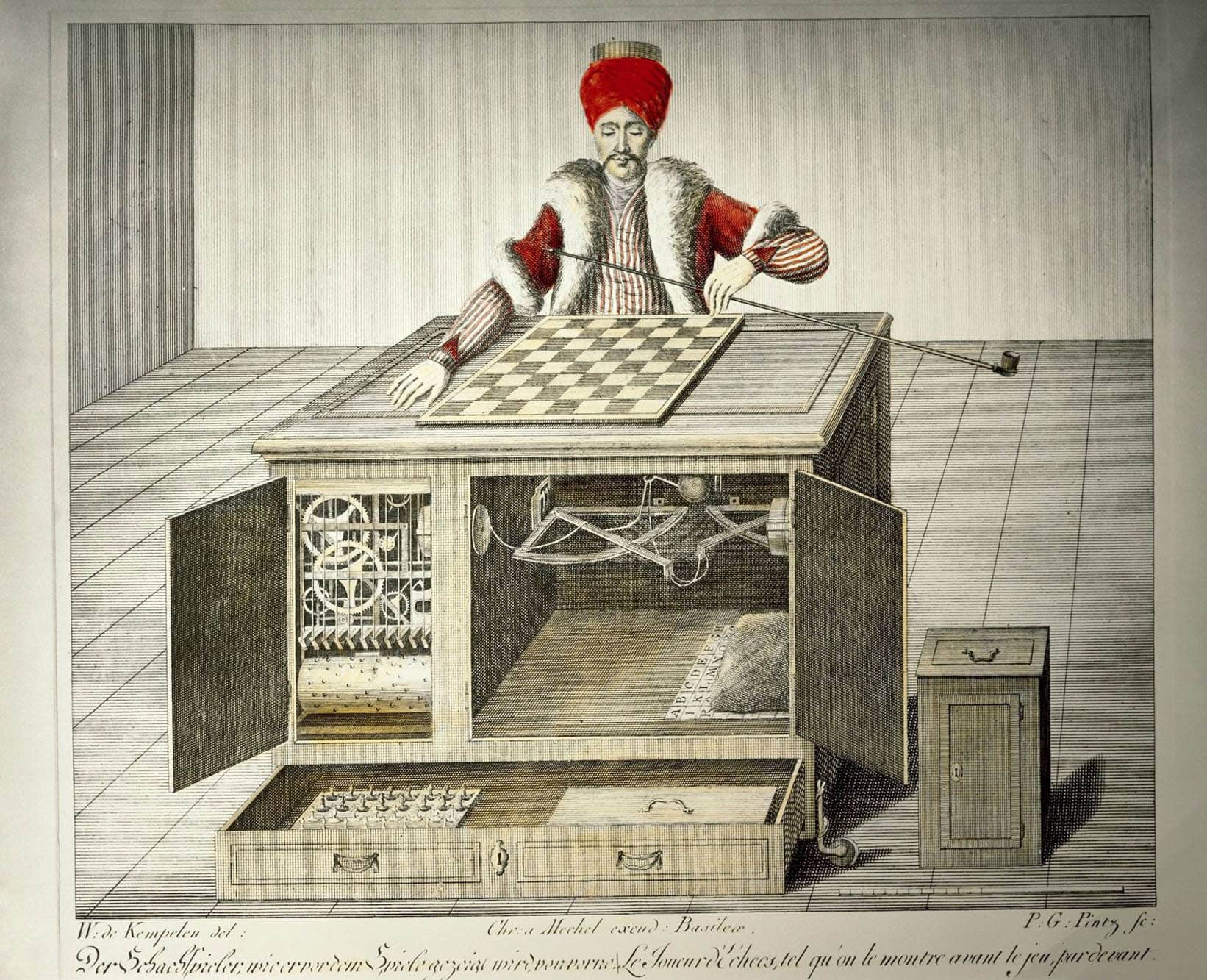
From the imposing astronomical clocks of Tudor England to the exquisite pendant watches of Victorian Britain, timekeeping has long been a symbol of power, prestige, and technological marvel within Europe’s royal courts. This new series explores the fascinating evolution of clocks and watches crafted specifically for royalty, tracing how these intricate masterpieces reflected the tastes, ambitions, and innovations of monarchs. Through the lens of craftsmanship, artistry, and historical significance, we reveal how these royal timepieces marked the passage of dynasties and empires. Maria Theresa was the ruler of the Habsburg monarchy from 1740 until her death in 1780, and the only woman to hold the position in her own right. Though crowned as Archduchess of Austria and Queen of Hungary and Bohemia, her true authority came from willpower, reform, and image-making. Maria Theresa ruled not as a king in disguise, but as a monarch in her own right, one who embraced both tradition and the flux of the Enlightenment. Horology, like art and music, became part of her sovereign language and a way to express her modernising ambitions and cultivated authority. Maria Theresa was born in Vienna on the 13th of May 1717, the eldest daughter of Emperor Charles VI and Empress Elisabeth Christine of Brunswick-Wolfenbüttel. As a child of the Habsburg dynasty, she grew up in the Hofburg Palace (below) surrounded by the rituals and splendour of imperial court life. Although her father’s hopes ...
 Worn & Wound
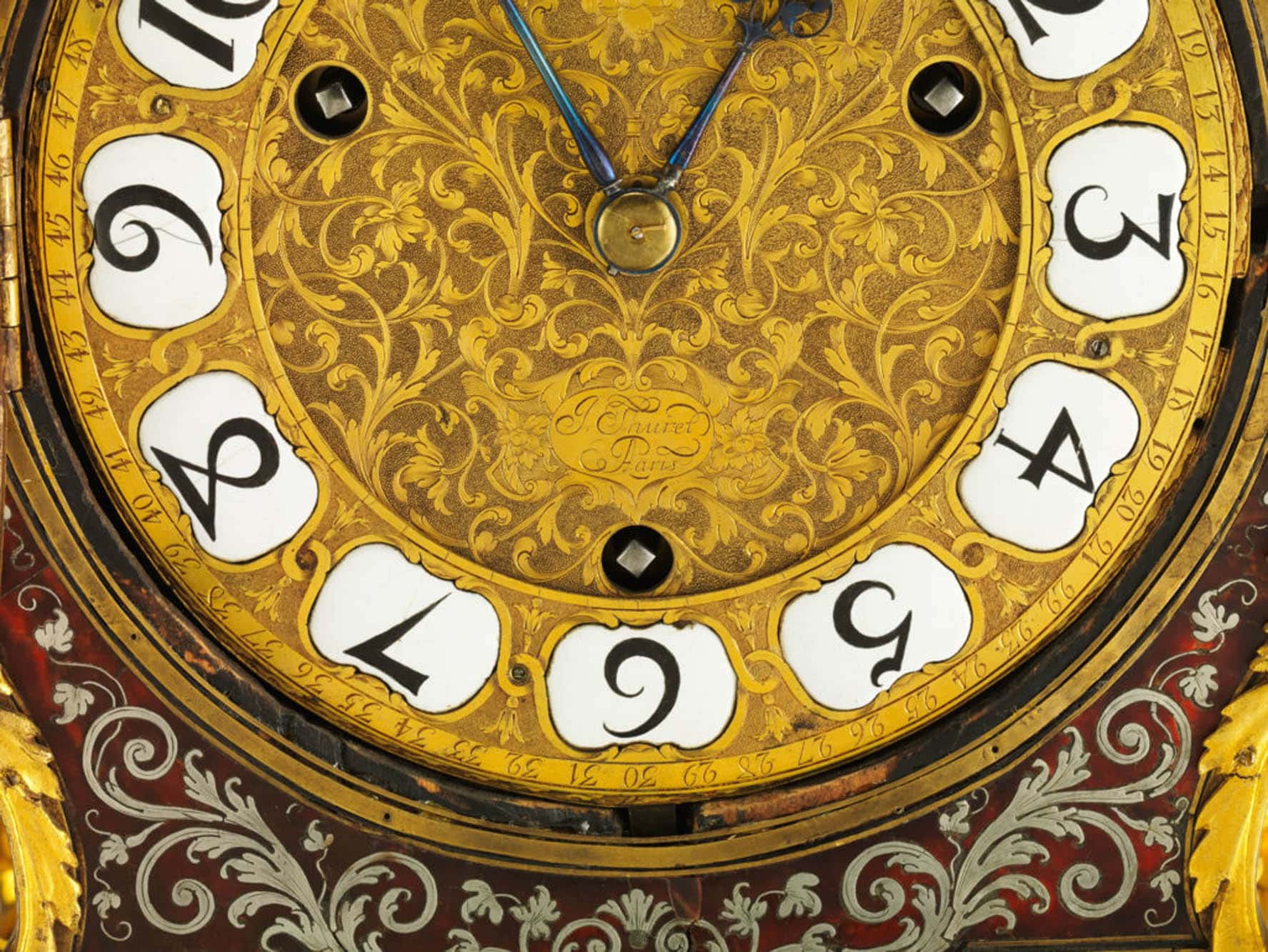
From the imposing astronomical clocks of Tudor England to the exquisite pendant watches of Victorian Britain, timekeeping has long been a symbol of power, prestige, and technological marvel within Europe’s royal courts. This new series explores the fascinating evolution of clocks and watches crafted specifically for royalty, tracing how these intricate masterpieces reflected the tastes, ambitions, and innovations of monarchs. Through the lens of craftsmanship, artistry, and historical significance, we reveal how these royal timepieces marked the passage of dynasties and empires. Louis XIV (1638–1715), the ‘Sun King’, was not only a patron of the arts but also an avid collector of scientific instruments, clocks, and watches. His interest reflected both his fascination with astronomy and mechanics, and his desire to project royal magnificence through technological marvels. Louis XIV ascended to the throne of France as a child, inheriting the crown at just four years old after the death of his father, Louis XIII. His early years were shaped by regency under his mother, Anne of Austria, and the powerful guidance of Cardinal Mazarin, who navigated the kingdom through internal rebellions and European conflicts. Emerging from this formative period, Louis assumed full control of the kingdom at the age of 23, determined to consolidate royal authority and establish himself as the embodiment of absolute monarchy. His rise to power was not just a succession of events, but th...
 Worn & Wound
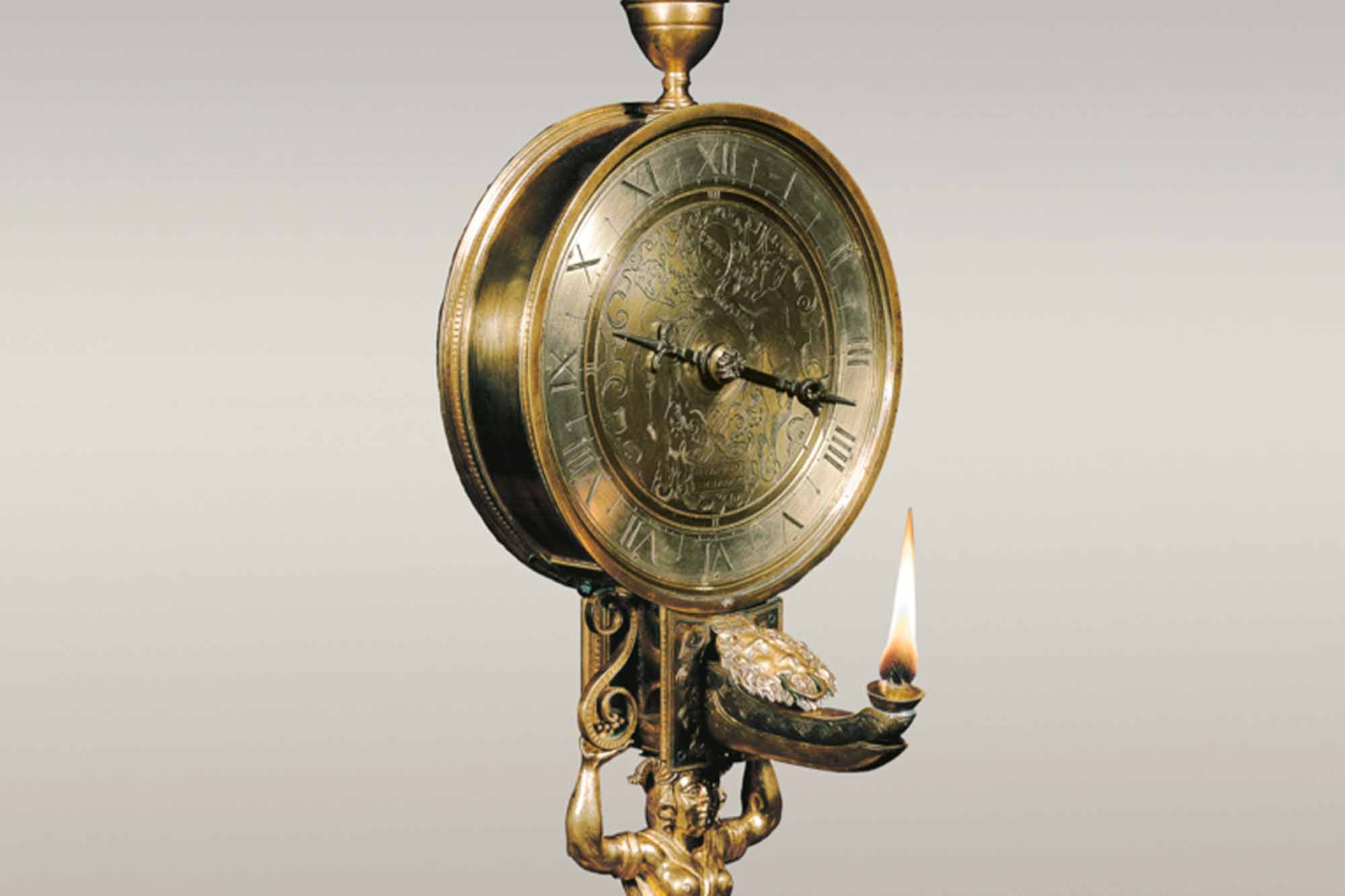
From the imposing astronomical clocks of Tudor England to the exquisite pendant watches of Victorian Britain, timekeeping has long been a symbol of power, prestige, and technological marvel within Europe’s royal courts. This new series explores the fascinating evolution of clocks and watches crafted specifically for royalty, tracing how these intricate masterpieces reflected the tastes, ambitions, and innovations of monarchs. Through the lens of craftsmanship, artistry, and historical significance, we reveal how these royal timepieces marked the passage of dynasties and empires. King Philip II (1527–1598) inherited a globe-spanning empire from his father Charles V and, after 1580, also ruled Portugal. A devout champion of the Counter-Reformation, he centralised government, built the vast monastery-palace of San Lorenzo de El Escorial, and presided over Spain’s political zenith. His court prized scientific instruments and clocks as emblems of order and piety. Philip was part of the great Habsburg dynasty and the son of the Holy Roman emperor Charles V. From time to time, the emperor wrote Philip secret letters, impressing on him the high duties to which God had called him and warning him against trusting any of his advisers too much. Philip, a very dutiful son, took this advice to heart. During his reign the Spanish empire attained its greatest power, extent, and influence, though he failed to suppress the revolt of the Netherlands and lost the ‘Invincible Armada’...
 Worn & Wound
From the imposing astronomical clocks of Tudor England to the exquisite pendant watches of Victorian Britain, timekeeping has long been a symbol of power, prestige, and technological marvel within Europe’s royal courts. This new series explores the fascinating evolution of clocks and watches crafted specifically for royalty, tracing how these intricate masterpieces reflected the tastes, ambitions, and innovations of monarchs. Through the lens of craftsmanship, artistry, and historical significance, we reveal how these royal timepieces marked the passage of dynasties and empires. Cosimo I de’ Medici (1519–1574), the first Grand Duke of Tuscany, is remembered as a masterful statesman who unified Florence’s power. Yet behind his political authority lay a profound curiosity for the sciences, especially the study of the heavens and the measurement of time. The Medici family rose to power in Florence primarily through their wealth and strategic use of the Medici Bank, which became the largest and most powerful bank in Europe during the 15th century. They leveraged this financial power to influence Florentine politics, eventually establishing themselves as the de facto rulers of the city, although they maintained the appearance of a republic. They used their wealth and influence to transform Florence into a leading capital of trading and a place for the greatest creators to work and develop incredible scientific instruments, such as the clock in the Cathedral of Santa...
 Hodinkee
Finding adventure in the California wilderness.
 Hodinkee
A New York City entrepreneur takes to the air.
 Hodinkee
A life spent exploring the Idaho backcountry.
 Worn & Wound
From the imposing astronomical clocks of Tudor England to the exquisite pendant watches of Victorian Britain, timekeeping has long been a symbol of power, prestige, and technological marvel within Europe’s royal courts. This new series explores the fascinating evolution of clocks and watches crafted specifically for royalty, tracing how these intricate masterpieces reflected the tastes, ambitions, and innovations of monarchs. Through the lens of craftsmanship, artistry, and historical significance, we reveal how these royal timepieces marked the passage of dynasties and empires. During Henry VIII’s reign (1509–1547), portable watches as we know them today had yet to emerge in significant numbers. Timekeeping was dominated by grand and stationary mechanisms, with tower clocks or ornate table pieces, serving both practical and symbolic purposes as a show of wealth and status. Watches, if present at all, were nascent and extremely rare. The first clocks and watches were expensive luxuries and only in the reach of royalty and landed gentry. There was, however, a sufficient demand for these items in the Tudor royal court which spread to a prosperous London. The beginnings of the horological industry were probably first initiated by King Henry VIII. During this period there was somewhat of a technical revolution, starting with the invention of the printing press which changed the way people received information. This filtered through to the court where there was a revoluti...
 Monochrome
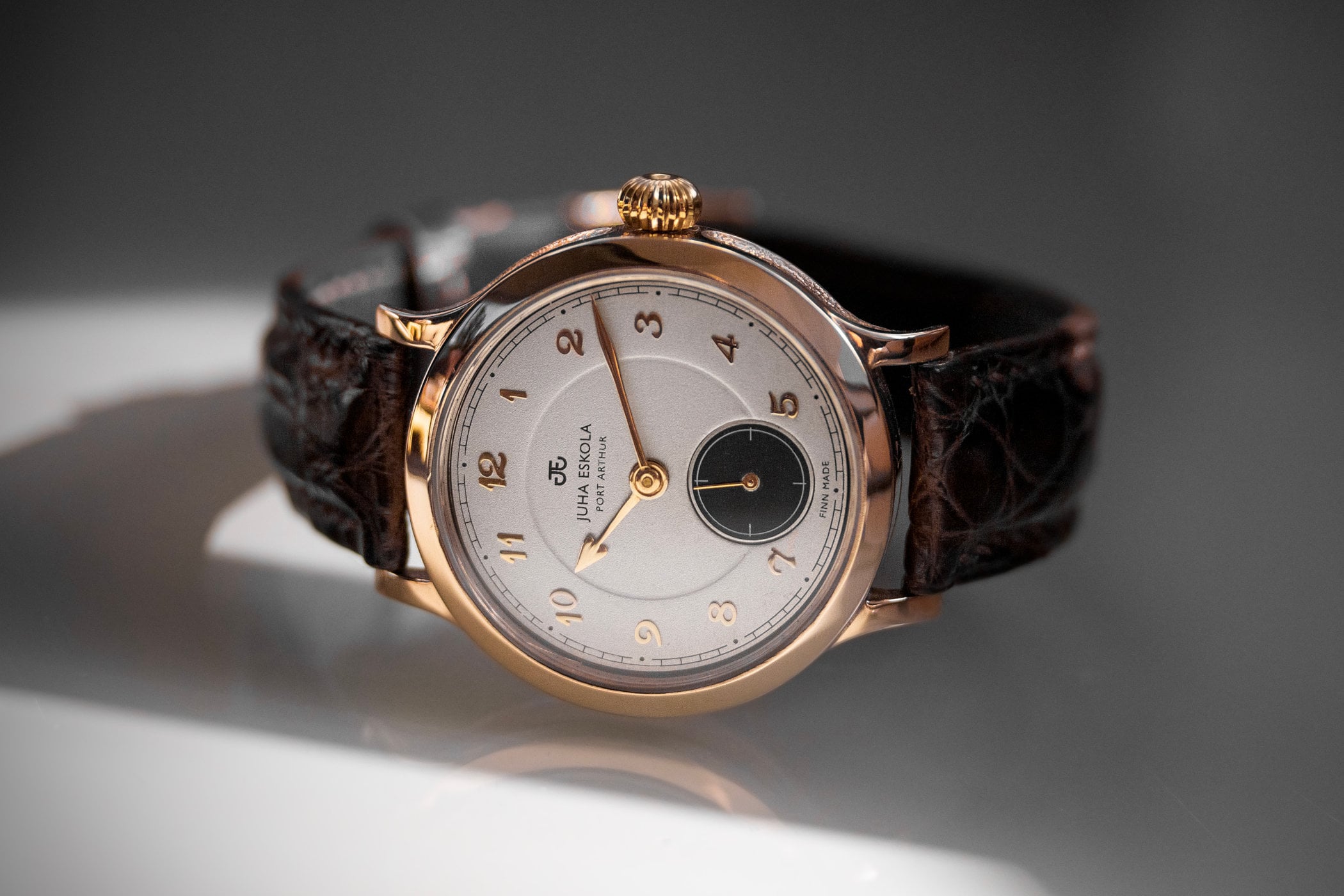
The independent watchmaking scene is as wide as it is deep, and we regularly stumble upon new and exciting projects and brands. And since indie watchmaking is also at the core of MONOCHROME Watches, we try to serve you as many of these as we can. For the next new indie discovery, named Juha Eskola, […]
 Revolution
 Revolution
 Revolution
 SJX Watches
In the world of independent watchmaking, Phimphrachanh – pronounced “fin-fra-chan” – is a name worth learning. Born in France, Dann Phimphrachanh is a Portuguese citizen with Laotian heritage who produces watches in Switzerland. That multicultural heritage that informs his approach to horology, personified by the Seconde Vive, his first wristwatch. The Phimphrachanh surname, inherited from his Laotian grandfather, a political figure in Laos, speaks to this lineage, but Dann’s professional and personal identity is firmly rooted in Portugal. After training in Lisbon’s watchmaking school and working at traditional Swiss watch brands, Dann set out to build his first watch on his own terms: by hand, with minimal industrial tools, and a commitment to preserving classical methods in a modern context. In a world where “independent watchmaking” can sometimes feel like just another label, Dann reminds us what it really means. The Seconde Vive, the result of years of solitary work, is both a technical achievement and a reflection of a deeper pursuit, a journey shaped by tradition, silence, and the slow mastery of time itself. The Seconde Vive Origins When Dann first left for Switzerland, he carried with him an image shaped by the glossy pages of watchmaking magazines, a world where the watchmaker was portrayed as a solitary figure, pursuing perfection in a quiet, idyllic workshop. “It was that image I went looking for,” he recalls. Reality, of course, was more co...
 Monochrome
It’s a well-known fact that we have a deeply rooted passion for independent watchmaking, and as such, we always keep an eye out for talented newcomers. Fortunately, with the rise in popularity of indie watchmaking, there is a lot to be discovered from all around the globe! Whether something is super-complex and ridiculously finished, or […]
 SJX Watches
Translating as “Stopovers Around the World”, Escale Autour du Monde is Louis Vuitton’s collection of unique and lavish minute repeating pocket watches. The collection now counts two watches: Escale en Amazonie that depicts the heart of the rainforest, while the just-launched Escale Au Pont-Neuf is set just outside Louis Vuttion’s headquarters in Paris. Each timepiece is unique and powered by a new, purpose-built repeating movement with automata, also known as jacquemart, tourbillon, and an eight-day power reserve. Aside from watchmaking complications, the pocket watches also boast elaborate decoration, namely enamel and hand engraving, encapsulating the many crafts and skills possessed by La Fabrique du Temps (LFT), the Louis Vuitton manufacture in Geneva. The LFT AU14.03 Notably, the Escale Autour du Monde is actually Louis Vuitton’s second haute horlogerie pocket watch offering. The collection follows last year’s Asnières-themed pocket watch that was actually powered by a wristwatch repeater movement. The pocket watches of Escale Autour du Monde retain the same 50 mm diameter as the Asnières but with the LFT AU14.03 calibre within was developed from the ground up as a pocket watch movement. Escale en Amazonie (left), and Escale Au Pont-Neuf Initial thoughts Usually, modern pocket watches either rely on wristwatch movements (like the Escale à Asnières from last year) or near-century-old ebauches completed in the modern day. Louis Vuitton didn’t take th...
 Revolution
 Hodinkee
Explore the evolution of Chopard’s Alpine Eagle XL Chrono, from its debut to the latest titanium and Rhône Blue edition. Discover how this luxury timepiece blends family legacy, cutting-edge technology, and a commitment to ecological preservation.
 Quill & Pad
GaryG has the pleasure of covering the wonderful Grönefeld One Hertz. For a watch fanatic, and especially for lovers of independent watch brands, it’s a dream come true to meet the makers of the watches that we admire.
 Hodinkee
In this week's edition of the House of Craft video series, Ben checks in with the longtime friend of Hodinkee, what he's been up to and what he's been wearing.
 Worn & Wound
For those unfortunate souls who have found their way into my gear bins, you know that I am a gearhead through and through, able to easily outfit a family of five for a week-long camping trip in just about any weather condition. One particular area of weakness for me is in the bag category. Tote bags, sling bags, fanny packs, large backpacking packs, duffles, I believe they all serve their purpose and that you should have one for every scenario. Finding the perfect bag though can be an impossible task leading you to spend hours researching boutique brands only to be disappointed in the one lacking feature you need, accompanied by a significantly lighter pocketbook. So, when I spotted a dirty worn-in backpack with a unique silhouette gliding through a sporting goods store in Denmark, the hunt was on. It didn’t take long as a few quick turns had me standing in front of an entire wall display holding an array of different designs from the new-to-me brand D__b__. Now, it was the early days of my trip and I did not have a lot of room in my luggage to spare, so I snapped a few pictures, residing myself doing downtime research into this exciting company. Despite its large global presence, D_B_ Journey does not seem to have made the push into the States, finding a small home inside of a select number of scattered retailers. This may be in part due to the crowded and hyper-competitive market, or potentially due to the recent forced rebranding stemming from marketing problems wit...
 Hodinkee
In the third installment of our House of Craft video series, we sit down with one of today's most renowned young independent watchmakers.
 Revolution
 Two Broke Watch Snobs
Unlike other well-storied brands, this watchmaker, dating back to 1884, isn’t shy about experimenting with new designs, materials, and even quartz movements, which have become rather taboo for many watch brands since the crisis in the 1970s and early 1980s. Breitling, however, has just released a new version of its Quartz Aerospace, with this one taking the name B70 Orbiter.
 Hodinkee
This Sub remains the model of consistency on the secondary market, so we look back at its humble beginnings.
Question, suggestion, or just want to say hi? Drop a note.