 Hodinkee
Introducing: IWC Announces Two New Limited-Edition Pilot’s Watches With F1 Driver George Russell
Ahead of the new F1 season, IWC announces its first collaboration with an F1 driver.
20,264 articles · 165 videos found · page 162 of 681
Hodinkee
Ahead of the new F1 season, IWC announces its first collaboration with an F1 driver.
 Worn & Wound
Recently, over the course of a brutally cold weekend here in Concord, NH, I rewatched last year’s F1, the Brad Pitt vehicle that is essentially a very long advertisement for the sport for which it is named. It’s a fun movie, and even though it was made for giant screens and deafening surround sound systems, it played just fine at home as a fairly standard sports movie. I had been wanting to give the film another look as it was recently nominated for Best Picture at the Academy Awards (a bit of a surprise to most observers) and figured it was time to see how it stood up to a repeat viewing. The answer is that it’s still really enjoyable popcorn fare, but my one real reservation is in the almost nonstop product placement. IWC watches factor heavily into the texture of the film itself. If you look closely, you can see a watch or the IWC logo in more scenes than not. It speaks to the importance of the relationship between IWC and F1, so I was not at all surprised when I learned that IWC’s first big novelty release of the year would be a pair of watches representing a collaboration between the brand and F1 driver George Russell, who races for the Mercedes-AMG PETRONAS team, which IWC has had a longstanding relationship with. Unlike previous watches IWC has released as part of their partnership with Mercedes-AMG PETRONAS, this one is tied to a specific driver. Rather than the teal color highlighted in those earlier watches, these feature a more traditional blue hue, ...
 Worn & Wound
Few other watchmakers enjoyed as much success and cachet as Heuer, especially during the fervent 1960s and 1970s. Not only had it launched one of the world’s first automatic chronographs, but it pushed the envelope on modern design with midcentury-cool chronographs like the uniquely square Monaco. Heuer was riding high on the glamor of Grand Prix: the Heuer shield was as indelible to the backdrops of Monza and Le Mans as Ferrari, Porsche, and McLaren themselves as the official timekeeper of Formula One. But, inevitably, the quartz revolution came for Heuer. Jack Heuer was the third-generation CEO of the company that bore his name, and he had been a savvy marketer, personally hawking chronographs to drivers like Jo Siffert and Nikki Lauda. By the 1980s, however, he found himself backed into a corner, and in 1982, he was forced to sell the company to Piaget and Lemania-a humiliating low point in his life, as he recounted in his autobiography. Yet, before he departed, he gave Heuer one saving grace. In 1979, he commissioned Heuer’s first dive watch, the Professional Series. At a trade show Jack had overheard a brief conversation about the unreliability of existing dive watches, and he aimed to emulate Rolex’s success with the Submariner and Sea-Dweller. (Incidentally, Rolex owned half of Heuer’s stock market shares, and nearly took over the company around this time.) Photo by Blake Rong Heuer had spent the decade building an electronic timing division, which b...
 Teddy Baldassarre
If you'd like to be considered for the next installment of our Real Collectors series, fill out our form here.
 Teddy Baldassarre
Fundamentally, mechanical and quartz movements do the same thing: they both tell thetime. But the ways in which they both do it couldn’t be more different. Not to get into acomparison guide here, but in a nutshell: a mechanical watch is powered by a mainspringthat’s either wound by hand or automatically through wrist movement. Energy is releasedthrough a complex system of gears, an escapement, and a balance wheel that beats steadily back and forth. There’s no battery, just centuries-old engineering refined to an art form. These watches aren’t the most accurate, but accuracy isn’t really the point. Craftsmanship, tradition, and the emotional connection are. Quartz watches, on the other hand, are powered by a battery and use an electrical current to make a quartz crystal vibrate at 32,768 times per second. That vibration is incredibly stable, which is why quartz watches are vastly more accurate and require far less maintenance. They’re practical, reliable, and often more durable for everyday use, as well as being notably more affordable. Neither system is inherently “better,” though. Mechanical watches speak to passion and heritage, while quartz prioritizes precision and convenience. Ultimately, it’s less about the movement inside and more about what you want your watch to represent on your wrist. [toc-section heading="Next-Level Accuracy"] Some watches measure accuracy in seconds per day, others by seconds per month. Butthere also exists a small group of t...
 Monochrome
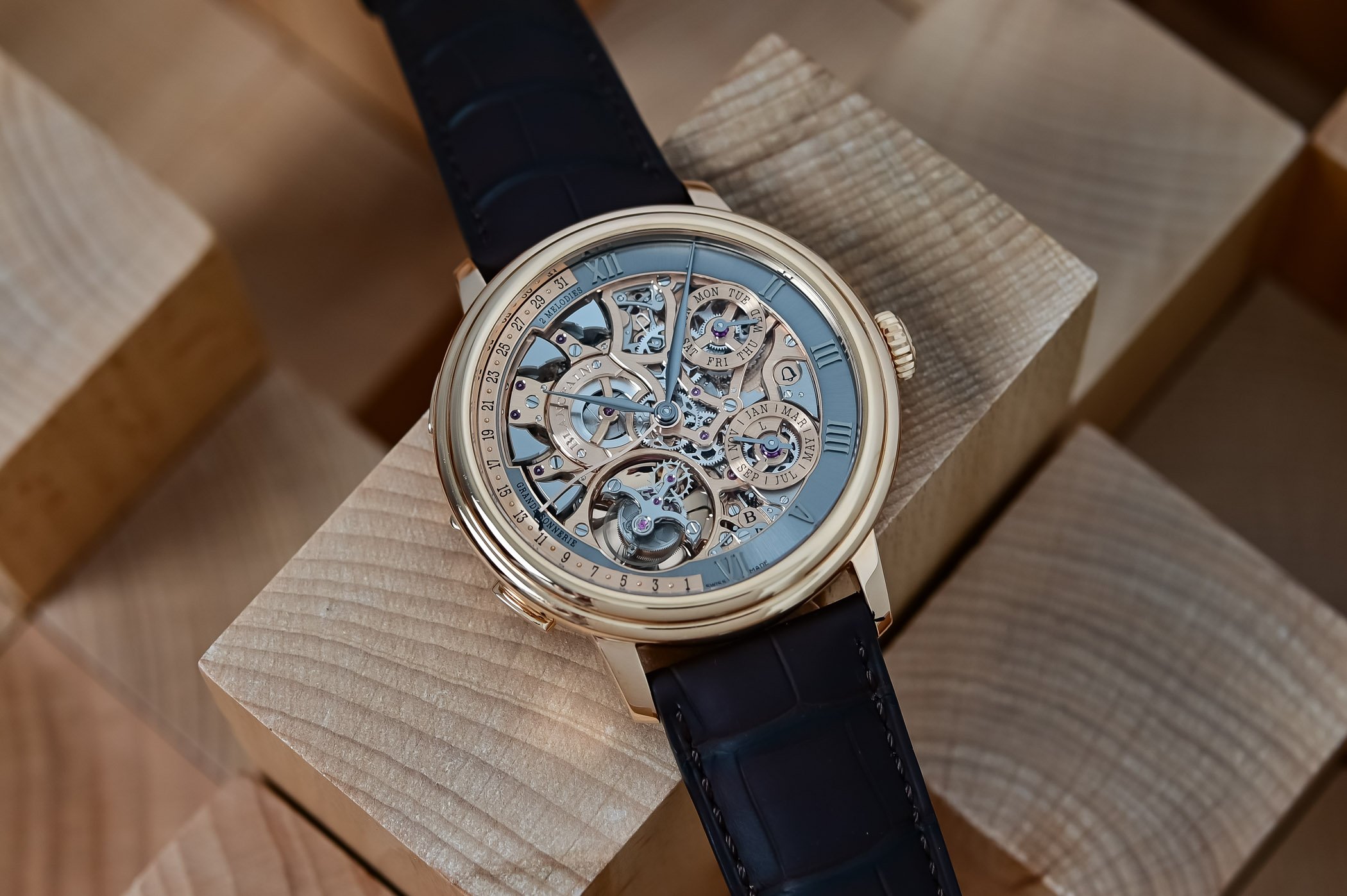
The first mechanical clocks were actually bell towers without dials or hands. Bells would simply ring to mark the hours or special events, starting in the late 13th century in Europe (Italy and Germany to be specific). The name “clock” even comes from the Latin word for bell, clocca. Among the most famous of these […]
 Worn & Wound
Fashion houses are often only as strong as consumers’ nostalgia for their heyday. As more time passes between a brand’s peak and its current incarnation, the connection to what it once represented can become increasingly tenuous. In some cases, that link barely holds at all. Balenciaga is a perfect example of a brand that leaned so heavily on its laurels that it fell on its ass. Thankfully, that isn’t the case with Louis Vuitton. The maison’s durability has come from its ability to evolve without losing sight of what made it relevant in the first place. Marc Jacobs is often credited with bringing Louis Vuitton into a modern context when he launched its first ready-to-wear collection in 1998, but the throughline has always been consistent: an emphasis on craftsmanship, materials, and design rooted in the principles established by Louis Vuitton in 1854. That same approach is clearly evident at this year’s LVMH Watch Week, where each release shows that the label is heavily invested in expanding Louis Vuitton’s legacy of craftsmanship into everything under the label’s umbrella. First up, we have the Escale Worldtime, which returns this year in a platinum case with a dial ring featuring 24 hand-painted city flags, each impressively applied at La Fabrique du Temps, the watch manufacture owned by Louis Vuitton that has been the catalyst for much of the brand’s advancement in watchmaking under their own name in recent years. If you are more interested in the Flying...
 Hodinkee
Ceramic, skeletonized, tourbillon, and 36mm versions expand the Skyline range.
 Revolution
 Worn & Wound
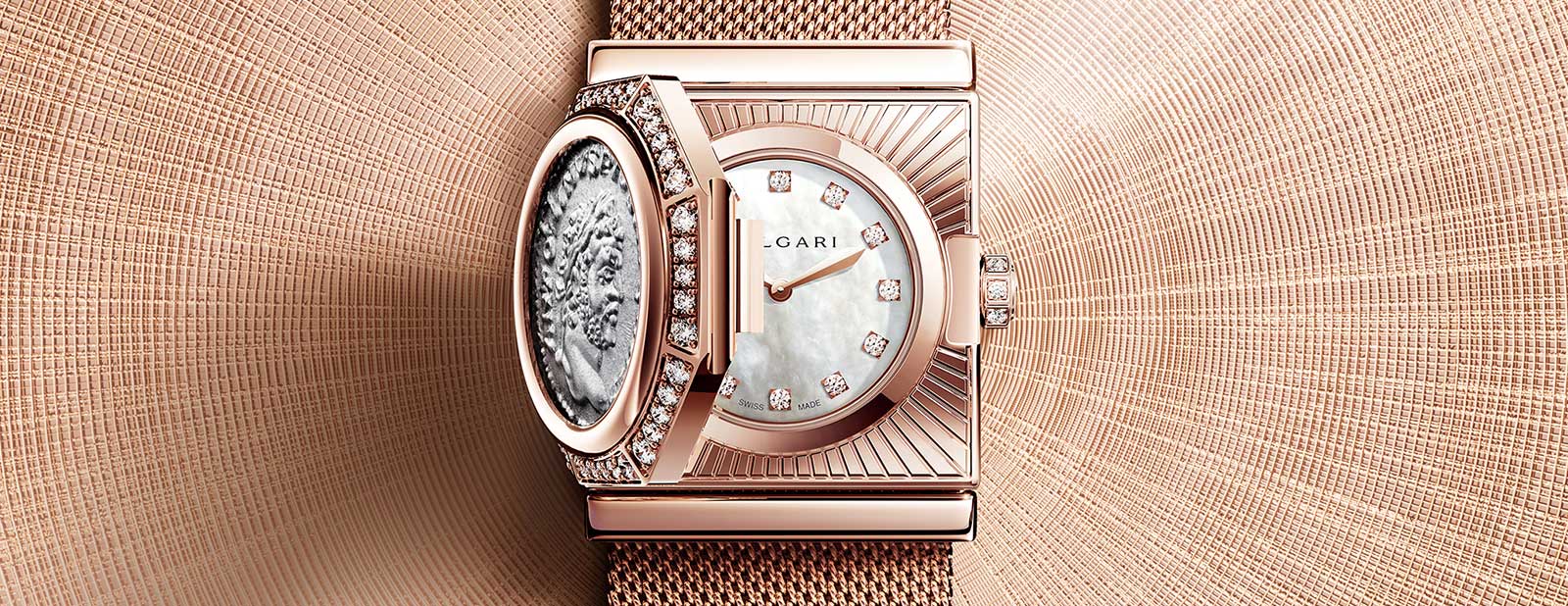
There are two things I really like about Bulgari. The first being that I’m not entirely sure how to spell their brand’s name. Bulgari? Bvlgari? Both? A secret third option? At any rate, I find it a bit chic to have a bit of runic ambiguity in a modern-day brand. The second thing I enjoy is their commitment to glamour. In today’s fashion and jewelry market, there is an inundation of simplistic, minimalistic styles. Personally speaking, I’m quite fond of dressing like I live in the Nordics, but a bit of eye candy every now and then never hurt anyone. That is to say, I’m quite pleased to share the release of two new watches, which will be presented in Milan during LVMH Watch Week, beginning today. Let me introduce you to: Maglia Milanese Monete and Tubogas Manchette. First up, the Maglia Milanese Monete revisits Bulgari’s Monete concept from the mid-1960s, centered around an authentic Roman coin from the reign of Emperor Caracalla. It is paired with a rose gold Milanese mesh bracelet, marking the brand’s first use of the technique and giving the watch a more fluid look on the wrist, nodding more to Bulgari’s jewelry-making history. The dial itself is concealed beneath the coin, while the watch is powered by Bulgari’s Piccolissimo BVP100. The manually wound movement measures just 13.5mm in diameter and 2.5mm thick, and offers a 30-hour power reserve, which can be viewed through the sapphire caseback. Next, the Tubogas Manchette takes its cues from a 1970s des...
 Revolution
 Revolution
 Revolution
 Revolution
 Revolution
 Revolution
 Revolution
 Revolution
 Revolution
 Revolution
 Revolution
 Two Broke Watch Snobs
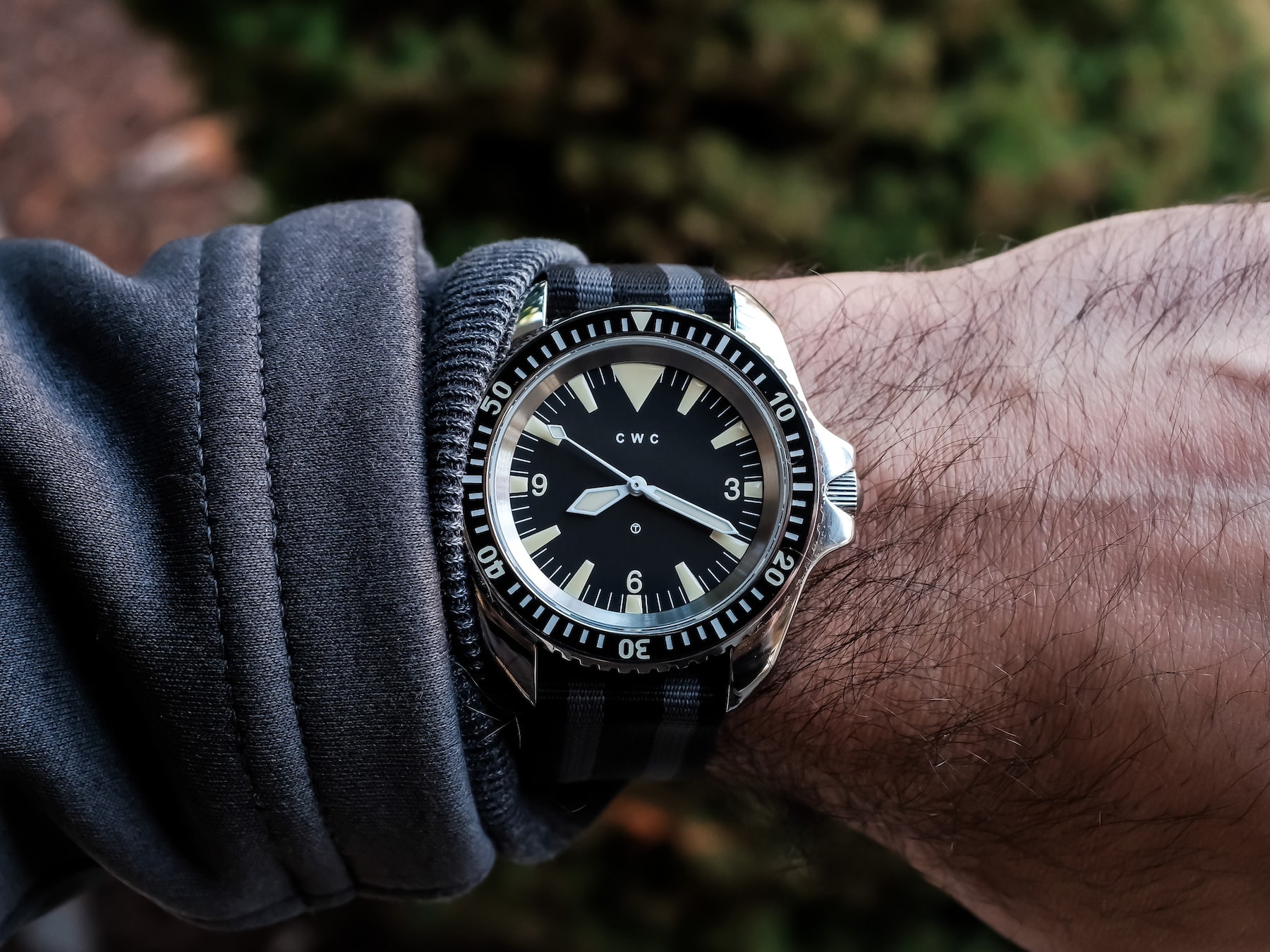
Explore hands-on dive watch testing and identify which models survive daily use. Get clear insights into durability, comfort, and real ownership trade-offs.
 Monochrome
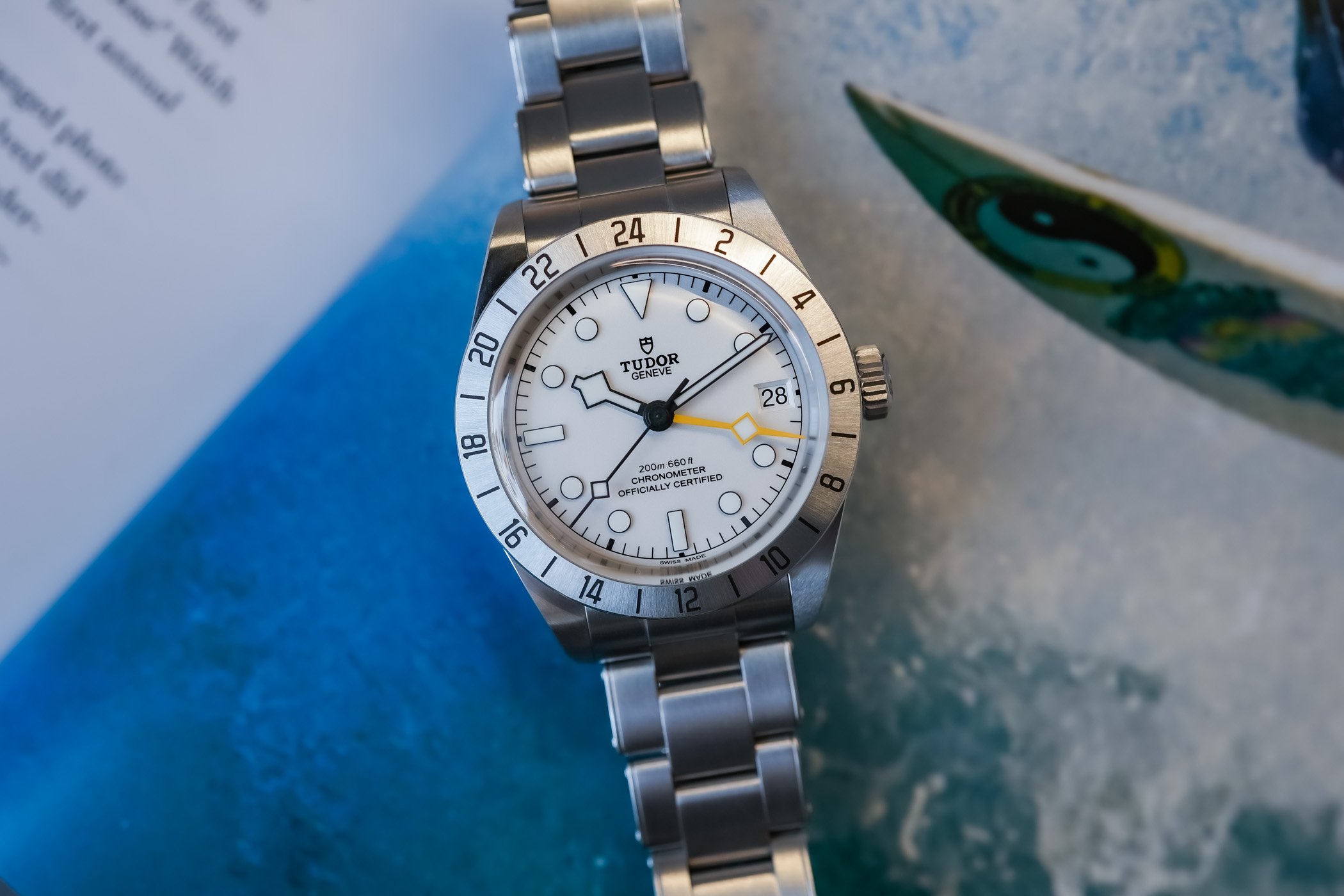
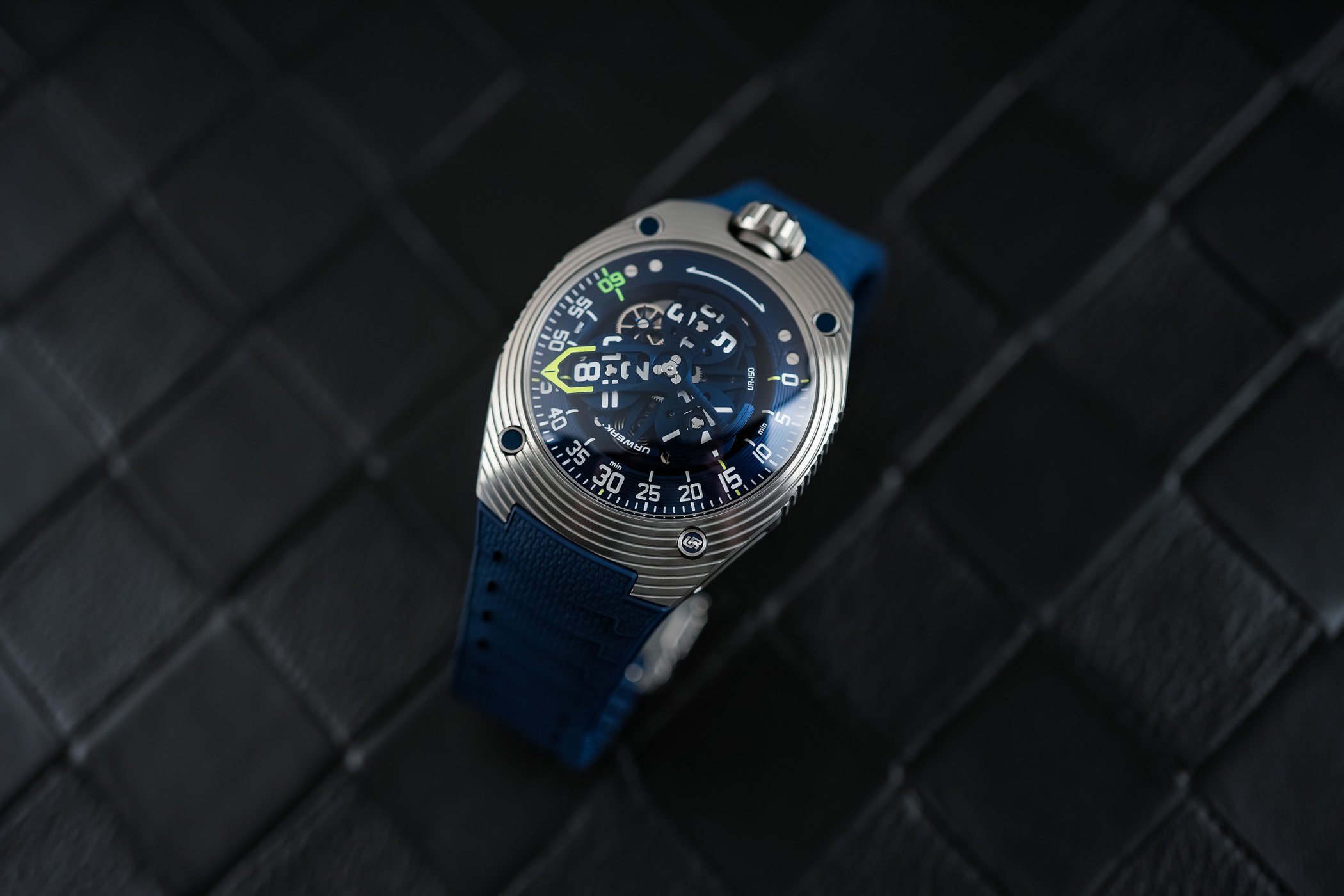
With temperatures dropping well below zero, and our small country of the Netherlands struggling with a thick layer of snow this past week, you can always rely on us to bring the heat. And it’s not only in our petite habitat that snow, ice and cold weather have an impact on daily life, but in […]
 Monochrome
At the dawn of mechanical time, hands weren’t a thing as bells would chime to signal an event or relay the hours. These giant mechanical bell towers were seen in Europe throughout the Middle Ages, with examples like the Salisbury Cathedral clock in the 14th century still functioning today (after restoration, of course). These early […]
 Worn & Wound
Joe Ottati is the owner of Ottati Car Detailing, a founder of VALT Auto Club, and a part-time Auction Specialist for Cars & Bids. He is also a co-host of the VALT podcast, which can be found on YouTube. Soft-spoken but always ready for a chat, many Bay Area car enthusiasts have likely had a conversation with Joe Ottati from the other side of a folding table, beneath a big VALT Auto Club tent. As one of the club’s founders, Ottati’s dedication to growing the car scene in the Bay Area and keeping it as inclusive and positive as possible can easily be seen in the way he interacts with everyone that comes through the tent: with kindness and small hints of the vast wealth of car knowledge within. But cars aren’t Ottati’s only hobby; he extends that interest in all things mechanical to his wrist, too. Like most of us watch nerds, Ottati’s first timepiece came in the form of a Casio. As an 8th grade graduation gift, he received a green G-SHOCK, a watch that he still owns. “It still keeps accurate time on the same battery, fourteen years later,” he says. We are currency outside his shop in Concord, where he details cars as his main job. Inside, a smörgåsbord of European beauties lie in wait, but he steers the conversation back to watches, first. “After graduating high school, I was gifted an Autodromo Stradale, which was my first mechanical watch,” he explains, “I wore it literally every day for years.” The exhibition caseback displaying the Miyota moveme...
 Hodinkee
A personal reflection of a crazy year in the industry.
 Hodinkee
How the watch industry navigated its most structurally challenging year in a decade and what to look out for in 2026.
 Two Broke Watch Snobs
A list for watch nerds. We went hands-on with cult favorites you rarely hear about, deep insights and real wrist-time value.
 Monochrome
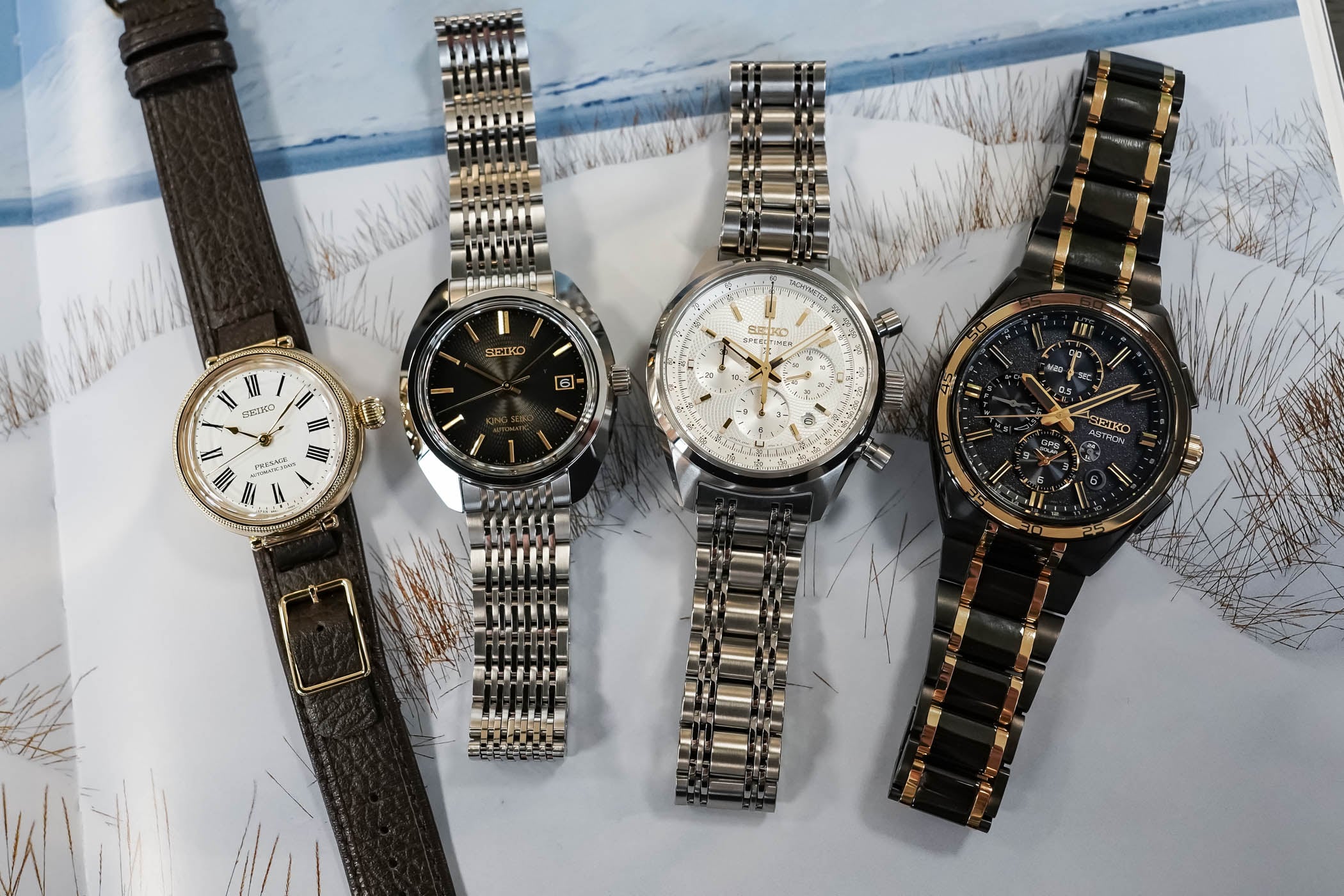
Seiko has influenced and continues to shape modern horology as only a few watchmakers can. From its origins in 1881, when Kintaro Hattori opened a small shop in Tokyo, to becoming a global powerhouse in precision timekeeping, Seiko’s history is a register of constant innovation. Over the decades, the brand has delivered some of watchmaking’s […]
 Two Broke Watch Snobs
Looking for your first mechanical watch? We share proven, hands-on picks we’ve worn and tested, so you can start confidently without wasting time and money.
Question, suggestion, or just want to say hi? Drop a note.