Watch brandsWatch wikiWatch videosVariousWatch calendarSaved articles
PopularRolexOmegaPatek PhilippeAudemars PiguetTudorGrand SeikoCartierSeikoIWCTAG HeuerBreitlingJaeger-LeCoultreA. Lange & SohneZenith

Results for GMT & World Time

16,686 articles · 93 videos found · page 246 of 560

Related pages

Wiki · Guide
GMT & World Time

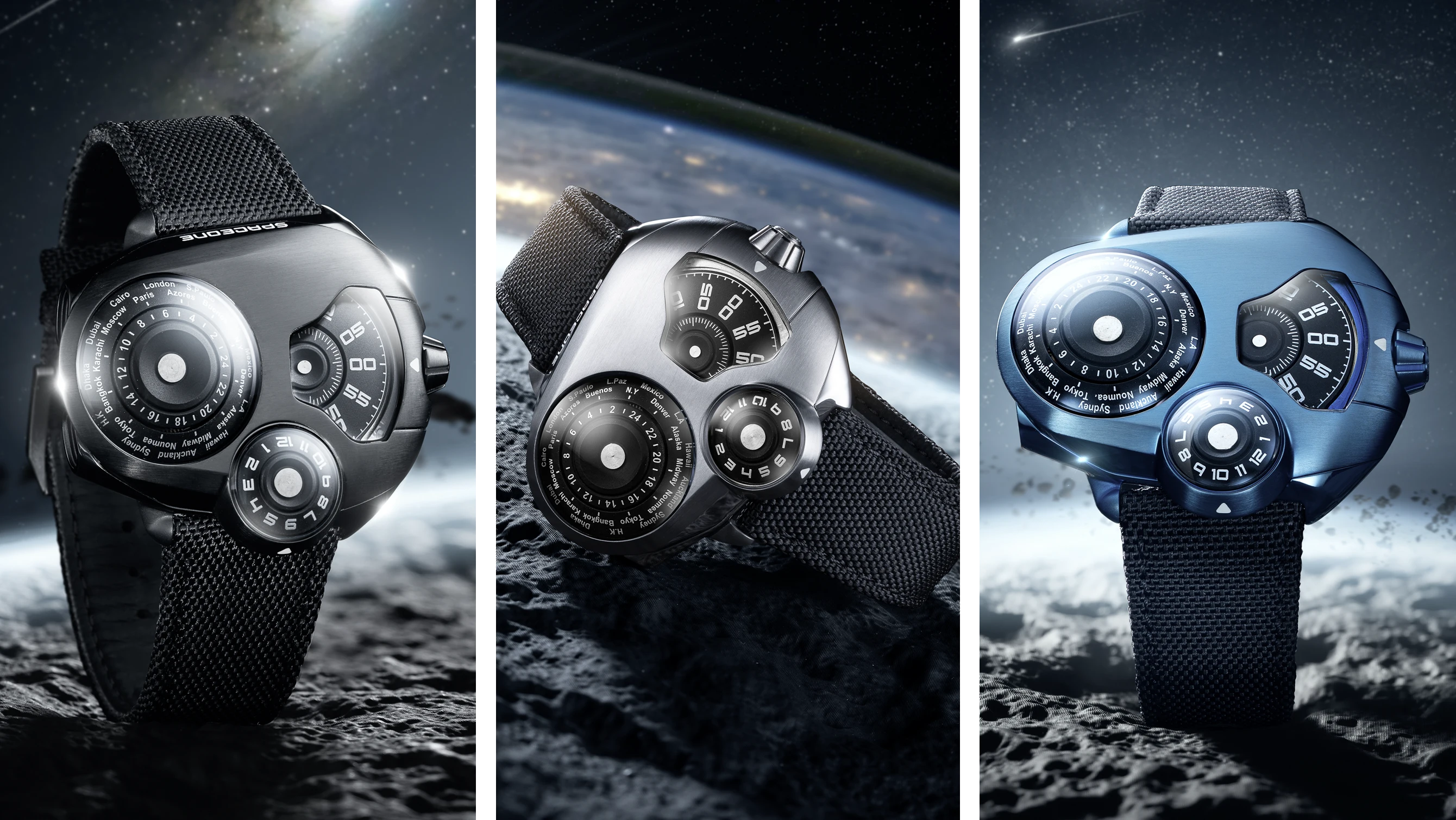
The traveller complications: Rolex's 1954 GMT hand and Louis Cottier's 1937 World Time mechanism.

“Patina” or Damage? Scrutinizing the Fine Line Between Pleasing and Pesky Imperfections Worn & Wound
Rado x involves May 13, 2025

“Patina” or Damage? Scrutinizing the Fine Line Between Pleasing and Pesky Imperfections

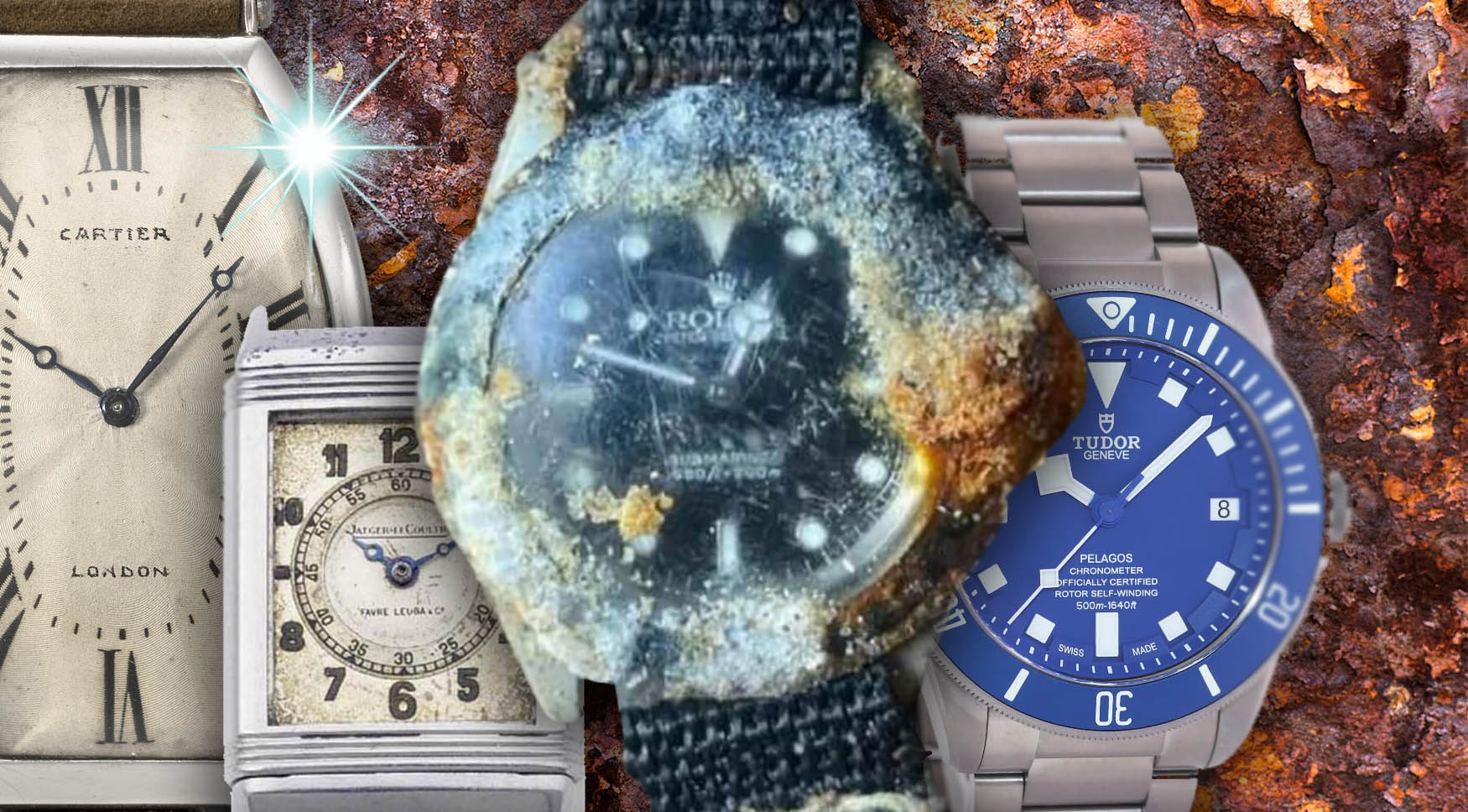
The Ship of Theseus paradox involves the legendary vessel that Theseus––a Greek mythological hero who rescued the children of Athens and slayed the Minotaur of Crete––traveled on. To honor his valiant efforts, the Athenians preserved the ship and, over time, swapped parts that decayed or had become damaged, eventually replacing all of its original components. This, in turn, begs the question: is it still Theseus’ ship even if all the parts have been replaced? If not, at what point did it cease to be the original?  Now that our history lecture is over, I want to utilize this idea of time and identity to talk about a topic near and dear to our watch-collecting hearts: patina. A number of journalists and enthusiasts have discussed what patina is, how it can be defined in a horological sense, and the many forms it can take, but no one (to my knowledge) has discussed when deterioration or damage becomes patina. This may seem like a rather abstract subject to discuss, but most, if not all, collectors take condition into consideration when shopping for a watch. The two main questions that will help get to the bottom of this patina paradox are: 1.) At what point does damage become patina? and 2.) Is patina just a buzzword to market a watch with lots of aesthetic flaws?  The Evolution of Flaws to Patina One of patina’s most essential characteristics is its dependability on age. The natural degradation of luminous material, the color-changing properties of a dial often...

Sunday Morning Showdown: Omega Speedmaster Moonwatch Vs. Rolex Cosmograph Daytona Fratello
Omega Speedmaster Moonwatch Vs Rolex May 11, 2025

Sunday Morning Showdown: Omega Speedmaster Moonwatch Vs. Rolex Cosmograph Daytona

It’s Sunday morning, and you all know what that means. It’s time for another Sunday Morning Showdown. This week, we paired two legendary chronographs because we found that we hadn’t pitted these particular versions against each other. It’s been roughly a year since Omega released the white-dial Moonwatch, but it feels like it was much […] Visit Sunday Morning Showdown: Omega Speedmaster Moonwatch Vs. Rolex Cosmograph Daytona to read the full article.

Hot Take: A New Trilobe Une Folle Journée In Green Fratello
Trilobe May 10, 2025

Hot Take: A New Trilobe Une Folle Journée In Green

Last month, at Watches and Wonders 2025, I visited the Trilobe booth. It was my first time seeing the brand’s watches, and they impressed me. The Parisian company depicts time uniquely through its pieces. The latest Une Folle Journée Rhodium-plated Green is a wearable modern watch in a new colorway. I’m always skeptical when I […] Visit Hot Take: A New Trilobe Une Folle Journée In Green to read the full article.

Only One More Week To Go Before TimeFest Opens Its Doors Again In Bordeaux Fratello
May 10, 2025

Only One More Week To Go Before TimeFest Opens Its Doors Again In Bordeaux

Next weekend, on May 17th and 18th, TimeFest will once again take place in Bordeaux, France. This is the second year for the event, and it promises to be even bigger and better than last time. The number of exhibiting brands went up from almost 50 to 65, and because the event moved to the […] Visit Only One More Week To Go Before TimeFest Opens Its Doors Again In Bordeaux to read the full article.

Hands-On With The Lovely Angelus Chronographe Télémètre Steel Rose Fratello
Angelus Chronographe Télémètre Steel Rose May 9, 2025

Hands-On With The Lovely Angelus Chronographe Télémètre Steel Rose

When I was asked to compile my list of favorite Watches and Wonders 2025 releases, the Angelus Chronographe Télémètre Steel Rose was the first that sprang to mind. So, when I got the opportunity to spend some decent time with it, I jumped on it. I spent a couple of days with this beauty on […] Visit Hands-On With The Lovely Angelus Chronographe Télémètre Steel Rose to read the full article.

This is the Company Quietly Making the Rubber Straps for Nearly Every Brand in the Industry Worn & Wound
Blancpain May 8, 2025

This is the Company Quietly Making the Rubber Straps for Nearly Every Brand in the Industry

Rubber straps are relatively new in the centuries-old history of wristwatches, and their widespread popularity is even more recent. Like many elements of watchmaking, rubber straps first came into use for a specific utilitarian purpose, and now-in a world that no longer needs watches as practical tools-rubber straps no longer need to be purely functional. They can simply be a fashion statement.  The first rubber straps appeared in the 1960s throughout the catalogs of brands like Rolex, Tudor, IWC, and Blancpain. Fittingly, these rubber straps were perfect for sport models like dive watches thanks to their lightweight build, durability, and resistance to the elements. Still, it would be another three decades before the rubber strap would transform from an occasional companion for a tool watch to a prominent bracelet material seen across styles and brands at all price points.  Hublot was at the forefront of shifting the perception and prevalence of the rubber strap. In 1980, the brand debuted the material in its catalog in a surprising way. The Classic Original (later revived as the Classic Fusion) featured Hublot’s signature porthole shaped case rendered in polished and brushed gold, complete with a black rubber strap, perfectly complementing the model’s black dial. The watch was not only the brand’s first to showcase a rubber strap but also the first luxury wristwatch ever to combine a rubber strap with a precious metal case as opposed to stainless steel. The d...

Watch Movements: A Comprehensive Guide and FAQ Teddy Baldassarre
May 8, 2025

Watch Movements: A Comprehensive Guide and FAQ

Watch movements, like the engines in cars, are the mechanisms that make the whole thing run, and if you're new to the world of avid watch enthusiasm, there's more to learn about them, and how they work, than you think. In this comprehensive guide to watch movements, we will attempt to answer every question that you might have about movements - their different types, their important parts, who makes them, and even a bit of history and trivia.  What is a Mechanical Movement? A mechanical movement, the oldest type of movement in horology, uses a coiled metal spring, called a mainspring, that releases energy as it uncoils through a series of gears to drive a weighted, oscillating wheel called a balance wheel. The balance wheel’s oscillations are linked to an escapement, which periodically releases the gear train to move the hands forward to record the passing of hours, minutes, and seconds. Originally, the mainspring needed to be wound periodically by hand, first by a key, then by a winding crown attached via a stem to the movement. Later, a type of movement was developed that could be wound “automatically,” through the motions of the wearer’s wrist. What is the difference between a mechanical movement and an automatic movement? It isn’t really a question of difference: the latter is simply a specific type of the former, à la a Cognac and a brandy. The two main types of mechanical movements are manually wound (or “hand-winding”), in which the user needs to p...

Introducing: The Tudor Pelagos FXD Chrono “Pink” - Pretty In Pink With A Cycling Twist Fratello
Tudor Pelagos FXD Chrono “Pink” May 8, 2025

Introducing: The Tudor Pelagos FXD Chrono “Pink” - Pretty In Pink With A Cycling Twist

What’s the best cycling stage race in the world? Don’t say it’s the Tour de France because, I’m sorry, that’s wrong. The correct answer is the Giro d’Italia, or “the world’s most beautiful bike race.” Never was a nickname so accurate. It all started in 1909, and the coming weekend sees the start of the […] Visit Introducing: The Tudor Pelagos FXD Chrono “Pink” - Pretty In Pink With A Cycling Twist to read the full article.

Introducing the Squale Corallo NOS 2008, Featuring a New Old Stock Case from the Archives Worn & Wound
Squale May 6, 2025

Introducing the Squale Corallo NOS 2008, Featuring a New Old Stock Case from the Archives

These days, it seems like every watchmaker is getting back to their roots and releasing redesigns or homages to past hits. I won’t speculate on what this means for the world psyche at the moment, but it has certainly produced a few discussion worthy pieces, whether controversial, widely popular, and everywhere in between. Swiss dive watch specialist Squale is capitalizing on the nostalgia boom with the Corallo NOS 2008. While the Corallo isn’t a rehash of a specific model for the brand-originally founded in 1959 as a case maker for other brands and known for their extreme divers and tool watches-it is a callback to designs of that decade, both from Squale and the watch world as a whole, and revives their “Corallo” case style from the decade, as they rediscovered 300 new old stock (or NOS) examples of the case in their archives three years ago. The name means “coral” in Italian, supposedly chosen for the eight rounded humps that form the bezel of the watch, giving it a shape reminiscent of the aquatic life form. I can’t see the resemblance, but I do like the silhouette that the humps give the watch, imbuing it with a symmetry that feels aggressively tactical, and makes sense for extreme diving applications; a gloved hand underwater will have no problem gripping the bezel with the namesake protrusions. The Corallo measures in at 36.8mm in diameter, 10.5mm in thickness, and 44mm lug-to-lug, and the 316L stainless steel case itself is a blend of the original ...