Bulgari Lightens the Octo Finissimo Chronograph with a Strap
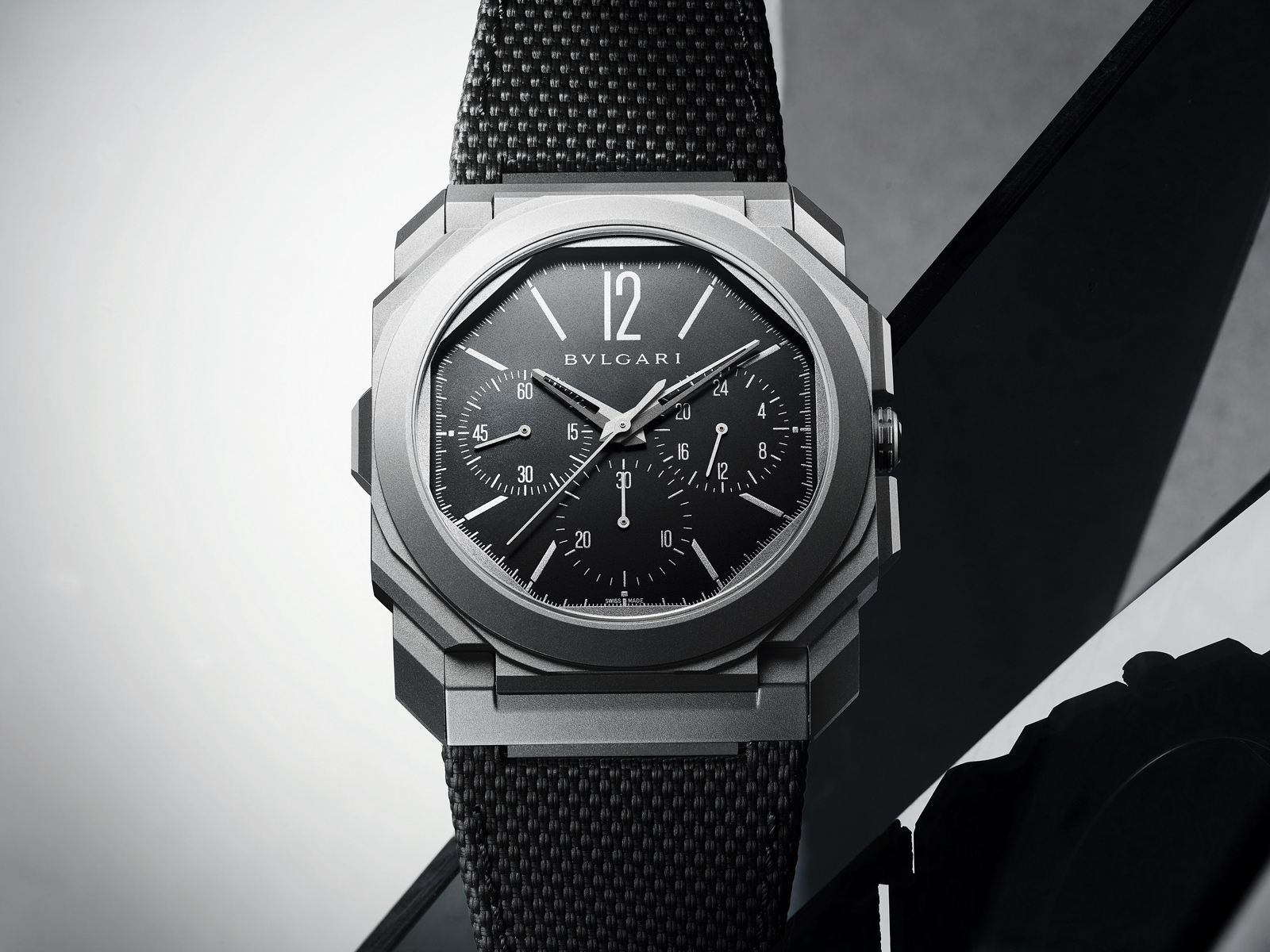
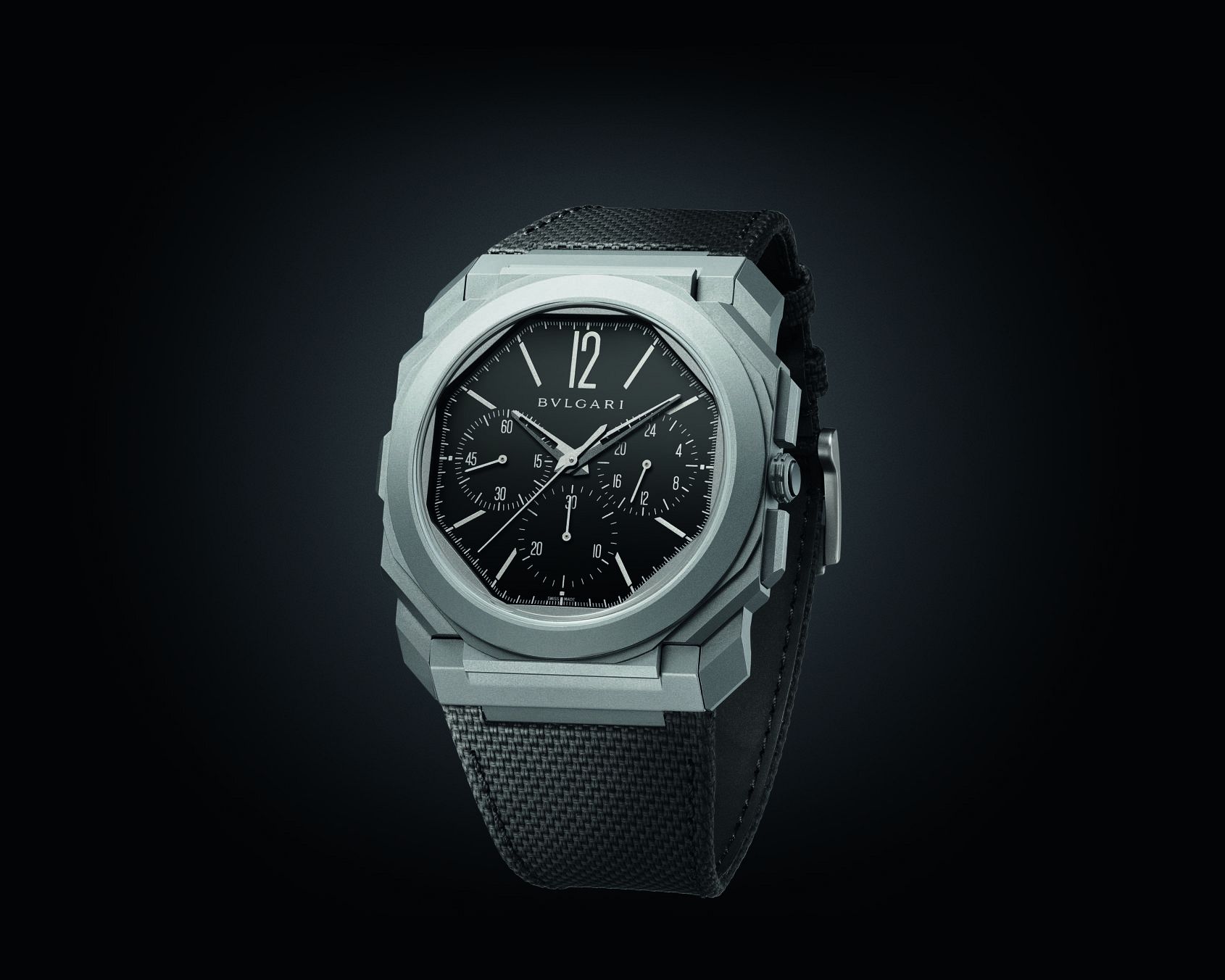
Bulgari’s race to the flattest started in 2014, when it started unveiling one complication after another of record-setting slimness, culminating with the thinnest-ever automatic chronograph two years ago. While the original version is monochromatic and all titanium, the new Octo Finissimo Chronograph GMT Titanium is a twist on the theme. It’s fitted to an integrated rubber strap, in a first for the model that leaves it even more featherweight. Initial thoughts Admittedly – at least from a technical standpoint – the new Octo chronograph isn’t as exciting as it was when the model was first launched. This is just a facelift, but it’s a good one. Though similar to earlier versions of the Octo chronograph, the new model stands out for its palette, which arguably gives it more wrist presence. The original version has an integrated metal bracelet that flowed well in terms of visual continuity. But the strap is compelling for the opposite reason: it makes the extra-thin case stand out, increasing the visual contrast while making the watch look a bit fancier. The elimination of the bracelet will surely change its tangible feel on the wrist substantially. Because of the lightweight materials – a titanium case and strap in rubber – the watch will feel almost non-existent on wrist, taking the ultra-thin nature of the Octo one step forward. And like the time-only version of the Octo, the Chronograph is fairly priced in most iterations. This costs US$17,200, making i...
 Time+Tide