Watch brandsWatch wikiWatch videosVariousWatch calendarSaved articles
PopularRolexOmegaPatek PhilippeAudemars PiguetTudorGrand SeikoCartierSeikoIWCTAG HeuerBreitlingJaeger-LeCoultreA. Lange & SohneZenith

Results for Detent Escapement

214 articles · 16 videos found · page 1 of 8

Related pages

Wiki · Guide
Escapement

The component that transfers energy from mainspring to balance wheel in controlled pulses.

Articles & videos

All Detent Escapement videos ›
Explained: The Detent Escapement SJX Watches
Breguet s natural escapement May 8, 2024

Explained: The Detent Escapement

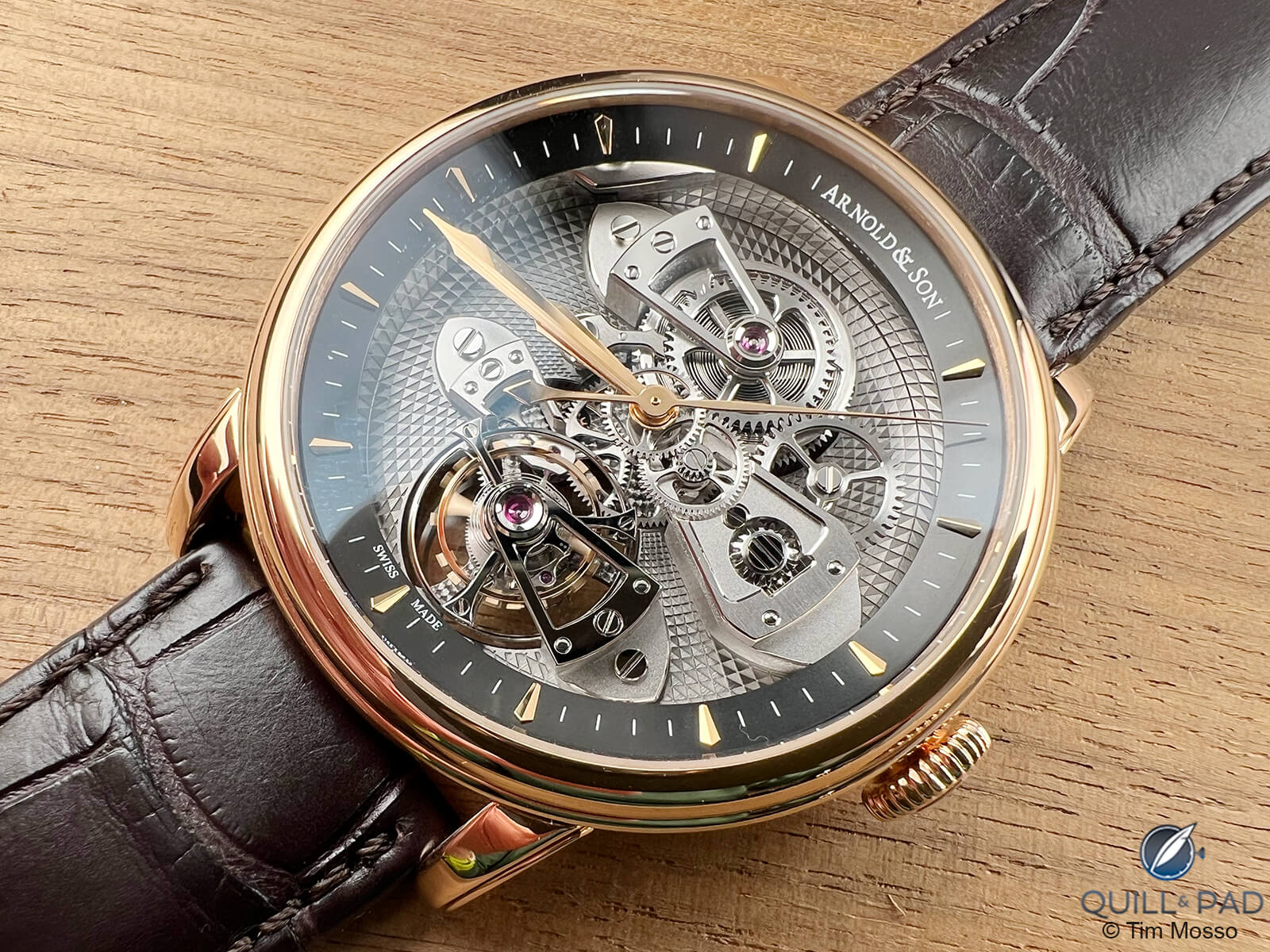
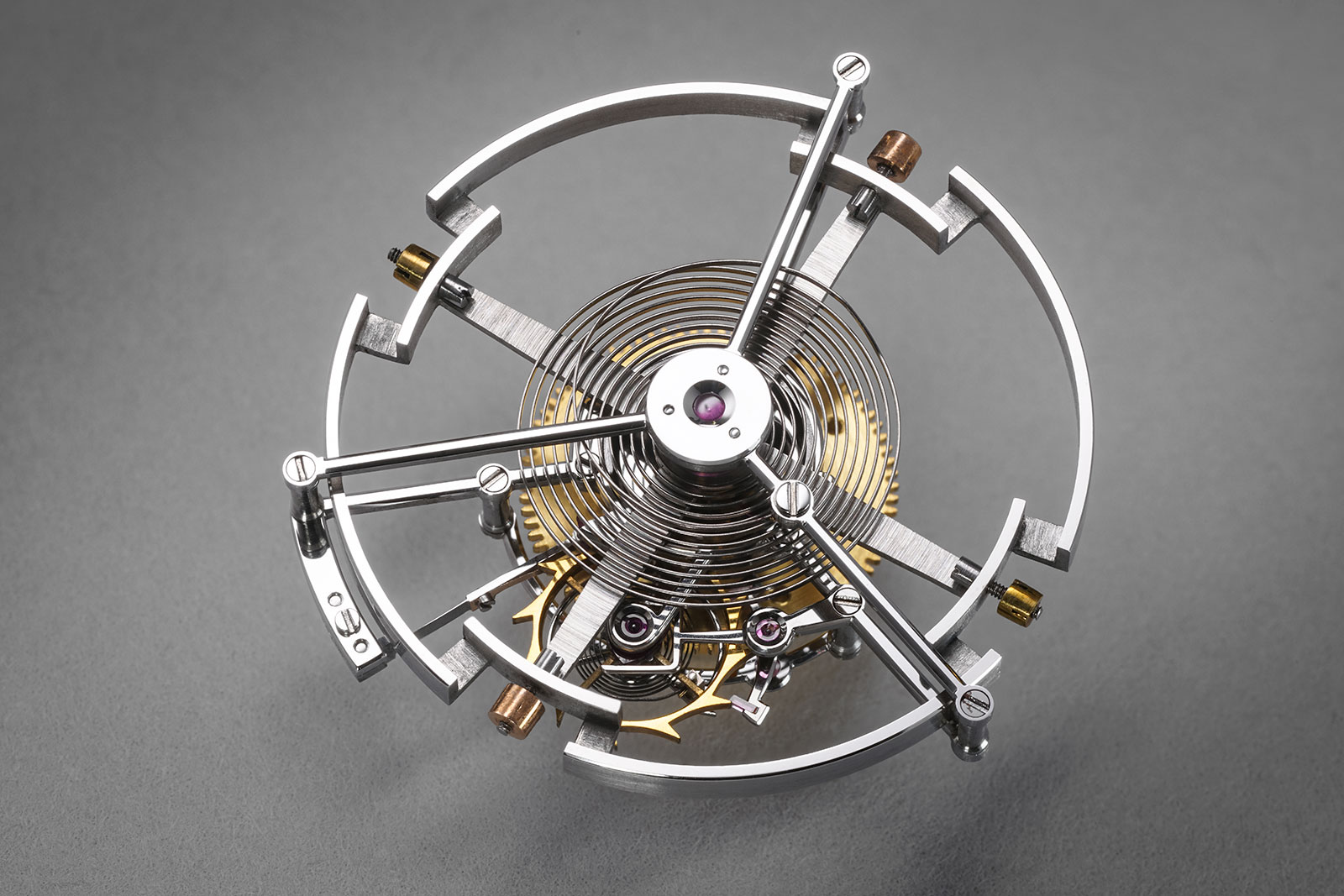
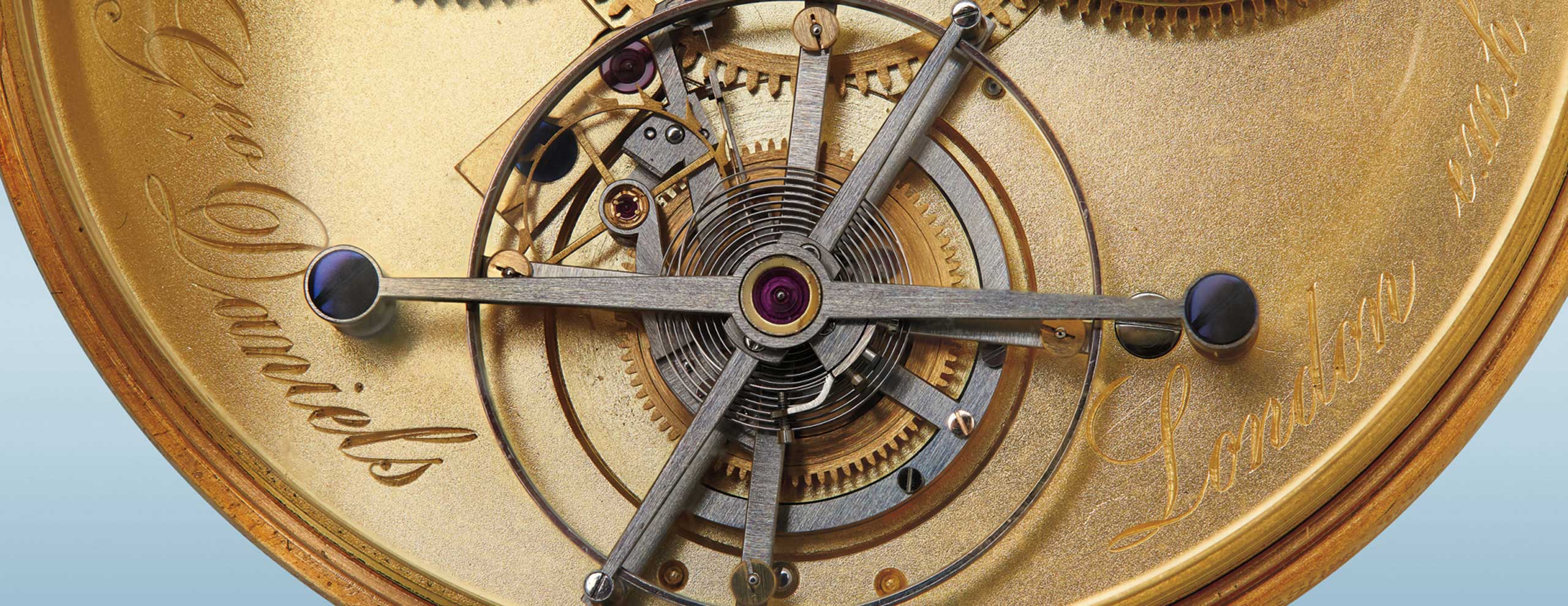
Among the many different escapement types, one in particular stands out, the detent escapement. Taking its name from détente, French for “trigger”, this system is often considered to be the purest type of escapement due to its efficiency and virtually lubrication-free operation. Any sort of mechanical clock or watch requires an escapement, a mechanism that transfers torque from the power source to the regulating organ. The escapement bridges the steady rotation of the gears in the going train and the oscillation of the balance. As a result, the escapement fulfils a double function, both maintaining the swing of the balance and regulating the discharge speed of the mainspring and going train. The detent escapement was invented in the second half of the 18th century,  somewhat simultaneously but independently by the English watchmakers Thomas Earnshaw (1749-1829) and John Arnold (1736-1799). A somewhat similar escapement was prototyped by the Frenchman Pierre Le Roy (1717–1785) some three decades earlier, but the modern detent escapement is derived mostly from Earnshaw’s design. Initially, the escapement was conceived for use in marine chronometers, explaining why it is also known as a chronometer escapement. The chronometer escapement also inspired many innovative subsequent escapements, like the Breguet’s natural escapement, the Robin escapement, and the Daniels co-axial. Drawings of detent escapement types taken from ‘The Marine Chronometer: Its History and ...
Hands On: Victor Kullberg Tourbillon Pocket Chronometer SJX Watches
Patek Philippe worldtime ref 2523 20h ago

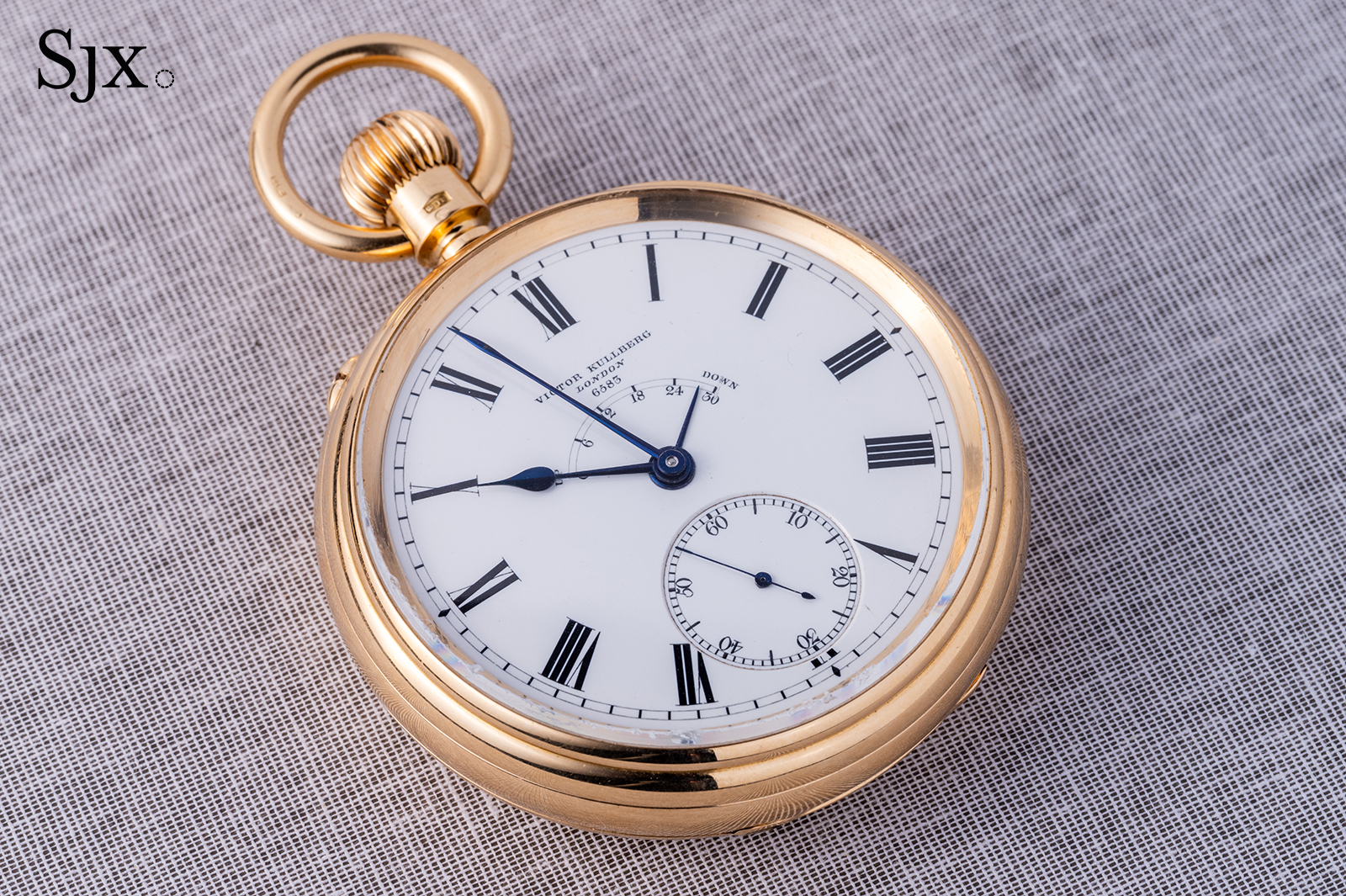
Hands On: Victor Kullberg Tourbillon Pocket Chronometer

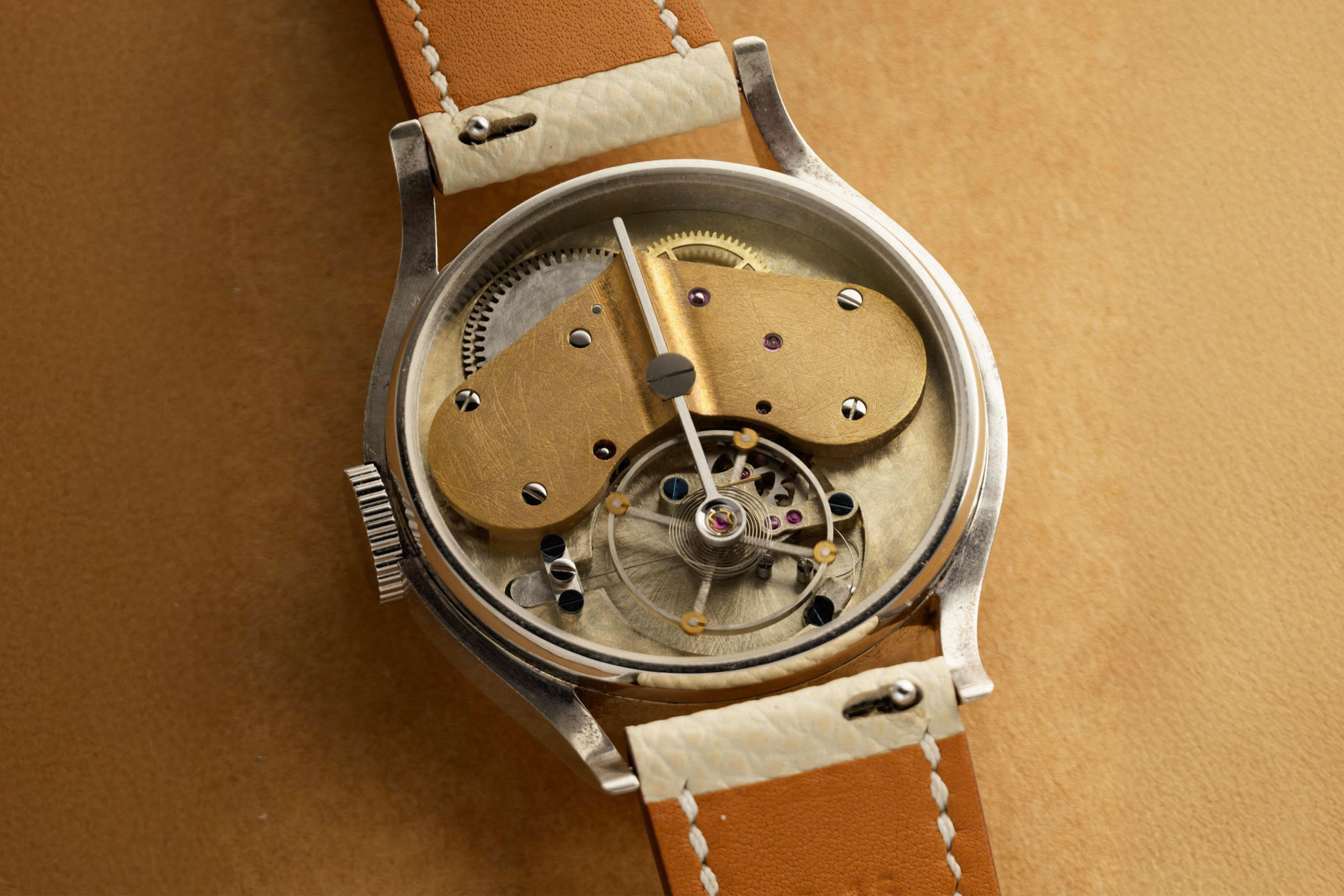
Phillips’s upcoming sale The Geneva Watch Auction: XXIII is packed with spectacular watches, including some already well known to collectors like the extra complicated La Royale by Louis Audemars, an unsual Patek Philippe worldtime ref. 2523, and the Golay Fils & Stahl astronomical watch. But among the finest is a simple watch that tracks only the time and state of wind, yet is comprised of several hundred parts: Victor Kullberg No 6583. Behind those three hands is a one-minute tourbillon equipped with an Earnshaw detent escapement, a massive free-sprung compensation balance, anti-magnetic helical balance spring and reverse chain and fusee, making it one of the most elaborate three-hand watches imaginable. Even at its high estimate of US$102,000, this pocket chronometer amounts to something of a steal, especially in an auction where multiple steel sports watches carry much greater estimates. The cult of the chronometer Swiss and English horologists disagreed on a great many things, from the ideal shape and material of escape wheels to the definition of a chronometer. To the Swiss, the title of chronometer was bestowed based on merit as a timekeeper. Any watch could be one if it kept good time, especially with a trusted, independent attestation of its accuracy. Watches submitted to observatory trials — or tested according to the ISO 3159:2009 standard today — are chronometers by this reckoning. England was dominated by the cult of the [marine] chronometer, unsurprisin...

Highlights: Pocket Watches at Phillips Hong Kong SJX Watches
Patek Philippe Nov 14, 2025

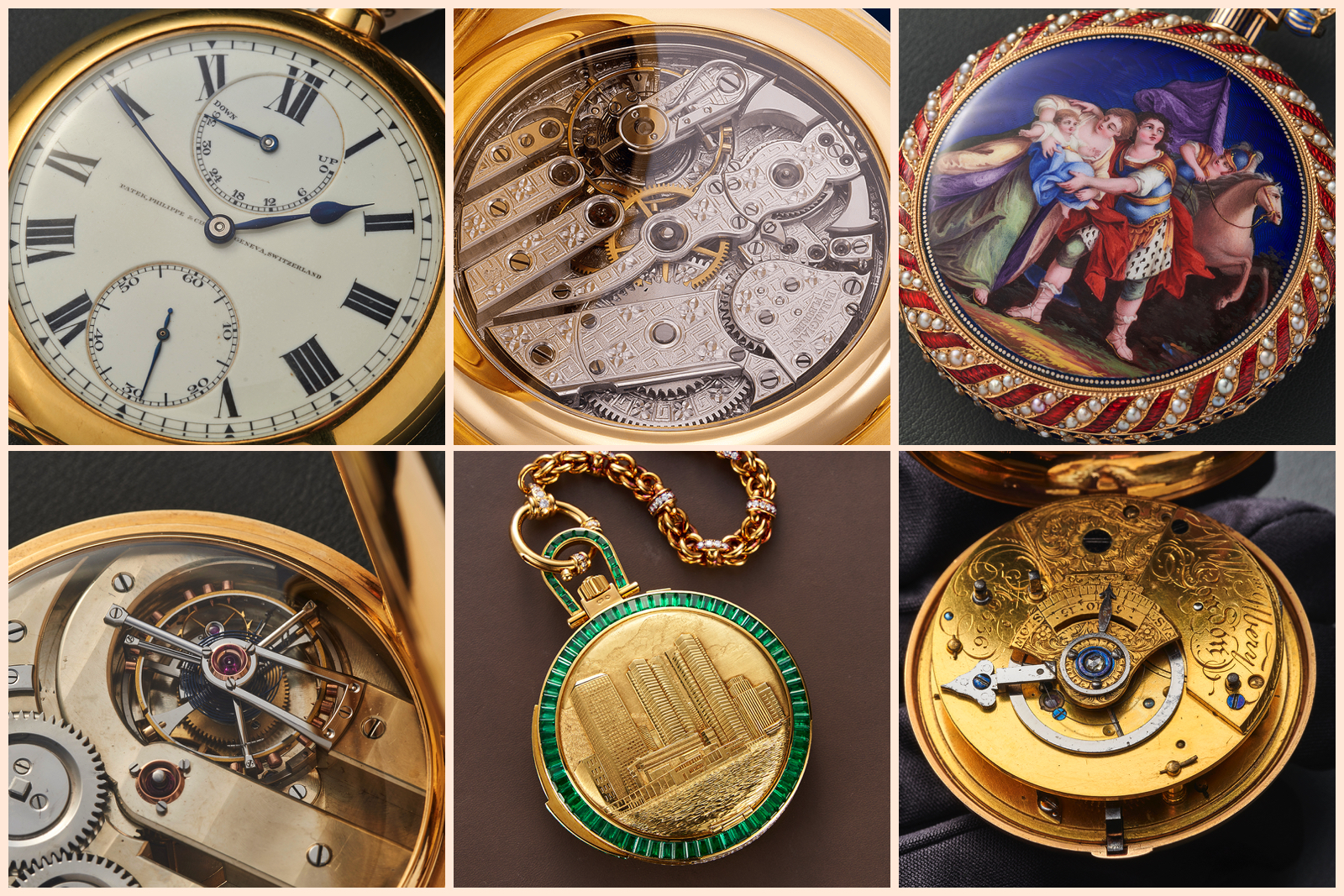
Highlights: Pocket Watches at Phillips Hong Kong

The upcoming Phillips Hong Kong auction includes a diverse and spectacular selection of pocket watches spanning two centuries. From early 19th‑century enamel masterpieces crafted for the Chinese market to 20th‑century tourbillon chronometers that triumphed at observatory trials, the lots on offer demonstrate the technical and aesthetic evolution of the watch over the last two hundred years. Lot 1086 – S. Smith and Son No. 1899-1 Tourbillon Chronometer with Kew Class A Certificate Albert Pellaton-Favre constructed the first of two tourbillons in the auction, which was later retailed by S. Smith & Son. The other, by Patek Philippe, is the work of his son, Jämes-César Pellaton. Both are depicted in Reinhard Meis’s famous Das Tourbillon. The English and Swiss disagreed on what constitutes a chronometer. The English argued that a chronometer must use a chronometer (detent) escapement, while the Swiss considered any watch a chronometer if performed well enough – which the English would call a “Half-Chronometer”. As the Willis enamel dial boasts, the first is a chronometer by both English and Swiss reckoning, with a spring detent escapement and “Especially Good” certificate from the Kew Observatory. While S. Smith and Son retailed quite a number of tourbillons, including others with detent escapements, most were sourced locally, while the present lot uses a Swiss movement. The London branch of Baume Frères ordered six tourbillon chronometers from Albert Pella...

Hands On: Urban Jürgensen and Derek Pratt Oval Pocket Watch SJX Watches
Urban Jürgensen Nov 6, 2024

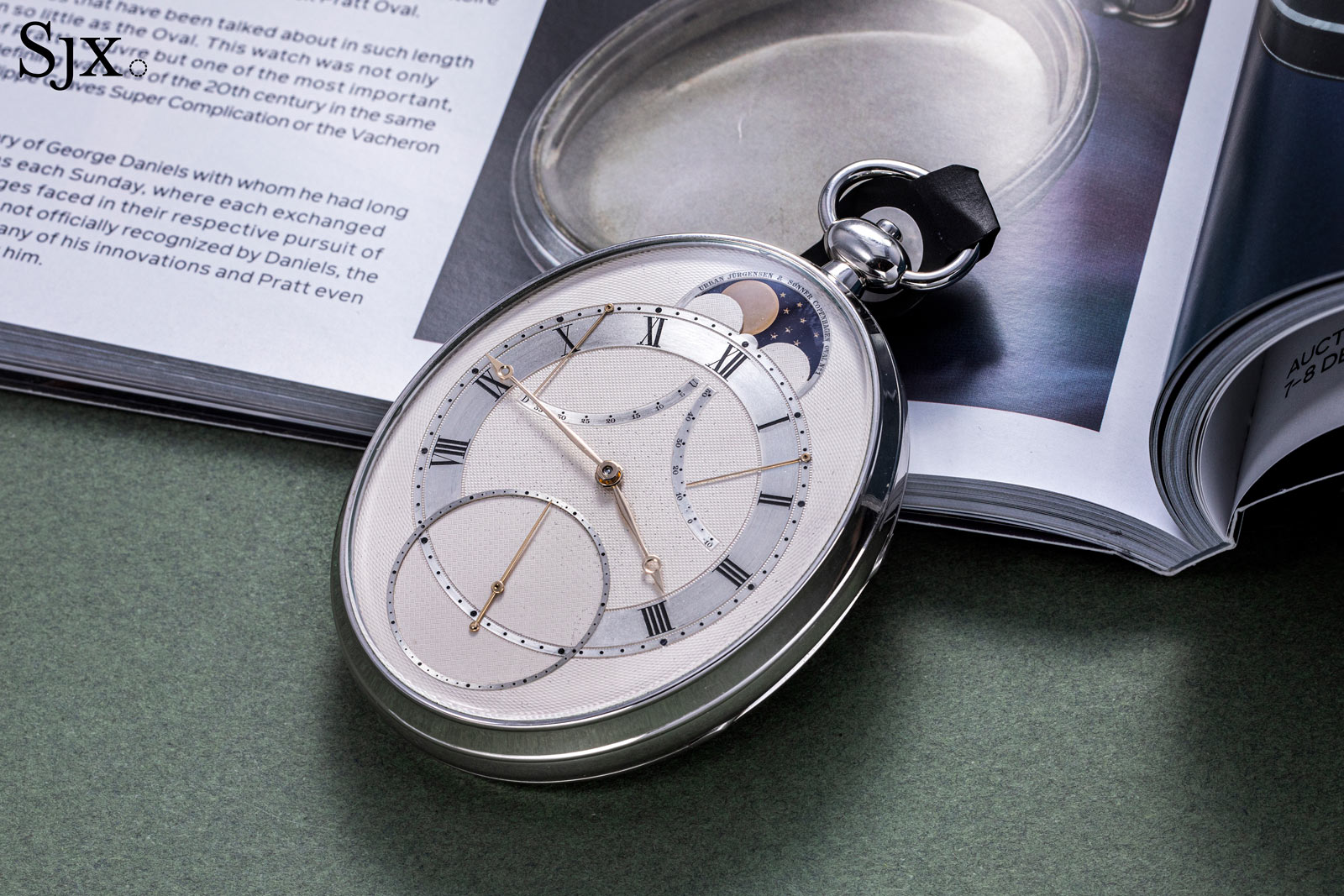
Hands On: Urban Jürgensen and Derek Pratt Oval Pocket Watch

A storied example of artisanal independent watchmaking, The Oval was the masterpiece by Derek Pratt (1938-2009), perhaps the greatest unknown watchmaker. Pratt began work on the Oval in 1982 as his magnum opus, the ultimate realisation of his aesthetic and technical vision. While his work for Urban Jürgensen is perhaps his best known, Pratt was an independent watchmaker with a diverse repertoire, including working with George Daniels on the co-axial escapement. Amongst his creations was a replica of John Harrison’s H4 marine chronometer. These projects, as well as the fact that the Oval was mostly hand made, meant the pocket watch took some two decades to complete. Although it’s a sizeable watch, the Oval is finely detailed, reflecting the high level of Pratt’s craft and the years he invested in creating the watch from scratch. Beyond its artisanal execution, the Oval also stands out for its technical achievement. Besides a detent escapement, the Oval also contains a horological first – a constant force mechanism integrated within the tourbillon – along with a thermometer, power reserve display, and moon phase on the dial. We took an in-depth look at the Oval in 2021, thanks to its current owner, Dr Helmut Crott. But now as the Oval heads to the auction block at Phillips, it’s worth one last look before it disappears into a collection. A two-decade odyssey A contemporary and friend of George Daniels (1926-2011), Pratt was one of the most talented horologists o...

Raúl Pagès Wins Inaugural Louis Vuitton Watch Prize SJX Watches
Louis Vuitton Watch Prize Feb 7, 2024

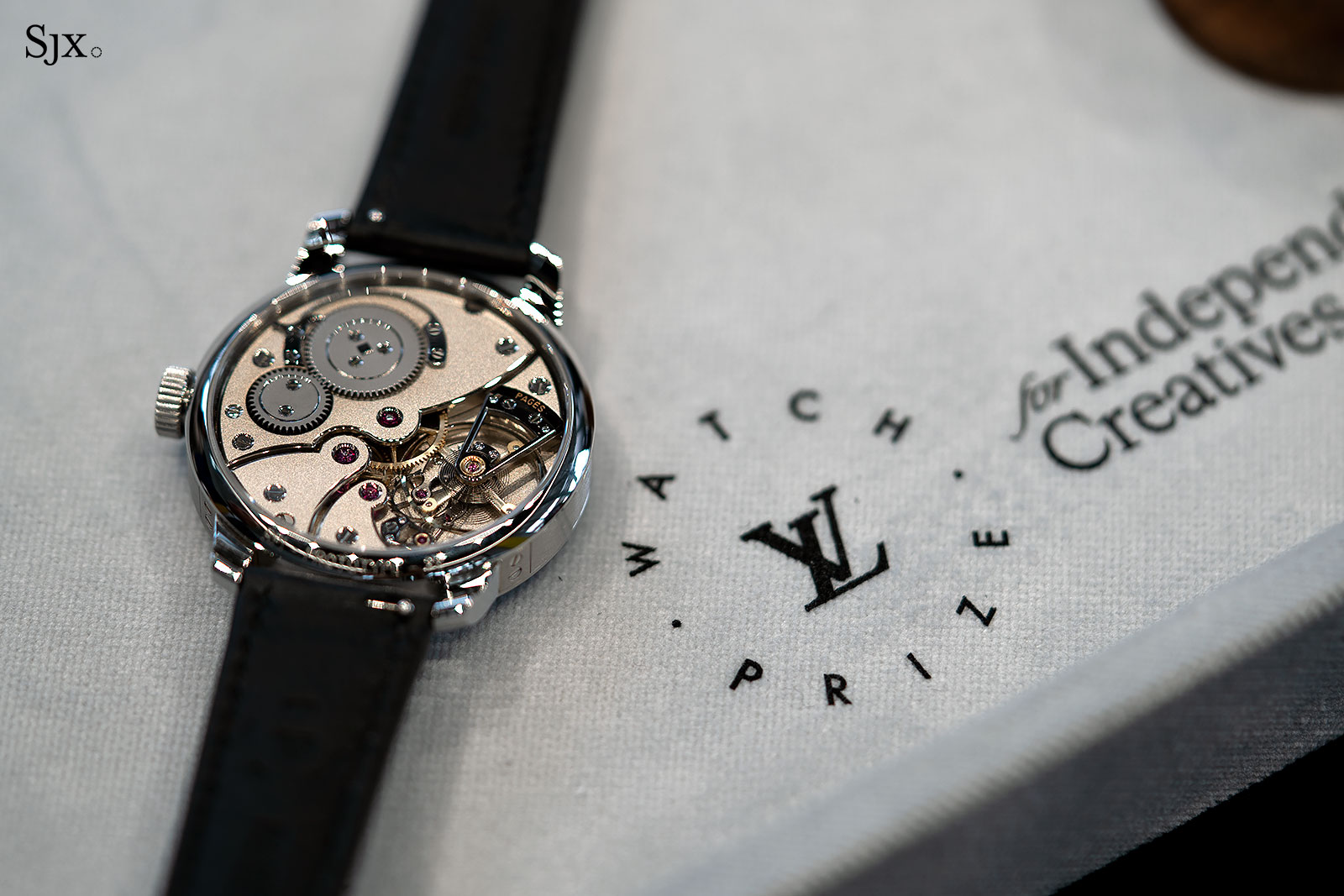
Raúl Pagès Wins Inaugural Louis Vuitton Watch Prize

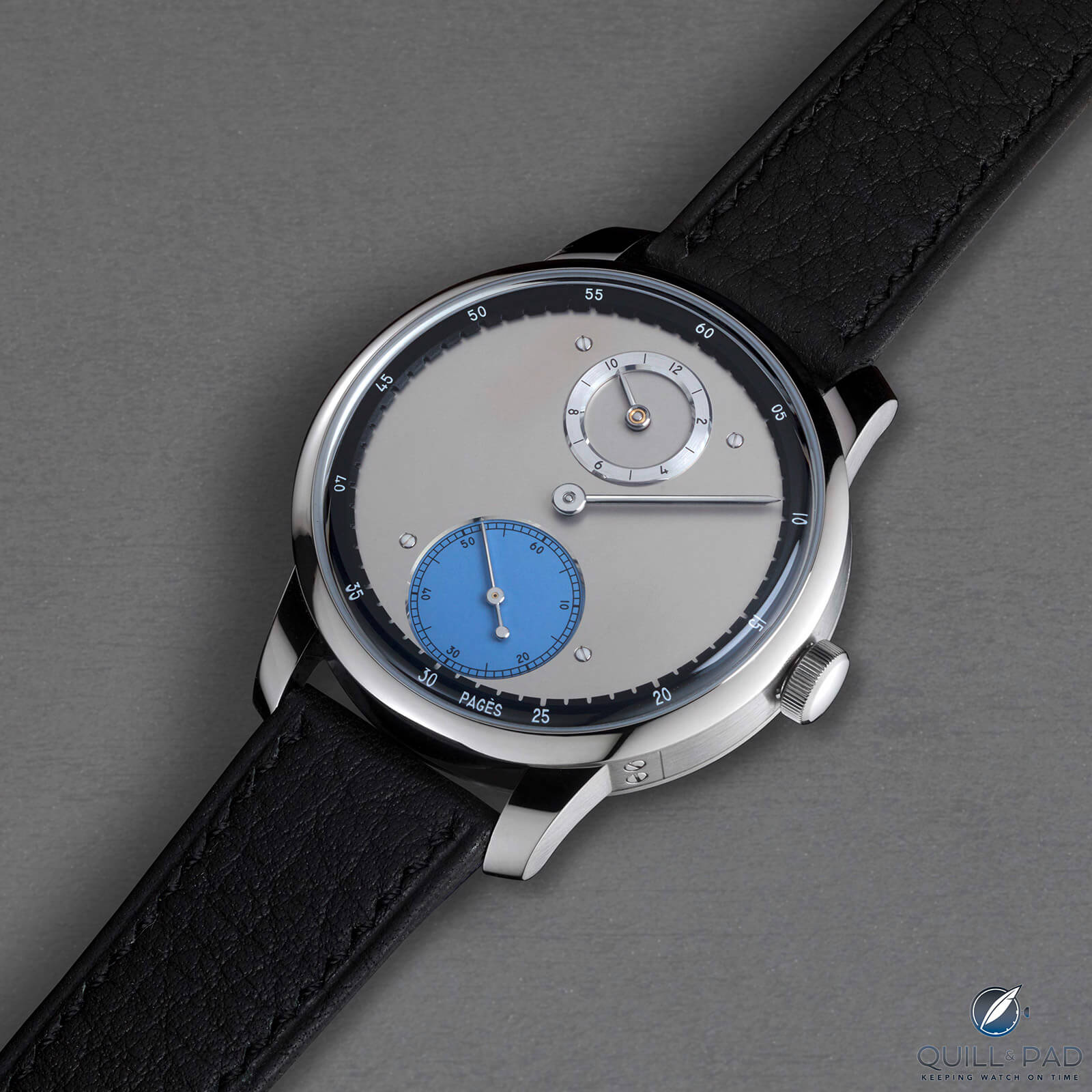
In its first year, the Louis Vuitton Watch Prize for Independent Creatives has been awarded to Raúl Pagès and his RP1 Régulateur à Détente. Selected by a five-person jury, the RP1 triumphed over five finalists, including Andreas Strehler with his Tischkalender Sympathique and Petermann Bedat and its Reference 2941 split-seconds chronograph. A watchmaker, restorer, and automaton maker, Mr Pagès’ winning entry is a time-only wristwatch with a regulator-style display, and more importantly, a movement of his own design with a detent escapement. Historically found in precision marine chronometers, detent escapements are highly accurate but typically not shock resistant, a problem Mr Pagès solved by taking inspiration from a 19th century escapement design. As a result, his escapement is shock resistant enough for everyday use in a wristwatch. Besides technical features, the RP1 movement also boasts a high level of decoration that is artisanal in nature and accomplished by hand. The finishing, architecture, and construction are all classical in style, reflecting Mr Pagès experience as a restorer, most notably at Parmigiani, perhaps the most respected restoration workshop in Switzerland. A drawing a traditional detent escapement (left), and the RP1 detent escapement Tearing up as he gave his acceptance speech, Mr Pagès’ win is a milestone in a career that actually started over a decade ago. His skill and dedication were recognised by the jury, made up of Carole Forest...

Raúl Pagès Introduces the Régulateur à détente RP1 SJX Watches
Jan 26, 2022

Raúl Pagès Introduces the Régulateur à détente RP1

Independent watchmaker Raúl Pagès is best known for the Soberly Onyx, which housed a highly-decorated movement that was originally a humble Cyma. His latest creation however, marks a significant step forward – a movement he developed and largely manufactures himself. A time-only watch with some fascinating details, the Régulateur à détente RP1 serves as a strong testament to Mr Pagès’ capabilities: it has a regulator display while the movement has a detent escapement of his own design. And of course, it is finished to the same high standard as his earlier work – or perhaps even better. Initial thoughts The RP1 is intriguing in many ways. It is well-executed both in terms of technical features and finish. The most obvious element that sets it apart is the detent escapement. Due to the technical quirks in implementation, the detent escapement is an uncommon regulation mechanism that contrasts with the Swiss lever escapement that is ubiquitous even at the highest end of watchmaking. It is clear that Mr Pagès designed the movement around the escapement, as the movement bridges expose enough to proudly showcase the mechanism. But the RP1 isn’t only about the movement, as its qualities appear all-encompassing, as demonstrated by the equally well-finished dial. Despite the simple appearance at a glance, the regulator dial is replete with fine finishing details. While the colour scheme may be too quirky for some, I wouldn’t be surprised if Mr Pages accedes to re...

Cleguer Debuts with Proprietary ‘Innate’ Escapement SJX Watches
Breguet s natural escapement Apr 1, 2026

Cleguer Debuts with Proprietary ‘Innate’ Escapement

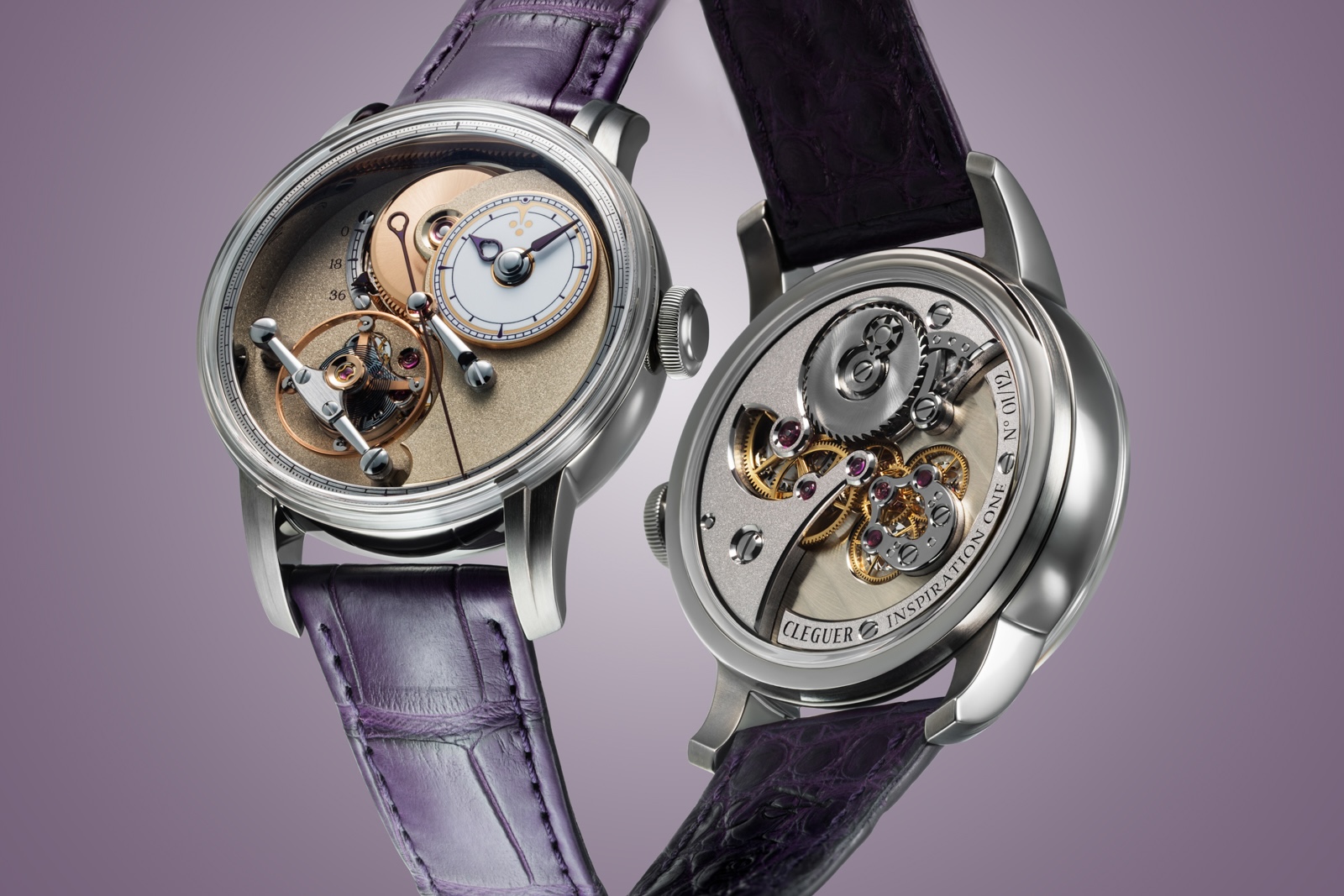
In the run-up to Watches & Wonders, a new crop of emergent independents is making its debut. But even within a crowded field, the Cleguer Inspiration One manages to stand out with an ambitious proprietary escapement and clever construction. It’s a promising start for founder Mathieu Cleguer, an engineer who’s had a hand in developing several calibres for well-known independent brands. Initial thoughts The artisanal, highly finished time-only watch is a well-worn trope among independents, but occasionally one breaks from the pattern. The Inspiration One from Cleguer Horology is one such watch. Mathieu Cleguer is an industry veteran who has worked as a movement construction consultant and now produces watches under his own name. The opening salvo in what is planned to be a larger ‘Inspiration’ series designed to explore alternative escapements, the Inspiration One is built around the so-called innate escapement, a fresh twist on Breguet’s natural escapement. The system is Mathieu Cleguer’s own design, and from initial analysis it exhibits a surprising degree of ingenuity and is original in its execution. Discreet signature on the interior bezel. The open design - an off-centre dial with exposed escapement - is a familiar arrangement among independents, but the delicacy of the components gives it a refined quality. The 38.5 mm case is well-proportioned, though the 12 mm height borders on tall. While there’s room to develop a more cohesive design language goi...

In-Depth: Breguet’s Constant-Force Magnetic Escapement SJX Watches
Breguet s Constant-Force Magnetic Escapement Dec 4, 2025

In-Depth: Breguet’s Constant-Force Magnetic Escapement

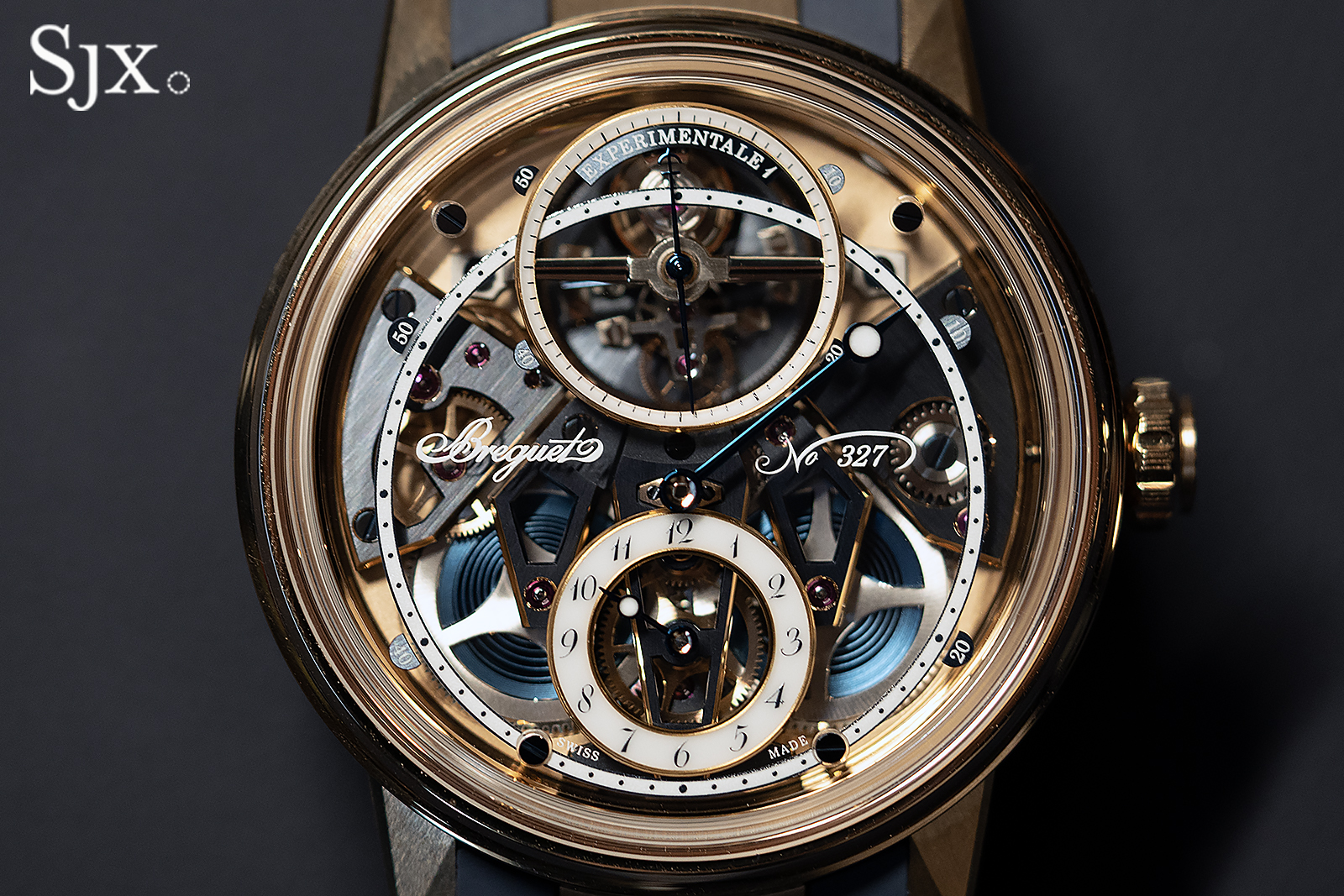
Earlier this week, Breguet rounded off its grandiose 250th anniversary with the unexpected launch of the Expérimentale 1 chronometer in Paris. Showcasing modern Breguet’s most impressive innovation to date - a magnetic constant-force escapement - the watch left many scratching their heads simply because the novel invention defies easy explanation. Here we explain the actual functioning of this remarkable invention, and why it represents such a significant step forward in terms of chronometry and escapement technology. The origins of the concept Before turning to the decidedly modern and futuristic Expérimentale 1, we must first take a short trip to the past and consider how the idea of using magnets in mechanical escapements first came to life. For that we must turn to the late 1930s, when Cecil Frank Clifford, Fellow of the British Horological Institute (BHI), started experimenting with oscillators maintained by magnetic rails or escape wheels.  He was granted a British patent in 1954 for a variety of magnetised escape wheels paired with elastic vibrating magnetic blades. The device would operate silently and Clifford envisioned it being used for naval underwater torpedoes, so the lack of ticking would be harder to pick up by sonars.  Iterations of Clifford magnetic escapements. His designs were rudimentary. The principle was that the escape wheel would be braked by a vibrating pair of magnetised blades (in several possible configurations), while simultaneously ...

An In-Depth Look At The New Rolex Dynapulse Escapement Fratello
Rolex Dynapulse Escapement Rolex surprised Apr 18, 2025

An In-Depth Look At The New Rolex Dynapulse Escapement

Rolex surprised friend and foe with a new movement at this year’s Watches and Wonders. While that’s always a relatively big deal in our little horological sub-universe, caliber 7135 represents a particularly big milestone. Rolex developed a brand-new escapement dubbed Dynapulse. We felt it was about time we took a closer look at it. Of […] Visit An In-Depth Look At The New Rolex Dynapulse Escapement to read the full article.

Girard-Perregaux Neo Constant Escapement with Patrick Pruniaux, CEO of Girard-Perregaux Revolution
Girard-Perregaux Neo Constant Escapement Mar 27, 2024

Girard-Perregaux Neo Constant Escapement with Patrick Pruniaux, CEO of Girard-Perregaux

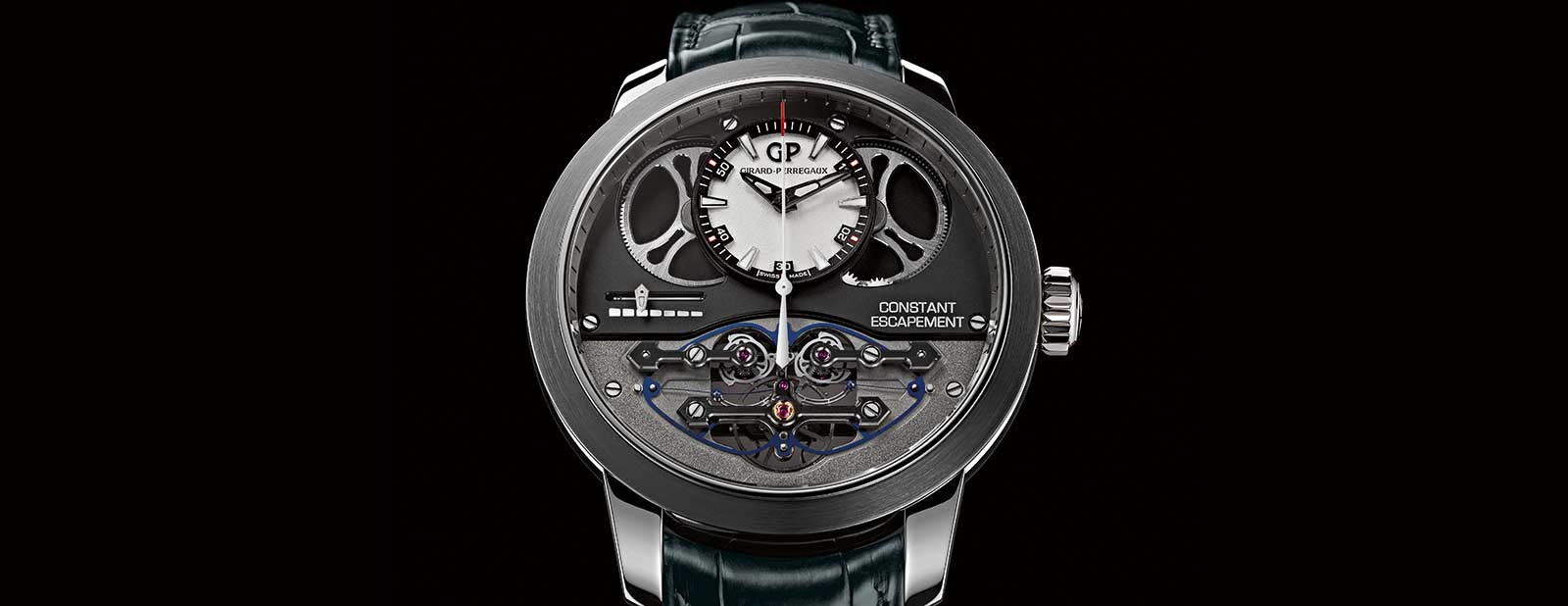
In 2013, Girard-Perregaux debuted the acclaimed Constant Escapement L.M., earning the prestigious ‘Aiguille D’Or’ at GPHG, which is a mechanism that delivered remarkable rate stability irrespective of the available energy. Wei and Girard-Perregaux CEO Patrick Pruniaux explore the Maison’s latest innovation, the Neo Constant Escapement. Enhancing the already remarkable Constant Escapement, it features aesthetic and […]

In-Depth: Girard-Perregaux’s True Constant-Force Escapement SJX Watches
Girard-Perregaux s True Constant-Force Escapement Jan 3, 2024

In-Depth: Girard-Perregaux’s True Constant-Force Escapement

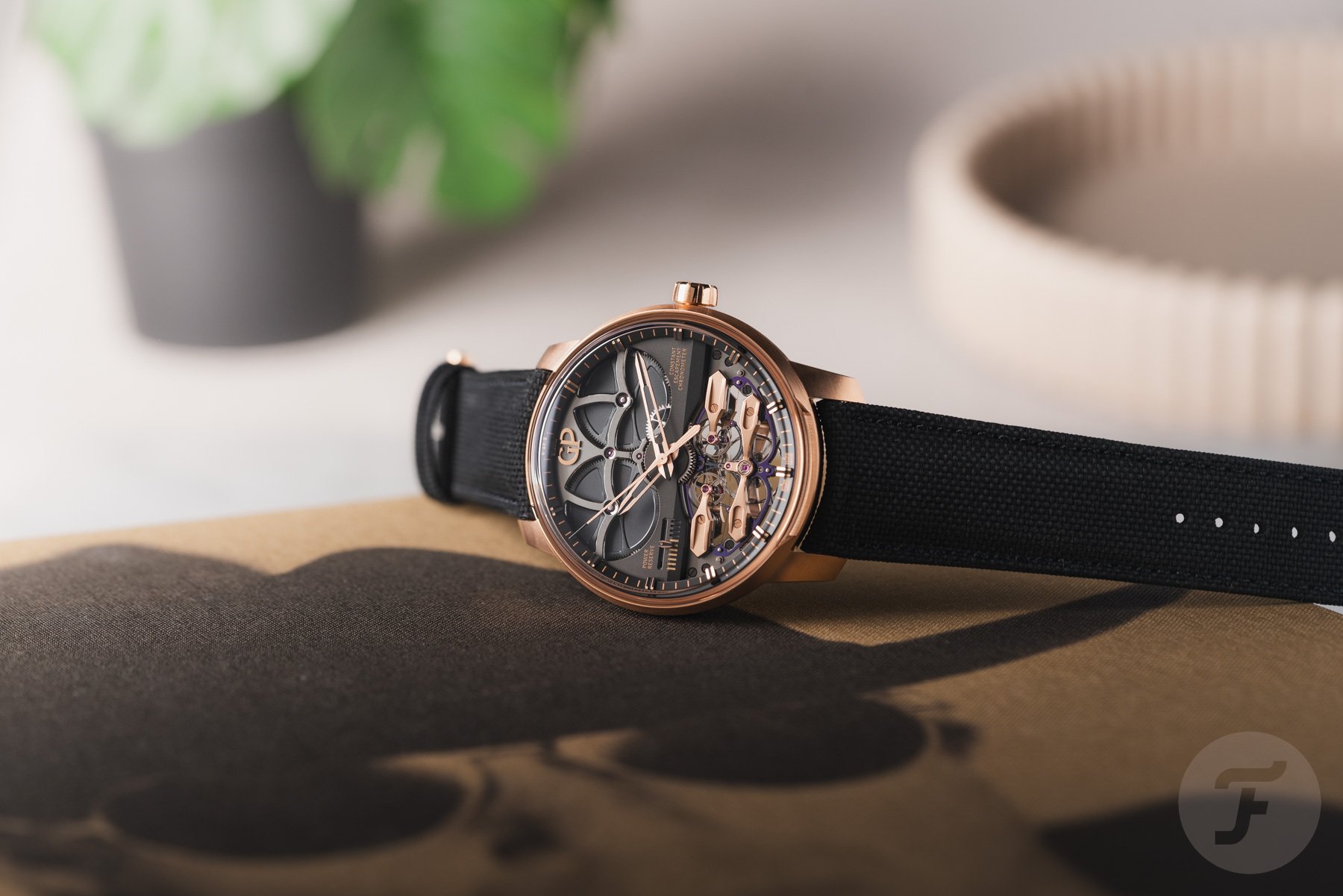
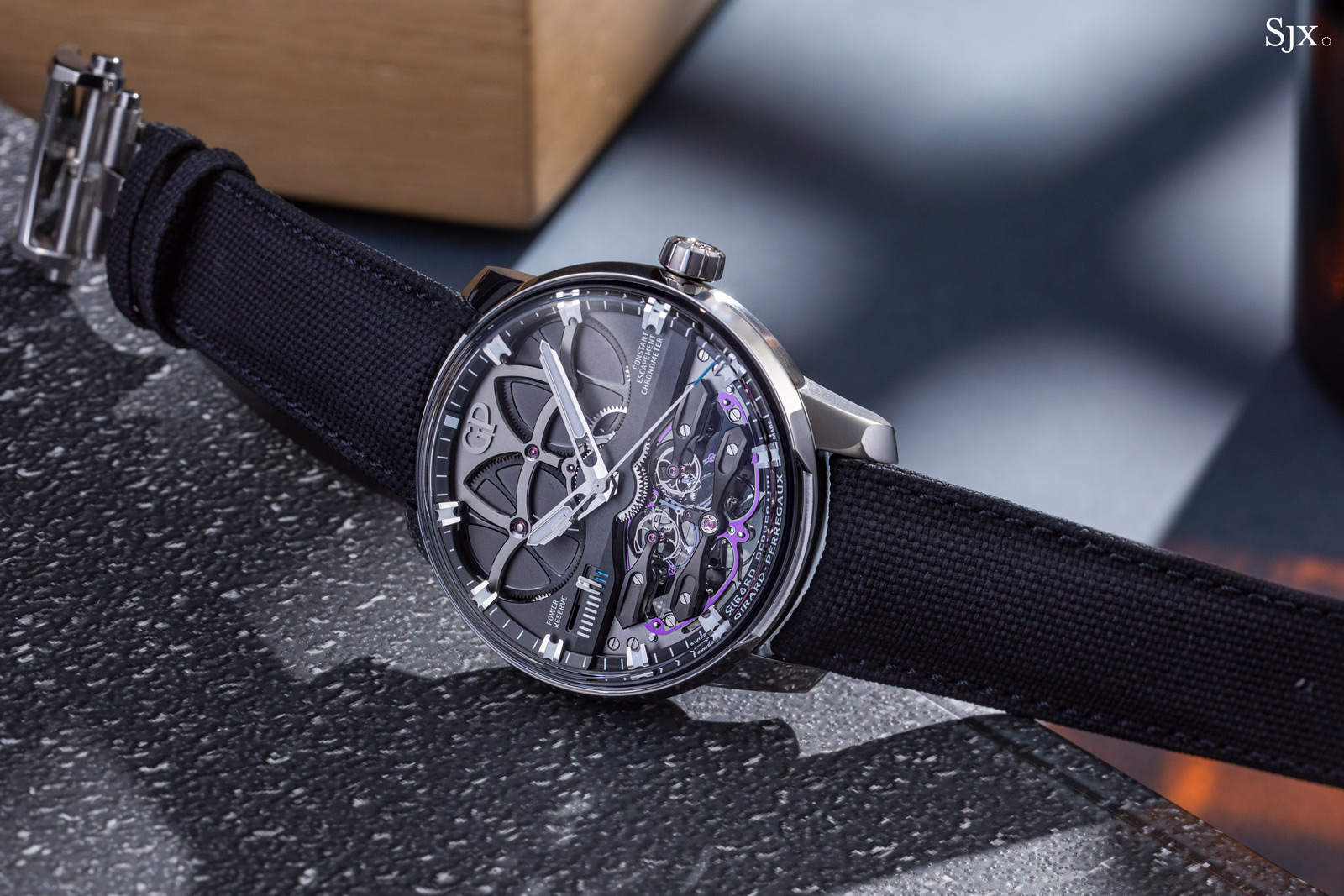
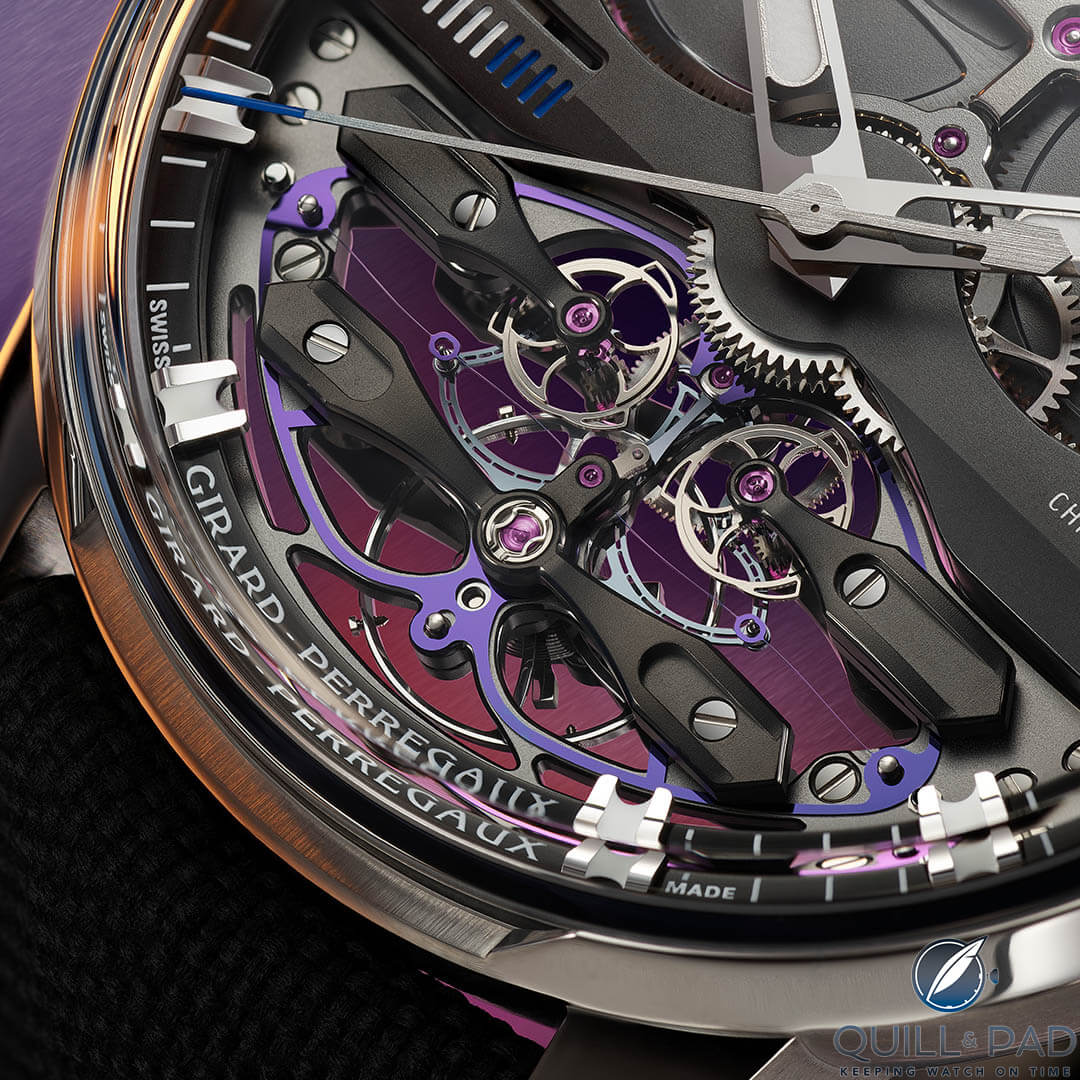
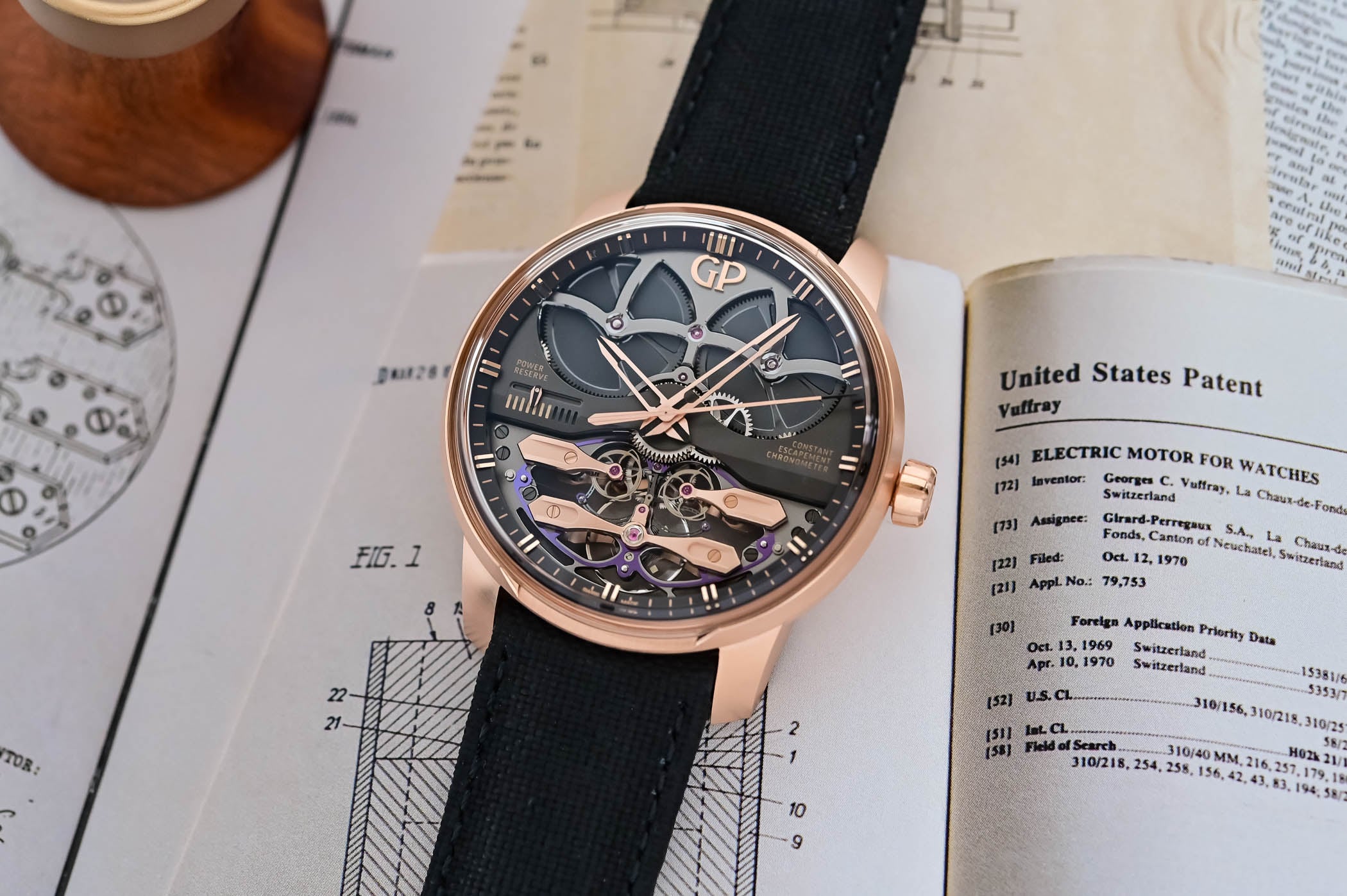
Ten years after it arrived on market, Girard-Perregaux revived its most notable modern-day invention with the Neo Constant Escapement. Operating on the same principles as the original, the Neo Constant Escapement (NCE) features an upgraded movement inside a more compact case. A combination of a historical concept originating with Abraham-Louis Breguet and cutting edge horology, the NCE retains the defining invention of the original – a true constant-force escapement. “True” because the constant-force mechanism, comprising a lozenge-shaped silicon spring, is integrated with the pallet lever, which in turn interacts with a “natural” escapement of twin escape wheels. While the key concept has been retained, the rest of the NCE, however, has been improved over the original, with wearability in particular having been enhanced. Initial thoughts The fundamental concept of the NCE is appealing because it successfully combines a significant historical invention, Breguet’s double-wheel escapement, with an innovation that is entirely 21st century, a compliant mechanism in silicon. Both are brought together in an elegant yet ingenious manner. The basis of the movement is Breguet’s échappement naturel, the “natural” escapement with two wheels that has been adopted in the modern day, in a variety of modified forms, by Voutilainen, F.P. Journe, and Charles Frodsham. But the natural escapement here has been enhanced with a constant force mechanism made up of a single pi...

Girard-Perregaux Neo Constant (Force) Escapement: The Evolution of a Revolution Quill & Pad
Girard-Perregaux Neo Constant Force Escapement Oct 16, 2023

Girard-Perregaux Neo Constant (Force) Escapement: The Evolution of a Revolution

While it is remarkable how Girard-Perregaux made the movement, it is even more astonishing how they turned it into such an incredibly good-looking watch. Compared to its predecessor, the Neo Constant Escapement has a very wearable size of 45mm in diameter at a thickness of 14.8mm. It sits nicely on even a smaller wrist thanks to relatively short lugs, while the titanium case keeps the weight down.

First Look – The Spectacular Pink Gold Edition of the Girard-Perregaux Neo Constant Escapement Monochrome
Girard-Perregaux Neo Constant Escapement Dec 19, 2025

First Look – The Spectacular Pink Gold Edition of the Girard-Perregaux Neo Constant Escapement

A conundrum shared by watchmakers for centuries concerns the issue of constant force, or how to produce a steady, unwavering stream of power from the mainspring to the regulating organ to prevent rate variations and maintain amplitude consistency. The big question is how? Taking the bull by the horns, Girard-Perregaux tackled the dilemma with the […]

In-Depth – Deciphering the Revolutionary Rolex Dynapulse Escapement and the Calibre 7135 Monochrome
Rolex Dynapulse Escapement Apr 11, 2025

In-Depth – Deciphering the Revolutionary Rolex Dynapulse Escapement and the Calibre 7135

Rolex has changed… Not marginally, but significantly. We knew the brand was capable of being rather unpredictable and capable of bold creative moves, such as bubble-decorated dials and watches with a guilloché pattern. The days when Rolex simply revamped a collection every 10 years by implementing incremental upgrades and releasing new dial colours every two […]

Insight: What’s Next for the Girard-Perregaux Constant Escapement? SJX Watches
Girard-Perregaux Constant Escapement? Jun 27, 2023

Insight: What’s Next for the Girard-Perregaux Constant Escapement?

In an era of modern and accessible digital technology, the utilitarian role of mechanical timekeepers has inevitably dwindled. Yet, it is still pursued as a luxury of an artform – either of the highest finishing by hand that can’t be performed by machines, or the research and development in making a mechanical timepiece – in particular wristwatches – as accurate as possible.  One of these horological pursuits, to preserve the accuracy of mechanical wristwatches, is the supply of a constant force to the escapement. To isolate the varying torque as a mainspring gradually unwinds, some haute horlogerie watches today incorporate either a fusée-and-chain or a remontoir, which supplies a steady torque to the escapement for stable timekeeping.  However, there is one particularly novel take on constant force released by Girard-Perregaux, in the form of a proprietary escapement. First unveiled as a prototype in SIHH 2008, the Girard-Perregaux Constant Escapement has a patented, double escape wheel system that is designed from the ground up to inherently have a built-in constant force system, thus eliminating the need of a remontoir or a fusée-and-chain.   Despite being first created 15 years ago, Girard-Perregaux (GP) is still further developing the escapement today, with a new set of patented improvements publicly available – strongly hinting at a revamped model in the near future. These patents make it worth a deep dive into the original Constant Escapement (CE) fr...