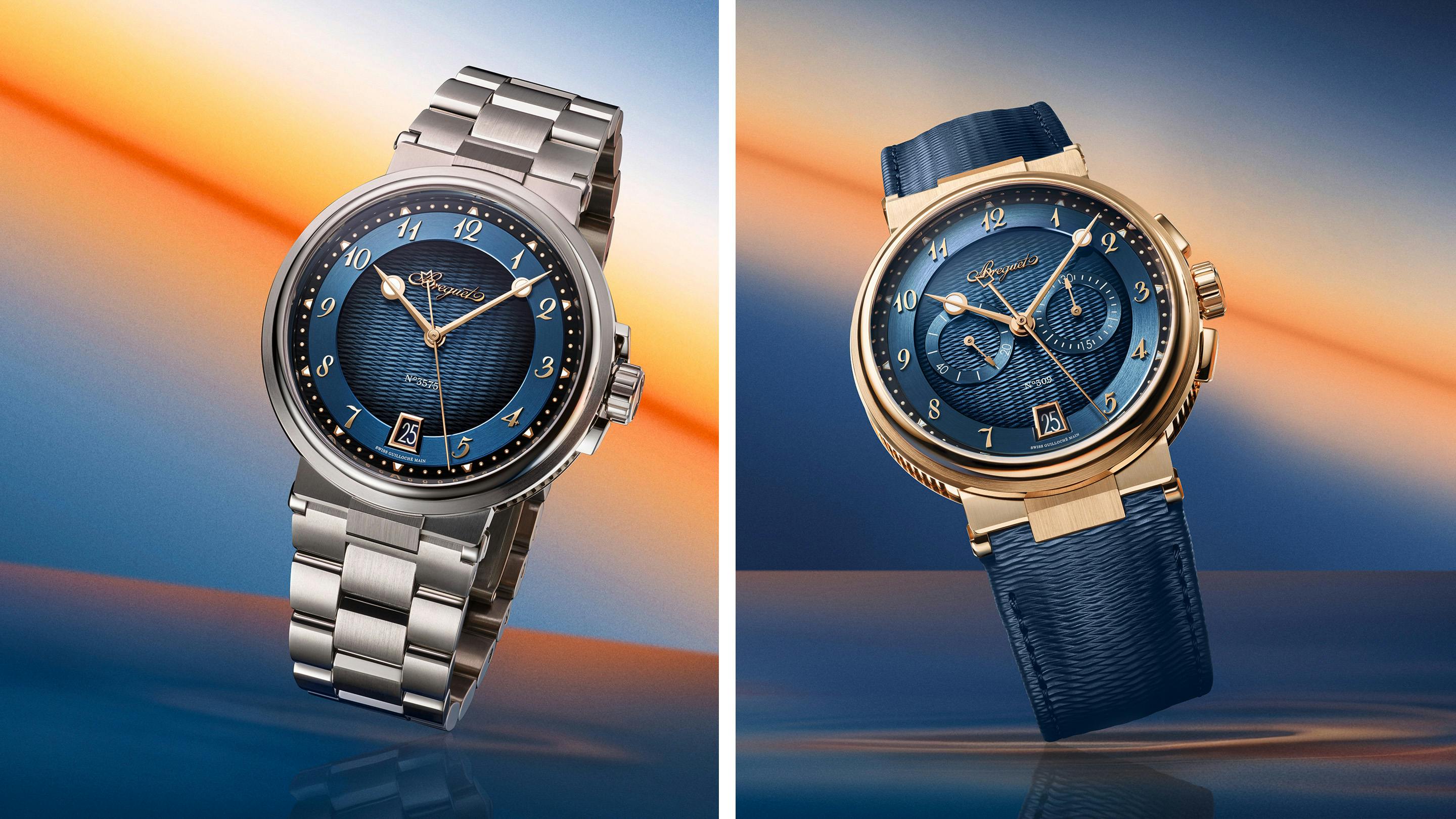
Introducing: The Newly Revamped Breguet Marine 5517 Time-and-Date And 5527 Chronograph
What We Know A refresh of Breguet's Marine line, inspired by Abraham-Louis Breguet's history of marine chronometers and scientific instruments, has been coming for some time now. If you've been following the sometimes sweeping, sometimes subtle, almost always welcome changes to Breguet's catalog over the last few years (and especially last year during the brand's year-long 250th fête), you knew the Marine was one of the few stones left unturned. While the Experimentale 1 (a groundbreaking achievement) launched a new design language for the Marine last year, today's refresh is more subtle. The first thing that you probably will notice is that the eponymous "Breguet" numerals now replace the Roman ones on the previous models. But wait. There's more. Previous versions of both models had either soleil finishing centered around the boxed brand name (and number) or a larger, irregular wave guilloché, depending on the execution. In both new models, the watches now feature the new, finer "Quai de l'Horloge" guilloché pattern launched to honor the brand's 250th Anniversary last year, with a circular brushed hour track. Rather than just doing the same dial treatment for each case material, regardless of the complication, the brand has a mix of dials ranging from blue (in different shades) to grey and black. In general, the case material matches the tone of the hands, but there is an exception. The cases and movements have remained largely the same, 42.3mm by 13.9mm with a 50.7m...
 WristBuzz