What is acoustic resonance?
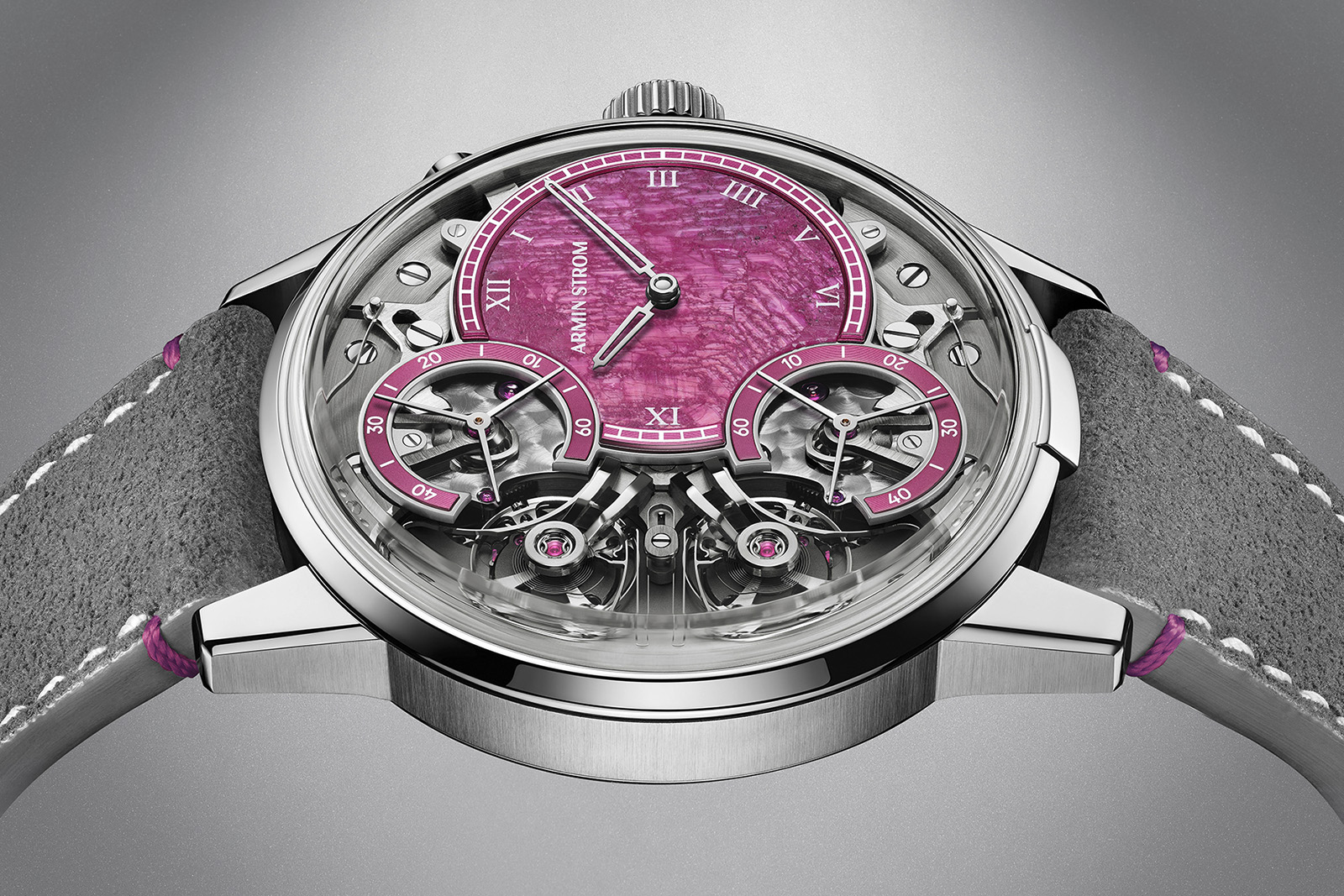
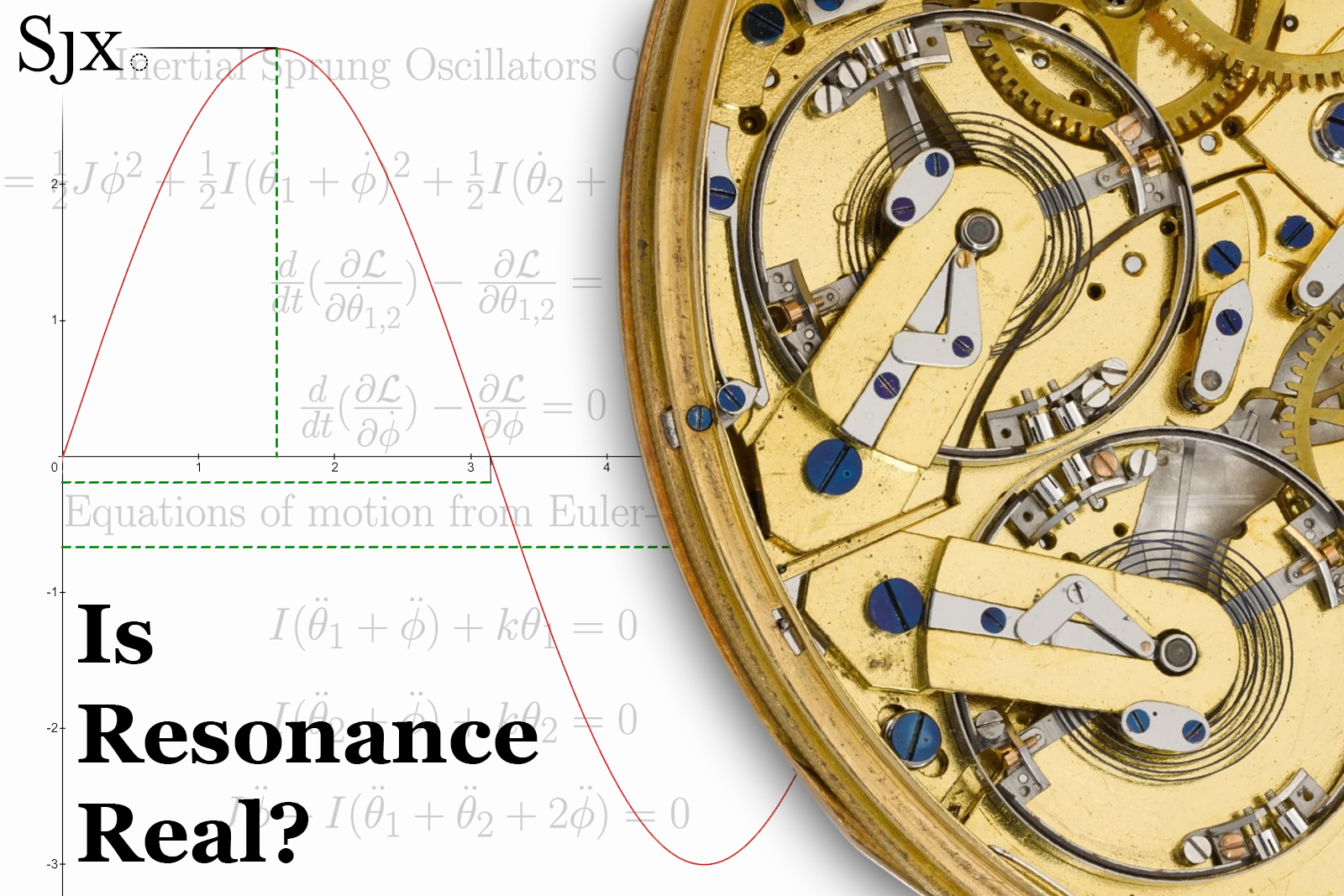
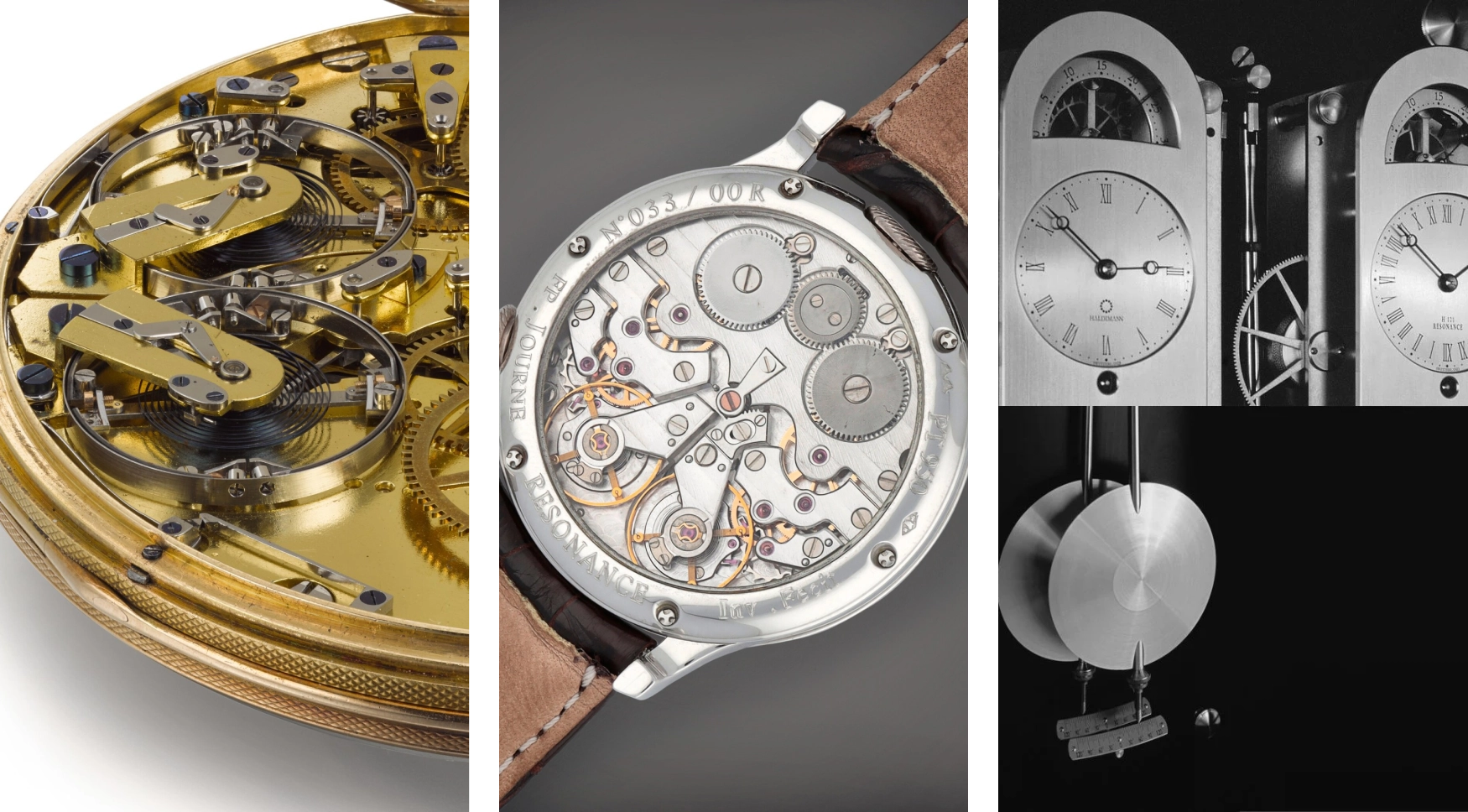
In 1665 Christiaan Huygens observed that two pendulum clocks mounted on the same wooden beam would slowly synchronise their swings, even when started out of phase, because vibration travelled through the beam from one pendulum to the other. F.P. Journe applied this principle to a wristwatch in 2000 with the Chronomètre à Résonance: two independent balances mounted close together share a common plate, and the slight rocking of one balance physically transmits vibration to the other, gently nudging both into synchronisation.
Why this matters mechanically
When two balances are weakly coupled and slightly out of phase, the small acoustic / mechanical exchange between them reduces the amplitude of disturbance on each. When the wearer's wrist motion (or any external shock) bumps one balance, that disturbance is partially absorbed by the second balance via the resonance coupling. The result is better isochronism and stability of rate than either balance would achieve alone. Whether the practical effect is large or symbolic is debated; what is undebated is that no other regular-production wristwatch implements this principle.
Architecture
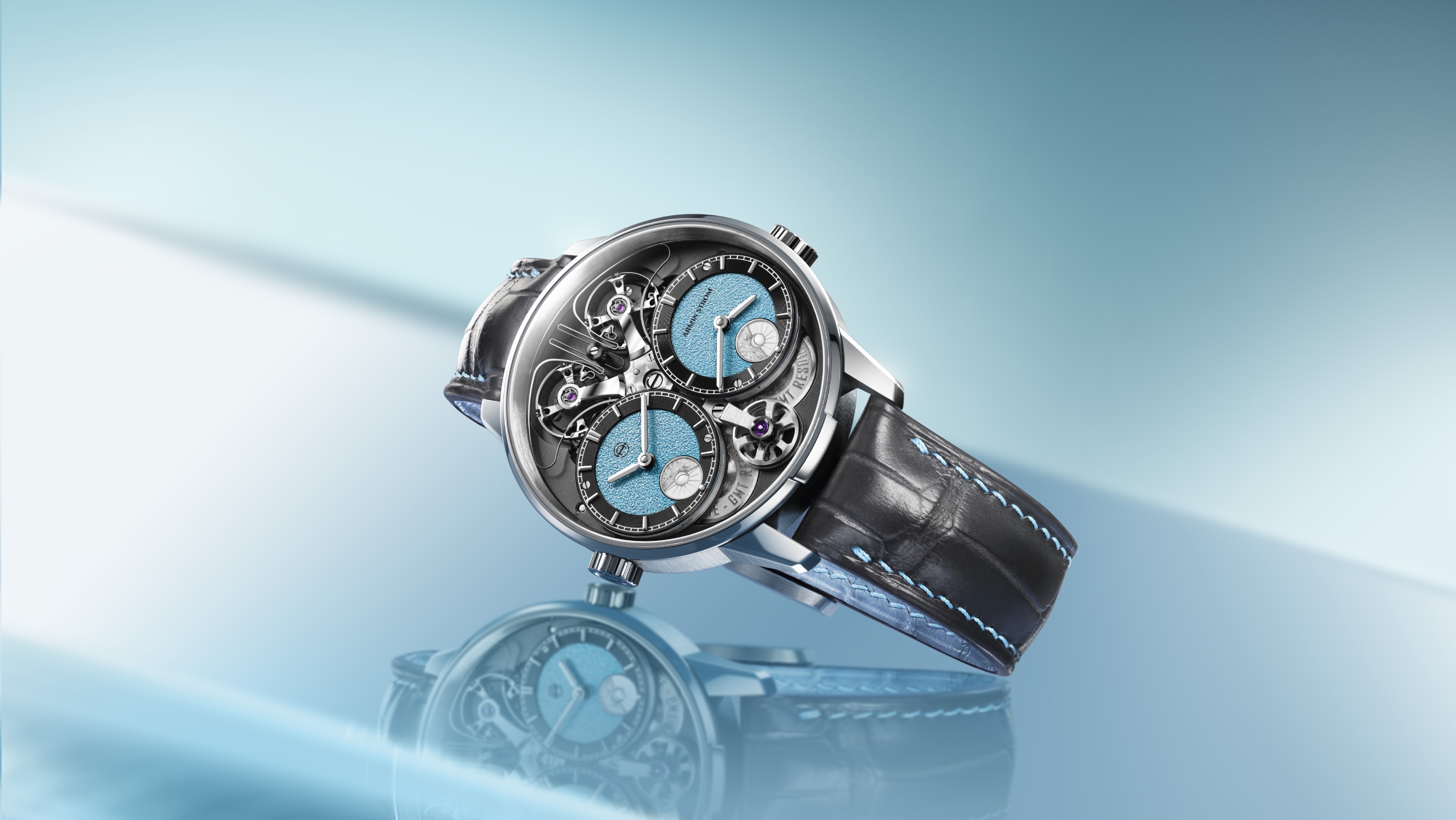
The 1499 has two complete movements in one watch: two mainspring barrels, two going trains, two escapements, two balances. The two trains are independent in time-setting (each has its own crown adjustment for the second time zone) but coupled in resonance through the shared plate. The dial reflects this with two displays: a primary time on one side and a secondary time on the other, often differentiated by metallisation or finish. The 1499.3 (revised 2020) brought the reserve from ~40 h to 80 hours with re-engineered barrels.
In context: Journe's pink-gold movement signature
F.P. Journe's house style is solid 18k rose-gold plates and bridges on his serial-production wristwatches, visible through every sapphire back. The 1499 follows this convention: warm pink gold structure, blued screws, hand-polished bevels, classical chronometer-grade finishing. The aesthetic is intentionally distinct from the Geneva-style Côtes de Genève and German silver of other haute horlogerie houses; Journe's movements are immediately identifiable as his.
Where it sits
The Chronomètre à Résonance has been in continuous production at F.P. Journe since 2000, with various aesthetic and technical revisions. Retail at launch was around CHF 28,000; current pricing (2024-2025) for the 40 mm Chronomètre à Résonance in pink gold is around CHF 95,000-120,000. Auction values for early Brass-movement ("Souscription" 1999) Résonance pieces routinely exceed USD 500,000. The 1499 is one of the most respected movements in modern independent watchmaking and the technical foundation of F.P. Journe's reputation as the most original watchmaker of his generation.


Comments 4