How a mechanical alarm wristwatch works
A mechanical alarm watch is essentially two watches in one case: the conventional time train (mainspring → balance → hands) plus a separate alarm train with its own mainspring, hammer, and a gong mounted on the inside of the caseback. The user sets the alarm by rotating an inner disc on the dial via a second crown; when the time-keeping minute hand reaches the alarm-set position, a release lever frees the alarm hammer to strike the gong rapidly until the alarm spring runs down (about 10 seconds of strike). The result is an audible alarm without batteries, electronics, or piezo elements.
The JLC Memovox legacy
The original JLC Memovox (Latin for "voice of memory") launched in 1950 with the manual-wind Cal. 489, becoming the first mass-production mechanical alarm wristwatch. In 1956 JLC introduced the Cal. 815, the first automatic alarm caliber, and the architecture has run continuously since. The 1968 Memovox Polaris (with inner triple-caseback construction for amplified alarm sound underwater) is the cult-collector reference; the modern revival started in 2008 with the Memovox Tribute to Polaris 1965.
The modern Cal. 956 family
The current production caliber for the modern Memovox Polaris (and its Memovox derivatives) is the Cal. 956, a refined modern descendant of the historic 815 / 825 architecture. 4 Hz beat rate (modern, vs the historical 18,000 vph), 45 h time-train reserve, automatic winding for the time train (the alarm train is wound separately by hand via the second crown). The alarm release is a refined version of the classical lever mechanism. JLC also produces variants for the Memovox Boutique Edition and various special releases.
Why so few alarms exist today
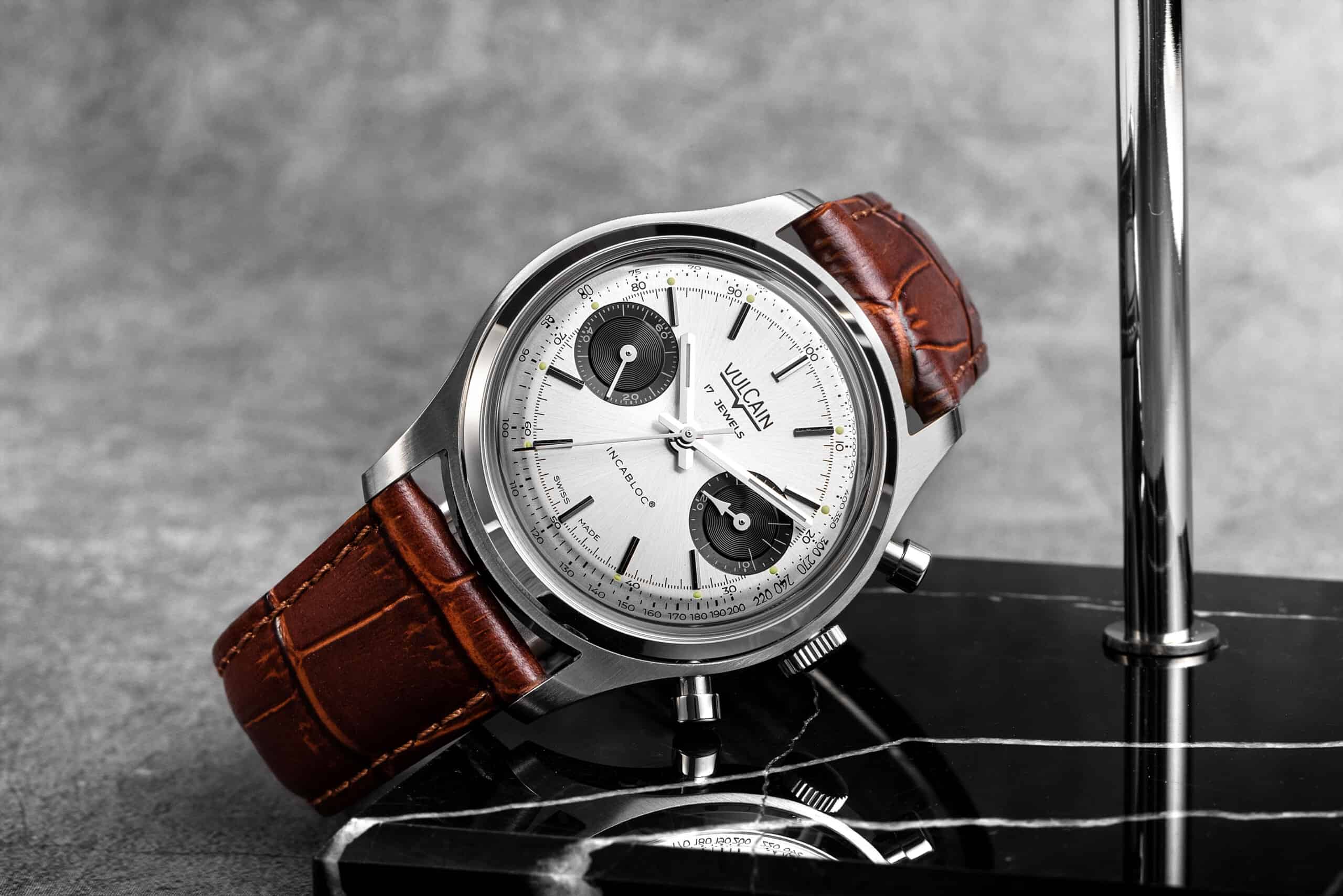
Mechanical alarm wristwatches are technically demanding (two trains, two mainsprings, the gong must be tuned for the case), and the practical use case is limited by smartphones. The category nearly died out in the quartz era; only JLC and a handful of small makers (Vulcain Cricket, Tudor Advisor in the 1950s-60s) ever produced them in volume. Today JLC is essentially the only major Swiss manufacture with a mechanical alarm in regular production, making the Cal. 956-equipped Memovox a unique entry in the modern catalogue. Mechanical alarm watches remain a small but devoted collector category.
Where it sits
A modern Memovox Polaris with the Cal. 956 retails around USD 13,500-15,000 in steel; pink-gold variants higher. Vintage Cal. 815 / 825 Memovox watches from the 1960s-70s trade on the secondary market at USD 4,000-12,000 depending on reference and condition (the 1968 Polaris II ref. E859 commands premiums). The Cal. 956 is one of the most distinctive movements in modern Swiss watchmaking: a mechanical alarm in 2025 is, at the very least, an opinionated choice.


Comments
No comments yet, be the first to weigh in.