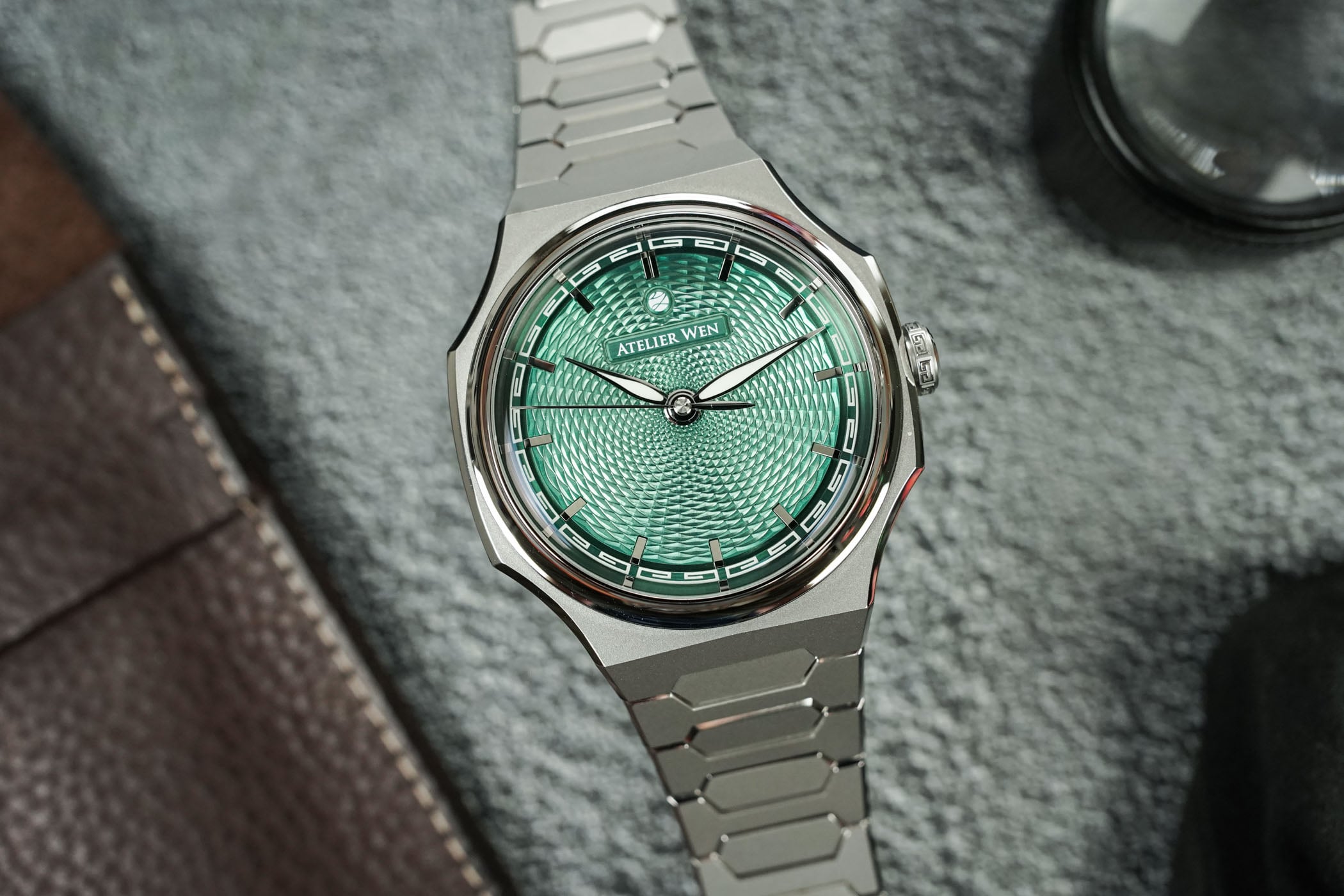
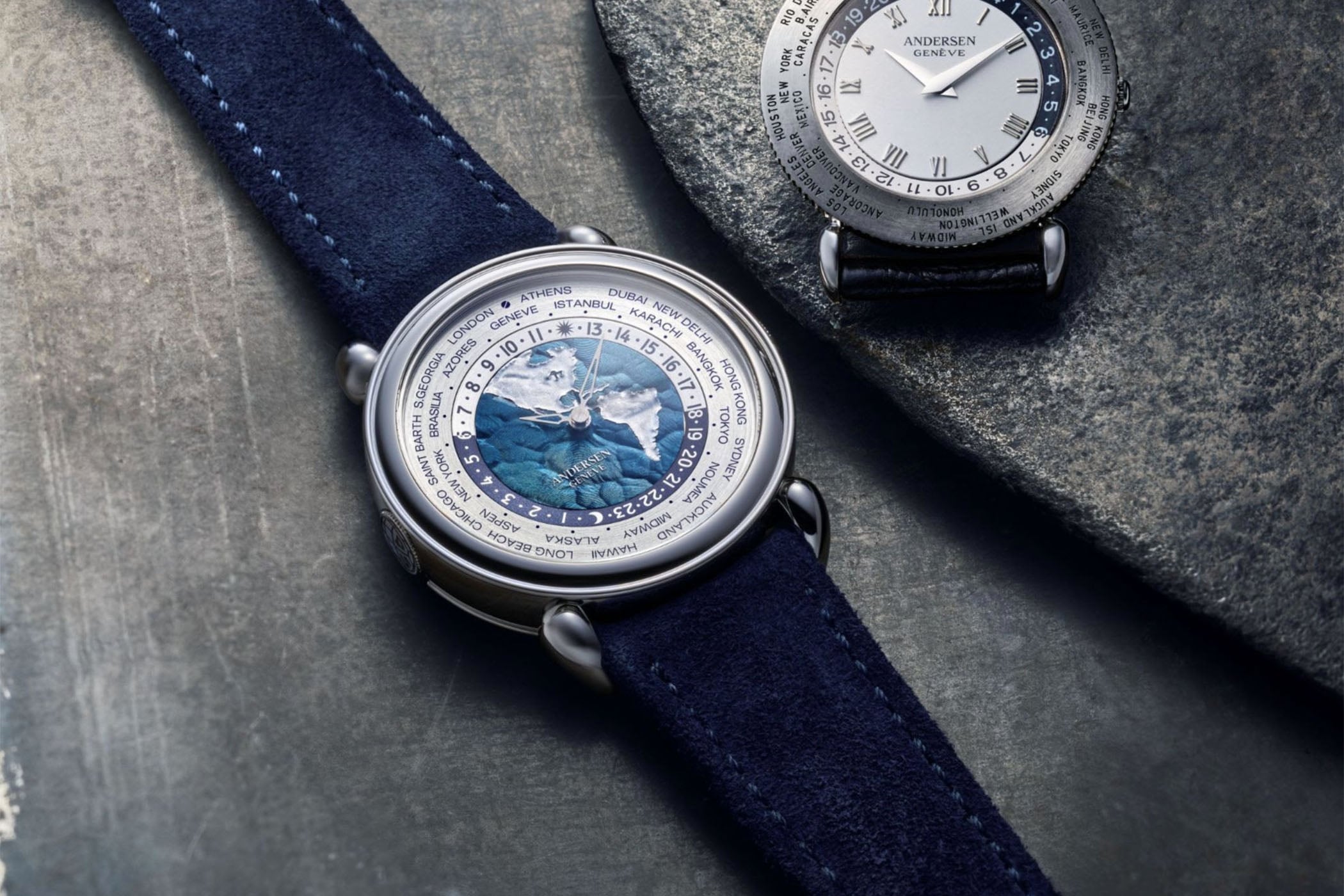
The AHCI (Académie Horlogère des Créateurs Indépendants, French for "Horological Academy of Independent Creators") is the international association of master independent watchmakers, founded in 1985 in Geneva by the Italian watchmaker Vincent Calabrese and the Danish-Swiss watchmaker Svend Andersen. The academy was established as a response to the consolidation of Swiss watchmaking under industrial groups during and after the quartz crisis; Calabrese and Andersen wanted a forum where individual watchmakers, working alone or in tiny workshops, could exhibit alongside (and be recognised independently of) the corporate manufactures.
AHCI membership is strictly limited by criteria the academy has applied since founding. Candidates must design and build their own watches by hand, in their own workshops, with no industrial-scale tooling, no investor pressure, and no corporate ownership. Each member must produce a piece that the academy's existing members vote into approval before admission; the process is competitive and slow. Most candidate periods last 5-10 years before full membership. Annual production per member is typically between 5 and 50 watches; the smallest produce a single piece per year. Total combined output of all AHCI members worldwide is in the low thousands of watches per year.
"You design it, you build it, you sign it. If you do not, you are not in our academy."- AHCI membership-criteria summary
The membership roster reads as a list of the most respected names in modern independent watchmaking. François-Paul Journe joined in 1985 as a founding-era candidate; Philippe Dufour was admitted in 1989; George Daniels joined as an honorary member around 1990; Roger Smith (Daniels' apprentice) is a current member. The Russian watchmaker Konstantin Chaykin (the Joker face), the Swiss-Austrian Felix Baumgartner (Urwerk co-founder), the French Vianney Halter, the Japanese Hajime Asaoka, and the Korean Eric Cho have all been members. The current membership list is publicly available on ahci.ch.
The AHCI has no commercial role; it does not sell watches, take commissions, or operate as a buying group. Its primary function is the annual exhibit at the major Swiss trade fair: from 1986 to 2019 the academy occupied a small dedicated booth at Baselworld (Hall 1.1, traditionally), where members displayed their pieces side-by-side. After Baselworld's 2019 implosion the AHCI shifted its primary annual gathering to Watches and Wonders Geneva and parallel events, with secondary exhibits at Geneva Watch Days (the smaller boutique-focused show) and at private gatherings during Watches and Wonders week. The academy also organises an annual general meeting and operates a member-mentorship system for candidates.
AHCI members produce watches at the very top of the haute-horlogerie price spectrum. Philippe Dufour's Simplicity retails at approximately CHF 250,000 at launch and CHF 1.5-2 million on the secondary market; F.P. Journe's Chronomètre Souverain is around CHF 70,000; Vianney Halter's Trio (his three foundational designs) reach six-figure auction prices. Total AHCI member output represents a tiny fraction of Swiss watch revenue (well under 0.01%) but a meaningful share of the haute-horlogerie collector mindshare and auction-result velocity.
For collectors, the AHCI badge is an unusually clear quality signal. A watch from an AHCI member is, by membership criteria, hand-built by an individual master in a small workshop; the academy's admission process functions as peer review against industrial scale. The "AHCI piece" has become a recognisable category in auction-house cataloguing (Phillips, Christie's, Sotheby's) and in collector vocabulary. Independent-watchmaking interest has grown substantially since the early 2010s; the AHCI member roster is one of the few short-lists that separates "real independent watchmaking" from "small luxury brand with marketing".






Comments 2