
Eric Giroud was born in Geneva in 1960 and trained as an architect at the École d'Architecture in Geneva, then in product design through the 1980s. His early career was in furniture, lighting, and exhibition design rather than watchmaking; he came to the watch world laterally in the early 1990s through commissions for Hublot and small Geneva ateliers. By the late 1990s he had established a small independent design studio in Geneva, Through The Looking Glass, working on a freelance basis for the Swiss watch industry.
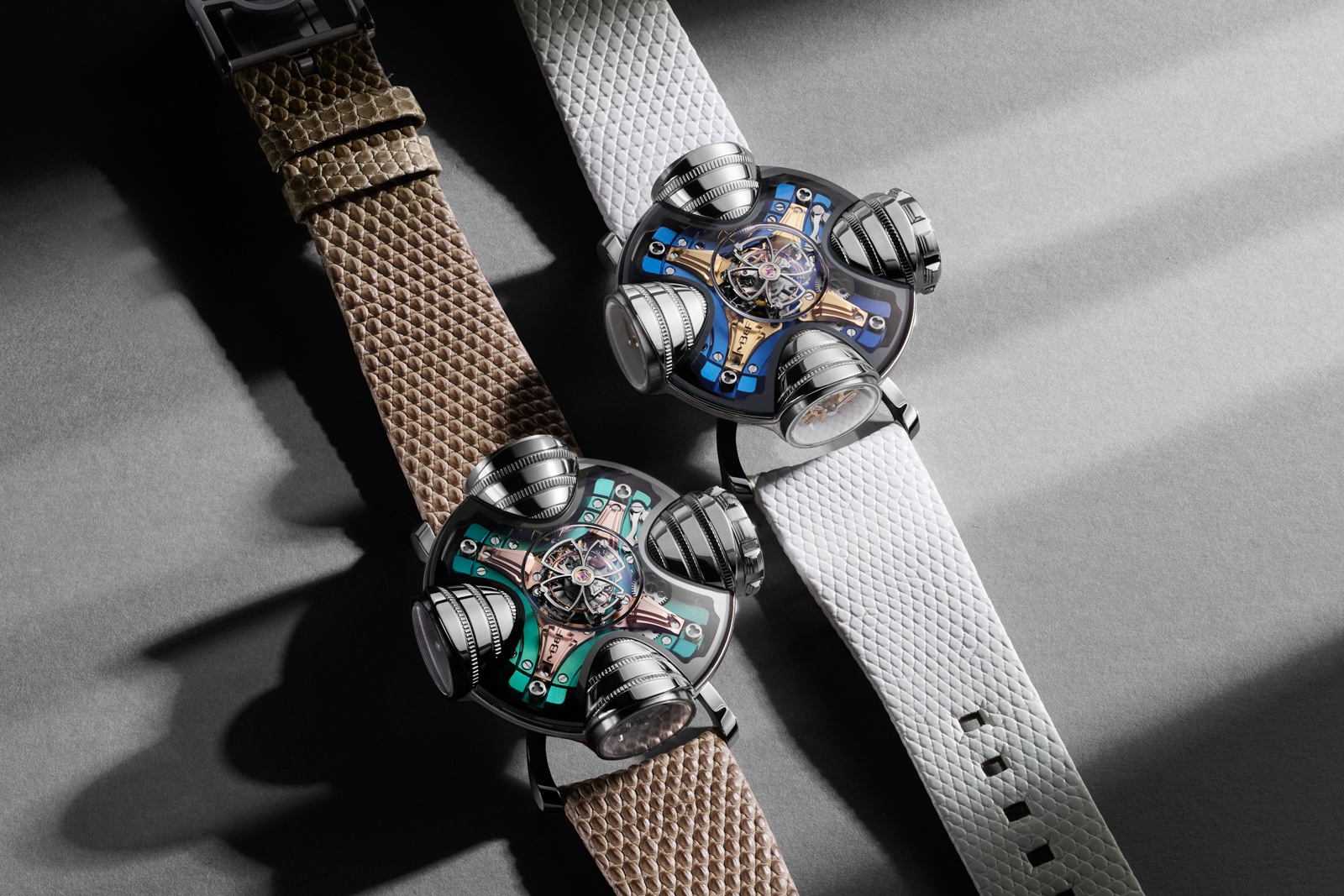
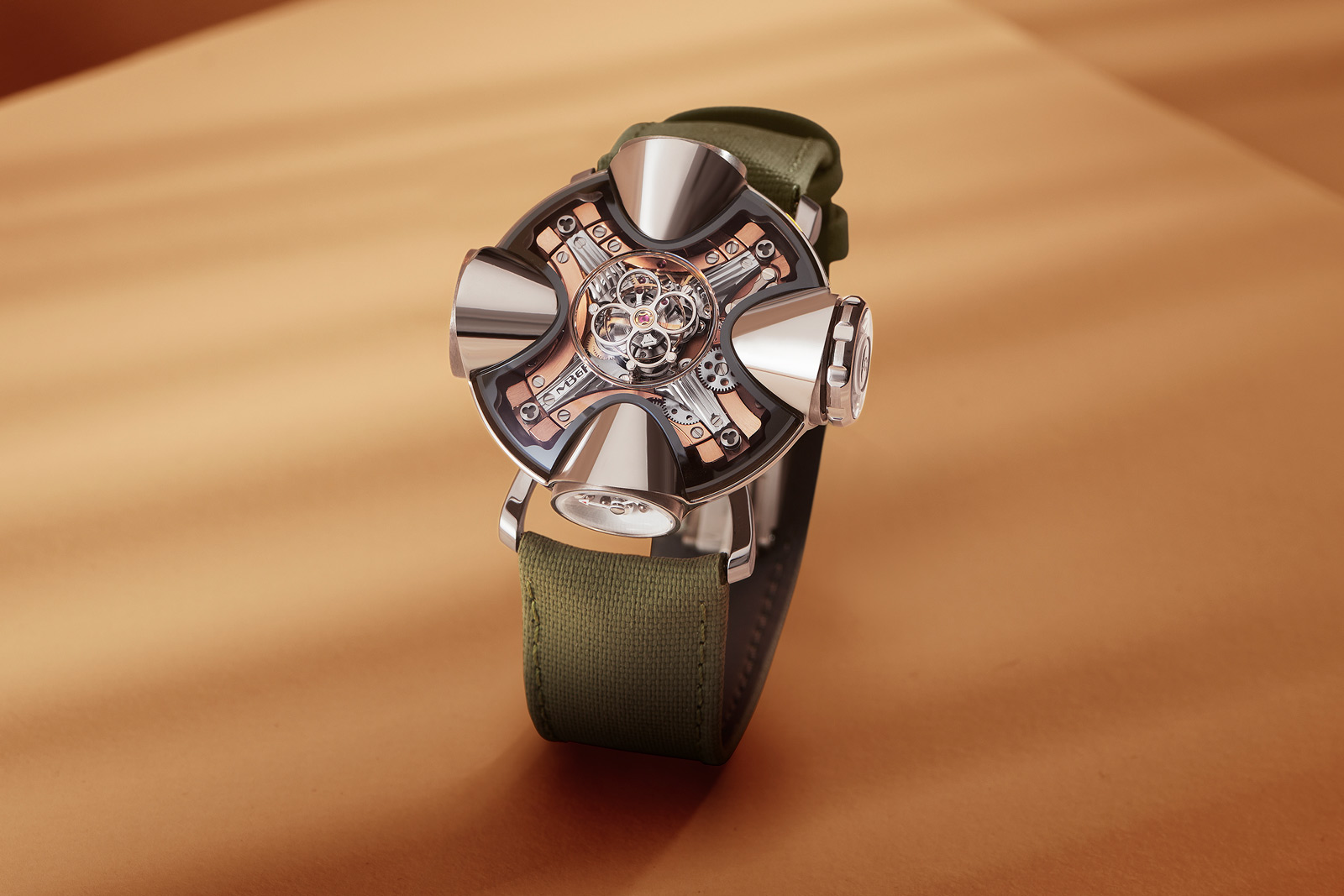
The decisive partnership was with Maximilian Büsser, then CEO of Harry Winston, on the Opus series of haute-horlogerie collaborations (Opus 3 with Vianney Halter, Opus 5 with Felix Baumgartner of Urwerk, and others). When Büsser left Harry Winston in 2005 to found MB&F, Giroud went with him as the brand's lead exterior designer. He has designed essentially every MB&F reference since the founding: the original HM1 (Horological Machine 1, 2007), HM2 (2008), HM3 Frog (2010), HM4 Thunderbolt (2010), the entire Legacy Machine series from LM1 (2011) to LMX (2021), and the HMX, HM7 Aquapod, HM10 Bulldog, and dozens of variants.
"I don't design watches. I design objects that happen to tell time. The time-telling is a constraint; the object is the work."- Eric Giroud, Hodinkee Talking Watches interview
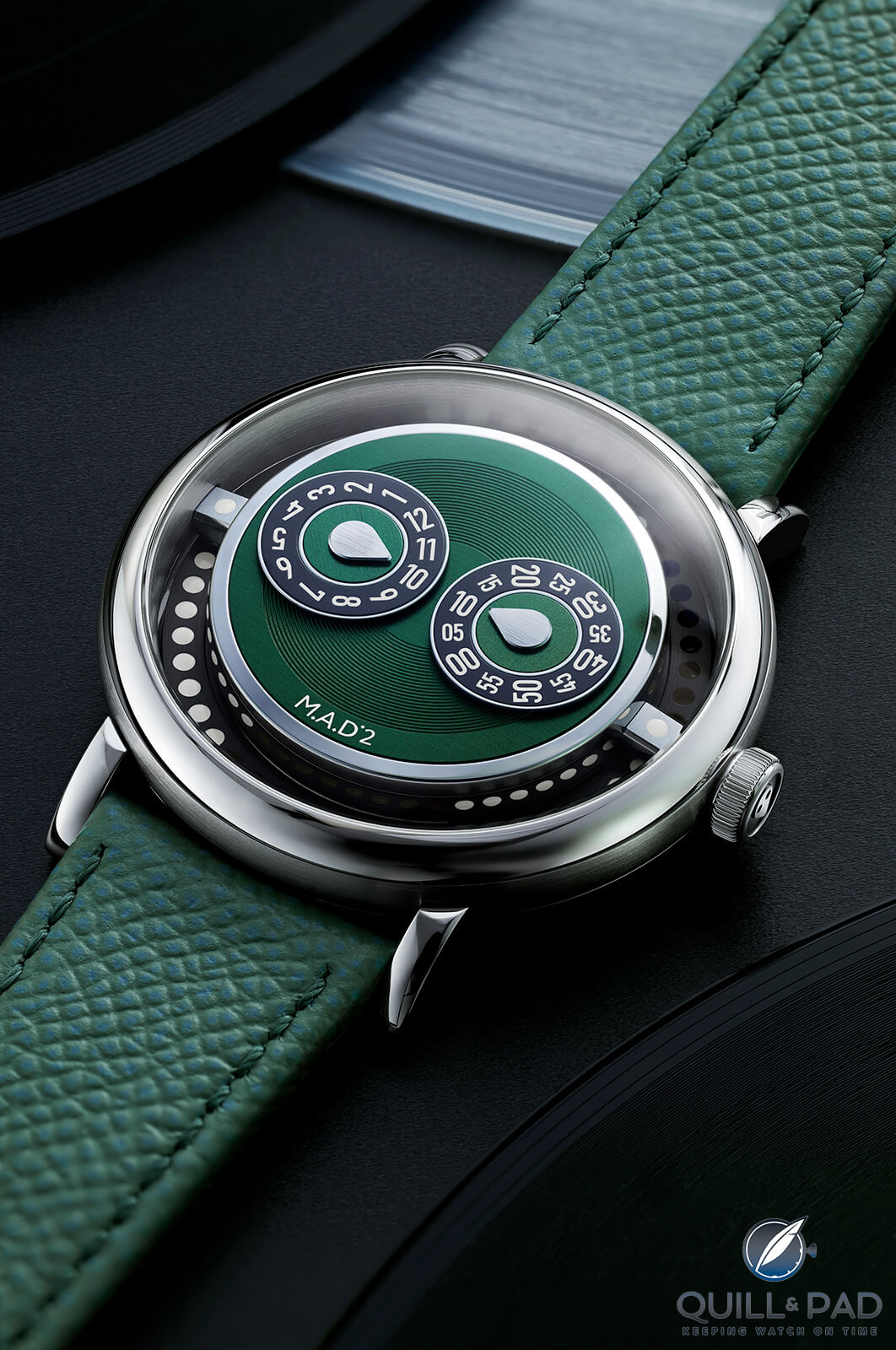
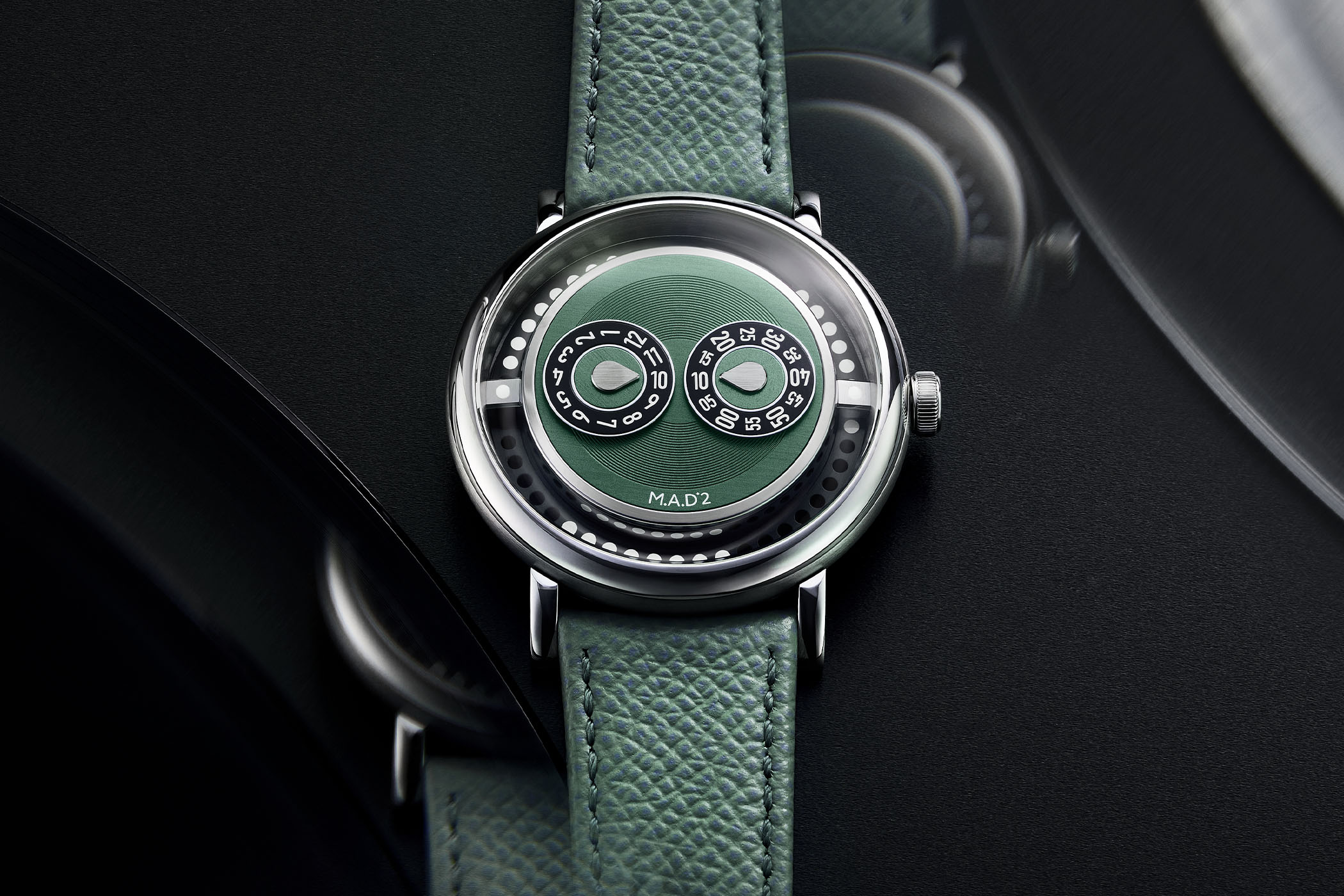
Beyond MB&F, Giroud's commissions read as a who's who of independent and statement watchmaking: Manufacture Royale's 1770 Voltige tourbillon and the Opera repeater, Christophe Claret's X-TREM-1 magnetic-rotating chronograph, Bovet's Récital 22 and 27, Greubel Forsey's GMT Earth, Hublot's LaFerrari, the Harry Winston Opus 11, and references for Romain Jerome, HYT, and Czapek. Across this body of work the common thread is architectural form-thinking: Giroud designs watches as small sculptures with functional movements inside, rather than as movements with cases wrapped around them.
Giroud's own description of his approach: he draws on paper for weeks before any 3D model, treats each commission as an architectural problem (how does the volume sit on the wrist, how does the wearer's eye traverse the dial, what shadow does the case throw at 3 PM), and works closely with the client's movement designer rather than imposing pre-built layouts. He says he is "not a watchmaker"; he is a designer who happens to design watches alongside furniture, lighting, and exhibitions. His studio has roughly 4-6 people at any time and ships 8-12 finished references per year.
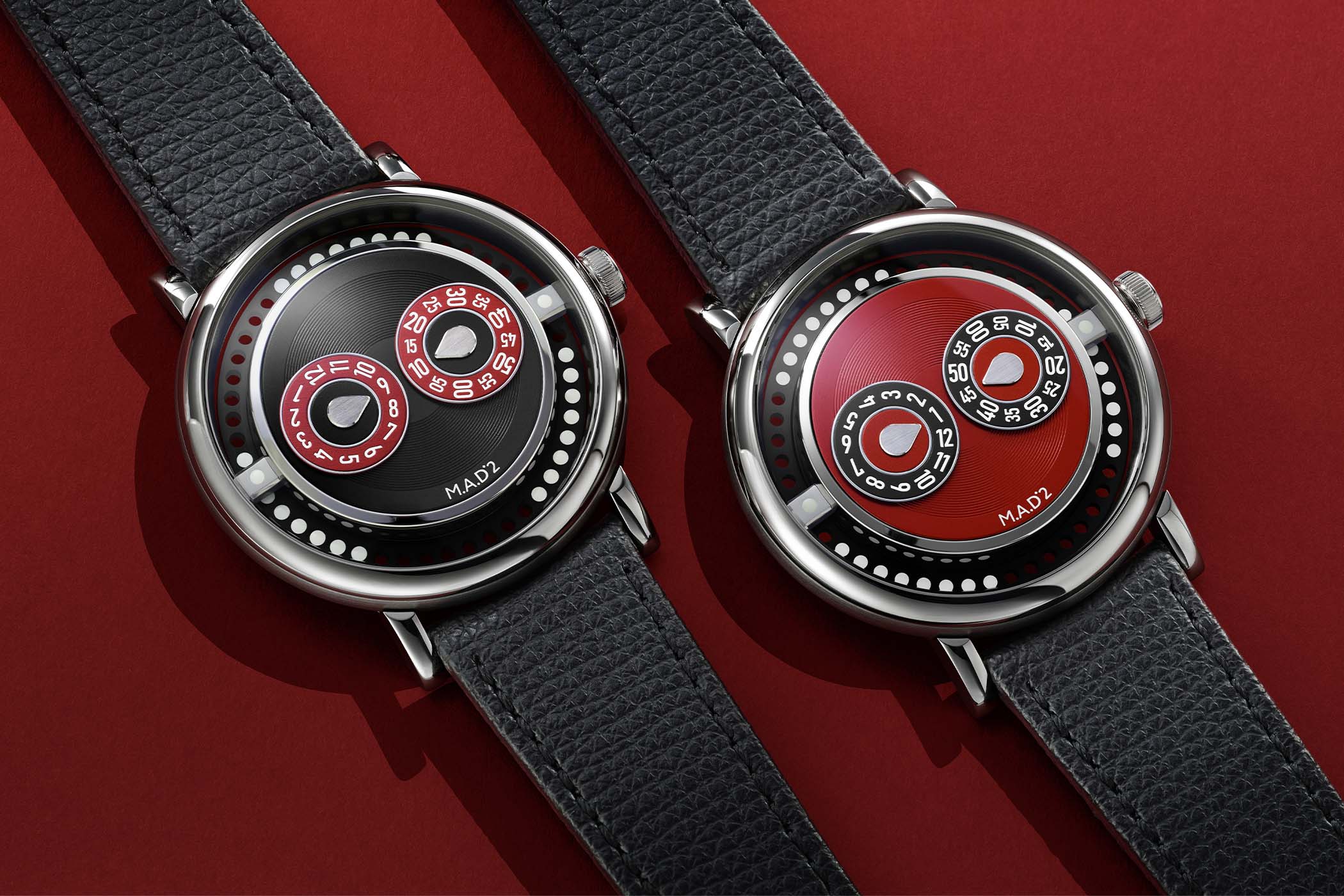
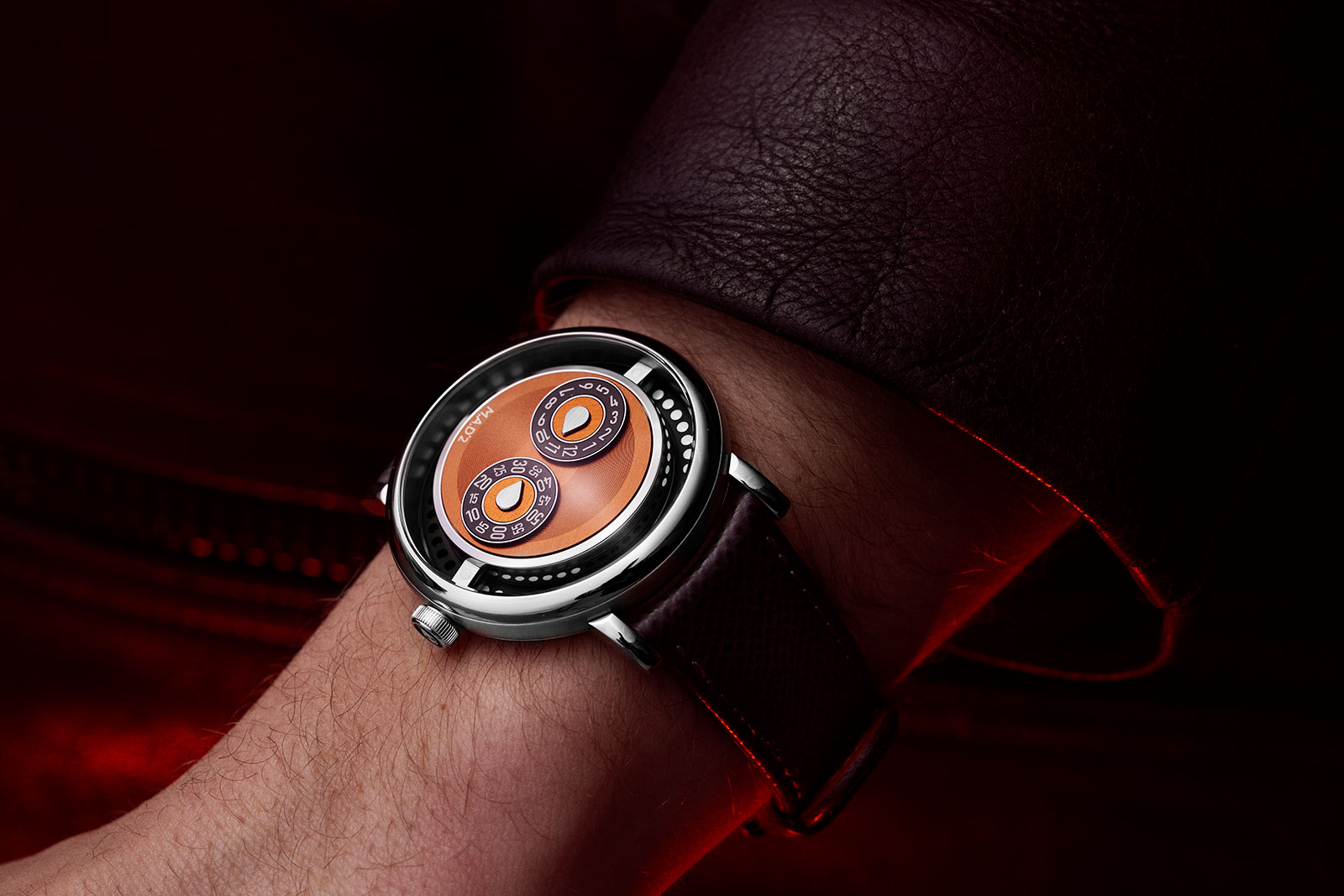
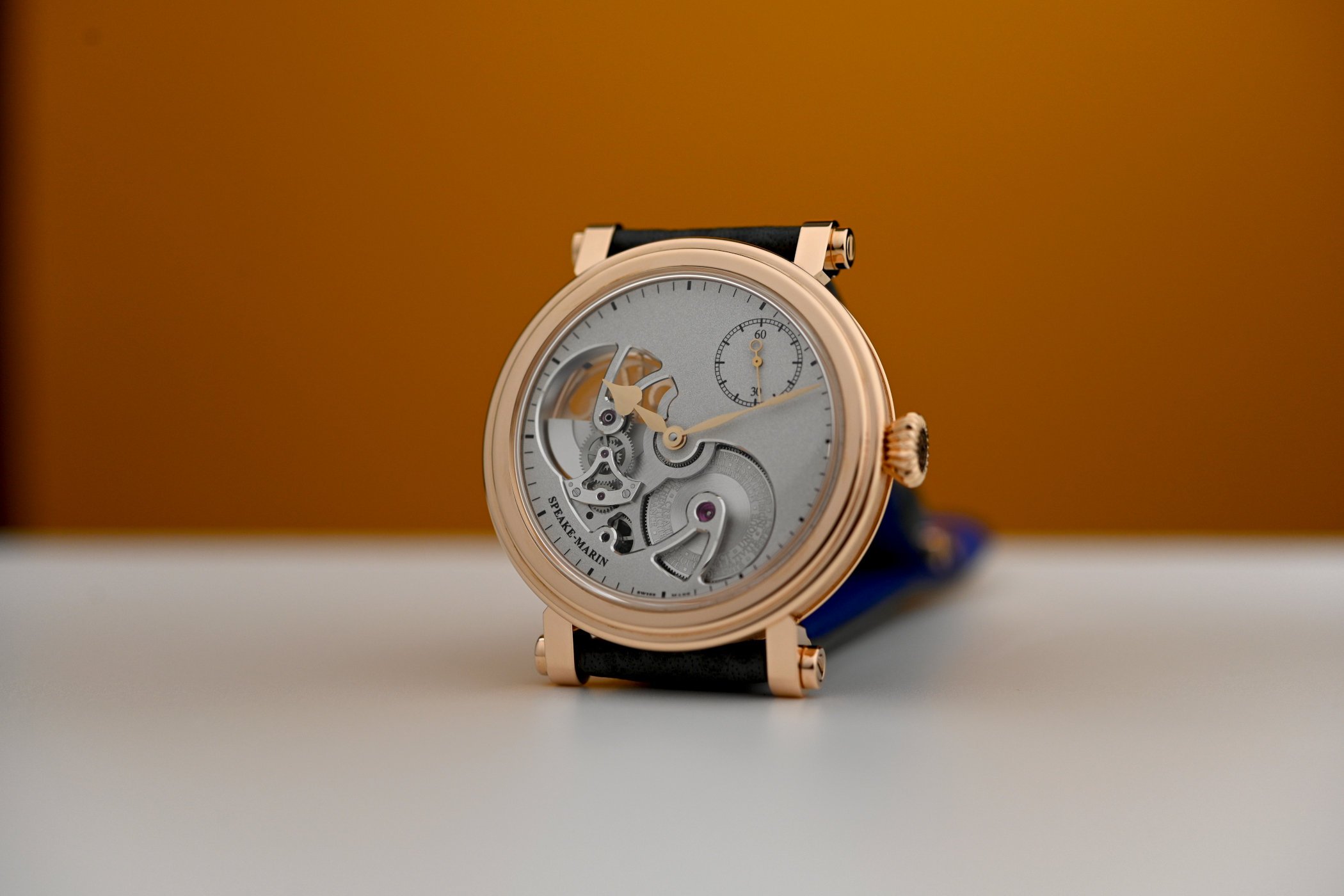
In the modern collector vocabulary, "Giroud-designed" is shorthand for a particular style: asymmetric layouts, three-dimensional dials with elements at different heights, thick crystals shaped to enhance optical effects, case profiles that don't resolve to circles or rectangles, and a willingness to make the movement itself part of the visual composition rather than hidden behind a flat dial. The MB&F Legacy Machine series, with its enormous single-balance-wheel suspended over the dial, is the most legible example: nothing about it is a "watch" by traditional standards, yet the form is unmistakably a watch and unmistakably Giroud.
He is widely cited alongside Gérald Genta, Daniel Roth, and Vincent Kauffmann as one of the four most influential post-1970 watch designers, with the distinction that Giroud is the only one of the four whose body of work is primarily 21st-century rather than 20th. He is still actively designing as of 2024 from his Geneva studio.

Comments 1