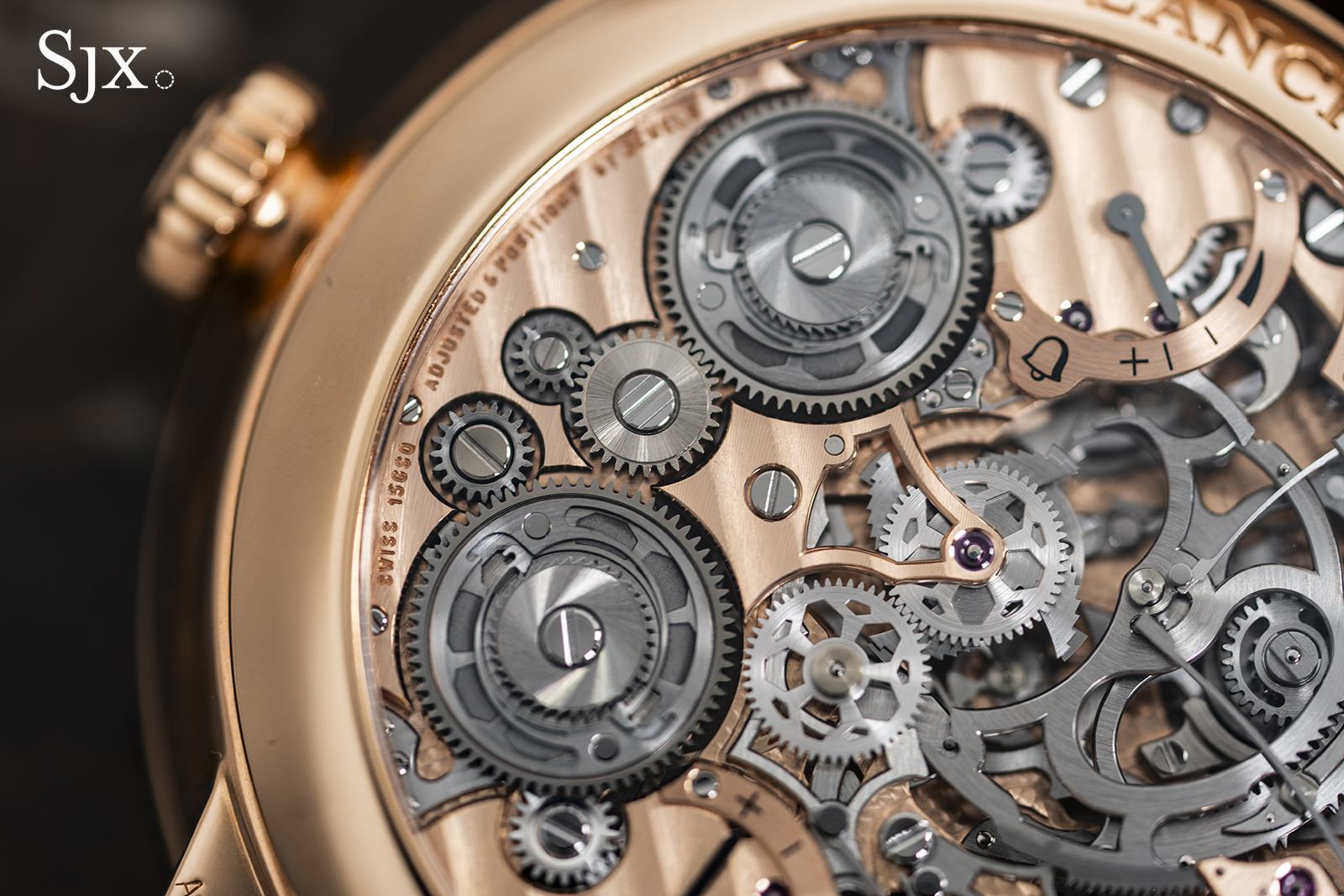
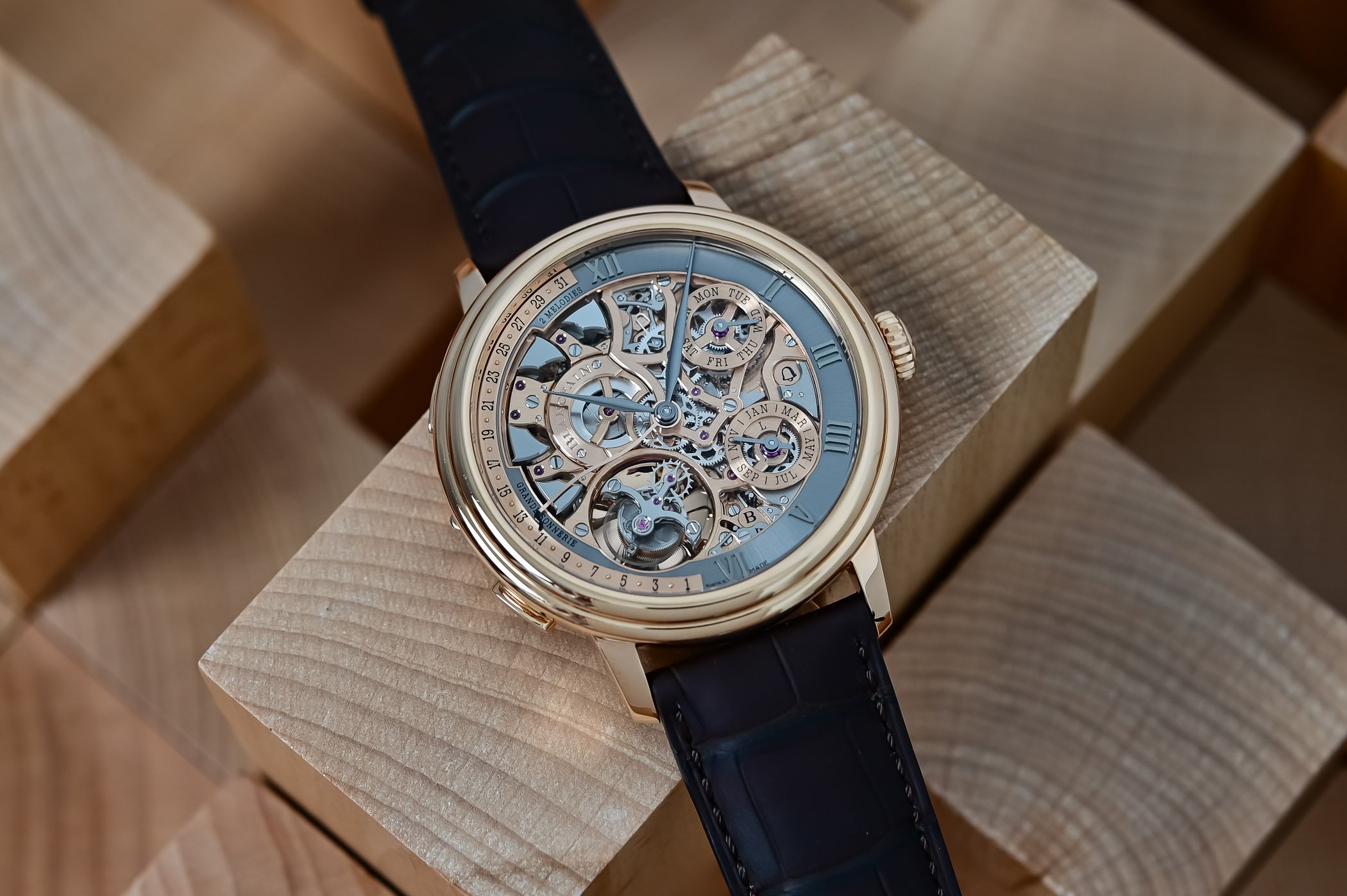
Grande Sonnerie (French for "grand strike") is the most mechanically demanding chiming complication in watchmaking. A grande sonnerie watch strikes the time automatically at every quarter hour, exactly the way a church clock or a tower clock chimes the time without needing to be activated. At each quarter, the watch chimes both the hour AND the quarter: at 3:45 it strikes 3 hours and 3 quarters; at 4:00 it strikes 4 hours; at 4:15 it strikes 4 hours and 1 quarter. A petite sonnerie ("small strike") is a simpler variant: it strikes only the hour at the hour and only the quarter at each quarter, without the full hour-strike at every quarter. Both complications can be combined with a minute repeater (manual on-demand chime), giving the owner three modes: silent, petite sonnerie, grande sonnerie.
The mechanical demands are extreme. A grande sonnerie watch chimes 96 times per day at the quarters alone, plus 24 times at the full hour, for a total of ~96 chimes per 24-hour cycle. Each chime requires substantial power; the typical grande sonnerie wristwatch burns through 30-60% of its total mainspring power on chiming. Most grande sonnerie wristwatches use a separate dedicated chiming barrel (in addition to the timekeeping barrel) and a silent governor (silent fly) to regulate the strike speed, plus an all-or-nothing safety that prevents the chime from starting if the chime barrel doesn't have enough power for a complete sequence.
"A minute repeater chimes when you push the slide. A grande sonnerie chimes because the watch decides it is time to chime. That decision, mechanical and automatic, is the entire complication."- Watchmaking commentary on the grande sonnerie
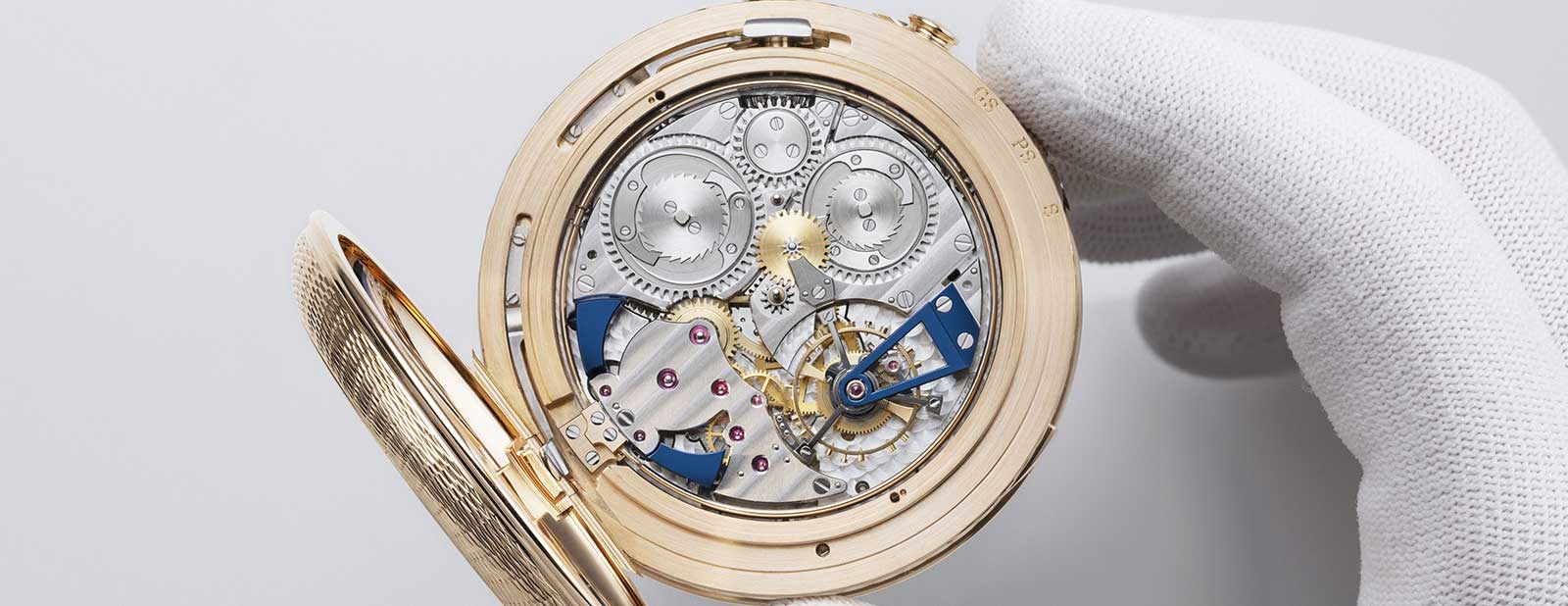
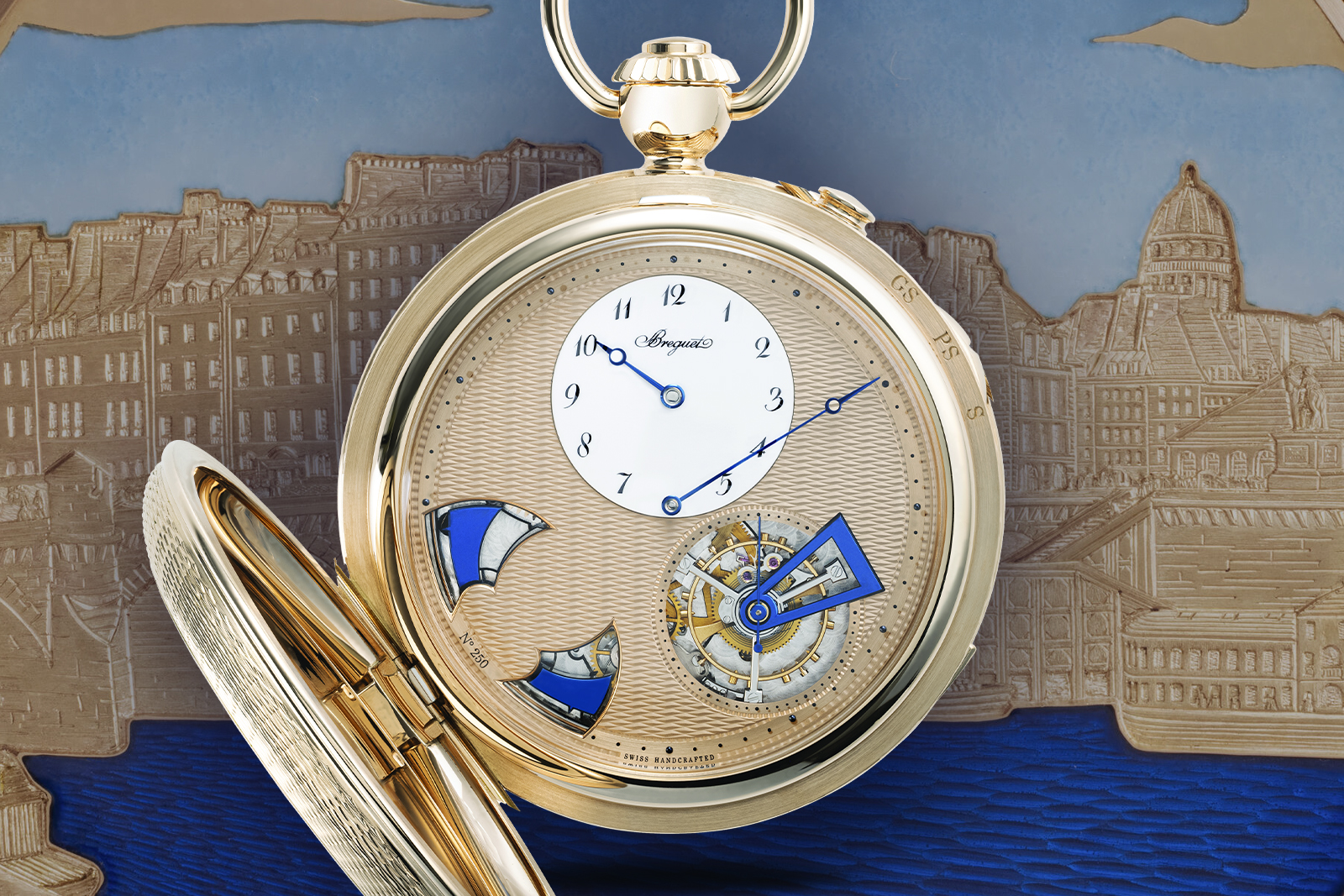
In pocket-watch form, grande sonnerie has existed since the 18th century. Breguet built grande sonnerie pocket watches; Patek Philippe's "Caliber 89" (1989, 33 complications) included a grande sonnerie. In wristwatch form the complication remained essentially out of reach until the late 20th century. Audemars Piguet produced one of the first serial grande sonnerie wristwatches in 1994; Jaeger-LeCoultre's Master Grande Tradition à Grande Sonnerie followed in the 2000s. Philippe Dufour's "Grande et Petite Sonnerie" (1992) is widely cited as the modern wristwatch reference; Dufour built each piece by hand in his Le Sentier workshop, total production under 10 watches.
The most ambitious modern grande sonnerie is Jaeger-LeCoultre's Hybris Mechanica à Grande Sonnerie (2009): triple-axis tourbillon + minute repeater + grande sonnerie + Westminster carillon (4 hammers, 4 gongs) in one wristwatch. Approximately 30 pieces produced. Patek's Grandmaster Chime ref. 5175 (2014, 175th anniversary) carries Westminster grande sonnerie alongside 19 other complications; the steel ref. 6300A-010 sold at Only Watch 2019 for CHF 31 million, the all-time wristwatch auction record. AP's Royal Oak Concept Grande Complication and Grand Sonnerie Carillon sit at similar levels.
Total annual worldwide production of grande sonnerie wristwatches is approximately 30-50 pieces. The complication is essentially the peak of mechanical wristwatch construction; pricing typically starts at CHF 500,000-1,000,000 and runs to CHF 10,000,000+ for combinations with tourbillon, perpetual calendar, and split-seconds chronograph. The acoustic quality of the chime, the weight of the case, the visible mechanical drama through the back, and the once-per-quarter automatic strike combine to make the grande sonnerie wristwatch a category of one in the modern market: a watch that does what a tower clock does, on the wrist, automatically.
For collectors, a grande sonnerie wristwatch is the ultimate statement piece of haute horlogerie. The combination of technical achievement (most demanding chiming complication), acoustic quality (the chime must sound musical, not mechanical), and scarcity (50 pieces/year worldwide) places it in a category by itself. The steel Patek Grandmaster Chime 6300A-010 at CHF 31M defines the modern auction-result peak for the category. Lower-tier grande sonneries (e.g. AP Carillon, JLC Hybris Mechanica) are generally "call to enquire" at retail; not displayed in catalogues, sold only to established clients, and frequently reserved years in advance. The complication remains the technical aristocracy of mechanical watchmaking.





Comments 2